

348 – Mike Abramowitz of St. Augustine, FL Co-founder of Better Than Rich, Speaker, Author, Transformational Coach & Father
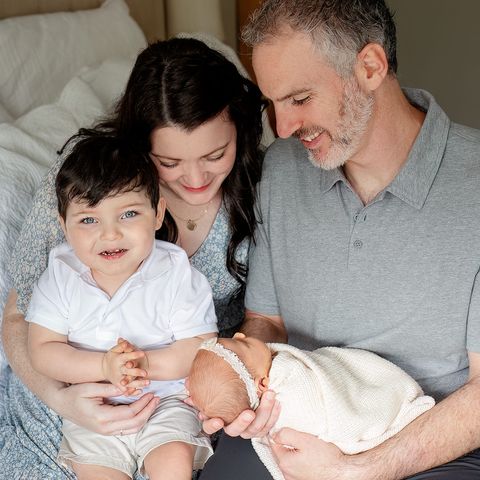
Our guest this week is Mike Abramowitz of St. Augustine, FL, an entrepreneur, co-founder of Better Than Rich, speaker, author and transformational coach as well as father of two young children.
Mike and his wife, Lindsay, have been married for seven years and are the proud parents of two children: daughter Ella (1) and son James (3), who was born at 26 weeks, weighing 1 pound four ounces, which caused severe bronchial pulmonary challenges, necessitating a trachea, ventilator and feeding tube. Their route to becoming parents also included; IVF, a series miscarrIages and a still birth.
Mike was born and raised in New Jersey and is the youngest of eight siblings. His dad fought in two Israel wars, which revealed some very positive and enlightening aspects of his dad’s personality, which helped shape his world view and impacted his commitment to fathering.
At heart Mike is an entrepreneur with a drive and commitment to serve. We learn about Vector Marketing and the Cutco Mafia, GRAB Tomorrow, PB&J for Tampa, Front Row Dads, and Better Than Rich, a virtual assistant platform, which allows users to leverage their time and accelerate growth.
We’ll hear Mike’s incredible story on this episode of the SFN Dad to Dad Podcast.
Show Links
Phone – (732) 687-8688
Email – mikeabramowitz.cutco@gmail.com
LinkedIn – https://www.linkedin.com/in/mikeabramowitz1/
Personal Website – https://mikeabramowitz.com/about/
Better Than Rich – https://www.betterthanrich.com/
PB&J for Tampa – https://mikeabramowitz.com/programs/pbj/
G.R.A.B. (Grow. Re-Evaluate. Appreciate. Believe.) – https://mikeabramowitz.com/programs/grab/
Transcript:
Tom Couch: Thanks to Horizon Therapeutics for sponsoring the Special Fathers Network Dad to Dad Podcast. Working tirelessly to research, develop and bring forward medicines for people living with rare and rheumatic diseases. Discover more about Horizon Therapeutics mission at horizontherapeutics.com.
Mike Abramowitz: So that way when spring comes, I can plant seeds and that seed planting, whether seed planting in relationships or seed planting on a knowledge or a skill, or seed planting in business, I could eventually plant those seeds. Then summer I’m going to work very, very hard and bringing those seeds into fruits that I can bear in a fall season. And that’s where I’m at now.
Tom Couch: That’s our guest this week, Mike Abramowitz, an entrepreneur, speaker and transformational coach who lives in St. Augustine, Florida. Mike and his wife Lindsay have two young children, including their son James, 3, who was born at 26 weeks. We’ll hear Mike’s incredible story on this Special Fathers Network Dad to Dad Podcast. Now say hello to the founder of the Special Fathers Network and host of the Dad to Dad Podcast, David Hirsch.
David Hirsch: Hi and thanks for listening to the Special Fathers Network Dad to Dad Podcast presented by the Special Fathers Network, a dad to dad mentoring program for fathers raising children with special needs. The Special Fathers Network Mastermind Group experience is the most comprehensive program the 21st Century Dads foundation offers. Dads raising children with special needs, meet virtually on a weekly basis and form meaningful relationships while sharing weekly wins, discussing books and sharing heartfelt challenges. One of the highlights of the year is attending an in-person weekend retreat. We’re launching 10 new mastermind groups in 2024 with 10 dads per group. That means we’re only looking for 10 like-minded dads in each community. If you’re a dad raising a child with special needs, we hope you’ll join a local mastermind group and make the investment to become the best version of yourself. For more information, please see the show notes or simply go to 21stCenturyDads.org.
Tom Couch: Now let’s hear this incredible conversation between Mike Abramowitz and David Hirsch.
David Hirsch: So I’m thrilled to be talking today with Mike Abramowitz of St. Augustine, Florida, co-founder of Better Than Rich, speaker, author and transformational coach, as well as the father of two young children, including a son who was born at 26 weeks. Mike, thank you for taking the time to do a podcast interview for the Special Fathers Network.
Mike Abramowitz: Well, thanks for having me, especially you’re at a big conference and fitting me in. That’s just a testament to you and your mission. So thank you.
David Hirsch: You and your wife Lindsay, have been married for seven years and are the proud parents of two children, daughter Ella, 1, and son James, 3, who was born at 26 weeks, weighing 1 pound, 4 ounces, which caused severe bronchial pulmonary challenges, necessitating a trachea ventilator and feeding tube. Let’s start with some background. Where did you grow up? Tell me something about your family.
Mike Abramowitz: Grew up as the youngest of eight in New Jersey. And, my dad owned a plumbing business my whole life. My mom pretty much took care of us, and I left for college to go to Florida, so I ended up living 18 years in New Jersey, and then I left the last 21 years in Florida post college. So what’s interesting, also, not many people know this, but my, dad had another son, so I’m actually youngest of nine. I think I might have shared to you offline, but Ancestry, uh,.com or 23andMe one of those. my dad had an oopsie when he was, like, 18 years old. And this, gentleman named Chuck, he’s now a part of our family for, like, the last four or five years because, he found out that, he lives, like, 30 minutes from my dad. His mom passed away. He never knew his dad. And then he did this test, just see what’s up. And turns out my dad was 30 minutes down the road from him. So Chuck is now the oldest big brother. I’m 39. I think Chuck might be, like, 65 or something like that. So, it’s kind of wild to think about.
David Hirsch: Well, thanks for sharing. That is usually when there’s like, an oops, baby, it’s at the back end. Right? It’s the caboose. Right. Parents have had their family, and then they don’t think about things. And then there’s a much younger brother. But in your case, you’re still the youngest now not of eight, but nine. That is like a bonus brother, right? I don’t even know how to think about it or describe that.
Mike Abramowitz: It is. That’s a great way to put it. He’s the bonus brother. My sister calls him new brother. But, yeah, bonus brother.
David Hirsch: Okay, well, thanks for sharing. So you mentioned your dad was a plumber. And, I also remember in a prior conversation, you mentioned that he, had served in two wars. Not here in the U.S. but in, Israel. And I’m wondering what that’s all about.
Mike Abramowitz: Yeah, he was in the Six Day War, and he was also in the Yom Kippur War. These are both before me, I was born in 85. My dad is, just to give a lens of some of his decision making. when he was a little kid, he was probably five or six, and this is what he shared with me. He saw a video. He was born in 41,
00:05:00
Mike Abramowitz: and he saw a video of, what was happening in Nazi Germany. And he made a commitment, at like 5, 6, 7 years old that he would, like, never let something like that happen ever again. So he made, like, an allegiance to himself and also to the Jewish people. So when his dad passed, when he was like 17, 18, 19, something like that, he was very committed to the Jewish faith. And then he ended, up falling in love and having my oldest brother Barry, in the original family. So Barry, he’s, 21 years older than me. And then he had my sister Audrey two years later. So he ended up getting married. But then the war broke out while he had these two little kids. So my dad’s lens of the world was I made a commitment to Israel before I made a commitment to my wife. Now I went to birthright in Israel, and I, witnessed some of the conversations around that, the families versus the land. But I never quite understood how my dad can make that choice as a dad and as a father and as a husband. But he ended, up leaving, going to the war to fight, willing to sacrifice his life. Then he brought his family over. So my oldest brother and sister, Barry and Audrey, and that, his first wife lived in Israel for, I don’t know, seven to ten years, during that time frame. Then they came back here. Eventually he got divorced and then found. Met my mom and then had my sister and myself. So My dad has four kids, and my sister and myself were two years apart. And he was in his. He was 43, I think, when he had me. Something like that. Here’s the thing that’s wild, Dave. I witnessed my dad did the exact same thing to my sister and I when the Gulf War broke out in 90, whenever that was, 91, 92, 93, whatever that was. I was 7, my sister was 9. And dad didn’t come home that day. I had no idea my mom was calling. He didn’t come home from his plumbing business, and he just hopped on a plane without telling anyone and just went to Israel when he was probably 50. And we didn’t. Dad just didn’t come home and tell anyone. So eventually, at like three in the morning, my mom was freaking out, calling everyone. And then someone told my mom what happened. And, I Don’t know. I have, I have a lot, many mixed feelings around that as a son and now as a husband and as a dad. Again, never understood how or why, he could make that decision. But after I went to Israel and understood the sides of it, I could, you know, riff on that. But those types of decisions, that’s very, it just gives a glimpse of the paradigm of how my dad has approached his life on some of those decisions. And then there’s many, many other decisions that my dad has made that are under the umbrella of commitment and loyalty, like he has demonstrated there. And also in the same breath, with loyalty and commitment over here, there’s consequence and negligence that also happens. And the same, the same gift is also sometimes the curse.
David Hirsch: Yeah. Well, thanks for sharing. It’s a very powerful story and it does give you a glimpse into the level of commitment that people are willing make. And I think the thought about sacrifice comes to mind when somebody’s willing to put their life on the line for a cause, something that they believe in. The unfortunate aspect of that is that, you know, they, they might be causing more harm. God forbid, you know, your dad was maimed or killed, you know, you’d look back on that decision and say, well, was that really the right decision? These decisions are not black and white. Right. They’re not made in a vacuum either. And I think the context which you, I think tried to share, which is really important as well. So very powerful though. He sounds like a, very committed individual. You know, I think he’s put the community, at least the Jewish, Israel community maybe above his own right. And I think that there’s a lot of people in Israel that certainly served in the IDF that I think shared his same view or belief of the world. Right. That, you know, the safe place that Israel is for Jews, in the world, you know, is more important than virtually anything else and they’re willing to sacrifice themselves and you know, it’s an honorable thing to do. And I’ve heard the parents of those that have served right, in the military say that, you know, that’s what we want our sons to do. And it’s remarkable. Right, because that’s certainly not a typical US centric way of thinking about things.
Mike Abramowitz: Correct. And I did not know that until I went.
David Hirsch: Yeah. Anyway, thanks for sharing. So, you gave us a little background on your dad and I’m sort of curious now. How would you describe your relationship with him?
Mike Abramowitz: It’s actually a great question because I’ve been very intentional. Mom passed when I was
00:10:00
Mike Abramowitz: 20. And when my mom passed, my dad, my dad almost became like a grown little boy. I know it sounds weird, but like, J. Jordan Peterson has a great video on Peter Pan and the analogy and the metaphor of Peter Pan. And he’s like, no one likes a grown infant. And that’s kind of how I would describe what happened with my dad after my mom passed. So he almost like was liberated from marriage and not a way that as a 20 year old I could, could have really understood. And now for the last, you know, almost 20 years that he had been able to just psychoanalyze him. It m sounds weird, but I’ve gone through a lot of counseling and therapy and grievance counselors and journaling and process my own to kind of get to this like resolution conclusion for myself. But ultimately, you know, my mom was always protective of me. My mom was my best friend. My mom was my biggest fan. My mom babied me. I’m the youngest. That was her baby cub. Like she would say things to me growing up like, you know, don’t be like your father, you know, when you grow up, like stuff like that. Because my dad would make some decisions that we’ve already discussed. So there’s many more of those that he would just like, like he would just go, leave us sometimes and not like be aware like he was being negligent. He would just be focused on something else, not us in that moment. And there’s a story he tells me all the time. He tells me, when you were a little kid, I was swimming in the pool. You couldn’t be more than three years old and you just kept jumping in the deep end while I was swimming in the pool. It’s like you were ready to swim before like anything. And I would go and I would get you and I’d pick you up and bring you out. And my whole life I heard this story thinking to myself, wow, I really love swimming. And now as a dad with a three year old, I think to myself, how are you that irresponsible to be swimming in the pool, allowing the three year old to jump in the deep end, right? So it’s like, it’s just a different. He’s telling the story is like this innocent like funny, like way. And I’m thinking like, that was extremely irresponsible of you dad. Right? So it’s just, so it’s unique. So I, the foundation of the relationship is not as strong. But then when mom died, I wanted to strengthen It. So it’s again, it’s a very long way of answering the question. So in my, when mom passed, we went on a trip, a dad trip, him and I and just had deep connection. And I shared with him that I did not want my mom and my dad both to be lost. So I’d like to make sure that we have a strong relationship because he started removing himself from the house. Like he moved away, moved into this one bedroom spot. So I started being very intentional and I started calling my dad a lot, asking him like, how are you? And he said, what do you want? Like, every time I heard that, like, it hurt me. I was like, I don’t want anything. I just want my dad. It’s like, what do you want? What do you want? So I spent like 10 years calling him, not asking him for anything, just to ask him how he’s doing. I also, once I got to a point, like, I was pretty broke, through my 20s because, I was doing really well in my early 20s. Just a slight segue, just for context. I had three rental properties. I owned three houses before I graduated college. I paid my way through college. So in cut go, I thought I had a strong foundation. But then 2008 hit market collapse. I lost the properties. I was negative $130,000 in debt in my 20s, so we could come back to that. But so during my 20s it was just like climbing out of this financial hole. And then eventually I climbed out of the financial hole and like I took my dad on a father son trip and we did a father son trip. Many, you know, almost every year for the last 10 years, we’ve gone to New York, we’ve done a kayak trip. We did a trip to Maine where I flew to Maine and he flew to Maine and then met there. we did a big trip to Switzerland and Italy. I’ve had him come down here to Florida. So we’ve done a bunch of really cool father son trips to foster and anchor in this relationship and strengthen it. So all that to say is it’s been very intentional to strengthen a bond with my dad. And now at this stage where I, have two kids, I’ve been such a committed father that I feel like I kind of let being a son just not be as much of that priority. And I think he’s starting to feel that and he’s starting to experience that and I don’t think he likes it as much. So it’s, it’s a brand new awareness for me at this exact moment when he’s 83 years old and still working six days a week and still being ambitious. But now I’m, I’m in a position to be the kid parent for the little boy. That. It feels abandoned sounds weird, but there’s still some of that in him that I’m noticing. And, I just want to be there for him in that regard, but I also want him to be here for me in the way I need a dad. So it’s an interesting dynamic. Very loaded answer to a very simple question, but I felt compelled to share it.
David Hirsch: Yeah, well, thank you. Lots to unpack there. But the question that comes to mind is he’s a grandfather to your two kids. And no doubt your
00:15:00
David Hirsch: older siblings must have some kids of their own, not just a grandfather to two, but how many of her grandchildren he has. And I’m wondering what role, if any, he’s played as a grandfather.
Mike Abramowitz: For my nephew Ian, my brother Barry’s son. He is, like, very involved, and I feel like there’s a piece of him, like, this is his redemption. So he’s showing up to swim practices and going to his saxophone recitals, and, like, he’s, like, super pumped up on this kid. He is. He’s a great kid. And I think there’s a piece of him that’s just like, man, I missed a lot of those basketball games for. For Michael growing up. So I, you know, I’m going to redeem myself. I think there’s maybe something there. So he’s. He’s pretty involved and pretty active with him. And then from. From these four, his original four, there’s another niece, another daughter, a granddaughter in there that he’s not really connected with much. And then there’s my two kids that are really young. But then Chuck’s. Chuck is a grandfather. So my dad became a great grandfather, you know, five years ago. So he’s, like, trying to play an active role in a lot of those kids, lives as well. But then my mom had six kids, so that’s why I’m the youngest. And he, you know, has a bunch of these grandkids over here that aren’t necessarily his and were, like, step grandkids, I would say, if I had to be fully transparent, not knowing if he’s ever going to hear this. But the truth is that my dad, as a grandfather, is not necessarily meeting the expectations of what I would expect a grandfather to be. And my reasoning for that is when he came down here when Ella was born, he spent 90 minutes in the hospital room when she was born out of three days and took two phone calls, that’s his prerogative. But I felt really insulted by that. And then when he was here at the home. My son is 3. He’s a toddler, showing him, like, toys. And my dad was, like, enamored in Facebook on his phone and, like, eating peanuts on the couch and was just pretty distracted. So it’s like he just wanted to come down here to check a box is how I felt. this is the story I tell myself. I just wanted to show up, that I’m doing a good job. But, like, he’s not really present as in the ways that I think we want him to be. It’s like, just look at. See what I’m doing, a good job. But it’s not. He’s not really there. And that’s not necessarily his fault because he’s never been demonstrated like, his parents and his grandparents never were really good for him. They weren’t good role models. Dad died when he was in his teenage years, and his mom never, like. She, like, pretty much abandoned him as a kid as well. His sister pretty much raised him. So he was broke as hell. Cockroaches and bedbugs in Trenton, New Jersey. So, like, he never had an example or a mentor or a parent. So he’s doing the best he can with what he knows how to do. So it’s not fair of me to judge. but it is also important for me to at least speak what I’m witnessing and bearing witness to. So if he wants to change and adapt, he could. But I’m not going to love them. More or less. It’s just an invitation. And that, sometimes is. It’s hard to express to your dad. so I have, and I attempt to, but I don’t want to parent my parent anymore. I have two kids to parent at this stage. So, again, long answers to a very simple question. But it’s just what’s on my heart right now.
David Hirsch: Yeah. Well, what I admire most about you, Mike, is your authenticity and transparency. It’s obviously one of your superpowers. You’ve given this, a lot of thought. You’ve reflected on it. It’s quite clear. And, God, willing, he’ll recognize that, the time is limited. Right. He’s 83. Right. Your kids are three in one. Right. If he wants to have any relationship with them at all, you know, there’s no time like the present. Right. And, there is something about being present, not just physically. Present, like making an appearance. Like a cameo appearance. That’s what I heard you say. But, you know, to be present physically, emotionally, spiritually. Right. So that you, you know, have a meaningful, relationship. Like what you and I think of as relationships that fathers should have with their kids or grandfathers might have with their grandkids. So, anyway, different era, and, I just really appreciate you being as open and transparent about that. So I’m thinking about other father influencers, and I’m wondering what, if any, influence your grandfather’s had.
Mike Abramowitz: Well, his dad. I never met my, mom’s dad, Grandpa Jack. I have several memories of him. But again, I was a little younger. he passed when I was a freshman in college. I believe I was a freshman or sophomore. But before I left for college and those, like, early teenage years, I remember playing, He was the one who taught me rummy. Like, I. So I used to play gin rummy with him a lot. We used to play cards a lot. I remember going to Brooklyn, and visiting him and, like, shopping on 86th street with the family and going out to the diner and, all, like, the Russian Jewish community that was over there in Bensonhurst. you know, so, like, there’s some of those vague memories. I remember, like, the plastic on his couch. I remember the little candies. I remember,
00:20:00
Mike Abramowitz: like, measuring on how tall I was against my grandma. But as far as, like, being like, a, poised influence or like, some sort of mentor, like, there weren’t any, like, big, profound experiences or memories. There is one interesting, just small, like, note he give. The thing I inherited from him was a watch. Pretty, like, cheap watch. Like, probably like a 10 target watch. But so interesting is his birthday was on June 24th, and my birthday is June 25th. So that watch that I got actually stopped at midnight between June 24 and June 25. And to this day right now, you can see on the, like, the calendar month, it’s turning from the 24th to the 25th, and the watch is stopped at midnight. pretty wide, like, pretty unique. And obviously, we could go in, like, much more of a spiritual realm of the meaning behind this uniqueness. But that’s something that I still have. I’ve kept, you know, for over 20 years. And it’s still on the same, like, dial and everything. So maybe there’s something to be said about that. Maybe there’s not. But I think it’s an interesting thing to capture, at least in this conversation.
David Hirsch: Well, there’s something else we have in common with our grandfathers. I have a watch story. It’s not as, like, oh my gosh, as yours is, like the transfer from 24th to the 25th, our birthdays. But I was born on my grandfather’s birthday and I wear his watch, right? This is a Timex watch.
Mike Abramowitz: That’s. Yeah, that’s.
David Hirsch: You know, it’s one of my keepsakes, right. I have a very nice set of watches, like anniversary watches. Here’s your, you know, 10 year anniversary. Here’s your 25 year anniversary. My 35 year anniversary watch. And you know, I’m quite proud of those too. They’re a little flashy, you know, relatively speaking. This is a Timex, right? It barely keeps time. I had it, I tried to recondition it and there’s nobody that, that like works on Timex watches, logically, because they’re not worth anything, right? Other than the sentimental value. For example, like this watch has to me. And it’s like a piece of my grandfather, right. I knew he wore this watch. I always remember him wearing this watch. And you know, it’s not so much about the time or what the value, like the material value of it is, but it’s a keepsake, right. It’s a reminder that he had a huge influence on my life. And you know, it was a positive experience and you know, that gives me a lot of joy. And you know, very few people will ever ask me, oh, what kind of watch is that? Because it’s not a very nice looking watch. But, you know, we each have our own watch story, grandfather watch story.
Mike Abramowitz: That’s beautiful.
David Hirsch: Yeah. So I’m thinking about other father influencers, right? You mentioned you had this, complicated relationship with your dad. You didn’t know his dad because his dad passed away at such early age. And you know, you just talked a little bit about your maternal grandfather. I wonder if there’s any men that played an important role in your life as a young adult.
Mike Abramowitz: Well, because I’m the youngest of eight. I mean my older brother Barry, he’s got like 20 something years on me and then 21 years. Adam has 20 years. And Robert and Scott both, have their twins. They have 18 years on me. So those four, because they were so much older than me, I watched them grow up, into their adulthood while I was going into my adolescence. So I witnessed, I was able to witness a lot of things that they did. Some of them were warnings for me to not do and some of them were examples of what I might want to do. And I Think almost like pride myself on being able to draw out the lessons from my surroundings. I think that is a gift that I’ve developed. So I watched them start their own business, and I think that was really helpful for me to witness and see what that looks like, the challenges behind it. And I also witnessed how much challenge financially that many of my brothers have gone through. The other, the other three on four, two of the three, their. Their wife has been. This is deceased. I mean, they’re these young and super, sad. Mary and Vangie, both of them that, you know, passed on while they were in their either late 40s or early 50s. So super sad. And just watching them navigate that, I think especially my brother Robert, he has just done such a good job at navigating with his boys. He has two, teenage boys, and it’s just so sad to see. And Adam had. Has four kids. And, when I came down to Florida, Matt King was more of like a big brother than a father. But he really did a great job at mentoring me through the passing of my mom. Through financial success and business and sales and communication, and just. I was studying engineering and just exposed me to so much leadership content. So with his influence and bringing some of that into my life truly created a trajectory during the last 20 years. No one else is as foundational for who I have become
00:25:00
Mike Abramowitz: during the last 20 years than Matt because of how impressionable I was at, being my mom pass when I was 20 and being independent. And I love them all and they’ve helped me so much in so many different ways.
David Hirsch: Yeah. Well, thank you for your authenticity. Again, what I think I heard you say is that, Matt King, he was the whole package. He had his act together. And what I think I heard you saying is that you’ve learned, you know, different lessons from other, individuals like your brothers. Some really positive things, the things you want to emulate. Right. Their commitment to their families. And then, maybe some of the things that you just assume live vicariously. Right. You know, not make the same mistakes that they did with the benefit of hindsight. You know, that is a skill. Right. To be able to take the best from the best and then try to avoid the other situations. Is there anybody else that comes to mind that played an influential role, from a positive adult male role standpoint?
Mike Abramowitz: A little bit later in life, 2016, I hired a business coach who’s now like one of my best friends and business partner. And he was really helpful because he was a little bit of ahead of me. On some areas of life, even though I’m two years older than him. but he had some life experiences that I haven’t had and that was really helpful for me. And I hired him in 2016 when I was dating my now wife. And if I did not hire him and foster relationship with him at that season, I, I think I would have been, I would have been singing a whole different song right now. His name is Andrew Biggs.
David Hirsch: Is there anybody else that has played an influential role?
Mike Abramowitz: Well, so I never, I only met him very briefly like in passing. But my wife’s dad, his name is James, Jim. Our son James is named after him. He went by Jim but he passed away about 10 years ago. So I, this was before my wife and I were together. But witnessing what he did for his family I think is influential for me. He was the oldest of eight and he was the first one he got out of the house and is a self made, I would call him a self made millionaire. he worked on for CSX and the railroad and built his own empire inside of that franchise and was able to retire and live in a very beautiful part of Jacksonville, Marsh Landing. He has, he put his three girls through private schooling and just seeing how from the outside looking in, I go to their house and his library of books that he’s read and seeing that how like grounded he was but then also seeing how he raises his kids, it’s shoes that I want to continue to fill in that regard of being such a rock solid husband and dad. And then also the pieces that I feel like I learned from it also is that he was on call a fair amount and he was traveling. My wife moved 26 times growing up so he had to travel a lot with these three girls, these kids. I have taken some of that to set up my business in a way where I could work from anywhere and be present where we wouldn’t have to do stuff like that. So that’s another example or role model that I want to learn from and try to pull all these pieces together.
David Hirsch: Yeah, well thanks for sharing. So my recollection was that you took a degree, Industrial Engineering from University of South Florida. You’d already mentioned that you had a very high paying job and you know, for a better part of two decades I think it was with Vector Marketing, which is the name of the company that you guys did your Cutco sales through. In a prior conversation you mentioned that this is the Cutco Mafia.
Mike Abramowitz: It is the Cutco Mafia.
David Hirsch: And I’m wondering if you could just give our listeners a quick idea of what your Cutco experience was about and then talk about grab tomorrow and then better than rich.
Mike Abramowitz: So the Cutco Mafia, Cutco is kitchen knives. So they’ve been around since 1949. American made, guaranteed forever, super high quality. So I started selling Cutco at 18 years old and I never had a sales job before. I was bagging groceries the summer before. So this was, that was brand new for me. So I went in and it was the first time I ever got exposed to getting paid what I was worth. Like what I put in is what I got out. Because the last job, every other job was you’re paid for your time. But Cutco was the first time if I did more and I did better, I get paid more. So when I got my first commission check and it was like two times the base, I was like I’m all into this. So it was really cool. And that that was the birthplace of all my self development, personal growth. My kids will sell Cutco, when they’re, you know, at least for a summer that we call it because it’s foundational at a chapter of life. Being in our college years, learning how to be self sufficient, how to be independent, how to make our own money, how to be, how to make hard decisions, how to sell, how to get rejected but get back up, how to stay
00:30:00
Mike Abramowitz: in equanimity where we don’t get a high on the highs and low on the lows. Like those types of foundational principles were really, really important. So that’s kind of the sales background of Cutco. And I did it for 20 years. So I paid my way through college. I mean I earned over six figures selling Cutco as a college kid. And then when I graduated college I took a career position training students how to do what I did. So I ended up training over 5,000 students, who ended up selling just under $20 million worth of Cutco. And in that time, like I said in my 20s, I was an okay manager. Like I was earning maybe 50 to 75,000 a year. But all of that was just going to climb out of that hole of, of the debt that I built, from the real estate which kind of led into what I’m doing now. There was a little season in there between Cutco and Better than Rich of what we’re doing now, which was Grab Tomorrow. That was birthed at a Tony Robbins event when he said my mess is my Message. And this was 2012, 2013. And he sent my message, my message. And I’m thinking, my mess, man, I got a big freaking mess of my 20. Mom passed, college roommate, best friend passed, my brother’s wife Mary passed, my Uncle Sid passed. And so I was dealing with death of loved ones. And then market collapses. I’m broke. So my net worth, like my self worth is tied to my net worth and I’m broke. Death of loved ones, death of my finances, unhealthy eating habits. A strict vegan, like strict, strict vegan. And it was just went to the Tony Robbins event, Walked across fire. My message, my message. Okay, let me figure out what that means. So I spend the next year, I spent 300 hours speaking to the Pinellas County School District, sharing what my message was, to figure out what that message was. And that was the birthplace of grab. Tomorrow’s A lot of Grabs was an acronym for Grow, reevaluate, appreciate, believe. So that’s what GRAB stood for. So it was all personal growth and perspective. And what’s your stories of like Oprah, ah, and Thomas Edison and helping them see like their potential is within them. And. And it turned into a curriculum that we ended up, teaching. I started teaching inside the school district and on the back end of that into a non profit called PB&J for Tampa Bay, where we fed the homeless once a month. We provided over a hundred thousand sandwiches there before I offloaded it to Tyler, who now runs it. And it was a great season. But the challenge was when I fell in love with Lindsay. It was just too much time. I didn’t have enough time to do all these things I was doing. And that’s where Andrew came into play to teach me how to buy back time and systemize the business. And then I sunset grabbed tomorrow. I passed off PB&J. James is born New Year’s Eve 2020. And then a whole priority shifted to how to become a medical dad. How, to make sure my wife could become a medical mom and how to replace her corporate income of 80,000 a year doing what I was already doing with the same amount of time. What might that look like? And that’s when I called Andrew Biggs, who was my coach, and I said, do you think we could teach other business owners how to buy back time the way you taught me? Because during that year we were in the hospital, essentially the business produced 1.4 million in sales. We provided 600 jobs and recruits brought in 250,000 in revenue six figures in profits without me there. So that was where we partnered up and started, Better than Rich, helping business owners buy back time so they could have the time freedom to do what matters most to them. And it’s been foundational. And, I was able to retire from Cutco after 20 years and leave that company. And my wife hasn’t had to go back to work yet. We are fully independent and, things are going really well in that regard.
Tom Couch: We’ll be back with more of the conversation on the Special Fathers Network Dad to Dad Podcast in just a few moments. But first, this quick message. Please help 21st Century Dads gather research on families raising children with special needs by having them complete the Special Fathers Network Early Intervention Parents survey. A link to the survey can be found in the show notes. As a token of our appreciation, each person, mom or dad, who completes the survey will receive a great dad coin. Thank you. Now back to the conversation.
David Hirsch: Let’s segue to, being a dad then. Prior to becoming parents, did you or Lindsay have any connection to the disability or, special needs community?
Mike Abramowitz: Nothing. The closest, my sister’s younger brother, her half brother, like, removed his down syndrome, but I only hung out with him once a year, maybe at, like, a family gathering. But that’s the closest possible. It was all brand new for us.
David Hirsch: Yeah, you have a better appreciation for the value of life than the average young, couple with two young kids. And a lot of it has to do with the fact that, you’ve had more than two pregnancies. And I’m wondering if you could provide, briefly, what the backstory is there.
Mike Abramowitz: The brief backstory is, 2017. We got married October. We started trying in 2018
00:35:00
Mike Abramowitz: and found out that, we had male factor infertility. So we started IVF and we had three embryos. The first one led to a 20 week stillbirth. The second one, was James. So the 20 week still work with Hannah. In 2019. In 2020, just New Year’s Eve with James while we were in the NICU. Natural pregnancy, miraculously, because I had male factor, that was a miscarriage. And then we had done another egg retrieval, which led into one embryo, which was Jack, which was another miscarriage. And then the final embryo, which was in the initial batch with James, was Ella in 2023, where she’s the only baby and she’s now eight months. No complications, nothing. She’s just been sitting in the freezer since, 2018. Yeah. So it’s been thousands of injections, lots of loss and really quite the challenge outside of the NICU stays just of loss for sure. It’s been tough.
David Hirsch: Yeah. Well, thanks for sharing. My heart reaches out to you and Lindsay especially, given the chaotic ride that you’ve been on to get to where you are with these, two amazing young children. And I don’t know if you think of James as a miracle baby, but you know, being born at 26 weeks, any birth is a miracle. And the fact that he was so young and so small, makes it more so. So what is James situation and how did it come about?
Mike Abramowitz: So Lindsay was having severe preeclampsia. So some of the symptoms were really hurting her. And James also had in utero growth restrictions IUGR so he was actually measuring 23 weeks. But they had to deliver him so he was 1 pound 4 ounces at 26 weeks. They had put him right into the incubator and we couldn’t touch him. Lindsay couldn’t hold him until, Valentine’s Day. He was born New Year’s Eve, so we, we did not know what to expect. But in, April, he got his trach. And that was, that was really tough. That was traumatizing for me because I knew nothing about it and I, and I was almost avoiding it until we had to face that reality that this is what’s going to help him. And Lindsay was an advocate for him, researching all the time. and I just really trusted all the research that she was doing. and I was learning as much as possible. I never changed a diaper in my life, you know, so like, to never change diaper. My life to having go through this situation was all brand new. When he got the trach, it was just, oh God, like learning everything that has to go, I had to go through caring for that. Ah. And then he got and also had the G tube and a GJ tube. So it was feeding his intestines and then also having the vent on the stomach for the G. It was just a lot, due to his lung development. So it’s like how much of the human body was connected to just his premature lungs that needed to, to grow. there was no challenges with his brain, no, no challenges with his heart. He just needed to grow. So they just like fed him a bunch of, you know, formula, fat him up. Lindsay pumped, like a champion for, I don’t know, like seven months, eight months or something, like just pumping, doing everything she can, giving him, you know, that nourishment. Eventually, after eight and a half months, we took him home and that’s when we had nursing come to the house and help us. But they were not helpful at all. in fact, we felt like they were putting his life at jeopardy. So we fired. After, I don’t know, maybe 12 to 15 nurses that we went through, we decided to just handle him on our own. And we became just his full time care. And it was a learning curve, between. He had about 15 doctor’s appointments a month. Typically between therapies and appointments. It was just a lot. It was a tough season. And then after two years, he started taking some breaths off the ventilator because he was on a ventilator with his Drake. So he started taking breaths off. I remember, it was October, I believe, maybe September of 2022. So it was about two years. Started taking his first breath for one minute. I have a video of it. It’s like super emotional. And from there, from October all the way through April was off the ventilator. He started, sprinted off the vent. And then From April until April 2023 until October, of 2023, they sewed up the hole. It was. He got his trach out. So now he’s been off, off of the ventilator and off of the trach for about a year. So we are down to just the G tube. And he just says his G tube feeding. He’s going through, growing independent eaters to eat independently by mouth. But he’s doing fantastic in that regard. And now he’s going through intensive physical therapy and occupational therapy to be able to stand and walk independently. he could walk assisted right now and he is doing excellent, Just absolutely excellent. He goes to speech therapy. he is super smart. They tested him cognitively. He is at about a, four year old level even though he’s not, four yet.
00:40:00
Mike Abramowitz: And we’re just playing some catch up physically, but we’ll get there soon. And he’s a strong, like you said, miracle baby. And it’s been quite the journey in that regard. Yeah.
David Hirsch: Well, my hat’s off to you and Lindsay for the commitment you’ve made. and it just seems unimaginable that you’d have to cycle through a dozen plus nurses, as quickly and shortly as you did to come to the conclusion that, hey, no better solution than to be the parents and provide them with all the medical attention that they need. So I don’t hear the term Medical dad very often, but you used it earlier, and, it definitely applies. You’re both, you know, medical mom and medical dad. And thank God. This is, just amazing. So we’re gonna have to check back in years down the road and see, how James is doing.
Mike Abramowitz: That’d be great.
David Hirsch: But, I did have a question or two as it relates to the concern or fears that you might have had. You know, here he is, 26 weeks, you mentioned he’s in the hospital for the first eight months plus of his life. What’s going through your mind?
Mike Abramowitz: So, for me, was a little different than my wife. For me, it was one day at a time. Because in that one day, I mean, the emotional roller coaster David is, was he might not survive today. And then he’s thriving. He might, like, you know, go home soon. Right? Like, every. It was just so emotional. So every day for me was, let me just. Just focus on what is in my control. And those two things that were in my control, that I was anchored to was doing my steps. Could I hit 10,000 steps in a day? So I would, like, pace the room. I would walk. We were about four miles from the hospital, so I would walk sometimes home from the hospital. True that. Just focus on motion. And then I had a dad activities list, the spreadsheet that I created. And I just kept reading and adding to the dad activities I was looking forward to. I had, like, 50 or 60 on there, of, like, taking the Disney World and going to a batting cage or, like, all these different activities of just, like, trying to focus on what’s to come and then keeping, my body, emotion. Everything else was bonus of, like, reading books or journaling or podcasts or any of that stuff. But, that was what kind of helped me. And listening to songs. I created, a James playlist. I would listen to music with him while he was in the incubator. So just every day, when they brought the news of the trach, it was just like, we’ll see. I said, you’re like, you’re probably gonna need to get it. I was like, we’ll see. Like, does he need it today? No. Okay, then we’re not gonna say that’s what he needs. We’re just gonna say, what does he need right now in this moment today? So I just needed to make sure, like, all right, this is. This is how I can show up, the best way I possibly can. I say it, like, now, like, oh, it was easy, but, like, it was really hard.
David Hirsch: Yeah. Well, I think we’re brothers from a different mother, because I found myself thinking almost identically. And I don’t mean to compare myself to you or the circumstances that you and Lindsay went through, but, there is a difference. and it’s a little bit of a male, female difference, but, we’ll cross that bridge when we get there. Right? That’s one of my consistent thoughts, which is I’m not going to pre worry my worries. Right. I’m just going to deal with what we have. And a lot of things that you contemplate or think about or anticipate or worry about never come to pass and think about the brain cells you kill, you know, and sort of going down these rabbit holes. So anyway, thank you for being so open about that. and not to focus on the negative. But what have been some of the bigger challenges that you encountered the last few, years?
Mike Abramowitz: I mean, there was one big one. He came home from the hospital and they gave him, a drug that was slipping, my mind the name of it at this second. But they gave it to him before he left and it created seizures for him right before we went home and we took him home. It was a big celebration. We’re excited. And then he’s like, having these, like, seizure like symptoms. And it was brand new for us. We didn’t know what to do. And, it was super, like, hard to have to bite the bullet and call 911 and have the ambulance come to the house and take him back to the hospital that was in August and figure out why was he having, like, he never had these before. What was the variable? And it took like about, 10 days of figuring out what the variable was. And it turned out to be this medication that slipped in my mind. But he had that reaction to it. So then they removed that, change it for something else. And that’s when we stay in the hospital for, another six weeks from, the beginning of August until September 10th. But, that was. That was so scary. I remember, like, then when they took Lindsay, my wife, and James into the ambulance and I was freaking out behind them in my car, and they were running through red lights and I was trying to as well. They opened the back door. One of the guys was like, like waving me down. And I’m like. I got to the hospital and, they wouldn’t let me in because of COVID They said, one parent only. And I was freaking out. So it was. It was tough. And I had, a new friend. I just. I recently joined Farm Road Dads. And I felt lost and I did not
00:45:00
Mike Abramowitz: know who to turn to. No one who could relate. And there was a guy, Kevin Evers, who was, out of Wisconsin. He had a G tube son. He had a son with a G tube. So it’s similar but different. And he said, I am a medical dad. I can’t relate to what you’re doing, but I’ll listen. And I vented on this stranger I never met my entire life. And, coincidentally enough, I just had a conversation with him yesterday, just catching up and. Or Wednesday rather. But such a great, solid duty as two kids. And that brotherhood of Furrow dads was just such a support system for me that I’m so grateful that I had in a moment like that. Like, that’s one story that captures a challenge. And to, have a rock that has supported me was, was really helpful. so outside of all the other challenges I’ve shared, I mean, that was, there’s, there’s been many stories inside of that I could have went with, but that’s one big, big story. That was tough.
David Hirsch: Yeah. Well, let’s use this as an opportunity to shine a light on the amazing work that John, Broman has done in the name of Front Row Dads. So what is it and what’s your role at Front Row Dads?
Mike Abramowitz: Front Row Dads? Front Row Dads is a brotherhood. It’s a community, it’s a podcast. It is a group of men who want to be family. Men with businesses, not businessmen with families. we love business, but we use our business to help us become better dads. So there’s three real three pillars inside of Front Row Dads. There’s the man, then there’s the dad, like the father, and then there’s the business. So it’s like the man, the family, the business. Those are the three pillars. Underneath family is being like a husband or a partner or spouse and also, a dad underneath the family. And then underneath the business is like wealth and legacy and business evolution and buying back time. And then underneath the man is our health and also our emotional intelligence and how we center ourselves, but also being able to stay inside of a flow state. So we focus on those three pillars. There’s workshops, there’s guest messages, there’s community, there’s private conversations. It is unlike anything else I’ve ever been a part of. And I can’t imagine going into the season of life of being a dad without Front Row Dads at the cornerstone of, the accessibility. There’s not a problem that I don’t believe that that community can’t help me solve in those three parts of life. So that’s pretty much all parts of life for me. So it’s, it’s been a great resource.
David Hirsch: Yeah. Well, thanks for sharing. I met John, I don’t know, half dozen years ago. And I’ve watched the organization grow and develop and it’s everything you said and then some. You know what a blessing it is to have that type of community you can tap into. I’d like to think that the Special Fathers Network and the mastermind group that we’ve created have very similar attributes, but more narrowly focused on dads raising kids with special needs. Not exclusively, but dads that have experienced some level of disability in their dad experience. We’re not competitors. I don’t think of us as competitors because there’s just such a need, an unmet need in the community. So thank you for emphasizing the important role that it’s played. So I’m thinking about advice now and I’m wondering, is there any specific advice that you would offer beyond perhaps the scope of our conversation for dads who find themselves in a challenging situation with the medical fragility of a child or a diagnosis?
Mike Abramowitz: I know for me what has served me is the season’s analogy. But I also know that some, dads listening to this, their seasons are not going to be the same as mine. So like we knew James was eventually going to be okay. Like he was eventually. When I say okay, I probably shouldn’t use that word, but he was eventually not going to be on a ventilator. He was eventually going to be a normal, able bodied, per human. And I know some people that that might not be the case for their kid, that their kid might be in a permanent situation where ours was more of a temporary situation. So the seasons analogy served me and a version of that might potentially serve somebody else. But the seasons of, of winter season, the season of unpredictability, the season of uncertainty is what that was for me and what that season of being a medical dad was a season of winter. I didn’t know how long that winter season was going to be, but I, I knew that spring always follows winter. So as long as I can be just resourceful enough, as long as I could navigate winter with the least amount of consequences is really a way to say it. I could reserve my resources, I could reserve my energy as much as possible. Don’t make any rash decisions that are going to have lots of consequences. So that way when spring comes, I can plant seeds. And that seed planting, whether seed planting in relationships or seed planting on a knowledge or a skill or seed planting in business, I could eventually plant those seeds. Then summer I’m going to work very, very hard
00:50:00
Mike Abramowitz: and bringing those seeds into fruits that I can bear in a fall season. And that’s where I’m at now. I’m bearing the fruits of some of the seeds that I planted when we got out of the hospital, starting this business with Andrew Beggs and fostering these relationships with front row dads. So two years later I’m fostering I’m bearing the fruits of those relationships and of those skills that I learned. Those fruits are the time and presence that I have. I mean last year in 2023 I had, I took nine full weeks off. I had work, 25 to 30 hour work weeks. We helped over 100 families. Whether it be through contributions or donations. I still invested 10% of my earnings in personal growth and self development and saved over six figures last year while helping hundreds of other people buy back time. So like to be able to do that on the other end in a fall season, on the other end of a winter season. That analogy, I’m living proof of if I just respect if I’m in a winter and spring always follows winter and knowing that the fruits that I bear in fall come from the seeds I plant in spring and the energy that I conserve during winter as much as I possibly can, is going to be used to grind and work in summer. That analogy just really resonates with me and I just know that winter eventually will come around again for me and when it does, I’m going to approach it with a similar mindset.
David Hirsch: Yeah, well, I love the analogy about the seasonality of things and you are right that some diagnoses are terminal. Right. There isn’t reason to think that it’s going to get better, but in most cases it’s not. And I think that being able to look at something and know that this is a certain period of time, not a finite period because like you said, it’s unknown. Is it weeks, is it months, is it years or longer? And having the hope, right that things are going to improve is really important.
Mike Abramowitz: And to speak very quickly, just want to make sure it’s captured. I had a conversation on our podcast with Nick Santa Nestaso. He has no legs, he has one arm and one finger. And I interviewed him because it was so fascinated by his story, spoke on some of the biggest stages around the world. But I was so fascinated by his story. But I was more fascinated by the parents who parented him through his story. So I had his mom come on the podcast, Stacy Santa Nistasso. And I asked her questions on how did she parent the situation. And that was super helpful for me as well. Just to get that perspective of something that was permanent and is permanent. But at the same time, she still kind of took a seasonality approach of being present and being where we’re, at and finding the gifts and navigating some of those seasons in her own way. So that was a good perspective shift for me because that permanence piece did what? It wasn’t for me, but it was for her. And she still created this unbelievable human who is influencing millions of people around the world.
David Hirsch: Yeah, well, talk about overcoming adversity. It’s just an amazing story.
Mike Abramowitz: Yeah.
David Hirsch: So I’m sort of curious to know why you’ve agreed to be a mentor father as part of the Special Fathers Network.
Mike Abramowitz: You hear my whole story. I mean, my dad was, is a great, ambitious guy that helped so many people. I’ve witnessed him do jobs for people for free if they had cancer. He did a job for free in plumbing. And my mom was a servant leader. She let people come into our house if they had broken homes. And I witnessed in the Jewish faith of mitzvahs growing up and serving leadership and helping others when you can, you know, the, the nonprofit and trained 5,000 students. So it’s like helping business owners right now. Like, my whole life has been a demonstration of learning something and then teaching something and learning something and then teaching something and. And from my own life experiences and then helping other people. It’s a privilege. I feel like that’s, what I’m here on this earth to do is to learn as much as I can and then give as much as I can and ideally laugh as much as I can, during the process and to find as much joy as I can in that process. So it’s like I can learn, I can give, I can laugh if I can do those three things and stay in integrity with those three things as much as possible. I think I’m going to live a pretty full life.
David Hirsch: Yeah. Well, we’re thrilled to have you. The word mensch comes to mind. And, if you are more religious, ah, focused, I think, you’d make a great rabbi as well.
Mike Abramowitz: I don’t think that’s a compliment because I forgot about Rabbi Wiener. He definitely was a great dude, when I went through my Hebrew school, my bar mitzvah. So he was a great guy.
David Hirsch: Is there anything else you’d like to say before we wrap up?
Mike Abramowitz: I just thank you for what you’re doing. I did not have this network. I did not know this network existed. But if it did, I would have leaned on it more heavily, because Front Row Dads was for me. But there’s like a small percentage of that group, that was experiencing the emotional challenges I was experiencing and also the current situations. But to have a network of solid individuals that were helping others that are already on
00:55:00
Mike Abramowitz: the other end, would have been truly remarkable. So thank you, David, for dedicating your time and energy and resources to this community, because they’re lucky to have you. And this is really powerful and I’m happy to be a part of it.
David Hirsch: Those are very kind words. Thank you. Let’s give a special shout out to Dr. Richard Shuster, podcast dad number 105 and host of the daily Helping Podcast for helping connect us.
Mike Abramowitz: Absolutely. He’s a great guy, too.
David Hirsch: If somebody wants to learn about your work or to contact you, what’s the best way to do so.
Mike Abramowitz: To get directly to me, if they went to betterthanrich.com I would even say taking a step further, betterthanrich.com/90dayplan, that goes legitimately directly to my calendar. everything else, social media, Facebook, LinkedIn, Instagram, email, my VAs manage all of that for me, that’s the I’m here, I’m live, people can get on my calendar. but everything else, it’s probably, a virtual assistant that is managing on my behalf. And then they will communicate to me, and then I’ll respond to them. But then it’s still the VA that’s probably communicating to you more so than me. So, Betterthanrich.com/90dayplan on there or free call, I think goes directly to me. I’d be happy to connect with anybody who wants to hop on my calendar, whether it’s business or personal. If you’re listening to this, it would be my honor.
David Hirsch: Yeah, well, thanks. We’ll be sure to include that information in the show notes. It’ll make it as easy as possible for somebody to reach out to you. Mike, thank you for your time and many insights. As a reminder, Mike is just one of the dads who’s part of the Special Fathers Network, a mentoring program for fathers raising a child with special needs. If you’d like to be a mentor father or are seeking advice from a mentor father with a similar situation to your own, Please go to 21stCenturyDads.org thank you for listening to the latest episode of the Special Fathers Network Dad to Dad Podcast. I hope you enjoyed the conversation as much as I did. As you probably know, the 21st Century Dads foundation is a 501c3 not for profit organization, which means we need your help to keep our content free to all concerned. Would you please consider making a tax acceptable content? I would really appreciate your support. Mike, thanks again.
Mike Abramowitz: Thank you.
Tom Couch: And thank you for listening to the Special Fathers Network Dad to Dad Podcast. The Special Fathers Network is a dad to dad mentoring program for fathers raising children with special needs. Through our personalized matching process, new fathers with special needs children match up with mentor fathers in a similar situation. It’s a great way for dads to support other dads. To find out more, go to 21stCenturydads.Org.
David Hirsch: And if you’re a dad looking for help or would like to offer help, we would be honored to have you join our closed Facebook group. Please go to Facebook group facebook.com groups and search dad to dad. Lastly, we’re always looking to share interesting stories. If you’d like to share your story or know of a compelling story, please send an email to david@21stcenturydads.org.
Tom Couch: The Special Fathers Network Dad to Dad Podcast was produced by me, Tom Couch. Thanks again to Horizon Therapeutics who believe that science and compassion must work together to transform lives. That’s why they work tirelessly to research, develop and bring forward medicines for people living with rare and rheumatic diseases. Discover more about Horizon Therapeutics at horizontherapeutics.com.
00:58:17