

356 – Tieal Bishop of Walkerton, IN Founder Of A Rosie Place For Children & Mother To Six, Including A Medically Fragile Son
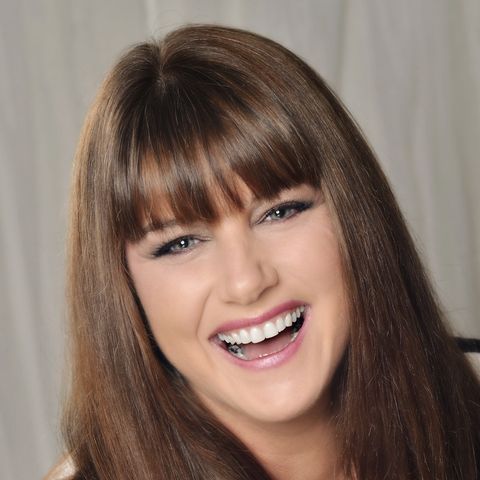
Our guest this week is Tieal Bishop, of Walkerton, IN, mother to six incluiding a medical fragile son and founder of A Rosie Place For Children.
Tieal and her husband,Travis, have been married for eight years and between them they are the proud parents of six children: Max (25), Sam (22) and Gigi (20) and triplet 21 year old girls, Madeline, Abby and Kate.
Her oldest son, Max, had a precarious entry into the world. Diagnosed with RSV, he required a G-Tube for feeding, a Trach for breathing and seven month in the PICU, which resulted in the family staying at the local Ronald McDonald House for seven months. Despite the early challenges, Max is thriving as a young adult.
Tieal is founder of A Rosie Place for Children, a state of the art, nurse-staffed specialty hospital for medically fragile children and respite for their parents, based in South Bend, IN.
Tieal has a zest for life and a passion for service. You’ll hear her uplifting story on this episode of the SFN Dad to Dad Podcast.
Show Notes –
Phone – (574) 315-6283
Email – tieal@arosieplace.org
LinkedIn – https://www.linkedin.com/in/tieal-bishop-b821237/
A Rosie Place For Children- https://arosieplace.org/
Children’s Respite Homes of America – https://childrensrespitehomes.org/
National Center for Pediatric Palliative Care Homes (NCPPCH) – https://www.ncppch.org/
She’s All Set (a short film by The Grotto Network at the University of Notre Dame) – https://www.youtube.com/watch?v=gNgD2wdUv-s&t=2s
Transcript:
Tom Couch: Special thanks to Horizon Therapeutics for sponsoring the Special Fathers Network Dad to Dad Podcast. Working tirelessly to research, develop and bring forward medicines for people living with rare and rheumatic diseases. Discover more about Horizon Therapeutics mission at horizontherapeutics.com.
Tieal Bishop: You know, he can drive, he can play basketball. I said. It’s funny. As soon as they took off the trick, he hasn’t shut up since. That’s so true. He’s just a remarkable joy. I call him my tornado of awesomeness. And he is. He’s remarkable. But his siblings also know that he’s going to need some oversight for the rest of his life.
Tom Couch: That’s our guest this week, Tieal Bishop, founder of A Rosy Place for Children, a state of the art specialty hospital for families with special needs located in South Bend, Indiana. Tieal is the mother of six children, including Max, who became medically fragile. Hers is an intriguing story, one which we’ll hear on this Special Fathers Network Dad to Dad Podcast. Now say hello to the founder of the Special Fathers Network and host of the Dad to Dad Podcast, David Hirsch.
David Hirsch: Hi, I’m David Hirsch, host of the Special Fathers Network Dad to Dad Podcast. Two short messages. First, I’d like to thank those who donated more than $1,000 to the 2024 cycle to end Father Absence Campaign. In alphabetical order, they are Ina Byrd, Irene and Tom Costello, Kim Duchessois, Damian Navarro, Brad Surratt, Don Stadler and UBS Financial Services. We’re close to reaching our $50,000 goal and we can use your help. If you haven’t already done so, would you please consider making a tax collectible contribution? You can do so by going to 21sCenturyDads.org. Secondly, the Special Fathers Network Mastermind Group experience is one of the most comprehensive programs the 21st Century Dads foundation offers. Dads raising children with special needs, meet virtually on a weekly basis and form meaningful relationships while sharing weekly wins, discussing books and sharing heartfelt challenges. One of the highlights of the year is attending an in-person weekend retreat. As you think about the year ahead, I invite you to join one of the existing or soon to be formed Special Fathers Network Mastermind groups and join a group of like-minded dads to become the best version of yourself. It might just transform your life as it has done so for so many others. For more information, please see the show notes or simply go to 21stCenturyDads.org.
Tom Couch: Now let’s listen in to this conversation between Tieal Bishop and David Hirsch.
David Hirsch: I’m thrilled to be talking today with Tieal Bishop of Walkerton, Indiana, who’s the mother of six, founder of A Rosy Place for Children, a, state of the art nurse staffed specialty hospital for medically fragile children and respite for their parents. Tieal, thank you for taking the time to do a podcast interview for the Special Fathers Network.
Tieal Bishop: You bet. Thank you, David, for having me. What an honor not being a father and all. I’m thrilled to be here.
David Hirsch: Well, I have to admit, you are not the one to break the glass ceiling. That happened about five years ago. But we’re thrilled to have you.
Tieal Bishop: I believe that. Absolutely.
David Hirsch: You and your husband Travis have been married for eight years, and between the two of you, you’re the proud parents of six children. Max, 25, Sam, 22, Gigi, 20, and triplet girls, Maddie, Abby and Kate. Let’s start with some background. Where did you grow up? Tell me something about your biological family.
Tieal Bishop: I grew up in South Florida. At what time? It was a little town called Delray Beach, Florida. It’s grown pretty phenomenally since then, but it’s just a town between Palm beach and Fort Lauderdale on the east coast. So I was born and raised there and spent my first 18 years there. The other half of my childhood, I was also privileged to be traveling back and forth to the Turks and Caicos Islands. my parents were divorced when I was very young, about 2 years old, and my father ended up moving to the Caribbean. So I was fortunate enough to be able to go back and forth. I lived with my mom full time in Delray and then visited him quite often in the Turks and Caicos. So that was the kind of the beginning of my childhood.
David Hirsch: Yeah. Well, thanks for sharing. That is, somewhat unique, by most U.S. standards, that you would, be there in Florida and have a chance to, go back and forth. So you had a passport at a relatively young age.
Tieal Bishop: Oh, it was, it was remarkable. You could, back then you could just carry a paper birth certificate and they just kind of. As long as it was sealed, it was good. And they let you in. it’s quite different today, but, what a remarkable experience that was. I mean, I got to swim with dolphins before that was cool. And do deep sea fishing. And so my whole childhood was very unique. I was very privileged and I knew it.
David Hirsch: That’s great. So, out of curiosity, what did or does your dad
00:05:00
do for a living?
Tieal Bishop: My dad, has recently retired. He is now 80 years old, but he started and made his way in the real estate business. So he actually started in Delray beach, where he had met my mother and worked with my grandfather. Went out on his own, and then ended up selling real estate in the Turks and Caicos, which is a really great story. He actually decided to, get on a boat with his best friend at the time. They’re still best friends today, so they’re quite funny. At 80 years old, they both lived there. They got on a boat as first mate and mate, and they traveled all through the Caribbean, the Grand Tortugas, all over the place. They pulled up in Providenciales, which is the main island there, and his best friend said, ralph, I’m getting off. And he literally stayed there. And he built, the first dive shop in the Turks and Caicos Islands called Provo Turtle Divers.
David Hirsch: That’s amazing.
Tieal Bishop: So, needless to say, when my parents divorced, that’s where my dad headed out.
David Hirsch: Yeah, well, there’s a lot worse places to go. And, I can’t even imagine what Turks and Caicos was like 30, 40 years ago.
Tieal Bishop: Yeah, just gorgeous.
David Hirsch: So how would you describe your relationship with your dad?
Tieal Bishop: You know, like most girls, your father, with all their perfections and imperfections, you’re sort of the apple of their eye and vice versa. So I adored my dad. He was great, fun, loved, by all. He played the guitar and was always pretty outspoken and friendly. so I just love that about him. I think I got my adventuresome from him, for sure. But at the same time, as beautiful as it was, it was strained. He was not there, as we just talked about. He moved to the Turks and Caicos when I was pretty young. And so I would say he was absent. he would probably say he was absent as well. But I remember early on, early teenager, not being real satisfied with the relationship that we had. And in a nice way, I’ll tell you what I wrote. So I wrote him this two page long letter, and I was maybe 12 or 13, and my opening line was, you’re a crappy father.
David Hirsch: Oh, my.
Tieal Bishop: Except I didn’t use the word crappy, but I don’t know what I’m allowed to say on this podcast.
David Hirsch: I got the message.
Tieal Bishop: And that was literally my opening statement, because at the time I had felt, you know, you’re coming back and forth, but are you really coming for boat parts or are you coming for me? And I was never really sure of that my whole childhood. And so when I wrote that letter, I remember that being a game changer between him and I. He definitely heard that and he responded. And so ever since then, Our relationship really changed. He engaged much more. I don’t think he knew what to do with us. My older brother and myself, when we were young, in his mind, he was still young. Right. And fighting his way. But as we got older, we had more in common. And we’re very close today.
David Hirsch: Yeah, well, very powerful. you know, the thought that you had written this letter to him, as a teenager, young teenager. The thought that it brought to mind was that, the Illinois Fatherhood Initiative, the other not for profit fatherhood organization I helped start, built its reputation on getting kids to write essays about their dads, stepdads, granddads and father figures to the theme what My Father Means to Me. And no exaggeration, we’ve had something like 425,000 Illinois youth write these essays. And I could tell you dozens, maybe hundreds of anecdotal stories, sort of like the one you just shared, which is the child had this authentic message that they share. Right. And we asked the teachers, because it’s a school based exercise, to copy the essay, submit the original, and make sure a copy goes to the dad or the stepdad or the granddad or father figure. And the words can be transformative. Right. they’re not all happy go lucky letters. Some of them are sort of like, hey, you know, as you’re getting older, you look at your parents differently. You’re not looking up to them as Superman or superwoman. Right. Because, you know, you’re such a small person at the beginning, you’re looking at them more at eye level. Right. You have a better understanding or perspective of things. And, I thought it was very telling that you shared that story. Thank you.
Tieal Bishop: Oh, yeah, absolutely. And I love to hear that. I love to hear children being brave and speaking out. I think it’s remarkable because it does transform, surely in my case, and it sounds like in thousands of others.
David Hirsch: Absolutely. So, I’m thinking about important lessons or takeaways. You’ve shared a couple. But when you think about your relationship with your dad, what do you think are those top, lessons that you learned?
Tieal Bishop: I think from a very young age, he always taught us to be very thoughtful of others. I remember we used to go out, you know, as a single dad, he didn’t cook much, so we would always go out for a meal when we got to see him on a Saturday or so. And so I remember him, tipping very graciously
00:10:00
Tieal Bishop: to waitresses, saying, hey, this is the way that I look at this. If there’s somebody out there that’s in the restaurant industry, and they’re having to be a waiter or a waitress. I’m thinking they need that a lot more than I do. So it’s my opportunity to really give back. And I think that was my first impression of giving. I think it became, something that I thought about a lot. It’s something that I taught my children, so that certainly carried over. I also remember him giving me the book the Giving Tree by Shel Silverstein for Christmas one year. And that had a remarkable impact on me. I’m not exactly sure why. Of course, I gave it to all of my children, and I read it years later. And really, this tree gives up everything, right, for this boy that it loved. And so I think giving has always been a part of something I was taught. I, think it’s also innately how I was made. It just brings me such joy to be able to do for others. We all hear about it, right? It’s far better to give than it is to receive. And that is certainly true. So I think that was a lesson that he taught me. He taught me to be independent. We’re sort of required to. Right. When you don’t always have parents around or they’re busy doing their life. And so I learned to be independent very young, So I appreciate that today. It was maybe hard as I was growing up, but, certainly molded me into the woman that I am today. he also taught me, just in general, to not be judgmental, to see people where they’re at, to see people as people. And so I think, that also resonates with the way that I live my life today.
David Hirsch: Wow. Some really important takeaways, there, you know, about generosity, about being independent and accepting people for who they are, not being judgmental. I think I’d like to meet your dad.
Tieal Bishop: Well, we can make that happen, I bet.
David Hirsch: Especially if I go to Turks and Caicos, right?
Tieal Bishop: That’s right. That’s right.
David Hirsch: I’m thinking about other father influencers, and I’m wondering what, if any, influence your grandfathers had starting on your dad’s side.
Tieal Bishop: Actually, my dad did not have a relationship with his father, which I think did have an impact on me, believe it or not, because he was so absent, and the relationship that they had was very strained. I’m not sure of all of the reasons why we didn’t talk about it that much, but I know that it was a source of pain. Even though I think my dad, like me, you make lemonade out of lemons. And my dad was very much like that. And I think that was probably because his father was very hard, rigid, did not have a lot of joy. And so I think my dad set on a path to be independent and have a life filled with joy. So I think it actually had a huge impact. Even though I think I might have only met him once. The grandfather on my mother’s side, however, he was a great man. He, worked in the insurance industry. He was one of the founding members of, Mutual of Omaha, which I remember as I got older I thought, well, what does that mean? And then I heard he didn’t graduate high school. And I’m like, well, that’s crazy. You know, like, I didn’t really put it all together until I was older. And I thought, wow, that’s, that’s pretty remarkable. He had to be a pretty tenacious guy. I was close with my. As close as you could be with my grandfather on my mother’s side. I took care of him for a year in his home when he was around 80 years old. He died at 84. Before I went off to college, I took care of him. And so it was a great time of year of learning about, you know, kind of who he was. Even though he was a man of very few words. You know, he’d say, much obliged, babe. When I would leave at night, say goodnight. But, the thing I think that really had the most impact on my life, whether he understood it or not at the time, was he paid for my college tuition. So that certainly gave me a start. I think he paid for several people to go to college. So I think that was remarkable.
David Hirsch: Yeah, well, it’s a legacy. So my recollection, speaking of education, was you went to, Colorado University and you took a degree in sociology, correct? where did you see your career take you? Or where did it take you?
Tieal Bishop: It’s taken me around the bend and back, no pun intended. You know, I picked sociology because I had very little direction from really anyone and I just knew I loved people. And so I think that’s ultimately why I landed on, sociology. My first job. I worked with first time mothers. I wasn’t even a mother yet. And I remember saying, what am I doing working with first time mothers that have all of these children, that have challenges, cycle of poverty, just very needy parts of our population that I was becoming aware of. And so that was my first job and I felt very ill equipped. However, there was one mother who actually named her child after me. And I’ll never forget that I’ve talked to her. To this day, she was living in a homeless shelter. And she said, I’d be so honored if I could name my daughter after you. So I don’t know what impression I left
00:15:00
Tieal Bishop: on her, but, I know that there’s another Tieal running around in Indiana who’s in her 20s now. So pretty neat. and that brought me, actually to South Bend, where I had gotten married. My first husband, Max’s father, Alex is. His name was in the Marines, and he was able to have his college paid for as long as we went in Indiana. So we started off in Muncie. We ended up in South Bend. And that’s actually how I got back to South Bend.
David Hirsch: Okay. And, did you have a case management business? Is that what you’re referring to?
Tieal Bishop: I did. That was next. You’re right. See, that was next. So when I came to South Bend, I started working with people with, developmental disabilities, older population of people. And it was an institution at the time. That’s what they called it. And it was a 39 bed facility where I did some case management within that company. I then moved to an Alzheimer’s unit and worked with the aged population, which was also a beautiful thing and I think helped shape who I am today. And then I had Max, and everything changed from there. But I learned quite a bit in those two settings about people that had very limited mobility, people that were limited in their communication or how they communicated. So I really feel like it was a preparation for the day that Max was to arrive on this earth.
David Hirsch: Well, why don’t we segue to the world of special needs and, beyond the professional exposure you might have had to the world of special needs, did you have any direct connection, family wise or otherwise, to the disability community?
Tieal Bishop: My dad’s brother Jack. Uncle Jack had a developmental disability. Never really fully understood what that diagnosis was. He ended up passing away from skin cancer. That was the only relation I had. I don’t know that I was very close to him. However, I was very aware of what his needs were, that my dad was helping to support him. But aside from that, no.
David Hirsch: Okay, so what are Max’s diagnoses and how did they come about?
Tieal Bishop: So, Max contracted a respiratory virus called RSV. Maybe a lot of people have heard about it today, 25 years ago, that was not really the case. And he contracted that at three months old. But before that, when he was born, he had something called a tracheoesophageal fistula. Yep. It’s a really long word. And basically that means that his stomach was not connected to his esophagus. And so his trachea ended up being connected. His esophagus ended up being, ended in a pouch. So that was, at 24 hours old, he had that corrected. And I thought, oh, right, we’re done for the year. That’s all the scares we need this year. But no. Three months later he contracted rsv, which ended up to be sort of the beginning of his journey. He ended up on a ventilator, to breathe, he had a G tube to eat. It was quite a journey, that’s for sure. His diagnosis today is much more around his development. he has very short attention span. A lot of people say you wouldn’t even know, right. Something might be off with Max until you try to go teach him something. So I feel like we’re in this world of, Right. He’s not like typical 25 year olds and at the same time he functions so highly that he doesn’t qualify for a lot of services. So he’s one of those kids that I say really falls in the gap. And there’s these, this whole population of gap kids out there. I know they’re there. And so we just try to support him in his daily choices, helping him to keep a job, things like that. So today it’s really more of a learning disability than it is a physical one, a medical one, like it used to be when he started.
David Hirsch: So rolling the clock back to those, early months, the first year, what were some of the fears that, you had faced as parents with, a kid who’s got a trach a ventilator G tube. And my recollection was you spent like a half a year or more like at the Ronald McDonald House, right?
Tieal Bishop: Yeah. Correct. Yeah.
David Hirsch: Crazy.
Tieal Bishop: Yeah. It was, quite the journey. Looking back, it’s not the dream that you have for your children. Right. When he was first born, I remember even in the hospital it was time to go get this surgery and they needed to do it down at Riley Children’s in Indianapolis. And they’re like, well, you can’t go because you just had a baby. And I said, oh, well, watch me. So you just get up and you go anyway. But I remember the nurses being very scared to come in and tell me. So I thought, oh.
00:20:00
Tieal Bishop: So that was kind of my first brush with this world is going to be a little different. This parenting world is going to be a little different for you than it is for other people. And then, like I had mentioned three months later he got this respiratory virus. He coded, not once, but twice. We were in three different hospitals, ended up at Riley Children’s only because our local hospital, they had one intensivist there who was a remarkable lady. she ended up to be my mentor and the person that helped build a Rosie place for children as well, Dr. Bumi Okanlami. So she was his first physician when he contracted this RSV and ended, up, sending him down to Riley because it was only her. And she said, you know, I’m only one person. And after two weeks of not sleeping, caring for your child, it’s time we get some help. And so that’s when we decided, okay, let’s head to Riley. But as a parent, I remember Alex and I, it was not even who should ride in the ambulance with Max, because the question was, if something happens to Max on the drive down, who’s the one that wants to tell the other one? So we actually both said, neither one of us are going to ride in the ambulance. Let’s ride together and we’ll hear the bad news when we show up. So right from the get go, we were not sure he was even going to make the transport. Which, that changes your perspective on children and what this new thing called parenthood was.
David Hirsch: Any meaningful advice that you got early on, that helped put the difficulties or the situation in perspective?
Tieal Bishop: I think maybe one of the takeaways for me was we spent a lot of time listening to the physicians, watching the numbers, being so unsure about everything I am now, not always in my whole life, but now I’m a woman who wholeheartedly believes in God and the strength that he has and the power that he has. Obviously, was able to watch him work through me, through Max, through nurses, through that whole experience. And I think leaning in, leaning in and being honest about who you are, what you feel, where you’re coming from, and, not being so worried about everyone else responding and how they might feel or what they think about it, but just trying to be genuine to yourself and be transparent with those people that are caring for your child in the situation that obviously you never wanted to be in. Because I think ultimately that ends up to be your biggest strength is yourself. You find yourself as you’re able to really dig deep and say, okay, what is all of this? What does all of this mean? I remember I had, I had just started going to church when Max got sick. I hadn’t really gone. And I remember that, the pastor calling and saying, well, Tieal, have You told him you know what your wishes are with Max. Have you told him you don’t want him to do any life saving measures? And I said, I don’t really know what you’re talking about, but yeah, I do. I want them to do all the things they can. And I said, but please understand that I do know this. God is either sovereign or he’s not. He’s either going to leave them here or he’s going to take them. And for me, that was a very comforting space to be in that it really didn’t have anything to do with me. Really didn’t have anything to do. Even with the physician’s talents and the nurses skills, it really was, at the end of the day going to be up to God, not me. And I think that the pastor was a little blown back by that. And anyway, ended up to be a pretty good friend in the long run. But I just remember thinking that, this is just the, it’s the roughest road. It’s a rough road and you just hang on.
David Hirsch: Yeah, well, thanks for sharing. And not to focus on the negative, but, what have been the biggest challenges along the way?
Tieal Bishop: Oh, you know, it’s. I had mentioned earlier, it’s not the dream that you have for your child. Growing up with a child that has special needs, you know, you’re constantly fighting for them. You’re trying to figure out, you know, where is their identity going to lie. How do we help them feel good about who they are, regardless of their ability, which is hard to do in the world we live in. It’s very hard to do. I remember even as a young student with Max in school, remember his first day of these things called IEPs. Everybody on everybody in this podcast knows what an IEP is, right? They all understand that your child has this plan in school and they said, Tieal, what are your goals for Max? You know, And I’m thinking, well, I don’t know that he’s going to read or write. I don’t know that he’s going to know how to do math. You know what my number one goal is? My number one goal for him is I want him to feel good in his own skin.
00:25:00
Tieal Bishop: I want him to feel good about who he is. So what do we need to create to make sure that he feels good about who he is? And I tell you, they were a little blown back by that. Well, how do we do that? And so we, we literally had to sit down and figure out, what does that look like for Max? Because I think they’re very used to and still are. Sadly, what equates success for a mainstream child is not what a parent of a special needs child equates. It’s not the same thing. your goals and your values and your vision, all the things that you had planned for your child just dramatically change. So sometimes it’s, do they know who I am? And that’s enough. If they give me a smile, if they give me a hug, if. If you’re blessed enough to say I love you, right, That’s a success sometimes in our world. So Max was able to do and grow into being able to do all those things, which was remarkable. He was not supposed to walk or talk. A third of his brain was missing on the MRI. And so when he did come home from Riley after seven months, it really was a testament to, I think, just how miraculous things can go. Nine therapies a week. He had 24 medications in a 24 hour period, four breathing treatments, was on a ventilator, had a feeding tube. All the things you have no idea what you’re doing if you’re really honest about it, but you learn really quick, right? You have to, because your child’s relying on you to do that. And you’ll do anything for your child, right? As a parent, it doesn’t matter whether you’re a special needs parent or not. You know, the goal is, how can I help this person be successful if you’re, you know, a parent who cares at all? So I think, you know, it makes you different, it makes you think of things different in a different light, but also it. You just end up having tremendous gratitude for the little things. And I think that makes us special. We are special.
Tom Couch: We’ll be back with more of the conversation on the Special Fathers Network Dad to Dad Podcast in just a few moments. But first, this quick message. Please help 21st Century Dads gather research on families raising children with special needs by having them complete the Special Fathers Network Early Intervention Parents survey. A link to the survey can be found in the show notes. As a token of our appreciation, each person, mom or dad, who completes the survey will receive a great dad coin. Thank you. Now back to the conversation.
David Hirsch: Yeah, well, one of the observations I’ve made, and it’s been for years now, is that parents raising a child with a disability or special needs are, on average, more humble, less arrogant, and less selfish than the broader population.
Tieal Bishop: I mean, for all the tragedy the special needs child, you know, has and brings, it’s a remarkable outcome on all of the people that Are surrounding that child. It’s awesome.
David Hirsch: Absolutely. Yeah, absolutely.
Tieal Bishop: And I would even throw in. I know you didn’t ask, but the siblings of special needs children, man, are they some trailblazers. I mean, they just see the world differently. I see it over and over at a Rosie place for children. I experienced it with my own children. I remember my son Sam, quickly, if I could. He was in kindergarten very young, and I had got a call from the teacher. Can I meet with you after school to talk about your son Sam? You know, and you’re like, oh, gosh, what do you do? You know? So you show up and, you know, hey, Mrs. Price, you know what happened? She said, I just want to say, we’ve been observing Sam in this class, and we’re just not really sure what’s going on. What we’ve recognized is that we have a few kids that have some special needs, and he is constantly taking them under his wing, and he’s sharing with the rest of the group how to interact with them. And I’m like, what? And she said, no, seriously, like, we have one child that has, a lot of processing disorder. And so he’ll tell the other boys, and they’ll, well, what you need to do is speak to him on a lower voice and don’t bang the musical instrument by him. That scares him. And then the child was like, yeah, yeah, what he’s saying, because he couldn’t say it. And how remarkable is that? I never taught Sam, that. Right. I didn’t even know that he was aware of that. And here he is in kindergarten. Kindergarten. That’s pretty remarkable. So I think that, you know, it’s just an example of. The siblings of special needs children are amazing, amazing people. I call them the silent caregivers today because I believe they do so much more than we see.
David Hirsch: Yeah, well, it’s, very insightful, and it doesn’t always happen that way. Sometimes the impact, can be, different.
Tieal Bishop: Yes.
David Hirsch: And I’m wondering if there’s been any other impact that
00:30:00
David Hirsch: you can share that, Max’s situation’s had either on your marriage, his siblings, or maybe your extended family, for that matter.
Tieal Bishop: Yeah, I think, even people within my extended family, my parents, my brothers, I don’t know that they have a true sense of, and never probably did have a true sense of, you know, what it’s like to have a child like Max that has these medical conditions and ultimately very special needs. But, you know, that’s one side of the coin. Even though they didn’t understand. I think they still appreciated him for who he was and really tried to bring him into the fold. My marriage with Alex did not make it. And I know that that was a direct correlation, I believe, with Max. I remember Alex saying to me about five years. Max was probably five years old. And he said, you know, I’m not sure that I ever really bonded with Max. I was just waiting for him to die.
David Hirsch: Oh, geez.
Tieal Bishop: And that just blew me just off my seat, because I remember thinking, why? Why aren’t you engaging? Why aren’t you participating? Why aren’t you investing in. And five years later is what he told me. And I just remember thinking, boy, I sure wish you would have said that five years ago. and maybe that would have made a difference on our perspectives. But in hindsight, you know, he was on one path, and I was on my mom path to make sure that Max had the best outcome as possible. So I think he’s had a lot of impact. I know that Sam and Gigi today, they adore Max, along with the triplet girls. But they also know that there’s a sense of responsibility with Max, that they will always make sure that they look out for him, that he may always need that. So that hasn’t gone away. Even though he’s outgrown his medical condition. you know, he can drive, he can play basketball. I said, it’s funny. As soon as they took off the trach, he hasn’t shut up since. And that’s so true. He’s just a remarkable joy, and I call him my tornado of awesomeness. And he is. He’s remarkable. But his siblings also know that he’s gonna need some oversight for the rest of his life. So I think it impacts everyone, right? It impacts everyone. Yeah.
David Hirsch: He might be making up for some lost time, for the time that he wasn’t able to speak.
Tieal Bishop: Right? Yeah, he certainly is.
David Hirsch: When you look back on that experience, were there some supporting organizations, you know, ones that played a more influential role than the others, to help navigate that slippery slope?
Tieal Bishop: Man, do I sure want to say yes right now. And yet I can’t. no, there really wasn’t. You know, we were stuck in this world between special needs, where there were a lot of services, and medical fragility, where there were not a lot of services. First steps, that’s a, you know, birth through three, where they can do therapeutic intervention at home. That was certainly a big one, so I shouldn’t say no, there wasn’t.
David Hirsch: So.
Tieal Bishop: But after first steps, after three years old, there really was no place to go. Not a lot of people understood what we were challenged with. Our friends and family did not have a child that was on medical equipment. they really didn’t know how to help. There were no organizations that were willing to help support Max and his medical fragility. Most of the great organizations even today are focused on developmental disabilities or, special needs, but not if they have a medical component. The medical component sort of ups the game when it comes to what care they need. There was no place for us to go, no place for us to sort of call home and find a tribe. And so hence, today, there’s a rosy place for children. And now there is.
David Hirsch: So let’s segue to talking about that. My recollection, it goes back about, 20 years. And what is a rosy place for children? And how did it come about?
Tieal Bishop: So A Rosy place for children is just this extraordinary, magical place. We don’t like to call it a home. We don’t like to call it a facility. It’s actually licensed as a hospital because we wanted the highest level of care. But we try not to function like that on the outside because we don’t want it to seem so clinical or sterile, let’s say. So a rosy place is a place that children can come that have a medical component to their care. That’s what we define as a medically fragile child, A child that requires medical intervention for just everyday living. And so it’s this amazing place where I always say, right, we bring families in. We say, let us partner with you. Let us become part of your family and allow us this beautiful gift of helping to serve your child, giving them this experience that otherwise they would not get.
00:35:00
Tieal Bishop: So I like to call them sleepovers, right? Everybody understands what a sleepover is. Most people don’t like hospital admission, right? That doesn’t sound very good. And I knew that, right? As a mom, no way am I signing up for, let me drop my child off at an institution so I can go have a respite or a reprieve, even if I really needed one. That’s not going to happen. But if I heard, let your child have their first sleepover with us. Let them experience other children, create art, have a bubble bath, play in the sprinkler. Right now those things are something that I want to sign my child up for. I’m like, yes, right? Whatever we can do to improve and have more substance right in my child’s life, I’m going to say yes to that. So that’s what we created at a Rosie Place. We said, let’s let them come for three days, up to 10 days at a time and allow these parents and siblings a reprieve and a break from the demands of 24/7 care. It’s grueling, it’s isolating. And they’ll do it every day of the week, right? 365 days a year, they’re doing it. So we’re just saying, let us be a part of that. Let us journey with you so that you can experience, right? Going to the movies, going on a date, because you haven’t done that in eight years. You know, there’s parents that can’t boast of sleeping through the night in 10 years. And so we’re able to provide things like that, right? This amazing space for these children to really just have a childhood and be children. And they all receive RN skilled care, whatever that is. One of the things I love is people say, what’s the staffing ratio? You know, everybody’s concerned about how many people can you do? So we have 10 children at a time overnight. And you know what the ratio is? Whatever it needs to be. Isn’t that great? So if a child is, you know, on a ventilator, has a G tube, very, you know, very involved, guess what? They get their very own nurse and they get a few support staff with them. And that’s to ensure that that quality of life stuff happens, along with maintaining the highest level of care so that we don’t jeopardize their health at all. They’re coming to us at their baseline state of health, so they’re healthy, but they’re just complex and caring for every day. So we get the privilege of being able to share with these families, share their children, share their experiences, share their triumphs, their losses. And so we are just so honored to be able to do that.
David Hirsch: And is it just exclusively for Indiana families or do you accept families from outside of Indiana?
Tieal Bishop: So we are focused all 92 counties of Indiana. That’s our service population in South Bend. We live very close to the Michigan line. So we have had a few families, that live right on that line. But. But, so far today, with a Rosie Place for children in South Bend that is focused on the 92 counties in Indiana.
David Hirsch: And, how do they go about scheduling? How far in advance do they need to schedule their 3 days or 5 days or 10 days?
Tieal Bishop: A wonderful part was in creating all of these systems. I have such a privileged spot, and I know it. To be able to Sit in this seat and say how this is going to go. And so one of the hardest parts about raising children, period. but certainly Special needs world is that everything is very cumbersome. There’s a lot of red tape, There’s a lot of jumping through hoops. So guess what parents have to do if they want to come to a Rosie place? You just have to pick up the phone. You just have to call us. There’s no referral. They don’t need anything. We’ll end up coordinating with their doctor because that’s one of the things that we’re really proud of. as a hospital, you have to have a medical staff. We actually wrote over 65 waivers to change how we deliver service at a Rosie Place for children. And one of those is we didn’t want a medical staff who did not know these children. So we said, let’s credential their primary care physician who’s in the community already. Right. As a dad or a mom who calls and says, hey, my child’s sick, who are they calling? They’re calling that primary care doctor. So we’ve credentialed over 100 physicians so that those children can just come and stay. And it’s all under the direction of that physician. So it’s very easy. They just have to pick up the phone and call. And we haven’t gotten there yet. But I always want to reiterate, at no cost to families. And that’s really important for families to know. They just need to call and it’s no cost to them. I think a lot of people might see what we do and go, ah, I could never afford that. Yes, you can, because we work really hard at a Rosie place to ensure that it remains that way.
David Hirsch: Yeah, well, it seems almost too good to be true. So how far in advance, you know, are you able to accommodate? You can’t just, like, call up and set up time tomorrow?
Tieal Bishop: Yeah, well, we’d like to get there. Actually, we’ve been able to do some of those calls because I remember there was a time we had a home care nurse and she had fallen asleep, and I said, this can’t be. We didn’t spend seven
00:40:00
Tieal Bishop: months in the hospital for you to sleep. And something happened to him. So it took them 24 days to find another nurse to help care for Max in the home. And so one of my goals is that families could call anytime and say, hey, I just need to sleep for the weekend. And so we’re pretty close to that right now. children like to call them A hotel for kids. That’s what they call us, the children that come and stay at a rosy place. So they call and make their reservation. We try to put schedules out a quarter at a time, but it’s pretty flexible. We actually open and close all the time by design. And that allows some flexibility in between there, so that if we have a family that calls and says, hey, I have a needed surgery, and this is the week it is, and you don’t have, you know, a stay, could you create a stay? We’ve done that several times for families, for moms, so that we can create a stay. And then, of course, it fills up right away. So, you know, typically it’s anywhere from two weeks to two months, let’s say, that they would need to call ahead of time.
David Hirsch: I remember, there’s something to do with the Grotto network in a documentary. What’s that about?
Tieal Bishop: Yeah. So great. A young man, his name is Kevin, decided to do a documentary on a rosy place for children and follow one of our children that was. Was coming in for a stay. And so he, filmed this documentary. It’s called She’s All Set. And we were just notified, last month that it is up for, an Emmy nomination.
Speaker 1: Am I coming with you?
Kevin: You ever had a chance to kind of reflect on what you’ve done. Are you proud of yourself now?
Tieal Bishop: You’re gonna make me teary. Yeah, yeah. You know, usually you’re just. You’re into the work and you’re doing the next thing, and you don’t stop and celebrate too often. But I’m proud. I’m real proud of all of us. We’ve done a good thing here, and I know it. I always brag about what we do. And I always admit, you know, I’m biased, no doubt about it. But it’s exceptional work, you know, that hasn’t been done before. So. Proud. Yeah, I’m proud.
Tieal Bishop: And we’re in the category of, diversity, equity, and inclusion, which I am so excited about. To me, that’s, you know, sort of trailblazing and getting these children on the radar. I would argue that they’re the most underserved children of children. I mean, children are already underserved. medically fragile children are really low on the totem pole. So I think it’ll give us great visibility. I’m super excited about that. And, yeah, that’s on our website. You can watch it or just even Google. She’s all set. I think it pops up on Google.
David Hirsch: Now, that’s fabulous. I’ll be sure to include some information about that in the show notes.
Tieal Bishop: Thank you.
David Hirsch: And what about this art studio?
Tieal Bishop: Heartwork Studio coming? Actually, we’re trying to break ground this year yet and certainly will be done in 2025. So this idea was born out of. For all of you parents out there who have younger children, you remember the 455 pieces of paper that children would come home with with just one mark on it. I realized quickly that a lot of our parents could not boast of that. And I said, this can’t be. So what we made sure of was every time a child came to a Rosie place, we made sure that they were creating art and that it was getting. And so all of a sudden, we have these families and these parents that are just overwhelmed with the art that’s being created. We’re getting pictures sent in. Their entire living room wall is all of their art creations for every time they came. And so I wanted to make a big deal about it. So of course, we had to publish the cards and make a calendar. And we go to our local art fair every year and really just brag on our children. a lot of them can’t do art. Typically, they’re not holding a paintbrush. So we use their fingertips and their elbows and their feet. And we’re creating all of these amazing, beautiful pictures based on some of the information that we get from parents of what they love. And so that became such a popular activity, let’s say. And they just started creating every day. And when I was watching, what I realized was there is this bond happening between staff and the children. Right? It’s not just the clinical care anymore. They’re actually creating something together. So there’s this bond that happens. So of course I want to. To foster that even more. And then we’ve just outgrown our space. And I said, you know what? They deserve an, entirely dedicated separate space and an art studio for them. So that’s exactly what we’ve done. We have created this space where we’re going to be able to not only do traditional art, we’re actually using AI technology. And it has become just an amazing, extraordinary tool for children that don’t have verbal communication, that are
00:45:00
Tieal Bishop: limited by their mobility. We have children choosing certain things, and we’re able to plug that into our AI system, and it’s actually creating art. There’s a beautiful story on our website under Artwork Studio, and it’s about Zarian’s Hippo. And I encourage everybody to watch that little short film. But he was able to create something that I don’t think he even thought he could do. And so it was just remarkable to see his response and what that brought. So we’re really investigating technology. There’s some eye gaze technology for children who are nonverbal but are able to choose and select colors and words and all kinds of things. Then we’re able to help, support them in that and plug those into systems. And then they’re creating things that we would have just never seen even a couple years ago. So we’re really excited about it. it’s sort of a destination. It’s a new way of learning for children. We’re trying to figure out how do we use the environment to work for them instead of against them. Most people that are limited in mobility really struggle with that. So we’re trying to figure out way that we can make that easier. And so it’s just been a, real labor of love and everybody’s super excited about it. and we’re almost there. We’re almost there.
David Hirsch: Well, if you have five acres, you have some flexibility, as far as what you can do.
Tieal Bishop: That’s right. You’re right. And we’re using every bit of it. And so Heartworks is one of those, projects that we’re excited about. We’re going to actually implement that into our model. we’re establishing ourselves as a model. My 10 year goal is to ensure that all children have access to respite across America. So we’re really writing the playbook. We’re trying to figure out how do we replicate that. And we’re interested in doing that sort of across the country. So we’ll see what the next steps are.
David Hirsch: My recollection was that you’re involved in a couple of other organizations and what came to mind is your vision for, you know, expanding or having places like a Rosie Place for children in multiple locations. I think one of them was the Children’s Respite Homes of America or something like that.
Tieal Bishop: Yes, yes. I belong to a national center for pediatric and palliative care homes that’s led by Jonathan Cotter, doing a great job on really, harnessing, all of those who are interested in building these like, homes across America. And so a division of that is Children’s Respite Homes of America. That’s where my passion lies, to make sure that we’re building more and more of these. In England there’s well over 350 homes and we only have about six right now in America. So we have a long way to go. And so I’m just trying to participate where I can in that. right now we have identified about 37 communities in 25 states that are actively working toward building something like this. So I just want to make sure, at least in my part, that, you know, how am I helping those organizations, whether they’re parents, whether they’re social workers, whether they’re nurses, whoever wants to build, you know, this model of respite, how can we help them expedite that so that it doesn’t take as long as it took us? So really giving them that playbook, I believe, My personal belief is if we’re good advocates for these children, we’re good stewards of that, then we will just give them this playbook and really just help them build that in their community. Every community needs one, for sure. At least every state. If not one or two, in their state, we have families coming from Indianapolis, Gary, Fort Wayne, but again, serving all 92. But, I envision us probably building another one in Indianapolis for ourselves. At least here in Indiana, we’re in great discussions with somebody in Michigan, another person in Florida. So there’s a lot of interest, and we just want to play a part in helping them make that dream come true for those families in those areas.
David Hirsch: Yeah. Well, I love your vision, and from your lips to God’s ears, I’m hoping that that’ll be a reality.
Tieal Bishop: Thanks so much.
David Hirsch: So I’m thinking about advice now, and I’m wondering what advice you can share specifically with dads if they find themselves with a medically fragile child.
Tieal Bishop: You know, I’ve watched a lot of fathers come through our doors, and there is certainly a struggle. and I would say it’s different than a mother’s struggle, at least in my experience. Dads have a lot to bring to the table. You know, they’re supposed to be the ones protecting the family, providing for the family. And all of a sudden, right, they have this child, and they think, this is not what I planned. This is not how I thought I would be providing. And I think it’s, you know, it’s raw for them and trying to figure out where their place is in engaging with their child. And I think many times they find themselves disconnected, disconnected with their wives, with other family members. Somehow they feel like that’s a failure of theirs. I think I’ve heard a tone of that, and so really trying to break that cycle of thinking for fathers, because what we have Also seen is the fathers that are engaged, the fathers that do participate.
00:50:00
Tieal Bishop: It’s remarkable the effect that it has on the family when they are leading them in that way. And so I think providing fathers, and dads an experience where they can celebrate with their children. And I think we’ve done that at a Rosie. You know, I’ve heard a dad say, your normal is our normal. And I just love that. I love coming here because I feel like, oh, my gosh, there’s all these other families that are doing the same thing. I had no idea. Ah, you know, even like, we were just talking about a heart work studio creating art. Right. I think traditionally you think of dads and children, you know, it’s sports, Right. And a lot of our special needs kids are not going to be able to play the traditional sports. Right. So what are some other ways that we can be innovative and creative on how they can bond and how they can, can experience and celebrate their children? And art is one of those ways. You know, we see dads creating things with children that we just could only dream of a few years ago. And so now there’s this sense of pride, there’s this sense of accomplishment. And so I think we’re just trying to wanting to foster that for sure. You know, I don’t know that I have advice for dads. I’m not a dad. Right. I’m a mom. But what I do know is that their engagement is so vital, their participation is so vital, and it gets me emotional. The impact that they have made by jumping in, even if they don’t know where they’re jumping in, is so profound. Just jump, right? I just would ask you to jump because the impact that it has on your wife and your other children and you leading in that way. You don’t have to have all the answers. Nobody has all the answers. We can pretend we were, you know, many of us raised that way, but if you just jump, it’s remarkable, the ripple effect that it has across your family and others.
David Hirsch: Yeah, great pearls, of wisdom there. I’m wondering if there’s anything else you’d like to say before we wrap up.
Tieal Bishop: There’s so much to say. But I think most of all, I want people to know that there is hope and joy in these children, in their lives, in participating. It might be a struggle, but I assure you, it’s really just a different struggle. I have mainstream children. I have the whole gamut. When you have six children, you’ve got a lot of different children. My son Sam is a type one diabetic. That happened at 11 years old. and he struggles with that still to this day, and he always will the rest of his life. You know, the girls are challenged in different ways. Anyway, my point is this is that, you know, I think finding your true north, finding your purpose, finding what it is and where you’re going to have the impact. It’s going to start at home. It’s going to start at home every time. So jump, right, engage. If you have a dream to build something, do it. If I can do it, you can do it. You just do the next right thing and it seems to fall into place. And I believe that to be true. We all have a lot of dreams and aspirations, not just for our children, but for ourselves. And I think it’s just really important that we do and we take those chances and we see what happens. And something like a Rosie Place for children can happen, not by our own doing, but by just being willing to be vulnerable, to dream big, to innovate, to care for others. There’s a lot to be said in focusing on those that are less fortunate, and I encourage all to do so.
David Hirsch: Yeah. Well, thanks again for sharing. I heard you say that dads, need to jump in and, err on the side of engaging, right? That’s what I heard you say.
Tieal Bishop: Yes, absolutely.
David Hirsch: Let’s give a special shout out to Tony Bombacino, SFN Dad to Dad Podcast interviewee 347 for helping connect us.
Tieal Bishop: Tony Bombacino, he is a peach of a man. I admire him. He is one of those remarkable special needs dads that is an example for everyone. And he might get mad at me, but I’m gonna share this really quick about him. So he brought his son AJ, which he talked about on your podcast. So I feel comfortable in being able to say his name. And David, he was, he was nervous, he was worried. He was like, what am I doing leaving this child here? And I said, Tony, you just gotta trust us, you gotta trust me that this is gonna be a great thing. And he, you know, he’s a, he’s a big guy. He’s like a big, huge, I mean, Tony Bombacino. That’s what I always say, right? He’s like this big northern Italian guy.
David Hirsch: Oh, yeah. Oh, yeah, right.
Tieal Bishop: He’s leaving a Rosie place with tears in his eyes. Like, how can I leave my child there? And do you know what happened? Our nurses. So this is how cool our far. They recorded AJ about three minutes after Tony left, laughing,
00:55:00
Tieal Bishop: giggling, singing songs with everybody. And they did like a 5-10 second video and said, we just want you to know how AJ is doing. And he called me and he’s like, oh, my gosh, best gift ever. I’m totally good now. Go have the best week. And so that was it. But made, me laugh because, he is, he’s a, he’s a force to be reckoned with at Tony and we just adore him. So I’m so grateful that he hooked us up. So I appreciate that.
David Hirsch: Absolutely. If somebody wants to learn more about, a Rosie Place for children or contact you, what’s the best way to do.
Tieal Bishop: So, we have a website, of course, arosieplace.org they can find me and my phone numbers and you’re welcome to use that. It feels like everyone else has it. You can too. So please just call, ask any of us are willing to jump in and help answer any questions, and just appreciate your inquiry. And please do, please contact call, please find out more about this. I always, you know, we’ve got it. We get a lot of visitors, a lot of tours that say, wow, this is remarkable. How can we help you? And I always say, go tell two people about what you heard today because what a remarkable difference that will make if we all just shared this with two people. So I would ask the same thing of your audience, if you would just go share this with two people and talk about how we’re doing things differently for medically fragile children and not just Indiana, but across our country.
David Hirsch: Yeah, Well, I can’t wait to visit. So, thank you.
Tieal Bishop: I will be so excited for that day, David. I’m just going to look forward to it and I am going to hold you to it. So I’m a woman of my word, if you can imagine. I’m fairly tenacious. So you will be visiting and I cannot wait.
David Hirsch: I look forward to it. Tieal, thank you for your time and many insights. As a reminder, Tieal is just one of the individuals who’s part of the Special Fathers Network, a mentoring program for fathers raising a child with special needs. If you’d like to be a mentor father or are seeking advice from a mentor father with a similar situation to your own, please go to 21stCenturyDads.org thank you for listening to the latest episode of the Special Fathers Network Dad to Dad podcast. I hope you enjoyed the conversation as much as I did. As you probably know, the 21st Century Dads foundation is a 501c3 not for profit organization which means we need your help to keep our content free. To all concern, would you please consider making a tax electable contribution? I would really appreciate your support. Tieal thanks again.
Tieal Bishop: Thank you so much David. What a privilege.
Tom Couch: And thank you for listening to the Special Fathers Network Dad to Dad Podcast. The Special Fathers Network is a dad to dad mentoring program for fathers raising children with special needs. Through our personalized matching process, new fathers with special needs children match up with mentor fathers in a similar situation. It’s a great way for dads to support other dads. To find out more, go to 21stCenturydads.Org.
David Hirsch: And if you’re a dad looking for help or would like to offer help, we would be honored to have you join our closed Facebook group. Please go to Facebook group facebook.com groups and search dad to dad. Lastly, we’re always looking to share interesting stories. If you’d like to share your story or know of a compelling story, please send an email to david@21stcenturydads.org.
Tom Couch: The Special Fathers Network Dad to Dad Podcast was produced by me, Tom Couch. Thanks again to Horizon Therapeutics who believe that science and compassion must work together to transform lives. That’s why they work tirelessly to research, develop and bring forward medicines for people living with rare and rheumatic diseases. Discover more about Horizon Therapeutics at horizontherapeutics.com.
00:58:35