

399 – Casey Stubbs of Burlington, NC, Trading Strategist, Author, Podcast Host, Army Veteran & Father To Nine
Description
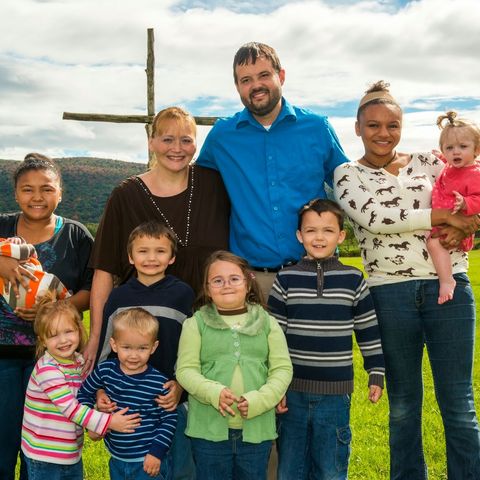
Our guest this week is Casey Stubbs of Burlington, NC a trading specialist, author, podcast host and father to nine children.
Casey and his wife, Deanna, have been married for 20 years and are the proud parents of nine children: twins Andrea & Courtney (26), Casey Jr (19), Caleb (17), Abbey (16), Ellie (15), Austin (14), Danielle (12) and Ethan (12). Ellie and Danielle were adopted at age 2/12 and as a newborn and are biological sisters.
Casey has been a host of the Replace Your Income With Options Podcast and author of: The Complete Trading System: How to Develop a Mindset, Maximize Profitability, and Own Your Market Success (2023)
Casey reflects on his military experience, as well as his thoughts on investing, podcasting and fatherhood in this episode of the SFN Dad to Dad Podcast.
Show Links –
Phone – (724) 493-9315
Email – caseystubbs@gmail.com
LinkedIn – https://www.linkedin.com/in/caseystubbs/
Podcast – https://podcasts.apple.com/ai/podcast/replace-your-income-with-options/id1364693088
Substack – https://caseystubbs.substack.com/about
YouTube – https://www.youtube.com/@FreedomIncomeOptions/videos
Book – The Complete Trading System: How To Develop A Mindset, Maximize Profitability, And Own Your Market Success. https://tinyurl.com/3zn6ck3n
Transcript:
Casey Stubbs: Every year, whether I had the money or not, I made a decision that we were going to go on a trip and we were going to visit my family so that my kids could spend time with my m parents, which was their grandparents. So my wife and I would get into a van and we take all nine of us and we drive all the way across the country every single year.
Tom Couch: That’s our guest this week, Casey Stubbs of Burlington, North Carolina. a trading specialist, author, podcast host, and father of nine children. Casey talks about his thoughts on investing, podcasting and fatherhood in this Special Fathers Network Dad to Dad Podcast. Now, say hello to the founder of the Special Fathers Network and host of the Dad to Dad Podcast, David Hirsch.
The Special Fathers Network Mastermind Group is free for the first 30 days
David Hirsch: Hi, I’m David Hirsch, host of the Special Fathers Network Dad to Dad Podcast. One brief message. The Special Fathers Network Mastermind Group experience is the most comprehensive program the 21st Century Dads foundation offers. Dads raising children with special needs, meet virtually on a weekly basis and form, meaningful relationships while sharing weekly wins, discussing books, and sharing heartfelt challenges. The Mastermind Group is free for the first 30 days. Stop trying to figure out things on your own. I invite you to join one of the existing Special Fathers Network Mastermind groups. You’ll meet some extraordinary dads, exchange a lot of best practices, and recharge your fatherhood battery for the journey ahead. It might just transform your life like it’s done for so many others. For more information, please see the show notes or simply go to 21stCenturyDads.org now.
David Hirsch: Let’s listen in to this informative conversation between Casey Stubbs and David Hirsch.
Casey Stubbs is a trading strategist and father of nine children
David Hirsch: I’m thrilled to be talking today with Casey Stubbs of Burlington, North Carolina, who’s a trading strategist, author, podcast host, U.S. army veteran, and father of nine children. Yes, I said nine children. Casey, thank you for taking the time to do a podcast interview for the Special Fathers Network.
Casey Stubbs: Thank you, David. It’s quite an honor to be here. I really appreciate it.
David Hirsch: You and your wife Deanna have been married for 20 years and are the proud parents of nine children, twins. Andrea and Courtney, 26, Casey Jr. 19, Caleb, 17, Abby, 16, Ellie, 15, Austin, 14, Danielle, 12, and Ethan, 12 as well. Ellie and Danielle were adopted at age two and a half and as a newborn and our biological sisters.
Your dad was a diesel mechanic, so he worked a lot
Let’s start with some background. Where did you grow up? Tell me something about your family.
Casey Stubbs: I grew up in Portland, Oregon. I’m the oldest of a family of four kids, so I had two brothers and one sister, and I grew up really Having a great family life, enjoying spending time with my siblings and my parents and my grandparents and cousins and uncles. And I was a big basketball fan growing up. Really enjoyed watching the Portland Trailblazers.
David Hirsch: Okay, that’s probably for another podcast, but thank, you for sharing. out of curiosity, what did your dad do for a living?
Casey Stubbs: So my dad was in the Air Force when I was born, and that’s why I was born in Texas, even though I moved to Oregon, because that’s where he was from. But, he was a diesel mechanic. And, he did a lot of interesting jobs, changed jobs quite a bit. I learned a lot from him, from his work ethic. And at one time he started a business where he was doing maintenance on vehicles, and another time he was working in Alaska up on the northernest point and Prudhoe Bay, on oil rigs, working on the big trucks up there. so he had a lot of experience and really influenced me in a big way.
David Hirsch: That’s fabulous. So how would you describe your relationship with your dad?
Casey Stubbs: That’s a great question. My dad, as I had mentioned, he was a hard worker. Right. So he worked a lot. And what that meant was that he was gone a lot. And so I didn’t really have a ton of time with him. It was kind of like, okay, he’s working. As I grew up, we had a great relationship, but he just worked a lot. And so I really respected that. And then when I got older, that’s kind of the model that I went after, is I spent a lot of time working.
David Hirsch: People do tend to fall under their father’s or parents footsteps.
Casey Stubbs: Yeah, that’s true. And, I thought it was a great thing that he taught me, which was a work ethic and providing for your family.
David Hirsch: So any other takeaways in addition to this, you know, identifiable work ethic?
Casey Stubbs: I would say just a big takeaway is that I consider myself extremely blessed and thankful for my upbringing. Because in regards to your upbringing, you don’t really have a choice in the matter. You’re dealt a certain position. And I’m just thankful for everything that I received.
David Hirsch: That’s a good thing to be able to say.
Your grandfather on your dad’s side was very influential on your life
So
00:05:00
I’m sort of curious to know what, if any, influence your grandfather’s had first on your dad’s side.
Casey Stubbs: So my grandfather on my dad’s side was also really influential. I spent a good bit of time with him. He was in the Navy when he was young, and he was a World War II veteran, and he was on a submarine, which was the USS Seahorse during the war. And, that was very influential to me. He was very involved with my family. And he was a carpenter, not by trade, but just as a. One of his hobbies. So he would build us things. He built picnic tables for us and benches and other things and bring over. It was really very cool. And he taught me how to do things like that. He was retired from the phone company. He worked for one of the Bell. Pacific Bell, I think was the one that he retired from.
David Hirsch: And how about your, maternal grandfather?
Casey Stubbs: Well, on my mother’s side. again, I’m just so blessed because. And this is like a little takeaway for people that are listening. I know that it’s a dad to dad show, but grandparents are so influential. And I cannot understate the influence that my grandparents had on both sides of the family. It was just so huge. And it really shaped my life in ways that I can’t even explain. But, but my grandfather was a great guy. He would spend time with us hiking, you know. He was also a veteran. He was a veteran of the Korean War. He was a forward observer in the war. And it was interesting. I don’t even know if I was aware of it. Maybe it was just like subconscious. But when I joined the military, that’s what I ended up doing. Becoming a forward observer as well.
David Hirsch: Yeah, well, there’s a lot of military history in your family, and, it is a blessing to not just, know your grandparents as a little guy, but if they lived in their 90s, like yours, have you got to know them as an adult as well? So that’s a blessing. Worth counting.
Casey Stubbs: Yeah, that’s really been wonderful. And, it’s. It kind of surprised me because I didn’t think I would have as much time with them as I did. And it, it worked out really well.
The military was a great time for me to experience fatherhood type membership
David Hirsch: Any other father figures, other, individuals that played an influential role either as a young guy or perhaps as a young adult?
Casey Stubbs: In fact, the military was a very great time for me to experience fatherhood type membership. Because when you’re out there in the military, you’re with your bosses and your leaders. You’re out there with them 24, seven, you know. And so I had some great experiences with leadership, which was fathering, because I was, you know, you come in at 19 years old, you’re not too smart, you think you know everything. But I remember my boss, his name was Staff Sergeant Bell, and he was just so kind to me. He would always educate me, treated me like an adult, treated me like a Man. And when I would make a mistake, he would punish me, you know, and I didn’t like that, but he would discipline me. But he did it in a great way. And, one time I was on a deployment, I was in Kosovo, and I went off of the. The base, and I was hanging out with some young people in the community. And this was a very serious type mission. We were carrying guns with us everywhere we went, and there was a lot of combat stuff happening, but me being young, not thinking things through. You know, I left and went off base, and he was very nervous because he couldn’t find me for several hours because I didn’t tell him where I was going. And when I came back, he disciplined me. And I was so upset and disappointed that I got in trouble. But in the long run, years later, I just realized what that taught me, and I was just very thankful for the lessons that he was able to teach me during that time.
David Hirsch: Yeah, well, you don’t know what you don’t know. And like you said, a lot of guys that joined the military are teenagers like you were, and, you know, your brain’s not even fully formed. Right. You look like a normal human being. You act like a normal human being. But, you know, if you make nine out of ten good decisions, and that one out of ten decision that’s not so good can really change the course of your life. If you’re in a combat situation, we’re talking about some pretty high stakes, so thanks for sharing.
You went to Westmoreland Community College using the GI Bill
So, my recollection was you went, to Westmoreland Community College, got a degree in, business Administration and management. Was that after you, were in the army for the nine years that you were in the Army?
Casey Stubbs: Yeah, right after I got out of the army, I used the GI Bill. And that was around the same time I got married. So I got married. I used the GI Bill to go to community college while I was also working part time
00:10:00
Casey Stubbs: at ups. So I was working part time at ups, going to college, using the GI Bill.
David Hirsch: Excellent. And my recollection was you’ve had some different jobs. you were a union laborer for a while doing construction before you found, this opportunity to learn about the markets and get, into, you know, trading and investment. So, out of curiosity, how did you and, Deanna meet?
Casey Stubbs: So while I was doing one of my other jobs, which I didn’t mention, I was a cook at a restaurant, and one of the people that I worked with was her brother. And so I met her through her brother.
David Hirsch: Okay, well, thanks. For sharing. It sounds like you’re very talented. Do you still do the cooking in your family today or not?
Casey Stubbs: I do a good bit of it, yes. Yeah.
David Hirsch: Okay, well, you’re putting those, early on skills to use.
Do any of your nine children have any, uh, challenges
So, do any of your nine children have any, challenges, whether they’re diagnosed or otherwise?
Casey Stubbs: I would say that there were a lot more challenges with my kids than what I was expecting. And I think, you know, maybe expectation is not a good thing to go into as a parent because you, you really can be way off the mark. But we mentioned about my upbringing, how my dad wasn’t around too much and I ended up working just like him. and he didn’t really give me a whole lot of instruction. I just kind of followed m. My expectation was that as a parent that I was going to kind of follow that same thing, that my kids would automatically just follow my lead without, me having to get involved so much, which is probably a bad, a bad way to go about it because it’s more of an absent type parent strategy, which in hindsight, that’s not the greatest way to go at it. But I say all that to say that, yes, most of my kids have had a lot of challenges that I wasn’t expecting.
David Hirsch: Okay. Not to name, a child in a challenge, but what would categorically the challenges be?
Casey Stubbs: So a couple of the biggest ones have been a lot of mental health challenges. Right. With things like anxiety, fear, stress, and behavioral challenges as well. And so being able to navigate that, has been really tough for me because again, sometimes you run comparisons and it’s hard to relate to your kids because you’re thinking, well, why don’t they just do this or why don’t you do that? And trying to really understand the challenges that they’re having. And I think as you mentioned, I’m, not necessarily a labeled special needs, but I think that could be one of the challenges of a dad of special needs is trying to make that connection. Not just the connection, but kind of like, oh man, this is not, what I was expecting. And maybe feeling a little bit down depressed because it wasn’t as great as you were thinking it was going to be, or it was more challenging, it’s as great as you think it was, but maybe more challenging than what you thought it was going to be.
David Hirsch: Yeah, well, it’s challenging enough if you just have one or two kids and they have, you know, well, everybody has issues. I think that it’s worth comparing one to the next. But you sort of you know, multiply things. You know, when you have a large family, blended family like you have, and, they’re relatively close in age. Right. And, you know, I think what I heard you saying is that, it’s important to meet your kids where they’re at. Right. Understand what’s going on in their lives as best you can, and, you know, try to help them, resolve whatever the, challenge or the difficulty might be. And it’s easier said than done, like you said. And, you know, if you go in thinking, hey, I’m going to have a lot of problems or challenges, then your expectations won’t be, you know, out, of line. But if you go in thinking, hey, I’m always going to have healthy, normal kids and everybody’s going to be, you know, singing from the same song sheet and it’s rainbows and unicorns, then you’re going to be in for some challenges. So.
Casey Stubbs: Well, yeah, well, that could have been my shortcoming there. But, yeah, I totally agree in the fact that you’ve got to try to meet them where they’re at and not be, comparing them to what you would do. For me, that’s probably been the biggest challenge.
David Hirsch: Yep. Well, you’ve still got some fathering ahead of you, so there, hopefully the learning curve plateaus a little bit.
What’s been your most profound insight as a father? Wow, that was profound
So, what’s been your most profound insight, you’ve learned as a father?
Casey Stubbs: Wow, that was. That’s a. That’s a great question. I would say the most profound insight is learning to be thankful for the journey and for the experience and for the relationships
00:15:00
Casey Stubbs: and for being able to influence people in a way that you don’t even realize how important it is and what a privilege it is to be able to be in this position, no matter how difficult it is. The privilege is extreme and just. Just overwhelmed with gratitude.
David Hirsch: Yeah. Well, it’s a good position to be in, and it is a privilege to be a parent. Along with that takes some responsibility. And, you know, if you’re somebody who’s disciplined like you are, and whether you learn that discipline from, your dad and your grandfathers, or maybe it was the service in the military. Right. You know, there’s that, hey, if you start something, you better follow through with that mentality. And, you have a lot of kids, that’s a lot of responsibility. And, maybe you have a better appreciation for how much responsibility that is today, as opposed to a younger dad like we used to be. But, thanks for sharing. I really appreciate your authenticity, and just being open to Talking about it.
Casey Stubbs: Yeah. And I like what you say about following up. I think that’s a big one. And so with me it’s been very challenging because you’ve got the nine kids and so that makes the challenges on a bigger scale. But at the same time you’ve, got the financial side because having nine kids is not a cheap experience. Especially when you’re self employed because you’ve got, you know, just food alone is really huge. And then when you think about education and you think about housing and you think about medical, dental, sports. Right. All of the things just add up and it’s like, okay, I want to spend time with my kids, but I’ve also got to provide. And so that’s been one of the biggest balances. It’s like, okay, how do I do both? How do I provide and spend time with them?
David Hirsch: Yeah, well, winning the lottery would be one solution, but the probability of that is pretty small. So you have to have a better strategy in place than that.
There’s a book entitled the Complete Trading How to maximize profitability and own your market
Maybe that’s a good way to segue into, some of the work that you’ve been doing the last decade or so. So there’s a book that you wrote entitled the Complete trading How to develop a mindset, maximize profitability and own your market Success, which came out in 2023. What was the impetus for writing that book?
Casey Stubbs: The main reason was I wanted to share my story about how to make additional cash flow in the markets. Again. That’s really helped me to be able to do what I’m, what I’m doing with, with my family. It’s given me the ability to do it. It was something that, you know, I’ve been sharing a lot of. I want one of the big themes to be gratitude because the fact that I have that knowledge is not something that just came upon me. I was very fortunate to get that knowledge. And it happened again through my dad. He had taught me about the markets when I was in high school. And so as soon as I joined the army, I immediately began investing. Like I turned 18, I joined the army and I immediately went and opened up my investment account and I started putting most of my paycheck into the stock market. And this was in the 90s. So right now we’ve had a real prosperous time in the market. But in the 90s it was the same. Right before 2000 there was a really big, they called it the dot com era. right. Because Internet was just starting and I was investing in dot com stocks and I did really well and I was able as A young man with zero money. I just put paycheck every time. I was able to generate over $30,000 in my brokerage account just from making only a small $800 a month. That’s all I made.
David Hirsch: Well, there’s a phrase, and you know, that I’ve been a professional Investment Advisor for 40 years that you, don’t want to confuse your brain with a bull market. And I think that’s what was going on with the benefit of hindsight. Right. You know, everything was ratcheting up in anticipation of the Internet. And then boom, In March of 2000, the Internet bubble burst. And, you know, a lot of those small companies that were just riding the wave, you know, got shellacked down 90% in some cases, some of them never recovered. Right. And that was a big learning experience for everybody. And I don’t know, what, what was the reaction to that experience on a personal level for you?
Casey Stubbs: For me, I was just getting out of the military the first time, so I did a nine year extension, but I took a short break in between. And so I got out and I took all of my money out right before that happened. And I invested in a business and the business I invested in was a carpet cleaning franchise and I started cleaning carpets.
David Hirsch: So.
Casey Stubbs: So, yeah, I’ve kind of been all over the place. And so I was just able to miss the big crash and burn. But, it didn’t really matter because the carpet cleaning business I started crashed and burned anyways.
David Hirsch: Yeah, well, it’s, preparing you for something that, is bigger and better. That’s the way I think about it. You can’t connect the dots looking forward. You can only connect the dots looking backwards.
David Hirsch: We’ll be back with more of the conversation on the Special Fathers Network Dad to Dad Podcast in just a few moments. But first, this quick message. Please help 21st Century Dads gather research on families raising children with special needs by having them complete the Special Fathers Network Early Intervention Parents survey. A link to the survey can be found in the show notes. As a token of our appreciation, each person, mom or dad, who completes the survey will receive a great dad coin. Thank you. Now back to the conversation.
You emphasize mindset as a core part of trading success
David Hirsch: So back to the book. You emphasize mindset as a core part of trading success. What are the most common mental traps traders fall into and how can they overcome them?
Casey Stubbs: There’s different ways of getting involved in the market. You being an investment manager, understand that a lot of people want to start trading. They want to go in and they see commercials or they hear about people that are really making a lot of money. So they’re thinking, I can get rich doing this. And they go in thinking that it’s going to be a solution to their problem. So they go in with a financial problem, right? They have a financial pain point and they’re like, yeah, I’m going to go in and I’m going to solve this problem with trading. And the truth is it’s approaching as it with a gambling mindset. and if you go to the casino thinking that you’re going to solve your financial problem, that’s about the as foolish of a thing as you can imagine to do. And that’s what people do in the markets, they use it as gambling and they give themselves an even worse situation. And you mentioned the lottery. You know, the statistics are people that win the lottery end up worse off because they don’t have the financial discipline and the financial education to be able to manage that money properly.
David Hirsch: Yeah, well the way I’ve thought about it is that people who trade are on average short term focused, have a near term expectation and people who invest are more long term in their approach. And all these ideas fall under the banner of investing. But I think that there’s a distinction, at least in my mind, that’s black and white. There’s a difference between things that are investments and things that are speculative in nature. And when you’re investing, in most cases over a short period of time, there is a certain amount of speculation involved. And I know that, you know, that’s not your focus. Even though some of the strategies, options, strategies that you’re familiar with and you try to educate people about are more short term in nature, but they’re not like get rich quick, let’s make a lot of money in the short term. But it’s just like hitting a lot of singles, right. And occasionally maybe hit a double. And you know, if you’re investing whether it’s for short term or long term, you have to be willing to accept some losses. Right. You know, investments are not without risk. So your book outlines building a personalized trading system. What key elements should every trader or investor include to make their system truly complete?
Casey Stubbs: Well, it’s, it starts with education and risk management. So you got that mindset thing and you nailed it when you said long term focus. You really do want to keep a long term focus. And I like to tell people, don’t go for home runs like exactly like you said. And so my primary focus is to hit on things that have worked in the past Right. Stick with the winners. Right. So if you’re investing, it’s basically all, all based off of the 8020 principle, right. Which says that, you know, 80% of your profits are going to come from 20%. And so you want to find, identify the 20% of the top investments in the market and then just focus on those. That automatically eliminates all of the junk.
David Hirsch: Right.
Casey Stubbs: And so if it’s just, you could use the same analogy with sports, right? There’s always those top few players that are better than the everyone else. You know, in business there’s always the, the companies that are better than everyone else. There’s always that CEO that is outperforming everyone else. Just ride the coattails of the champions.
David Hirsch: That’s good advice. So I’m thinking about consistency and growth. Many investors struggle with consistency. What daily or weekly habits have you
00:25:00
David Hirsch: found most effective for sustaining long term profitability?
Casey Stubbs: So the biggest thing for me is to make sure that I follow my system. And my system is to really only look at the markets just once a week and not, focus on them much. So it saves a lot of time, but it also helps me with my discipline because I go in, I have a set time frame, I look at it and then the rest of the time I’m, not doing that. And so it’s helped me to stay consistent just by following my time frame of when I’m supposed to be doing what I’m doing.
You talk about using 1% a week to generate significant returns
David Hirsch: Well, I know a little bit more about this strategy, of yours, the income option income type strategy, I think, which is core to your overall message. And I remember if it wasn’t reading, discussing with you previously, this sort of concept of 1% a week. And I’m wondering if you could drill down on that a little bit.
Casey Stubbs: Yeah, that seems like a very low amount of revenue. Right. So if you look at, let’s just use a simple example of $100, right? You invest $100, 1% is a dollar. And when you mention that to someone, they’re thinking, well, a dollar is not a lot of money. Why would I waste my time? Right. And so that’s again, it’s a mindset thing like why would I waste my time for a dollar? But the point is, if you can make 1%, which is pretty simple, and it’s actually a, very high probability that you can get that return, but then you can continue to do that over and over again. shockingly, after 52 weeks, that’s a 52% return, which is extremely on the high end of what you would ever expect with regular investing. So even though it’s a small amount, if you continue to do that consistently, it actually grows rather quickly.
David Hirsch: Yeah, well, that’s the simple rate of return. If it’s 1% a week times 52 weeks, conceptually, if you were reinvesting, profits, you would make an even higher rate of return on an annualized basis.
Casey Stubbs: Yes, that’s absolutely true. That is one of the things that I like to teach people with our system. And, yeah, I mean, I like to keep things simple. And just like with, with. You have to learn that when you have a larger family too. Right. Because having a large family makes things more complex. And so you have to simplify everything to be more effective in the things that you do.
David Hirsch: Yeah, well, maybe for a different conversation, we could take a deeper dive. But, one of the things you’ve been doing well before the book came out, is you’ve been hosting a podcast, and the title of which is replace your income with options.
Casey Stubbs started podcasting in 2017 and doubled his account
Casey Stubbs: Hello, everyone. Casey Stubbs here with how to replace your income with options. I just had a great breakthrough and I doubled my account. And I want to share how I did it, and I want to share how you can do this through using these same strategies that I.
David Hirsch: but your podcasting experience goes back to 2018, and I think I remember you mentioning in an episode or two that I listened to of yours that, it didn’t start out with the title of replace your income with options. So give our listeners a little bit better understanding about, where you started in podcasting and how it’s, transformed.
Casey Stubbs: Well, first of all, podcasting is a great experience. And you know this because you’ve been podcasting as long as I have.
David Hirsch: Right.
Casey Stubbs: When did you start yours?
David Hirsch: 2017. Beginning in 2018. Yeah. About the same amount of time.
Casey Stubbs: Yeah, yeah. So the biggest benefit for me has been the people that I have met. It has been tremendous. I mean, I have met. You know, the only reason I have, I actually have two books. The first one wasn’t very good, so I’m not going to mention it. But the only reason I have two books, both of them were because of podcasting. The first guy was like, you should do a 30 day book challenge, because that’s what he did. And he taught me about that. So he taught me how to, launch a book. And then the next guy was from Wiley, a big, they’re pretty big publisher. He’s like, hey, I heard your podcast. Any chance you might want to write a Book. And I was like, well, I actually have one here on my desk. It’s in my notebook. But it just worked out really well. So podcasting has opened up a lot of doors for me. It’s not necessarily been amazing at, like, financial stuff, but it’s been good of, expanding my network, helping me meet amazing people.
David Hirsch: People.
Casey Stubbs: And I have absolutely loved podcasting because I really like connecting with people.
David Hirsch: Yeah, well, I think that’s something that I, would reiterate as well. I didn’t know anything about podcasting, being a financial guy, and just, took a flyer
00:30:00
David Hirsch: and jumped in. You know, not with both feet at first, but just doing a podcast once a week, once every other week, maybe you know, two a month. Not really understanding the whole concept. And then, you know, once I got to a certain point, invested a little bit more time, went to one of these podcast conventions. PodFest was what it was. I think it was back in 2019, maybe. I met a lot of independent podcasters and I was like, oh, my gosh, there’s so much more to this than I was knowledgeable about. And, what I find, is that I love to take a deep dive and shine a bright light on the positive things that are going on in the world of disability and get to know people really well. And what a rewarding experience that is. Like you were saying, to meet all these people and to expand your sort of network.
Casey Stubbs: Yeah, well, I gotta say that. What a great thing to do. You know, when I say it’s a privilege to be a, to be a father, that’s great. But it’s also a privilege to, to be able to do what you’re doing. And I would say it’s like, wow, that’s just so amazing. The, just the concept of shining a bright light on people. That is an honorable thing to do. So keep going. And, ah, that’s, that’s so exciting because the news is all bad news, all the stories are bad, all everything’s bad. It’s so hard to find any good news anywhere. And so the fact that you’re shining a light on it and encouraging people is so cool.
David Hirsch: Yeah. Well, thanks.
Your podcast focuses on one income option, selling
So what does your podcast start out as and how has it changed over the years?
Casey Stubbs: Well, it, it shifted a little bit. The initial topic was called Cash Flow Hacking Podcast, which was just all kinds of different cash flow strategies, which I’m, a big believer in. I think everyone should do it. I been doing it since I was young. everybody should be creating streams of income. And so that’s really what that was about. And I didn’t change the podcast, I just re rebranded it, you know, and then I kind of narrowed it down a little bit from all types of cash flow. Then I changed it a couple years in, changed it to how to trade it, which is all about how to trade. And then I’ve narrowed it down even more to only focusing on just one strategy. So I started out really broad, narrowed it down and now I’m like laser focused. I’m only doing one strategy and that’s an income option, selling.
David Hirsch: And do you have to be a licensed advisor to do what you’re doing or not?
Casey Stubbs: No, no, I don’t have a license. I basically am just an educator. So I’m not like managing money or anything like that. I’m just teaching basic strategies and I’m helping people make good financial decisions.
David Hirsch: That’s why the lawyers have created disclaimers.
Casey Stubbs: Yes.
David Hirsch: So, do you want to do like a option income 101 lesson without overwhelming anybody?
Casey Stubbs: Absolutely, yes. Yes, I certainly would. So I’ll go starting with the absolute basic, which is let’s just assume that you own some shares of stock, right? A very simple, company, maybe something in the S P500, something very stable and safe. A long term investment portfolio type stock.
David Hirsch: We’ll call it ABC or xyz.
Casey Stubbs: ABC Company. Abc. Well, if you own it and you, you really like the company, they’re growing, their fundamentals look great. You are just excited about owning that. well, you can then do what is called selling a covered call, which means you own 100 shares and you sell a call option which you make an income on that, right? Because you’re selling the option to sell your shares at a specific price, right? So if it’s a hundred dollars, you say I will sell you the option to buy my stock off of me at a hundred dollars. And if it’s below a hundred, then you don’t have to sell those shares. But if it’s above, you do, but you’re just selling the right to buy them. And so it’s a very low premium. But you can just do that over and over and over again on stocks that you’re owning to give you an extra bit of cash flow on stocks that you already have.
David Hirsch: That’s the essence of your strategy.
Casey Stubbs: That’s it.
David Hirsch: And when you are recommending these options because you said if you can make 1% a week, are these like really short term options, ones that are going to expire within a week or A short period of time or are they longer term options?
Casey Stubbs: The way that I do it is I go for 45 days. So 45 days, which is about a month and a half.
00:35:00
David Hirsch: Okay. So to net 1% a week on average, if you’re going to go for 45 days, that would be somewhere in the neighborhood of six weeks. So you’re looking to make a 6% return annualized.
Casey Stubbs: Yeah, about that. I believe that’s about it. And when I sell it, what I usually do is I don’t hold it the whole time. Right. And so depending on the market fluctuations, if it spikes real quick or drops real quick there creates that volatility and you can sell your option much quicker. So I almost never hold it for the full term, which increases my, my cycle of reinvestment and compounding.
David Hirsch: Gotcha. Okay, well, that was a good 101, level of knowledge. Thank you for sharing.
I’m curious what role spirituality has played in your journey with children
I’m sort of curious what, ah, role spirituality has played in your journey.
Casey Stubbs: Well, as far as, children, it’s been a big one, Right. So if you ever go into the book of Genesis, God goes through the whole creation process right in the very beginning. The first commandment that God gives Adam is he says, be fruitful and multiply. And so God wants us to be fruitful and multiply. And I took that very literally. And so I was like, okay, Lord, if that’s what you want me to do, that’s what I’m going to do. And a lot of people are fearful because they say, well, I don’t have a lot of money, or I don’t have this and I don’t have that, or I don’t have the skills. And I think that you should be mindful and plan. I’m not saying to be irresponsible, because that would be wrong. But at the same time, sometimes you got to take a leap of faith. And where you’re at right now isn’t where you’re going to be later. And when you take that leap of faith, a couple things that have always happened. Number one is every time I had an additional child, my provision somehow got bigger. Right? And so me being a person of faith, it’s like, okay, I’m trusting the Lord. God has increased my position, he’s increased my provision because I was acting out in faith. And then the second thing is you just learn so much, right? Being in tough places is really the best place you can ever be because it puts your back against the wall and forces you to learn. So when you’re in there and you’re young and you’re having kids, you have no idea what you’re doing. Well, you’re just going to start learning. And, that’s why all these experts say, get out of your comfort zone. And that’s really true, because getting out of your comfort zone is when you learn to grow and become a better person.
David Hirsch: Yeah, Well, I love that message. the way I articulated is that when, you’re outside your comfort zone, that’s when the real learning takes place. Because, you know, you’re, you feel vulnerable, right? You feel exposed.
Casey Stubbs: It causes you to change or die.
David Hirsch: Oh, yeah, yeah, yeah.
Casey Stubbs: People don’t want to change. I, we. I hate change.
David Hirsch: You know, it’s just human, human beings, it’s the, the stasis, right? You know, your, your mind, your body is looking to be stable, not, you know, get outside of that, that zone, you know, from a fight or flight standpoint. And, that’s a really powerful message. Thank you.
So any advice that you can offer as the father of nine to the listening,
So any advice that you can offer as the father of nine to the listening, audience?
Casey Stubbs: Well, I have a, I have a lot of advice probably, but I’ll, just hit one thing. You know, you mentioned on the beginning, and you talked about, you know, grandfathers and fathers. Right. And so one of the things that I did that was, I think, extremely beneficial and fruitful was making a huge sacrifice on my part, and it was very difficult. And that was to make sure that I included my, family with my children’s lives. And so me being on the east coast, and I grew up on the west coast, there wasn’t a lot of interaction because we were so far away. So every year, whether I had the money or not, I made a decision that we were going to go on a trip and we were going to visit my family so that my kids could spend time with my parents, which was their grandparents, and even my, my grandparents, which is their great grandparents. So my wife and I would get into a van and we take all nine of us and we drive all the way across the country every single year to make that investment in family. So the advice was. It’s a long story, but the advice is get your kids around other family members and show them the value of family so that they can have that other interaction. Because they’re not just going to get everything just from you. Other family members is good, but also get them around other people. Right. You know, and me being a dad. Get your kids around other dads.
00:40:00
Casey Stubbs: Get them around other people. sometimes the outside influence has as much impact as what you can do as a dad.
David Hirsch: Yeah. Rock solid advice. And the bonus, with what you were describing, taking these cross country trips as a family, you know, I’m fairly confident if your experience is like ours, because I went out of my way to be driving across the country. Ah. A number of times. East, coast, west coast, south. We got to the point where my wife’s like, you know, I love this concept, but, I don’t want to be in the car with these kids. You know, she said, that’s what I do. You know, day in and day out. I’m just shuttling from point A to point B. You like to drive. You get to spend more time with the kids. I’ll fly. I’ll meet you in California, or Denver. And, you know, we’ll continue our, you know, family vacation. And that’s what we did. We sort of divided and conquered, and we, have some of our fondest family memories, you know, being on the road like that.
Casey Stubbs: Yeah, yeah, we. It was a lot of stories. A lot of stories.
David Hirsch: Absolutely.
Casey Stubbs: And it was crazy, like you said. I mean, wow. With nine kids in the back of a van like you could imagine.
David Hirsch: Oh, yeah. I’m sure they’re perfect angels. Always getting along and not making any noise or complaining. And nobody has to go to the bathroom, so you don’t have to stop.
Casey Stubbs: Right.
David Hirsch: Anyway, I can’t wait to have a beer with you sometime. So is there anything else you’d like to say before we wrap up?
Casey offers advice to all fathers dealing with special needs
Casey Stubbs: Well, I just think that I would like to encourage. I know this, this is for primarily fathers that are dealing with special needs, but I would just like to encourage all fathers and just say, you know, don’t be fearful. Just go for it and practice gratitude. Because I know that it can be very difficult and it can be challenging, it can be hard, and it can be like you just focus on the long term benefit because the impact that you’re having is well worth any of the discomfort or pain because the influence is leaving a lasting difference.
David Hirsch: Yeah. Great advice about legacy. And, it seems like the, some of the days are really long, but the years seem to click by really fast. And, you know, when you have kids, it just seems like things start to accelerate as far as time is concerned. Let’s give a special shout out to our mutual friend Rena Friedman Watts of the Better Call Daddy Podcast for helping connect us.
Casey Stubbs: Thank you, Rena.
David Hirsch: If somebody wants to learn more about you, your book, your podcast, or contact you, what’s the best way to do so. Casey.
Casey Stubbs: So probably the best way to connect with me would be on LinkedIn. I am, pretty active on there and all my books listed there. My website’s listed there. So you could go there, connect with me.
David Hirsch: I’ll be sure to include that in the show notes so it’ll make it as easy as possible for somebody to reach out to you. Casey, thank you for your time and many insights. As a reminder, Casey is just one of the dads who’s part of the Special Fathers Network, a mentoring program for fathers raising a child with special needs. If you’d like to be a mentor father or are seeking advice from a mentor father with a similar situation to your own, Please go to 21st Century Dads.org Thank you for listening to the latest episode of the Special Fathers Network Data dad Podcast. I hope you enjoyed the conversation as much as I did. As you probably know, 21st Century Dad’s foundation is a 501c3 not for profit organization, which means we need your help to keep our content free to all concerned. Would you please consider making a tax optical contribution? I would really appreciate your support, Casey. Thanks again.
Casey Stubbs: Thank you.
David Hirsch: And thank you for listening to the Special Fathers Network Dad to Dad Podcast. The Special Fathers Network is a dad to dad mentoring program for fathers raising children with special needs. Through our personalized matching process, new fathers with special needs children match up with mentor fathers in a similar situation. It’s a great way for dads to support other dads. To find out more, go to 21st.
David Hirsch: Centurydads.Org and if you’re a dad looking for, help or would like to offer help, we would be honored to have you join our closed Facebook group. Please go to facebook.com groups and search dad to dad. Lastly, we’re always looking to share interesting stories. If you’d like to share your story or Nova comparison compelling story, please send an email to david01dadsuh.org the special fathers.
David Hirsch: Network Dad to Dad Podcast was produced by me, Tom Couch. Tune in again next week for another intriguing conversation on the Special Fathers Network Dad to Dad Podcast.
00:44:37