

280 – Sarah Glofcheskie of Toronto, Canada, Founder of BeMe.ai & Single Mother Of A Daughter With Autism
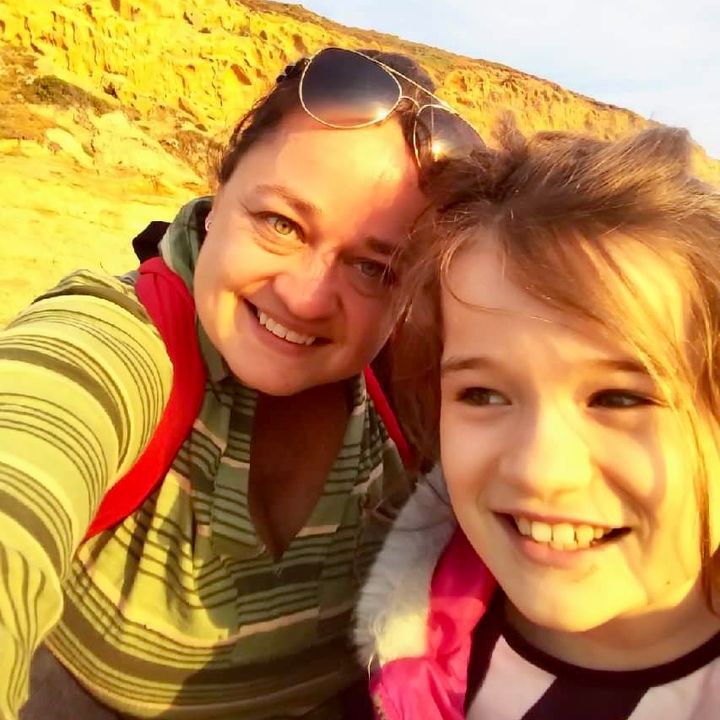
Our guest this week is Sarah Glofcheskie of Toronto, Canada, who is the single mother of a daughter with Autism, a serial entrepreneur, and founder of BeMe, an Autism innovation company.
Sarah and her x-husband, who remains a very involved father, were married for six years and are the proud parents of Flynn (12) who is Autistic.
Informed by her experience as the mother of a child with Autism, Sarah founded BeMe.ai a company whose mission is to empower Autistic individuals, their families and care team with the tools they need to thrive. BeMe combines medical, behavioral and environmental factors in an insight generating app designed specifically to support Autistic children.
We’ll hear the BeMe story and how Sarah has worked tirelessly to improve the lives of autistic people around the world. That’s all on this episode of the SFN Dad to Dad Podcast.
Show Links:
Email – sarah@beme.ai
Website – https://www.beme.ai/
Facebook – https://www.facebook.com/BeMe.aiInc
LinkedIn – https://www.linkedin.com/in/sarah-glofcheskie-mba-23300233/
Transcript:
Tom Couch: [00:00:00] Special thanks to Horizon Therapeutics for sponsoring the Special Fathers Network Dad to Dad Podcast, working tirelessly to research, develop, and bring forward medicines for people living with rare and rheumatic diseases. Discover more about Horizon Therapeutics’ mission at HorizonTherapeutics.com.
Sarah Glofcheskie: When my family would talk about my relatives with Down syndrome, it was with joy and about their gifts and their unique personalities. So I think, yes, I was lucky that that’s the experience that we had in our family.
Tom Couch: That’s our guest this week, Sarah Glofcheskie, the mother of 12 year old Flynn, who is autistic. Sarah is also the founder of BeMe.ai empowering autistic individuals, their families and care teams with the tools they need to thrive. We’ll hear the BeMe story and how Sarah has worked tirelessly to improve the lives of autistic people. That’s all on this Special Father’s Network Dad [00:01:00] to Dad podcast. Now say hello to the founder of the Special Fathers Network and the host of the Dad to Dad podcast, David Hirsch.
David Hirsch: Hi, and thanks for listening to the Special Fathers Network Dad to Dad Podcast presented by the Special Fathers Network, a dad to dad mentoring program for fathers raising children with special needs.
The Special Fathers Network Mastermind Group Experience is the most comprehensive program the 21st Century Dads Foundation offers. Dads raising children with special needs meet virtually on a weekly basis and form meaningful relationships while sharing weekly wins, discussing books, and sharing heartfelt challenges.
One of the highlights of the year is attending an in-person weekend retreat. We’re launching 10 new SFN Mastermind Groups in January 2024, with 10 dads per group. That means we’re only looking for 10 like-minded dads in each of the following locations: Anchorage, Alaska; Bellevue, Nebraska; Chicago, Illinois; Denver, Colorado; Georgetown, Grand Cayman; Houston, Texas; Indianapolis, Indiana; London, England; [00:02:00] Nashville, Tennessee; and Reykjavik, Iceland.
If you’re a dad raising a child with special needs in one of these cities, we hope you’ll join the local SFN Mastermind Group and make the investment to become the best version of yourself. For more information, please see the show notes or simply go to 21stCenturyDads.org.
Tom Couch: Now let’s hear this conversation between Sarah Glofcheskie and David Hirsch.
David Hirsch: I’m thrilled to be talking today with Sarah Glofcheskie of Toronto, Ontario, who is the single mother of a daughter with autism and founder of BeMe, a company whose mission is to empower autistic individuals, their families, and care team with tools they need to thrive. Sarah, thank you for doing a podcast interview for the Special Fathers Network.
Sarah Glofcheskie: I’m very pleased to be with you today.
David Hirsch: You and your ex-husband were married for about six years and are the proud parents of Flynn, your daughter, who is 12, who is autistic. Let’s start with some background. Where did you grow up? Tell me something about your family.
Sarah Glofcheskie: Sure. So I grew up in a small town called Barry’s Bay [00:03:00] in Ontario. It is about an hour to the nearest city, which is about 10,000 people, and about a two-hour drive to Canada’s capital, Ottawa. So I grew up with my family around me on both sides. There are people of both Polish and Irish heritage in my community, which is representative of both sides of my family.
David Hirsch: Excellent. And my recollection was you are the oldest of three. You have a younger brother and a younger sister.
Sarah Glofcheskie: That’s right. I have a brother who is two years younger and a sister who is nine years younger.
David Hirsch: What do they do?
Sarah Glofcheskie: My brother works in environmental safety; he’s a manager for Canada. And my sister, she is a teacher. She is currently at home with her two young children.
David Hirsch: Excellent. I’m curious to know, what does your dad do for a living?
Sarah Glofcheskie: My father is the front shop manager for a pharmacy.
David Hirsch: He’s not a pharmacist then, but he’s like an office person.
Sarah Glofcheskie: He manages the entire staff of the store.
David Hirsch: Okay.
Sarah Glofcheskie: He does pretty much everything [00:04:00] in that store other than be a pharmacist.
David Hirsch: Okay, good to know. And how would you describe your relationship with your dad?
Sarah Glofcheskie: I’m close with my father. We’re probably pretty similar.
David Hirsch: So when you think about your dad, are there some takeaways from a characteristic standpoint perhaps that you’ve tried to incorporate into your own pairing?
Sarah Glofcheskie: Oh for sure. My father is a little hard on himself and I think I have those traits as well. He is definitely a very ethical person, has high moral standards for himself and us as children growing up as well. And he’s somebody, when he does something, he sets out to do his best all the time.
David Hirsch: Okay. Those are really important characteristics to have, so thanks for sharing. And I’m thinking about other father influencers, and I’m wondering what, if any, influence your grandfather’s had, first on your dad’s side and then your mom’s side.
Sarah Glofcheskie: I was lucky to grow up with both of my grandfathers very close to me. On my dad’s side, my grandfather was a school principal. He was actually at the school my first couple of years when I attended the school. [00:05:00] As was my grandmother, actually. She was a teacher at the school. On my mom’s side I was quite close with my grandfather, Flynn, as well. In fact, that’s how Flynn got her first name. It’s my grandfather’s last name. He was an automotive mechanic and somebody who I spent a lot of time with growing up and a lot of time outdoors with, actually.
David Hirsch: That’s interesting. Were you a bit of a tom girl then or a tom boy?
Sarah Glofcheskie: My parents always encouraged us to explore anything that we found interesting, and they actually bought me toy trucks and things like this growing up, and I would put my Barbies in the toy trucks and drive them around. So I don’t know that I was necessarily that stereotype in terms of a tomboy, but I had a great interest in mechanical things, actually, space, science. Not exclusive domain, of course, of young boys at the time I was growing up, but I was maybe a bit more interested than some of the other girls in my class, I guess you could say.
David Hirsch: So any other father figures that were influential as a younger person or [00:06:00] perhaps as a young adult?
Sarah Glofcheskie: I have uncles who I was close to. The two uncles older than my father, I definitely spent quite a bit of time with. They are both intellectuals, academics, and definitely inspired me on that front and to always be learning and curious.
David Hirsch: So my recollection was that you took a BA in biology from Western University. And I’m wondering when you did that where did you think your career was gonna take you?
Sarah Glofcheskie: In the sciences. I thought I would work in a lab. That’s actually what I started applying for. And I ended up working for a very senior person who formed a lobbyist organization to promote agricultural biotechnology, actually. That actually set me on a bit of a different path, which was executive administration for 10 years. And then back into the sciences, into software and then biotech and then clinical science. So I’ve been across the gamut of a few different things, but always connected to [00:07:00] science, life sciences.
David Hirsch: My recollection was you also decided to get an MBA, not there in Canada or here in the US, but in Berlin. And I’m curious to know, what’s the backstory there?
Sarah Glofcheskie: I did my MBA a little later in my life. So typically, in Canada and the United States, people are doing their MBA soon out of university. So maybe they get a couple of years experience and then they do an MBA. I actually did my MBA in my early thirties. And so I looked to Europe because in Europe most people are doing their MBA around that time. I actually saw that as a positive. So I had classmates who had probably a decade of experience by that point. Also, I sought out an MBA that was focused on technology and entrepreneurship and was very diverse. So the school that I attended actually had the most diverse class globally at the time with 32 different nationalities represented in a pretty small class.
David Hirsch: And where did you think your career was going to take you once you got your MBA?
Sarah Glofcheskie: I thought I would [00:08:00] probably be working in technology and entrepreneurship. And that is what I did. I returned back to Canada and I worked in eClinical as a chief strategy officer of an eClinical company that grew pretty quickly and then after that founded BeMe.
David Hirsch: Okay, so you’re actually using your MBA.
Sarah Glofcheskie: I do.
David Hirsch: What a bonus.
Sarah Glofcheskie: Yeah.
David Hirsch: So let’s switch gears and talk about special needs first on a personal level and then beyond. And I’m curious to know, before starting your family, did you have any connection to the world of disability or special needs?
Sarah Glofcheskie: I had a great aunt and a great uncle with Down syndrome. So I actually did grow up exposed to their different life. They were close to the family, so they were at family events, etc. And also I heard a lot of different things going on in my house about their care and planning for them. So yeah, I was exposed.
David Hirsch: So the fact is you had some relatives that had Down syndrome and if I heard you correctly you said these were a great uncle and a great aunt. So that would be of your [00:09:00] grandparents age or generation.
Sarah Glofcheskie: Yes.
And that would have been like 50 or 60 years ago and the world was a lot different for people with disability or in this case Down syndrome. Did you have an appreciation for what that was all about either when you were younger or maybe a better appreciation now?
Sarah Glofcheskie: I know that my family’s decisions to have them at home and care for them and have them in our lives was not the same decision that all families made. I heard particularly both of my grandmothers talk about that quite a lot and why that was important to them. And I think their faith played a role in that as well.
So without using the word inclusivity at the time, like it is now my family was very much living inclusivity. I saw the benefits of that, and when my family would talk about my relatives with Down syndrome, it was with joy and about their gifts and their unique personalities. So I think, yes I was lucky that that’s the experience that we had in our [00:10:00] family.
David Hirsch: Yeah I don’t think they used the word inclusivity back then.
Sarah Glofcheskie: No.
David Hirsch: And they probably wouldn’t have used the word mainstreamed, like we do today as well. But they were pioneers because I know that 50, 60 years ago, it was pretty common that individuals with disabilities, Down syndrome, cerebral palsy, whatever it might be, were institutionalized. I think that was pretty common practice. That was the advice that people in the medical community were giving parents, young parents for that matter. So it’s always refreshing to hear a story like your family’s story where the parents were like that might be what other people are doing, but that’s not what we’re going to do, right? We’re going to just raise them just like everybody else and love them. And, like you said, celebrate what their gifts are. We’re all different, right? We should embrace one another’s differences as opposed to being compartmentalized because of our differences. So thanks for sharing.
So what is Flynn’s diagnosis and how did it come about?
Sarah Glofcheskie: So Flynn is autistic, and her path to diagnosis was a little bit different [00:11:00] than the average path to diagnosis, and the way that autism presented with her was what happens in about 25 percent of cases. What Flynn was diagnosed with was so called regressive autism. She was diagnosed at about the age of three. I don’t really like the term developmental regression, but that’s how it’s clinically been characterized. Flynn went through a period of pretty dramatic change after her third birthday. I was living in Germany at the time, doing my MBA, and she was home with my ex-husband and he was spending the full day with her. And it was actually him that started to say, I’m noticing changes in Flynn. I’m noticing changes in how she’s communicating. She’s not doing the things that she’s been doing. She didn’t want to color anymore, wasn’t playing in the same way. I didn’t see the changes in the same way as him because I wasn’t spending the full day with her, but I definitely did see some changes. I was actually [00:12:00] maybe attributing it to being in a multilingual environment at the time, because it was really the difference in communication. But then I graduated and I spent about two weeks every day, the full day, with Flynn, and I could see something different was going on.
So she went through a period of what’s called echolalia, which is repeating things that she would hear. Also actually she had some pretty phenomenal skills at the time where she would memorize full movie scripts and walk around our house and just recite it back without an error with exact intonation, everything, putting on the voices of all the different characters. It was pretty special. Okay that’s different. [David laughing] That’s not typical, but that wasn’t super alarming for us. It was actually much more concerning that she seemed to be in pain. She was crying a lot. She wasn’t sleeping through the night. She was actually able to express to us that she [00:13:00] wasn’t feeling well, and she was very cognizant about the change in her ability to communicate verbally.
She would actually say to us, tough to speak. So that actually led us to come back to Canada – which wasn’t the plan – so that we could navigate the medical system, and soon the educational system in our native language, my native language. So we made the decision to come back to Toronto and pretty soon after we did have the diagnosis.
David Hirsch: So when you say native language, just for clarity, are you talking about English or French?
Sarah Glofcheskie: English.
David Hirsch: Okay. I just wanted to make sure because your English is very good. I wasn’t sure if you’re like one of those super scary smart people that has three, four or five languages at their disposal.
Sarah Glofcheskie: No, English is my native language and I speak a little bit of French and a little bit of German.
David Hirsch: Okay. Thanks for the clarification. So you get the diagnosis. It’s got to be a little overwhelming. And I’m wondering what some of the fears were that you had at that time.
Sarah Glofcheskie: I guess I [00:14:00] can describe that first medical appointment and then it’ll be clear. That medical appointment was not very long. We did have an appointment with a developmental pediatrician at a world-leading hospital. And within a few minutes this doctor agreed. Yes, this looks like autism. Progressive autism. Oh, okay. What do we do here now? Then he wasn’t ready to look at much intervention. He said she’s very young now. We’ll give it a year or two. Maybe a speech language pathologist. But we’ll wait a little bit of time and see how she progresses. And I thought, that doesn’t seem right. But what was more concerning was when I described her symptoms, that she was up all night crying, it was actually dismissed as autistic behavior by him. She’s autistic. And I didn’t accept that because I could tell that she was in pretty serious pain and discomfort. And when he wasn’t going to do any additional diagnostics around that, I actually got up and left his office. I walked out. I never went back. I didn’t fully appreciate all [00:15:00] the whys behind why I did that at the time. But I say now that’s probably become the biggest why of my life is to understand, connect the dots related to my daughter. And we found out that she actually had three pretty significant co-occurring health conditions that we’ve been able to address and some we continue to address over time that have meant we had a different child, a much healthier, happier child.
Now with BeMe, it’s about enabling this approach to truly needs-based care, holistic and integrative care, at scale. That’s my life’s mission at this point, is to support as many families on their journey as I can and as we can as an organization at BeMe.
David Hirsch: Thanks for sharing. I would like to go back before we jump in to BeMe. You’d mentioned that in addition to the autism diagnosis, there were some health care conditions. I think you made reference to three and if you can enumerate those just for our [00:16:00] listeners benefit.
Sarah Glofcheskie: Sure. So one of them is a GI health condition. So Flynn has and still battles with chronic constipation and that is where a lot of the pain was coming from. And things can look very different in an autistic child than a neurotypical child. So often these things are misdiagnosed or undiagnosed or get dismissed as autistic behavior. So this condition of chronic constipation was actually so severe she almost needed surgical intervention at one point. The colon can become so distended that it actually starts to push on the bladder and causes a lot of pain. So I had made emergency room visits with her just trying to get this assessed. Actually to the point in one visit where they weren’t going to do a bowel x-ray or ultrasound and I said you’re going to have to do it because if you don’t do it you’re going to have to call the police because I’m not leaving. So they [00:17:00] did it and that’s when it was discovered, the severity of it.
So no parent should ever have to go through that. And absolutely no child should ever have to suffer through that. So we see that as a human rights issue. Additionally, she had a condition of yeast overgrowth in her body. And the way that presented is something that often gets dismissed as behaviour as well. So signs and symptoms, clinical signs and symptoms can be things like so called excessive laughter, or walking on tiptoes, pushing the belly into objects, hanging off of objects. So that was something that we addressed over a period of a few years that we still have to monitor. We have to monitor her diet and she takes something called Saccharomyces boulardii. So it’s a yeast that crowds out the bad yeast and if she stops taking it then she can have issues again. But knowing that and knowing that specifically this saccharomyces boulardii is the one that changed the game for her took some time to figure out. We want to fast track that discovery process for [00:18:00] families.
And then the other condition is neurological and Flynn has had some seizures and that’s one that we’re more actively dealing with now.
David Hirsch: And to address the seizures, is there medication or is it diet or what’s been effective for Flynn?
Sarah Glofcheskie: Yeah, we’ve been working to discover the triggers for Flynn, which are really not unique for her so far. But often a seizure occurs when she’s got another health condition. So she had a strep infection when she had her first seizure and she’s had other infections when she’s had subsequent seizures. That combined with not sleeping that night. So every seizure that she’s had has happened within minutes of her waking up in the morning. And so these two things combined with her we watch. If she has an infection, we’re monitoring for that. So we’re taking her temperature and we’re looking for other signs and symptoms of any underlying infection. If she [00:19:00] is sick, then making sure that we’re not waking her up early or anything like that. We let her sleep for as long as she needs to. We’re managing right now this way. She’s not taking any medication.
David Hirsch: Thanks for the insights. Very enlightening. I’m wondering even though the advice you got initially from this pediatrician was to more take a wait and see attitude, which obviously didn’t resonate with you, if there has been some good advice that you’ve gotten along the way that you can look back on and say that’s been instrumental for us.
Sarah Glofcheskie: We’ve been lucky that we’ve interacted with several different specialists, quite a few over time. It really has been dealing with these medical concerns first, because any other therapy or aid that you’re going to utilize with your child, if the child is not healthy, it’s not going to have the same impact. Flynn has worked with different specialists – a gastroenterologist, a developmental pediatrician has been very key, even her [00:20:00] regular pediatrician. So one that understands, the unique things about Flynn and our concerns. She’s seen a neurologist. We’ve had other diagnostics done to rule other things out, genetic testing as well. So that kind of holistic approach, integrative medicine has really been key. And also getting those professionals to talk to each other. Being the one to try to organize a conference call so that they can talk to each other has moved things along faster for us.
We also work with a naturopathic doctor. We’ve worked with a nutritionist on Flynn’s diet because that has a big impact on her well being. Just being able to manage her diet and see things that we’ve found several things that have been an issue for her in terms of her diet. So I’m lucky because of the field that I worked in and who I had access to, but this type of access should be available for any person who needs it.
We’ve also had quite a bit of success [00:21:00] with assistive communication, assisted spelling with Flynn. So she is now pretty fluent with a letter board, and we’re working on Flynn learning to type.
David Hirsch: Yeah, you bring up another issue, which is she’s using an assistive device to communicate, this letter board that you made reference to. So that even though she’s 12, she’s not at call it grade-level as far as her ability to communicate verbally. So obviously presents a different set of challenges as well.
Sarah Glofcheskie: Yes. Non-speaking, limited speaking, unreliably speaking, autistic children. We know that intelligence in autistic children is at least average to the general population. And even if a child has challenges with verbal communication, they want to communicate. And their receptive language might be excellent. And we know that Flynn’s receptive language is excellent. We know that because she could memorize full movie scripts before. But also what she’s able to communicate with us now.
Yes, it can be very tough, [00:22:00] but we are following, again, a needs-based approach for her in terms of her education and how she communicates. So Flynn can write poetry. She writes pretty profound poetry. She can do pretty complex math in her head as well. So it’s focusing on what are her gifts.
That’s the key to communication and unlocking communication and engagement with her, too, is being able to meet her where her interests are and how she communicates. So we’ve never pushed her to communicate verbally. We want her to communicate in the way that she is most comfortable. In fact, when she is doing really well with the letter board, she starts to communicate more verbally. So we’re definitely going to continue the approach and allowing her to communicate in whatever works the best way for her.
David Hirsch: Yeah. Thanks for sharing. So the lights are on at home, upstairs in Flynn’s brain. And it’s just a matter of trying to encourage her to express herself in whatever way is most appropriate.
Sarah Glofcheskie: The lights are more than on.
David Hirsch: Not to focus on the negative, but what have been some of [00:23:00] the biggest challenges that you’ve encountered?
Sarah Glofcheskie: It’s the health challenges. It can be heartbreaking. When Flynn had her first seizure, that was probably the scariest day of my life. To see your child in pain is very difficult.
David Hirsch: Yeah, thanks for mentioning that. I’m curious to know what impact Flynn’s situation’s had on your marriage, or your extended family for that matter.
Sarah Glofcheskie: My family are very supportive. When we make a visit up to my hometown, Flynn is welcomed, and she goes swimming and does all kinds of great things. We’re lucky that we have a family that is more than accepting of Flynn and also of the approach that I’ve taken to her care and her education. That’s definitely not always the case.
Flynn’s father and I are divorced. It was certainly hard on us. I won’t say that that’s certainly not a reason that we got divorced. These things happen. But he is very much in her life. So he sees her most days and we are co-parenting.
David Hirsch: Yeah what’s encouraging, and I’m really glad that [00:24:00] you shared that, is that he is involved in her life on a daily basis. It’s not that call it typical situation where the non-custodial parent sees their child once every two weeks or on the weekends type of deal. So that’s really encouraging. Thank you.
I’m curious to know what supporting organizations you’ve relied on for Flynn’s benefit during her first nine years of this autism journey.
Sarah Glofcheskie: So other parents. I’ve been active in online groups with other parents. Some organizations with respect to health. So here in Canada, Epilepsy Toronto has been a good support as we’ve been navigating things more recently. Also, different groups that have been focused on health and communication. So as Flynn’s needs have evolved, it’s been different groups, but it’s been largely community groups that assemble online.
There are also some local organizations here that are more focused on communication. We’ll go to [00:25:00] holiday parties and things like that where the families get together. So that’s been pretty important at the very beginning, understanding that we weren’t alone and that there are families out there that are going well beyond the standard of care.
Tom Couch: We’ll be back with more of the conversation on the Special Fathers Network Dad to Dad Podcast in just a few moments. But first, this quick message. Please help 21st Century Dads gather research on families raising children with special needs by having them complete the Special Fathers Network Early Intervention Parents Survey. A link to the survey can be found in the show notes. As a token of our appreciation, each person, mom or dad, who completes the survey will receive a Great Dad Coin. Thank you. Now, back to the conversation.
David Hirsch: Let’s talk about BeMe which I understand was founded in 2020. And what’s the backstory on creating the organization?
Sarah Glofcheskie: It was based initially on my lived experience and then the hundreds of families that we’ve interacted with now.[00:26:00] A needs-based approach is one that focuses on the specific needs and strengths of the individual as they evolve over time. And in order to take a needs-based approach, you need information. You need data. And that’s actually what I did with Flynn in the earlier days is I actually was a little obsessive. I tracked everything [both laughing] that went on in Flynn’s life, everything that she ate, to all of her daily activities, to what was going on outside, to… Anything that happened in Flynn’s life got tracked by me or anybody who spent time with her. They were subjected to the same thing. So if you came into my house, you were given papers and please make a note of everything Flynn says, does, if she goes to the bathroom, everything.
With all this data – my friends and family used to make fun of me a little bit, they called me Spreadsheet Mom – I spent my weekend taking this information from paper and putting it into [00:27:00] Excel. And I would look for patterns. If we changed something, I tried to look at what the impact had been of that change. So that we could take this iterative approach to her care and her well being and her health. And we saw many different things that, if we had just been relying upon our memories alone we never would have seen.
And, importantly, we were able to advocate to get additional diagnostics done for her. Because if you take a report of data along with physical symptoms and relevant clinical research, and you say, hey, we need to do these tests, if that physician is following their Hippocratic Oath, they’re going to do that investigation. So that was really important.
With BeMe it’s been about productizing that approach. Utilizing technology so that families can follow a similar approach, not spend their entire weekend in a spreadsheet, but in a few minutes a day actually be armed with information so that they [00:28:00] can evolve care. They can make decisions about therapies, interventions, if something’s working or it’s not having the impact that you’d like. And do that in a way that they can collaborate with that entire team working with that child.
So we’re using technology to bring in all these different types of data. So behavioral data, medical data, and environmental data. And look at that all versus each other and do that with a team that is all looking at the same picture and then connecting the dots across that team. If you have a situation where the occupational therapist isn’t interacting with the medical doctor who isn’t interacting with the respite care worker, the babysitter, mom, dad, grandma, music therapist, whoever is on the team, then you’ve got a massive missed opportunity for connecting the dots as you move forward.
So this, we call it a contributory model, is a big piece of enabling this needs-based approach with the [00:29:00] goal of improving quality of life. So we are utilizing different types of technologies to bring in data and really turn around that data to the care team so the care team can make decisions about what to do next. So our platform is not diagnostic or therapeutic itself, but it actually arms the team with the tools that can help them implement care decisions and therapies, etc. for the child. We’re able to fast-track insights and fast-track, hopefully, results.
David Hirsch: So is my understanding that it’s an app-based platform or not?
Sarah Glofcheskie: It’s an app. It’s out as part of everyday life. So it has to fit into the daily flow of life for families without disruption. So it’s mainly used on a mobile device. So the majority of data that’s entered is just from a mobile phone but it’s called a responsive web app. So it changes the [00:30:00] display depending on if you’re using a phone or a tablet or a desktop. So the desktop is used more often by professionals that are working with a child because it’s easier to look at a report on a desktop than on a phone.
David Hirsch: So is there one app or is it multiple apps?
Sarah Glofcheskie: It’s one app. That’s important that everybody has access to the same information. They may have a different lens in how they’re looking at the data, utilizing the data, but everybody sees the same data.
David Hirsch: So I’m focused on the collection of the data for a moment. I’m just gleaning this from your website – there’s a “Track & Journal” aspect of what you’re doing. There’s the “Collaborate & Organize” aspect of what you’re doing. There’s the “Empower & Engage” aspect of what you’re doing. And then there’s the “Learn & Connect.” So I’m wondering if you could just spend a moment talking about each of those.
Sarah Glofcheskie: Sure. The first part, it’s about tracking and measuring, right? There are different ways the data can come into the platform. It can be that someone working with a child or a family member enters data. [00:31:00] We have things that get logged, like episodes, periods of overwhelm, that can get very much in the way of quality of life for an autistic individual and the family. If this happens, then the family is actively logging data. We also have, to give you another example of a module, nutrition logging. Anything that the child eats, you can actually speak to our app. You can say, “peanut butter sandwich and a glass of orange juice.” It’s going to track that and it will give you back real time what’s contained in a peanut butter sandwich and a glass of orange juice. So this type of data gets tracked and then we’re able to produce insights about things that might be an issue for that particular child. So we see things in the nutrition analysis, for example, like sugar consumption is often very high or a lack of hydration. And those things can have a very significant impact.. So this tracking and insights piece is very key.
Then it’s about getting everything in one place for everyone to look at. So this [00:32:00] engagement and empowerment piece is about that full team seeing the same things and going in the same direction when they set goals for the child. We’re working on a goal-setting module in the platform where maybe the team has a goal, something like we’d like to decrease the number of episodes by 50 percent over the next six months. You would invite in everybody on the team who is working on that goal with the child. They can chat about what’s going on with the child. They can tag reports. They can upload different files that might be associated with that too. So getting everyone looking at the same thing and engaged with each other, actually talking to each other. The more people that we have in an account, the more engagement. So we know that’s important.
The knowledge base that we have is meant to be a place for families to go when they see something that might be an issue for their child. Again, I’ll use the example of nutrition reporting. Low vitamin A in the diet. So they could go to our knowledge center and see what the impact of low vitamin A might [00:33:00] be for their autistic child. That’s also a place where we’re working to bring the community together, so we curate this knowledge center. And it’s free, it’s not something that you need a subscription to access. And it’s a way that people can find the contributors to that knowledge center. So you might read something that somebody wrote about the impact of low vitamin A, and then go and chat with other parents about it because there’s a Facebook group that’s referenced as the source of that.
So that’s been a request of many families, is having a place that they can come together. So we don’t manage a community, but we actually point families toward resources where they can find those communities that are specific to maybe what their child’s current needs are, or their own support.
The other thing that we have in the platform is a caregiver well being module. Studies have shown that outcomes for the child can be more closely correlated to that caregiver, primary caregiver’s well being than even any other therapy. And so [00:34:00] their physical health, their mental health, are important to track because that is going to have an impact on the child. Also things like how a caregiver views the prognosis for their child, the child’s capabilities, or their child’s receptive language have an impact on how they interact with the child. So that’s something that we know is very important and we’re evolving in the platform.
We also have what we call our child tracker, which needs a better name, but it’s a way to get objective data hopefully directly from the child themselves. So we have a visual tool where particularly this is used with non-speaking children. They’re able to point to how they’re feeling, their mood, their emotions, their energy level, if they’re feeling pain or discomfort somewhere in their body, being able to point to where. So that’s another piece of what we have.
We also are now the sponsors of the largest autism-focused events calendar in the United States. So we took that on from another organization and we’re being [00:35:00] hopefully good stewards of that right now, but that’s something that we really want to evolve. So there are over 650 contributors to this calendar. And it’s been important to us that we support the community in ways that we can. And so we actually are able to engage with more organizations this way as well.
Many different pieces to the platform in terms of the data that it brings in, the information that it can house, any document that the family wants to store, related to the child. It could be for financial planning, it could be medical documents. Families keep video logs, they can also upload to the platform. So we want it to be a one-stop shop, one place that they can come that’s operating as a hub for that child.
David Hirsch: Would this tool only be available to somebody on the spectrum, or… I was thinking one of the challenges that you mentioned that Flynn has is the seizures, the epilepsy. And if somebody doesn’t have an autism diagnosis, does that preclude them from making use of this platform, or is it applicable [00:36:00] to a number of different situations?
Sarah Glofcheskie: So the majority of the – we call the modules in the platform, that’s how we organize the different types of data – are applicable to any human being. So they’re really about overall health, mental health, physical health. And no, it’s not autism-specific. There are some of the modules that are more autism-specific. Those are the ones where we’ve got clinical signs and symptoms of underlying health conditions as they might present in an autistic child. Or the episode tracking module, which is more specific to a neurodivergent child.
Also just serving children is where we’re currently focused, but we have it on our roadmap to develop a version for the transition to adulthood and adulthood. And there are different needs at that time that would need to be met. But, again, just growing that population of who could utilize the app.
We do have families where the children don’t have an autism diagnosis using the platform where they have diagnoses of [00:37:00] ADHD, Down syndrome, and Tourette’s. It’s definitely not autism-specific, but we focused on autism and serving this very large community well because there’s just such a massive unmet need.
David Hirsch: Thanks for clarifying and I’m really glad to hear that it’s not just autism-specific. So I’m curious to know what role if any spirituality has played?
Sarah Glofcheskie: I’m not religious. That’s not to say that I’m not guided by something beyond myself, because I certainly am. It’s very important to me to serve others. That’s why I’m doing what I’m doing. That’s why I sometimes work 16 to 18 hours a day and work across time zones and do what I’m doing and all this time that takes me away from my own child. So when I say this is a human rights issue, I absolutely see it as a human rights issue.
And being connected and having a life’s mission is very important to me. And doing so in a responsible way. So I guess that’s [00:38:00] how spirituality, however you would like to characterize it, comes into play for me. I definitely feel guided by something bigger than myself.
David Hirsch: Yeah. You did make reference earlier to it’s become your why, and it’s clear that it’s a calling. You feel called to do something, not just on Flynn’s behalf, but for the benefit of society at large. So very impressive. Thank you.
So I’m thinking about advice now, and I’m wondering what advice you can offer a parent whether it be a mom or a dad for that matter, who maybe is struggling, not getting not the answers they want to hear, but just in their gut, there’s something that’s just not right. Isn’t that really what motivated you to address the situation in the way you have?
Sarah Glofcheskie: I definitely felt this is not it. This is not all that I’m going to do for my child and it was very hard. My advice for a parent who’s struggling is this isn’t all that’s out there. This isn’t all that’s available. And even if you can’t afford a cross-disciplinary team for your child, there are lots of things that you can do and there are lots [00:39:00] of people out there who can support you. My advice would be find those places. Look for those places where you find that support. If something doesn’t feel right to you, move on. As parent to a child with special needs, it’s ultimately you that’s making all of these decisions. You are in control. Empower yourself and go with your gut.
David Hirsch: Yeah I think it’s a matter of trust. Trusting yourself. Not being cocky, but confident that there’s something more that can be done, right? And then, like you said, taking the initiative to be that advocate for your child because you know your child better than anybody else.
Sarah Glofcheskie: Yeah. It’s very hard when you’re up all night with a child who’s crying and then to find the energy to do something about it. But I guess that’s the greater goal is obviously to improve quality of life for your child, but everybody in your family too. So you can get there and it doesn’t have to take… You can do things that can have a transformative impact in weeks, in days even. Just trying the next thing to [00:40:00] find what’s right for you and your family.
David Hirsch: Thanks for sharing. Is there anything else you’d like to say before we wrap up?
Sarah Glofcheskie: I think we’ve covered a lot, so I’m pretty happy with the range of topics. And yeah, I think I’ll just reiterate why we’re doing this is our team truly sees this as a human rights issue, right? Autistic individuals, neurodivergent individuals, deserve to thrive. They deserve to be healthy. They deserve to be heard. We, as a team, are neurodiverse, so we have neurodivergent people on our team, as well as parents to autistic children and even autistic adults, parents to autistic adults on our advisory board. It’s very important to us to involve the autistic voice in everything that we do. And I would be happy to engage with anyone who feels the same way. And we’re honored to do that on a daily basis.
David Hirsch: Thank you. So let’s give a special shout out to Eric Jorgensen of True North Disability Planning who was featured on episode [00:41:00] #269 of the Special Fathers Network Dad to Dad Podcast for helping connect us.
Sarah Glofcheskie: Thank you, Eric.
David Hirsch: If somebody wants to learn more about BeMe or to contact you, what’s the best way to do that?
Sarah Glofcheskie: They can go to our website, which is BeMe.ai. We are also present on social media. So we have a Facebook page, we have Instagram, we’ve got videos on YouTube. You can also find our events calendar and our knowledge center there.
David Hirsch: Okay, we’ll be sure to include all that in the show notes. It’ll make it as easy as possible for somebody to reach you. Sarah, thank you for your time and many insights. As a reminder, Sarah is just one of the individuals who’s part of the Special Fathers Network, a mentoring program for fathers raising a child with special needs. If you’d like to be a mentor father or are seeking advice from a mentor father with a similar situation to your own, please go to 21stCenturyDads.org.
Thank you for listening to the latest episode of the Special Fathers Network Dad to Dad Podcast. I hope you enjoyed the conversation as much as I did. As you probably know, the 21st Century Dads Foundation [00:42:00] is a 501c3 not for profit organization, which means we need your help to keep our content free to all concerned. Would you please consider making a tax-deductible contribution? I would really appreciate your support. Sarah, thanks again.
Sarah Glofcheskie: Thank you.
Tom Couch: And thank you for listening to the Special Fathers Network Dad to Dad Podcast. The Special Fathers Network is a dad to dad mentoring program for fathers raising children with special needs. Through our personalized matching process, new fathers with special needs children match up with mentor fathers in a similar situation. It’s a great way for dads to support other dads. To find out more, go to 21stCenturyDads.org.
David Hirsch: And if you’re a dad looking for help or would like to offer help, we would be honored to have you join our closed Facebook group. Please go to Facebook.com, groups, and search “dad to dad.” Lastly, we’re always looking to share interesting stories. If you’d like to share your story or know of a compelling story, please send an email [00:43:00] to David@ 21stCenturyDads.org.
Tom Couch: The Special Fathers Network Dad to Dad Podcast was produced by me, Tom Couch.
Thanks again to Horizon Therapeutics, who believe that science and compassion must work together to transform lives. That’s why they work tirelessly to research, develop, and bring forward medicines for people living with rare and rheumatic diseases. Discover more about Horizon Therapeutics at HorizonTherapeutics.com