

290 – Graham Caldow, of Brighton, England, Author Of ‘What’s Possible?’ & Father Of Two, Including One With Additional Needs
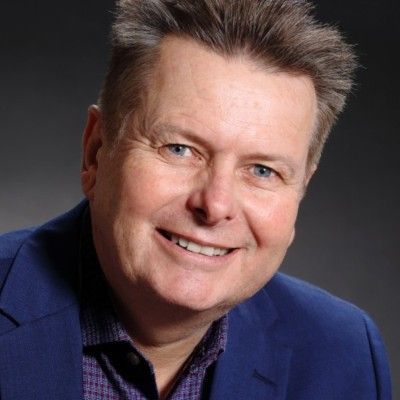
Our guest this week is Graham Caldow of Brighton, England who is co-founder and a coach at Red Giraffe Solutions, an author and father of two young adult daughters, one who has additional needs.
Graham and his wife, Debra, have been married for 30 years and are the proud parents of two young adult daughters.
Graham & Debra are co-founders of Red Giraffe Solutions, helping plan a better future for young adults with additional needs. They are parents to two young daughters, one of whom has a history of learning difficulties.
Debra hosts the Expanding Worlds Podcast established in April 2017, now with more than 140 episodes, on a broad range of topics for families raising children with special abilities.
More recently, Graham authored the book “What’s Possible?: Plan A Better Future For Your Young Adult With Additional Needs.“
It’s a fascinating story and we’ll hear it on this episode of the SFN Dad to Dad Podcast.
Show Notes –
Email – graham@redgiraffesolutions.com
LinkedIn – https://www.linkedin.com/in/grahamcaldow/overlay/contact-info/
Website – https://redgiraffesolutions.com/
Book – https://www.amazon.com/Whats-Possible-better-future-additional/dp/1781338078/ref=sr_1_1?crid=1V9RCMI6ZS4OJ&keywords=what%27s+possible+graham+caldow&qid=1700053118&sprefix=whats+possible+gra%2Caps%2C157&sr=8-1
Team Dominica Brighton – https://teamdomenica.com
Portage Pre-School Program – https://www.supportservicesforeducation.co.uk/Services/6203#:~:text=Portage%20is%20a%20service%20for,the%20child%27s%20development%20through%20play.
Transcript:
Tom Couch: [00:00:00] Special thanks to Horizon Therapeutics for sponsoring the Special Fathers Network Dad to Dad Podcast, working tirelessly to research, develop, and bring forward medicines for people living with rare and rheumatic diseases. Discover more about Horizon Therapeutics’ mission at HorizonTherapeutics.com.
Graham Caldow: If we don’t believe first in our children, they can’t believe themselves. So they’ve got to get that belief from us first, which means we’ve got to make the step change to believe that actually it is possible for them to live the sort of life that we want them to, a full life.
Tom Couch: That’s our guest this week, Graham Caldow. Graham and his wife Debra run Red Giraffe Solutions, helping plan a better future for young adults with additional needs. They’re parents to two young daughters, one of whom has a history of learning difficulties. Graham also has written an eye-catching book, What’s Possible? Plan a Better Future for Your Young Adult with Special Needs. He’s got a fascinating story, Graham does, and we’ll hear it on this Special Fathers Network [00:01:00] Dad to Dad Podcast. Now say hello to the founder of the Special Fathers Network and the host of the Dad to Dad Podcast, David Hirsch.
David HIrsch: Hi and thanks for listening to the Special Fathers Network Dad to Dad Podcast presented by the Special Fathers Network, a dad to dad mentoring program for fathers raising children with special needs.
The Special Fathers Network MasterMind group experience is the most comprehensive program the 21st Century Dads Foundation offers. Dads raising children with special needs meet virtually on a weekly basis and form meaningful relationships while sharing weekly wins, discussing books, and sharing heartfelt challenges. One of the highlights of the year is attending an in-person weekend retreat. We’re launching 10 new MasterMind groups in 2024 with 10 dads per group. That means we’re only looking for 10 like-minded dads in each community. If you’re a dad raising a child with special needs, we hope you’ll join a local MasterMind group and make the investment to become the best version of yourself. For more information, please see the show notes or simply go to [00:02:00] 21stCenturyDads.org.
Tom Couch: Now let’s hear this intriguing conversation between Graham Caldow and David Hirsch.
David HIrsch: I’m thrilled to be talking today with Graham Caldow of Brighton, England, who’s the co-founder and coach at Red Giraffe Solutions, an organization that assists young adults with additional needs to create a life plan, and he’s the father of two children. Graham, thank you for taking the time to do a podcast interview for the Special Fathers Network.
Graham Caldow: I’m delighted to be here, David. Thank you very much for this opportunity.
David HIrsch: You and your wife Debra have been married for 30 years and are the proud parents of two young adult daughters. Let’s start with some background. Where did you grow up? Tell me something about your family.
Graham Caldow: I grew up in Folkestone, which is about an hour southeast of London, the closest part to France. We grew up in a very traditional family. My father worked, was the main breadwinner in the family. My mother looked after us when we were younger, and then eventually got a part-time job. My sister is four years younger than I am, and she still lives in [00:03:00] Folkestone.
David HIrsch: Excellent. So you mentioned your dad was in the automotive industry. Is he still alive? Does he still work?
Graham Caldow: Yes, he’s still alive. He’s not working. He worked for all his life, really, in the automobile industry. He worked in the parts department and gradually worked his way up to become manager of that department. Since then, he’s retired. And through lockdown, we discovered he had vascular dementia. So he’s now in a care home and he’s beginning to go downhill. So he was fine at the beginning of the COVID and then once he came through COVID, he was a different person. So I suppose that opportunity to say goodbye and thank him for our childhood has gone because we had a happy childhood which is great.
Which is something good to say about your father, I think. He always wanted to provide, always wanted us to have meals. And partly because he grew up in the war. So he had rationing, that’s food rationing. So I think food was always scarce. It was always important for him that we [00:04:00] sat down for an evening meal and there was always food in the cupboards. So in that sense, I’m really thankful for him and admire him. And you don’t get to say goodbye in the way that you should.
David HIrsch: Yeah. Thanks for sharing. I’m sad to hear that your dad has declined or has dementia. And, I think COVID impacted people in different ways. And it’s unfortunate that maybe the isolation that people experienced has impacted your dad and the timing of it seems quite poignant. And while you might not fully be there there isn’t a reason that you can’t go out of your way to be thankful because you don’t know if your message is resonating or not resonating with somebody that has dementia. But it sounds like you have a lot of reverence for your dad. He had a good work ethic. He was a good provider. He was faithful. And these are important characteristics to acknowledge, like you have. And I’m wondering, when you think about your dad, I’m wondering how would you describe your relationship with him?
Graham Caldow: I think it was good, actually. There’s lots of things that, you know, as a boy I [00:05:00] grew up admiring. He had a trial for England Boys, which is football, soccer as you call it. I was never that good, so there was always a bit of me that just wished to be as good as that. That was thought to be. But he always provided and was always there. He always spent weekends, when there was spare time, he wanted to spend it with his family. He was a family man. And, I suppose that is, it’s something that I am because of the example I was set. I admire him for that, yes.
David HIrsch: Any important takeaways, a lesson or two that you learned from your dad that you’ve perhaps tried to incorporate into your own parenting?
Graham Caldow: Yeah, we always sit down, ever since the kids were young, we always sat down for our meals together at the table without the TV on. Maybe a bit of background music and talked about what we did with our day. So I think that’s the one thing that we’ve always done that, it brings you close together as a family. We’ve always done that. Yes.
David HIrsch: That’s really important. As busy and hectic as people’s lives are, it’s easy just to say, hey, I’ll just catch something to eat, [00:06:00] or I’ll just eat later. And it might be more efficient, right? Just because. But that discipline, the tradition that you have, even if it’s just 20 or 30 minutes a day, where you’re all together and to reflect on what’s going on in the family, maybe in the community or beyond. So thanks for emphasizing that. I’m thinking about other father influencers and I’m thinking about your grandfathers. First on your dad’s side and then on your mom’s side. Did you know either of your grandfathers?
Graham Caldow: I knew my grandfather on my dad’s side. He was away in the war for a lot of my father’s childhood and that generation always held their feelings within themselves. I think he was in bomb disposal, so he probably witnessed a lot of horrific things and he was always there, we always saw him, but he never really opened himself up much with his feelings or even past stories about. It was always talking in the present. My maternal grandfather, he died when I was quite young, probably four or five, so other than a memory of him sitting in a [00:07:00] chair, I don’t have any memories really.
David HIrsch: Thanks for sharing. I know that those that lived through World War II had a lot of different experiences, and I remember my grandfather, he immigrated to the United States in 1938 with his wife and my dad, who was then seven. And he barely talked about it, right? It was just not something that he wanted to reflect on. We are very curious to know all these things about the family’s history. He was like a clam, right? And it wasn’t until literally two years ago, Graham, one of my sons was doing some research on our family history, the Hirsch side of the family from Germany. I had done a lot of history. I traced my family roots going back like five or six generations. I’d visited Germany, the family home, the different cities that the company, Hirsch and Company, operated in. And my son Charlie says, who’s Ignis Hirsch? So that was grandpa Harry’s, my grandfather’s dad. And he goes, did you know that he died in a concentration camp? I [00:08:00] said, oh my God, I had no idea. And it was just a revelation I’ve had more recently. Maybe that’s what my grandfather didn’t want to reflect on. That’s what he didn’t feel comfortable talking about.
Graham Caldow: Yeah.
David HIrsch: It was very unfortunate that he internalized that. But the war had a lot of different impacts on people and I don’t share that for sympathy or pity. It’s just a fact, right? And sometimes people bury these things and they don’t talk about them. And I don’t know that it’s good or bad. It doesn’t sound entirely healthy, right? Not to be forthcoming and to be open about things. But I can relate to what you were saying about your dad’s dad, your grandpa Caldow. Anyway, thanks for sharing. Any other men who played an influential role? Somebody who might have been a father figure or a mentor to you?
Graham Caldow: I suppose my first boss at work. He, again, he fought in the war in the Far East. And he took me under his wing and showed me a lot about business and opened up my mind really about the world and probably made me have a desire to [00:09:00] travel, which I probably did for seven years traveling around the world. And yeah, I just wanted to see and experience something broader than Folkestone really, which was a fairly provincial town. I wanted to see the world and enjoy life.
David HIrsch: It sounds like he might have got you to think a little bit beyond your own situation, right? And maybe nurtured that curiosity or interest that you had in traveling and seeing the world.
Graham Caldow: Yeah, for sure.
David HIrsch: So my recollection was that you went to UNSW, you have a Bachelor’s of Arts in Modern Literature. And I’m wondering, once you completed the university, where did you see your career going? What did you think you were gonna do?
Graham Caldow: I suppose I thought I’d end up, I wanted to have an academic career, but I love literature, but I really didn’t like being in university. And university life was great for a while, but actually I wanted to go off and travel. So that’s what I did. I went to university later in life because I traveled and met my wife in Australia. We traveled some more and [00:10:00] she did a degree when she was younger and I thought, oh, I want to go back to uni. And we was in North Queensland and there wasn’t much else to do. So I thought, oh yeah, I’ll go as well. I enrolled in a BA and went from there really.
David HIrsch: So if I get the chronology, you traveled after high school. You found yourself, it sounds like in Australia, if I remember. You and Debra met, and then you did some more traveling before you completed your university.
Graham Caldow: Yes, that’s right. Yes. We came back to Australia. Debra and I met as I was traveling around Australia I got a job in an office. At the time, there was a tram strike in Melbourne, and one of Debra’s friends used to give me a lift to work. I asked her to go to the zoo with me. She had an insanely jealous boyfriend at the time. So she brought Debra along to support us. [both chuckling] Then somewhere between the monkey bottoms and majestic cats, we really hit it off and we’ve been so close ever since really.
David HIrsch: I love that story. Thanks for sharing. My recollection was that you spent the better part of 20 [00:11:00] years as a financial director and proprietor at Blue Water Caravan Park in Hythe. And I’m wondering how did you get into that field and what was your experience?
Graham Caldow: It was my uncle’s business originally, so it was passed down to my sister and I, so I tended to do the financial side and she tended to do the operations side. It’s rather like a recreational vehicle. Holiday homes for the UK. We built that up over the years, my sister and I. There was some fun times working together. And then on the side as well, because of my experience and finding out about finance, I was able to raise money to buy some property. One of Debra and I’s ideas was to provide shared accommodation for young adults with additional needs, who wanted to move out of their house and get their first sort of place to live because we saw this as a part of a solution for what we needed for our daughter. So we started doing high quality shared accommodation. So we [00:12:00] sold the caravan part a couple of years ago and so we still have the property company and that’s what I’m doing partly now.
David HIrsch: Excellent. Thanks for sharing. Let’s talk about special needs first on a personal level and then beyond. Prior to your second daughter’s birth, did you have any connections to the world of disability or additional needs community?
Graham Caldow: Absolutely none. None at all.
David HIrsch: And it’s your second daughter, the one that has the additional needs. What is her diagnosis?
Graham Caldow: When she was born, she went straight to the special care baby unit. And it was obvious then that she had learning difficulties. So we didn’t really necessarily get a diagnosis where we took her home and then we thought all things aren’t quite right here, we’d better see a doctor about it. We just knew right from the offset, we spent a lot of time in hospital. Every time I asked questions — what would become of her, how would she live — there was a, don’t expect too much, don’t expect too much.
David HIrsch: So is she verbal or non-verbal then?
Graham Caldow: [00:13:00] Yes, she is verbal, but she does have trouble with receptive language, also sometimes expressive language. But she does have a very keen desire to communicate. She does like to talk, but sometimes she has difficulty in keeping up with conversations. She doesn’t always understand the world, the nuances of the world. There’s lots of unwritten rules in the world. She doesn’t always understand those unwritten rules.
So she is vulnerable, but we ended up going to mainstream primary school, which is junior school initially. But gradually, she was always falling further and further behind her peers. We got to the point where we did have to take her out of mainstream and move her to a special school.
David HIrsch: Thinking back toward the beginning, I’m wondering what were the fears that you and Debra had coming to the understanding that your younger daughter had these developmental language delays?
Graham Caldow: I suppose the biggest fear is what will become of her. Obviously we’re gonna die before she does because we’re a generation older than [00:14:00] she is. There was nothing to suggest that she might not live a full life. And it’s that fear of how will she cope in the world without us to support her? Some people are always going to live independently, some may not live independently, and then probably my daughter’s somewhere in the middle, isn’t it?
She could live independently and that’s what we didn’t know at the time. That was our fear actually, is what would happen to her once we passed. The other fears are, she’s crutchy, falling behind, she doesn’t understand the world as well as we hoped. Part of life is love. I suppose there was that fear that actually she might not have that real connection, that sort of special bonding with a person. We’re not quite sure whether she will find love and get married, but I suppose that’s what we want for her, as much as every human being wants that connection and closeness to other people.
David HIrsch: Yeah I think what I hear you saying is that the basic fear is that your child might outlive you and then who’s going to take care of them? And then what level of [00:15:00] independence will she enjoy? And then at a very basic level, will she find a mate? Will she have a life partner herself? And it’s really difficult when your child’s young to have any idea of how things might transpire. As the years go by, as the decades go by, our kids, in most cases, exceed our expectations. You’re thinking, oh, there’s just no way that they’ll ever be able to do this or that. But don’t put any limitations on your child. And often is the case that the parents are the ones with the limits that they impose either on themselves or on their kids. So I think that one of the things that you and Debra have been very good at is projecting the possibilities of what can be and being optimistic and erring on the side of what is possible. So I’m wondering, was there any advice you got early on that helped put you on that path?
Graham Caldow: No. I suppose I’ve always been a glass half full sort of guy. [both chuckle] And we hear [00:16:00] negatives in life. You won’t be able to do that, you won’t be able to do this, you won’t be able to do that. But I think our children hear even more about what they won’t be able to do all the time. If we don’t believe first in our children, they can’t believe themselves. So they’ve got to get that belief from us first, which means we’ve got to make the step change to believe that actually it is possible for them to live the sort of life that we want them to, a full life.
David HIrsch: Absolutely. Not to focus on the negative, but what have been some of the bigger challenges that you’ve encountered along the way?
Graham Caldow: One of the worst moments for us was when we took her out of mainstream and we realized that she needed to go to a special school. Not because there’s anything wrong with special schools, but because for us that was the point at which we were saying that she won’t be able to keep up with her peers and what we still hoped and trusted in the back of our mind may not transpire and that sort of realization then that we really had to think of a different plan in a different way.
As I say, the fears are what will happen to her? And more [00:17:00] the fear actually is the fear that as a father I won’t be able to help her live her full life in the sense of… so that she could be the best she can be and do everything that she can do and have as much as she can have. I didn’t know a way to actually foster that belief into her. When I didn’t have that, that’s a big fear.
We’ve had lots of medical fears over the years, but her consultants and surgeons have always been good. So we’ve always overcome any obstacle like that. So her condition was never life threatening in the same way that these real fears that lots of people face.
David HIrsch: Yeah thanks for emphasizing the important decision that you made about pivoting from the mainstream education to a special school. And I think that it’s good that she was mainstreamed for as long as she could be. And then if that’s not meeting her educational needs then you have to pivot. You have to make a difficult decision, right? And maybe what I heard you describing [00:18:00] is grieving the loss, right? That you had anticipated that she would be able to pursue a mainstream education and getting over that hurdle and just accepting that, right? As the reality of the situation and then making the most of it, not getting stuck in that, “Oh my gosh, this is the end of the world” mentality. And moving forward.
Graham Caldow: Yes, exactly.
David HIrsch: Everybody has different gifts, right? And oftentimes when there’s additional needs – physical, intellectual, emotional needs – it just takes longer for people to accomplish certain things. Not just minutes or hours, but it could take weeks or months or years for people to be able to do things that other people just take for granted, or that comes easy. And most parents don’t have the patience, right? We weren’t wired to wait for days, weeks, months, or years for things to occur. So making that adjustment, I think, is one of the more difficult adjustments that parents have to make.
Graham Caldow: Yes. I think it is that thing that we’re all capable of growing and it’s actually holding onto [00:19:00] that, that you can still grow. What I do now was nowhere near what I imagined as a child growing up where I grew up in Folkestone. It’s that capacity to grow. Everyone has that within them. All our children have that. We mustn’t stop or get in the way of this possibility and encourage them as much as we can so that they can live as full a life as they’re able to.
David HIrsch: Excellent point. So I’m wondering what impact your younger daughter’s situation has had on her older sister, your marriage, or your extended family for that matter.
Graham Caldow: It’s been hard. Obviously my elder daughter, sometimes it was hard explaining to her friends why her sister didn’t behave in the same way that the other girls did, especially when she was younger. For Debra and I, it does put a strain on your marriage, of course it does. But in some senses it’s made us close as well because we do have the common goal and common bonds of our children. There was never any moment ever where we considered giving up on our daughter, [00:20:00] not having her as part of our family. We had those fears in the beginning. But it has put a huge strain on us, but in some ways we’re stronger for it.
David HIrsch: That’s good to hear. And your extended family, was there any impact on your extended family?
Graham Caldow: No, I think sometimes with extended family, they don’t always understand the issues that you’re facing as a parent because they’ve not been in the situation. So they can’t always put themselves in the situation enough to understand how you’re feeling. That does happen with friends as well. That happens with everybody. You do get friends that really do make a huge effort to understand and really do support you. My mother was very good like that as well. It’s been a difficult journey, but everybody faces this, I don’t want to moan about it in any sense.
David HIrsch: Yeah. Thanks for emphasizing the point that you know it’s difficult for people to understand something that they haven’t experienced themselves and it’s a special family member or friend, like your mom or some others that you made reference to, that make the [00:21:00] extra effort to try to put themselves in your shoes. To get close enough to the situation to fully grasp the scale or the scope of what it is that you’re experiencing. Not just physically experiencing, but emotionally experiencing. It’s a really important point.
So I’m thinking about supporting organizations, and I’m wondering, are there any organizations that come to mind that your daughter has benefited from, or your family has benefited from?
Graham Caldow: When she was young we were referred by the hospital to Portage. It’s a pre-school program. They focus on trying to help young children who have difficulties catch up a little bit. So there’s lots of focus on tactile and recognizing faces, facial expressions, sensory things. And that kind of categorized what sort of input our daughter needed. That Portage was always a big thing.
But more recently, I guess you guys have come across Project Search. It began in America, which is a supported internship [00:22:00] program to get young adults with additional needs into work. We had a similar program like this in Brighton called Team Dominica, which followed a similar model. This sort of model really is a good way of giving our children the work skills that they might need. So yeah, this is an organization that I’d encourage other people to look out for.
David HIrsch: Yeah thank God for programs like Portage and Cape Dominica, because the resources and the experience they bring to the table are very valuable. Why would you be able to figure these things out on your own?
Tom Couch: We’ll be back with more of the conversation on the Special Fathers Network Dad to Dad Podcast in just a few moments. But first, this quick message. Please help 21st Century Dads gather research on families raising children with special needs by having them complete the Special Fathers Network Early Intervention Parents Survey. A link to the survey can be found in the show notes. As a token of our appreciation, each person, mom or dad, who [00:23:00] completes the survey will receive a Great Dad Coin. Thank you. Now back to the conversation.
David HIrsch: So I’d like to talk about Red Giraffe Solutions which I understand started in 2016. One of the things that has been going on for the past six years or so is the “Expanding Worlds Podcast.”
[Audio excerpt from the Expanding Worlds Podcast]
Welcome to the Expanding Worlds Podcast. I’m your host Debra Caldow and welcome to the final episode of the ‘Technology Changing the Future’ series. In this episode, I’ll be talking about the here and now and the next. So I’ll be looking at what technology is here with us at the moment, how it’s being used, and I’ll be talking about that from Thursday…
[Fade out of audio excerpt]
What was it that motivated Debra to become a podcast host?
Graham Caldow: Madness, maybe. I don’t know. [both laughing] You’ve done this, David.
We did it partly to share stories and share solutions. We did it partly to find out some answers that organizations that were out there. So initially it was curiosity and to share our story, but it’s also become a quest through the Expanding Worlds Podcast. So many different organizations that give young [00:24:00] people with additional needs a chance to work or even housing initiatives.
You guys in America really are leading the way in a lot of this stuff and It really was a case of, we did this partly because we lacked knowledge. We didn’t have a network. We didn’t have a Dads to Dads or other community around us. So we thought we would start a podcast and see where it led.
And it’s led us to some answers for ourselves and hopefully it’s given lots of other people ideas. Say you might find an idea from one part of the world and maybe there’s not an organization like that exactly where you live, but it does give you a seed of an idea of a solution that might work for your situation.
It’s taken us a long way and from partly editing the podcast, partly from my own experiences, I ended up writing our journey in a book called What’s Possible. And that’s what Red Giraffe is really about. It is sharing stories, sharing solutions.
David HIrsch: Yeah I’ve listened to a number of the episodes. There’s [00:25:00] a wide range of topics, like you made reference to, whether it’s housing or unemployment or different health issues. And I have to believe it’s been somewhat therapeutic for you as parents, right? To just put your own situation out there, gather these resources, connect the dots, and it’s really difficult to connect the dots looking forward, right? You can only really look backwards and connect the dots and realize, oh, if it wasn’t for meeting so and so or learning about this, we wouldn’t be doing this today.
And I think what I’ve taken away from the Expanding Worlds Podcast is that you’re opening up doors, right? You’re helping others identify resources and opportunities. And if nothing else, it’s very rewarding or satisfying to know that you’re being of help to others. We’re here for such a brief period of time in history. And sometimes the days are long, the years click by so [00:26:00] quickly. It’s amazing that you’ve been doing this for seven years, the podcast, and I hope that you’ll continue to put that out there. It takes a fair amount of effort not only to identify the topics and the people to interview, but to do the editing and production as well.
I’d like to switch gears and talk about your book, which just came out earlier this year. The title of which is What’s Possible? Plan a Better Future for Your Young Adult With Additional Needs. I think it’s brilliant. It’s simple, it’s straightforward, and it’s got five sections: the planned life, the daily living line, the relationship line, the purpose line, and the financial line. And you have this way of tying it all together with what you called the VOCAL method. And VOCAL is an acronym for Vision, Options, Create, Access, and Legacy. And what I’d like to do is go through the book just briefly, just to give people a little bit of an appetizer, if you will. But before we do, I [00:27:00] was wondering what motivated you to put pencil to paper or fingers to keyboard to write the book?
Graham Caldow: I think it’s partly where the podcast started. When our daughter was getting near the end of high school, college loomed, and while she was receiving great speech and language and occupational therapy support, we couldn’t see a job on the horizon. We could see her progressing and making a lot of progress with her development, but not necessarily what would happen once she timed out of education.
And so that’s where the podcast began. And quite early on in the podcast, we identified probably the four areas that we needed to make a proper plan for, was these four areas of daily living, relationships, purpose, it doesn’t have to be work, but a purpose to one’s day. Because we get a bit of our identity from what we do in the day and it isn’t healthy to not do [00:28:00] anything because our own mental health suffers if we’re bored.
When I looked at my daughter, I thought, yes, she’s able to work. Very unlikely she would ever earn the same salary as I have in my life or her sister will. So we needed a financial plan for her. She would earn income to supplement probably the financial plan that we put in place for her. The plan was, how do we get her into work in the first place?
So I suppose this has become a life plan that is specific for young adults with additional needs because conventional life plans start at a different point from where we need to start with our children. So everybody needs to be able to cook to some degree, do their own washing, travel independently if they are to live independent. And relationships – it’s the people in our work life that give us joy. When you’re at the end of the life, I’ve heard so many people say actually, it’s the people in my life that [00:29:00] have given my life meaning. Relationships, we didn’t want her to be isolated. Purpose, so that she had to engage with the world because she had a place to go that made her feel that her day was worthwhile. And then obviously the financial plan.
David HIrsch: Yeah. And could you just describe briefly the VOCAL method, which I thought was brilliant, so that, there’s these smaller steps, right? The pieces to the puzzle, if you will. Could you describe that for our listeners?
Graham Caldow: Yes, of course. If you imagine, say the daily living line as a line on a train map. You’ve got to navigate certain stops. House management, shopping, travel, personal care, personal safety. So if we were at, say, cooking, we need to think, how are we gonna do this stop in a way that is suitable for my daughter or someone else’s son or daughter so that they can feed themselves? So first of all, you need to have a sort of food or what sort of meals [00:30:00] they would eat? And then from that, you then narrow it down to your options for creating those meals. For example, my daughter struggles lifting heavy pots and pans out of the oven. She was never going to cook in an oven realistically. What options do we have available? Microwaves do an awful lot. It’s thinking for options that are going to work for your son or daughter. Once you’ve figured out your options, you then need to create a plan about how is your son or daughter going to learn this particular skill and put in place teaching methods to teach them.
After a while, with any plan, you’ve got to assess how it’s working. We need to assess it. Legacy, really. People always think about legacy as money that you leave. But if you imagine people in your community who have left a lasting legacy that is non-financial, legacy in this context is rather like that. It’s the legacy of, say, my daughter, or someone else’s son or daughter being able to cook meals to feed themselves. I’m not talking gourmet meals [00:31:00] necessarily, but meals that they like to eat, that they can eat. And legacy to my daughter and Debra’s as well, is actually she can cook and she does have a habit and a routine that she does.
This is just one example with cooking. VOCAL can be applied to all sorts of other individual skills or stops that all of our children need to make on their journey to not necessarily being able to live independently, but being able to live with less support, which obviously gives them more dignity and feeling of accomplishment.
David HIrsch: Yeah I think it’s brilliant. What I like about it, it’s not just here’s some information that you might benefit from, but here’s how you can go about building this plan and having some level of accountability, right? That’s my way of thinking about it is not just thinking about things, but it’s doing things. There’s action steps. And one of the things I enjoyed most about reading the book was that each of the sections, and the back of each of the [00:32:00] sections, there was like a page or so of ‘Our Story.’ And I think by personalizing this, even though you can go into a lot of granular detail about the specifics, it added to the authenticity of you being parents who’ve had this lived experience. It’s not just oh, I’m a practitioner, I studied this, I have a PhD in these subjects. But this is written from the heart, right? From one parent to another. And I think that that’s where the credibility comes from for the work that you put out there.
Graham Caldow: Thank you, David. I appreciate that. Yeah, that is exactly where it does come from. It’s not an academic study of how to teach your children this or that. At the end of the day, we’re the ones that are most invested in our children’s future. We have, say, a speech and language therapist who comes along. They do great work. They’re invested at the time, but 10 years later or 20 years later, we’re [00:33:00] still invested. It’s up to us to help find solutions for our children. We help them find solutions.
I suppose when we started this, we made plans for our daughter, but we’re now at the stage where she is a part of the discussion, where she does talk about these things. I mentioned in the book that she was at a really good school, but we had the opportunity to go on one of these supported internship programs, which meant taking her away from her friends. And it became a bit of a conversation and we really had to consult with her and ask her what she wanted to do and she did embrace it fortunately and it has been good for her and it’s been good for us because I suppose one of the things I really passionately believe is actually if our children can do something with their day, lots of other things stem out from that or follow on from that. By going somewhere in the day, you have to travel there, you have to engage in the world, you have to talk to other people, even if you don’t always want to, and it is being a part of the world and being [00:34:00] a part of life.
David HIrsch: So I’m thinking about advice. And I’m wondering what advice you can share with parents, maybe specifically dads, who find they have a diagnosis or a child with a diagnosis with additional needs.
Graham Caldow: Sometimes, as a dad, I felt that everybody else knows more than I do. But it comes down to Malcolm Gladwell and his 10,000 hours. If you spend 10,000 hours doing something, you become an expert in it. And I think even if you don’t spend that much time. We’ve all spent 10,000 hours, 20,000 hours with our children. So as dads, we’re experts in our children and we should own it. We should believe it and I suppose trust our own judgment and believe that actually we do know what’s best for our children and claim this knowledge, this status. Trust yourself.
David HIrsch: Yeah, I think it’s not intuition so much, but you know your child better than anybody else. And if it’s in your gut you need to follow that. It’s an excellent point. So I’m curious to know, why have you agreed to be a mentor father as part of the Special Fathers Network?
Graham Caldow: In the beginning, I was [00:35:00] very lonely. I had no one to talk to. I tried to talk to friends, but they simply didn’t understand. So I didn’t have any network around me. And I’ve probably been through more years of this than say, somebody who’s new to it. And if there are things that I can do to help other fathers, of course, yes, I’m going to do it, and I just wish I had a program like this when my daughter was born. So I’m more than happy. I want to actually.
David HIrsch: We’re thrilled to have you. Thank you for being part of the network. Is there anything else you’d like to share before we wrap up?
Graham Caldow: Yes. Always try to believe in your child because we need to believe in them so that they believe in themselves. I think that’s the one thing that we can always give our children is belief. Belief in themselves.
David HIrsch: Yeah, that’s a perfect way to end the interview. Brilliant insight. Let’s give a special shout out to Judith Weiss at Ambition PR for helping connect us.
Graham Caldow: Yes, Judith’s been absolutely fantastic. She’s put me in connection with lots [00:36:00] of people, particularly with you, David. Thank you.
David HIrsch: If somebody wants to learn more about Red Giraffe Solutions, the Expanding Worlds Podcast, your book What’s Possible, or contact you, what’s the best way to do that?
Graham Caldow: The website, redgiraffesolutions.com. The podcast, Expanding Worlds, is on Spotify and wherever you listen to podcasts. And the best place to contact me, actually, is on LinkedIn. Send a connection to me and send me a message and I’ll more than happily get back to you.
David HIrsch: I’ll be sure to include all that information in the show notes that will make it as easy as possible for somebody to connect with you. Graham, thank you for your time and many insights. As a reminder, Graham is just one of the dads who’s part of the Special Fathers Network, a mentoring program for fathers raising a child with special needs. If you’d like to be a mentor father or If you are seeking advice from a mentor father with a similar situation to your own, please go to 21stCenturyDads. org. Thank you for listening to the latest episode of the Special Fathers Network Dad to Dad Podcast. I hope you enjoyed the conversation as much as I did.
[00:37:00] As you probably know, the 21st Century Dads Foundation is a 501c3 non for profit organization, which means we need your help to keep our content free to all concerned. Would you please consider making a tax-deductible contribution? I would really appreciate your support. Graham, thanks again.
Graham Caldow: Thank you, David.
Tom Couch: And thank you for listening to the Special Fathers Network Dad to Dad Podcast. The Special Fathers Network is a dad to dad mentoring program for fathers raising children with special needs. Through our personalized matching process, new fathers with special needs children match up with mentor fathers in a similar situation. It’s a great way for dads to support other dads. To find out more, go to 21stCenturyDads.org
David HIrsch: And, if you’re a dad looking for help, or would like to offer help, we would be honored to have you join our closed Facebook group. Please go to Facebook.com, groups, and search “dad to dad.” Lastly, we’re always looking to share interesting stories. If you’d like to [00:38:00] share your story, or know of a compelling story, please send an email to David@ 21stCenturyDads.org.
Tom Couch: The Special Fathers Network Dad to Dad Podcast was produced by me, Tom Couch.
Thanks again to Horizon Therapeutics, who believe that science and compassion must work together to transform lives. That’s why they work tirelessly to research, develop, and bring forward medicines for people living with rare and rheumatic diseases. Discover more about Horizon Therapeutics at HorizonTherapeutics.com.