

295 – Eric Nixon of Lansdale, PA Father of Three All With CVID, A Rare Autoimmune Disease
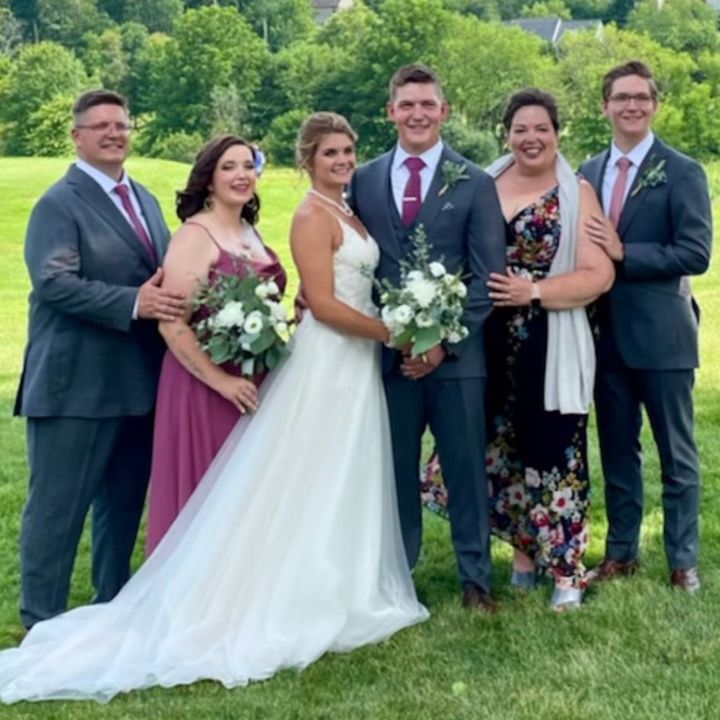
Our guest this week is Eric Nixon of Lansdale, PA who works for a blood plasma company and is the father of three all with Common Variable Immune Deficiency (CVID), a rare autoimmune disease.
Eric and his wife, Candy, have been married for 33 years and are the proud parents of three: Benjamin (30), Hannah (27), and Daniel (24) all who have CVID, or Common Variable Immune Deficiency, a rare autoimmune disease. Eric also has Multiple Sclerosis and has been on disability for 17 years.
Despite all the family health challenges, Eric has been leading small groups of fathers for years and years. The couple has also been actively involved with Rising Above Ministries and Joni & Friends, two outstanding Christian disability ministries.
Their family journey has been shared in several books:
“Marriage Ability” by Joan Borton
“Sharing Love Abundantly in Special needs families (the 5 Love Languages for parents raising children with disabilities)” by Gary Chapman & Jolene Philo
“Common Man, Extraordinary Call” by Becky Davidson
“Another Kind of Courage” by Doug Mazza & Steve Bundy
“Unbroken Faith, spiritual recovery for special needs parents” by Diane Dokko Kim
“Real Families, Real Needs. A compassionate guide for families living with disabilities” by Joni & Friends.
It’s a uplifting story about faith, a father’s commitment to his family and service to others, all on this episode of the SFN Dad to Dad Podcast.
Show Notes –
Email: EJNixon32@gmail.com.
Phone: 267-218-6749
Facebook – https://www.facebook.com/eric.nixon.73
Joni & Friends – https://joniandfriends.org/
Rising Above Ministries – https://www.risingaboveministries.org/
Transcript:
Tom Couch: [00:00:00] Special thanks to Horizon Therapeutics for sponsoring the Special Fathers Network Dad to Dad Podcast, working tirelessly to research, develop, and bring forward medicines for people living with rare and rheumatic diseases. Discover more about Horizon Therapeutics’ mission at HorizonTherapeutics. com.
Eric Nixon: In order to get to Children’s Hospital, we had to both take off from work, drive an hour into the city. We had to drag the kids with us, the other two siblings. And after a while, you start to feel that you are crazy. I jokingly say, “Doctors say we practice medicine. That’s what it felt like: practicing medicine on our family.”
Tom Couch: That’s our guest this week, Eric Nixon, an advocate for a blood plasma company who has three children, all of whom have CVID, a very rare autoimmune disease. We’ll hear Eric’s life story and more on this Special Fathers Network Dad to Dad Podcast. Now here’s our host and founder of the Special Fathers Network, David [00:01:00] Hirsch.
David Hirsch: Hi and thanks for listening to the Special Fathers Network Dad to Dad Podcast, presented by the Special Fathers Network, a dad to dad mentoring program for fathers raising children with special needs.
The Special Fathers Network MasterMind group experience is the most comprehensive program the 21st Century Dads Foundation offers. Dads raising children with special needs meet virtually on a weekly basis and form meaningful relationships while sharing weekly wins, discussing books, and sharing heartfelt challenges. One of the highlights of the year is attending an in-person weekend retreat. We’re launching 10 new MasterMind groups in 2024 with 10 dads per group. That means we’re only looking for 10 like-minded dads in each community. If you’re a dad raising a child with special needs, we hope you’ll join a local MasterMind group and make the investment to become the best version of yourself. For more information, please see the show notes or simply go to 21stCenturyDads.org.
Tom Couch: So let’s listen in now to this conversation between Eric Nixon and David Hirsch.
David Hirsch: I’m thrilled to be [00:02:00] talking today with Eric Nixon of Lansdale, Pennsylvania, who himself has multiple sclerosis and who is a voice to voice advocate for CSL Behring, a blood plasma company and father of three children with a rare autoimmune disease. Eric, thank you for taking the time to do a podcast interview for the Special Fathers Network.
Eric Nixon: Happy to be here and thank you.
David Hirsch: You and your wife, Candy, have been married for 33 years and are the proud parents of three children: Benjamin, 30; Hannah, 27; and Daniel, 24; all who have CVID or Common Variable Immune Deficiency, a rare autoimmune disease. Let’s start with some background. Where did you grow up? Tell me something about your family.
Eric Nixon: I grew up about an hour from where we live right now. And I was raised in a Christian home. Had something interesting happen at the age of 10. My biological mom died of cancer. That really threw our family system. I have a younger sister and it’s funny how those type things can happen to two people and two people go in completely different directions. My dad was a [00:03:00] single parent for many years until he remarried a wonderful Christian lady who I call Mom. I’m only saying stepmother just for clarification, but I never use that word.
But God was always real to me. I was involved in church and in youth group, and I went to a Christian high school. I did photography. I played many sports, cross country, wrestling and baseball.
David Hirsch: Thanks for mentioning that your mom, your biological mom, passed away at such a young age, your age 10. That must have been pretty traumatic for anybody – your dad, who was the grieving widower, and you and your sister – to process. That’s not the ordinary course of life that a parent dies at such an early age. And thanks for also emphasizing that you don’t think of the person who married your dad is anybody other than your mom, right? Because she was there from such a young age for you. Out of curiosity what does your dad do for a living?
Eric Nixon: He was a credit manager for a trucking company. And then he became a general contractor. He put up the [00:04:00] industrial steel that you would see in large commercial parking lots, like at hospitals or stadiums.
David Hirsch: Interesting. And is your dad still with us?
Eric Nixon: No, he passed away three, four years ago now of congestive heart failure.
David Hirsch: Okay. How would you describe your relationship with your dad?
Eric Nixon: Stressed. My dad was a yeller and a screamer and cursed. And I’ll give you an example. Working on a car. He’d throw things. He’d scream, “This bolt’s broken!” And I just never reacted that way. I was a quiet kind of person. My sister, on the other hand, was a pretty good carbon copy of my dad. Because she yells, screams, throws things, but both of them, at the end of the day hug, kiss, make up as if nothing happened. So that just didn’t compute in my brain.
And my dad always worked. My mom was a stay at home mom, so my dad never got an opportunity to see me play sports. Back then we didn’t have flex time that you could just take off of work to [00:05:00] go see your child play sports or any other activities that I was in, in junior high or high school or college.
David Hirsch: So it sounds like the apple didn’t fall very far from the tree as it relates to your dad and your sister. You just had a different genetic makeup, if you will.
Eric Nixon: Yeah.
David Hirsch: So I think I can anticipate at least one of your answers, but I’m curious to know, what were some of the more important takeaways with your relationship with your dad? Lessons learned?
Eric Nixon: I shoveled snow and I cut grass and I had a pretty good thriving business. 15+ people in my neighborhood for snow shoveling and cutting grass. But for the elderly single ladies, my dad would not allow me to charge. Just said absolutely not. And I never really understood that. But what they did pay me with were like chocolate chip cookies. So as a starving teenager, I was like, oh yeah, chocolate chip cookies!
But my dad also taught me about serving, both in the church and outside of the church. I [00:06:00] watched him tirelessly serve in various churches. We church hopped a lot as a child. My dad could never find that perfect church. But every church we were in, we were always involved. He was always a board member, a deacon, an elder. Yeah, I learned that from him.
David Hirsch: Yeah, those are two or three important takeaways. I think I heard you say your dad had a good work ethic. You developed a good work ethic at an early age. Your dad had compassion for widows, as far as not charging them, even though you might have gotten an in kind type of payment, like you said. And your dad was a believer, right? Maybe he was the one that sowed the seeds for your Christian roots and heritage.
Eric Nixon: He’s actually the one that when my mom died, he took my sister and I up to the bedroom, and asked us if we were to die today, why would God let us into heaven? And that’s when I accepted Jesus at that point. I always, thought I was a Christian, but it really wasn’t until the age of 10.
David Hirsch: Yeah, very powerful. Thank you for sharing, Eric. Where did you go to school and where did your career take you after that?
Eric Nixon: It was [00:07:00] called Eastern College at the time. It’s down by Villanova University. It’s now called Eastern University. I had a dual major in business and marketing, and a minor in communication. It took me where I didn’t expect to go right away out of college. I went to go work for Sherwin Williams, the paint company. I worked there for probably 12, 13 years, and I became a commercial store manager. Not a retail, but a commercial that I just dealt with contractors, and then eventually a district manager for them.
David Hirsch: So where did your career take you after Sherwin Williams?
Eric Nixon: I went to AccuSystems. It’s a computer robotics company. And I was their purchasing manager. I knew nothing about computers and robotics, but I knew everything about purchasing and inventory management from Sherwin Williams. And after that, I went to go work for Federal Realty. I was a property manager. I oversaw shopping centers and malls.
David Hirsch: And after that?
Eric Nixon: And after that, that’s when I was diagnosed with MS about 17 years ago. Then [00:08:00] I’ve been on disability since then. And I work part-time for Aflac, that crazy screaming duck. “Aflac!”
David Hirsch: Maybe that brings your dad to mind, the crazy screaming part.
Eric Nixon: Okay. You got me on that one.
David Hirsch: You also started working for CSL Behring. And I’m curious to know, how did you get connected with them?
Eric Nixon: The Immune Deficiency Foundation is a nonprofit that just specializes in rare diseases. We wanted to go to one of their conferences, one of their family conferences, but we were drowning in medical debt with our kids. The pharmaceutical company helped subsidize us to be able to go to this conference so we could meet other parents and my kids could meet other people who had the same disease as them. And ever since then, I’ve been wanting to give back and help.
David Hirsch: We’ll circle back to that. So I’m curious to know, how did you and Candy meet?
Eric Nixon: At college, our junior year, we were paying our tuition bill at the bursar’s office and I was single, she was single, and we got together during the Christmas break.
David Hirsch: And the rest is history?
Eric Nixon: Yeah. Yeah.[00:09:00]
David Hirsch: Okay.
Eric Nixon: We dated for a couple of years and got engaged on New Year’s Eve.
David Hirsch: That’s wonderful. And you’ve been together for 33 years, so that’s quite a blessing.
Eric Nixon: Yep.
David Hirsch: And you mentioned in a prior conversation that Candy had worked for Joni & Friends, one of the organizations that we’re both very familiar with. And she also leads a mom’s group for some women. And I’m wondering if you could expound on that.
Eric Nixon: Yeah, she was their church relations manager. She helped churches understand why they needed to have a disability ministries. And she had all sorts of strategies for how to help them with autistic kids and Down syndrome kids. She realizes that a lot of parents, like I do, need other moms who get it. She leads a monthly group for women who have kids with disabilities.
David Hirsch: Yeah, I think that’s beautiful. Thank you for sharing. So let’s talk about special needs first on a personal level family-wise and then beyond. Prior to Benjamin’s diagnosis, did you or Candy have any connections to the world of disability?
Eric Nixon: Candy always [00:10:00] did. Her connection was through being a special ed teacher and a director of a special ed program afterwards. I had none. To be honest, I only knew one young man with Down syndrome in high school. Otherwise, I didn’t know anybody who had a disability at all.
David Hirsch: What is Benjamin’s diagnosis and how did it come about?
Eric Nixon: Common Variable Immune Deficiency, which I call CVID, has about an average 10-year diagnosis period. Monday morning, getting ready for the bus. The kids would be having breakfast and one child would cough. Just a simple cough, not even a funny cough. My wife would take that child to the pediatrician and demand antibiotics. Of course, she didn’t get antibiotics. Tuesday, she’d be back at the same pediatrician’s office and that child would have full blown bronchitis plus an ear infection. A different doctor would be seeing her and they would always say, “Why would you wait so long to bring your child in?” And she would be like, “Look at your notes. We were here [00:11:00] yesterday at 10:30.” And the doctor would look at the note and be like, child coughed once, mother wanted antibiotics. Mother’s a hypochondriac. Sent them home. If she didn’t get antibiotics or a treatment or a doctor’s appointment by Tuesday, we were in Children’s Hospital and that child had full blown pneumonia. So from zero to 60 in 48 hours is not normal.
And nobody could figure it out. And in the medical world, I love doctors and nurses, but you get seven to ten minutes with them. And nobody could take the time and effort to piece all the puzzles together until we found by accident, an immunologist who stumbled across, he’s hey, this isn’t normal. He was more of a scientist. Yes, he is a doctor. And I want to go on the record and say that. But once he diagnosed Benjamin, he found that the other kids followed in the same pattern. And when a cold goes around the family, everybody gets it, zero to 60, and now you got three kids with bronchitis, ear infections, pneumonia, one’s in the hospital, a parent’s in the hospital. It was [00:12:00] just an endless nightmare. It felt like we were in quicksand that we could never get out of, and that we just got pawned off to specialists and nobody had answers.
David Hirsch: So how old would Benjamin have been when this was first diagnosed accurately?
Eric Nixon: Accurately at the age of nine or 10 is when he was finally diagnosed. All the symptoms were pretty much from one year old, two year old and onward. And then everybody got it, but we never had a name for it. Once we got a name and a diagnosis after 10 years, it proved that we weren’t crazy. And now we could create a game plan for how to attack this crazy thing.
David Hirsch: You went through this extended period of time, from Benjamin’s age one through ten roughly, and the other kids following in his footsteps, if you will, until you actually understood what you were up against. Was it more difficult before the diagnosis was officially made, or more difficult afterwards?
Eric Nixon: It was way harder before, because it took a tremendous toll on our marriage. In order to get to Children’s [00:13:00] Hospital, we had to both take off from work, drive an hour into the city. We didn’t have family around that could help us, so we had to drag the kids with us, the other two siblings. And after a while, you start to feel that you are crazy. I jokingly say, “Doctors say we practice medicine. That’s what it felt like: practicing medicine on our family.” But once we got that diagnosis no one wants to have a diagnosis ever of anything. Now you can create a game plan like, okay, how am I going to handle this now? Hope that made sense.
David Hirsch: Yeah thanks for explaining. It does make perfect sense. Was there some meaningful advice you got early on then, perhaps from this immunologist or some others, once the diagnosis was made?
Eric Nixon: He was incredibly helpful. He would allow the whole family to come for like your health checks, where normally you only get one child, one doctor. He was like, “No, I can’t keep having you take time off from work. You’re all going to sit in the same room.” And he actually, it’s when iPhones were first starting in. My oldest son, [00:14:00] Ben, 10 years old, couldn’t sit still for an hour, so the doctor just gave him his iPhone and he’d play Garage Band, I think it was, on the doctor’s phone, just so the doctor had time to talk with my wife, who kept detailed notes. At the time, he had never… the disease strikes random, like cancer. So to have three in the family and him being a scientist was incredible. It would be like you or anyone else having three Down syndrome kids. What are the chances of that?
David Hirsch: So if I understood what you’re saying, Eric, it’s not hereditary?
Eric Nixon: No.
David Hirsch: It’s just something that happens randomly, so the probability of having one is small, two is really remote, and three would be like, buy a lottery ticket, right? That’s the probability of that is really remote.
Eric Nixon: Now, they are finding nowadays that it is hereditary and can be passed on, but back then it was so rare that nobody knew anything about it really. So we were like on the cutting edge with learning. Yeah.
David Hirsch: Yeah, thanks for mentioning that. Not to focus on the negative, you already [00:15:00] mentioned some of the challenges when the kids were super young. Now that the diagnosis has been made and you’ve had a game plan, what have been some of the bigger challenges that you’ve encountered for Benjamin and for his siblings for that matter?
Eric Nixon: Insurance nightmares. Trying to battle insurance companies to help pay for their very rare blood transfusions. Immuoglobulins. I call it plasma. My wife will kill me. But it’s incredibly expensive. $10,000 a month per child. So we had to get medical assistance otherwise my kids would die. There was no way we had $30,000 and that was back two decades ago, what the cost was, because it’s one of those rare diseases. So insurance nightmares, keeping them healthy. They got an artificial immune system by other people’s donated plasma. So we still had to be careful sending them to birthday parties, sleepovers, school events. And then as they got older, it was, “Dad, I don’t think I need this anymore. I’m sure I’ve outgrown it.” No, they haven’t. So it’s fighting with teenagers that yes, you have to keep [00:16:00] taking your treatments.
David Hirsch: What do the treatments entail and how are they administered?
Eric Nixon: It’s subcutaneous, it’s a little small needle about the size of a thumbtack, about as thick as a human hair, and it puts the immunoglobulin replacement in between the skin and the muscle and it creates what you would think of like a blister on the back of your shoe. It’s done in their belly. It goes into the fat of the skin. It takes about an hour. They do it once a week and it allows them to have an immune system from somebody else’s plasma basically that was donated.
David Hirsch: So the plasma, the immune system, has efficacy for about a week and then it needs to be renewed. That’s what I hear you saying.
Eric Nixon: About nine days.
David Hirsch: Okay.
Eric Nixon: Give or take. So if you do it every seven days, it stays level. We used to, when they were little, have to get it intravenously done. And that was monthly. So you’d get a big, huge dose and then it would wear off as the month went on. So about the third week, the kids [00:17:00] were getting sick again. But insurance wouldn’t pay for another treatment until the next month. Now doing it weekly, it stays level in their system. So there’s no peaks and troughs and drop offs.
David Hirsch: And there’s no cure. That’s what I hear you saying, right? It’s just something that can be treated, but not cured.
Eric Nixon: Correct. In kids, there’s a chance when they hit adolescence that their immune system will kick in and start making it. For most people it does not. It’s usually a lifetime.
David Hirsch: What impact has the situation had on your marriage or extended family for that matter?
Eric Nixon: Our marriage took a brutal beating. One of the things that my wife and I said early on is that we’re never going to discuss the “D” as in David word. And I don’t mean David, I mean divorce. Once we started entertaining those ideas that’s never good for a marriage.
David Hirsch: Yeah.
Eric Nixon: I have a short fuse temper and I can go from zero to 60 pretty quick. I like to think I’ve gotten much better over the years, but as much as I don’t want to say this publicly, I spent a lot of time sleeping [00:18:00] on the sofa for being a jerk. Because it’s an invisible disability, family didn’t understand it. Even after we got the diagnosis, my parents thought my wife was still hypochondriac and we were just making up diseases. Some family understood it. But if you see somebody in a wheelchair or with leg braces or a cane, you understand that there’s a disability. When they’re functioning normal, going to school, playing sports, they look and act normal. So people start to question, are they really sick? If they don’t get their blood infusions, yes, it is life-threatening that way.
David Hirsch: Yeah. Thanks for sharing. It sounds like you’ve been battle-tested, your marriage, and I know exactly what you’re talking about when you can’t see something there’s a doubt in some people’s minds whether or not it exists.
Eric Nixon: Yeah.
David Hirsch: And in certain respects, if you’re not ambulatory, you’re in a wheelchair or you have something like Down syndrome, which has a certain look or feature to it, it’s more identifiable, right? Maybe easier to understand and easier to accept for that [00:19:00] matter. So thanks for emphasizing that.
Eric Nixon: But also a little small quick key is that if I had said my child has cancer or leukemia, people would be like, oh, okay. But I say common variable immune deficiency and they go what? And it’s not really something easy to explain to people.
David Hirsch: Yeah, good point. It’s not something that most people have heard of or can identify with, these rare autoimmune diseases. And I think part of what we’re doing here is just shining a bright light on something that people would be unfamiliar with to remind them that just because you haven’t heard of something doesn’t mean it isn’t consequential or life-threatening or challenging. And I think we have to enlighten people and hopefully it builds compassion, empathy, understanding which is what we’re talking about.
So out of curiosity, what are each of the children up to? Benjamin then Hannah and then Daniel? How are they doing today?
Eric Nixon: Benjamin is married And we have our first grandchild.
David Hirsch: Congratulations.
Eric Nixon: She’s seven months old. Back when he was little and so [00:20:00] sick, I didn’t even let myself think about having grandkids. I worried whether Ben would make it to high school, with my own insecurities. So yeah, it is wonderful having a grandchild now. He’s a project manager at a large meat distribution facility. My daughter, Hannah, is in college. She worked right after high school and went back to college. She’s studying special ed. And my son is a machinist at a large medical facility.
David Hirsch: Pretty amazing. Great. What a blessing that is that the diagnosis with CVID was made and that you could get the treatments. Not inexpensive and not without some challenges along the way, but that they have been able to lead predominantly productive lives educationally, sports and activity wise, and now, into their adulthood which is a testimony to God.
Eric Nixon: Yes, it is. And I thank God for it.
Tom Couch: We’ll be back with more of the conversation on the Special Fathers Network Dad to Dad podcast in just a few moments, but first this quick message. [00:21:00] Please help 21st Century Dads gather research on families raising children with special needs by having them complete the Special Fathers Network Early Intervention Parents Survey. A link to the survey can be found in the show notes. As a token of our appreciation, each person, mom or dad, who completes the survey will receive a Great Dad Coin. Thank you. Now, back to the conversation.
David Hirsch: So let’s talk a little bit about your experience with special needs beyond your own family. I know that your family’s situation has been profiled in quite a few different venues. You had shared some of these with me, and I’m wondering if you could just make reference to them briefly. The first is the Marriageability.
Eric Nixon: Yes. In all the different books, our names have been changed for confidentiality reasons. So I never thought our story meant anything. And one of my friends was like, “What are you, blind? Like, how do you not realize everything you’ve gone through with your family?” But back when we [00:22:00] started this whole journey two plus, almost three decades ago, there weren’t books about disability. There weren’t people writing podcasts and blogs, and even Joni & Friends didn’t have anything at the time. There’s hundreds of people out there who need help.
David Hirsch: I know that one of our overlaps is with Becky Davidson’s group. And I’m wondering if you can reflect on your experience with that organization, Rising Above Ministries.
Eric Nixon: Yeah. I lead monthly men’s support groups for dads who have kids with disabilities. I’ve been doing it for over two decades. And I’m always looking for guest speakers and I stumbled across Becky’s husband, Jeff. He and I became good friends. We both had a mutual dislike for the Dallas Cowgirls, I mean, uh, Cowboys, and he loves Philadelphia cheesesteaks. And we just bonded and he became a close friend of mine.
I love what Rising Above does. It’s exactly what my wife and I kind of do here. Jeff has passed away and [00:23:00] his wife Becky has been running the ministry and I helped in a book that Jeff was writing that I was helping and giving input to, the Common Man, Extraordinary Call book. And his wife Becky finished it, but she was like, “Eric I don’t want this to have a woman’s perspective. I need it to have a man’s viewpoint.” So I was very honored to be able to help and give guidance and input.
David Hirsch: Thanks for mentioning that. I think I mentioned in a prior conversation, Becky Davidson – who I met maybe four years ago, it was shortly after Jeff passed, when she finished the book – was the first woman that did an interview for the Special Fathers Network Dad to Dad Podcast. And we joked about it at the time that she was the one that broke the glass ceiling…
Eric Nixon: Wow.
David Hirsch: …on the Dad to Dad Podcast. And her superpower has been a result of raising her son, John Alex, and being a ‘solo parent’ which is what she emphasized to me. It’s different than being a ‘single parent.’ Single means that the other parent is probably still alive or at least around. But when you’re a solo [00:24:00] parent, when your spouse has passed, you know that all the responsibility is on your shoulders, right? 100 percent of it. And her superpower is being able to reach out and ask for help. And I just really admire who she is as an individual and the work that she continues to do in the name of Rising Above Ministries.
We’ve also talked just tangentially about Joni & Friends, and you’d mentioned that Candy had worked officially for Joni & Friends, and I’m wondering what, if any, involvement you’ve had along the way as well.
Eric Nixon: Pretty much for me, it was we did ministry together. I jokingly say this, everybody knows my wife. And they go, “Oh, you’re her husband that we’ve heard about.” I was able to give input for two of their books.
David Hirsch: You’re making reference to at least one of the books that I’m familiar with which is entitled Another Kind of Courage, which was co-authored by Doug Mazza, who was a former president at Joni & Friends, and one of the vice presidents there, Steve Bundy…
Eric Nixon: Right.
David Hirsch: ..who is one of the dads in the network.
Eric Nixon: Wonderful guy.
David Hirsch: [00:25:00] Steve’s been a big supporter, a proponent of the Special Fathers Network, and we’ve distributed hundreds of copies of that book that you made reference to, so thanks for mentioning that. And are there any other organizations that come to mind that you want to make reference to here?
Eric Nixon: There was another book. Gary Chapman did The 5 Love Languages, and he’s written some variations of The 5 Love Languages, and one of the ones that he came up with was Sharing Love Abundantly in Special Needs Families: The 5 Love Languages for Parents Raising Children with Disabilities. It was nice to be able to be interviewed and again, have our story shared because he said, I understand the five love languages, but I don’t know how they apply to families with disabilities. So a wonderful author, Jolene Filo, helped write the book and it was just an honor that she thought highly enough. She heard my wife speak at a conference and interviewed us for the book.
David Hirsch: I’ll make sure to include some information on that particular book in the [00:26:00] show notes as well.
Eric Nixon: We’ve been helping out for the last 10 years with the Tim Tebow Foundation and his Night to Shine Proms. Becky Davison’s husband, Jeff. They started with the first prom. I think we were the second or third year in. That’s where I heard about it from Jeff. And then when it came over to the east coast, my wife and I jumped on it and we’ve been helping. We help in the parent respite lounge. We help where the parents are. They get a sit-down dinner, massages, the women get their nails done, they can get couples portraits and things like that.
David Hirsch: I love it. That’s a great program, the Night to Shine program that the Tim Tebow Foundation does. Thanks for sharing. I’m curious to know what role spirituality has played in your journey.
Eric Nixon: I will say first and foremost that Jesus Christ is my Lord and Savior. There’s a little funny short story. A lady wrote to Mother Teresa and said, “I’d like to come to Calcutta and serve you and serve the poor.” And she got a letter back from Mother Teresa that said, “Thank you. Stay where you are. Your Calcutta is where you [00:27:00] live.” And that’s been a real motto for me. I don’t have to go overseas and be a missionary to other countries. God calls certain people to do that. But my ministry and my wife’s ministry has been here in our neighborhood. Our Calcutta is here and we’re serving families with disabilities.
David Hirsch: Yeah it’s beautiful. Thank you for sharing. So I’m thinking about advice now, and I’m wondering what advice you can share with parents, specifically dads, who find themselves with a child with a disability or multiple children like yourself, for that matter.
Eric Nixon: Find a men’s support group. There’s lots of organizations, but a lot of them don’t have men’s. Men don’t feel that they need support groups, plain and simple. What men want is fellowship, and food, and alcohol. I just don’t offer the alcohol, I offer food and fellowship. Just last week, we had an all-you-can-eat wing night for a whole bunch of guys, and we got a five-time legendary motorcycle drag racing king. Ministry is, if you can’t find it, like I couldn’t, I just started [00:28:00] something with a couple guys in my church. Because we all needed it and there was nowhere to go. It’s a lot easier than you think.
David Hirsch: Yeah thanks for emphasizing the importance of being in association with others. One of the things that we suffer from is testosterone poisoning as men, which is the inability to reach out and ask for help or directions.
Eric Nixon: Very true.
David Hirsch: I think that it’s pretty obvious, at least from this perspective, that you’re better by being in association with others. So thanks for emphasizing that. Is there anything else you’d like to share before we wrap up?
Eric Nixon: Men need other men who get it. We’re wired to fix things. We can’t fix a child with Down syndrome. We can’t fix a child who’s autistic. And there’s a high divorce rate. Most of the time it’s the man walking out because we can’t fix it. Or we become addicted to something: porn, alcohol, gambling. They’re short-term fixes for when we’re overloaded, and of course gambling and porn and alcohol all have heavy consequences on a family.
David Hirsch: Thanks for emphasizing that. So if somebody wants to learn more about your work or to contact you, what’s the best way to do that?
Eric Nixon: Probably my Facebook [00:29:00] page. Or they could contact me by email or my cell phone number. My cell phone is 267- 218-6749. And my email is EJNixon 32@ gmail.com. And our men’s group is called Band of Brothers. Taken from the war movie.
David Hirsch: I love it. We’ll be sure to include all that information in the show notes. It’ll make it as easy as possible for somebody to follow up with you. Eric, thank you for your time and many insights. As a reminder, Eric is just one of the dads who’s part of the Special Fathers Network, a mentoring program for fathers raising a child with special needs. If you’d like to be a mentor father or are seeking advice from a mentor father with a similar situation to your own, please go to 21stCenturyDads.org.
Thank you for listening to the latest episode of the Special Fathers Network Dad to Dad Podcast. I hope you enjoyed the conversation as much as I did. As you probably know, the 21st Century Dads Foundation is a 501c3 not for profit organization, which means we need your help to keep our [00:30:00] content free to all concerned. Would you please consider making a tax-deductible contribution? I would really appreciate your support. Eric, thanks again.
Eric Nixon: Thank you very much. I enjoyed it.
Tom Couch: And thank you for listening to the Special Fathers Network Dad to Dad Podcast. The Special Fathers Network is a dad to dad mentoring program for fathers raising children with special needs. Through our personalized matching process, new fathers with special needs children match up with mentor fathers in a similar situation. It’s a great way for dads to support other dads. To find out more, go to 21stCenturyDads.org.
David Hirsch: And if you’re a dad looking for help or would like to offer help, we would be honored to have you join our closed Facebook group. Please go to Facebook.com, groups, and search “dad to dad.” Lastly, we’re always looking to share interesting stories. If you’d like to share your story or know of a compelling story, please send an email to David@ 21stCenturyDads.org.
Tom Couch: The Special Fathers Network Dad to Dad Podcast was [00:31:00] produced by me, Tom Couch.
Thanks again to Horizon Therapeutics, who believe that science and compassion must work together to transform lives. That’s why they work tirelessly to research, develop, and bring forward medicines for people living with rare and rheumatic diseases. Discover more about Horizon Therapeutics at HorizonTherapeutics.com.