

319 – Kelley Coleman of Los Angeles, CA a Film Director, Author, Disability Advocate & Mother of a Child With Disabilities
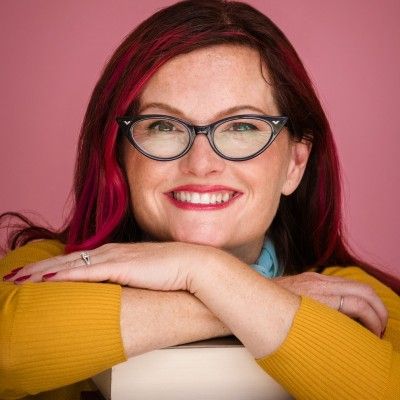
Our guest this week is Kelley Coleman of Los Angeles, CA a feature film maker turned author, disability advocate, wife and mother of two including a son with an undiagnosed rare disease and many disabilities.
Kelley and her husband, Eric, have been married for 16 years and are the proud parents of two boys: Sean (12) and Aaron (10) who has multiple disabilities, including:
- An Undiagnosed Genetic Disorder
- Cortical Visual Impairment
- Failure to Thrive
- Autism
- Epilepsy
- Cerebral Palsy
- Microcephaly, and
- A Feeding Tube
Kelley is also the author of Everything No One Tells You About Parenting a Disabled Child, available on Amazon.
Kelley has lots to say about a host of supporting organizations, including the Undiagnosed Disease Network, Canine Companions, and Painted Turtle Camp to name a few.
That’s all on this episode of the SFN Dad to Dad Podcast.
Show Links
Email – kelleyellek@gmail.com
Website – https://www.kelleycoleman.com/
Facebook – https://www.facebook.com/kelley.coleman.56
Instagram – https://www.instagram.com/hellokelleycoleman/
Undiagnosed Diseases Network – https://undiagnosed.hms.harvard.edu/
Canine Companions – https://canine.org/
Painted Turtle local camp – https://www.thepaintedturtle.org/
SNAP Special Needs Aquatic Program with Stepping Stones https://snapaquatics.org
The book –Everything No One Tells You About Parenting A Disabled Child. Your Guide to the Essential Systems, Services, and Supports – https://tinyurl.com/5casy743
Transcript:
Tom Couch: [00:00:00] Special thanks to Horizon Therapeutics for sponsoring the Special Fathers Network Dad to Dad Podcast, working tirelessly to research, develop, and bring forward medicines for people living with rare and rheumatic diseases. Discover more about Horizon Therapeutics’ mission at HorizonTherapeutics.com.
Kelley Coleman: He is this magnetic, vibrant, hilarious human, and this is his world, and the rest of us are all just living in it.
David Hirsch: So we’re gonna call this Aaron’s World.
Kelley Coleman: Oh my gosh. This is Aaron’s World.
Tom Couch: That’s our guest this week, Kelley Coleman, filmmaker, author, advocate, and mother. Kelley lives in Los Angeles, has two sons, one of whom, Aaron, has multiple disabilities. She’s written a book, Everything No One Tells You About Parenting a Disabled Child, available now on Amazon. Kelly has lots to say about being a mom of a son with special needs, and we’ll hear her thoughts on this Special Fathers Network Dad to Dad Podcast. [00:01:00] Now say hello to the host of the Dad to Dad Podcast, and founder of the Special Fathers Network, David Hirsch.
David Hirsch: Hi, and thanks for listening to the Special Fathers Network Dad to Dad Podcast, presented by the Special Fathers Network, a dad to dad mentoring program for fathers raising children with special needs.
David Hirsch: The Special Fathers Network MasterMind Group experience is the most comprehensive program the 21st Century Dads Foundation offers. Dads raising children with special needs meet virtually on a weekly basis and form meaningful relationships while sharing weekly wins, discussing books, and sharing heartfelt challenges. One of the highlights of the year is attending an in-person weekend retreat. We’re launching 10 new MasterMind groups in 2024 with 10 dads per group. That means we’re only looking for 10 like-minded dads in each community. If you’re a dad raising a child with special needs, we hope you’ll join a local MasterMind group and make the investment to become the best version of yourself. For more information, please see the show notes or simply go to [00:02:00] 21stCenturyDads.org.
Tom Couch: Now let’s hear this fascinating conversation between Kelley Coleman and David Hirsch.
David Hirsch: I’m thrilled to be talking today with Kelley Coleman of Los Angeles, California, a feature film director turned author, disability advocate, and mother of two, including two boys, one with multiple disabilities. Kelley, thank you for taking the time to do a podcast interview for the Special Fathers Network.
Kelley Coleman: Thank you so much for having me and for the degree to which you are serving dads. And by doing that, just making all of our families stronger. And it’s easy to forget about the importance of the conversation of dads within this. And I just love that you are tackling this over and over in a way that feels really great.
David Hirsch: Yeah. You’re too kind. Thank you. You and your husband, Eric, have been married for 16 years and are the proud parents of two boys: Sean, 12 and Aaron, 10, who has multiple disabilities. Let’s start with some background. Where did you grow up? Tell me something about your family.
Kelley Coleman: Yes, I grew up in farm country [00:03:00] Ohio, just north of Columbus, Ohio. I have two sisters and we always had lots of pets and spent most of our time climbing trees and running around outside, which now that I’m a grown up, I greatly appreciate just how wonderful that is.
David Hirsch: That’s fabulous. My recollection was you had two sisters, one older and one younger.
Kelley Coleman: Yes, so I have two sisters, one older, one younger. My older sister has been a working professional artist her whole career, and my younger sister is a pediatric ophthalmologist. So we have all very interesting and diverse careers.
David Hirsch: Yeah, thanks for sharing. So I’m curious to know, what did your dad do for a living?
Kelley Coleman: He sold cars.
David Hirsch: A certain type of car, or just any type of car?
Kelley Coleman: He was selling Hondas and that’s mostly what he was doing.
David Hirsch: And how would you describe your relationship with your dad?
Kelley Coleman: In my adulthood, it hasn’t been much of a relationship at all. Growing up, his focus was on work and grew up at a moment in time when the man went off and did [00:04:00] the thing and then the woman stayed home with the children. So, you know, it was very close with my mom and my sisters, but never particularly close with my dad.
David Hirsch: Okay. Any important takeaways from that relationship with your dad that you’ve tried to incorporate or have informed you about being a parent yourself?
Kelley Coleman: I think all of our relationships get incorporated into not only who we are, but especially into our parenting. The idea of parenting as a true team and as true partners, and that doesn’t mean the workload is exactly divided 50-50 with all parenting tasks at all times. And what exactly the partnership looks like can and should change, sometimes minute to minute. But for me, my big takeaway was that it’s always been so important for me and my husband to be equally involved in our kids and in their interests and their lives. And so that we [00:05:00] are building that together. And to really say we want to do all these things together, whether it is digging into my son’s strange hobby, whether it is taking a vacation, and really that we are a unit. And for us, having a kid with multiple disabilities, that has certainly been a challenge because sometimes his ability to be comfortable and do things and be out in the world can be a big challenge, but because my husband and I really value the idea of being equal partners in all things, it’s been something that’s always been top of mind in our parenting.
David Hirsch: That’s fabulous. Parenting roles have changed from generation to generation. I think that’s one thing that we have to acknowledge. And it is important for both parents to be engaged as fully as they can, right? Depending on what their own circumstances are. And the way I think about it, it’s not just being physically involved, but being emotionally and spiritually engaged as well.
David Hirsch: So my recollection was that you went to DePaul University, you took a degree [00:06:00] in communications, and I’m wondering where did your career take you?
Kelley Coleman: My career took me to New York for a year, and then to Los Angeles. And I knew I wanted to make movies for a living, and ended up being very fortunate to work at some smaller companies, and found my way into feature films and into animation specifically. So I worked at Disney Animation and Sony Animation and some independent companies and had a great career almost entirely pre-kids working in animation, basically coming up with ideas for talking animal movies and working with writers and artists and the whole team of people to make it happen, which is really, it just feels like such a privilege and something that I certainly worked hard for.
Kelley Coleman: Coming from farm country Ohio, you might imagine I did not have a lot of connections and I was really fortunate to be able to put pieces [00:07:00] together, largely through volunteer work I was doing so that I could build the career that I had dreamed of.
David Hirsch: Any favorite movie that comes to mind that you worked on?
Kelley Coleman: I worked on a very early version of the movie Tangled, which is Disney’s Rapunzel movie. It turned out so beautifully and so wonderfully. And I love it partly because it’s a great movie and partly because our boys both love it, and especially our younger son, Aaron, just belly laughs through the whole thing. [David chuckles] It’s so exciting to know that I was part of a very early version of that, and that’s the thing that my kid could watch on repeat. And when he’s having a hard day, he loves when people shoot arrows. And we got some good archery going on in that movie.
David Hirsch: That’s fabulous. I’m curious to know how did you and Eric meet?
Kelley Coleman: Eric and I met, I had left Disney Animation and he was working at Nickelodeon in animation as well. And a friend of ours suggested we have a business meeting to talk about jobs as I was looking. And we had a [00:08:00] very professional meeting, followed by a very professional lunch after where we didn’t actually talk about work. And ended up dating soon after. So we met through friends who were all in animation together.
David Hirsch: Would it be safe to say you took more away from that lunch or your animation career than most of your colleagues?
Kelley Coleman: 1000%. My husband, who is also best friend and amazing partner, it’s exciting that we share our strange interests and love of art and animation, and that we’re seeing that evolve in our kids, which is really fun.
David Hirsch: That’s fabulous. So let’s talk about special needs first on a personal level. And I’m curious to know, before becoming parents, did you or Eric have any connection to the world of disability or special needs?
Kelley Coleman: Eric and I had almost no connection to any of this, and we were just thrown into the deep end in so many ways. Our son began his diagnostic odyssey when he was an infant. Some of our closest friends did have a [00:09:00] young son who had been diagnosed with autism and we were seeing and hearing from them. But looking back, even hearing from close friends what their experiences are with their son who now is in college and thriving, we absolutely didn’t understand the extent to which the cognitive and emotional labor that goes into parenting a kid with disabilities is such a constant and often overwhelming and often exhausting reality.
David Hirsch: So just to paraphrase, almost no experience prior to becoming parents?
Kelley Coleman: Almost zero experience, that is correct.
David Hirsch: So what is Aaron’s diagnosis or series of diagnosis and how did they come about?
Kelley Coleman: As I mentioned, his many diagnoses began to accumulate when he was very young, when he was an infant, and he’s now 10 years old and is thriving. And his diagnoses include a yet undiagnosed genetic syndrome. Within that has also been [00:10:00] diagnosed with cerebral palsy, epilepsy, autism, cortical vision impairment, microcephaly, he has a feeding tube, he has intellectual disability, cognitive and sensory processing issues, fine motor, gross motor, sensory behavior, medical challenges all mixed into there. So he’s an overachiever. I’m just going to check whatever box you put in front of me. That’s just my jam. [David laughing] And within that, certainly so many question marks when you have a kid who doesn’t have an overall diagnosis.
Kelley Coleman: And just before I sat down to do this interview with you, we were at our son Aaron’s school where he was receiving an award for most improved this school year. And I’ll probably cry a little bit. It’s not just a pat on the back. It is being able to point to the explosion of communication he’s had. The interaction with and seeking out his peers [00:11:00] and playing.
Kelley Coleman: And really, he is in fourth grade and is just coming into his own in a way that when he was an infant, we were told that we didn’t know if he would ever see or smile or hold up his own head. And those are not the goals for everyone, but we certainly presume our children will do those things. And when someone tells you your infant might never do those, that sticks with you. And then to be watching him walk up on stage and get a medal hung around his neck for all these things that he has accomplished is just so exciting. And I think any parent can relate to the excitement over their kid succeeding as they are, for who they are. It’s just the best.
David Hirsch: Yeah thank you for sharing. And I think that parents of children with special needs, whether it’s autism or Down syndrome, cerebral palsy, rare disease, blind, deaf, missing a limb or limbs can celebrate the small victories, right? In a bigger way than [00:12:00] most. And that’s really important. So I’m just thrilled to hear that he’s thriving.
David Hirsch: But one of the things that you mentioned is that he has an undiagnosed genetic disease. And have you had the full panel of genetic testing done?
Kelley Coleman: We have. We’ve done every test that science has available up through full genome sequencing. There are many genetic tests. He’s part of the Undiagnosed Diseases Network and will remain in their database. So if we ever do get a diagnosis, I’m certain it would come through them. And they’re really looking to find the hardest to find, the rarest of the genetic syndromes.
Kelley Coleman: And whether or not we find it, I don’t believe will impact our course of action with Aaron, with his academics or therapies or life. But what I do believe is it would be exciting to connect him with a community of peers who is having the same life experience. We’ve certainly made an effort to connect [00:13:00] him with peers and with role models who are also disabled, but there’s no person whose exact footsteps he can follow because we don’t know what is going on with him genetically.
David Hirsch: With all the diagnoses that he does have, which one do you think has been the most challenging or has presented the greatest problems?
Kelley Coleman: The most challenging of Aaron’s diagnoses absolutely has been the epilepsy. I fully celebrate him and all the things that he is, and we do not believe children are broken. We do not believe they need to be fixed. But if I could fix the epilepsy, man, that would be great. Epilepsy seizures are rotten. There are very real potential medical and even life-threatening consequences that can come with seizures. So there’s an element of fear that I have that it’s very real. I don’t believe he has that fear and that’s good. But seeing your child [00:14:00] suffer and not being able to do anything about it. Calling 911 enough times that you recognize all the people in the squad because they’ve been to your house before and you’re asking how their dog’s doing, it’s not awesome.
Kelley Coleman: And epilepsy came out of nowhere for us and completely changed my ability to sleep through the night. I used to be a very heavy sleeper and in the years since Aaron started having a seizure, I don’t know that I will ever be anything other than a very light sleeper. And I think many things we have under control. The epilepsy is something that is always on my mind and always has me on edge, even when he’s in a great stretch.
David Hirsch: Is there medication for the epilepsy or how do you address that?
Kelley Coleman: For us, there are so many different types of epilepsy and it often can be mysterious. Aaron’s case, it is somewhat mysterious. We’ve been able to achieve a great deal of seizure reduction through a combination of medication and specialized [00:15:00] diet that is overseen by the neurology departments that we see at our local children’s hospital. And for us that combination of medication plus the diet has really been the thing for him to achieve, not elimination, but a great and manageable reduction of seizures so that it is not upending his entire life in the way that it used to.
David Hirsch: Was there a turning point when you look back over the first 10 years that you can say, oh we’re on a much better trajectory now because of this or that?
Kelley Coleman: The better trajectory for Aaron has definitely had some steps. The first sign that I can point to was when I first really connected with another parent who remains one of my best friends who is in this situation, because not feeling like I am alone on an island made me more able to handle and deal with things head on. And I became a better parent to him and wasn’t [00:16:00] living in fear in the same way. So that is one thing. Because I was able to figure myself out more, I was able to better serve him.
Kelley Coleman: Mobility and walking is not the goal for everyone. For Aaron, I thought it might be achieved eventually. He was able, started walking at three and a half years old. For him, the mobility gave him physical exercise that he needed, which also helped to address the years of chronic vomiting, which is a real close second to the epilepsy in the hardest things. And the physicality has been a big factor for him. He’s also hyperactive and needs to be able to get that out. And we realized that mobility for him gave him a lot of communication because he was able to crawl or walk over to things and point at or to show or to even make a sound towards something to help him understand that communication [00:17:00] can get me what I want.
Kelley Coleman: And then within the past year, he has learned to communicate on an iPad with a program known as AAC or Alternative and Augmentative Communication and has had this amazing abundance of language where he’s able to tell us his feelings. When he is upset about something, he is able to calm himself more often than not by telling us what he wants, what he needs, that he wants me to go away because he wants the dog. Cool, we’ll get you the dog. So the explosion of communication, we are such believers in teaching him self advocacy in every form it can take. And figuring out a mode of communication that works for him has really allowed us to up our parenting game because we’ve allowed ourselves to ask new questions of ourselves and of him because he can communicate in a much more meaningful and expressive way.
David Hirsch: [00:18:00] That’s fabulous. Now you did make reference to the fact that he had these vomiting episodes and he has a feeding tube. I’m assuming, but maybe not accurately that was a big milestone or a big decision, to go from trying to get food in to just saying, hey, this is not working. We want to make sure that he continues to grow and thrive. Reflect on the decision to utilize a feeding tube.
Kelley Coleman: Yes, I love how you first worded that: milestone and decision. It was – and I’m glad you brought this up – a giant milestone. But was it a decision? It was not.
Kelley Coleman: Aaron got a feeding tube when he was about three months old and was hospitalized because he was eating almost nothing. In order to keep him alive, that was our only option and certainly not for lack of effort on our part. We were working real hard to get our kids to eat and he did not have the reflexes and the motor planning to make that happen. So for many families, [00:19:00] a feeding tube is a decision that they really agonize over. And for us, there was no decision to make.
David Hirsch: Thanks for the clarification. So I’m curious to know what impact Aaron’s situations had on his older brother, your marriage or your extended family, for that matter.
Kelley Coleman: The impact of Aaron could be volumes and volumes of your podcast. [David laughing] He is this magnetic, vibrant, hilarious human, and this is his world. And the rest of us are all just living in it.
David Hirsch: So we’re going to call this Aaron’s World.
Kelley Coleman: Oh my gosh, this is Aaron’s World. It is so true. And is this hard? Yes. Every single day. And that is not a diss on my kid. That is just objectively true. My husband and I fortunately started from a parenting place of being very aligned. And we have continued to be very consistently throughout Aaron’s life and care.
Kelley Coleman: And we see reverberations of this with his older [00:20:00] brother every single day and in who his older brother Sean has become as a 12 year old and is becoming as a young adult. I hear from other parents who also have non-disabled siblings as well as the disabled child that they see the same things that we see in Sean and we’re like, oh, we thought that was just him. But it turns out is actually one of many ways it can impact. He is incredibly empathetic and in tune to others, whether that’s when he’s watching a movie or reading a book, whether that is with his brother, whether that is with other kids at school. And he has such a strong sense of justice and not mistreating anyone, because he knows that his brother is in a marginalized group, that his brother requires accommodations. And he is so adamant about the need for people to get the access that they deserve as humans. [00:21:00]
Kelley Coleman: The ways that we have divided our time as parents are not at all what I imagined. I pictured I was like baking cookies and doing craft projects and like that was going to be my afternoon every day. I have one kid who literally doesn’t eat food and who doesn’t have any interest in craft projects and also doesn’t have a lot of fine motor skills So we’re still working on all that. So my afternoons are instead spent standing in the driveway for a couple hours watching airplanes fly overhead. Which is great, and we have so much fun doing it. But there are days when I really want to be playing Legos with Sean for three hours, building towers out of cardboard boxes and reading books together that are chapters and chapters long.
Kelley Coleman: While I am bummed out that I’m not able to spend the time doing that, we check in with Sean all the time. We make sure that he has time with just him. So I think he [00:22:00] doesn’t see, oh, I’m missing out on what mom had envisioned. But I think what he sees is that he needs to be more independent because he doesn’t require full-time, one to one adult support at all times for all activities, for his safety and hygiene and being and eating.
Kelley Coleman: So I think it has made him more empathetic, more independent, and also gives him a pull towards anyone who is not like him because he has such a curiosity. Our boys have always been very close. That is not a given, and we feel so fortunate that even with all of their differences, they are really the best of friends.
David Hirsch: You’re very fortunate that the relationship between the two boys has evolved like it has, that you and Eric have been able to maintain that strong relation that you made reference to. And I’m curious to know with your extended family, the grandparents or aunts and uncles, I’m wondering [00:23:00] what, if any, impact Aaron’s situation’s had on them.
Kelley Coleman: Yes, that’s a tricky question, especially for us. Eric and I live a plane ride away from all of our siblings and parents. So being a plane ride away makes it challenging, especially because if people are visiting it’s hard to stay with us. We are awake early with loud squealing noises and it is hard. And if people want to – we live in California – come and visit and go to all these places, we can’t necessarily do that. We’re not always the fun people to come visit.
Kelley Coleman: And we are experiencing, we’ll call it a season because I hope it will evolve out of this, a time in our lives when it is very mentally, emotionally, and physically hard for Aaron to travel. So we don’t see our families as much as we would like. And we do have to we [00:24:00] say divide and conquer to do trips, which is really a challenge and it’s a bummer. And I think because of this, our families really don’t know either one of our kids, and especially Aaron, as much as we would have envisioned or liked. Because when you are a plane ride away and you have a kid who can’t do plane rides, it makes it a lot harder.
David Hirsch: Yeah. What I think I hear you saying is that there’s a distance or a gap, right? And maybe it requires that you be more intentional about trying to bridge that gap. Maybe the technology allows for that with Zoom or Skype or whatever, so that you can still stay in contact with one another. It’s not the same as being in one another’s physical presence, but hopefully, like you said, it’s a season. And seasons come and go.
Kelley Coleman: Yes.
David Hirsch: And a lot of things have transpired that you would have never imagined Aaron would be able to do. And maybe traveling longer distances in a car or on an airplane become a little [00:25:00] bit more part of the routine. I don’t know what else to say.
Kelley Coleman: Yes. And I love that you used the word intentional, because ideally we should all be intentional in all things. And I think when you are parenting a kid with high support needs, with disabilities, with medical considerations, being intentional I think is the thing that has kept our marriage strong, has kept the brothers having the relationship that they can, and has also allowed us to really pursue therapies, medical treatments, different things that have allowed Aaron to thrive. Because I think part of that is being proactive with things and not just being afraid and reacting to everything and waiting to see what comes next and waiting to see if there will be another seizure, but instead saying there will be another seizure, what are we going to do? Our boys will have a very different experience in life. We want them to be friends. What are we going to do? And being intentional and proactive can take so much of the fear out of all of this.
Tom Couch: We’ll be back with more of the conversation on the Special Fathers Network Dad to Dad podcast in just a few moments. But first, this [00:26:00] quick message. Please help 21st Century Dads gather research on families raising children with special needs by having them complete the Special Fathers Network Early Intervention Parents survey. A link to the survey can be found in the show notes. As a token of our appreciation, each person, mom or dad, who completes the survey will receive a Great Dad Coin. Thank you. Now, back to the conversation.
David Hirsch: I’m thinking about supporting organizations and I’m wondering which organizations have played an important role in your family?
Kelley Coleman: We’ve had many organizations that have been essential to us. We mentioned the Undiagnosed Diseases Network, and that has connected us with a community of people who also do not have diagnoses, potentially with a community with Aaron’s diagnosis, maybe just one other person one day.
Kelley Coleman: Other organizations that have allowed us to give Aaron more access to his world and our family more access to fun and just regular family things together [00:27:00] include the Painted Turtle, which is this remarkable camp. They’re part of the SeriousFun Network, which is nationwide. Painted Turtle is here in Southern California. It is a fully accessible camp that has family weekends and weeks for kids with disabilities and medical conditions. And seeing our son on a zipline and a ropes course for the first time was just so powerful because that is never anything I thought he could do.
Kelley Coleman: Watching his friends in wheelchairs powering themselves through an actual real life kind of scary ropes course was amazing. And our takeaway from the weekend as we were winding down and packing up our stuff, Sean said, “Mom, I can’t believe all the things Aaron can do.” And that is what camp is for us. It’s the opportunity to have everything fully accessible and for us to see the [00:28:00] reframe in our own heads and certainly in Aaron’s when he’s not worried about tripping up steps because everything is a ramp and when the archery course is adapted so that he can shoot an arrow. Maybe this is his arrow thing that he loves. He can shoot that arrow.
Kelley Coleman: And also part of our camp adventure is we bring Aaron’s service dog, who we got through another great organization: Canine Companions. They serve many individuals with many different types of disabilities. Something unique about Canine Companions is that they’re funded by donations, so the financial barrier to receiving and being matched with one of their service dogs is removed, so that you’re able to receive the dog without having to fundraise for tens of thousands of dollars.
Kelley Coleman: And having a service dog, she’s trained in many skills to mitigate the disability. Something we hadn’t really anticipated that has been wonderful is the reaction of others and the interaction with others when Aaron is out in public [00:29:00] with his service dog is so different. He is loud and proud and all over the place and waving right in everyone’s face. And he’s adorable, I think. But when you hear loud, sudden squealing when you’re at the library or the grocery store or the movie theater, it’s jarring. And people look at him and give him the la la la look, which is not fun. And it was hard to think about our child growing up and going through life with everyone looking at him and making a face or that oh-you-poor-thing face. Nobody needs that.
Kelley Coleman: When he is with the dog, people hear him. They turn, and the first thing you see is, hey, you’ve got a dog at the mall. And that changes everything. People smile, people say hello, they come over and talk. Kids run towards him, which he loves. And having a service dog for Aaron, in addition to all the tasks, really does change his interactions with the world, and I think really [00:30:00] bolsters his social emotional experience because it is giving people a connection rather than people just feeling distanced because like we once didn’t, they don’t have any experience with disability.
David Hirsch: What’s your dog’s name and how many years have you had your service dog?
Kelley Coleman: Our dog’s name is Heddy and we got matched with Heddy in February of 2020, so mere weeks before the world shut down. So we’ve had Heddy since February of 2020 and she was really key to all of our mental health as we entered into COVID. And even if Aaron was just helping walking her up and down the street getting physical activity, having bonding and interaction and doing the training with her really added a great sense of purpose. She continues to have a great sense of purpose, but we’ll always be very thankful that we happened to get her before the world shut down.
David Hirsch: Others have also mentioned that these service animals, just dogs in general, are like magnets, like you were [00:31:00] saying, right? They attract people in a positive way to your child, as opposed to this behavior that might seem a little out of ordinary. That is like one of those other benefits that you’re not thinking about immediately. It sounds like you’ve realized that as well.
Kelley Coleman: Yes, it is remarkable, the social bridge aspect, especially for a kid like Aaron, who is social and is outgoing and wants to be around people. And we understand that especially so many children have never had an experience with a kid like Aaron. So it’s really an opportunity for connection when you have the dog.
David Hirsch: So let’s switch gears and talk about your book, which is entitled, Everything No One Tells You About Parenting a Disabled Child: Your Guide to the Essential Systems, Services and Supports, which came out in March of 2024. Where did you find the time to write a book, for God’s sakes, Kelley?
Kelley Coleman: I found the time to write [00:32:00] a book first very slowly, [David chuckles] and very intently, speaking of being intentional. I was a writer prior to this book, so my brain already wrapped its head around things with words. And I knew that if I was going to write a book, it needed to happen almost entirely while the boys were at school. And part of that equation was putting time on my calendar to do the writing. And part of that was putting time on my calendar to do all of the stuff.
Kelley Coleman: Serving Aaron and supporting Aaron requires so many mountains of paperwork and so much time spent with customer service phone calls, and chasing down medication orders, and diaper orders, and feeding tube supplies, and blending the food for the feeding tube. And there is so much that is never going to go away.
Kelley Coleman: But by giving that literal time and space on my calendar meant I knew I had to get that done and if I wanted to write [00:33:00] this book, I had to turn off my internet and write a book during those windows. It was meaningful to me and so it became the thing. And there were certainly times when Aaron’s health took priority and when medical concerns jumped in there and I had to not write for weeks or a couple of months at a time. But as any of us who find a passion project, once that is the thing you want to do and once you know why you’re doing it, it really drives you forward.
David Hirsch: Yeah. It’s an amazing book. I listened to your book. I think I mentioned that I took the audible version of the book and I really enjoyed the book. And if I was lazy, I would not have made it to the appendix and I would have been very disappointed because the appendix of your book is gold in and of itself. And I’m wondering if you could just explain for our listeners what you did with the book and what the appendix is about.
Kelley Coleman: Yes. I’m so glad you said that about the appendix. I love it. And I don’t think I’ve ever loved an appendix before in my life.
David Hirsch: It sounds like something you should get [00:34:00] removed, an appendix.
Kelley Coleman: Right?! Everybody, if you’ve got the book. Read it, I swear. Maybe read the appendix first even. The book covers different categories of things that we need to know: insurance, financial planning, future care plans, government benefits, school, IEPs, inclusion in your community, getting comfortable with disability, diagnosis, therapies, lots of different things. We’ve got the basics of everything, stories from me, letters from fellow parents, and checklists, bullet points, templates, here’s what worked for me, here are the questions to ask to build your journey.
Kelley Coleman: So it really is a foundational overview. I wish there was like, here’s the thing that’ll work for everybody and go, but that’s not real and that doesn’t exist. So it’s really about how can we learn what we need to know, ask better questions and build the journey for ourselves.
Kelley Coleman: And I was so excited. I interviewed over 40 experts for the book. Each [00:35:00] chapter features at least two experts. And there are bullet points from the experts within each chapter, and then the appendix has the full interviews with all of the experts, who are remarkable, many of whom are disabled themselves. I really wanted to include many disabled experts and leaders in this conversation, and in every conversation. And it also lists any resources cited, whether that’s organizations the experts are affiliated with, that the other parents are affiliated with, or just here’s how to find your parenting training and information center, here’s how to connect with your children’s hospital. So all of those resources that have just been sitting on the desktop of my computer for the last decade, I’m so thrilled to be able to share those with people.
Kelley Coleman: I just feel like we are reinventing these same wheels, and when we have this information, when we are reading those interviews with experts, we really [00:36:00] see that so much of this work has been done for us. So here it is! Here’s a decade’s worth of time I just gave you.
David Hirsch: Yeah it’s brilliant, and it’s a must read, especially for younger families, ones that are toward the beginning of their journey. Not that somebody with more experience couldn’t benefit but I’m particularly thinking about families that might be the 0 to 3 early intervention years or maybe just beyond that as you’re entering the world of IEPs. Anyway, I’ve read a lot of books on disability and this is one of my favorites. So thank you for creating this masterpiece.
Kelley Coleman: Thank you!
David Hirsch: Before we move on, I want to make sure that we talk about these epic Halloween costumes that you and your family have created. So where did that start and how has it blossomed like it has?
Kelley Coleman: This is the best question of all. So in our family, we definitely value creativity in all its forms. And I love to sew, and I was very excited to have kids because I could dress them in Halloween costumes. [00:37:00] So I’ve always made handmade Halloween costumes, and our kids get to choose what they want to be, provided that they help. So our kids might be at the sewing machine with me or Aaron, who’s not yet ready for machinery, might be pointing at and picking colors of things and that works too.
Kelley Coleman: So we have our epic Halloween costumes. Our boys have been explorers being attacked by snakes. They have been pirates battling giant squids. They have been polar bears, gnomes, robots with blinking lights. They’ve been all sorts of fun things. And something I’ve really enjoyed with making costumes is that Aaron’s physicality and his motor skills and safety and the way that he moves necessitates different costume planning.
Kelley Coleman: So Halloween is a big event in our house, and I enjoy adapting costumes where I want his robot costume to [00:38:00] be just as awesome as his brother’s, but he can’t walk around with a cardboard box on his body that he can hardly see out of and a bunch of blinking lights that he’s trying to grab. Looking at what is the equally awesome version that is safe for you.
Kelley Coleman: And we have a blast! This year we’re debating what our costumes might be. I think anglerfish [David laughs] with actual lights is a top contender. There’s also been a lot of talk of how many lights can we put on a Halloween costume? So we’ll see.
David Hirsch: Yeah. Very creative. At your website, there’s a series of these pictures. And one of the ones that you did not mention that stuck in my mind was, I think they were hammerhead sharks, but I’m not a hundred percent sure.
Kelley Coleman: Yes. Hammerhead sharks were an especially fun and surprising year because our older son, Sean, the boys were younger and he declared very early on, we are going to be sharks. I designed a pattern. I got the fabric. This is great. We’re going to be sharks. And I laid everything out and I [00:39:00] was ready to cut the fabric. And he said, “You know we’re hammerhead sharks, right?” So ask your children what type of shark they want to be. There are many.
David Hirsch: Yeah I love it.
Kelley Coleman: Thank you.
David Hirsch: So I’m curious to know what, if any, role spirituality has played on your journey.
Kelley Coleman: For me, spirituality hasn’t taken the form of religion so much as being connected to bigger and more beautiful and more curious things in the world than I can wrap my head around. It’s not as simple as ‘God only gives special children to special people,’ which I know that we hear all the time. And for me that has never rung true. I think we all have beautiful things. We have hard things. We have unexpected things. I think for me, my path of spirituality, which I am still figuring out because I think it is so much bigger and more [00:40:00] beautiful that I can even wrap my head around.
Kelley Coleman: And what I always come back to is that our job here is to do the best with what we have and who we are and foster that in others and just to love. And the most spiritual people I know and the most religious people I know, everything comes back to this beautiful place of love.
Kelley Coleman: And people ask me all the time, I talk very openly about how I was just a mess at the beginning of our journey. Am I still a mess sometimes? Yes I am. But I don’t feel like I am just falling down a bottomless pit. I feel like, “I got this, we’ll figure it out, we’re good.” And the thing that connects it really is that love of our kids, of Aaron in all of his things and just that connectedness to there is something bigger. I may not know what it is, but it’s definitely, it’s love.
David Hirsch: Yeah. You make a good point, which I [00:41:00] think the basis of most religions, practice religions do focus on the importance of love and how that brings people together and that we have more in common than we are different. And I think that’s a really healthy way to look at it.
David Hirsch: So I’m thinking about advice and I’m wondering what advice can you share with parents, specifically dads?
Kelley Coleman: I have so much advice for parents. Number one, be partners. And for dads, this can be hard, huh? This can be overwhelming. It can be hard to find your place, especially because dads very often are not the primary caregiver and the primary keeper of all the disability moving parts, and there are many in our house.
Kelley Coleman: For dads, look to where you can find a role, especially in those hours, days, months, years when you feel like you are just treading water, trying to figure out your place within this and how to connect with your child, your spouse, your family, yourself.
Kelley Coleman: So much within [00:42:00] my book is about here is all of the stuff and the paperwork and the planning. In our house, my husband brilliantly declared, he said, “I’m the CEO of the long term planning. You are the CEO of the short term planning.” And I loved the clarity of that, because within that, he is making sure that the future care plan and the financial plan and trusts and whatever we need for Aaron’s future is all disability-specific, is all geared towards him, is updated as Aaron grows and develops. And he has been the primary earner in our house. I have had to take time away from working for the better part of the last decade. So his role of going off to work is an essential part of being the CEO of the long term planning, because that keeps a roof over our head.
David Hirsch: Yeah. What I think I heard you say is that it’s important to be partners. Each of us needs [00:43:00] to find his or her role. And I love the way that the two of you, you and Eric, have divided and conquered long term versus short term and how they complement each other. Thank you.
David Hirsch: I’m wondering if there’s anything else you’d like to say before we wrap up.
Kelley Coleman: First, I so appreciate you entering into this conversation and sharing this with dads. And second, something that shouldn’t be revolutionary, but has been for me on this journey and I wish I had known from the very beginning, was how essential it is to learn about disability from disabled people. I realized through our journey with Aaron, I had spent my whole life learning anything I knew about disability, which was not very much, from people without disabilities. And the pity and the fear and the ‘isn’t this awful’ had just been heaped upon me in a way that never felt good, but seemed like the thing because that’s what people were saying.
Kelley Coleman: We are at such a great moment in time where even the simple act of following [00:44:00] disabled leaders and creators online, following organizations run by and that serve individuals with disabilities, can give us information directly from people who are having the firsthand experience and that can inform ourselves, our bias, our parenting, and also our impression of who our children will become. Because of the friends, the leaders, the creators who have been kind enough and forthcoming enough to share their experience, I have very high expectations for my son’s life, his contribution to the community, and his ability to advocate for himself. And that didn’t come from me just making it up. That came from me being in community with people who have the lived experience.
David Hirsch: Yeah, you’ve hit the nail on the head with learning from people that have disabilities. Let’s just simplify it. If your [00:45:00] child has autism, you can listen to all the experts, you can go through all the different therapies – physical therapy, occupational therapy, speech therapy. There’s a lot of professionals. But the people that have the lived experience, the autistic individuals, have so much more to offer than just the professional opinions, which are to be respected but that’s almost secondhand, right? The professional opinions are really secondhand versus getting the information from the source, if you will. So thank you for emphasizing that.
David Hirsch: If somebody wants to learn about your work, purchase a copy of your book, Everything No One Tells You About Parenting a Disabled Child, or to contact you, what’s the best way to do that?
Kelley Coleman: Yes, my book is available at all the book places: Amazon, Target, Barnes & Noble, your local bookseller, as well as you can find more about me and everything I’m up to and about the book at my website, which is kelleycoleman.com.
David Hirsch: Excellent. I’ll be sure to include [00:46:00] that information about the other resources that we mentioned during our conversation in the show notes, so it’ll make it as easy as possible for somebody to follow up. Kelley, thank you for your time and many insights. As a reminder, Kelley is just one of the individuals who’s part of the Special Fathers Network, a mentoring program for fathers raising a child with special needs. If you’d like to be a mentor father or are seeking advice from a mentor father with a similar situation to your own, please go to 21stCenturyDads.org.
David Hirsch: Thank you for listening to the latest episode of the Special Fathers Network Dad to Dad Podcast. I hope you enjoyed the conversation as much as I did. As you probably know, the 21st Century Dads Foundation is a 501c3 not for profit organization, which means we need your help to keep our content free to all concerned. Would you please consider making a tax-deductible contribution? I would really appreciate your support. Kelley, thanks again.
Kelley Coleman: Thank you.
Tom Couch: And thank you for listening to the Special Fathers Network Dad to Dad Podcast. The Special Fathers Network is a dad to dad mentoring [00:47:00] program for fathers raising children with special needs. Through our personalized matching process, new fathers with special needs children match up with mentor fathers in a similar situation. It’s a great way for dads to support other dads. To find out more go to 21stCenturyDads. org.
David Hirsch: And if you’re a dad looking for help or would like to offer help we would be honored to have you join our closed Facebook group. Please go to Facebook.com, groups, and search “dad to dad.” Lastly, we’re always looking to share interesting stories. If you’d like to share your story or know of a compelling story, please send an email to David@21stCenturyDads.com.
Tom Couch: The Special Fathers Network Dad to Dad Podcast was produced by me, Tom Couch.
Tom Couch: Thanks again to Horizon Therapeutics, who believe that science and compassion must work together to transform lives. That’s why they work tirelessly to research, develop, and bring forward medicines for people living with rare and rheumatic diseases. [00:48:00] Discover more about Horizon Therapeutics at HorizonTherapeutics.com