

323 – Al Malavolti of Rockford, IL A Retired Aerospace Ops Manager, Father of 22 & Grandfather of 34 – Part 1
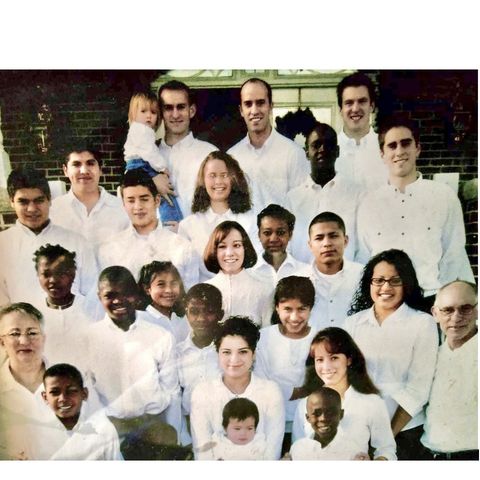
Our guest this week is Al Malavolti of Rockford, IL a retired aerospace operations manager, father of 22 and grandfather of 34.
Al and his wife, Rose, have been married for 51 years and are the proud parents of 22 children; four biological children, 17 adopted children and one who they parented, as well as 34 grandchildren. Their first experience included adopting eight siblings, upon their biological mother’s deathbed wish to keep her children together.
The Malavolti family story is a fascinating one, inspired by their deep faith and the call to make a difference in the lives of so many by opening up their hearts and homes to 18 youth who might not otherwise experience the love of a family.
Given the scope and scale of the Malavolti family, the story is being told over two episodes. This is Part 1 in today’s SFN Dad to Dad Podcast.
Show Notes –
Phone – (815)298-5527
Email – mtamalavolti@yahoo.com
Seattle Times Story 1/4/98 – https://archive.seattletimes.com/archive/?date=19980104&slug=2726904
Transcript:
Tom Couch: Special thanks to Horizon Therapeutics for sponsoring the Special Fathers Network Dad to Dad Podcast. Working tirelessly to research, develop and bring forward medicines for people living with rare and rheumatic diseases. Discover more about Horizon Therapeutics mission at horizontherapeutics.com.
Al Malavolti: Up to that point, like I said, I had always given a century up here to adoption, but I was always scared to death that one of these adoptions would finally go through and, I’d have an extra responsibility, which I didn’t know how I would handle. I didn’t know how I’d take care of it financially, physically, spiritually. And here I am saying yes to eight. Eight children.
Tom Couch: That’s our guest this week, Al Malavolti, who has the distinction of being a father of 22 children. Al is retired and has been married to his wife, Rose, for 51 years. His stories of adopting children from Haiti make up the two parts of this Special Fathers Network Dad to Dad Podcast. This week, we’ll hear part one. It’s a fascinating story, one which you will enjoy. Now say hello to the founder of the Special Fathers Network and host of the Dad to Dad Podcast, David Hirsch.
David Hirsch: Hi, I’m David Hirsch, host of the Special Fathers Network Dad to Dad Podcast. Two short messages. First, I’d like to thank those who donated more than a thousand dollars to the 2024 cycle dad father Absence Campaign. In alphabetical order. They are Ina Byrd, Irene and Tom Costello, Kim Duchesse, Damian Navarro, Brad Surratt, Don Stadler, and UBS Financial Services. If you haven’t already done so, please go to 21stCenturyDads.org and donate today. Secondly, I’d like to invite you to attend the 4th Annual Special Fathers Network Mastermind Group weekend retreat taking place at the Hyatt Regency Chicago, September 6th through the 8th. Attendance is free for Special Fathers Network Mastermind Group Dads. Other dads can attend for a small cost. We’re budgeting for 30 dads this year, and it’s sure to be a memorable experience for all involved. For more information, please see the show notes or simply go to 21stCenturyDads.org.
Tom Couch: Now let’s listen to the first part of this conversation between Al Malavolti and David Hirsch.
David Hirsch: I’m thrilled to be talking today with Al Malavolti of Rockford, Illinois, who’s a retired aerospace operations manager, father of 22. Yes, I said 22, including 17 adopted children, as well as 34 grandchildren. Al, thank you for taking the time to do a podcast interview for the Special Fathers Network.
Al Malavolti: You’re welcome.
David Hirsch: You and your wife Rose have been married for 51 years and the proud parents of 22 children, four biological children, 17 adopted children, and one more who you parented.
Al Malavolti: Correct.
David Hirsch: Let’s start with some background. Where did you grow up? Tell me something about your family.
Al Malavolti: I grew up in Rockford, Illinois. It was a kind of an industrial town back when I was born. But, my father always owned small businesses. Besides that, he worked a couple of other jobs, so he was always busy. He was always an outdoorsman, hunting and fishing. I went to school in Rockford, through high school, and, after that spent two years in Peoria at Bradley, and obtained, my bachelor’s degree from Michigan Tech University in the upper peninsula of Michigan. The weekend after I graduated, Rose and I got married and, started working in Rockford. We weren’t real sure where we’d end up. I had a degree in forestry, which isn’t a big demand item in the Midwest, but Rose’s dad ended up several months after, our marriage having cancer diagnosed. So we stayed in Rockford, and, we’ve been here pretty much ever since. I had a sister growing up. She’s a younger sister. Like I said, my folks were small business owners the whole time I grew up. but my dad did work several jobs, including a technician at, Sunstrand, the local aerospace company in Rockford.
David Hirsch: Well, thank you for mentioning that. And I’m sort of curious to know, how would you describe your relationship with your dad?
Al Malavolti: Oh, that’s kind of hard to describe. It was a combination of fear. And as a kid, you know, you’re never sure what dad’s going to do if you really screw up and disobey. Ah, Also, it was also one of respect. So I never screwed
00:05:00
Al Malavolti: up real bad.
David Hirsch: Well, it sounded like your dad had a good work ethic if he was working multiple jobs in addition to his job at Sunstrand.
Al Malavolti: Oh, he did. He had a wonderful work ethic. And, he shared his experiences as an outdoorsman and with me. You know, growing up, we went hunting and fishing and spent time outside. He built houses for a while and, just fixing cars and I don’t know what else. I mean, everything.
David Hirsch: He sounds like a little bit of a jack of all trades, given all the experiences you were just describing. And I’m thinking about sort of like important takeaways when you think about your dad. Perhaps something you tried to incorporate into your own parenting.
Al Malavolti: Well, I never felt like there wasn’t anything I couldn’t do because of him.
David Hirsch: Any other important thoughts when you think about your dad?
Al Malavolti: Like I said, just nothing seemed impossible.
David Hirsch: Okay. I’m wondering if there’s any other men that played an influential role, perhaps as a young guy, or as a young adult for that matter.
Al Malavolti: Well, a few of my bosses as I was growing up. I started working when I was like 13 at our ice cream store. In 15, I had a job working at a, I think it was a shoe store. And, you know, various bosses at various times. I’d always go to them with problems or whatever, and they would say, well, if you were the boss, what would you do? Kind of thing. So started making decisions right away at a young age.
David Hirsch: I love it. I think in a prior conversation, you mentioned, Robert Page.
Al Malavolti: Oh, Robert, Yes. He was a teacher in grade school.
David Hirsch: Okay.
Al Malavolti: Again, one of my bosses, as I got older in college, he hired me for the Rockford Park District. And that’s actually where I met Rose. Became a camp leader, a camp director, I should say. more than a leader. You know, he was, again, a kind, inclusive person and learned a lot from him.
David Hirsch: I think of people like Robert as being the angels in our lives. You know, maybe you don’t realize it at the time, but, they have a influence. Just by virtue of the fact that you said you met Rose while you were there at the park district, obviously has changed the trajectory of your life as well.
Al Malavolti: It did, it did.
David Hirsch: So, after, school, you mentioned that, you went to, work, there in Rockford. And I was wondering, did you go straight to Sunstrand or were there some stops along the way?
Al Malavolti: No, I worked at, Rockford Screw Products for three years. I learned a little bit about manufacturing. At that point. I had to get familiar with all the ins and outs of the, process of making screws. Started going back to school, went to school at night for about two years and ended up with a master’s degree in education. I had to quit Rockford Products to do my student teaching. Then I worked full time for the Rockford Park District for a little while. I was running the outdoor education school. It was their first year of doing that. The school district had done it prior, and they couldn’t decide whether they wanted to reopen in the, school year. So I had to get a job teaching. And that was in Freeport. And so I taught over there for six years, maybe six, six and a half. The pace of pay for, a schoolteacher wasn’t keeping pace with industry. and our family was growing. We had, three children at that point. And so I started looking around. My dad and my uncle both worked at Sunstrand, so I went there first and applied for a job. So I eventually started working for them as a teacher, teaching computer skills and whatnot. I had already done some work educationally to increase my computer background, so I started working for them as a teacher. And as I learned the manufacturing processes, I, got into manufacturing and then from there did various things for 34 years, almost all of it in manufacturing. Some of it was in engineering, but, mostly manufacturing.
David Hirsch: I’d like to talk about family. I guess we’ll be sort of talking about adoption, just given the size of your family. And I’m sort of curious now. Before you and Rose became parents, did you ever talk about how many children you were likely to have?
Al Malavolti: Oh, yeah, we did.
00:10:00
Al Malavolti: Rose had an experience in third or fourth grade when her mother died. Her father took her teacher, Mrs. Lyle, and, her brothers and sisters and took them all to an orphanage. Now, Mrs. Lyle was probably 70 something when she was teaching Rose in third grade. So it was quite a while ago, you know, turn of the century. And Mrs. Lyle would talk to the class about what it was like growing up as an orphan and, how on Sundays they would try to make themselves prettier for the people who came and orphan shopped. Unfortunately, nobody ever took Mrs. Lyle. So third or fourth grade, Rose went home and announced to her dad she was going to have 21 kids.
David Hirsch: Oh, my gosh.
Al Malavolti: Her dad told her no, she wouldn’t.
David Hirsch: What a prophetic statement.
Al Malavolti: Yeah, so we talked about having a large family before we got married, and, I always gave a cent to it up here. So we got married and, I don’t know when we actually started the actual adoption process. We had two or three kids when we started. And we started a number of different times, and each time it got stopped for one reason or another. We were also doing foster care at the time, and our foster care experiences were not very, encouraging because of the problems with foster care versus adopting. We had it stopped at one point because, Rose became pregnant, and we had already had a referral and we said yes. And then she got pregnant and they just yanked it right out from under us. Even though we felt like we could have handled it, they still said no. It’s our policy. If you’re pregnant, you’re done. And so we finally tried to adopt three children from Mexico. We had four children at the time. We even went so far as to fly down to Mexico to meet these three children in the orphanage. They were part of a failed adoption with an American. So the embassy was involved in all kinds of things. And so we said, fine. We would take all three, and, came back home and started working on the paperwork, which is voluminous. Years later, we still hadn’t completed the adoption. I don’t know how many years it was, but the director of the orphanage got fired. Half of his staff got fired. The new staff came in. They didn’t know us. They wanted a bunch more paperwork redone. A lot of our original documents timed out. They get old, and you have to get new ones. So we ended up having to go to the embassy or consulate, whatever it is, in Chicago, and we had to, bring an interpreter. And we found a nun who would go with us who spoke Spanish. She grew up in Mexico. And we spent, I don’t know, a little more than half a day in the consulate, and we spent about 20 minutes in the actual office. And the other time, we spent in the waiting room. Well, in the waiting room, we’re the only gringos, I guess you could say Americans.
David Hirsch: Non-latino, right?
Al Malavolti: Yeah, Latino. There’s a culturally correct answer. But we were the only ones sitting there. So this woman started speaking Spanish to the nun who was with us. So this woman at the end, when we were leaving, this woman said, my friend, she’s an interpreter, and she’ll do your documents for you. And she gave us her name. So we called her. So she did some documents for us. So during this time period, you know, we became friends on the phone and shared our faith. And so she called us one, I think it was new year’s eve day. And she said, I want you to pray for my son, David. He is helping to take care of some children in Laredo, Texas. She started telling us about the situation. This woman was terminally ill with stomach cancer, and she had, Margaret told us, eight children. As it turned out, she had nine, but one of them was married already. She was having a hard
00:15:00
Al Malavolti: time finding somebody to adopt her children, and she wanted them all kept together. There was an, orphanage involved. They would take the two babies. She asked if we would be interested. I said, why not? Now? Up to that point, like I said, I had always given a cent up here to adoption, But I was always scared to death that one of these adoptions would finally go through, and, I’d have an extra responsibility, which I didn’t know how I would handle. I didn’t know how I’d take care of it. Financially, physically, spiritually. And here I am saying yes to eight. Eight children. We went down, we met the mother. She was in the hospital. Met the kids now, these eight children. The oldest was 17, but he really wasn’t home. Anytime he didn’t get his way with either his mother or his father, who lived in Mexico, cross the river, he would leave. He would go to the other one. And so when his mother became sick, he came home, but he really wasn’t there to take care of his brothers and sisters. He was 17. He was more on his own, running with gangs and whatnot in Laredo. So we met him, said yes. We signed some documents with an attorney and came home thinking, we’ll leave the kids there for them to experience her mother’s passing, spend time with her until she does go. So to go back to work. And, you know, we’re trying to make arrangements for getting the house ready for eight more inhabitants and so on. And. And I finally called an attorney friend who we knew was involved with adoption. We kind of knew him through church. His Rose had taught his. His children in school. And so I called him and he. This is the day before the mother dies. And he says, well, have you filled out your IPC, whatever it was? He explained that it was a document, the Interstate Compact for the Protection of Children, ICPC. He says, you can’t bring him home. You can’t bring him from Texas to Illinois unless all that paperwork is done. Well, the attorney who was helping us down in Laredo had no clue about family law or adoption or anything and didn’t know anything about this. So here we are sitting there for 30 days thinking the mother’s going to die and we’re going to bring him home, and we can’t bring them home. We find out the day before she dies, and by the time I even figure out what this thing is and what we have to do, she passes away. Well, she’s got to sign some documents, and she can no longer sign them. So I called the DCFS. I called, ah, Laredo, their Children and Family services, the. The people who were helping the family. And these kids are now living with no adult in the house. And everything that I was told was that it would take me six months to just get the paperwork done, let alone, you know, figure out how to get them up here. The gentleman who sat next to me at work swore my phone wasn’t. Wasn’t going to survive because I kept slamming it down when I get these answers, like it would take six months. So we moved. Heaven And Earth. Well, for example, we needed our fingerprints done for this ICPC or whatever it was. I said, well, You’ve got about 14 copies on our records already for all these other adoption attempts that we went through. Oh, those were all paper. We’re not doing it on a computer, so you have to come in and have it done on the computer. I said, where do we go? I’ll be there tomorrow. So we. We, pushed and pushed, and we eventually got it done in 30 days instead of six months. We didn’t know how we were going to get from Texas to Illinois with eight children and two adults. So we looked into renting a. A van. And we looked. Car rentals are. You can go one way, but I didn’t know that van rentals are strictly both directions. They’ll rent you a van, but you got to bring it back to the same place. So we couldn’t rent one in Texas and drive them up, you know, fly down. We couldn’t afford tickets for commercial flight.
00:20:00
So I had a friend at work, and he said, why don’t you contact the Sunstrand Foundation? They had a charitable foundation and see if they can’t help you? So I contacted him, and they said, well, we, you know, we do have airplanes, but you would need permission from the vice president of operations. So I went to talk to him. He says, we have a plane. It’s seated 10, so we could get the eight children, Rose and I on it. And they said, you just have to make sure that we’re not using it for a business at the time. So, that solved our problem with getting him home. We just had to come up with a weekend where we could go down and get them. So, long story short, eventually, about three weeks later, a weekend came up. We flew down, and we, retrieved them from the airport there. The folks in Laredo got them all together with all of their belongings, and we put everything on the airplane and flew home.
David Hirsch: So that was the beginning of the journey. That’s an amazing story. I really appreciate you, going into the detail that you did, and, it’s not lost on me that you had four kids at home already. What were the ages of your biological kids at that point?
Al Malavolti: Well, our two oldest sons were in graduate school. They were both, in chiropractic school in Davenport, at Palmer Chiropractic. Our daughter was in high school. I believe she was a senior at the time. And Gabriel was just. I think he was 6 or 7.
David Hirsch: So the first wave, if I can call them waves of adoption, sure took place with these eight family members, age 18 months to 17 years. And they’re siblings, right? That’s what you said.
Al Malavolti: Correct.
David Hirsch: And you had two out of the house, but two still in the house. Ah, your daughter and then Gabriel, who’s your youngest. And, I’m wondering, was it an easy transition for all involved or were there some bumps along the way?
Al Malavolti: Oh, there were bumps. We had, what, 12 at that point? So we set some rules. So many had to shower in the night, so many in the morning, go have kids. And then Rose and I and I had to put another hot water heater in the house, get that plumbed in. And. And, we had to find schools for everybody and had no idea of the level of schooling that they were at. turns out the 17 year old, which we didn’t know, had dropped out of school in fourth grade.
David Hirsch: Oh, geez.
Al Malavolti: And we didn’t find that out until he went to, Boylan, which is a Catholic high school in town near where Rose was working. It was very highly rated. And we ended up with some documentation finally, that they got from Laredo and found out that he was. Had dropped out in fourth grade. And so his level of education was not really up to boiling levels. And, he was having a hard time seeing, so I took him to an eye doctor, and turns out he was legally blind.
David Hirsch: Oh, geez.
Al Malavolti: So. And he refused to wear glasses because of his ego. So we had problems. He didn’t want to be adopted. The judge basically made him come to help take care of his brothers and sisters. So we had some real getting over his recalcitrants. at first, that was the start. Then as we all got to know each other better, you know, other things start to pop up, and you just deal with them as they. As they come, I guess.
David Hirsch: Was there a language barrier? Did they all speak English or were they, bilingual?
Al Malavolti: Most of them were bilingual. The little one, Jackie, the three year old, she was three by the time we got her home, she only spoke Spanish. But when we got her home, she decided she wasn’t going to speak anything. She didn’t talk for a long time, and she was really funny. She walked in and she looked around the place and saw the VCR underneath the tv. And, she walked up to it and she started punching buttons. And before you knew it, she had the time set. She had this set three years old, and she had all this technological stuff done already. I didn’t know how to do it. Rose didn’t know. Here’s Some three year old programs or VCR force. Like I say, she didn’t talk. And little by little she spoke English or learned to speak English.
00:25:00
Al Malavolti: And then the others, the two oldest, the two that were, they were illegal by the way. Their mother had brought them to the United States from Mexico. She was illegal. And so we had a, a lengthy round of go rounds in the courts with, the American government to get them legal. The others, the three oldest, maybe two girls and a boy, they could speak Spanish, but they lost their Spanish almost right away when they got up here. They were bilingual. But I think if the oldest one, if you asked her anything in Spanish now, she’d tell you she couldn’t tell you an answer or give you an answer because she doesn’t remember.
Tom Couch: We’ll be back with more of the conversation on the Special Fathers Network Dad to Dad Podcast in just a few. But first, this quick message. Please help 21st Century Dads gather research on families raising children with special needs by having them complete the Special Fathers Network Early Intervention Parents survey. A link to the survey can be found in the show notes. As a token of our appreciation, each person, mom or dad, who completes the survey will receive a great dad coin. Thank you. Now back to the conversation.
Al Malavolti: Wave number two is four little boys from Haiti. About two years after we adopted the eight, a gentleman came to our church. He was a friend of a friend and he was the director of a school in Haiti. And he asked for parishioners, to go down and to help at the school. I went to an information meeting and I, I said to my wife, I’m not going, I don’t have time, I have so much to do. We have the eight kids to take care of and I, you know, I’m not going. She kept saying I probably needed to go because everybody who was interested in going couldn’t do anything. It sounded like a wonderful trip. You could go down and meet the kids, talk to them. it sounded like something good you should do. So I finally went and I get there and turns out the school is a residential school. You have to be in like the top three of your class to even come and take the test to get into this place. They come from all over the Port au Prince area. These kids show up on Sunday afternoon and they go home on Friday night. In some cases, that’s the only time that they ate. They get home, there’d be maybe four or five other kids and there wasn’t enough food for him or her, so she didn’t eat for two or three days until she got back there. And you know, I just, it just was a wake up in terms of how poor, the country was and how, what kind of situation a lot of them were living in. One of the outreaches from the school was to go to Mother Teresa’s orphanage in Delma, Haiti. And I would go with them to drop off. There were seven or eight of us. I knew how to do plumbing and wiring and carpentry work. And so they had me busy all the time at the school fixing wiring, fixing plumbing. I overhauled their generator and that kind of thing. But when we took people to the orphanage, I would go along because we would stop at the hardware store and I would get the things that I needed. I walked in one day in, this little Haitian girl is holding a baby. And she said, I have to go get diapers or something for him. And she handed me this baby to hold. Well, I held him until she came back. And, I asked about the baby, I asked about the beef a couple days later when we were there and the baby had died. And, there were kids at this orphanage that were, you know, babies up to five, six years old. And a lot of them had physical issues, you know, just going back to the school and seeing these kids. The electricity would be on sometimes only for two or
00:30:00
Al Malavolti: three hours in the middle of the night at the school, the electricity would come on and these kids would find a light that, was like a, a street lamp or a yard light or something, and they’d all be underneath the light studying in the middle of the night. I’ve already told you about the situation with a lot of them not eating. And so after our trip down there, I said to Rose, you know, we should, we should think about adopting from down there. Patrick, the man who ran the school, ended up moving to Rockford. He still ran the school, but he, he became a parishioner at our church. And he dropped off a bunch of pictures one day and said, these are all the kids available at the orphanage right now. I made a few more trips down there to work on the infrastructure at the school. Eventually Rose went with me once, you know, we were there and tried to decide how many kids we needed or not needed but would take or could take. We finally settled on four. And we stair stepped him from a baby up to. The oldest boy was, I think nine at the time. He was really too old to be in that orphanage. And he had, they had sent him to another orphanage, but they brought him back because they knew we were interested in him. And so we started the paperwork. Haiti is not real friendly to adoption. Apparently they’ve had some issues with people adopting children, selling them on the black market and doing other things like that. And so the fact that we were taking or wanted to take four at once was very suspicious to them. So we did not, get a lot of help in Haiti. We had an attorney down there and Patrick, the gentleman who ran the school, he was heroic in helping us what should have been a few months process ended up being a whole year. The kids that we had selected, by the time we got back down to get them, they were, you know, one or two years older and completely different people. We a four year old when we brought him home, he was only two something. When we were down there, he was a lively little guy jumping out of his crib, running around. And we get there and he’s got failure to thrive. He was practically comatose. They’d give him his bowl of rice at lunch and he would pick a single piece of rice out and look at it a while and then he’d stick it in his mouth. Meanwhile, the other kids all around him are eating all of his food out of his bowl. He was, like I said, practically comatose. And he was that way until we got him home for several months after. And he’s pretty healthy now. He’s in fact living in Gary’s house in McHenry. That’s Joseph. I don’t know if you met Joseph, but he was part of Gary’s campaign and whatnot. So there were four boys, there was a baby and there was Joseph who was 4. Emanuel was, I, think it was 18 months or so by the time we got him home. And Jacob, who was 7 or 8, and Mark who was 9. So we brought him home. And just getting to the airport was a real challenge. The last flight out of Haiti was like 3:15 in the afternoon. We were flying standby because we had standby tickets from a friend who was a pilot for American Airlines, who also happen to be the airline to Haiti. we explained to the embassy down there that we had to leave be at the airport early enough to make a flight. 3:15. They said, oh sure, we’ll have your paperwork ready early. So we go to the airport. I, leave Rose with the kids there. So she’s got four kids. She’s got a little girl who’s there helping her from Rockford actually, who was down there working at the school and four kids who can’t speak English. And people are eyeballing her for her purse and all kinds of stuff. And we leave to go to the embassy and pick up our paperwork and there’s a riot going on, burning tires in the street and all kinds of stuff. And so we go back to the embassy, we have to
00:35:00
Al Malavolti: drive all the way around Port au Prince because of this riot going on. And we get to the embassy and they don’t have our paperwork ready. So we sit there and we sit there and we sit there and they don’t bring it out until it’s like 2 o’ clock and the plane leaves at 3:15 and we haven’t gone through customs so we leave and we’re flying down the street. Don’t know whether the riot’s still going on or not. And to drive all around Port au Prince again would be time consuming. So we see a policeman on a motor scooter and we think, well he’s going the direction we, we need to go, we’ll follow him. So we get behind him and we’re going up and down these hills and we, we get to the top and the policeman’s gone, don’t know where he went, he’s not in the road and there’s the riot right in front of us, the burning tires, all that. So we’re sitting in the car. Patrick and I are the only two, let’s say non African descent people in, in the vicinity and we don’t know what to do. The driver is the principal at the school at Patrick ran and pretty soon this tiny little boy walks up to the car and he’s tapping on the window and he’s, he’s going like this pointing and we see that there’s a like an alleyway. All the houses and buildings are in compounds in this part of town. So you know, there’s eight foot walls on either side of this alleyway. So Gary, the driver of the car kind of inches his way over there and we get, get into this alleyway and get around the, the riot. We get to the airport and we’re running. You know, we were supposed to be back like two hours before and she’s there alone with, nobody speaks English, blah blah blah. Kids are crazy. And so I run in, I grab her and grab closest kid and we’re, we’re headed towards the, the ticket line and we only had like 15 minutes to get through customs and on the plane and somehow we made it. I don’t know if they held the plane for us or what, but we get on the plane and luckily there’s lots of room. So the kids spread out in the back of the plane, and the stewardesses all treated them like they were royalty. And that was wonderful. Just getting there wasn’t. So, we flew to Miami. Everything was backed up because, of a snowstorm in the Northeast. So we ended up spending the night in Miami and then coming home the next day. In February, we had to get the four of them all settled in. And of course, they’re coming from Haiti, which is hotter than hot. They got no clothes. They had to start in right away with clothing them and shoes and whatnot. And the nuns gave them everything they had. And it’s February and it’s cold and it’s snowy. And so we both had shoes on. They were probably, about two or three sizes too small. So one of the first places we went was a shoe store. And a funny story there. Joseph, first time he had worn shoes. He’s 4 years old, so he’s all proud of his new shoes, which are old shoes for somebody. And we go to the shoe store, and, I get two or three of the kids done, and I get to Joseph, and he refuses to take his shoes off. Now it doesn’t speak any English, and I’m having a hard time trying to figure out how to get him to take his shoes off. And he’s fighting me like a tiger, to keep his shoes. Of course, his toes are all crinkled up inside. He can’t even straighten them out. But they’re his shoes. So Mark, the oldest boy, understood what we were doing, and he explained to Joseph then. And Joseph had this look on his face like, oh, new ones. Okay. So then he was able to get his shoes off, and we got a everybody shot and, moved on with life.
Tom Couch: And that concludes this first installment of David Hirsch’s conversation with Al Malavolti. Tune in next week when we’ll hear how Al continued his journey to adopt 22 children. That’s all on, next week’s Special Fathers Network Dad to Dad Podcast.
David Hirsch: And if you’re a dad looking for help or would like to offer help, we would be honored to have you join our closed Facebook group. Please go to Facebook group facebook.com groups and search dad to dad. Lastly, we’re always looking to share interesting stories. If you’d like to share your story
00:40:00
David Hirsch: or know of a compelling story, please send an email to david@21stcenturydads.org.
Tom Couch: The Special Fathers Network Dad to Dad Podcast was produced by me, Tom Couch. Thanks again to Horizon Therapeutics who believe that science and compassion must work together to transform lives. That’s why they work tirelessly to research, develop and bring forward medicines for people living with rare and rheumatic diseases. Discover more about Horizon Therapeutics at horizontherapeutics.com.
00:40:31