

325 – Al Malavolti of Rockford, IL A Retired Aerospace Ops Manager, Father of 22 & Grandfather of 34 – Part 2
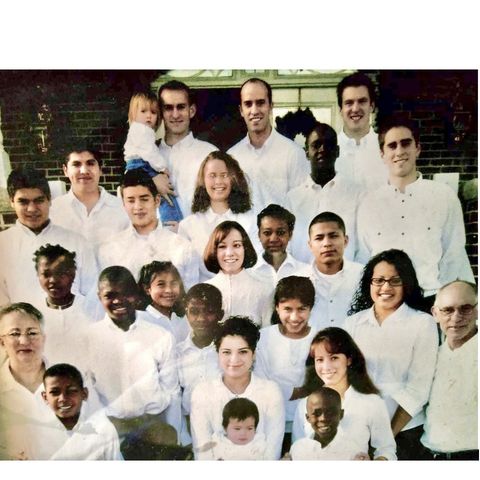
Our guest this week is Al Malavolti of Rockford, IL a retired aerospace operations manager, father of 22 and grandfather of 34.
Al and his wife, Rose, have been married for 51 years and are the proud parents of 22 children; four biological children, 17 adopted children and one who they parented, as well as 34 grandchildren. Their first experience included adopting eight siblings, upon their biological mother’s deathbed wish to keep her children together.
The Malavolti family story is a fascinating one, inspired by their deep faith and the call to make a difference in the lives of so many by opening up their hearts and homes to 18 youth who might not otherwise experience the love of a family.
Given the scope and scale of the Malavolti family, the story is being told over two episodes. This is the second installment.
Show Notes –
Phone – (815)298-5527
Email – mtamalavolti@yahoo.com
Seattle Times Story 1/4/98 – https://archive.seattletimes.com/archive/?date=19980104&slug=2726904
Transcript:
Tom Couch: Special thanks to Horizon Therapeutics for sponsoring the Special Fathers Network Dad to Dad Podcast. Working tirelessly to research, develop and bring forward medicines for people living with rare and rheumatic diseases. Discover more about Horizon Therapeutics mission at horizontherapeutics.com.
Al Malavolti: You know when you’re in the middle of everything, you do the best you can. You have to give God control of some things, and you just do your best and you ask God for help. You step forward and you hope that he guides you. He brings the people you need, the things you need, into your life. And he’s done that. He’s done that in spades.
Tom Couch: That’s our guest this week, Al Malavolti, who has the distinction of being a father of 22 children. Al is retired and has been married to his wife, Rose for 51 years. His stories of adopting children from Haiti make up the two parts of the Special Fathers Network Dad to Dad Podcast. And this is the second half. Now say hello to the founder of the Special Fathers Network and host of the Dad to Dad Podcast, David Hirsch.
David Hirsch: Hi, I’m David Hirsch, host of the Special Fathers Network Dad to Dad Podcast. Two short messages. First, I’d like to thank those who donated more than $1,000 to the 2024 cycled and Father Absence Campaign. In alphabetical order. They are Ina Byrd, Irene and Tom Costello, Kim Duchesse, Damian Navarro, Brad Surratt, Don Stadler and UBS Financial Services. If you haven’t already done so, please go to 21stCenturyDads.org and donate today. Secondly, I’d like to invite you to attend the 4th Annual Special Fathers Network Mastermind Group Weekend retreat taking place at the Hyatt Regency Chicago, September 6th through the 8th. Attendance is free for Special Fathers Network Mastermind Group Dads. Other dads can attend for a small cost. We’re budgeting for 30 dads this year and it’s sure to be a memorable experience for all involved. For more information, please see the show notes or simply go to 21stCenturyDads.org.
Tom Couch: Now let’s hear the final installment of this conversation between Al Malavolti and David Hirsch.
David Hirsch: So I’m sort of good with numbers, Al. Four biological kids, eight kids adopted from Laredo.
Al Malavolti: Correct.
David Hirsch: Now four from Haiti. We’re at 16. I’m sort of curious to know, what does the sleeping arrangement look like? Do you guys have like a large number of bunk beds? Or how are you accommodating, you know, this growing family?
Al Malavolti: Well, the house we lived in, I had built it and it was supposed to be our forever house. It was a good sized home. Problem was it had city water, but it had a septic system. And we were in an area that wasn’t real dry, it was a little bit wet. With that many people in the house, the septic system could not handle that much water. So we started looking for a new place to build another home. We tried to find a large enough home already built, and we actually found one, put an offer on it and it turned out to be condemned. And you know, we had plans to renovate it and whatnot, but, we ended up buying a piece of property. We built a home that was going to be large enough for all of us. And if, you know, the Lord bless us with any more children, it would have been large enough for them. And it was, it is. We’re still there. Like I say, we bought the land. I, drew up the plans and we started construction. We were kind of a novelty, ah, obviously for as many kids as we’ve adopted. And so the local media in the newspaper kind of run updates on us through time. And when they found out we were going to be building, they ran a little update on us and we ended up with having a lot of help from the community. The electricians union said that they’d wire the house for us and several suppliers for materials helped us out. So we built a larger home. I really don’t know exactly how many square feet it is, but it’s about 5,000. But it’s simple, it’s nothing fancy, just big. At that point, for example, the only thing we could afford to do vacation wise was camping. And you have no idea how much space. 16 or 17, sleeping bags take up.
David Hirsch: I’ll take your word for it.
Al Malavolti: Just having space to keep everybody in all of their stuff and, and by that point in time, Rose was homeschooling. We started
00:05:00
Al Malavolti: off in school with all the first eight kids and it became obvious that more than one needed more attention than they were going to get in a classroom with 30 other kids. Even in very good schools, which is what we were in, parochial schools in Rockford. Our youngest son Gabriel, had some issues at that point in time and he had severe headaches by the time he got to, I think it was fourth grade. Headaches became so violent and so frequent that he lost his ability to read, to walk. He was just in constant pain. So Rose did what she could for him. She had to quit her job. She took a medical leave. Actually several of the other kids Became obvious that they couldn’t hack it in school. So we started with one or two, and we ended up pretty soon with all of them at home. With Rose homeschooling, she treated it as if it was a school school. They had, ah, uniforms. We had a schedule which included mass in the morning. You know, we have a library. I have a classroom built in the new home. So we had school at home. Rose was the teacher and principal, and I was the, superintendent, so to speak. So that’s where we were with the 16, and that’s how we ended up fitting everybody into one building.
David Hirsch: Yeah, well, thanks for sharing. It’s not lost on me that the, four Haitian kids, didn’t speak any English. Right. And they had a wide age range from like 2 to 10 years old. I imagine that was another hurdle, right, Just getting them to learn English.
Al Malavolti: Oh, yeah. It surprised me how quickly they did learn it. We had a lot of help.
David Hirsch: Well, the story. We’re just. We’re just in the middle of the story, Al. Wave number three included, three kids. And if I remember, they were Peoria adoptions, Right.
Al Malavolti: They were also from Haiti. The next five were all from Haiti, and they were all from an organization called Helping Haitian Hearts. We found out of them from a woman from Pittsburgh, actually, who met somebody from Rockford at a retreat. And they had also adopted. They read an ad in a. In a Catholic magazine. It was looking for, host homes for, kids for this Helping Haitian Hearts program. And we, said we would look into it. And we called. It was a doctor in Peoria. And he came home, called us and said he had some kids who needed homes. And we said, okay. And we went down and we met him at his home. We said, okay, fine, we’ll. We’ll take them all home with us. and we were open to adoption. Two boys and a girl. The next time we saw him was about a week later, and he shows up with, one of the boys and the girl. The boy was 15, I think the girl was 14. Our kids went running out to the cars, like, more kids, more kids for the football team. And, the boy, he wasn’t real happy to be here. He was kind of a spoiled brat in Haiti. His dad was a school principal. And, he said he didn’t have any idea who his mother was. Although later turned out we figured out who his mother was. And so it got off to a little bit of a rocky start with those two. And the doctor showed up about two weeks later with Willie. And Willie had to stay in Peoria because he was undergoing some more tests. Now, all three of these children had come up here for heart surgeries and didn’t have anywhere else to go back to. Pascal, the boy he first brought, his dad had passed away, and he was living with his grandfather, but his grandfather was very old. And Sophie, the girl, she was already living in an orphanage, even though she had a mother. Anyway, neither one of them wanted her. So the doctor shows up two weeks later with Willie. And Willie, we had never met. He wasn’t at, the doctor’s home when we went there originally. So the doctor spends a while visiting with us. Basically, we’re finding out about his organization helping Haitian hearts and what they do and how these kids got here and how they don’t have a place to go back to, and they’re getting up to leave. And he says something cryptic about Willie.
00:10:00
Now we don’t even know how old Willie is at this point. It’s the first time we’ve seen him. And roast turned to him and said, what did you mean by that? And, he said, well, I’d, be surprised if Willie’s still alive in 18 months. One of the things we had always talked about was that we didn’t want to take any children who had special medical needs. So she turned to me and said, what do you think? And I said, well, even if he’s only got 18 months to live, he still needs a family. Sorry. And, you know, so he was our 12th son, and here, all those fears we had about taking care of, somebody with medical needs Willie was. Would prove us wrong. Now, Willie did. He died in about two years, but he was still alive. I’m sorry. Let me explain. He collapsed after about 18 months. His stomach looked like he had a basketball in it. Well, first of all, he was 16 years old, and he was size 4T clothes, so he was still in toddler clothes. But he was 8. 16 years old, because his heart. His heart was a unique thing. He spent nine months in the hospital before they could figure out what his heart even was and how his body worked before they attempted a surgery and they completely rebuilt his vascular system. Then he left and went back to Haiti. He had a mother who took care of him, but who had to work full time to, provide for him and his sisters. Well, he had a pacemaker involved, and the pacemaker batteries were running out. So they found Dr. John Carroll again, and he brought him back up here, and they replaced the batteries, and, in his pacemaker and got them all better again. And, you know, his mother said, I just can’t take care of him. And Willie, by this point, he still needed a lot of medical care. So we took him. You know, his greatest joy was all of his brothers. They would, take him on walks, put him in a bicycle. You know, he had a three wheeler. They’d pedal, he. He’d ride in the back and, you know, those kind of things. And they were great with him. So his body gave out after about 18 months, and we ended up taking him back to the hospital in Peoria. They had to do another complete rebuild of his heart, Willie’s heart. His system was two completely closed systems. His veins were one system, and his arteries were the other. And they didn’t cross in his heart like a normal person would. But he had so many holes in the middle of his heart, in the septum, that enough blood mixed to keep him alive. Here he was, you know, at this point, he’s, what, 18 years old. We were scheduled to adopt him during this time frame. And after the surgery, which was 20, I think was 26 hours, and he’s. He. He died on the table, but they revived him. So he survived this surgery. And, the judge in his adoption case offered to come to the hospital room. So, we had three lawyers, our lawyer, the state had a lawyer, and the, guardian ad litem lawyer for Willie and the judge and us. we were all in his hospital room, and he was recovering. And shortly after the surgery and we adopted him. So he was about 18 years old. the bad part of the surgery, was that when he died, his, kidneys stopped working. And, Willie was so tiny that they couldn’t do normal dialysis for him.
David Hirsch: Wow.
Al Malavolti: So we. We tried to do peritoneal
00:15:00
Al Malavolti: dialysis. And it. It involved putting a diaphragm in or something. I don’t know how you describe it, but they tried once, unsuccessfully, to do that, and then the second time, they were successful. So he couldn’t do normal, hemodialysis, blood dialysis, because his veins were so tight. It’s like a tube or something in your stomach. Tiny. They would collapse. So we ended up doing peritoneal dialysis, which meant that Willie was tied to a machine for about 11 or 12 hours every day while he was sleeping. And there would be an exchange of fluids, in his body. This machine would pump a saline solution into his body, and it would sit there for a while, and then it would pump it out. And that happened several times over the course of this 11 or 12 hours. So we brought him home with all of this equipment, and we had to set up a separate room in our house, which we did on our first floor, because every month we’d have a straight truck show up with about a ton of fluid in other mechanical things for him. We’d load it into his room, and then every night he’d have to get hooked up. You know, everybody spent a lot of time with Willie in his room at night, doing things with him, watching TV or playing cards or whatever. So that was Willie.
Tom Couch: We’ll be back with more of the conversation on the Special Fathers Network Dad to Dad Podcast in just a few moments. But first, this quick message. Please help 21st Century Dads gather research on families raising children with special by having them complete the Special Fathers Network early intervention parents survey. A link to the survey can be found in the show notes. As a token of our appreciation, each person, mom or dad, who completes the survey will receive a great dad coin. Thank you. Now back to the conversation.
Al Malavolti: In the meantime, the other two Haitian kids, Pascal, ah, and Sophie, they. They were settling into homeschooling and learning what it meant to be brothers and sisters. Pascal, like I said, he was a pretty selfish kid, but, we have a Haitian priest in town who kind of did some work with him and helped straighten him out a little bit. About two years, three years after we got those three, we got a call from John, Carol, and there was another girl, she was in Aurora living at a doctor’s house, who had done a surgery on her to repair a hole in her heart. She had a mitral valve replacement, but they didn’t expect any further medical care for her. But her parents, they lived in a, basically, John said, a mud hut and couldn’t take care of the, fact that she needed Coumadin and she needed regular updates, testing of the Coumadin levels. And I’m on Coumadin too, so I understood what that meant. And. And so that was the. The girl that, we never got to complete her adoption, we brought her here. Haiti kind of fell apart at the time. I forget if there was the earthquake or a hurricane or both, but things weren’t functioning down there, and we no longer had an attorney down there we could work with. And so she got old enough and met somebody up here, and they eventually got married. So that was 21. And John called us. Well, John’s wife called us. John’s wife was a social worker who worked adoptions for Catholic Social Services in Peoria. They had a little girl living with them, and they had adopted a little boy from Haiti, Luke, who, was six or seven at the time. And this little girl was six or seven. And they were not getting along, this little girl, who they were. Who they were the host family for, and Luke. And, she was struggling immensely with her. And, she called us and asked us if we would be her host home. And we said, sure. And so we went down. When she was seven years old, on a Father’s Day, we met her. And this was Mary. This is our baby now. She’s now 20. We brought her home on a Father’s Day. And,
00:20:00
Al Malavolti: funny story in the car, of course, there’s. I don’t know how many of us were at. In the car at that time. At least a dozen kids in Rose and I. Mary’s sitting in the second seat, and she is just scowling at us, and she didn’t want to come up with us. And she’s just showing how ticked off she is. And Rose turned around, looked at her and says, whoa, that’s a really good angry face. She said she turned to. Jackie, was sitting next to her. Jackie, show your best angry face. So put on this angry face. And then the kid that’s sitting on the other side of her put on her best. Her best angry face. And then the ones behind her did the same thing. And before it was all done, everybody had done an angry face. And Mary was laughing like crazy.
David Hirsch: Welcome to the family, right?
Al Malavolti: Yeah. so we bring Mary home, and she’s 7 years old, and she’s going to be our last, Well, we didn’t know if she would be our last adoption, but turns out she was. Anyway, she’s living here for maybe a year. And I used to have a routine where I’d go out on the patio at night and I’d watch the stars. I’d pray a rosary and drink a beer. And she walked up to me and she says, so, are you going to get rid of me when I’m really naughty? And I started laughing. It was all I could do to, contain myself. Because as long as she’s been here, the other kids had been. They couldn’t get any worse than they were at times. And so I’m thinking, I said to her, mary, I haven’t gotten rid of any of the other ones. And you see how naughty they are. Why would I get rid of you? And so she thought about it a minute and she says, you’re right. That was the end of it. You know. So this is. This was about 2010, and we, get a call from the attorney in Peoria who had worked with us with John to adopt Willie and the other. Other kids. And she said, there’s something going into effect that the federal government has put into play that would mean, that you’re not going to be able to adopt Mary locally if we don’t do it, like, right now. And I said, well, let’s do it. We had a new home study done and all the rest of this paperwork that had to be done with every adoption. We got all that done, and we. It was the day before this new law went into effect, which would have required that we send her back to Haiti. And then we flew to Haiti and adopted her, down there. So we went to Peoria. We did the whole thing in a day, thanks to the work of this attorney down there. And, Mary was adopted, but she’s still not a citizen. So we had to wait two years, and then we had to start that paperwork.
David Hirsch: Oh my God.
Al Malavolti: And so that’s been going on for a little over six years now. Now, for Pascal and for Sophie, that only lasted for a year, and the government was done, but we had all this turmoil at the border, change of presidents and whatnot. And so it’s still going on, and she’s still not a citizen. We’ve spent a bundle of money, have a lot of frustration with the government, and, you know, that village, that helps. It hasn’t been a help. So we have had a lot of help locally with people, but the government hasn’t been one of them or one of them.
David Hirsch: So I’ve got this, thought. I’m wondering, with all the experts experience you’ve had with these. Call it four waves of adoptions.
Al Malavolti: Sure.
David Hirsch: 22 children in total, including your four biological children. Looking back, would you have done anything differently with the benefit of hindsight?
Al Malavolti: You know, when you’re in the middle of everything, you do the best you can. You have to give God control of some things, and you just do your best and you ask God for help. You step forward and you hope that he guides you. He brings the people you need, the things you need, into your life, and he’s done that. Spades. I don’t think there’s anything we could say I, should have done this or I should have done that, because we just tried to do the best we could with every one of them, whether their needs were school, church, a sport, you know, a friend, whatever, a new pair of shoes. It was whatever they needed, when they needed it. And you always tried to be the best parent you could. I don’t know what I’d do different.
David Hirsch: Well, I. When I think about, the story
00:25:00
David Hirsch: you’ve just shared, what comes to mind is that, when I’m talking to these young, families who, Whose families have grown like yours, you go from having your first child, where it’s two parents and one child, it’s two on one. And then you have your second child, and now you’re on man to man defense.
Al Malavolti: Yeah.
David Hirsch: And then if you’re fortunate enough, Right. To have a larger family, you have your third or fourth child, and all of a sudden, you know, mom and dad have to play zone defense. Right. Because they outnumber you. Right. And the strategy becomes a little bit different.
Al Malavolti: Right.
David Hirsch: But what I witnessed when we went from three to. To more kids, that zone defense didn’t really change. Right. It was total chaos. You know, you just, like you said, you just do the best job you can with what you have and just let God take over the rest of the situation. But you and Rose have been a little bit more, shall we say, open minded to growing the size of your family. And you’ve told these very touching stories about how each of these children. Children. These waves of children have become part of the Malavolti family. And you mentioned you adopted all but one of the non biological kids. And does that mean that they’ve taken on your last name as well?
Al Malavolti: Yes, yes, they have. They’re all Malavoltis.
David Hirsch: Okay. And, out of curiosity, have any of them been able to stay connected for those that their parents or moms are still alive? Have you been able to maintain any connections with their birth parents?
Al Malavolti: Well, the eight Mexican kids, they have several aunts and uncles. There is one that lives in, Madison, Wisconsin, and their older sister that was married lives in Madison, Wisconsin. And they have kept in touch with her. Well, the one. One of the older children of the eight, she still sees her biological father, he’s from Mexico. He comes up here occasionally. Of the Haitian kids, Willie’s mother would keep in touch with us through Dr. Carol. Now, he used to make regular trips back to Haiti, but with the situation down there right now, he no longer does. And Willie had a sister who reached out a couple times to contact him, and they would talk, but, that’s the extent of the parental involvement.
David Hirsch: Sure.
Al Malavolti: Our experience with, foster care, the negative part of foster care was the parental involvement. And so we discouraged it as much as we could when we adopted.
David Hirsch: Well, thanks for sharing. Understandable. So I want to talk a little bit about, health. Prior to, recording our conversation, we talked about the annual, conference that the 21st Century Dads Foundation did recently on the topic of self care. And, this has not been a straight line for you. I think you mentioned you’d had cancer, a couple of mini strokes, and three open heart surgeries, correct?
Al Malavolti: 2004, 2006, and just last year.
David Hirsch: Which is pretty remarkable that you, are like the energizer bunny, Al. Right? You just put a new set of batteries in and you keep on ticking.
Al Malavolti: Like you said, God’s still got plans. He just doesn’t tell me what they always are.
David Hirsch: Well, Rose is probably telling you what those plans are. So he’s communicating to you through Rose?
Al Malavolti: Pretty much.
David Hirsch: I’m thinking about advice now, and I’m wondering, what advice comes to mind when you think about our listening audience, who are mostly parents, raising children with special needs, what type of advice can you share?
Al Malavolti: Well, I look at my hesitation early on because I put everything on my shoulders. Self reliant guy, you know, I can build a house, I can, you know, run a factory. I can do this, I can do that, and. But I couldn’t figure out how to add more kids until I decided it wasn’t up to me and it was up to God. And especially with someone like our, Willie, you know, we had certain mindsets and certain opinions and certain thoughts, and none of them were right and true. So I. I guess I. I hate to say you can’t rely upon yourself because I don’t want to take you or whoever you are out of the picture and say, just give it all to God. But you have to do an assessment of really who you are and then your strengths, how much you’re going to let God in your life to help you. I guess
00:30:00
Al Malavolti: I don’t know how else to say it. Rose has, I don’t know, 100 miracles written down. what would you say about us building a house, this house here, and how God helped every time we turned around when we adopted the AIT kids, you know, miracle, miracle of an airplane for no cost. That second water heater I talked about was a donation from a friend. All the bunk beds we needed were donated. Not only does God help you with your physical needs, he worries about the decorating as well. Some lady dropped off bunk beds and we, had already done everybody’s room and everybody had these dark green, forest green comforters on Them so that they would all match. Right. So we got more kids coming, the Haitian kids. She drops off bunk beds and then she says, oh, by the way, you need any comforters for them? As she’s driving out of the driveway. And I said, yes. So she’s pitching garbage bags out the window of her truck. Guess what color they were. They’re all dark green.
David Hirsch: It’s divine intervention.
Al Malavolti: Exactly. You know, have we come up short a lot of times with things and. Yeah, we have, there’s never enough money. There’s always food on the table and, you know, clothes on our back and whatnot. But. And we have to work hard. We have a huge garden. So you have to work as hard as you can and try as hard as you can, and the rest you give to God.
David Hirsch: Yeah, well, thanks for emphasizing that. Now, we haven’t talked about your grandchildren, and you actually have more grandchildren than you have children. So I’m going to give you, an opportunity just to, let me know from one grandfather to another. I’m at the beginning of my journey. We just have two. What does being a grandfather mean to you?
Al Malavolti: Oh, boy. You know, it’s. When you have the kids, you always have fun with them and you always teach them when you can, what you can, spoil them when you can and then give them back. You don’t have to keep them. So we love when they’re here. But like I say, you got to remember that they have parents that are there for them, too. You got to give them back.
David Hirsch: We’ll leave it at that. Is there anything else you’d like to say before we wrap up?
Al Malavolti: Adoption has been very difficult from a number of different perspectives. I would never tell anybody or never encourage anybody to do what we did. And not because it hasn’t been a wonderful experience, just that it’s not easy. You have to go into it with your eyes open and know who you are, your, strength and your limits. I’m glad we did as well as we did with God’s help.
David Hirsch: So let’s give a special shout out to your son, Gabriel’s father in law, Gary Rabine. Special Fathers Network podcast dad number 305 for helping connect us.
Al Malavolti: Thanks.
David Hirsch: If somebody wants to learn more about your situation or contact you, what’s the best way to do so?
Al Malavolti: Well, probably not email. You get so much spam, we just go through and delete it all without reading most of it. So that’s not a good idea. Telephone. 815-298-5527. And leave a voicemail if I don’t answer because I tend to not answer numbers I don’t know. So but leave a voicemail. I’ll call you back.
David Hirsch: Well, that’s very generous of you. Thanks. I’ll make sure we include include that in the show notes. Al, thank you for the time and many insights. As a reminder, Al is just one of the dads who’s part of the Special Fathers Network, a mentoring program for fathers raising children with special needs. If you’d like to be a mentor father or are, seeking advice from a mentor father with a similar situation to your own, Please go to 21stCenturyDads.org. Thank you for listening to the latest episode of the Special Fathers Network Dad to Dad Podcast. I hope you enjoyed the conversation as much as I did. As you probably know, the 21st Century Dads foundation is a 501 not for profit organization, which means we need your help to keep our content free to all concerned. Would you please consider making a tax acceptable contribution? I would really appreciate your support. Al, thanks again.
Al Malavolti: You’re welcome. Nice to meet you.
Tom Couch: And thank you for listening to the Special Fathers Network Dad to Dad Podcast. The Special Fathers Network is a dad to dad mentoring program for fathers raising children with special needs. Through our personalized matching process, new fathers with special needs children match up with mentor fathers in a similar situation. It’s a great way for dads to support other dads. To find out more, go to 21stCenturydads.Org.
David Hirsch: And if you’re a dad looking for help or would like to offer help, we would be honored to have you join our closed Facebook group. Please go to Facebook group facebook.com groups and search dad to dad. Lastly, we’re always looking to share interesting stories. If you’d like to share your story or know of a compelling story, please send an email to david@21stcenturydads.org.
Tom Couch: The Special Fathers Network Dad to Dad Podcast was produced by me, Tom Couch. Thanks again to Horizon Therapeutics who believe that science and compassion must work together to transform lives. That’s why they work tirelessly to research, develop and bring forward medicines for people living with rare and rheumatic diseases. Discover more about Horizon Therapeutics at horizontherapeutics.com.
00:36:16