

327 – Scott Maulsby of Lebanon, TN A Life & Health Agent With HeathMarkets, Father Of Five Including Two Adopted Sons
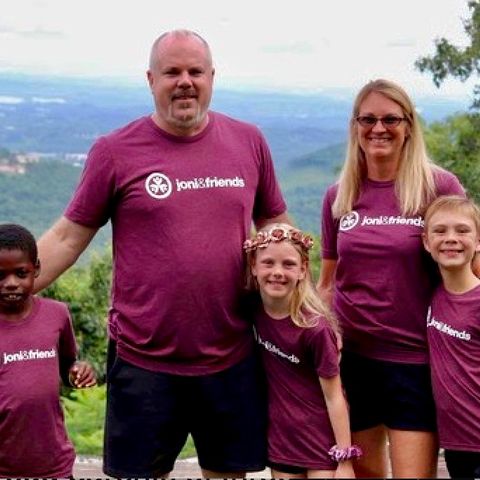
Our guest this week is Scott Maulsby of Lebanon, TN, who is a life and health insurance agent with HealthMarkets, Inc. and father of five inlcuding two adopted sons.
Scott and his wife, Carrie, have been married for 13 years and are the proud parents of five children; two older daughters, daughters Zoie (11) and two adopted sons, Jackson (11) and Ridley, who is autistic and intellectually disabled.
Scott and Carrie have also been outspoken advocates for people with disabilities through Joni & Friends and Rising Above Ministries.
We’ll hear Scott’s story on this episode of the SFN Dad To Dad Podcast.
Show Notes –
Phone – (615) 606-1006
Email – maulsbys@icloud.com
Website – https://www.healthmarkets.com/local-health-insurance-agent/smaulsby/
LinkedIn – https://www.linkedin.com/in/scottmaulsby/
Blog – https://www.itsweewee.com/
Joni & Friends – https://joniandfriends.org/
Rising Above Ministries – https://www.risingaboveministries.org/
Transcript:
Tom Couch: Special thanks to Horizon Therapeutics for sponsoring the Special Fathers Network Dad to Dad Podcast. Working tirelessly to research, develop and bring forward medicines for people living with rare and rheumatic diseases. Discover more about Horizon Therapeutics mission at horizontherapeutics.com.
Scott Maulsby: It’s hard. I mean, my life has been threatened in the community. When you. When you have a child with behaviors like Ridley, it doesn’t look normal, right? There’s no such thing as normal. I had a guy threatened to kill me. You know, my wife and I both get the police called on us on a regular basis. People pull out their phones and video us, and I’m sure they’re texting it to their friends. We might be on YouTube. I don’t know. I haven’t had any royalty checks come in, so I don’t know if it’s that popular or not. but at the end of the day, none of that stuff matters because I love that child and I love my wife. I love my kids. And when it comes to fostering and adoption, I always tell anybody that asks me about that topic, you have to be able to love them big enough that these things aren’t going to matter.
Tom Couch: That’s our guest this week, Scott Maulsby, a life and health insurance agent. Scott and his wife, Carrie, have five children, including two adopted sons, one of whom, Ridley, is autistic and intellectually disabled. We’ll hear Scott’s family story this week on the Special Fathers Network Dad to Dad Podcast. Now, say hello to the founder of the Special Fathers Network and host of the Dad to Dad Podcast, David Hirsch.
David Hirsch: Hi, I’m David Hirsch, host of the Special Fathers Network Dad to Dad Podcast. Two short messages. First, I’d like to thank those who donated more than $1,000 to the 2024 cycle to end Father Absence campaign. In alphabetical order, they are Ina Byrd, Irene and Tom Costello, Kim Duchess, Damian Navarro, Brad Surratt, Don Stadler, and UBS Financial Services. If you haven’t already done so, please go to 21stCenturyDads.org and donate today. Secondly, I’d like to invite you to attend the 4th Annual Special Fathers Network Mastermind Group weekend retreat taking place at the Hyatt Regency, Chicago, September 6th through the 8th. Attendance is free for Special Fathers Network Mastermind Group dads. Other dads can attend for a small cost. We’re budgeting for 30 dads this year, and it’s sure to be a memorable experience for all involved. For more information, please see the show notes or simply go to 21stCenturyDads.org.
Tom Couch: Now let’s hear this intriguing conversation between Scott Maulsby and David Hirsch.
David Hirsch: I’m thrilled to be talking today with Scott Maulsby of Lebanon, Tennessee, a licensed life and health agent with HealthMarkets, Inc. And the father of five, including two adopted sons. Scott, thank you for taking the time to do a podcast interview for the Special Fathers Network.
Scott Maulsby: Wow David, it’s a pleasure to be here. Thank you for asking.
David Hirsch: You and your wife Carrie have been married for 13 years and the proud parents of three, your daughter Zoie, 11, adopted sons, Jackson, 11, and Ridley, 10, who is, autistic and intellectually disabled, and two older daughters from a prior marriage. Let’s start with some background. Where did you grow up? Tell me something about your family.
Scott Maulsby: Absolutely. So I was born and raised in Pittsburgh, Pennsylvania. And so, of course, I bled black and gold for the Steelers, the Pirates, and the Penguins my whole life. And then from that Northeast upbringing, I got my charming personality and my work ethic. And I. I made my way to Virginia Tech after high school. And I always tell people I was at, Virginia Tech in Blacksburg, Virginia, when the football team was 2, 8 and 1. And I also was there for eight years. And I’m not a doctor, so I’ll let you figure out the rest from there. And then from Virginia Tech, I became an engineer and never really pursued anything that was engineering related. You know, I joke, and my mom always eventually listen to this, so I can say out loud that I did it to make her happy. But I. I never really pursued an engineering job and, ended up in a variety of different scenarios. But one of them brought me to Florida. South Florida. That’s where I met my wife, Carrie. I was in South Florida for about 12 years. We met in the West Palm beach area, met through church, got married. it was a brief courtship. Went off on our honeymoon, and I moved into a 700 square foot condo with those two teenage daughters. And, I worked from home at the time, so you can imagine what that was like.
David Hirsch: Okay, well, thanks for sharing. Let’s go back, though. You mentioned that you grew up in Pittsburgh, Pennsylvania. You have a younger sister. And I’m sort of curious to know, what did your dad do for a living?
Scott Maulsby: Yeah, I have a younger sister, Amy, who lives here with me in Nashville now. But, yeah, my dad, John Nick, as they called him, he was in sales. He worked for, like, Napa Auto
00:05:00
Scott Maulsby: Parts and was, like, a traveling salesman. And then after that sort of ended, he got into, like, appliance repair. He’s a mechanic and a, and a repair guy. He could fix anything you gave him. And so he was in an appliance, repair role. You know, even in retirement he would go do that on the side.
David Hirsch: And if I recall, correctly, your dad was a, Vietnam veteran in the Army?
Scott Maulsby: Yeah, yeah, he did a tour in Vietnam in 68, 69 and he was in the army. He was a crew chief on the Huey helicopters, 1st Cav, 3rd Brigade Snoopy Division. We’re actually heading out to Nebraska here in just a couple of days to a memorial that’s built out there that has the helicopter that he flew in in Vietnam as part of a memorial and a museum environment. And unfortunately he won’t be there with us. He passed away about a year ago and so his ashes are actually placed inside the helicopter. So it’s a pretty neat event coming up. And, and he served in Vietnam and was in the army and then was a, 100% disabled vet by the time he got into his later years in life.
David Hirsch: Yeah, well, thanks for sharing. Sorry to hear that he’s passed away, but you know, it’s always nice to hear somebody like yourself talk lovingly about their dad and the service to our country. So I’m sort of curious to know, how would you describe your relationship with your dad?
Scott Maulsby: My dad was always there. He coached my baseball team up until my arm almost fell off when I was a pitcher as a young kid. Was always involved and certainly was, was in attendance for a lot, of everything that I did in life. I would say that you, you know, he had his own struggles probably stemming from his service. There was never any doubt that my dad loved me. He just wasn’t always the most affectionate or the most sort of emotional type of guy. And that’s probably where I get my same charming personality with the low emotion.
David Hirsch: Well, I know a lot of men of that era, guys, who would be in their 70s and 80s or older now, you know, know, were a little bit more stoic. They weren’t ones to be touchy feely about things. You know, I think that things have changed a little bit. Not all people think the same way, but I think that that’s more a, reflection of the generation than it is perhaps your dad and is just his individual personality. So when you think about your relationship with your dad, are there any takeaways, something that, you know, you learned from your dad that maybe you’ve tried to incorporate into your own parenting?
Scott Maulsby: You know, I think the two things that stand out most would be the work ethic. My dad was a hard worker, and I find that to be something that I have that gives me maybe some advantage in the world that I’m in. It helps me to be a better employee, to be a better husband, a better father, all those things. When it comes to providing and getting, you know, the work and the responsibilities done, I think another thing that I got from my father was his desire to serve other people. growing up, I can always remember if we weren’t catching a baseball in the front yard, one of the neighbor’s cars was in the driveway, and he was changing the oil or replacing the brakes or fixing the whatever, or he was going to somebody’s house on a Sunday afternoon to fix their washing machine. And I’ve got that same sort of desire to serve others almost to a fault. I mean, sometimes I get in trouble for it because I am gone from my family while I’m serving other people. And, I think that I got that from my dad as well. That. That desire to. To help and be the person, that solves a problem, maybe.
David Hirsch: Yeah, I love it. strong work ethic and a need to serve the larger community. Thank you for sharing. I’m thinking about other men who might have had an influence. I’m wondering what, if any, influence your grandfathers had first on your dad’s side.
Scott Maulsby: Yeah, so my dad’s father died when I was 4. My sister was still in the womb. My mom was pregnant with her. I remember my little Snoopy stuffed animal that, you know, that was kind of the. The thing that I had that I remember from my grandfather. The Snoopy was from the helicopter that was my dad had in Vietnam. And so I don’t have a lot of memories of my dad’s dad. You know, I regret that, his life was cut short. I think that’s a testament to where medicine has come. You know, he died of a heart attack. And if he was in a different generation, he would have had many more years with us. You know, he didn’t know what he didn’t know. And then my mom’s father, I definitely had a strong relationship with him, and he was a, very influential man in my life. Again, I’m laughing because my mom will listen to this and she’ll laugh, but my grandfather
00:10:00
Scott Maulsby: had two daughters, and so I was the oldest grandson. And so they always would make fun of me and say that I was the son that he never had. And so he probably spoiled me more than most and, you know, put a lot of time into all the boy things with me, you know, because I was the first grandson.
David Hirsch: So, Well, thanks for sharing. Any other men who played an influential role either as a kid or as a young adult for that matter?
Scott Maulsby: There were men in the high school. If I look back when I was a kid, John Morgan was my guidance counselor and Earl Petrussi was the director or the liaison of the student government. Those two men had a profound impact on my younger years, my middle school and high school days.
David Hirsch: Thanks for sharing. So my recollection was you went to Virginia Tech, you took a degree in, industrial systems engineering, and, you were there for more than the standard four years.
Scott Maulsby: Yeah, when I look back, I just had this conversation with an old friend. I made a mistake in high school. I was president of nine different clubs and captain of three varsity sports. And I had a girlfriend, and there was never a minute of downtime. And it probably kept me out of trouble and doing the things that other high school kids might have done. Right. Let’s just leave it at that. And then I get to a Division 1 college and there’s no use for a 3 sport athlete. M. Yeah, you can’t walk on a Division 1 golf team unless you’re shooting in the 60s. So I learned quickly that suddenly I have all this time on my hands. There’s no more sports, there’s no more conditioning, there’s no more clubs. And so I look at that and I realize that that’s kind of where my life went south a little bit. I don’t mind sharing that. That’s when I basically turned to alcohol and the partying and the things that got me into some of the messes that I got into. And I look back on that now and probably would have done things a little bit different. But, I would also say in that time I became a leader in my fraternity. I became a leader at the Interfraternity Council. I was managing one of the most popular night spots. And so here I was at the age of 21, the treasurer of a $1.2 million fraternity. And I was, you know, managing a restaurant with 20 something employees and a couple, thousand customers. And so school quickly became a back burner. And so it just took me longer to realize that I needed to wrap that up, get that degree, move on in life, grow up and mature maybe a little bit, find a profession or whatever. But it took me eight years to get out of school and I’m not a doctor.
David Hirsch: Thanks for sharing. I know that you’ve, had a number of different, jobs. And I’m just wondering, the job that you currently have with HealthMarkets, Inc. As a licensed life, and agent, what is it that you do currently with your work?
Scott Maulsby: So I tell people all the time, I didn’t grow up dreaming of being an insurance agent. I wanted to fly jets in the Air Force Academy. And so when that dream ended up, and when I threw my arm out in ninth, grade and couldn’t make it to the big leagues pitching, you know, I had to move on. And so that’s where it’s so valuable to have a purpose. Because for so many years I floundered around without a purpose and I chased different jobs and I wasn’t a good employee all the time. You know, they talk about sometimes you’re unemployed and sometimes you’re unemployable. And there were times when I was unemployable, certainly in my drinking days. I had to figure those things out. But I tell you, I landed where I did today with HealthMarkets because with my son Ridley, and even just trying to be the provider for a family of, with three little ones in the house and now grandkids to try to, you know, spoil, I can’t find a better vehicle to do that. I have the flexibility. I have the freedom to work whenever I need to work. I can make a pretty nice amount of income. Prior to that, almost everything I did, I was in an office from 7 to 5. I was CEO, Vice President, Director, whatever. And, you know, that’s a whole different world. I also recognize a shortcoming that, I allowed those positions to take away from my family and take away from my marriage and take away from even my own personal health because I was pouring so much in to these different companies. I think the lesson I learned was I’m going to bet on myself. I’m going to bet on me because I know my skills, my strengths, my weaknesses and my work ethic. And I don’t have to worry about somebody else holding the key to my income or my longevity.
David Hirsch: Yeah. Well, thanks for sharing. And, if I can paraphrase what you’ve said, the career that you pursued the last seven years has a little bit more to do with blending, it with your lifestyle. Right. Not just earning a living, but doing something that offers you some balance. And what is HealthMarkets Inc. It’s
00:15:00
David Hirsch: not a company that some people would be familiar with in the life and health space.
Scott Maulsby: Yeah. So HealthMarkets is the fourth largest IMO in the company the, IMO is an insurance marketing organization. And so we help people with health insurance, life insurance, and Medicare. And so that’s the beauty of what I do is I get to help people with protecting their health, protecting their, their wealth or their finances, you know, securing their future with life insurance. You know, there’s a couple of different things you can do with life insurance that helps almost from an investment perspective. It’s a tax free option to invest. And then my favorite thing is, special needs families. So many special needs families are out there trying to figure out how do I provide for my child when he or she’s an adult or when I’m not around. And there’s all kinds of different ways. And so what’s great about HealthMarkets is I’m not stuck with any specific products or any specific companies. We have, I don’t know, over 100 carriers that we can work with. And so I can help families with either saving the money or increasing the benefit or putting more away for life insurance or using life insurance to build generational wealth and help, you know, provide for future generations and show people ways to use money not as a. You know, they say the love of money is the root of all evil, but if you use money the right way, it can really change your future. And so it’s a blessing that I fell into. I like it. I enjoy helping people and, it’s a great opportunity to provide and do something good for the community, but also earn a living doing it.
David Hirsch: Yeah. Well, it sounds like a great fit for you. Thanks again for sharing. I’m sort of curious to know, how did you and Carrie meet?
Scott Maulsby: So we lived in West Palm beach, you know, South Florida. And, I was plugged into my church down there at the time. It was one of those mega churches. 20,000 or so people were coming in there every weekend. And she was at a different campus. But we met on Tuesday nights at the main campus for that one night, for that one group. And, you know, I can still remember that dress and I can still remember those shoes and I can still remember the way she had her hair and all that stuff. But I found a way to talk to her and I joke because she brought another guy over with her to talk to me a second time that night. And I’m like, that’s weird. She brought her boyfriend over, so it delayed things a little bit. But I, I’m in sales, I guess. You know, I was persistent, you know, and of course my, my charming personality from Pittsburgh. She couldn’t resist.
David Hirsch: Thanks for sharing. Let’s talk about adoption first. I’m sort of curious to know prior to being married if you and Carrie had talked about adoption or if you were engaged in the world of adoption.
Scott Maulsby: We went to a exploratory meeting at some ministry that was connected to our church, you know, as an agency that would help you get your licenses and go through all that stuff. And I just felt convicted. I mean, sitting in that meeting with, listening to the stories, listening to the things that foster parents and foster children go through, I left there convicted that that’s what we were gonna do. Over the course of the next five years, we had nine children come into our home. One of them was, as far as I’m concerned, one of the greatest stories of my life. We didn’t get to adopt. I can now call him Cameron. At the time I had to call him Chubbs because we couldn’t use his real name. we had Chubbs with us for 14 months and he ended up being reunified with the father with George. And it hardly ever happens. It’s rare. I mean, you and I both know it’s rare that the father fights for custody. It’s rare that the father tries to get their child. And so, you know, God bless George for stepping up. And of course I tell anybody, they’ll listen. I hated George. I wanted George to fail so that I could adopt a son. And then I was standing in the parking lot of a target giving this child back to his father. And it just hit me like a ton of bricks, like I need to be this guy’s biggest fan. And so a short year or so later, George is, he, he came to Christ. He, he married a wonderful godly woman. He was in the lives of all of his kids and, and we still got to have a relationship with Cameron. And so it dawned on me that that was the purpose, right? I didn’t understand, why am I losing this child? I love him so much. And it turns out that that wasn’t the plan. And I, I didn’t see that I’m not the sharpest tool in the shed. And so it had to be pounded into me. And George is a dear friend. We spent a long time getting to know each other’s families. And he is a, phenomenal father, grandfather, husband. And obviously God had a different plan than we could have. I never in a million years would have been able to draw that plan up on a whiteboard.
00:20:00
David Hirsch: Yeah, well, thanks for sharing. So what’s the, backstory to adopting your son Jackson?
Scott Maulsby: Yeah, so Jackson, you know, he was one of those nine children. And in fact, we didn’t think that we would have the chance to adopt him. When he first came to our home, it was because he had some minor medical stuff, asthma and whatever else, and there was having a hard time, you know, finding a home that could help them. And my wife and I said, sure. And it was right around the same time that Cameron went back to his dad. And so we were grieving the loss of a child. That’s kind of what it’s like. It’s like grieving the loss of a child. You know, we thought it was going to be a short term thing. And here we are, he’s 11, almost 12. A blessing in our family, you know, without going too deep into, you know, his story and, you know, whatever else. It involves human trafficking, it involves, you know, substance abuse and things. And it involves, you know, two different states and a lot of courts and a lot of hearings and a lot of things. And so at the end of the day, it was hard. And he spent the first two years of his life mostly in. I mean, these days people don’t like to use the word orphanage, right, because you think of Annie in the movie and, you know, whatever else, but it’s, they still exist. They just call them group homes. and so he spent the first two years of his life there, and now he’s, he’s a thriving young boy. But I tell everybody, they’ll listen. They don’t prepare you when you’re going through the classes for what you’re going to experience with children from hard places. And so, man, he’s, he had a tough beginning to his life. I mean, one day he’ll, he’ll listen to this. And if I, if he was standing next to me, you know, he, he had a hard life. First couple of years just fighting to stay alive, you know, was. Was a hard thing for that child. And he could never describe how, how hard it was for him to get things started. So for where he is right now at 11 and where he’s going to be when he’s 22 and 33 or whatever, I’m looking forward to how that story ends.
David Hirsch: Yeah. Well, what I love, about your story, about what commitment you and Carrie have made, you’ve opened up not just your home, but you opened up your hearts to these, individuals, these nine that you had fostered, one that, came and went that left this big hole in your heart. Chubbs or Cameron. And then, Jackson is The first of the two adopted sons that you have. And, so let’s, switch gears and talk about, special needs. And I’m sort of curious to know, before you and Carrie became parents, did you have any experience with the disability community?
Scott Maulsby: I really didn’t have a step backward. My aunt. You know, I have a nephew that has special needs. You know, it was very early on in his life, and at the end of the day, you know, he’s really never been able to take care of himself or feed himself or you know, that kind of thing. He’s been in a wheelchair and so on. But, you know, that was. I was in Pittsburgh, my aunt was in Chicago. It wasn’t like a daily thing. It wasn’t. It wasn’t normal or part of my life, I guess. I mean, I was aware of it. I loved Adam, as part of my family, but I just wasn’t around him very often. When you look at special needs and being, you know, understanding what it means to be a caregiver, like, that’s really what it comes down to is, you know, regardless of the need of the child, you’re shifting from a role as a parent into a caregiver. It’s a whole different ball game. And I was not at all prepared for that. It never was in the conversation, and it was never, And even when they called us when he was, you know, really was one year old, when he came to our home and they called us and they told us about his background and they told us there was a couple of things, and, you know, we were like, okay, he’s going to be delayed a little bit, you know, developmentally and la, la, la. And okay, you know, we’ll be fine. I mean, you know, we’ll. We’ll. We’ll help them catch up. We’ll do the best we can. We’ll get them extra support. Nobody can tell you what that’s going to look like in nine years or 10 years. And I don’t think it would have mattered. But at the end of the day, again, I think that’s why God kind of reveals things on his time, because maybe we wouldn’t have made a decision. I don’t know. And at the end of the day, we had no idea what we were getting ourselves into. You know, it changed the course of all of our lives. You know, all five kids, me and my wife, you know, grandparents, everybody. The whole family dynamic has been, you know, permanently altered, at some level.
David Hirsch: Well, thanks for sharing. And I guess the thought that comes to Mind is that you don’t know what you don’t know, you don’t know. Out of curiosity, how long was Ridley part of, the foster experience before you adopted him?
Scott Maulsby: Yeah, so we got him when he was one year old. And so he was in the foster care system for a year, you know, without going into some, some stuff. But, I mean, you know, his, his background, his family of origin. You know, we knew there was going to be some issues and the places that he would go to be fostered, they weren’t interested in adopting. There’s a lot of people in the foster care community that don’t want to adopt. They just
00:25:00
Scott Maulsby: want to foster. So when they realized that his case was going to shift into an adoption because mom wasn’t going to be able to take care of him anymore, that’s when they called us and we met his foster parents. We visited a couple times and met them and met Ridley, and then they eventually transferred him into our home. And so we knew them, we met them. They were great people. They had fostered dozens of children and, took good care of him. All of his needs were met, you know, physically and emotionally. You know, Ridley was very, you know, blessed, to have, you know, great parents around him from the day he left his biological mom’s home.
David Hirsch: So what is his diagnosis and how did it come about?
Scott Maulsby: He’s intellectually disabled is the main challenge that we have. And he’s got a really low IQ. That’s the biggest challenge is chronologically he’s 10. Developmentally, he’s about three and a half or four. So really that’s the main diagnosis. But then you get autism out of it, right? Autism is not a disease. It’s not a virus. It’s not a, you know, thing. It’s just a list of symptoms. And if you check enough boxes, you’re autistic. And that’s why it’s a spectrum, right? Because it’s, it’s a scale. You know, you might have just checked just enough boxes, or you, you might have checked them all. And a lot of that comes from the intellectual disability because it’s behavior driven. It’s developmental delays. But then comes ADHD. Then comes odd, Then comes, you know, all these other initials, the Alphabet I can write. It’s like Scrabble in my house, right? And so at some level, he’s got a lot of other things, but the main challenge is just that intellectual disability and his, you know, developmental. I mean, he’s three and a half or four in his brain. And so you Remember when you’re three and a half or four years old, you’re like, hey, I’m going to go jump off the fireplace and onto the dog and I’m gonna take this sword and go stab somebody. And it’s like, but when you’re three and a half or four, you can’t do those things. You know, you don’t have the physical ability to climb up on the mantle and jump off or do the things right. Well, now he does. So now he’s, now he’s strong enough and he’s, he’s got that street smart, you know, like that he can finagle his way into all these different scenarios, but realistically it’s, you know, trying to chase a 10 year old around that’s, you know, 85, 90 pounds and, and he knows where to stick his knee or his elbow and in my side or, you know, my wife’s groin or whatever to make sure he gets his way. And so, it’s a whole different challenge.
David Hirsch: Yeah, well, I can only imagine. So I’m wondering, what type of fears did you have as these diagnosis started to come in as, parents, right. He’s the youngest of the five or the three that, you know, of the younger kids.
Scott Maulsby: You know, I am a man of faith and so I try my best to meet that fear with faith. I know that’s a generic answer and that’s a, you know, an easy answer, but I also will say that it’s just been a challenge and a struggle and it’s just been a fight. Each time you get a diagnosis, it’s not so much the diagnosis that’s, you know, that brings the, it’s, it’s the future. You know, I think any, any parent of a special needs child will always, you know, share that. The biggest fear is what’s going to happen when I’m not here, what’s happening when I’m not around. When he’s with other people, are they treating him the same way I would? Are they giving him the benefit of the doubt? Those are the things that will keep you up at night. I’m not worried about what he’s going to do for work. You know, if I have to work until I’m 90 to keep providing, I will, you know, there’s enough insurance out there to keep him going too. I’m not worried about is he going to get good grades, is he going to get a diploma. None of those things matter to me or my wife. We just want to help him and, you know, make him the best that, he can be. And so I think our goal, we would love to see him live somewhat independently someday. Yeah, I’d love for him to have a wife or even some kids one day. Be loved by, you know, other folks outside of his family and be safe and be in a place where, if he is working great, if he’s not, that he’s provided for. So those are the things that I fear. It’s hard. I mean, we, you know, my, my life has been threatened in the community. When you, when you have a child with behaviors like Ridley, it doesn’t look normal, right? There’s no such thing as normal. I had a guy threaten to kill me. You know, my wife and I both get the police called on us on a regular basis. People pull out their phones and video us, and I’m sure they’re texting it to their friends. We might be on YouTube, I don’t know. I haven’t had any royalty checks come in, so I don’t know if it’s that popular or not. But at the end of the day, none m of that stuff matters because I love that child and I love my wife. I love my kids. And when it comes to fostering and adoption, I always tell anybody that asks me about that topic, you have to be able to love them big enough
00:30:00
Scott Maulsby: that these things aren’t going to matter. Because if they do, it’s not really love, you know, it’s a big commitment and it’s a big love that, that I don’t think I was prepared for. But I got thrown into it and it taught me a whole heck of a lot of lessons and a whole lot of stuff bounces off of me. The skin got really thick when I look at the way people look at him or the way people look even at just our whole family. Because I love that child and I love everything about him. Doesn’t matter to me about any of those letters.
David Hirsch: Well, thanks for sharing. I’m sort of curious to know, have you always thought that way or was there a turning point, right, a point of enlightenment that you came to as a result of putting all this in perspective?
Scott Maulsby: Great question. I’m 100% convinced, first of all. The short answer is no. I haven’t always been this way. I’m a tough nut. I’m, stubborn. I’m unemotional. I’m stoic. I’m all those things. My dad was like that and his dad was like that and all that good stuff. Right. I’m 100% convinced that that’s exactly why Ridley is in my life. That God was like, I gotta soften this guy up a little bit. I’ve got to teach him some things that he needs to learn, right? He needs to learn about compassion. He needs to learn patience. When an autistic child, like, really doesn’t want to get in the car, he ain’t getting in the car, you know, and for a guy like me that, you know, for the first 39 years of my life, I was never late for anything. And suddenly I’m, I’m, an hour late to everything in my life, right? And scenario after scenario, all of those things. I mean, try, you know, having enough patience for him to tie his own shoes, you know, that. That could take 25, 30 minutes. And I still have to help at the end. And my wife bears the brunt of most of that. And so those are no doubt the lessons. But I also, when I look at how he loves me back, and when I look at how he loves my wife and my other children and other people in the community when. Because he doesn’t really understand, but he loves them back, and I can see that behind those eyes. I can also see the pain because he’s struggling, because he can’t communicate. He can’t really tell the story that he wants to tell. It’s taught me more than anything, you know, college books, YouTube videos. I mean, he’s taught me more than anything else in my life.
Tom Couch: We’ll be back with more of the conversation on the Special Fathers Network Dad to Dad Podcast in just a few moments. But first, this quick message. Please help 21st Century Dads gather research on families raising children with special needs by having them complete the Special Fathers Network Early Intervention Parents Survey. A link to the survey can be found in the show notes. As a token of our appreciation, each person, mom or dad, who completes the survey will receive a great dad coin. Thank you. Now back to the conversation.
David Hirsch: I’m sort of curious to know what impact Ridley’s, situation’s had on his siblings. Your marriage, or your extended family, for that matter.
Scott Maulsby: David, it’s the hardest thing in the world. There’s a reason why 86% of special needs marriages end in divorce. There isn’t a lot of help out there for us with siblings. Same thing. You know, most of my attention goes to Ridley. Most of my attention and my affection and my compassion go to him. It doesn’t leave a lot for my wife. It doesn’t leave a lot for my other two children. It doesn’t leave a lot for my adult children and the grandkids that are out of the house. It’s not fair to them and I regret that. It’s the hardest part of trying to balance that piece of my life. I’ve got to find a way to work. I’ve got to find a way to provide and, and, and those things. But then I’ve also got to be the buffer for Ridley and then I’ve also got to get my wife respite and I’ve got to get my kids, my other in the home kids a chance to do fun things and live their childhood. And I’ve got to give my adult daughters attention and spoil those grandkids and recognize and be ah, cognizant of their stage of life. It’s hard. And so almost every day I want to quit. You know, I want to give up. But at the end of the day there’s enough grace, to fill that gap. And for whatever reason we, we find a way to hit the pillow and, you know, start over again the next day. but there, there are times where I look and I, I just don’t know if I’m going to make it to the next day. It’s such a challenge, man. That’s why I like talking to, to men like you and other special needs dads because I don’t have to explain myself. Trying to explain it to somebody who isn’t experiencing it is so challenging and I don’t always have the emotional energy to be able to try
00:35:00
Scott Maulsby: and so I default to wanting to be around men that understand what I’m going through so that I don’t have to try to explain it. I wouldn’t wish it on anybody, but I have so much respect for all the parents that have come before me and blazed the trail for what we have today. And I can only hope to try to continue that. But it’s the hardest thing in the world.
David Hirsch: Yeah. Well, thanks for sharing. I appreciate your transparency and just being so open about the challenge. It’s a fact. Right? And you’re not looking for sympathy or pity. That’s just the reality of your situation. Have there been some supporting organizations that, Ridley’s benefited from or that your family’s benefited from as a result?
Scott Maulsby: Yeah, we’re certainly blessed. The first one that comes to mind would be Johnny and friends. In my opinion, it’s the gold standard. Yeah, I think they’re considered a disability ministry. So I don’t know, you know, special needs. I mean, there’s A bunch of different terms for it. I met Johnny. I used to work for Bot Radio Network and had the privilege of meeting Johnny. I know her kind of personally. I’ve had a chance to talk to her at length. They’re number one on my list. If you ever want to know how to take care of a special needs family, start a special needs ministry, provide respite, whatever, that’s the very first phone call. And you’ll never have to make another phone call. Second on that list, and it’s a very close second, is Rising Above. They’re out of Cookville, Tennessee. Johnny is everywhere. But Rising above reaches a long way. I just have a deep respect for what they do with the subject matters that they put out, the devotions, the support groups. I lead a support group. I was involved in one for two years before leading one. And the men in that group and the men that I’ve met and my wife is in the female version of it, the women side of it, the things that they do to connect men and women and pour into marriages and the resources that they provide are again, the gold standard. You don’t need to go any further than them. And little known fact, you know, they’re kind of the spark behind what Tim Tebow does with Night To Shine. And so I don’t know Tim, I don’t know. My kids aren’t even really not even old enough for Night to Shine. But that’s another great, resource is Tim’s Night to Shine that sparked from what they did at, Rising above years ago when they had their dance and their, their night. you know, that’s kind of how it all started. And so outside of that, though, I’d be remiss to not say there’s plenty of great people in the community here, specifically, like right in my own neighborhood and within our church and outside of the church and in the, in the community, there are plenty of people. You can see that they just get it. I don’t know why. And I’ve even asked some of them and they don’t really have an answer for me. but there’s just certain people that gravitate to the caregivers and they know, you know, how challenging it is. And they just pour life into me or my wife or my kids. And I’m grateful for each of them.
David Hirsch: Yeah, well, thanks for sharing. We’ll be sure to include information on Joni and Friends as well as Rising Above Ministries in the show notes, so it’ll make it easy for people to follow up I’d like to talk about the It’s Wee Wee blog. There’s a fun story behind that. What is it? And, what’s the backstory?
Scott Maulsby: What is it? It’s. It’s therapy for dad is what it is. And so, itsweewee.com is the blog. And so my son Ridley, for the first however many years of his life, he couldn’t pronounce the R in his own name. And we would go through, you know, it’s Ruh Rah Ridley. And he would go, it’s Wee Wee. And he would say, my name is Wee Wee Wee Wee. And so that’s affectionately how I came up with the name: ItsWeeWee.com. And realistically, early on, when parents were asking me questions about Ridley and, you know, and I would tell them about his behaviors, and they would be like, like, what are you even talking about? Give me an example. And I started, like, giving them examples, or I would grab my phone and show them a picture, and they would be like, you should start, like, blogging about that. But really, it’s a collection of stories of what the heck this kid does. And because most of the time, people wouldn’t believe me. But then there’s also someone there that are pretty tough and, you know, go into some of his behaviors that are severe, and it, gives you a little bit of a snapshot into what it might look like inside of our home, you know, with holes in the wall and the drywall and a broken window and some of the things that nobody likes to talk about. Those are the things that most families would want to try to hide. Not that I’m trying to. I’m not trying to shame anybody. I’m not trying to, you know, rub his nose in it 10 years from now, go back and show him. It’s an awareness thing. It’s like, hey, here’s a little bit of a snapshot of what this is. Like. You think I’m kidding when I say these stories, but here’s the picture of the broken window and the blood from where
00:40:00
Scott Maulsby: his fist went through. Yeah. Here’s a picture of the. The fire that he set in the backyard. Here’s a picture of this. Here’s a picture of, that. And I think those are, you know, I don’t know. Hopefully it helps. Hopefully, if anything, it might even help the medical world and the. The waivers and the support world and the. And all the different things that are out there for people to realize. This is real. This happens. These aren’t Just exaggerated stories. Because these parents are tired and they’re hoping that somebody will give them another resource or increase a benefit on a waiver or do something with the insurance company. This is real. This happened. It exists.
David Hirsch: Yeah. Well, thanks for sharing. I think you led by saying it’s therapeutic, Right. And I think that’s probably the primary benefit. you can just process some of these things and oftentimes when you put it on paper or you type it out on a Word document or whatever it is, you’re not carrying it around. It’s not like this butterfly that’s batting around sort of distracting you. Right. You can look at it from a different perspective when it’s out there. And like you said, sometimes you can laugh at yourself. Right. And anytime you can bring humor to a situation that’s sort of tense. Right. You know, it has the ability to diffuse it. So, anyway, thanks for sharing. I’m thinking about advice now and I’m wondering, what advice can you share with parents, specifically dads, who, are raising a child with not just autism or ADHD or odd or whatever, but, just overall, it’s a great question.
Scott Maulsby: I think the analogy of putting the oxygen mask on yourself first on an airplane in this scenario, in this part of my life, I cannot give to my family, to my wife, to my kids, to my grandkids, to my mom to work. I can’t do anything if I’m not doing something for to take care of myself. So I don’t get those golf outings, I don’t get those fun guy trips. I don’t get a lot of things, and I don’t mean it, to say woe is Scott. My wife doesn’t either. She doesn’t get to go see the grandkids all the time. She doesn’t get to have those long conversations when, you know, our adult daughters need her on the phone because they’re struggling with how to raise a child or whatever. Neither of us get some of the joy of, the other two little ones in my home because we’re chasing Ridley everywhere. And so we’ve got to find little joys. We’ve got to find that cup of hot coffee that usually isn’t hot anymore is a joy. You know, that, eight extra minutes of sleep is a joy. and it’s those little things. And that’s really the advice I would give. And for the men, specifically, the husbands specifically over compensate with your wife. She probably won’t want me to say this, but I try to give you Know, everything goes to, well, you take the weekend and go somewhere. You do this tonight, you, you know, need a break and whatever else. And, you know, I, I, I work during the day, but insurance isn’t hard. It’s not rocket science. So at the end of the day, when my work day is over, that’s when the work really begins. And I, I, I didn’t like that either because I listened to a whole bunch of sermons where these pastors are telling me, you know, when you pull in the park or in the driveway, you know, say a prayer, because that’s when your day really starts. And it, but unfortunately, it’s true. And so no matter how hard you, no matter how hard you work at your job and, and I’m guilty of it because I’m like, well, I provided for this, so I should come home and, you know, like some TV show from a hundred years ago, at the end of the day, give more to your wife if you can, but also, don’t take that oxygen mask off yourself because it doesn’t do you any good if you’re passed out in that seat. You can’t help them land the plane.
David Hirsch: Yeah, well, I, I’m going to paraphrase what you’ve said. you have to take care of yourself first. I think of it as being selfish before you can be selfless. Celebrate the small victories. You know, recognize that, you’re going through this with somebody else and your spouse. And, anytime you can provide, your spouse with some respite or a little flexibility, you know, that’s just showing some grace. And I think that’s just a smart approach to things. So I’m sort of curious to know. Why have you agreed to be a mentor father as part of the Special Fathers Network?
Scott Maulsby: I think that as I look at my life, I knew it all. I think once I turned 14 is about when I knew it all. Right? Isn’t that when it kind of happens and it carries into, and, and then I just knew even more when I got into college and all that stuff. And, and then I got even, I knew it even more when I was in business. And then I look back on it and realized every step of the way, there was always a mentor or somebody that knew it better than me, that was showing me the way. I didn’t know it at the time because I, I only, I was just too into myself and I couldn’t see the forest through the trees. And so when I look back at every step of my life, there was another person there, helping me My father, my grandfather, the
00:45:00
Scott Maulsby: guys that I mentioned from high school even, you know, even in the college days, they weren’t much older than me, but they were a little bit older than me, showing me the way. And so that’s the goal in any type of a mentorship. Even when I was getting sober in AA, my sponsor saved my life. You know, Louis C. Saved my life. And I have to give him all that credit. You know, I did what he told me to do and he saved my life. And in that world of being a special needs dad, there have been times where, like, I tell the story all the time. There’s been Wednesday nights when I get on that zoom at 7 o’ clock and I was ready to jump off that ledge. If I had made it to like 7:18, I probably would have jumped and knew I had that zoom. And I knew that on the other end of that computer screen, there was a man there that loved me enough to be real with me and to help me get through that. And so by the end of that zoom at 8:09 or whatever time we wrap, up, I didn’t want to jump anymore. And I’ve had, at least a dozen of those times in my life over the course of, you know, however many years. And if I can do that for somebody else, you know, in, in the AA world, you know, you’ll hear people say, you have to be willing to freely give what was given to you. And same with my Christian faith, you know, freely give what was given to me. You know, somebody spoke that into me and delivered the gospel to me. And so I will forever freely give and deliver the gospel. I will forever freely give any support I can with overcoming alcoholism, and I will forever give freely to other special needs dads because somebody’s done it for me and it’s literally saved my life. And it’s the reason why I’m still married. It’s the reason why my kids haven’t over. You know, if they were smart enough, they would have overcome because there’s more of them than there are me. right. So, you know, those folks, those men in my life, those mentors, are the reason why I’m still here. I’m not a statistic and I’m not in the hospital or potentially in the grave.
David Hirsch: Yeah. Well, we’re thrilled to have you. Thank you for being part of the network. I’m sort of curious to know if there’s anything else you’d like to say before we wrap up.
Scott Maulsby: You know, David, I love what you guys do. I love the network of men and families. And the only thing I would say is for anybody that’s listening, that’s not a special needs dad or in a special needs family, because there’s, you know, there’s a lot of that support around us in the community. You know, take a family a meal, cut the grass, you know, do something that gives them 10 extra minutes either to take a nap or to spend 10 minutes throwing a ball in the front yard with one of the siblings. That doesn’t usually get attention. A lot of people, you know, I can cut my grass, I can get my oil changed. But it sure would be nice if I could get that 30 minutes of time that it would take me to do something, to spend that time with my kids instead or to get a little rest. And so, I don’t mean for my family. I’m not asking you to bring me a meal tonight, but find somebody that can. You can bring a meal and don’t ask them, because we. See, here’s the other thing that a lot of dads, special needs families in general, won’t tell you. We eventually get to a point because we don’t get enough help that we stop asking for it. And even when somebody offers it, we’ll turn it down. And so I always tell people, don’t ask. Just show up, knock on the door, and even if they don’t answer the door, leave the crock pot or leave the casserole dish on the front porch, they’ll figure it out. They’re all going to eat it and they’re all going to enjoy it, and you did a great service for your community. And don’t ask permission to cut the grass on Saturday at noon. Just show up, bring your own lawnmower, bring your own gas, and just do it. And if the lines aren’t the way that they wanted them, who cares? They’ll be grateful that it was done.
David Hirsch: Yeah, well, great advice. So let’s give a special shout out to, our friends at Rising Above Ministries, especially Becky Davidson and Steve Chapman, for helping connect us.
Scott Maulsby: Amen. You know, Becky, God bless her, you know, her husband was, was such a profound father and his passing was too soon. And I’ve read his book at least twice, maybe three times now. used all their resources. You’re not doing yourself justice if you’re not using those resources. Steve Chapman has done a great job taking, over and, you know, leading locally and now nationally, what a blessing they are to not only the local Tennessee, where, I’m where I am, locally, but just around the country and beyond. So amen to that.
David Hirsch: If somebody wants to learn more about your work or to contact you, what’s the best way to do that?
Scott Maulsby: You know, I’m not afraid. I’m in sales. I answer my phone. So call me at 615-606-1006. I love helping people. You know, it doesn’t cost anything to use me to help you with your health, your life or your investment type of, you know, the things I can help you with their, life insurance products. I love helping people with Medicare,
00:50:00
Scott Maulsby: but I love also with the special needs families because there’s a lot of uncertainty and a lot of unknowns and there’s very few professionals out there that really understand what your options are. In fact, one thing that is very common is people. They are always trying to get life insurance on a child that has a diagnosis and it’s almost impossible. And then if you can, it’s very expensive because the insurance company is taking on additional risk. And so there’s ways around that. There’s so many creative things that we can do without costing, a fortune for families. And so I love doing that because I’ve literally changed the course of the future for families by understanding what they, what resources they do have. Let me show you what your other options are and let’s, let’s look through that. But call me, text me anytime. I’m an open book. I answer my phone when it rings and, I love helping, people. And the thing I do the best, it drives my wife crazy because I’m constantly connecting people. I really do believe that was a gift, in some way that was given to me. I love connecting people. So if you’re looking for a resource, you know, I don’t necessarily mean if you’re looking for a plumber. You know, you could probably use Google for that. But if you’re looking for a resource, you know, in a ministry, David, you’re another good example of a resource. You know, I’m really good at connecting people, so call me anytime, text me anytime. Or you could add, I guess to the show notes. You could add my, you know, my email or my website. It’s too long to spell. It would burn up all your, your tape.
David Hirsch: We’ll be sure to include your contact information in the show notes. It’ll make it as easy as possible for somebody to follow up. Scott, thank you for your time and many insights. As a reminder, Scott is just one of the dads who’s part of the Special Fathers Network, a mentoring program for fathers raising a child with special needs. If you’d like to be a mentor father or are seeking advice from a mentor father with a similar situation to your own, please go to 21stCenturyDads.org. Thank you for listening to the latest episode of the Special Fathers Network Dad to Dad Podcast. I hope you enjoyed the conversation as much as I did. As you probably know, the 21st Century Dad’s foundation is a 501c3 not for profit organization, which means we need your help to keep our content free to all concerned. Would you please consider making a tax optimal contribution? I would really appreciate your support. Scott, thanks again.
Scott Maulsby: David, thank you.
Tom Couch: And thank you for listening to the Special Fathers Network Dad to Dad Podcast. The Special Fathers Network is a dad to dad mentoring program for fathers raising children with special needs. Through our personalized matching process, new fathers with special needs children match up with mentor fathers in a similar situation. It’s a great way for dads to support other dads. To find out more, go to 21stCenturydads.Org.
David Hirsch: And if you’re a dad looking for help or would like to offer help, we would be honored to have you join our closed Facebook group. Please go to Facebook group facebook.com groups and search dad to dad. Lastly, we’re always looking to share interesting stories. If you’d like to share your story or know of a compelling story, please send an email to david@21stcenturydads.org.
Tom Couch: The Special Fathers Network Dad to Dad Podcast was produced by me, Tom Couch. Thanks again to Horizon Therapeutics who believe that science and compassion must work together to transform lives. That’s why they work tirelessly to research, develop and bring forward medicines for people living with rare and rheumatic diseases. Discover more about Horizon Therapeutics at horizontherapeutics.com.
00:53:32