

329 – Dave Van Doorn of Carpentersville, IL Father Of Two Including An Autistic Daughter & Take A Vet Fishing Ambassador
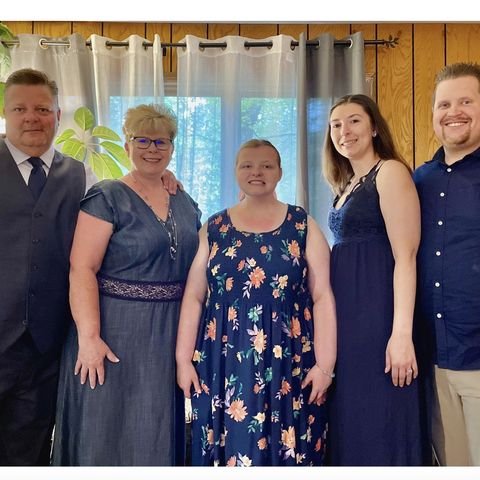
Our guest this week is Dave Van Doorn of Carpentersville, IL a retired general contractor, father of two, including an autistic daughter and Take A Vet Fishing ambassodor.
Dave and his wife, Nancy, have been married for 35 years and are the proud parents of two: Tim (31) and Sara (29), who has Autism.
Dave is a retired general contractor and professional fisherman, having won numerous tournaments. More recently he has directed his love for fishing to serving as an ambassodor for Take A Vet Fishing, a non-profit dedicated to: honor, comfort and provide healing for our PTS (Post Traumatic Stress) veterans and their family members.
It’s an uplifting story about commitment to family, overcoming adversity and service to others, here on this episode of the SFN Dad to Dad Podcast.
Show Links –
Phone – 847-636-2677
Email – davevandoorn@comcast.net
LinkedIn – https://www.linkedin.com/in/dave-vandoorn-85664713/
Take A Vet Fishing – https://takeavetfishing.org/
Special Olympics Illinois https://www.soill.org
Transcript:
Tom Couch: Special thanks to Horizon Therapeutics for sponsoring the Special Fathers Network Dad to Dad Podcast. Working tirelessly to research, develop and bring forward medicines for people living with rare and rheumatic diseases. Discover more about Horizon Therapeutics mission at horizontherapeutics.com.
Dave Van Doorn: I truly believe when we had Sara, God gave us Tim so we could have Sara. I mean, Tim made things just so much easier around the house. he was a great brother in Sara’s mind. There’s me and Nancy and then above that, you know, Tim and God himself. She just absolutely loves him and lights up every time he walks through the door. Every time.
Tom Couch: That’s our guest this week, Dave Van Doorn, a retired general contractor and father of two, Tim, 31, and Sara, 29, who is autistic. Dave is also an ambassador for Take A Vet Fishing, where he and his boat provide US Military veterans with a day of sport on the water. Dave’s got a great story to tell and we’ll hear it on this Special Fathers Network Dad to Dad Podcast. Now say hello to the founder of the Special Fathers Network and host of the Dad to Dad Podcast, David Hirsch.
David Hirsch: Hi, and thanks for listening to the Special Fathers Network Dad to Dad Podcast presented by the Special Fathers Network, a dad to dad mentoring program for fathers raising children with special needs. The Special Fathers Network Mastermind Group experience is the most comprehensive program the 21st Century Dads foundation offers. Dads raising children with special needs, meet virtually on a weekly basis and form meaningful relationships while sharing weekly wins, discussing books and sharing heartfelt challenges. One of the highlights of the year is attending an in-person weekend retreat. We’re launching 10 new SFN mastermind groups in January 2024 with 10 dads per group. That means we’re only looking for 10 like-minded dads in each of the following locations. Anchorage, Alaska Bellevue, Nebraska Chicago, Illinois Denver, Colorado Georgetown, Grand Cayman, Houston, Texas Indianapolis, Indiana London, England Nashville, Tennessee and Reykjavik, Iceland. If you’re a dad raising a child with special needs in one of these cities, we hope you’ll join the local SFN Mastermind group and make the investment to become the best version of yourself. For more information, please see the show notes or simply go to 21stCenturyDads.org.
Tom Couch: Now let’s listen in on this conversation between Dave Van Doorn and David Hirsch.
David Hirsch: I’m thrilled to be talking today with Dave Van Doorn of Carpentersville, Illinois, who’s a retired general contractor, father of two, including a daughter with autism, and who is an ambassador for Take A Vet Fishing. Dave, thank you for taking the time to do a podcast interview. Thanks. The Special Fathers Network.
Dave Van Doorn: Thank, you for having me. I really appreciate it.
David Hirsch: You and your wife Nancy have been married for 35 years and are the proud parents of two Tim, 31, and younger sister Sara, who’s 29, who has autism. Let’s start with some background. Where did you grow up? Tell me something about your family.
Dave Van Doorn: Well, originally from northern Wisconsin, and my dad was in the Navy and ended up being stationed at Glenview when the navy had it there. And he was an air traffic controller. During his time here as an air traffic controller, he would start shingling houses on the weekends for some extra money. And he turned that into, at the time, one of the largest commercial roofing contracting businesses in the country. So I essentially, I was born in northern Wisconsin, was raised in northern Illinois, Palatine, Barrington area.
David Hirsch: Did I remember that you had siblings when you were growing up as well?
Dave Van Doorn: I do, I do. I have a younger brother, Dean, and a younger sister, Nicole, who lives, in Cincinnati. Dean kind of travels around for a company as a, construction manager. He was in Hawaii for two and a half years and about two months ago was sent to New York. So Dean doesn’t really have a home per se.
David Hirsch: Well, it sounds like he’s a step above homeless, though.
Dave Van Doorn: Yeah, he’s doing well. Was married for 20 years and his wife developed Lou Gehrig’s disease, ALS at 40 years old and passed away 18 months after her diagnosis. And Dean had three
00:05:00
Dave Van Doorn: kids. Has three kids. And at the time, two were in high school and one was eighth grade. So it’s nice to see him. You know, they’re grown up now and, he’s able to move on a little.
David Hirsch: Yeah. Well, very, very sorry to hear about your sister-in-law passing away at such an early age and leaving, you know, this young family behind. That’s really tragic.
Dave Van Doorn: Yeah, it, it felt lifetime. Having lost, you know, grandparents and, and, you know, I, My folks went through, kind of a messy divorce. This is the single most tragic thing I’ve ever seen or ever been part of. She was such a great woman. You know, tomorrow’s not promised to anybody. the dignity and the grace in which my brother and his wife handled this awful, awful situation was just amazing. Just amazing. He’s, he’s really kind of my hero.
David Hirsch: Yeah. Well, hats off to Dean. thank you for sharing.
Dave Van Doorn: Yeah.
David Hirsch: So you mentioned your dad was a contractor. he was in the Navy. And did you say he was an air traffic controller?
Dave Van Doorn: Yes, he was for the Navy.
David Hirsch: Okay. And when I think of air traffic controllers, I think of people that have nerves of steel. Right. People that don’t like, get distracted by things, they can stay very focused. Right. Because, lives depend on it.
Dave Van Doorn: Right.
David Hirsch: Making sure these planes stay away from each other.
Dave Van Doorn: Yep, yep. That description that you just gave Dave is probably right on the money. Regarding my dad.
David Hirsch: So, what comes to mind is that people, have told me that I’m very unemotional and I sort of took that as a badge of courage. Right. Because I’m a financial advisor and I don’t think people want a emotional financial advisor. Right. Somebody that gets, you know, upset or emotional about things. Somebody said to me, oh, I think you should have been an air traffic controller with those emotions that you have or the lack of emotions. So I’m sort of curious to know, was your dad, an emotional guy or did he express his emotions or not?
Dave Van Doorn: Yes. He was a, type A, you know, everything, the best he could do it all in or all out. It’s funny, my dad will be 82 in November and he is so far from the man that I remember as a kid. I love him, he’s my father, but we look at life a lot differently.
David Hirsch: So how would you describe your relationship with your dad?
Dave Van Doorn: This, is going to be sound very misfortunate, but it’s almost non-existent. I talked to my dad probably three times a year, four times a year. He stopped hunting, he stopped fishing, which, and I get that he’s not a young man anymore and it just. Neither one of us makes the effort to go and see each other. my schedule is incredibly tight. It’s an unfortunate thing, but, you know, he’s my father, I love him. Now I’m gonna kind of leave it at that.
David Hirsch: Okay, fair enough. Well, when you think about your dad, are there some important lessons that you remember learning?
Dave Van Doorn: Absolutely. My dad built, like I said, out of nothing, I mean nothing. A really, really well run machine in van dorm roofing. My dad also inset, my love of the outdoors. And I think both my parents, my dad being just, were hayseeds from northern Wisconsin. Both were grew up on dairy farms. And mom and dad always, they didn’t care what you look like. They didn’t care where you came from. They didn’t care what your background was, who you’re married to, who you’re sleeping with. They cared about none of that stuff. But they did care about you. Treat me good and I will treat you good. And that stuck. I never looked at a man or a woman ever that I can remember and go, well, he’s from here or she’s from there, and she does. The mom and dad were always super fair that way. And that rubbed off on the three of us. And if I can take anything away from their parenting skills, I hope I was able to pass that on because, you know, you never judge somebody by the way they look or the old adage cliche is, you
00:10:00
Dave Van Doorn: know, never judge a book by its cover. In my family, that was really almost law.
David Hirsch: Yeah, well, thanks for sharing. It sounds like you nurtured a love in the outdoors. You mentioned you really have enjoyed that. No, pomp and circumstance. That’s what I sort of heard you say about your parents and that, you know, they treated people equally. You know, it’s really important. Right. There’s all the divisiveness we have in society today. You know, we need more people that, look at things objectively and not, are not quick to make judgments.
Dave Van Doorn: Yeah, I agree with what you said. You know, how much better would the place would the world be if you could walk into whatever you’re doing with the only expectation is I’m going to treat you as good as you treat me or better. And that would make this place a lot better than it is.
David Hirsch: Absolutely. I’m thinking about other father figures. I’m wondering if you knew your grandfathers at all when you were growing up.
Dave Van Doorn: Yeah, my grandfather on my ma’s side, Lloyd Diedrich was his name, died at 99. He was a dairy farmer. The very first farm he bought had no electricity. In fact, they had no electricity at that place for almost 15 years.
David Hirsch: Oh, my God.
Dave Van Doorn: I was very close to him. Grandpa was a man very meek, wasn’t very braggadocious, wasn’t very talky. He just did what he had to do to the best of his ability and every day and didn’t prejudge people. And, I think I can count on one hand the number of times I ever heard him say something foul or curt. He was just a very loving human being. I don’t know how else to describe him other than you knew he loved you.
David Hirsch: Yeah, that’s fabulous. And he lived to an old age. He said 99.
Dave Van Doorn: Yeah. It’s funny because he, he got dementia towards the end. And in my travels for Take A Vet Fishing, I would stop in there overnight and I would go in and see him. And about, oh, three months before he died was the first time when I went in there. You just knew he Looked at you and he, you know, it wasn’t there. He, you know, who is this man? But out of all my relatives, you know, outside of my mom and her brothers and sisters, ah, I hung on the most there. He always used to call me, boy, what are you doing, boy? And I said, well, Grandpa, I’m fishing now. And he goes, I wish I could have gotten that job. He was such a sweet man. He taught me that, you know, some of the toughest people I know are the ones that keep their mouth shut and just do good things, you know, we’ve just lost our way in that respect, I think.
David Hirsch: Yeah. Well, thanks for sharing. You’re very fortunate to have, known him not just as a little guy, but he lived to, relatively old age, so you got to know him as an adult as well. Any other men that played an influential role, your other grandfather or any other adult male role models?
Dave Van Doorn: Yeah, my other grandfather was a piece of work. You know, I would go back to my brother. Dean and I are close. We’ve always been close. You know, two years apart. You know, we fought like cats and dogs as kids. As we got older, that changed. But his humility and his strength of character, you know, even after his wife Carol passed, he had the uncanny ability to look ahead or stay in the Now, I never heard him once say, why is this happening to us? Why has this happened to me? He’s just not that kind of human being. And when you spend enough time around those types of folks, well, you know, you are who you associate with. And I think the world of my brother.
David Hirsch: Yeah, well, thanks for sharing. So my, recollection was, before you, became parents, you were a general contractor. I was wondering, what type of work did you actually used to do?
Dave Van Doorn: General contracting stuff. We did a lot of fire protection work here in Illinois, and then, it actually grew to some out of state work. But, you know, you were always struggling. You know, you were either riding on top of the world or you were scrambling. It was a tough way to make a living. And then you throw Sara into the mix, and that,
00:15:00
Dave Van Doorn: you know, that changed everything.
David Hirsch: Well, before we jump into that, my recollection was that, Nancy’s had a really good paying job, with, Zurich Insurance Company for the better part of four decades. And, I’m sort of curious to know, how did the two of you meet?
Dave Van Doorn: Well, some mutual friends of ours were getting married, and, I was the best man, and she was the maid of honor, and we just clicked it’s corny and it’s hokey, but I think I fell in love with her that night on the dance floor at the wedding. And then probably six months into dating, I just knew she was, you know, for me. And 35 years later, she’s like the old song says, I love her more today than yesterday, but not as much as tomorrow.
David Hirsch: I love it. Are you still in contact with that couple that, you were the best man in and she was the maid of honor?
Dave Van Doorn: They got divorced, so,
David Hirsch: Oh, geez.
Dave Van Doorn: Yeah, our friend. Listen. Changed dramatically after the kids were born, so it’s been, well, you know, kids require a ton of attention. So it was funny how our friends kind of dwindled down the numbers.
David Hirsch: Yeah, I think that’s common. So let’s talk about special needs. Prior to becoming parents, did you or Nancy have any connection to the world of disability or special needs?
Dave Van Doorn: Ah, very loosely. Nancy had a cousin that had down syndrome.
David Hirsch: Okay.
Dave Van Doorn: Yeah. You know, I came from a family of athletes, and, you know, everybody was this big jocks, stud type of thing, and I wasn’t around it.
David Hirsch: So what is Sara’s diagnosis and how did it come about?
Dave Van Doorn: Well, when she was a baby, we noticed when she was sitting in her high chair very young, she would have these ticks with her hands and fingers. Like, my best description, Dave, is, she tried clapping with one hand, and she would twirl her feet around, and he swear she was going to break them off. And, you know, just kind of zoned out, was looking up into the air and you could get her back, but it was happening all the time. And so we took her to a neurologist and, had a couple tests done at Rush. And neurologist comes back and she goes, she’s got autism. That was, you know, what did we. To me and Nancy, autism was the movie Rain man, you know, the, Tom Cruise, Dustin Hoffman movie. And Nancy, my wife, just was gonna fight that diagnosis. So we went to a few other doctors, add some more tests done, they all come back to the same thing. So, she was probably about two, two and a half. So we jumped on it right away through the school district out here in Carpentersville. District 300 had a phenomenal group of teachers and, you know, all kinds of support. And it was, a blessing, a true blessing, not only for Sara, but for Nancy, Tim and I.
David Hirsch: So I’m sort of curiosity. When, we first got the diagnosis, were there some concerns or fears that you can remember having at that point in time or not.
Dave Van Doorn: You know, I’m gonna play ignorant here. The way I looked at it, very naively, I imagine was a. These were, the cards were dealt as parents. This is all Sara knows. So on, my part, I didn’t feel sorry for her. I didn’t feel sorry for us. It’s just, this is how we are going to live and we do what we need to do for Sara. Again, I understand that’s a very naive way of looking at it, but sometimes I think as parents, we make things way more complicated than they have to be. I have always told my son Tim, you know, when he was about to get married, and I said, don’t make marriage more complicated than it is. And he goes, what do you mean by that? I said, it’s very simple. The Dave Andorran keys. The happy, marriage. Just love your wife. That’s all you got to do. You want
00:20:00
Dave Van Doorn: to be good parents. Love your kids. You know, going into it, there’s going to be peaks and valleys. Your job is to try and straighten that line out, but never lose sight of the fact that it ain’t any harder than just love, period.
David Hirsch: Yeah, well, life should be so simple. But there are a lot of twists and turns, like you were saying. And, was there some meaningful advice you got early on that helped put the autism, diagnosis in perspective?
Dave Van Doorn: Not really. Not having dealt with it, you know, we were kind of on our own from a family standpoint and you know, that was probably the biggest struggle. We didn’t have anybody to kind of lean back on.
David Hirsch: Were there some important decisions you made along the way that, you know, you can look back and say, if it wasn’t for this, it wasn’t for that, you know, things might have been more challenging.
Dave Van Doorn: As I sit here thinking about it, no, it’s always Nancy and I, we, we got help from family when we needed it, you know, in regards to watching Tim and. But, as far as her, day to day life and function in that role, it was, you know, me and Nancy and, and as she went to school, the folks from District 300, too many good teachers and aides to single out anybody, to be honest with you.
David Hirsch: That’s really good. Not, to focus on the negative, but what have been some of the bigger challenges that you’ve encountered related to the situation?
Dave Van Doorn: There’s a couple, you know, Sara has an older brother and you know, when you’re a parent with one child with special needs, the other ones, I don’t want to say suffer because that but the time, they don’t get the time that the child with special needs gets. And as you’re going through it, Dave, at least in mine and Nancy’s case, you know, you’re just. You’re going through it. And, like, when Tim was getting married, I had some time to, you know, reflect on. On that. And I had actually said I was sorry to Tim. You know, I feel like we ripped you off on mom and dad time. And, you know. You know, it’s always about Sara. And his response, you could knock me over with a feather, was, I never felt that way ever. And he goes, if you feel that way, he goes, dad, that’s on you and Mom. You know, I was loved, and I always felt like I was loved. He’s more of a man at 31 than I am at 58. He’s just such a quality human being. And I get it. It’s dad talking. But when you hear it from your friends and his friends, you start to believe it more and more. He’s a quality, quality human being. He is the thing I am most proud of, that he was able to grow up in a family with a child of special needs and, you know, never made it about himself. Never. Not one time that I can think of. I truly believe when we had Sara, God gave us Tim so we could have Sara. I mean, Tim made things just so much easier around the house. he was a great brother. In Sara’s mind, there’s me and Nancy, and then above that, you know, Tim and God himself. She just absolutely loves him and lights up every time he walks through the door. Every time.
David Hirsch: Yeah. Well, thanks for sharing. It sounds like he’s a very mature young man, and, sometimes, our minds can play mental tricks on us, too. Right. You know, you don’t feel like you’re being equitable or fair, you know, with the allocation of time, like you were saying. And it’s pretty common that if you have a child or children with special needs, that they do demand more of your resources, your time, and some cases, financial resources. So, you know, you don’t want to feel too guilty, but it’s, pretty remarkable to, hear from, Tim’s lips that, you know, hey, if you feel like there’s an imbalance, it’s on you, dad. It’s not something that I ever noticed or was concerned about. So that. That’s really powerful.
Dave Van Doorn: Yeah, he. Like I said, I. Absolutely. And again, I get it. This is dad
00:25:00
Dave Van Doorn: talking, but he is. He’s just a hell of a Man. Period.
David Hirsch: Yeah, well, mission accomplished. Thank you for sharing. So I’m thinking about supporting organizations, and, you already mentioned that District 300, the special ed program was, you know, sort of, a linchpin to, Sara’s experience. Any other organizations that come to mind that she’s benefited from, or your family’s benefited from, for that matter.
Dave Van Doorn: Special, Olympics has been an absolute godsend for Sara, And I am one this next part. I am 100% blaming Nancy for everything to Sara is a competition, and it’s amazing how Special Olympics, it’s everything to her. And we are in basketball, track, volleyball, softball, you name it, and she’ll do it. And in fact, she qualified here. She’s going down to state for the Summer Games. What I love about the folks at Special Olympics is it’s really not where you’re finishing at. It’s the fact that you get the opportunity to compete. And that’s not lost on Sara. If Sara doesn’t do well, she’ll go, man, I got crushed today. But she gets right back on her horse. There’s no pouting. There’s no, belittling other people. She, you know. Well, good for you. You did very good today. I say this a hundred times. I speak all over the country, and Sara comes up, obviously, a lot. There is nobody in the thousands and thousands of people I’ve talked in front of or met, including my brother. There’s nobody I’ve met who is more comfortable with who they are and in their own skin than Sara Van Dorn. She likes who she is, and she acts accordingly. I. I am so proud of her. She has nothing to prove, and neither do you when you talk to her. I. I absolutely admire that. And a lot of her friends are that way, too. They say special needs or troubled kids and, you know, or just different. I always tell Nancy, I said, we’re with the problem, not them. We’re just trying to live in their world.
David Hirsch: Yeah, well, thanks for sharing. Very powerful. My recollection was you’re big baseball fans as well.
Dave Van Doorn: Oh, she loves the Cubs. I grew up next to the old Cubs catcher Randy Hundley from the 69 Cubs. And we have been friends with their family for 40 years. And baseball and softball, stuff like that are very big in our family. So my brother and Sara will watch the Cubs games and they will text each other during. Did you just see that? Omron and Dave, I can honestly tell you, I’ll bet we did not miss five games, either on TV or radio, all last year. All the year before, the year before that. As long as I can remember, she knows everybody. She knows where the Cubs are in the standings. And we’re building a house in Northern Wisconsin right now. It’s kind of a second travel home. And I told her, I said, well, now that we have this house in Wisconsin. I’m a Brewers fan now, dad. Ah, just poke, poke, poke. And every night she’ll go, hey, you know, the Cubs are in first place right now. Head of the Brewers. She absolutely loves it, and always has. So, yeah, big baseball fans in this house.
David Hirsch: Yeah. Well, thanks for sharing. And you mentioned Randy Hundley’s name. I’m assuming you might be familiar with the fact that he had a book that came out last year called Iron Man.
Dave Van Doorn: Yep, yep.
David Hirsch: Went to one of the, one or two of the book signings. And, his co-author, John St. Augustine, is actually a pretty good friend. In fact, he was the co author of the first book that I wrote as well. The 21st Century Dad’s a Father’s Journey to Break the Cycle of Father Absence. So, I’ve been a big baseball fan for a long time, and Randy is just
00:30:00
David Hirsch: one of the nicest people you’ll ever meet.
Dave Van Doorn: The rebel. Yep. We go way, way back. His son Todd, and my brother, you know, we all grew up together playing ball. They were a little younger than I was, but, Dean was Todd’s best man at his wedding. And, so, yeah, they’re great family. They were a great family.
Tom Couch: We’ll be back with more of the conversation on the Special Fathers Network Dad to Dad Podcast in just a few moments. But first, this quick message. Please help 21st Century Dads gather research on families raising children with special needs by having them complete the Special Fathers Network Early Intervention Parents survey. A link to the survey can be found in the show notes. As a token of our appreciation, each person, mom or dad, who completes the survey will receive a great dad coin. Thank you. Now, back to the conversation.
David Hirsch: Well, let’s switch gears and talk about Take A Vet Fishing. Where did that start? And what, does the organization do?
Dave Van Doorn: The organization started up in Madison, Wisconsin in 2011. We were at a fishing tournament. The founder and president of it was. You know, we were out having dinner and some drinks, and the manager of the bar was a. Had just gotten back from Iraq. He was a US Marine sergeant. So we have sat there and talked and it moved Jay Garceki, my buddy, who’s the president of the organization, where he went back and he said, hey, what can we Do. There’s a lot of vets that are struggling with PTSD. You don’t hear much about it at that point. You didn’t. The guy goes, take them fishing. So we set up a little, event. I think we took 22 vets. We had, you know, eight or 10 guys come out with boats, you know, tournament guys that showed up for the. The event. And we do what’s called a day of giving back. We’ll put up a vet and their family in a hotel on Saturday night. We take the vets fishing the next morning. We encourage them to bring their families. Have everybody meet us back at the local legion or VFW or wherever we’re holding it. Feed everybody. There’s a color guard and an honor ceremony for every veteran in attendance. Every vet that’s there, whether It’s World War II, down to the kid who just got out, they leave with, you know, some goodie bags, new rod and reel, and. And I sincerely hope the, the feeling that, you know what? There. There are people out here that appreciate what we’ve done. When we first started this, they had asked me to be the kind of the everyday ambassador for this thing, and I’ve said absolutely. Well, I had met this gentleman named Elmer Henderson, and, Elmer and I got to be pretty close. And Elmer’s family, Elmer had, when I met him, had lost his wife of 72 years the fall prior. And we started fishing together. And, you know, he was following along. He goes, boy, this. This take of a fishing thing is kind of taken off. He goes, got any idea why? And I said, well, I can’t tell you. And he said, it’s. It’s rod and reel and a handshake, burger and a brat. You know, it’s not a big deal. And he just kind of gives me this snort of derision and shakes his head. And you kids, I’ll never forget that.
David Hirsch: He was, like, 90, right? That’s why he’s saying, you, kid.
Dave Van Doorn: Yeah, right.
David Hirsch: Yeah.
Dave Van Doorn: And he goes, Dave, what is it that everybody loves to hear? What’s everybody want? What he said was, everybody here loves to hear two words, thank you. And everybody loves to know that what they’re doing is being appreciated. He goes, and you guys do that better than anyone else I’ve ever seen. And, he is 1,000% correct. Everybody. Everybody wants to be appreciated. I don’t care if you’re a milkman or a mortar man or a military man or woman. You want to hear, hey, thanks. You did a good job. And it’s Appreciated. And we’ve taken out over 4,000 vets. When Covid hit, we couldn’t do our days of giving back, so we started taking. The monies, that we collected were 501C3. So it’s done through donation.
00:35:00
Dave Van Doorn: And we started treating veterans and their family members. If the VA wouldn’t pick up the cost, we would. And so basically, since 2020, we facilitated, paid for a little over 300 vets at an average cost of about $5,000. And when you do the math on that, I think to myself, it’s not bad for a bunch of dumb, gruffy, old fishermen. I’m 58 years old, and outside of Nancy and my kids, there’s nothing that I am more proud of to put my name on and gives me more satisfaction than doing what we do for our US Military veterans. There is something to be said for, love of country, love of fellow man. I love the opportunity I get every morning I look in the mirror and go, whose life am I changing today? I truly feel that way seven days a week, 365 days a year. Yeah, you’re probably going to be putting me in a box before I would ever give this up.
David Hirsch: I was sort of curious to know why is it they approached you? What credentials did you have to be an ambassador to a program like that?
Dave Van Doorn: Well, Jay and I have been friends a very long time, and when Sara started going to regular school, that freed up a lot of time. I could take veterans out on the water, I could take donors out on the water. So my, my qualifications were I started fishing some tournaments locally and in the Midwest, and I, I won a bunch and, kind of made a little name for myself, so there was some recognition there, you know, albeit very little. And Jay, knows me. If I get behind something, I’m behind it. I’m on the water, I volunteer. It’s after all these years, 13, 14 years, whatever it is, it’s still 100% volunteer for me and Nancy. I don’t get compensated in any form. The boat truck that you see out on the water or on the television show is mine and Nancy’s. I’ve always believed that in some weird way, we’re all called to do something. And, I kind of think this is what I was supposed to do.
David Hirsch: Well, you’re very fortunate to find something that, you really enjoy doing, like fishing, and then be able to share that experience with others and in particular, vets veterans like you’ve been talking about. It’s not about the money, but it’s just about the time, that you get an opportunity to spend doing something that you love doing and meeting people and really having authentic conversations. Because if you’re in a fishing boat with somebody for an hour, a couple hours, half a day, a day at a time, you really get to know them well. Right? It’s just the two of you, if not maybe two on one. And it’s a special experience. It’s a really special experience.
Dave Van Doorn: And Sara, kind of wrapping this back to Sara is a huge help in that she’ll run with me. She’ll help me move boxes and pick up rods and reels and set stuff up. And she loves the vets and they love her. So it’s a win, win for, for everybody here.
David Hirsch: Does she enjoy fishing as well or, not.
Dave Van Doorn: She is a fishing machine. I have men in the boat, tough, battle hardened men that aren’t near as good in the boat as she is. I think it’s the repetition. Cast reel. Cast reel. Cast reel. We do a family trip to Canada and it’s 10, 12 hours on the water. Wow. I’m the one that’s going, I’ve had enough, let’s go. But out of that she and Tim have learned that, you know, you will be riding back and she’ll, dad, look at the clouds and how pretty they are with the sun. You know, the color. I always smile because there are a lot of folks that, that’s lost on and that’s some of the greatest things that life can give you. A beautiful sunset, you know, a cool breeze through pine trees, you know, the smell and the feel. She picks up on that stuff and I smile every time she does. You know, those are the things that matter that count.
00:40:00
David Hirsch: Yeah. Well, you’re very fortunate. thank you for sharing. So I’m thinking about advice now and I’m wondering what type, of advice you can offer another parent. Specifically a dad who might be closer to the beginning of his journey raising a child with a disability, or special need.
Dave Van Doorn: You know, since you and I have talked, I’ve thought a lot about this and there are two things that keep coming up over and over. Dave. If you don’t know something, ask. I don’t care if it’s as simple as appropriate bedtime stories for the, you know, your child. If you don’t know it, that’s okay. But, you know, find the answer, work to find the answer. And probably, the biggest one, especially new parents, do not make this harder than it has to be. Being a parent, whether it’s Special needs or not, there are going to be days where, it’s rough, it’s hard. But the one thing, and this one thing alone, love them, it takes care of everything else. It makes those hard days not quite so hard. It makes you remember that you’ll figure it out. Just remember, if you love them, everything else will fall into place. I know it’s an oversimplification. It’s probably not what you want to hear, but at the end of the day, that’s what it’s about. Everything else is just everything else.
David Hirsch: Well, I think what I heard you say is that, ask for help, right? Especially if you don’t have all the answers. Don’t make things more complicated or harder than they need to be. And, at the end of the day, we just have to, love our children, right? love them for who they are, meet them where they’re at, and, you know, it doesn’t have to be any more complicated than that. So I’m sort of curious to know why you’ve agreed to be a mentor father as part of the Special Fathers Network.
Dave Van Doorn: Because that is my nature. It’s a blessing and a curse. I like helping people and being there for people. It’s not about helping, mentoring somebody or you’re providing support. You know, I. I think as parents, we tend to look at our kids. Little Tommy isn’t like little Bobby at Mr. And Mrs. Smith’s house. You have to be able to look at your child and go, this is who they are. And as parents, your job is to give them the best opportunity at the best life they can have. The idea of providing some kind of support. I can remember when Nancy and I got this diagnosis with Sara, and she would cry and she would, be just, what are we gonna do? And that was Nancy’s process, you know, because Nancy’s about the toughest human being I know. My wife, I always, like I said in the beginning, we got this blessing. Let’s work with it, and let’s see how we. We do. And, I gotta be honest, it’s worked well. I absolutely love from where we started to where we are today, and I’m excited for where we’re going to be tomorrow. No regrets. I absolutely love it.
David Hirsch: Yeah. Well, we’re thrilled to have you as part of the network. Thank you again for being involved. Let’s give a special shout out to Alan Lynch, Medal of Honor recipient and Special Fathers Network podcast dad number 109, for helping connect us.
Dave Van Doorn: Yeah, I’m actually taking Al out fishing Friday morning. So remind me to thank him when I talk to him. Yeah, that’s a special man.
David Hirsch: Absolutely. So if somebody wants to learn more about your work, about, Take A Vet Fishing or to contact you, what’s the best way to do that?
Dave Van Doorn: Well, there are two ways. they can contact me through, our website www.takeavetfishing.org. They can contact me via my phone. 847-636-2677. I’m here. No question is dumb. No question is off limits. You know, when it comes to our kids, you know, we all need help. And I want to thank you, Dave, for the help that you provide, to fathers and families all over the world.
David Hirsch: Well, we’ll be sure to include that information in the show notes so it’ll make it as easy as possible for somebody to contact you. And I might be calling you for some fishing tips, just so you know.
Dave Van Doorn: Well, you are more
00:45:00
Dave Van Doorn: than welcome, Dave.
David Hirsch: So, Dave, thank you for your time and many insights. As a reminder, Dave is just one of the dads who’s part of the Special Fathers Network, a mentoring program for fathers raising a child with special needs. If you’d like to be a mentor father or are seeking advice from a mentor father with a similar situation to your own, please go to 21stCenturyDads.org. Thank you for listening to the latest episode of the Special Fathers Network Dad to Dad Podcast. I hope you enjoyed the conversation as much as I did at. As you probably know, the 21st Century Dads foundation is a 501 not for profit organization which means we need your help to keep our content free to all concerned. Would you please consider making a tax actable contribution? I would really appreciate your support. Dave, thanks again.
Dave Van Doorn: Take care of yourself. Thank you, Dave. I appreciate the opportunity.
Tom Couch: And thank you for listening to the Special Fathers Network Dad to Dad Podcast. The Special Fathers Network is a dad to dad mentoring program for fathers raising children with special needs. Through our personalized matching process, new fathers with special needs children match up with mentor fathers in a similar situation. It’s a great way for dads to support other dads. To find out more, go to 21stCenturydads.Org.
David Hirsch: And if you’re a dad looking for help or would like to offer help, we would be honored to have you join our closed Facebook group. Please go to Facebook group facebook.com groups and search dad to dad. Lastly, we’re always looking to share interesting stories. If you’d like to share your story or know of a compelling story, please send an email to david@21stcenturydads.org.
Tom Couch: The Special Fathers Network Dad to Dad Podcast was produced by me, Tom Couch. Thanks again to Horizon Therapeutics who believe that science and compassion must work together to transform lives. That’s why they work tirelessly to research, develop and bring forward medicines for people living with rare and rheumatic diseases. Discover more about Horizon Therapeutics at horizontherapeutics.com.
00:47:02