

352 – Todd Evans Of Brentwood, TN, Business Owner, Author & Father Of Two Children With Disabilities
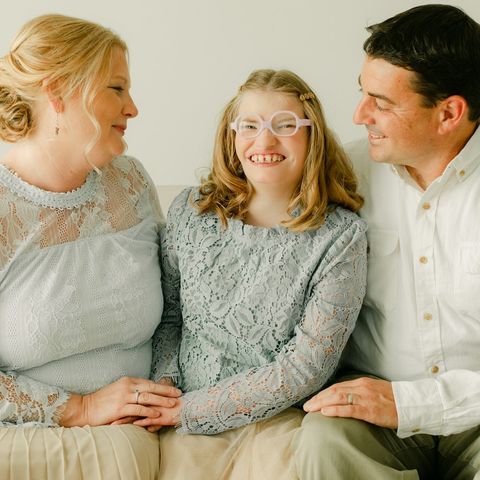
Our guest this week is Todd Evans of Brentwood, TN who is a business owner, author and father of two children with disability.
Todd and his wife, Kristin, have been married for 23 years and are the proud parents of two children: an 18 year old who was born with a metabolic disorder and 14 year old who has Cri du chat syndrome is a genetic disorder caused by a deletion of the short arm of chromosome 5.
Together Kristin & Todd maintain the website: DisabilityParenting.com, dedicated to empowering parents of kids with all kinds of disabilities.
They are also co-authors of the book, How To Build a Thriving Marriage As You Care For Children with Disabilities. Todd is also a member of the Nashville SFN Mastermind Group.
Theirs is a story about faith, marriage overcoming adversity and service to others all on this episode of the SFN Dad to Dad Podcast.
Show Links
Phone – (731) 202-1112
Email – mauddib6@gmail.com
LinkedIn – https://www.linkedin.com/in/todd-evans-a35744137/
Website – https://disabilityparenting.com/
Book – https://tinyurl.com/3urefxpr
Transcript:
Tom Couch: Special thanks to Horizon Therapeutics for sponsoring the Special Fathers Network Dad to Dad Podcast. Working tirelessly to research, develop and bring forward medicines for people living with rare and rheumatic diseases. Discover more about Horizon Therapeutics mission at horizontherapeutics.com.
Todd Evans: Couples that have a child with special needs, that choose to stick it out to, choose to contribute to their marriage, have some of the most satisfying marriages out there. they grow and they’re closer than typical marriages often are. and it can be very, very rewarding. And you almost don’t think that you think of it. Are we just going to be partners that are trying to get through this life together as caregivers? Are we going to be intentional and rediscover what it means to be lovers and partners together in the midst of it all?
Tom Couch: That’s our guest this week, author Todd Evans. Todd and his wife Kristin are the parents of two children with special needs and they have a website, disabilityparenting.com dedicated to empowering parents of kids with all kinds of disabilities. They’ve also written a book, How to Build a Thriving Marriage as You Care for Children with Disabilities, available on Amazon. It’s a fascinating story and we’ll hear it on this Special Fathers Network Dad to Dad Podcast. Now say hello to the founder of the Special Fathers Network and host of the Dad to Dad Podcast, David Hirsch.
David Hirsch: Hi and thanks for listening to the Special Fathers Network Dad to Dad Podcast presented by the Special Fathers Network, a dad to dad mentoring program for fathers raising children with special needs. The Special Fathers Network Mastermind Group Experience is the most comprehensive program the 21st Century Dads foundation offers. Dads raising children with special needs meet virtually on a weekly basis and form meaningful relationships while sharing weekly wins, discussing books and sharing heartfelt challenges. One of the highlights of the year is attending an in-person weekend retreat. We’re launching 10 new mastermind groups in 2024 with 10 dads per group. That means we’re only looking for 10 like-minded dads in each community. If you’re a dad raising a child with special needs, we hope you’ll join a local mastermind group and make the investment to become the best version of yourself. For more information, please see the show notes or simply go to 21stCenturyDads.org.
Tom Couch: Now let’s listen to this entertaining conversation between Todd Evans and David Hirsch.
David Hirsch: I’m thrilled to be talking today with Todd Evans of Brentwood, Tennessee, who is an author and is the father of two children with different abilities. Todd, thank you for taking the time to do a Podcast interview for the Special Fathers Network.
Todd Evans: Yeah, thanks for having me on.
David Hirsch: David, you and your wife Kristin have been married for 23 years and are the proud parents of two children, an 18 year old who was born with a metabolic disorder and a 14 year old, who has Cri du chat syndrome, genetic disorder caused by a deletion of the short arm of the chromosome number five. Let’s start with some background. Where did you grow up? Tell me something about your family.
Todd Evans: Sure. Grew up in West Tennessee in Jackson. Lived there up through third grade with my mother and father, then my sister who was four years younger than me. So we had pretty typical early childhood there in Jackson and just remember some great times with family. My family decided an important thing was that time together. I remember having a pool and they, they paid to get that put in so we could have that family time together. And my mother went and got lifeguarding lessons to make sure we were safe. And dad helped out a lot with all those things and we had a lot of good memories there at our home and going to the pool, playing cards and those kind of things.
David Hirsch: Excellent. What did your dad do for a living?
Todd Evans: At the time? He was a finance in finance for a car dealership. So he’d work deals and help with those on the back end of things. He wasn’t the one pressuring you up front, but he was in the back doing all the numbers and running those and helping with everything. So that’s what he did. And then we moved to Nashville. You know, I was in fourth grade and he was in finance for a couple years, but then ended up just having to change careers. And it’s interesting to see that process. You know, my dad, who was in all these finance all these years, just felt compelled to kind of change careers completely and switched over. Went back and got his master’s in social work and helping disabled adults with placements and with DIDs and things like that. So so that was kind of a neat thing to, to see an example in him with that.
David Hirsch: You know, that is quite a career change. It’s not like you went from like finance to investments or accounting or something business related. You know, like it’s not a 180, but it’s a, it’s a big change. So it’s like he’s had two careers, right? He had his like business career and then he had his like social worker career. So it’s, that’s really remarkable. So how would you describe
00:05:00
your relationship with your dad.
Todd Evans: It’s a great relationship pretty much our whole life. Of course, as all relationships have, things are different at different stages of your life. But he’s always very supportive of me, encouraging. I was a big thinker and big dreamer in a lot of ways growing up. And he was always trying to be supportive of that, along with that from a young age as an entrepreneur. At 12, I went out and was mowing grass for the neighbors because he wouldn’t let me mow our grass because he loved to mow the grass himself. So, so he wouldn’t give me that job. So I had to go mow the neighbor’s grass to be able to mow. And I was like, if I’m going to do this, I’m going to start a business doing it. And so he helped finance it for me, helped paid for equipment, and, believed in me and kind, of helped set me up for that first business and even worked alongside with me for years on it. When I got, you know, too much to do, he’d come out and mow with me and do things. And then through the years, he’s been someone to be able to call and talk to and just to, be that companion. And now the last five years, we’ve had probably the closest relationship of all time of our life. He wants to help our family. He knows the struggles we go through with my business. Now he’s involved. He works probably 25 to 30 hours a week. We’re on the phone every day, which is nice because it gives a chance not to talk business, but to have some personal conversation every single day with him. So that’s been a, a neat experience to have.
David Hirsch: That’s fabulous. So, what were the most important takeaways when you think about the relationship with your dad? Lessons learned, things that you might have tried to incorporate into your own fathering?
Todd Evans: Definitely the selflessness. I can’t think of a more selfless man that puts others ahead of himself. You know, he’s been through, just like our family’s been through, tough things. He went through tough things. my sister at a young age, she has a genetic disorder as well. So he was really, you know, really a special needs father in many ways, too, with, with her medical issues and her neck collapse and saw him care for her selflessly and when she had to be in a halo and help her through that period, then my mother had ALS. He just lovingly cared for her and took care of her. Quit his job to be there by her side all the time. And like I said, now with my business, he puts us first and our family first, and we’ll do whatever he can to make it best for us.
David Hirsch: Yeah, well, sorry to hear about the situation with your sister, who I know is really struggling, and, your mom passing away at a premature age as a result of ALS. So, you know, your dad has been through a lot. You can learn a lot just by watching how somebody handles, challenging situations. And I think that’s what I heard you say, is that, he was present and did what he could. And, not all dads, stick with the program, if you will. So I think that’s, fabulous that you’ve had that type of role model. I’m thinking about your grandfathers now, and I’m wondering what, if any, role they played, starting with your dad’s dad.
Todd Evans: Yeah, my dad’s dad. Very, very close to him. Granddaddy. Lots of great memories. He was in many ways, a quiet person, as you found from those that went through the war. And he wasn’t willing to talk about that for sure. And just in general was a quiet demeanor, I think, somewhat from that. But he would tell a joke and. And he would do all the Reader’s Digest jokes and tell them to us over. Over dinners when we were home. So that had lots of memories of that. And they had a little cabin, type thing on near the lake. So we spent a lot of time, especially in the summers, out fishing together and going out on the boat and just having cheese sandwiches, I think was one of the big things that he loved. So, yeah, just, spent a lot of time with him, growing up, and that was definitely some great memories.
David Hirsch: And how about your, maternal grandfather?
Todd Evans: That was a more difficult situation. My grandmother, and grandfather got divorced back before I was born. Kind of caused a rift in the family a little bit. You know, growing up, I would see him once a year, maybe wasn’t real often. And there was a lot of hurt there in the family on our side. So I wasn’t personally hurt, but you felt it indirectly through them. It didn’t have a lot of connections the last two years of his life. He really reached out and tried to have a place for, us and our family. So I made an effort to go out, and we visited him usually m. Once a month or so and at his assistive living and just visited with him. And, he tried to be kind to us, and I was able to catch up a little bit with him. But. But definitely you miss something when you’re not there for all those years, it wasn’t the same as having another grandfather, but it was definitely new. He cared for me and the ways he talked and spending, that time with him.
David Hirsch: Yeah. Well, thank you for being so open and transparent about the situation. It’s like, here’s, the role
00:10:00
David Hirsch: model, right, with your paternal grandfather. And then, you know, you compare and contrast, maybe with the benefit of hindsight, what happens when things don’t go as well as they could or should. And, you know, we can learn from all different types of role models. the way I think about it is you want to emulate the ones that got it right and maybe live vicariously through the others. So hopefully you don’t make those, same decisions or go down that path as well.
Todd Evans: Right.
David Hirsch: So any other men that played an influential role in your life, in addition to your, grandfather on your dad’s side and your dad himself?
Todd Evans: You know, I’ve had some. Some really close friends, male friends in college, that really helped inspire me to kind of look at this path of ministry that ended up going on. You know, it was a thought that maybe that was an important thing in my life and might do it. You know, I was trying to decide when I went into college, you know, whether I was going to be an engineer, a youth pastor, or a Navy seal. That was my three choices. And, they really came alongside. They were, graduate students. Just really mentored me through that first year of college, especially helped me kind of dream in a larger picture of what this world could be and how we could serve God in it and really inspired me and were there alongside, helped them to form me a lot in that freshman year especially. So that’s probably some of the biggest other, influences through the years.
David Hirsch: So, what was it, or why didn’t you pursue the Navy SEAL path?
Todd Evans: Really just fell back in love with God and trying to serve him and do that. I saw just this way to try to love the world and figure out how I could do that better. I really kind of went that direction. I love the challenge of what I thought the Navy SEAL program would be. I love to push myself to the limits, push my body as hard as I can mentally, physically, and see what it’s capable of. but then I discovered, you know, I can do that, my faith, too. and God will push me, and he has pushed me more than I ever imagined with family issues and other things going on.
David Hirsch: Yeah, well, thanks for sharing. So my recollection was from an educational standpoint, you went to Vanderbilt undergrad, then, Wheaton College, you took a master’s degree in, educational studies, and then you got a PhD from Vanderbilt in mechanical engineering. And was that back to. Back to back or was there a gap in there?
Todd Evans: Definitely a gap. I did my undergrad at UT Knoxville in engineering and then went straight to the master’s program at Wheaton College because that’s really the direction we wanted to go. So my wife and I went and did that program together and then like, I talked about, went into ministry for about 12 years and had our kids that had special needs and life wasn’t the same anymore and jobs weren’t the same. it really became an emotional toll to try to serve at a church and meet the emotional needs of the congregants and of my family, both, not to mention the financial aspects of things. That was one of two or three career changes. And went back, said, you know, let me get my PhD in engineering and see where that takes us. Got some good opportunities at Vanderbilt to do that and do some research fellowship and working, in that. So, so yeah, it’s a little circuitous path through that.
David Hirsch: So what is the career path after you’ve gotten a PhD in, mechanical engineering, what are the logical paths that you would go down?
Todd Evans: It’s really one of three major directions you would go. It’s research, teaching or government work, which is usually research too, but it’s a very different pathway than for profit business research pathways. So I was pursuing more of the academic, and academic research path, after I graduated and was able to teach some classes, there at Vanderbilt and really enjoyed that a lot.
David Hirsch: And that’s perfectly prepared you for the businesses that you’re leading now?
Todd Evans: Yeah, yeah, exactly. No, no, no, not at all. so it’s one of those. It’s actually kind of ironic, you know, I had no money in grad school to do anything besides go to school and take care of the family as little as we could. And we just wanted to go on vacation and, and couldn’t figure out how to do that. So I ended up discovering credit card miles and points of all things. And As a research PhD student, I put my research PhD skills to researching that field and that’s turned into my multiple businesses now completely unrelated to engineering, in every way, but, ah, very good fit for our family and what it provides for flexible time and finances and things.
David Hirsch: So what are the two businesses that you’re leading now?
Todd Evans: It’s tough to describe in a short time, but, I run a fueling company that I provide diesel fuel for small trucking companies. also run an, online retail company focused on gift cards, and those are kind of related. And then in addition to that, my wife and I help run a ministry called disabilityparenting.com and we try to support other couples that are kind of going
00:15:00
Todd Evans: through this and trying to help them find ways to strengthen their marriage. So it’s a busy week every week, but, a lot going on.
David Hirsch: Yeah. Well, I admire you for your, industriousness. You know, life is sort of unpredictable, right? you can only connect the dots looking backwards and see how you got to where you are. It’s really difficult to look forward and think, oh, that’s where I’m going. You know, good to have an idea or a direction. But, you know, I think that you, have this, entrepreneurial spirit and that you’ve, been able to nurture that more recently. So I think it’s fabulous. So let’s talk about special needs first on a personal basis. Prior to becoming parents, did you or Kristin have any connection to the disability community other than perhaps your sister situation?
Todd Evans: Yeah, beyond my sister, not really. I remember there were kids in school that were in wheelchairs and things, and they had their own kind of program and area in the school they went to. that’s kind of how it was back in those days. It wasn’t the inclusion that they try to do more so now. But as a youth pastor, you know, obviously had youth with, you know, autism and other issues that were going on. I’d work with them and with, their families a little bit, but nothing real direct until these, diagnoses happened in our family.
David Hirsch: So what is or are your kiddos diagnoses, and how do they come about?
Todd Evans: Our oldest was diagnosed with metabolic disorder, one of the first in the U.S. seems like every special needs family we talked to, there’s so many diverse things, and they’re all unique. And this was kind of true for him. So they didn’t know much about it. It was a metabolic disorder. So he was throwing up all the time on a feeding tube sometimes, you know, very delayed in speech, and some of those things that you see sometimes in younger children that might be on the autism spectrum and things. But it was our daughter that’s probably the most profoundly disabled with the disability she has with Cri du chat. it’s an overall muscular and mental cognitive disorder. So anything that affects a muscle, she has an issue with it. You know, everything in your body is a muscle. Your eyes so trouble seeing you’re eating. So she couldn’t eat the first five years of her life, and she’s still on a feeding tube to help get her nutrition. But she eats a lot better now. They said she’d never walk, but she runs and plays and has fun now she gets tired quickly. And then, like I said, She’s 14, but she’s really mentally and developmentally more like a two and a half year old. so we’ve got a lot of those, things that, that are a joy many days, but a struggle other days. So the good and bads are the terrible twos.
David Hirsch: I can only imagine. So when these diagnosis became, apparent, what were some of the fears that you and Kristin had early on?
Todd Evans: Well, you know, we didn’t know what to do with our son. You know, it was our first kind of experience in this kind of world. We didn’t know a lot of other people that were dealing with special needs or anything like this. And I guess really was the. I don’t know if it was a fear as much as it was just not knowing what to do or how to help you, feel almost helpless or like you’re going to do something wrong. With our daughter, you know, we got had a little bit of experience, you know, coming into that, so in some ways we were a little more prepared. But with her, you know, we found out a few months into the pregnancy about her diagnosis. so we had a little more time to prepare and think about it and work on it. But really it’s the same kind of thing. You know, she was born just over two pounds and in the NICU for months, and then comes home and still this tiny, tiny baby. And, you know, you know, her life is in our hands and literally, you know, she’s on all these machines. If we don’t take care of any one piece, she could pass away. I mean, we saw her code in the NICU. So we know how fragile life is. And to be entrusted to do that in our own home without medical professionals around, that was definitely a fear.
David Hirsch: Oh, my God, I can’t even imagine. Was there some meaningful advice that you got early on that helped put things in perspective or made it a little bit easier?
Todd Evans: There was another couple that, their family had had some issues with it, and I don’t know if it was meaningful advice. It was more their willingness to come alongside and kind of share with us and kind of be willing to listen to whatever we wanted to talk about. I don’t know. I think advice is overrated and I don’t like advice that much. And so I don’t give advice to people hardly anymore. because it, the advice people give is just pat and, and not, very applicable to your situation. It often feels like. So it, it was more the support of people being there than the advice or anything that I, that I think really was meaningful.
David Hirsch: Yeah, I think that’s important too. You know, doctors
00:20:00
David Hirsch: give medical advice, lawyers give legal advice, and I think what parents have to offer one another is maybe just a shoulder to lean on and the presence. And you know, you can certainly share what your experience has done. Right. Not telling people what to do, but just say, you know, this is what we did in our, our situation. And I think you find some comfort or knowledge, you know, there. Right. So, you know, you don’t feel like you’re doing it on your own.
Todd Evans: Yeah, definitely. Just sharing of resources and when. I mean, not money or anything, but just knowledge, like you’re saying of this is what we did in our family. And as an example to help that or have you thought about asking for this type of service? You know, when we came home, the hospital, we had no idea that there was, help from, from Social Security programs, for instance. we went three months before we ever heard about that. And it was because a friend told us and that was life changing to be able to get nursing, and support services in to help. so that’s probably the most meaningful. Was that one thing?
David Hirsch: Absolutely. So not to focus on the negative, but what have been some of the biggest challenges that you and Kristin have encountered the last decade or more.
Todd Evans: Now, really, I would classify it as a loss of what could be and of a dream. You know, when you get married, you have a lot of perceptions of what we’re going to be as a family and what we’re going to be as a couple and what we might accomplish in our careers. And so I think that’s been something pretty challenging is to kind of give that up. You know, I said we were in ministry for 12 years and had to leave. That was a, very, very hard piece because it was giving up an identity, giving up a career, a calling. Didn’t know where what was going to happen, you know, when we left that and did that. So I’d say that’s been some of the biggest challenge for us. Understanding one another. When the hardest points in your life come along, it often brings out some of your truest nature and brings out the differences in you. And my wife and I, Kristin, really experienced how different people we are, that we don’t understand each other a lot of times. So that was definitely a challenge to kind of figure out who we were and also who our spouse was and how we could live with that, support that, love each other in the midst of that. So that was definitely a big challenge for us.
David Hirsch: What impact has your children’s situation had on your marriage or your extended family, for that matter?
Todd Evans: Like I said in the beginning, it was crushing. It really split our marriage apart, and we just didn’t know how to function. Felt like we were in almost a PTSD situation from the trauma of pregnancy and everything, and just trying to survive and weren’t surviving. So that’s been one of the hardest things back then to kind of work with and deal with.
David Hirsch: Yeah. Well, thank you for being so open and transparent about that. I know that we’ll talk a little bit about your book and some of the learnings that you shared there. I’m thinking about supporting organizations. What organizations come to mind that, your children have benefited from or you and your family have benefited from?
Todd Evans: You know, we moved to Nashville. One of the reasons we left where we were and moved to Nashville was for the services that were here with the doctors and the. And the programs, early intervention programs that were kind of pioneering at Vanderbilt with, the Triad, but then down to, other programs. Like, more recently, just last three years, we’ve started getting involved in Special Olympics. Right now we’re doing the middle of cheerleading. They kind of started that as brand new this year. And doing it for our daughter was one of the reasons they started it, because she just loves to cheer people on and clap and do that. So, they actually kind of built it around knowing she would love it, plus some other girls, too. And so we go. She puts on her headphones because she doesn’t like the noise, and, go and clap and try to be a part of that as much as we can. So those probably as a national organizations and things, those are probably some of the bigger ones that we’ve connected with. And then governmental programs, obviously, can be very helpful. There’s a respite program in our state. every state has a coalition that offers that. We’ve been able to take advantage of that a couple times. And then local churches that have programs, whether it’s been support groups or special Saturdays where we get away for a couple hours, and they provide care for the children and things a lot of different ways and a lot of opportunities are out there, but it’s hard to get out and find them and look for them sometimes because you’re so engrossed in the daily grind of survival. but they enhance your life so much when you do find them and reach out for them.
David Hirsch: Absolutely. So in a prior conversation, you made reference to attending some conferences. I think they were the Five P Minus society.
Todd Evans: Yeah, we’ve been able to go to that for about three years over the course of the last six or seven. We can’t go every year, but I know that was one. My wife just, was amazing for her the first time we went. there’s some definite characteristics with Five P Minus that you can see visibly, in the way people talk, the mannerisms, things like that. And at the time we went to our first one,
00:25:00
Todd Evans: there was only like two or three cases of Cri du chat in the state that we knew of. And so we didn’t really connect or know other people. But then when you show up and it’s a hundred families, you know, all with kids like this, my wife felt like, wow, these are people that understand me, people that know me, people like our daughter. Just this warm, accepting environment. And they try to provide a lot of research, a lot of understanding and education. So definitely a neat organization for our specific disability with our daughter that we enjoy going to and try to support them and, and, be a part of that to meet other families too.
Tom Couch: We’ll be back with more of the conversation on the Special Fathers Network Dad to Dad Podcast in just a few moments. But first, this quick message. Please help 21st Century Dads gather research on families raising children with special needs by having them complete the Special Fathers Network Early Intervention Parents Survey. A link to the survey can be found in the show notes. As a token of our appreciation, each person, mom or dad, who completes the survey will receive a great dad coin. Thank you. Now back to the conversation.
David Hirsch: I’d like to focus on your book, the title of which is How to Build a Thriving Marriage as You Care for Children with Disabilities, published in May of 2024. you and Kristin co authored this book, and I’m sort of wondering what the backstory was. What was the impetus on. That’s a big undertaking, given all the other things you’ve got going on.
Todd Evans: Yeah, it definitely was started just as a idea somewhat with COVID happening. My wife had to quit her job. She was a crisis counselor. Going to jails, going to the side of roads, helping people. But with our daughter’s medical fragility at the time, she had to quit her job and just decided to start a mom’s Facebook group to start helping other moms that were raising kids with special needs and tried to support her and encourage her to do that. And it kept growing and turned into a blog. And then we just started talking about it and we said, we’ve learned a lot in our time. We feel like we’ve been in the depths of despair of a marriage, but we’ve came back through it. It took years and years for it to happen, but how did we do it? And so we just started looking back and said, and kind of trying to figure out and put the pieces together in hindsight, what made our marriage come back together. And so we did that, and then we started researching. My wife is a research nerd, and I am a little bit too, but, she is more so. And, looking and seeing, well, what is the research showing? What are things that help? and then realizing special needs, families and parents. We don’t have time to read research and to know these. So we started thinking, okay, how can we get all this down into something easily digestible, little nuggets of information and stories from our own lives to illustrate them and kind of carve out what are the principles that can really, really help a marriage thrive in the midst of this pressure that’s on there? because what the research shows and what was so profound to me and part of the reason that he’s motivated to do this is couples that have a child with special needs, that choose to stick it out, to choose to contribute to their marriage, have some of the most satisfying marriages out there. they grow and they’re closer than typical marriages often are. And it can be very, very rewarding. And you almost don’t think that it’s. You think of it. Are we just going to be partners that are trying to get through this life together as caregivers? Are we going to be intentional and rediscover what it means to be lovers and partners together in the midst of it all?
David Hirsch: Yeah. Well, I think it’s brilliant. There’s two sections. The first is reorienting, your marriage. And then the second, which is the larger part of the book, is building additional marriage skills. And, in the back of each of the chapters is like a skill building section. Like, almost like a workbook.
Todd Evans: Yeah, that’s what it is. Yep. It’s hidden in there as a workbook. Yes.
David Hirsch: So I just love it. And, there Was something. There was a part of the book that, I think it was page 27 and the little section there was accepting your circumstances. And that is the exact title of a book that another dad in the network, wrote. His name is Noel Fernandez Collette. he’s an 82 year old retired Baptist pastor who went blind 50 plus years ago. And he did an interview. he’s in Cuba. I interviewed him. Fortunately he spoke good enough English where we didn’t need to use a translator. And literally the title of his book is accepting your circumstances. You know, he was like you were writing about. It took a while, right, to come, to grips with the fact that he’s blind and he’s never going to see again. And you know, does he just close down or does he say, hey, you know, I’m not the only blind person in the world. There’s a lot of opportunities. But you do have to, you know, accept your circumstance. Right. As opposed to fight it or be bitter about it or, you know, always having some friction or negative
00:30:00
energy around it. And I think that was one of the really important points, of your book as well.
Todd Evans: Yeah, that’s, that’s like I said, it’s two sections. The first one is really about, especially for younger dads and younger couples, of coming to grips with, with where you are in your life and trying to help change that perspective. That’s such the key piece of it and also the hardest piece to do. so some tips in there of how to do it. Like you said, there’s kind of a workbook section because we believe strongly if you don’t go out and practice it, you’re to forget it and you’re not going to learn anything from it. So we definitely will make you, quote, unquote, make you with the ends of the chapters, try out something. But they’re fun to try out. They’re things like plan a date night. You know, it’s not like hard homework, but it’s good stuff that will really build your marriage. And we think that once you try it and see those results happening, it’ll kind of be a get the ball rolling and be a momentum thing that just keeps you propelled forward.
David Hirsch: Yeah, I love it. So you made reference a little bit earlier to another, program separate from the book called disabilityparenting.com. What is that? And what type of resources are there?
Todd Evans: That’s the website that we maintain. So my wife spends, full time doing that now. We try to post lots and lots of different resources in there. And she’s really good about doing that. And I don’t always read it. You’ll find this funny, David. So I told you in another interview about being invited to be part of the Special Fathers Network when I was at a conference. So I told my wife about it and, and like, is this thing called Special Fathers Network or something? And she’s like, yeah, it’s on our website where we have a link to it.
David Hirsch: That is hilarious.
Todd Evans: And so, so, there’s lots of good things like connections to the respite coalitions that are on there. We also try to provide just little stories and encouragements, stories from other people sometimes things like that. My wife runs an Instagram, have to have a daily encouragement of quotes and scriptures and funny stories or even medical tips of little things to do that we’ve tried to help other parents learn some new little tip or something. But yeah, just anything we can do. Do some podcasts on some other networks and things and we speak at conferences. We try to just really support the overall community of parents raising children with disabilities and just speak out on their behalf to church leaders, to mental health professionals as well, and trying to make it a holistic support network as best we can.
David Hirsch: Yeah. Well, I really admire your commitment to your faith, to your marriage, to your children and that somehow some way you found the bandwidth beyond. Right. With the book and this, website that you maintain or the Kristin maintains. And you know, it just really speaks to your character. And maybe there’s some therapeutic aspects of the book and the website as well.
Todd Evans: Oh, absolutely.
David Hirsch: You know that getting something back for what you’re putting in as well.
Todd Evans: Yeah. We’ve learned a lot reading our own book. I can tell you I don’t know who those smart authors are in there, so they know something.
David Hirsch: I’m thinking about advice and I know you’re not inclined to be giving advice, but, I’m wondering, what advice you can share with parents, specifically dads who might find themselves, you know, with a recent diagnosis or in a circumstance that they, they really didn’t anticipate.
Todd Evans: I think when you get into that kind of situation, it kind of. I know I’ll speak more of my experience. I think that might, maybe will help. it’s easy to kind of do one of two things, kind of that fight or flight mentality. It’s either I’m going to just forget it and not do anything. and I’m just going to check out that could even be in the midst of staying with your family, it can be checking out by going to work and spending more hours there. They can be going off to do other enjoyable activities, or there’s the fight side, which can also be a negative side that you want to fix the problem. And I think that was more my issue. I wanted to fix it. I wanted to make life better. I thought if I did enough, spent enough hours, did enough care, helped with all this stuff, that I could make my kiddo better. And it just kind of, in some ways kind of tore into me that I couldn’t. And it was really, I’m pretty stubborn. So it was probably two years into it before I realized I’m not going to fix my family, I’m not going to fix my kid. How can I turn this around? And eventually came to, you know, like I said, I don’t like to give advice because I don’t think you can just flip a switch and do this. But eventually, in hindsight, see that it was more of this acceptance of your situation, being in the midst of it, being open with those around you, whether it’s your spouse or family that’s your support network or friends, be willing to share what you’re feeling. It’s hard to do that and you need that more than you could ever know. Just to have people around you that you can share with and be with and know that it’s okay if you’re not happy, you’re angry or anything like that. that’s part of the
00:35:00
Todd Evans: natural process.
David Hirsch: Yeah, well stated. why is it you’ve agreed to be a mentor father as part of the Special Fathers Network?
Todd Evans: I really think it’s just such a hard time in life. Like I said, it was a few people that were willing to be there beside me during some of those times that helped. and I hope I can be that to help someone else. It’s a challenging aspect of life and I think, ah, maybe in some way I can help them come, to terms and grips with it and then not just get through it, but learn how it can be a blessing in their life and their family. And I hope to be a part of that and to be able to see that joy and blossoming, in another dad.
David Hirsch: Yeah. Well, we’re thrilled to have you. Thank you for being part of the network. Is there anything else you’d like to say before we wrap up?
Todd Evans: No. It’s just been, been good to, connect with some other dads and enjoying that time. And I’m still kind of fresh into the group and looking forward to seeing kind of where, some of these relationships take off too.
David Hirsch: Excellent. let’s give a special shout out to John Shouse and Matthew Rebein, the leaders of the Nashville Special Fathers Network mastermind group, for helping connect us.
Todd Evans: Yeah. Woohoo. John and Matt.
David Hirsch: If somebody wants to learn more about your work or to contact you, what’s the best way to do so?
Todd Evans: Our website’s a great place, disabilityparenting.com I do help with that 10 to 15 hours a week and my wife will get me the email if you contact us. But also my email or text. You know, I’m open to anyone anytime reaching out to me and would love to talk or listen or whatever you might need.
David Hirsch: We’ll be sure to include that information in the show notes so it’ll make it as easy as possible for somebody to follow up. Todd, thank you again for for your many insights. As a, reminder, Todd is just one of the dads who’s part of the Special Fathers Network mentoring program for fathers raising a child with special needs. If you’d like to be a mentor father or are seeking advice from a mentor father with a similar situation to your own, Please go to 21stCenturyDads.org. Thank you for listening the latest episode of the Special Fathers Network Dad to Dad Podcast. I hope you enjoyed the conversation as much as I did. As you probably know, the 21st Century Dad foundation is a 501 not for profit organization, which means we need your help to keep our content free to all concerned. Would you please consider making a tax optimal contribution? I would really appreciate your support. Todd, thanks again.
Todd Evans: Thanks David.
Tom Couch: And thank you for listening to the Special Fathers Network Dad to Dad Podcast. The Special Fathers Network is a dad to dad mentoring program for fathers raising children with special needs. Through our personalized matching process, new fathers with special needs children match up with mentor fathers in a similar situation. It’s a great way for dads to support other dads. To find out more, go to 21stCenturydads.Org.
David Hirsch: And if you’re a dad looking for help or would like to offer help, we would be honored to have you join our closed Facebook group. Please go to Facebook group facebook.com groups and search dad to dad. Lastly, we’re always looking to share interesting stories. If you’d like to share your story or know of a compelling story, please send an email to david@21stcenturydads.org.
Tom Couch: The Special Fathers Network Dad to Dad Podcast was produced by me, Tom Couch. Thanks again to Horizon Therapeutics who believe that science and compassion must work together to transform lives. That’s why they work tirelessly to research, develop and bring forward medicines for people living with rare and rheumatic diseases. Discover more about Horizon Therapeutics at horizontherapeutics.com.
00:38:36