

358 – Emma Livingstone, of London, England, Mother of Three, Self Advocate & Founder of UP The Adult Cerebral Palsy Movement
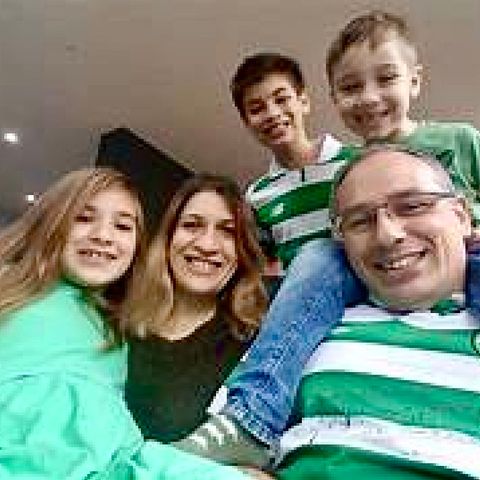
Our guest this week is Emma Livingstone of London, England who is the mother of three typical kids, a self-advocate with Cerebral Palsy and founder & CEO of UP – The Adult Cerebral Palsy Movement.
Emma and her husband, Derrick, have been married for 17 years and are the proud parents of three typical children ages 11-16. She is the one who has cerebral palsy, which has propelled her to become one of England’s most outspoken advocates for adults with CP.
Emma is founder and CEO of UP – The Adult Cerebral Palsy Movement, a non-profit whose mission is to help all members of the adult Cerebral Palsy community to live their best lives.
It’s an uplifting story about family, perseverance and service all on this episode of the SFN Dad to Dad Podcast.
Show Notes –
Phone/WhatsApp – 44-07-951-019-508
Email – emma@upmovement.org.uk
LinkedIn – https://www.linkedin.com/in/emma-livingstone-080967a4/
Website – https://upmovement.org.uk/
Transcript:
Tom Couch: Special thanks to Horizon Therapeutics for sponsoring the Special Fathers Network Dad to Dad Podcast. Working tirelessly to research, develop and bring forward medicines for people living with rare and rheumatic diseases. Discover more about Horizon Therapeutics mission at horizontherapeutics.com.
Emma Livingstone: If you have a child that isn’t able to do those things, then we have a responsibility to provide those opportunities where you learn, those independent skills and you learn to advocate for yourself and have a voice.
Tom Couch: That’s our guest this week, Emma Livingstone. Emma lives in the United Kingdom and is the founder and CEO of up a UK based movement dedicated to improving the lives of people with cerebral palsy. And Emma is one of those people. We’ll hear her story on today’s Special Fathers Network Dad to Dad Podcast. Now, say hello to the founder of the Special Fathers Network and host of the Dad to Dad Podcast, David Hirsch.
David Hirsch: Hi, I’m David Hirsch, host of the Special Fathers Network Dad to Dad Podcast. Two short messages. First, I’d like to thank those who donated more than $1,000 to the 2024 cycle to end Father Absence Campaign. In alphabetical order. They are Ina Byrd, Irene and Tom Costello, Kim Duchessois, Damien Navarro, Brad Surratt, Don Stadler and UBS Financial Services. We’re close to reaching our $50,000 goal and we can use your help. If you haven’t already done so, would you please consider making a tax collectible contribution? You can do so by going to 21stCenturyDads.org. Secondly, the Special Fathers Network Mastermind Group Experience is one of the most comprehensive programs the 21st Century Dads foundation offers. Dads raising children with special needs, meet virtually on a weekly basis and form meaningful relationships while sharing weekly wins, discussing books and sharing heartfelt challenges. One of the highlights of the year is attending an in-person weekend retreat. As you think about the year ahead, I invite you to join one of the existing or soon to be formed Special Fathers Network Mastermind Groups and join a group of like-minded dads to become the best version of yourself. It might just transform your life as it has done so for so many others. For more information, please see the show notes or simply go to 21stCenturyDads.org.
Tom Couch: Now let’s listen in to this conversation between Emma Livingstone and David Hirsch.
David Hirsch: I’m, thrilled to be talking today with Emma Livingstone of London, England, who is the founder and CEO of up, the Adult Cerebral Palsy Movement and mother of three typical kids. Emma, thank you for taking the time to do a podcast interview for the Special Fathers Network.
Emma Livingstone: Thank you so much for inviting me to come and talk to you today.
David Hirsch: You and your husband Derrick have been married for 17 years and are the proud parents of three typical children, ages 11 to 16. You’re the one who has cerebral palsy, which has propelled you to become one of your country’s most outspoken advocates for adults with CP. Let’s start with some background. Where did you grow up? Tell me something about your family.
Emma Livingstone: So, I grew up in London. I was the oldest of three children. I have a younger sister and a younger brother and we had a quote, unquote, very kind of normal middle class life.
David Hirsch: And out of curiosity, what did your dad do for a living?
Emma Livingstone: When I was very small, he was a market trader. So he, worked on the markets. And as I grew older, he then, sold, cars. Had, a garage, a forecourt, and he sold cars. But he always ran his own businesses.
David Hirsch: So was he sort of handy type of guy? Somebody who sells cars, maybe works on cars, enjoys cars or. Not necessarily.
Emma Livingstone: He would probably say, naught. But yeah, he, he is. I mean he will fix anything or have a go at fixing anything as long as he’s got his, handy supporters to help him to pass the tools. But yeah, he grew up with himself and his twin brother and his little sister and his mum and dad and very much from a working class background. But he will, put his mind to most things. He doesn’t like to sit still very often.
David Hirsch: Yeah. Well, thanks for sharing. It just brings this fun memory that I have. Your dad is the father to two daughters. I have three daughters. And when they were like teenagers and like beginning to drive, having some independence and some responsibility, I thought it was really important to teach them how to change the tire. Like if they had a flat tire and they’re like, dad, we would just call AAA. I’m like, nope, you can’t always plan on that happening. You know, if you get stuck in a spot, I want you to be able to, you know, understand how to jack the car up, how to loosen the bolts, how to get the wheel off, how to put the spare on, that type of thing. And you’d think I was pulling teeth. as we were going through this little exercise. And I have some really fun photos to memorialize
00:05:00
David Hirsch: that experience. Anyway, thanks for letting me digress.
Emma Livingstone: I think that’s what I mean by, when you say, is he handy? For him, he’s not handy. It’s just what everyone should know. He taught us also how to check the Oil, how to check the water. he didn’t have expectations that I could change the tile myself because of the physical issues, but certainly my brother. So, yeah, I think it’s just the way that he grew up and his expectations.
David Hirsch: I love it. Thanks. So, were there some important takeaways when, you think about your dad, lessons learned that you’ve tried to incorporate, perhaps in your own parenting?
Emma Livingstone: Yeah, I mean, I guess my parents were kind of my role models. My dad, too. I mean, they never believed that I couldn’t do anything. They didn’t treat me really any differently to, my brother and sister. they were always very supportive. And my dad believes in taking life by the horns m and living every day as best you can. And he’s a big family man. Family was incredibly important to him. He’s very close to his family, and he is still very, very involved with our life and very involved with my children’s lives. And so his role as a father and a grandfather remains important. He’s a bit of a, patriarch, but not in an old fashioned kind of way. It’s just he’s the person that they want to go hang out with.
David Hirsch: Yeah. Well, that’s fabulous. Thanks for sharing. And I think the most important thing I think you just shared is that he didn’t treat you any differently than your siblings. And it would have been easier to, you know, just do things for you and say, oh, she can’t do this or she can’t do that. And I think that, with other families, there’s an iconic dad. Sadly, he passed away a couple years ago now here in the States, Dick Hoyt. And Dick was recognized for running these, Boston marathons with his son, pushing his son rick, in 34 Boston Marathons. And I’ll brag on him a little bit because he was one of the very first interviews that I did when we started the podcast. He did over 100 marathons. 12, hundred races, including six Ironman triathlons. And he didn’t treat his son Ricky any differently than he treated his other two boys. You know, Ricky was, he had cp. He was actually spastic quadriplegic as well. Never talked, never walked. But, you know, he graduated from college, he wrote a book, and he had a very, very full life. And I credit that a lot to the way his parents raised him, the way that you were talking about your dad not treating you any differently than your siblings and having high expectations for you.
Emma Livingstone: Yeah, I guess that’s what I mean about different. He had the same high expectations. You know, he was a big advocate. You know, my parents were big advocates of helping me to find a path that I could succeed in. And that’s not to say that one doesn’t have to make adaptions and allowances when you’ve got a physical disability. So it’s not like he wasn’t aware. for me, my big memory is on my 18th birthday. Because here in the UK, 17 is when you learn to drive. So it was my 17th birthday and I came home and he had wrapped one of his cars from the forecourt in the biggest bow that you’ve ever seen, you know, and he went off for my first driving lesson. In fact, I think the first one was, with a driving instructor in an automatic car. And that didn’t go particularly well. I think the, driving instructor lost a few lives, on the way because I didn’t have the dexterity to drive with my, right foot, which is what you need. but you talked about my dad being handy. So he was like, okay, so how do we make this work? So he went away, he got a car, he got it specially adapted with an extra pedal. the driving instructor came back and patiently, for an entire year took me out on driving lessons. And I actually, the reason I say my 18th birthday, because my 18th birthday was when I took my test and I remember coming back, having passed. He picked me up and he swung me around. But during that time, over that year, I wanted to give up so many times. And he was like, no, you need to learn to drive. Because if you learn to drive, you’ve opened up your world and that’s what you need to do. So, so when I say, you know, they made allowances, they made adaptions, they found ways. Now if you go to motability here in the, it’s quite standard to get an extra pedal. But then he went and found a mechanic that would do it and he did it himself. So I guess what was the same as my brother and sister is the expectation that we would do the best that we possibly could and then have those allowances, around that, because obviously there were certain things that I wasn’t as able to do, if that makes sense.
David Hirsch: Oh, absolutely, yeah. Thanks for sharing. So let’s, talk about other father influencers. And I’m wondering what, if any, influence your grandfathers had starting on your dad’s side first.
Emma Livingstone: So, yeah, my dad’s dad, he was from the East End of London. He had been in the war, he’d been a mechanic
00:10:00
Emma Livingstone: himself. He’d also sold materials in the market. And, he was incredibly proud of his two sons, and his little daughter. And so that’s my memory of him. He was a very quiet man, not really particularly cuddly, but always with a hand, you know, like quite old school. And he died when I was about 14. But he was also a big cheerleader for his family, I think.
David Hirsch: Yeah, yeah. Well, thanks for sharing. It sounds like a great role model. And, you know, not everybody gets to know their grandfathers or grandparents.
Emma Livingstone: No.
David Hirsch: Just because the age and things. And how about on your mom’s side?
Emma Livingstone: So on my mum’s side I’ve been incredibly lucky again that, he lived, until he was 98. Unfortunately, in his latter years he suffered from Alzheimer’s. So, for the last 10 years or so, he wasn’t the person that I knew before. He was someone that could go and make friends with everybody. He was a very, very small man actually, but had a very larger than life character. He was somebody that I used to talk to a lot, especially after I lost my other grandfather. I think it made me realize that they weren’t going to be around forever. So I really worked on that relationship.
David Hirsch: Yeah, well, thanks for sharing. You, were very fortunate to have both your grandfathers in your life, even though one died at a relatively early age, relatively speaking. And that’s another thing we have in common. three of my four grandparents lived into their 90s, so they passed away when I was in my late 30s, early 40s. And it’s a blessing, right, to have them around for that period of time, not just to look up to them, you know, as a little person when you’re really young, but to know them as an adult and as a parent yourself. They became great grandparents. So my recollection was that from an educational perspective, you went to Birmingham City University, you had a degree in speech, and language therapies. And then you also went and got a degree, I think in coaching. and I’m wondering, where did you see your career taking you?
Emma Livingstone: So when I was growing up, obviously I spent a lot of time with physiotherapists and in that kind of health environment. But I really liked being with people. I really liked that therapeutic idea. And then I found speech and language therapy. Language always fascinated me. So I did okay at school. I didn’t find it that easy, but I did okay and I got decent grades. But then when I went to university and I, and I found speech and language therapy, I Found something I loved and I was really good at. It was kind of the first time that I found something that I really felt I could excel at. So I think that was where I saw my career kind of just carrying on. And the reason that I got, into coaching was because I did quite well in my career in my early days. And so I found myself managing teams quite early. And, then realized that I didn’t really feel like I had the skills to support people and not take on all their emotional baggage. And I knew enough to know that there were skills that you could have that would help people to learn for themselves and to get the best out of people. And also, now thinking about it, I wasn’t that old when I got married. But in relative terms, a lot of my peers had already settled and were having babies and I had, quote, unquote, some free time. So I took myself off and, ah, just got more education. Yeah.
David Hirsch: Well, my recollection was that you were a clinical tutor for a handful of years, a, speech and language therapist for maybe 15 years, and then for the last nine, years you’ve been leading this organization up the Adult Cerebral Palsy Movement, which we’ll talk about in a few moments. but you didn’t make reference to getting married. Maybe you weren’t the first of your peer group to get married. And I’m wondering, how did you and Derrick meet?
Emma Livingstone: Oh, it was a very old fashioned way, really. A friend of mine was taking some time off to go traveling and it was something that I always wanted to do and she encouraged me to go with her, so I took some time and I went traveling. And, then she decided to stay in Australia and to go and live and work out there for a few years. And, that, following Christmas I went out to see her and I met a few of her friends who I got on really well with. And so that summer they all came back to celebrate their 30th birthdays here in the UK. And Derrick, my husband, was one of their friends from university who was also invited to the party. And we got talking and the rest, as they say, was history.
David Hirsch: Okay, well, thanks for the background. So I’d like to talk about special needs on a personal level and then, beyond. Most of the interviews that I’ve done, as you know, are interviewing dads, stepdads, granddads, father figures who are raising a child with a disability. But in this situation, you’re the one with the disability. And I’m wondering if you can recall when you first Learned about your own situation. How did that transpire?
00:15:00
Emma Livingstone: If I’m going to answer honestly, I don’t remember a key moment. There was no moment of, this is what you have, and this is why I don’t remember not knowing. But the one thing that I haven’t said, which may or may not be relevant, is that, my sister is only nine months younger than me.
David Hirsch: Oh, my. We call that Irish twins. Maybe that would be English twins in your case.
Emma Livingstone: They do. They do, yes. So I was always with my sister. you know, I grew up completely in parallel to her. Ah. And I always knew that things were more difficult for me or that I did things differently. And I always recall my dad, you know, saying to my sister, look after Emma. She was always the one given the role to look after me. So I. I always kind of knew. I don’t remember not knowing.
David Hirsch: Yeah, well, thanks for responding in that way. You’re the oldest, so this is. All you knew was your own reality or your own experience. And maybe as you got to be a little bit older, it wasn’t like, oh, there was a diagnosis, like a date and time, like you were saying, but. But you probably realized that your sister was able to do things that you might not have been able to do, and that was just your reality.
Emma Livingstone: Right.
David Hirsch: It wasn’t like a profound learning.
Emma Livingstone: Yeah. I also remember that I had big, ugly brown shoes, and she could have lovely black painted shoes that I really wanted. It’s those kind of things that I remember more than, actually, any kind of formal conversation or discussion. It just was. And, in fact, I didn’t really speak about the fact that I had cerebral palsy. I mean, I did in that, m. My friends, my close friends knew. Often people used to ask my sister what was wrong. I think that’s just the way society was. But I never really spoke openly about the fact that I had cerebral palsy until I started this campaign or I started the charity in a much more vocal way. And I remember the first time the local paper did a piece, my dad found that quite difficult because I was sort of out there, owning it, acknowledging it in a way that we never really did as a family. But that wasn’t. It wasn’t because there was any shame in it. It was just. That’s just the way it was. You just kind of got on with things, so. Yeah.
David Hirsch: Yeah. Well, thanks for sharing. If I can try to paraphrase what you’re saying. You know, there wasn’t a focus on the fact that you had cerebral palsy, even though you obviously had, difficulty getting around physically. And just to be crystal clear, were you in a wheelchair or did you use like walking stick or how did you get around from a mobility standpoint?
Emma Livingstone: No, up until, my adulthood, and this is one of the reasons that I started looking into it. You know, I walked unaided. I probably had an interesting gait and I always had sort of special shoes or, splints. But I did walk unaided, if not slower. my balance wasn’t great and I couldn’t really run. And I remember my grandparents, when I first jumped up and down, I, I didn’t realize how much they’d been waiting for me to be able to do that. But yeah, you know, and I was always going to physiotherapy and having those kind of interventions. But I did walk unaided, just different.
David Hirsch: So at what point in time did you have more challenges from a mobility standpoint?
Emma Livingstone: So, my mobility changed as things in my life progressed. I mean, I always got more tired. I was never someone in my teenage years that could go shopping all day and then party all night like I did it. But it always really exhausted me and I never really owned that. I found it really difficult when I went off to university, actually was the first time I started to own the things I could and couldn’t do and not just try and keep up with everybody. And then when I got my first job, it was when I first started experiencing such high levels of fatigue. And I remember going to the GP, our general practitioners here, and saying, you know, I’m falling over more often and they hurt a bit more. And it’s a lot less pretty when you’re an adult falling than when you’re a little kid and you’ve jumped back up. So I started to fall more, I started to have high levels of fatigue, but I was still, I still walked unaided. I still, sort of carried on. And I’m the sort of person that will carry on until someone tells me that I shouldn’t. I didn’t have it within me to say, okay, enough’s enough. So I worked, I had a full time job and then I cut down the hours. I remember playing with. Should I work four days a week and have Fridays off so we had long weekends or should I? And then at other times I took a Wednesday off so that I could have a rest day in the middle. Still not really acknowledging that this was all because of cerebral palsy and that things were changing. It was Just me. And, then I went
00:20:00
Emma Livingstone: on to have children. From 2007 until about 2018, I had a buggy in front of me because of one or other of my children. And actually when I look back and reflect, I made myself like a walking device because it really did, help. And then before I actually had my first child, I dropped out of work, for the NHS. And that’s when I oldest was, was two and I was ready to go back to work. That’s when I started working at the university because it was less physically demanded and I could still use my skills. And then when I was, So Callum was my youngest, was about 2. And then my hips finally failed. I couldn’t walk anymore. And I remember going to, the general practitioner and saying, you know, my hips are really hurting me. And I had this experience where I can’t lift my foot. And I used to say to her, you know, my usual rest and taking anti inflammatories isn’t helping. You know, it’s not changing. And then, because I had lots of colleagues who were physiotherapists and speech therapists, because of the work I did, I remember speaking to a colleague and she said, it sounds like you’ve dislocated your hip, but you can’t have dislocated your hip. I’ll come and have a look. So she had a look and she said, she hadn’t dislocated your hip, but you’ve definitely done something. And then I went to A and E to get an X ray and they said, well, no, you haven’t dislocated your hip. You might have a touch of sciatica, go home, and take some anti inflammatories. But, just before I left, she said, would you like a wheelchair? Because it doesn’t look very comfortable, you walking. And I was aware enough to know that if someone’s saying that there’s something more is going on than just sciatica, and I found a pediatric orthopedic surgeon. and I say that because, in this country, that’s where all the knowledge and information is about cerebral palsy. It remains amongst the children’s professionals. And actually, that was by chance. It was somebody that somebody recommended. I mean, he looked at my hips, he looked at the X rays that they’d taken in AE and said, you have hip dysplasia, so much so that one of your hips is completely arthritic. And actually, what we’re going to offer you is hip remodeling. Surgery. It’s a major surgery. It’s going to take you a year or two to get over it. And he kept saying, if I was performing this surgery on your husband, who was always with me at the appointments, I could tell him it was going to take six months to recover, and this is what was going to happen, and it would be fine. But with you, we don’t know because of the underlying neurology. Now, that was the first time anyone had acknowledged that the implication of having cerebral palsy and, surgeries and interventions. And it was the first time anyone had offered me any surgery. I’d always had pain in my hip, but I’d often been, sent away from doctor’s appointments with, packets of antidepressants, saying, you know, well, clearly you’re not coping with what is cerebral palsy. Just deal with it. And I remember going on that appointment and saying to Derrick, I really need them to do something this time. But then I, you know, be careful what you wish for. Because then they told me that, you know, this was going to be two years off your feet. And it really was. The surgery was very, very traumatic. He did bespoke surgery because he thought I couldn’t cope with the full surgery, which meant that they left my pelvis in place, but they broke my legs and they remodeled my hip. But it took two years to get back on my feet. And, it took me four weeks to get out of hospital. They were not very good at understanding that, the neurology. So the spasms were causing pain. I’d never had antispasm medication before, and nobody was recognizing that that’s what was causing me pain until a physiotherapist came in, saw me one day, and she recognized that it was that that was the problem, rather than giving me lots and lots of analgesia, which wasn’t solving the problem. The problem and was meaning that I couldn’t get back on my feet because every time I got up, I fell over. and then I came home to a house that wasn’t adapted for my needs. Then the frame that they had sent me home on was too big to get into the, the door frames of the house. and I slept for six months downstairs in a bed in the kitchen because I couldn’t get up the stairs. I always describe it, I don’t know if you have it in the States as Charlie and the Chocolate Factory, where they describe at the beginning of Grandma and Grandpa in the beds, and they’re in the bed and everyone’s, because that’s exactly what it was like. My two, he was in the high chair, and I had two very small children and I was in the bed. and overnight our life changed quite dramatically for those two years. And then as I was recovering
00:25:00
from that, my other hip failed. And again, I had a fight to say, can you replace my hip, please? And they were saying to me that, my hips looked like somebody who was 60 or 70 that needed replacing. But because I was only 39, I was too young for the surgery and they weren’t prepared to take the risk of giving me surgery. They wanted me to wait till I was full time in a wheelchair before they would do the surgery. And obviously having three young children, I didn’t want that. and so I then went and had this other surgery eventually when I found someone that would do it. But again, my experiences in hospital were that they didn’t really understand that even though I had orthopedic surgery, that I had underlying neurology and I ended up with a grade four heel sore and a blood clot. So recovery from that was also quite traumatic. And it was at that point that having someone who had worked within the NHS and had worked in health services started to question why was cerebral palsy still being thought of as a childhood condition? When I am an adult and I need support and I need information, and most of all what I wanted was information about how to live well with my condition, how to keep healthy, that’s been my main motivation, really, is what do I need to understand about cerebral palsy and, how do we understand it as an adult condition? And just a quick anecdote, when I first met one of our trustees, Dr. Jennifer Ryan, who has done lots of research in this area. Now, when I first met her, I said to her, you know, I haven’t done literature review since I was at university and I can only find five papers about cerebral palsy. And she said, oh, that’s because there is only five papers on adults and cerebral paper. We now know a lot, lot more. And that’s one of the first things that we did, was try and find, to try to understand CP as a lifelong condition.
David Hirsch: Wow. Well, thank you for sharing. That’s, quite a journey. And, I have a better appreciation, understanding, for the fact that as a youth or as a young adult, you had a lot more mobility than you have today. And that has a lot to do with the fact that, you know, your hips, based on what you said, aged a lot faster. If you had the hips of a 50 or 60 year old as somebody in their 30s. And what a journey that you’ve been on. Right? The harrowing recovery from the first surgery and then the second one. And you know, it’s not lost on me that you’re married, you have these young kids, so you’re a, wife, you’re a mom, and you’ve got all these challenges. and Derrick, no doubt had to pick up some slack.
Emma Livingstone: He’s a saint.
David Hirsch: He became not only the husband and the dad that he had signed up for, but a caregiver. Right. to some extent as well. And we’re having a better appreciation for the concept of caregiving. And I know that we each find ourselves in that role at different points in our lives, whether it’s raising children or caring for adults, who might be our grandparents or our parents later in life, or friends and other family members, who are in need. So, thank you for again, shining a light on your own, journey, which no doubt has informed you to, to start up the adult CP movement. So how did that start? What was the sort of formality of saying, okay, this is my experience. I know there’s other people out there like that. It’s sort of not well understood. I mean cp, pediatric CP is sort of like the sort of well known or better understood but not so much so in the adult world. So how did you go from having this as your personal experience to maybe it becoming your calling?
Emma Livingstone: I think it started with wanting to find out information and also seeing the ridiculousness of the situation that I was an adult with CP and like I say, it was kind of the first time I reached out to the community and I heard them say, saying things like, you know, you know, yeah, I’m really tired. Yes, I have real difficulty with pain, I have difficulty with sleep. Yes, my mobility is declining. But I keep being told I’ve got a static condition that doesn’t change, that’s non progressive. But I’m realizing that there are things that I can’t do now that I used to be able to do. and so I really wanted knowledge and information. I guess that’s where I’ve had an advantage because I’ve got a medical background. It’s also meant that it’s opened doors to me that I can talk to medical professionals and they definitely talk to me differently once they know that I’ve got that understanding and empathy for the situation that they’re in working in that area. But yeah, it started with
00:30:00
Emma Livingstone: wanting to find out more information for myself. I had no intention of formally starting a charity, but it became obvious that that was the mechanism that we needed and there wasn’t an organization here in the UK that represented adults. We now know that although cerebral palsy is a static brain injury, that there is an impact on living lifelong with C.P. that as I like to say, if we use our body in the way that it wasn’t designed to be used, then you’re going to have that wear and tear. I’m not sure where you are in the, in the States with it, but often people talk about premature aging, which for a while I stuck with but, but I’m not quite comfortable with that because I think then that says that this is a normal trajectory and it definitely isn’t a normal trajectory, of aging. But we do know that people start to lose muscle mass when they become over 40. And if you’re using all of your muscle mass to move and then you start losing some, that that means you’ve got a lower threshold when things start to change for you than somebody who is it doesn’t have cerebral palsy. We also know more about muscle structure. We know that muscles are not just weaker, but they’ve got high levels of visceral fat and therefore they are weaker in that way. But that also means that potentially that’s why we’re more at risk of cardiovascular disease and kidney disease. So not only are we have identified the fact that no, we weren’t all going mad, that things do change as you get older. So that was number one. Number two, we found out that we’re more at risk of these non communicable diseases. So heart disease, kidney disease, osteoporosis, osteoarthritis. But then we’ve also much, much more aware about how even though CP is a physical disability or described as such, it affects all body system. So it has consequences on all of your body as well as your mental health as well as your physical health. And lots of people within the community are at high risk of anxiety and depression. and most interestingly for me, because of my speech and language therapy background, there is now research looking at your executive functions and your ability to plan. And if you have difficulty with your executive function, then there is a correlation between that and high levels of anxiety, which kind of makes sense. You know, if your world is unstructured and you’re not sure about things, it brings up your level of anxiety. And so that possibly is why we’re seeing high levels of anxiety in the community, as well as the fact that there aren’t any services and systems and, you are constantly having to fight for your needs. That also brings a level of anxiety and frustration. and we have with physical disability, comes isolation sometimes. So there is also, without being too dramatic about it, a pandemic of loneliness, I think. So there is a multitude of issues that goes on because we are complex human beings. Not everything is because of cp, but the way it presents might be different because of cerebral palsy. So that’s been my experience.
Tom Couch: We’ll be back with more of the conversation on the Special Fathers Network Day to dad podcast in just a few moments. But first, this quick message. Please help 21st Century Dads gather research on families raising children with special needs by having them complete the Special Fathers Network Early Intervention Parents survey. A link to the survey can be found in the show notes. As a token of our appreciation, each person, mom or dad, who completes the survey will receive a great dad coin. Thank you. Now back to the conversation.
Emma Livingstone: I like information and I like knowledge. And I also like to find out, well, if I’d have known that at a younger age, what are there things that we could have done or I could still do to prevent that trajectory? And, the answer is yes, there are lots of things that you can do. And I am such a big advocate for that that although our work is predominantly with adults, now we’re starting to think about how do you prepare children for adulthood? And, we have put together at the charity, kind of a metaphorical backpack of skills and experiences and of attitudes that you want to give your children as a way of preparing them into adulthood. And I know from my own children we encourage independence, we encourage self advocacy and we encourage self help skills, but we do that by scaffolding experiences for them as they are growing up. So the simple example I can give is my son, my little one. I used to take him to the shops with me and he used to watch me buy the shopping, put the things into the trolley like you do. And then as
00:35:00
Emma Livingstone: he got older, I’d give him the money to go and pay at the counter. And then last year I used to stop outside the shops and say, right, here’s the money, go in and buy this for me. Partly because I was exhausted and he liked doing it. And now because he’s 11 and we’re preparing him for secondary school, I’ll say, can you just go down the road and get that for me. So I’ve scaffolded those experiences. If you have a child that isn’t able to do those things, then we have a responsibility to provide those opportunities where you learn those independent skills and you learn to advocate for yourself and have a voice. And I think there’s a very much more complicated relationship when you are also very involved because you’ve got a child with a disability. so part of the work that we are now looking at is how do we best prepare our children for adulthood to be successful. And then also we’re learning from adults that say things to me like, I wish somebody would have told me about fatigue management and how to manage my time better when I was a child. Why did it have to wait until I was completely on my knees before someone explained to me that perhaps I wouldn’t have all the energy that everyone, everybody else has? And I have to pace my life in certain ways. And here are some strategies that help or growing up in the UK, success for somebody with a physical disability is to be able to walk independently. And we often have situations where people are continuing to struggle to walk independently because they don’t want to go into a wheelchair or because they don’t want to use sticks or because they want to be like their ah, peers. And now what I’m saying is actually we need to change our attitudes. We need to say that wheelchair is your aid to participation. If you’re in the wheelchair, then you’re not sitting on the bench in the playground, you are playing with your friends and you’re interacting. And actually these pieces of equipment, what I call kind of my cupboard full of equipment that I use for different occasions. You know, it wasn’t until I had my own surgery and I had to use a wheelchair that I thought this is the first time I’ve gone out with my family and I’m in it. And we were at the zoo and I’m not in the cafe having a coffee while everybody else is having fun because I’m exhausted. I’m actually here involved and it means that I can stay involved and be involved. And so now, you know, I will use a wheelchair sometimes. I, will use my crutches sometimes. And if it’s around the house and there’s lots of things to lean on, I use nothing. So we need to teach those ideas really early and we need to teach skills really early. And then lastly we have to teach children or families to build healthy habits, healthy habits around exercise and activity and find activities that are active that people enjoy early in life that they can take through for the rest of their life. Because what we know is in order to stay active, you need to keep active. And that’s completely different to what we used to get told. We used to get told, oh, if it hurts, sit down, relax. If it, if you’ve hurt yourself, take a rest. If your back hurts, lay down flat. Now what we know is actually we want to keep active. And I believe in the same way that I teach my children about healthy diets by example, by providing them with healthy meals, even if they do still eat McDonald’s and by sitting down with them and having those healthy meals that I’m teaching and I’m modeling. And I think we need to do the same with activity. And, and I say activity deliberately and not exercise because I think it’s got bad connotations. But you know, part of our weekly routine is that my children take part in sport, that we go to the park and we’re active as a family because that’s inbred. Healthy habits that I hope will see them through for the rest of their lives. I would do it with children who have disabilities and who haven’t got disabilities. And so because that’s what we know will keep people healthier for longer. So it needs to start in childhood.
David Hirsch: Yeah. Well, you’ve covered a lot of ground under the banner of UP the adult CP movement. It started about nine years ago, formally as a charity, informed by the information that you just shared. And it’s evolved. Right. There’s ah, been quite a bit of growth. Would you describe the work that you do, like programmatically, or are there services that you can enumerate so that our listeners would have a better understanding about the UP the Adult movement?
Emma Livingstone: I would say it’s threefold. One, we work with the research community to find out the information. What does living well with cerebral palsy look like? What is the consequence of living well with CP or living badly with CP?
00:40:00
Emma Livingstone: 2 is that we try and connect the community, we try and engage the community with education and information. And we do that throughout social media. We also do that by running weekly online zoom meetings where, sometimes it’s just about connecting a community, sometimes it’s about bringing in speakers and signposting people to organizations that might support them in terms of more wider, holistic things like pregnancy or traveling or hobbies. And then, in other times it’s about your health. How do you manage pain, how do you manage fatigue, how do you manage sleep? So we do a lot of that kind of work. Thirdly, we advocate. So we work with the NHS here in the UK to develop care pathways. We also lobby government and also we lobby and educate practitioners or professionals within the field that actually they have a role to play for adults with cerebral palsy. So last week I was speaking at the National Podiatry, conference. I have just been made a lay trustee of the British Society of, Rehabilitation Medicine. So we go and talk at different professional conferences too. So we have an education role as well.
David Hirsch: Yeah, well, thanks for sharing. So, if I can paraphrase what you’ve said, there’s a research component to what you do. Gathering more information, educating people so that there’s, more information. There’s, a number of things that you do to engage the community. Right. And bring people together with these, ZOOM meetings, the social media, on a whole host of different topics, like you made reference to. And then there’s the advocacy piece. Working with NHS, the government and, spreading the, information about the work that you’re doing. And is it possible that you could say that there’s a scope to the work that you’re doing? Like, we’ve engaged so many individuals with CP in London or in England or overall, I mean, have you tried to put a metric to what it is that you’re doing?
Emma Livingstone: There’s about 130,000 adults in the UK, with cerebral palsy. And our aim is to interact with them. we also connect with all 42 ICSs. That’s how the NHS is broken down. but we also are working internationally too, so we have connections with the European Academy of Childhood Disabilities, with the Australian associations, with the American associations. So we have an international reach too, because we’re all working towards the same thing and we all learn from each other. And I believe there was two things I wanted when I set up the organization. My two parameters was it had to be done with a positive understanding that we wanted to change and we wanted it for a positive reason, with a positive outlook that change is possible, and with an understanding that it hasn’t been like it because of very understandable reasons. For example, we didn’t know that people with CP had similar life expectancies to the normal population. And we also didn’t understand the degenerative impact of living with CP and therefore they didn’t think that they needed services in adults. Now we know that you do, then let’s get on with it and let’s create them. So that’s my philosophy and my Other big thing is about collaboration. For me, I don’t mind who does it, as long as we’re working to work together and we get where we want to go.
David Hirsch: Yeah, well, I love the work that you’re doing. I’m impressed with the scope of it and the breadth of it. And, I’m hoping from your lips to God’s ears, that, the work will continue. And, the most stunning thing I think, that you shared with me is that there’s 130,000 people with CP in the UK. That sounds like an extraordinary large number of people. I was not prepared for that. That’s, quite an undertaking.
Emma Livingstone: So it’s one in 400 births. It’s a lot. And it’s the equivalent size to conditions like Ms. And Parkinson’s, which are acquired conditions, and they get a lot more focused. And my belief is that if we get it right for cerebral palsy, which is the largest child onset physical disability, then we get it right for all child onset disability. And we need to change our attitude to child onset disability.
David Hirsch: We make it sound so simple. So I’m thinking about advice, and remember, many of our listeners, are dads, stepdads, granddads, father figures. So I’m thinking about advice you’d have for parents, but maybe especially specifically dads who, have a child, with a disability. Maybe it’s not CP, but something that might be comparable. what advice can you offer parents?
Emma Livingstone: have high expectations. Give lots of love and support in the same way as you’d give to every other child. Be where that child is and walk the
00:45:00
Emma Livingstone: path with them. Each time somebody doesn’t reach a milestone, it is difficult. And understand that. Give yourself compassion for that. but you have to walk the path of the child that you have in front of you and ignore the outside noise and the comparisons with the other children around and create that, fun and active environment where they can thrive. But, but I think that that’s just good parenting. And also forgive yourself when you are frustrated and sad and, and disappointed. Because that also happens too, because it’s unrealistic.
David Hirsch: Yeah, well, pearls of wisdom. Have high expectations. Offer love and support. Be present, be compassionate, you know, when your expectations are, not being met. accept your child for who they are. Right. Super important. You emphasized more than once the fun, active aspect of things. Right. To be positive. And then, another important point you made was to be able to forgive yourself. Right. You know, we’re human beings. we’re frustrated. you know, we have blind spots or shortcomings. And, you know, it’s only human, so not to be so hard on yourself. And, you know, if you haven’t written a book, those seven points would make good chapters or a good outline.
Emma Livingstone: And I guess my last thing to add is that the focus should be on participation and not necessarily to be normal. And so I think if I had a child with a disability, for me it would be about how can I ensure their participation, their social, active participation in things.
David Hirsch: Great point. So I’m wondering if there’s anything else you’d like to say before we wrap up.
Emma Livingstone: No, I think I’ve said a lot and I’ve really enjoyed doing, talking to you today. So, thank you so much for the opportunity to share, ah, my thoughts, some of which are interesting to me too.
David Hirsch: Yeah, well, thank you for being so open and, transparent. Let’s give a special shout out to, our mutual friend Ruslan Vasiyutin, a Ukrainian dad living in the UK who was featured in, two separate, SFN Dad to Dad Podcasts for helping connect us.
Emma Livingstone: Thank you.
David Hirsch: If somebody wants to learn more about your work or to contact you, what’s the best way to do so?
Emma Livingstone: To have a look on our website and contact me by email.
David Hirsch: Okay. I’ll be sure to include that information in the show notes that will make it as easy as possible for somebody to follow up. Emma, thank you for taking the time and many insights. As a reminder, Emma, is just one of the individuals who’s part of the Special Fathers Network, a mentoring program for fathers raising a child with special needs. If you’d like to be a mentor father or are seeking advice from a mentor father with a similar situation to your own, please go to 21stCenturyDads.org. Thank you for listening to the latest episode of the Special Fathers Network Dad to Dad Podcast. I hope you enjoyed the conversation as much as I did. As you probably know, the 21st Century Dads foundation is a 501 not for profit organization, which means we need your help to keep our contact free to all concerned. Would you please consider making a tax actable contribution? I would really appreciate your support. Emma, thanks again.
Emma Livingstone: Thank you so much.
Tom Couch: And thank you for listening to the Special Fathers Network Dad to Dad Podcast. The Special Fathers Network is a dad to dad mentoring program for fathers raising children with special needs. Through our personalized matching process, new fathers with special needs children match up with mentor fathers in a similar situation. It’s a great way for dads to support other dads. To find out more, go to 21stCenturydads.Org.
David Hirsch: And if you’re a dad looking for help or would like to offer help, we would be honored to have you join our closed Facebook group. Please go to Facebook group facebook.com groups and search dad to dad. Lastly, we’re always looking to share interesting stories. If you’d like to share your story or know of a compelling story, please send an email to david@21stcenturydads.org.
Tom Couch: The Special Fathers Network Dad to Dad Podcast was produced by me, Tom Couch. Thanks again to Horizon Therapeutics who believe that science and compassion must work together to transform lives. That’s why they work tirelessly to research, develop and bring forward medicines for people living with rare and rheumatic diseases. Discover more about Horizon Therapeutics at horizontherapeutics.com.
00:49:25