

362 – Michael McManus of Barrington, IL Insurance Exec, Father of Two, One With Autism & Co-Proprietor Of Jigsaw Farms
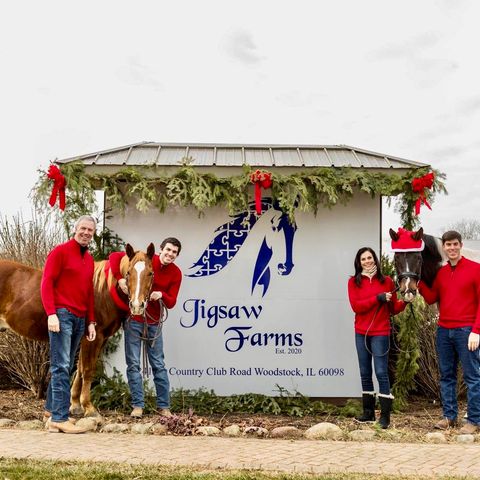
Our guest this week is Michael McManus of Barrington, IL, Vice President of Captive Resources, co-proprietor of Jigsaw Farms and father of two adult sons, including one with Autism.
Michael and his wife Stacie have been married for 33 years and are the proud parents of two boys: Matt (31) and Jake (29) who is Autistic.
Jake has benefited from a host of programs, including:
- Cure Autism Now (CAN), now known as Autism Speaks,
- Brave Hearts, and
- Cowboy Dreams
Michael & Stacie purchased a 50 acre working horse farm in Woodstock, IL and renamed it Jigsaw Farms. In addition to their own horses, the farm currently boards 40 horses, includes three full time staff all with separate residences. They also rebuilt a house which would be suitable for Jake to live in, along with space for a caregiver.
We’ll hear about that and more on this week’s episode of the SFN Dad to Dad Podcast.
Show Links
Phone – (847) 460-8792
Email – mmcmanus@captiveresources.com
LinkedIn – https://www.linkedin.com/in/mike-mcmanus-21a12932/
Facebook – https://www.facebook.com/jigsawfarms/
Transcript:
Tom Couch: Special thanks to Horizon Therapeutics for sponsoring the Special Fathers Network Dad to Dad Podcast. Working tirelessly to research, develop and bring forward medicines for people living with rare and rheumatic diseases. Discover more about Horizon Therapeutics mission at horizontherapeutics.com.
Michael McManus: We had heard about something called hippotherapy, which is basically equine horseback riding therapy. And it’s particularly good for people with autism, down syndrome, people with MS or CP, multiple sclerosis and cerebral palsy. And, that was a lifesaver, for us because Jake was a regular kid on a horse.
Tom Couch: That’s our guest this week, Mike McManus, vice president of Captive Resources and the father of two, including a son with autism. Mike and his wife Stacie own a horse farm where their son Jake, 29, loves to ride. We’ll hear about that and more on this week’s Special Fathers Network Dad to Dad Podcast. Now say hello to the founder of the Special Fathers Network and host of the Dad to Dad Podcast, David Hirsch.
David Hirsch: Hi, I’m David Hirsch, host of the Special Fathers Network Dad to Dad Podcast. Two short messages. First, I’d like to thank those who donated more than $1,000 to the 2024 cycle to end Father Absence Campaign. In alphabetical order, they are Ina Byrd, Irene and Tom Costello, Kim Duchessois, Damian Navarro, Brad Surratt, Don Stadler, and UBS Financial Services. We’re close to reaching our $50,000 goal and we can use your help. If you haven’t already done so, would you please consider making a tax deductible contribution? You can do so by going to 21stCenturyDads.org. Secondly, the Special Fathers Network Mastermind Group Experience is one of the most comprehensive programs the 21st Century Dads foundation offers. Dads raising children with special needs, meet virtually on a weekly basis and form meaningful relationships while sharing weekly wins, discussing books and sharing heartfelt challenges. One of the highlights of the year is attending an in-person weekend retreat. As you think about the year ahead, I invite you to join one of the existing or soon to be formed Special Fathers Network Mastermind groups and join a group of like-minded dads to become the best version of yourself. It might just transform your life as it has done so for so many others. For more information, please see the show notes or simply go to 21stCenturyDads.org.
Tom Couch: Now let’s listen in to this conversation between Mike McManus and David Hirsch.
David Hirsch: I’m thrilled to be talking Today with Michael McManus of Barrington, Illinois, who is vice president of Captive Resources and father of two, including a son with autism. Michael, thank you for taking the time to do a podcast interview for the Special Fathers Network.
Michael McManus: Thank you, David. I’m very happy to be here and hope, this can be helpful to somebody.
David Hirsch: You and your wife, Stacie have been married for 33 years and are the proud parents of two boys, Matthew, 30, and Jake, 29, who’s autistic. Let’s start with some background. Where did you grow up? Tell me something about your birth family.
Michael McManus: I was born in Brooklyn, New York and moved, from Brooklyn, New York, when I was probably about a year to northern New Jersey, about 25 miles outside of Brooklyn, New York. You know, to me, I didn’t know any different, but it was, seemed to be a normal, idyllic small town, USA, had a Main street with, you know, drugstore, dry cleaner, coffee shop, an ice cream shop. It was like, Main Street, USA.
David Hirsch: That’s great. And did you have any siblings when you were growing up?
Michael McManus: I have a brother who’s 10 years older.
David Hirsch: Okay, so it’s like, was that that big gap in time, meaning that you guys didn’t really have the same experiences growing up?
Michael McManus: We definitely did not. My brother was a, product of the 60s. He was, you know, definitely in the hippie and in the peace movement and things like that. And actually he was asked to leave our residence by my parents when he was 18 because he was totally into stuff that my, my mother thought was a bad influence on myself.
David Hirsch: Okay, well, we’re not going to go down that path, but thank you for, the, transparency about it.
Michael McManus: Yeah.
David Hirsch: Sort of curious to know, what did your dad do for a living?
Michael McManus: His one and only job. he was a banker for, at the time was First National Citibank, that is now known as Citibank. And, his main responsibility was setting up overseas branches.
David Hirsch: So give me a sense for when you say overseas, what type of countries?
Michael McManus: So, case in point, I was conceived in Argentina. I’m not kidding. My, my parents were living in Buenos Aires from 1960-62. And my dad went there with a bunch of his other colleagues to set up branches in South America, you know, Buenos Aires.
David Hirsch: So
00:05:00
David Hirsch: generally speaking, South America, or was it different parts of the world?
Michael McManus: He was in Africa, he was in Europe. I almost moved to Africa. And that was when IDI Amin was in power in, in Nigeria. And my mother went there and she’s like, there is no way in hell that we are moving to Nigeria with, I don’t know how old? I was 76. So I was what, 13, maybe. Ish. People walking around with, Uzis in the military and she’s like, no way am I bringing me and, and our son to live here for any amount of time.
David Hirsch: Okay, well, it sounds like that was a, probably very interesting, occupation for your dad, right. To be in these culturally different, environments setting up Citibank branches or helping the bank expand.
Michael McManus: He loved it. And ironically, his favorite city, which you couldn’t go to today, was Beirut, Lebanon. That was his favorite place.
David Hirsch: Oh my God, that’s wild. Is your dad still alive?
Michael McManus: He’s not, Unfortunately. Passed in 2009.
David Hirsch: Okay.
Michael McManus: At, ah, 80 years old.
David Hirsch: Well, sorry to hear that, he’s gone. But it sounds like, he had an influence. And I’m sort of curious now. What type of relationship did you have with your dad?
Michael McManus: Yeah, it was great. We both had a love of sports. He particularly liked golf, and tennis because those are individual sports versus the big team sports. And I think pro sports turned him off when the salaries, you know, became. I think Dave Winfield was like the first one with the Yankees. Got this enormous contract and that kind of turned him off. But, I can remember we throw the baseball around. He, coached my baseball team in Little League. I like playing football. Both my parents were not fans of football. They thought it was too violent and I was going to get hurt. So they did not promote me or advocate me to continue playing football. But that was my favorite sport. Yeah, I looked up that he was successful, you know, good guy, definitely a positive, you know, influence for me.
David Hirsch: That’s fabulous. So I’m wondering if there’s any takeaways, from your relationship with your dad, lessons learned that you’ve, either tried to incorporate in your own or that come to mind.
Michael McManus: You know, he was successful. And after I realized that I wasn’t going to make it to the NFL, I then realized that, I had to get a day job. And he was in, you know, in banking. And I, I thought I would. The financial services industry interested me. So after a brief stint after college in the retail world, I marched myself into New York to find a, you know, a job on Wall street or in the financial district, kind of like my dad did. And that was, that was my, my motivation. And I was like, you know, want to be like my dad and be successful and things like that.
David Hirsch: Gotcha. So I’m thinking about other father influencers and I’m wondering what, if any, influence.
Michael McManus: Your grandfather’s had the one, my m. Dad’s dad. I did not know he passed, I think when I was probably 2, 2 or 3 years old. My mom’s father was a big influence on me. He was a jack of all trade. there was nothing that John Doyle could not fix if, if. If something broke. He was in World War II. He was a boxer in the army. He came out and I think he worked for Commonwealth Edison in Brooklyn, New York. And, I think he was an electrician or, you know, just a jack of all trades, master of none, but could do any and all things that were asked of him.
David Hirsch: Yeah, well, I think the individuals of that era call it the World War II era, the greatest generation. It’s like their lives were totally different than ours. Right. The experiences they had, for sure, and the things that were the sort of normal experiences or typical experience. It sounded like he was a rather sturdy guy. I’ve got this, vision of somebody boxing, like, trying to knock the daylights out of somebody else while the other person’s trying to knock the daylights out of you. It takes a certain amount of fortitude to be able to stand up or stand in the ring with somebody else.
Michael McManus: Sturdy is a great word. I think he was probably 5, 9, bald when I knew him. He had a little bit of a beer belly. But sturdy is a great word.
David Hirsch: So I’m wondering if there’s anybody else that comes to mind, men who played an influential role, perhaps when you were a younger guy, or maybe a young adult for that matter.
Michael McManus: I would consider my brother to be influential. He was really cool. You know, he dressed well, he played guitar, he, you know, in a band. Obviously, with him being asked to leave the household, he wasn’t around much. You know, he moved away. But I still looked up to him. And while we went down different paths, in our lives, he was definitely somebody I looked up to being, you know, 10 years old as well. A couple of football, baseball coaches were, were influential to me. my dad’s brothers, particularly
00:10:00
Michael McManus: my one Uncle Joe, who’s, who’s 94 now. He’s the remaining brother that, that’s still alive. He was kind of like a second father to me, and he had eight kids, two sets of twins. He worked for the phone company Bell.
David Hirsch: The, phone company. Right.
Michael McManus: Yeah, the phone company. Right, right. He was just, you know, putting food on the table, paying the bills. Eight kids. They had three bedrooms maybe, so the girl slept in one, the boy slept in another. My aunt and uncle slept in the other one.
David Hirsch: That’s Fabulous. Well, you’re very fortunate to have some of that generation still alive, right? That you can stay connected to. My recollection was that you went to Ryder, university, you took a degree in business. And I’m wondering, where did you see your career take you?
Michael McManus: When I graduated, I wasn’t sure what I wanted to do. Candidly, my brother had gone into retail. he worked for Macy’s. And I thought he’s doing well there. So I thought I would, try that. So I worked for the equivalent to, in the Midwest to Kohl’s out here. It was a different company back east. Quickly found out that was not my cup of tea. A bunch of my fraternity brothers, college friends, went right into the financial services industry in New York. So I marched myself into Manhattan and went to see, you know, what was available. And this one recruiting place said to me, have you ever heard of reinsurance? And I said no. And she said to me, well, it’s insurance of insurance. And I said, well, who knew? And I was intrigued by that because I had never heard of it before. And. And she’s like, yeah, insurance companies insure other insurance companies. I had no idea because I had never heard of it. And it intrigued me. So that was my launching point into the insurance industry.
David Hirsch: So if I can paraphrase, you had, a stint in retail, sort of like following in your brother’s footsteps, and then as a result of a fraternity brother or brothers going into financial services, you sort of steered in that direction and then launched, if you will, in the insurance and the reinsurance area. Is that reasonably accurate?
Michael McManus: Yeah, very accurate.
David Hirsch: And out, of curiosity, what fraternity are you a member of?
Michael McManus: Phi Kappa Psi. Phi Psi for short.
David Hirsch: Yeah, well, I know that my, fraternity played a very influential role in my life. That’s why I was sort of curious. So my recollection was that, you worked at Catalyst Insurance and then, more recently at Captive Resources. And I’m wondering, what is it the Captive Resources does?
Michael McManus: So Catalyst is part of Captive Resources. Catalyst is the name of an insurance company that we at Captive Resources named. So they’re one and the same. Captive Resources is a insurance, consulting firm. We consult to almost 50 group member owned captive insurance companies. So we insure middle market, corporate America. The people we insure, the companies we insure also own part of the insurance company. So Catalyst, for example, has almost 130 companies from around the United States. Each one of those companies has a 1% ownership in Catalyst.
David Hirsch: Okay, so I guess that’s the nature of the reinsurance business. That’s the way it’s structured. That’s what I hear you saying.
Michael McManus: So the reinsurance part of it is where the insureds, we call the insured members the members. It’s a loss sensitive program. So the members have the ability to recapture upwards of 60% of the premium that they pay in. So it’s a loss sensitive program. And through the use of the reinsurance is how they’re an owner and how they get distributions or dividends back.
David Hirsch: Okay, so what type of losses are you talking about covering in the, middle market?
Michael McManus: Corporations, workers compensation, auto liability and general liability.
David Hirsch: And is that pretty steady? Because it doesn’t sound like it’s weather related like some insurers or is there some variability maybe, to do with the business cycle?
Michael McManus: I’m knocking on wood as I say this. so insurance is the necessary evil, right? Workers compensation. If you have more than five employees, you are required by law in every state in the country to buy workers compensation. And then obviously auto liability is a requirement as well. And I don’t think general liability is a requirement, but most people need to cover their assets so they buy the general liability to protect themselves. So it is a recession proof financial mechanism.
David Hirsch: Okay, well, that’s our insurance reinsurance 101 lesson. Thank you.
Michael McManus: Yeah, you’re welcome.
David Hirsch: So let’s switch gears. I’m sort of curious to know, how did you and Stacie meet?
Michael McManus: We met down the Jersey Shore. For those of you that know the TV show, it’s not at all like that. but we met down the Jersey Shore. I think our first encounter was 2
00:15:00
Michael McManus: o’ clock in the morning after the bar that I was at closed. And she was staying with 10 or 11 of her friends in a separate house than the house I was staying in. The guys that I was out with, you know, we were not done with the night. So one of my friends that I was with was dating one of her friends that she was staying at the house with. So we went over to their house and I saw this vision at 2:00 clock in the morning and introduced, myself. She was still in college, I was out. And then a week later, it was Labor Day, I went down to Georgia where she was, going to school at Emory. And we started a long distance romance. And I can remember my $300 phone bills, you know, talking to her. If not every day, it was every other day from New Jersey to Georgia.
David Hirsch: Yeah, well, I remember back in the day, people would oftentimes wait until like Sunday to make phone calls because the rates were lower on Sundays than they would be during the week. Was that still the case?
Michael McManus: For sure, yeah. But I was, I was in like, I thought I was in like. So I wanted to talk to her as much as possible, so I didn’t. Whatever day it was, whenever I was available.
David Hirsch: I love it. Thanks for sharing. So let’s talk about special needs, first on a personal level and then beyond. And I’m sort of curious to know, prior to Jake’s diagnosis, did you or Stacie have any connection to the disability community?
Michael McManus: I, I did. A neighbor of mine in New Jersey, they had an older, a girl, she was a few years older than me, who had mental retardation. she was one. And then also somebody that we didn’t go to school with but, but another person with mental retardation by my buddy’s house. His name was Josh I think. he, he was out and about, you know, quite a bit. So we had some exposure to him.
David Hirsch: Okay. So very limited. If I could paraphrase what you’ve said though, very.
Michael McManus: Yes.
David Hirsch: So, what is Jake’s diagnosis and how did it come about?
Michael McManus: So Jake, is diagnosed as autistic and we, we knew something was up. You know, he walked sooner than his older brother. They’re 18 months apart. Jake was up and walking by about 10 months, maybe 11 months, where Matthew I think was full year before. He was zooming around but Jake wasn’t talking. And our pediatrician at the time said, well, you know, this happens a lot. You know, the, the younger one lets the older one do the talking and everything for him. So we, we didn’t think really anything of it. But then, you know, a year, he was a year and a half old, still not talking. And my mother in law had some inkling that, that something was not right. And we were thinking, okay, maybe something’s not right. And then it wasn’t until my wife went to pick up my older son at preschool, and Jake was having a meltdown in line waiting for Matthew to come out of the school. And the woman behind my wife who had a child in the school too said have you had your child checked? And Stacie said for what? And she’s like, well he reminds me of a, ah, child in my neighborhood, neighbor of ours that has autism. And Stacie’s like, what? Autism? Never heard the word nor had I. And that sent us obviously to where we are.
David Hirsch: Wow, that’s interesting that somebody would point something out to you that, you know, is sort of unrelated and wouldn’t know, you know, Jake from a hole in the wall. And, you know, everybody’s story is a little bit different. So, how long was it before he started talking? You mentioned he was non verbal.
Michael McManus: He, it was about three, when he started talking. And we believe his first word was Tyrannosaurus, rex, because he was so into the cartoons that he was watching at the time. And I love dinosaurs. And obviously, you know, all kids probably say their favorite dinosaurs is the T. Rex, right? Yeah, probably about, you know, two and a half, three.
David Hirsch: So when you got the, autism diagnosis and you had to come up to speed because you were unfamiliar with autism or whatever they might have called it, then what were some of the concerns or fears that you and Stacie had?
Michael McManus: You know, what do we do? Where do we turn for help? What’s his life gonna look like? What kind of life is he gonna live? And just, you know, so many questions and no answers. And, you know, autism was new back in 1998. Very few people had heard of it. there was no playbook. so, you know, we just were, you know, what do we do? So we just went, looked in every possible direction. You know, the Internet was, wasn’t around then, so it was asking doctors and other people that, that maybe had some exposure to it.
David Hirsch: Was there any advice you got early on that helped put the situation, ah, in perspective or that you can look back and said,
00:20:00
David Hirsch: well, that was pretty, influential.
Michael McManus: Yeah, just, you know, our pediatrician in Pennsylvania, which is where we lived at the time, she was clueless. She had no exposure to it. That wasn’t even on her radar. And after obviously then being diagnosed, we, moved out to Illinois. Then we had heard about something called hippotherapy, which is basically equine horseback riding therapy. And it’s particularly good for, people with autism, down syndrome, people with MS or CP, multiple sclerosis and cerebral palsy. And, that was a lifesaver, for us because Jake was a regular kid on a horse.
David Hirsch: Well, you’re very fortunate to find that early on something that he could gravitate to and, that sort of his center of gravity. A lot of people are intimidated by large animals and, the, balancing on a horse isn’t like something that people were born with. It’s something that I think it’s a skill that you develop. So it sounds like that’s something they took to very quickly.
Michael McManus: So on that note, all the People that are, in doing hippotherapy, they have sidewalkers, so they have two people on either side making sure that somebody doesn’t fall off the horse. And then they have somebody in front of the horse leading the horse around so the horse doesn’t take off, potentially injure the rider.
David Hirsch: So that, creates an element of safety. That’s what I hear you saying.
Michael McManus: Yes.
David Hirsch: Were there some important decisions you can look back and say that you made with Jake and his development in, addition to the hippotherapy?
Michael McManus: just that the word, no was not an acceptable response to somebody, you know, a teacher, somebody else who, when we were, you know, looking to help Jake and put him, give him the resources that he needed and deserved, and someone said, well, we can’t do that or we don’t do that or whatever, that was not an acceptable response. And my wife, gets all the credit for that because, you know, she was just, you’ve met her, she’s a dynamo, she’s a bulldog. And, she was going to make sure that Jake got everything he needed and, was entitled to.
David Hirsch: I thought you said she went to Emory.
Michael McManus: She did.
David Hirsch: You said she’s a bulldog.
Michael McManus: Yeah, I forget what their mascot was.
David Hirsch: Okay. Just joking with you.
Michael McManus: Yeah, I know.
David Hirsch: Anyway, she, seems very determined, I can tell you that. Right. Were you referring to like the IEP situation when no was not an acceptable response?
Michael McManus: Yes, exactly.
David Hirsch: Okay, not to focus on the negative, but what have been some of the biggest challenges you’ve encountered related to, Jake’s diagnosis?
Michael McManus: You know, ignorance from, from the general public, you know, Jake having a meltdown or saying something inappropriate or screaming or doing something like that out in the public. And, and you know, we get the, the cross eyed or the, the stare look of, you know, can’t you control your child or, you know, you’re not a good parent, you’re, you’re letting him just do whatever he wants. And you know, no, we were not. We were just dealing with the situation to, to the best of our ability. Autism at that time was new, so there, there weren’t a lot of resources available. So, you know, there was no playbook like, like I said earlier. So we were just trying to, you know, figure out what’s the right thing to do for our child. Because autism as, as, you know, the spectrum is really wide. There’s the high functioning, which we are very fortunate, you know, Jake is. And then there’s the, the, the low functioning, you know, we, we know kids his age that, that are still in diapers, aren’t potty trained. So we’re very fortunate in the unfortunate situation of him having autism.
David Hirsch: Yeah, well, thanks for your authenticity. I think the first thing that you mentioned, the ignorance in the broader population is one of those things that you have no control over, which is so frustrating. And I think, it doesn’t just apply to individuals with autism or CP or rare disease, but learning as quickly as you can that you can’t control what people say, think or do puts you in a much better situation. Because initially you feel like you’re in a confrontational situation, you might react differently. And then you just have to accept that people will think, say, or do things that you have no control over. And the sooner you can understand that, I think, the better off everyone is.
Michael McManus: Yep. Well said.
David Hirsch: Has there been a turning point when you look back over Jake’s almost three decades, you know, that you’d say, oh, at this age it became a little bit easier, or things seem to develop a routine? You know, there’s some level of normalcy.
Michael McManus: We are now at the, at
00:25:00
Michael McManus: as much normalcy as we’ve ever had, you know, with him being 29.
David Hirsch: Okay.
Michael McManus: You know, he just, we pushed him and we, we wanted, you know, his teachers, his therapists and things like that. We, we knew there was so much more in there that, we weren’t gonna just be satisfied with, you know, the next goal that was. So we just kept extending the goalpost as far as possible, to bring out the person that we knew that’s in there.
David Hirsch: Yeah, well, oftentimes when, somebody has a child that’s non verbal for whatever number of years, and they were like, oh, my gosh, you might never talk, or she might never talk. And then, it seems like they might be making up for lost ground. Right. You know, later in life.
Michael McManus: It’s funny you said that because we were lamenting, you know, we wish he would talk, we wish he would talk. And then the joke was, then he started the talk and now he won’t shut up. And so it’s, you know, be careful what you wish for. But no, obviously him being verbal is wonderful.
David Hirsch: It beats the alternative, that’s for sure.
Michael McManus: Beats the alternative, for sure.
Tom Couch: We’ll be back with more of the conversation on the Special Fathers Network Dad to Dad Podcast in just a few moments. But first, this quick message. Please help 21st Century Dads gather research on families raising children with special needs by having them complete the Special Fathers Network early Intervention Parents Survey. A link to the survey can be found in the show notes. As a token of our appreciation, each person, mom or dad, who completes the survey will receive a great dad coin. Thank you. Now back to the conversation.
David Hirsch: So I’m sort of curious to know what impact Jake’s situation’s had on his older brother, your marriage or your extended family for that matter.
Michael McManus: Yes. You know, people compliment us a lot saying, you know, you’ve done an amazing job with, him. We obviously say thank you. But you know, when, when given the cards you’re dealt, you have two ways to go. You either play the cards or you don’t play the cards. And not playing the cards was not an option to us. You know, Matthew is his older brother, 18 months older. You know, probably took a back seat in a lot of situations because while Matthew was self sufficient and things like that, and a typical developing person, Jake required more time, effort, money, resources and things like that. And I think it, it hurt Matt a little bit. And not that he’s resentful at all, but you know, he, he understands that Jake looks to him as his best friend and, and Matthew has, ah, embraced that, which is all we can ask for. And you know, it’s wonderful, but Matthew wants to live his own life, but at the same time he recognizes that, you know, Jake views him as, you know, my, my guy so well, like.
David Hirsch: You looked up to your big brother. I guess he looks up to his big brother.
Michael McManus: Yeah, for sure.
David Hirsch: And what, is Matthew doing these days?
Michael McManus: He actually works for Captive Resources as well.
David Hirsch: Okay.
Michael McManus: Yeah, we, we don’t do the same thing. He’s in what we call the program management department where I’m in sales and management. So he works more behind the scenes on things than me. I’m more on the front lines.
David Hirsch: Gotcha. And I’m sort of curious to know what impact Jake’s situation had on your marriage or your extended family.
Michael McManus: Yeah, again, either two things happen. It brings the husband and wife closer or it divides them. And thankfully it has brought us closer together. I understand how it definitely adds stress to the relationship. Again, there’s no playbook. you don’t know what to do, but you do the best you can. But it definitely has some, some M Stressors, but thankfully knocking on wood here, it has strengthened our, our marriage and our resolve.
David Hirsch: That’s great. And how about your extended family? Any issues?
Michael McManus: My in laws, Stacie’s parents, have been great. my, I think my parents, they’re both deceased. It was, it was a challenge for Them, they didn’t know what to do, what to make of, of Jake’s situation. You know, for instance, when my parents moved to South Carolina and when the kids were growing up, my parents invited us to stay at their house. And we would say thanks, but no thanks, and we’re doing you a favor because we’re going to stay in a hotel because Jake’s going to, going to want to touch everything in the house. He’s going to have a meltdown and we’re, we’re doing you a favor but by not being, you know, because my parents were great people but, you know, don’t touch the fine china, you know, the valuables, just, you know, keep your hands off. And there was no telling Jake you can’t touch this or have that or whatever without, you know, something going, you know, wrong. So my parents didn’t understand, that where my in laws did.
David Hirsch: Gotcha. Well, thanks for sharing. I’m thinking about supporting organizations and I’m wondering what organizations Jake’s
00:30:00
benefited from or that your family has benefited from outside of Jigsaw.
Michael McManus: Yeah, the first one was a company called Bravehearts, in Harvard, Illinois. they catered to people with special needs and also, wounded warriors or veterans, with PTSD. And then we were introduced to another organization called Cowboy Dreams, which was here in Barrington and same thing, therapeutic riding facility.
Michael McManus: And so those were the two major, ones that influenced, helped us tremendously.
David Hirsch: Was Cowboy, Dreams, the one that Sue Gronke started?
Michael McManus: Yes, sue and Terry.
David Hirsch: Sue and Terry Gronke are just pillars in our community, very generous, very supportive of so many different causes and it’s not surprising that they helped create or support both those organizations. So let’s talk about Jigsaw Farm, located in Woodstock, Illinois. My understanding it’s about 50 acres, three full time employees. And you and Stacie acquired that in 2020. And Stacie has been telling me, oh, you have to come out and visit the farm. You have to come out and visit the farm. And you know, she’s been so proud of this. And I’m thinking, okay, you know, I know you guys have a horse. I know Jake likes to ride horses. And you know, you probably have a couple other horses. And I finally got around to visiting the farm and I was like, oh my God, this is a real farm, right? Like there’s like 40 horses here and capacity for probably 2x that there’s just like so much property that’s like a Real business. Right? What were you guys thinking?
Michael McManus: It’s a full scale operation. So, I have to digress a little bit because when the Gronkies were selling and moving out of Illinois, I think they went to South Carolina or Georgia. The, Cowboy Dreams property came up for sale, and we wanted to buy it, but at the time it was, it was too expensive for us, so we couldn’t do it. Then somebody else bought it. And, it then came up for sale again and it had fallen into disrepair. We were kind of set on having a property closer to our house. Then we came to the realization that maybe, you know, we’re going to have to expand our reach to, buy a farm. And the Jigsaw Farms we then, which is 15 miles from our house, came up for sale. And as fate would have it, Jigsaw Farms was twice as nice, twice as big, and less expensive than Cowboy Dreams property was. So things happen for a reason. And, we thank our lucky stars. And it came with the three employees, that are on the property now. One of them has been on the property for almost 30 years. So we’re the third owner of the property. So he knows, like my grandfather, he knows how to fix anything and everything at the drop of a hat. We just are fortunate as to how that happened.
David Hirsch: So, who are you giving attribution to? Who is the jack of all trades at Jigsaw?
Michael McManus: His name is Sammy.
David Hirsch: Sammy. Okay. I know I met one, maybe two individuals there. I don’t know him by name, but, you know, it’s quite a big property to maintain. so, everybody should have at least one Sammy.
Michael McManus: He is the definition of priceless. He is the poster child for priceless.
David Hirsch: That’s fabulous. So it wasn’t named Jigsaw when you purchased it, but you renamed it Jigsaw. So what was the story behind the naming of the, farm?
Michael McManus: So the puzzle piece is the logo for autism. When Jake was younger and participating in Illinois Special Olympics, you had to have a team name. So his team name was Jigsaw Jake. So we took that. And then our logo is a horse head and the mane is a puzzle piece.
David Hirsch: Gotcha. And, it seems obvious that, you were informed about, this equine, experience through the hippotherapy that Jake, was, attracted to. And, and, that’s sort of been a common theme for years and years, if not a decade or decades now. And it’s one thing to be involved with equine therapy. it’s another Thing to be the owners of a horse, operation. And I’m wondering what the vision is for Jigsaw Farm and who does it impact today?
Michael McManus: So we were preparing like most parents do. We’re preparing for when we’re not here, which hopefully won’t happen for another, you know, a couple of decades. But Jake does not consider himself to be special needs. So when he’s around other, special needs, people, you know, autism or down syndrome or whatever it is, he will say to us, well, this
00:35:00
Michael McManus: one does this weird thing or this one does that weird thing. And, and, and we say, dude, you do the same weird thing and what bothers you also bothers the other people. So a group home was not going to be the solution, for Jake. And we don’t want to saddle Matthew with having to be the caretaker for his brother on a daily basis because Matt’s going to have his own life and then hopefully kids and things like that. But Matt will remain part of Jake’s life. So we were thinking how can we create, you know, a bubble and insulate him from, you know, the, the undesirable people that have bad intentions with other people, out in the world. So we decided to buy the farm. And the farm has had a house on it. It was a 50 year old house. And so we knocked the house down and rebuilt the house. We doubled the footprint of it. We made a caretaker’s quarters in the basement. So that house just was completed this past April of 24. And our next step is to find a caretaking person or company that will live there a couple days a week to take care of Jake. Because Jake will never have a driver’s license, it’s unlikely that he’ll have a, a wife or girlfriend which he desperately wants. That part of the body is working just fine. But we created this environment that we can control and we’re now in search of either a caretaking person or firm that will be able to drive him around and do the things he needs to do if we’re not able to do it and, or when we’re not around.
David Hirsch: Yeah, well, it’s brilliant. You’re blessed to have the wherewithal, the vision, the resources to put something like that, that bubble in place for Jake. And is the vision that there will be other individuals that might be beneficiaries of hippo therapy, equine therapy that would be there at ah, Jigsaw, or are the other couple, three dozen horses just more traditional boarding situations at the moment?
Michael McManus: The other borders are not special needs individuals. They’re. They’re just regular people like, like, like you and I that, mostly women that, own horses, that like to ride them recreationally. We. We could see Jake having a roommate, you know, another special needs roommate, maybe one or two people. We’ve owned the farm for five years, so we’re just kind of still getting our feet underneath us to understand the whole operation and what it costs and things like that. We don’t know if we’re going to also then roll out an equine therapy program. I think the answer to that is yes, we’re not there yet, but. And I just want. I gotta plug my wife because none of this is possible. This was mostly her vision, and she’s made it happen. You know, she runs the farm. You know, she’s the reason that we’re doing this.
David Hirsch: And she’s a horse girl, right?
Michael McManus: She’s a horse girl, correct. She rode, a teenager.
David Hirsch: Okay. Yeah. Well, I love it. it’s very inspiring. And, we’ll have to check back in a number of years down the road and see what, Jigsaw Farms is doing. So I’m sort of curious to know what role, spirituality has played on your journey.
Michael McManus: So, I was raised Roman Catholic. My wife was raised Jewish, so we’re an interfaith couple. we were married by a priest and a rabbi. We both believe in a higher being, spiritual, and that things happen for a reason. We are not practicing. Both of us have not practiced candidly since high school. But, we do have faith and believe in a higher being and just are not practicing Catholics, or Jews.
David Hirsch: Well, thanks for sharing. it’s interesting you should mention that. we were in an interfaith relationship, but just the opposite. I was the Jewish one, and my wife was raised a cradle Catholic, if you will. And, no, it’s a good thing. Right. and, we’ve just steered a little bit, more to the Catholic faith over the last dozen, years, having converted. But I’m not preaching or evangelizing when I say that. it’s just that, you know, sometimes religion plays, like a central role, and then, other cases, maybe not so much. So.
Michael McManus: Yep.
David Hirsch: So I’m thinking about advice, and I’m wondering what advice you can offer parents, specifically dads, who find themselves maybe earlier on, like you and Stacie were early on, you know, confronting something that you weren’t familiar with or, you know, didn’t have a lot of experience with. What advice could you offer that, younger, special needs dad?
Michael McManus: Yeah. don’t give up. have faith. things will. Will get better. It will test your patience to the nth degree. So, just, you know, try and take
00:40:00
Michael McManus: a deep breath and step back and. And measure your emotions to the best of your ability, because it will. It will stress you there. There are so many more resources now available out there. Don’t take no for an answer. From who? Whoever is. You think your child deserves something, needs something. You, fight for it. Because legally, at least until they’re. Until, I don’t know, 26 or something like that. I think that’s the threshold. You know, the state has to, accommodate your. The things you’re entitled to. Hopefully you have a good partner. Lean on your partner. ask for help. You can’t do it by yourself. You’re not expected to do it by yourself.
David Hirsch: Pearls of wisdom. Thank you for sharing. So I’m sort of curious to know, why have you agreed to be a mentor father as part of the Special Fathers Network?
Michael McManus: I think it’s a valuable tool, resource for you. I commend you for creating this, your vision. we had the fortunate experience of meeting each other years ago when our sons played hockey together. I’m grateful. happy to help.
David Hirsch: Well, we’re thrilled to have you. Thank you for being involved. Is there anything else you’d like to say before we wrap up?
Michael McManus: You can’t do this alone again. You’re not expected to do it alone. Hopefully you have a supportive partner, because my partner has again made this happen. Yeah, if I can. If I can help anybody, I’d offer to do that.
David Hirsch: So, yeah, like I said, we’re thrilled to have you. Thank you. Let’s give a special shout out to your extraordinary wife Stacie, for helping connect us.
Michael McManus: Yeah, for sure.
David Hirsch: If somebody wants to learn more about your work or to contact you, what’s the best way to do that?
Michael McManus: Yep, My cell phone number is, 847-460-8792. And my email address, is my first initial and last name, so It’s M McManus. So M M C M A N U S@captive resources dot com.
David Hirsch: We’ll be sure to include that information in the show notes. It’ll make it as easy as possible for somebody to follow up with you if they’re curious to connect with you or to learn more about Jigsaw. Michael, thank you for the time and many insights. As a reminder, Michael’s just one of the dads who’s part of the Special Fathers Network, a mentoring program for fathers raising a child with special needs. If you’d like to be a mentor father or are seeking advice from a mentor father with a similar situation to your own, Please go to 21stCenturyDads.org. Thank you for listening to the latest episode of the Special Fathers Network dad and Podcast. I hope you enjoyed the conversation as much as I did. As you probably know, the 21st century dad’s foundation is a 501c3 not for profit organization, which means we need your help to keep our content free to all concerned. Would you please consider making a tax equivalent contribution? I would really appreciate your support, Michael. Thanks again.
Michael McManus: Thank you David.
Tom Couch: And thank you for listening to the Special Fathers Network Dad to Dad Podcast. The Special Fathers Network is a dad to dad mentoring program for fathers raising children with special needs. Through our personalized matching process, new fathers with special needs children match up with mentor fathers in a similar situation. It’s a great way for dads to support other dads. To find out more, go to 21stCenturydads.Org.
David Hirsch: And if you’re a dad looking for help or would like to offer help, we would be honored to have you join our closed Facebook group. Please go to Facebook group facebook.com groups and search dad to dad. Lastly, we’re always looking to share interesting stories. If you’d like to share your story or know of a compelling story, please send an email to david@21stcenturydads.org.
Tom Couch: The Special Fathers Network Dad to Dad Podcast was produced by me, Tom Couch. Thanks again to Horizon Therapeutics who believe that science and compassion must work together to transform lives. That’s why they work tirelessly to research, develop and bring forward medicines for people living with rare and rheumatic diseases. Discover more about Horizon Therapeutics at horizontherapeutics.com.
00:44:09