

364 – Alfred Niwagaba of Uganda, School Administrator & Father Of Four Including One With Down Syndrome
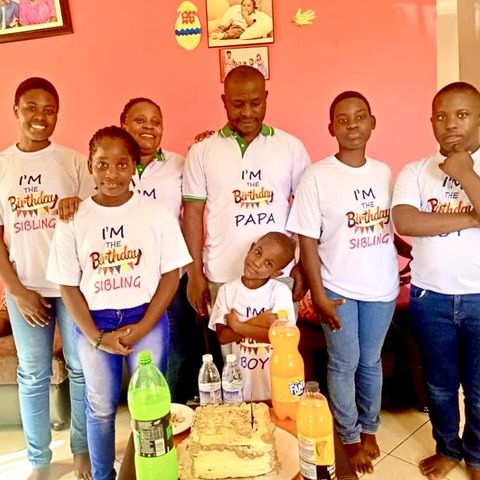
Our guest this week is Alfred Niwagaba, of Kampala, Uganda who is the director of the Little Angels School in Wakiso and father of four children including a son with Down Syndrome.
Alfred and his wife, Rosemary Nambooze, have been married for 16 years and are the proud parents of four children: Benjamin (5), Beroil (9), Abigale (15) and Abryl (14), who has Down Syndrome and has some hearing deficits.
Alfred runs The Little Angels School, with over 600 students. Alfred and Rosemary also run Angel’s Center For Children With Special Needs, a NGO that serves families raising children with special needs.
It’s a fascinating story and we’ll hear it on this week’s episode of the SFN Dad to Dad Podcast.
Show Links –
Phone – +256-788-887077 WhatsApp
Email – niwaalfred@gmail.com
LinkedIn – https://www.linkedin.com/in/niwagaba-alfred-357ba814a/
Angel’s Center For Children With Special Needs https://angelscentre.org
Register for the 6th Annual SFN Dads Virthual Conference on May 10, 2025:
https://us02web.zoom.us/meeting/register/TLkN_ViJTTqnaK-M8pHPNA
After registering, you will receive a confirmation email containing information about joining the meeting.
Transcript:
Tom Couch: Special thanks to Horizon Therapeutics for sponsoring the Special Fathers Network Dad to Dad Podcast. Working tirelessly to research, develop and bring forward medicines for people living with rare and rheumatic diseases. Discover more about Horizon Therapeutics mission at horizontherapeutics.com.
Alfred Niwagaba: As a father, Abryl’s experience, it has helped me to be a better teacher and better administrator, a better director to my staff members and parents at large and for the siblings. They have really supported Abryl, especially Abigale who grew up with him when he was in the hospital.
Tom Couch: That’s our guest this week, Alfred Niwagaba of Kampala, Uganda. Alfred runs the Little Angels school with over 600 students. He’s also the father of four children, including his son Abryl, 14, who has down syndrome. Alfred and his wife Rosemary Namboozee also run angel center for Children with Special Needs in Uganda. It’s an incredible story and we’ll hear it this week on the Special Fathers Network Dad to Dad Podcast. Now say hello to the founder of the Special Fathers Network and host of the Dad to Dad Podcast, David Hirsch.
David Hirsch: Hi, I’m David Hirsch, host of the Special Fathers Network Dad to Dad Podcast. Two short messages. First, I’d like to invite you to attend the 6th Annual SFN Dads Virtual Conference taking place via Zoom on Saturday, May 10th at 8:00am Central Time. We have a great roster of speakers and there will be plenty of time for breakouts to meet like-minded dads who are committed to their children and self-improvement. Secondly, the Special Fathers Network Mastermind Group experience is the most comprehensive program the 21st Century Dads foundation offers. Dads raising children with special needs, meet virtually on a weekly basis and form meaningful relationships while sharing weekly wins, discussing books and sharing heartfelt challenges. One of the highlights of the year is attending an in person weekend retreat scheduled this year from September 5th to the 7th. As you think about the year ahead, I invite you to join one of the existing or soon to be formed SFN Mastermind groups and join a group of like-minded dads to become the best version of yourself. It might just transform your life like it’s done for so many others. For more information please go to the Show Notes or simply go to 21stCenturyDads.org.
Tom Couch: Now let’s tune in to this conversation between Alfred Niwagaba and David Hirsch.
David Hirsch: I’m thrilled to be talking today with Alfred Niwagaba of Kampala, Uganda, the director of the Little Angel School in Waukesha and father of four children, including a son with down syndrome. Alfred thank you for taking the time to do a podcast interview for the Special Fathers Network.
Alfred Niwagaba: Thank you, David, for having me on this broadcast.
David Hirsch: You and your wife, Rosemary Nambooze, have been married for 16 years and are the proud parents of four children. Benjamin, 5 Beroil, 9, Abigale, 15, and Abryl, 14, who has down syndrome and has some hearing deficits. Let’s start with some background. Where did you grow up? Tell me something about your family.
Alfred Niwagaba: Oh, thank you very much. I grew up from a small town called Kabale. It is in the southwestern, part of Uganda. That’s where I lived for most of my life. I’m the firstborn of my family. I have six brothers and then, three sisters. My mom passed on. My mom passed on, around 1998. We still have our dad who is now making, I think he made 73 recently and is, is also still best there in Kabari. All my siblings are old enough and they are out of school now. They are living independently.
David Hirsch: Well, that’s quite an accomplishment. And nine children. You’re the oldest of nine.
Alfred Niwagaba: That is rather a big family for Uganda still. I think an average family in Uganda now is about six children.
David Hirsch: Okay.
Alfred Niwagaba: But we have families that go up to 12, 11 children, 10 children.
David Hirsch: Here in the United States, farmers had large families because they needed help. Right? They needed, you know, people to help with the crops and with the animals and things like that. And I’m wondering if that’s a little bit the same way there in Uganda. The reason for having large families.
Alfred Niwagaba: Yes, it’s a little bit the same here too.
David Hirsch: So you mentioned your dad’s still alive. He’s 73. I’m wondering what, what did he do for a living or what does he do?
Alfred Niwagaba: He has been largely, pleasant. He has not been having, he has not had a professional job at all.
David Hirsch: So we would refer to somebody like that as a blue collar worker. Distinguishing white collar, like a professional versus somebody who maybe works with their hands or builds things or does things. Is that
00:05:00
David Hirsch: similar?
Alfred Niwagaba: Yes.
David Hirsch: Were there any important takeaways, a lesson learned that come to mind when you think about your dad?
Alfred Niwagaba: Well, he has been a caring father. Yeah. Has always been there for us. He has paid for our school fees. He has provided for us, although he used to stay away for working in, in another district. But who would be there for us when he gets, some time off the job and he comes home? Yeah, we have had a good relationship, talking to each other and supporting us.
David Hirsch: Well, it sounds like he had a good work ethic. If he supported nine children and a wife and put you through school, that’s not a small accomplishment.
Alfred Niwagaba: Yeah, sure. I think he tried his best.
David Hirsch: So I’m wondering if there’s any other men that played an influential role in your life, perhaps when you were younger?
Alfred Niwagaba: Yeah, mostly my teachers, my high school teachers, but also one main, one was Reverend Milton Tweheo, who I got to know as I became a, young adult after school and would be more of my mentor and nurturing me in my career and also spiritual life and also family matters.
David Hirsch: Is Reverend Milton still alive?
Alfred Niwagaba: Yeah, he’s still alive.
David Hirsch: Okay, well, I hope he’ll listen to this interview when you’re done with it. I’m reflecting on your education and my understanding, was that you, have a certificate of Primary education from Cabal Corp. Ptc. You also have a diploma in primary education from Uganda and Christian University and a bachelor’s in Human Resource Management from Bishop Stewart University in Marbara. Were these back to. Back to back or were they over a longer period of time?
Alfred Niwagaba: They were over a longer period of time. Like after when I did a certificate, I had to have a break of about one year or two years to start the diploma. And when I finished the diploma, which was also two years, it took me about quite some time to start the bachelor’s degree because being the firstborn, I used to take care of my siblings, paying school fees and taking care of them in other ways so I wouldn’t be rushing to go back to school and support myself when my siblings were also struggling with school fees because my dad was, was not able to pay for, for them. And so it made me stay longer to, to begin on the other courses. Enough. In fact, most of my siblings got about to Alex and Alan because they got their degrees before I got them. So. But I was happy because I could support them then.
David Hirsch: Yeah. Well, that’s wonderful. I’m sure they, are grateful for your, support and look up to you as the big brother.
Alfred Niwagaba: They are so proud of me. They talk about it and we make fun of it and. And then so later on I actually, in 2019, I had started on in the course I had. That’s when we went to Belgium and Abryl was born with these difficulties. So when Abryl was born, I had to abandon the course and take care of Abryl and Rose and Abigale. Then when we came back to uganda, in 2012, I had to wait to reorganize myself financially and ah, many other ways.
David Hirsch: You’ve had a career in education. What was it that drew you into education? Why did you go into education?
Alfred Niwagaba: My dad was like, you now have to divert and go to the college and study teaching so that you are able to finish early and support your siblings. So that’s how I ended up in education.
David Hirsch: Gotcha.
Alfred Niwagaba: Yeah. But today I really, really appreciate and I’m glad that I, I became a teacher. I think it was good, it was divine because I, I really have enjoyed the journey of teaching. I, I love children. I love being with positively. So I like the profession. And amazingly, my other two sisters are also teachers. Somehow in Uganda. I don’t know about that in America, but in Uganda somehow you find if you’re, if your father is a teacher, somehow you will two or three teachers in the family.
David Hirsch: Yeah. That’s impressive. You used to be a headteacher and now you’re the managing director at Little Angels Primary School in Tagamo.
Alfred Niwagaba: Yes.
David Hirsch: How many children are there and what grades are they in?
Alfred Niwagaba: We have to close to 700 children as, as per last this year that is ending.
00:10:00
Alfred Niwagaba: And we normally call, categorize them in ages. So we have those of three to five years. Those are normally in kindergarten and then primary one to primary seven. That’s a age six to 12. And then they are fit to go for secondary.
David Hirsch: Gotcha. So, switching gears, I’m sort of curious now. How did you and Rosemary meet?
Alfred Niwagaba: Me and Rosemary, we met in the small town of Tungamo. It was amazing how we met because she, she had just moved in from Kampala, our city, to. And I also had also moved in from Mukavari, the small town in southwestern, to Ntungamu. So we met in this small town at a, friend’s place, one of the friends who was her pastor and my friend too. So when we were visiting, I met her there. I was moved by, her. Then we started. So. So the rest is history now, 16 years down the road.
David Hirsch: Yeah. That’s amazing. Thank you for sharing. So let’s talk about special needs first on a personal level and then beyond. Prior to Abryl’s birth, did you or Rosemary have any connections to the disability or special needs community?
Alfred Niwagaba: Well, we both had little knowledge about special needs. I think personally I used to. What I knew about special needs was maybe the physically handicapped. Those are the people we used to see commonly. Maybe someone who has issues with their legs and it doesn’t work. But I didn’t know much about, mental disability and these other special cases of down syndrome, autism and stuff like that. So Rose, I think she had a little bit of it noise because she was a social worker going to the community. But also she didn’t have interest. She didn’t have a lot to know about it until it strikes. It came to us. And then we had to dig deeper to know more about these special cases.
David Hirsch: So what is April’s diagnosis and how did it come about?
Alfred Niwagaba: Abryl’s diagnosis is down syndrome. And we got to know about it. He was born in Belgium. In the hospital, the doctors told us that there’s something wrong with him. And they had to, they got to explain to us and told us about down syndrome. And that’s when we got to know that was a big problem for him and for ourselves.
David Hirsch: Did he have any heart issues when he was born? Did he have to have an operation like some people with down syndrome or not?
Alfred Niwagaba: Yes. Aubrey was born with three holes on the heart and he had to undergo an operation when he was one year and a half. He also had, actually had multiple M issues because he was born deaf. He didn’t hear, he was not hearing. And he had to get some implants. And then he was also. He had a narrow throat. Ail couldn’t swallow anything. He actually didn’t breastfeed. He was taking breast milk through tubes and and bottles. Yeah. Later on after the operation of of the heart, he also had an operation of the Tom Seals. And yeah, he has been really through a lot. It has been a tough time for him and tough time for us too. And the most recent being the operation of the ear where he was developing some foreign mass in the ear as a result of some infection that was not attended well. And this tumor was likely to cause cancer. And so we were to go to Belgium and operate him in October and the operation was successful.
David Hirsch: So regarding Belgium, he was born in Belgium, so does that make him a Belgium citizen and entitled to Belgian healthcare?
Alfred Niwagaba: No, he, he was born there, but he doesn’t make him a Belgian. In Belgium they don’t give citizenship like that. Your parents have to be citizens to be able to get citizenship.
David Hirsch: But you’ve gone back to Belgium, so there must be some connection. What’s the connection to Belgium?
Alfred Niwagaba: Once we decided to come back to Uganda, that’s when we thought and decided to begin angel center for Children Special Needs. And so this since that time we started looking out for potential funding and donors and, we got some support from the city of Antwerp, which has been supporting us for up to this time. And then we kept in close link and touch with the hospital where Abryl was born.
David Hirsch: It sounds like, it was a good thing that, Abryl
00:15:00
David Hirsch: was born in Belgium because of the resources. Is it accurate to say that the resources, healthcare resources, were better there than they might be in Kampala?
Alfred Niwagaba: Yes. It was really a good thing that he was born there because Rose was following her masters there. And so that’s how Abryl ended up being born there. And, she was doing her masters in globalization. So when he was born, we had to really tap on the opportunity of him being there so that he’s able to get the best medication and treatment.
David Hirsch: Well, I’m thinking about the fear that you might have had when you first learned about down syndrome. You’d mentioned you didn’t know that much about it. What were some of the concerns or fears that you and Rosemary had early on?
Alfred Niwagaba: Yeah, right from the beginning, when they told us about down syndrome, it scared us. First of all, the doctors told us that, they were not sure if Abryl will live longer because given especially because of his heart condition. And also they were not sure if Abryl will walk. If you’re not sure of how Abryl generally will be. I think also, especially being Africans, and we’re looking back to going to Uganda. So we had a lot of fear. And then, a lot of things started running in my head about now, if this young man dies, this baby dies, how to take him back to Africa and all it takes to go through such kind of trauma. So largely, they were fearing the unseen. We didn’t know what was going to be, what it was going to be like. The journey of raising a child with down syndrome.
David Hirsch: Yeah, well, there might have been a lot of uncertainty. And, you know, it’s easy to pre worry your worries. Right. You know, think about all the possible outcomes. But, that’s not healthy. It’s good to anticipate the future, but not, you know.
Alfred Niwagaba: Yeah. Ah, yeah.
David Hirsch: Worry too much about it, because a lot of the things we worry about never come to pass. So you spend a lot of time and energy, thinking about things or worrying about things. Was there some meaningful advice you got early on that helped, you know, you better understand the challenge?
Alfred Niwagaba: Yes, they assigned us some social workers and, counselors who used to visit us and talk to us about the average condition and also continue to give, medication. And then also we could Meet other children with down syndrome. We started getting some testimonies of those that have had those children, and they have lived. And so we started gaining some hope, knowing that, oh, okay, they can live. And, given support and early intervention, they can, there is a lot they can achieve. Thought of coming back to Uganda to start angel center to help out the parents who were, also in their state, probably living in denial and, uncertainty, not sure what is going to happen. Thinking of, witchcraft. Maybe they did this and that knowing. So we imagined ourselves being educated, and we don’t know about this. What about the poor woman in the village? someone back in Uganda who has never gone to school. We imagine there’s torture and, uncertainty that comes up in their mind. So I told Ross, you know what? We can think of something to do around this situation. And that’s how angel center came into existence.
David Hirsch: We’ll talk about the angel center in a little bit. I’m sort of curious to know what impact Abryl’s situations had on his siblings, your marriage, as well as your extended family.
Alfred Niwagaba: Yeah, well, as a father, Abryl’s experience has helped me to be a better teacher and a, better administrator, a better director to my staff members and parents at large. And for the siblings, they have really supported Abryl, especially Abigale, who grew up with him when he was in the hospital.
Tom Couch: We’ll be back with more of the conversation on the Special Fathers Network Dad to Dad Podcast in just a few moments. But first, this quick message. Please help 21st Century Dads gather research on families raising children with special needs by having them complete the special Father Network Early Intervention Parents survey. A link to the survey can be found in the show notes. As a token of our appreciation, each person, mom or dad, who completes the survey will receive a great dad coin. Thank you. Now back to the conversation.
David Hirsch: So let’s talk about the angel center for Children, which your wife, Rosemary is the primary driving force behind. And is Rosemary available to talk with us or not?
Alfred Niwagaba: Yeah, she’s available.
Rosemary Nambooze: Hi, David.
David Hirsch: Good to hear, your voice. And for
00:20:00
David Hirsch: the record, Rosemary was in Chicago back in March of 2024, and, we spent, quite a bit of time together, so we got to know each other. I’m very impressed with the Angels center for Children with Special Needs, and I’m wondering if you could, share with us what the backstory was. What was it that propelled you, you and Alfred to help create the, program?
Rosemary Nambooze: Thank you so much, David. Starting angel center, first and foremost, My knowledge and understanding of intellectual disability very, very limited. At the birth of April, I always tell people that it was one of my last life changing experience. First of all, I went through trauma. I was so frustrated with myself much as I left this country, Uganda. I won a scholarship between the governments of Belgium and Uganda. But at the birth of my son, born with a disability and with my cultural background, this made me feel like I wasn’t worth to be a mom. I wasn’t worth to. I felt so worthless. But having worked with USAID funded organization and having an NGO experience, I just realized that the only thing I would do better was to reach out to the communities with behavior change messages, with, you know, a story to tell the world. So angel center was formed because Alfred already had a school called Little Angels. And every time I looked at our son in a hospital bed lying, he looked so innocent, like an angel. So we realized that the best we could ever do for our communities was to start a community based organization. And that was angel center for Children with Special Needs. We really gave it a long name because we wanted people to relate according to their name. In Uganda, disability is still looked at as witchcraft, as something we shouldn’t talk about. There is so much stereotype up to now. So we gave it such a long name, such that whoever reads our signpost should be able to relate and get to understand what we do. So angel center was formed when we were still in Belgium on a hospital bed with a laptop. We looked for a perfect name that will really suit, you know, the dream we had. I just realized that it wouldn’t be possible anymore to work for the American based organization that I was working for here. because from the time our son was born, we kept in the hospital, he was going through various surgeries and we are also going through our own traumatic moment. I think we were more traumatized than the child himself. So the formation of angel center was not only meant to support community children or families, it was also meant to be good for us as a family. So I learned on job with a lot of knowledge. Then I started to educate myself. Read more Visit places that are doing what I’m trying to do, network more, you know, to enrich ourselves with knowledge and information. So right now, 12 years down the road, the number of children we have reached out, the publicity and the advocacy we have in the country. right now I was nominated on the National Coalition to End Child Poverty as a disability inclusion expert for the entire country. So right now we have served more than 380 children with different disabilities, definitely, but all aligned into intellectual disabilities, mainly cerebral pulse down syndrome, autism. We have also hydrocephras and spina bifida. And the other learning disabilities like we have those with dyslexia, severe dyslexia cases, and definitely the adhd, attention deficit hyperreactive disorders, all categorized under intellectual disability. So we are working. We have such a big follow up of the parent support group in the next strategic plan. We are just looking forward to building the capacity
00:25:00
Rosemary Nambooze: of parents because we realize with intellectual disabilities, once you empower the parent, then the child can live more healthier. So our strength lies a lot in supporting families into rehabilitation. As a country, we are really struggling with unemployment of people with disabilities. And most of the families in Uganda that have a child with disability, they experience high levels of poverty. But the medical challenges, the medical bills of our son have been one of the biggest challenges. And the care and support.
David Hirsch: Yeah. Well, thank you for sharing an overview of the angel, center for Children with Disabilities or Special Needs. It’s remarkable what you’ve been able to do in the last 12, plus years and the fact that you served 380 plus, children with a wide range of diagnoses, Autism, cerebral palsy, down syndrome, spina bifida, dyslexia, ADHD at all different ages. so, it’s really made an impact, a tremendous impact to the families that you’ve touched. And it sounds like there’s a lack of resources in Kampala or maybe in the country of Uganda. So what a godsend it’s been for you to bring attention, to raise awareness, for raise resources to help educate these parents and caregivers so that the children will be in a better place, be healthier, be more well educated and hopefully be more independent as they get to be older. And I want to thank, Rotary for bringing your work, to my attention. And I think it was a Rotary International publication, the Rotarian magazine that you were featured in a year, a couple years ago that prompted me to reach out to you just because. And I’m so grateful for our relationship. And I’m thinking about advice now. And neither of you can answer the question, what advice would you give to parents but, more specifically dads, because most of our listeners are dads. What advice would you give to dads who have learned, more recently that they have a child with some type of handicap or some type of disability?
Rosemary Nambooze: On my perspective as a mother, this is the advice I would Give fathers first and foremost. When a child comes into a family with a disability, there is some bit of confusion and, cohesion that comes in. Sometimes it is direct, sometimes it is within. It is internal. And, there is that struggle and stretch that comes along. My biggest advice to fathers would be first and foremost is to discover who they are. Because along the way, we tend to lose it out when society passes on judgment.
David Hirsch: And, Alfred, I’m wondering, why is it that you volunteered to become a mentor father as part of the Special Fathers Network?
Alfred Niwagaba: One is because I have passion for children with special needs, given my experience with raising Abryl. then two, it’s because I’ve realized there are very few fathers who really get to discover themselves, like Rose was mentioning. And so they scatter and they leave responsibility to mothers and run away from their, responsibilities and families. And so I feel there’s need for us to reorganize and get to meet and get to share in details, man to man, about these challenges we face when we have children with special needs. And also, of course, there are many financial challenges. And actually, even men run away not because they want, but because of the poverty and financial consequences they encounter. So the man will feel like, in fact, it is not even only about special needs. In Africa, even sometimes some men, when a wife gives birth to twins, the man will run away because he can’t. He can’t afford to take care of even twins. And then it becomes worse when the child has, special needs. So normally it’s always about the poverty.
David Hirsch: Yeah. Well, thank you for emphasizing the point about, the economic concerns that, men have, the commitment that it takes to, raise children not just with disability, but just, just to be a father.
Alfred Niwagaba: Yeah, even just the normal children, raising them is not a joke. Here in Africa, it becomes so difficult to raise these children.
David Hirsch: So if somebody wants to learn more about angel center for Children with Special Needs or to contact you, what’s the best way to do so?
Alfred Niwagaba: It is through emails, WhatsApp, contacts, and also
00:30:00
Alfred Niwagaba: a, website of angel center for Children in Special Needs.
David Hirsch: I’ll be sure to include all that information in the show notes, so it’ll make it as easy as possible for somebody to reach out to you. Alfred and Rosemary, thank you for taking the time and many insights. As a reminder, Alfred’s just one of the dads who’s part of the Special Fathers Network, a mentoring program for fathers raising a child with special needs. If you’d like to be a mentor father or are seeking Advice from a mentor father with a similar situation to your own. Please go to 21stcenturydads.org thank you for listening to the latest episode of the Special Fathers Network Data dad Podcast. I hope you enjoyed the conversation as much as I did. As you probably know, the 21st Century Dads foundation is a 501c3 not for profit organization, which means we need your help to keep our content free to all concerned. Would you please consider making a test acceptable contribution? I would really appreciate your support, Alfred. Thanks again.
Alfred Niwagaba: Thank you too, David. Looking forward to seeing you and meeting you and share more this year.
Rosemary Nambooze: Yeah, thank you, David, for having us. And, my last word as we enter into the new year. Ah, we are so grateful for the 21st Century Dads that stood with us at a time when our son was really going through a very big health challenge. And we are very grateful.
David Hirsch: Yeah, very well spoken. and we’re happy to support in a small way like we have. So, we look forward to crossing paths in the year ahead. Be well.
Tom Couch: And thank you for listening to the Special Fathers Network Dad to Dad Podcast. The Special Fathers Network is a dad to dad mentoring program for fathers raising children with special needs. Through our personalized matching process, new fathers with special needs children match up with mentor fathers in a similar situation. It’s a great way for dads to support other dads. To find out more, go to 21stCenturydads.Org.
David Hirsch: And if you’re a dad looking for help or would like to offer help, we would be honored to have you join our closed Facebook group. Please go to Facebook group facebook.com groups and search dad to dad. Lastly, we’re always looking to share interesting stories. If you’d like to share your story or know of a compelling story, please send an email to david@21stcenturydads.org.
Tom Couch: The Special Fathers Network Dad to Dad Podcast was produced by me, Tom Couch. Thanks again to Horizon Therapeutics who believe that science and compassion must work together to transform lives. That’s why they work tirelessly to research, develop and bring forward medicines for people living with rare and rheumatic diseases. Discover more about Horizon Therapeutics at horizontherapeutics.com.
00:32:42