

378 – Leon Logothetis of Los Angeles, CA, ‘The Kindness Guy,’ Author, Speaker & Producer
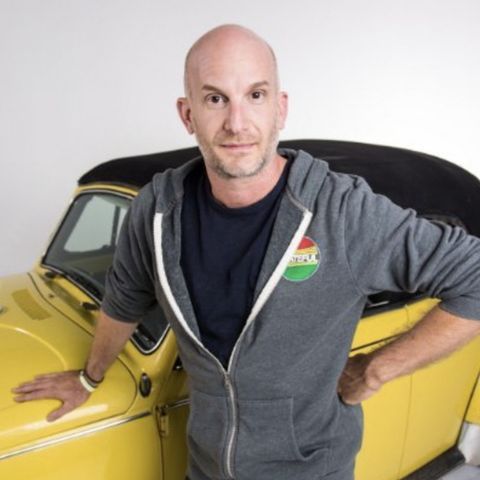
Our guest this week is Leon Logothetis of Los Angeles, a British-born adventurer, author, and television host renowned for promoting global kindness. Formerly a London-based broker, he left finance to explore human connection through travel.
Leon created and starred in the docuseries Amazing Adventures of a Nobody (2006–2008), journeying across the U.S., U.K., and Europe on minimal daily budgets. His acclaimed Netflix series The Kindness Diaries (2017–2019) chronicled his travels relying solely on strangers’ generosity, offering life-changing gifts in return.
Leon has authored several books, including The Kindness Diaries and Live, Love Explore, inspiring audiences to embrace empathy and adventure. His work underscores the transformative power of compassion in everyday life.
Show Links
Instagram – @thekindnessguy
Email – leon@createdbywinston.com
LinkedIn – https://www.linkedin.com/in/leonlogothetis/
Website – https://www.leonlogothetis.com/
Website – https://gobekind.org/
Books –
The Kindness Diaries: One Man’s Quest To Ignite Goodwill & Transform Lives Around The World. (2015) https://tinyurl.com/3m6m8hjc
Live, Love, Explore: Discover The Way Of The Traveler A Roadmap To The Life You Were Meant To Live. (2016) – https://tinyurl.com/5bd2zdtu
Go Be Kind (2019) https://tinyurl.com/mrxf67r3
Go Be Brave 23 ¾ Adventures For A Fearless, Wiser, & Truly Magnificent Life (2023) https://tinyurl.com/mswdm4hp
Amazon Prime Movie – The Kindness Within: A Journey To Freedom (2024) https://tinyurl.com/bdfdvnd3
Transcript:
Tom Couch: Special thanks to Amgen for sponsoring the Special Fathers Network Dad to Dad Podcast. Committed to unlocking the potential of biology for patients suffering from serious illnesses by discovering, developing, manufacturing and delivering innovative human therapeutics. Discover more about Amgen’s mission at amgen.com.
David Hirsch: What would you say to somebody who feels stuck in a routine and craves adventure, but doesn’t know where to begin?
Leon Logothetis: Bypass fear and just do it. I think I’m going to, trademark just do it.
David Hirsch: Oh, I think that’s already been taken, but you might want to check on that, yeah.
Tom Couch: That’s our guest this week, Leon Logothetis, also known as the Kindness Guy. A keynote speaker, acclaimed author and TV personality, Leon Logothetis ignites positive change by unleashing the boundless power of kindness. And we’ll hear his conversation with David Hirsch on this Special Fathers Network Dad to Dad Podcast. Now say hello to the founder of the Special Fathers Network and the host of the Dad to Dad Podcast, David Hirsch.
David Hirsch: Hi, I’m David Hirsch, host of the Special Fathers Network Dad to Dad Podcast. One brief message. The Special Fathers Network Mastermind Group experience is the most comprehensive program the 21st Century Dads foundation offers. Dads raising children with special needs, meet virtually on a weekly basis and form meaningful relationships while sharing weekly wins, discussing books and sharing heartfelt challenges. One of the highlights of the year is attending the in person weekend retreat scheduled this year from September 5th through the 7th. As you think about the year ahead, I invite you to join one of the existing or soon to be formed SFN Mastermind groups and join a group of like-minded dads, to become the best version of yourself. It might just transform your life as it has done for so many others. For more information please see the show notes or simply go to 21stCenturydads.org
Tom Couch: And now let’s listen in to this week’s conversation between Leon Logothetis and David Hirsch.
David Hirsch: I’m, thrilled to be talking today with Leon Logothetis of Los Angeles, California, who is a brand ambassador, TV host, motivational speaker, best selling author, who is also known as the Kindness Guy. Leon, thank you for taking the time to do a podcast interview for the Special Fathers Network.
Leon Logothetis: Yeah, thanks so much for having me.
David Hirsch: So let’s start with some background. Where did you grow up? Tell me something about your family.
Leon Logothetis: So I grew up in London. My family were, are, Greek. But they moved to England and I was born in London, grew up in London until I moved to America.
David Hirsch: My recollection was that you were the second of four boys?
Leon Logothetis: I was indeed. For 10 years, I was the middle child. That will explain a lot.
David Hirsch: I guess you still, by definition, would be the middle child. You and your next youngest brother would be the middle children.
Leon Logothetis: I guess you’re right.
David Hirsch: Yeah. So, from that perspective, what does life look like as one of the middle children?
Leon Logothetis: I was pretty quiet. I think I was pretty shy. kind of kept myself to myself. That’s why sometimes when people watch my show and then see me in the real world, they’re like, they’re two different people. Just because the guy in the show is, you know, happy, go lucky. And, always talking to people. But generally I don’t really talk to that many people. but, yeah, so I’m still, I would say, a little bit shy. I don’t know if shy is the right word. Introverted.
David Hirsch: Okay. That’s fair. So, is your dad still alive?
Leon Logothetis: Yes.
David Hirsch: And what, does he do or what did he do?
Leon Logothetis: He was, and is still in the world of business. So he’s been doing that for many, many years.
David Hirsch: And is that back in London, or where would that be?
Leon Logothetis: My family is an interesting one. He kind of lives all over the place, but he lives between Athens and Switzerland.
David Hirsch: Did I remember you telling me that it was in the hotel business?
Leon Logothetis: Yeah.
David Hirsch: And how would you describe your relationship with your dad?
Leon Logothetis: Good. I think we see the world in similar ways. We want similar things. I would definitely say he is a good father, for sure, 100%. And if he’s listening to this, then I should probably say it to him in person and not just say it in a podcast.
David Hirsch: When you think back about, growing up with these three brothers of yours and some of the things that your dad did with you, what comes to mind?
Leon Logothetis: He would take me to football matches.
David Hirsch: You’re talking about soccer now?
Leon Logothetis: Yeah, soccer. I love soccer. He loved soccer, actually. I’ll tell you a funny story. I’m aging myself, but in 1989, there was a very famous football match between his team and my team. I think I picked the opposite of his team. So they were playing
00:05:00
Leon Logothetis: in the final game of the season, and his team needed to score two goals in order to win the entire championship. Right. And they scored one at, our home. And I was under so much pressure. I was 12. I was under so much pressure that I couldn’t watch the game. So I went upstairs to the playroom, and then all of a sudden I heard screaming. And I knew what had just happened that his team had just won and just scored. And I have never forgiven him for that. Literally. It was one of the, ugh, if you’re a sports fan, you know, you know the pain of that.
David Hirsch: Yeah. It sounds like the agony of defeat in the wide world of sports. At least that was something that I remembered when I was growing up and I was super young.
Leon Logothetis: Yeah.
David Hirsch: So I’m thinking about important takeaways. If you had to think two or three lessons that you learned from your dad, what would they be?
Leon Logothetis: I would say to be kind, and I would say to never give up.
David Hirsch: Well, those are two pretty, important criteria. Sticking with something, you know, not being discouraged. If you had to air on how to be in the world, being a kind person, there’s certainly room for that.
Leon Logothetis: There certainly is. And people often think that kindness is weakness, but kindness is far from being weak. Weakness is the opposite of kindness. If you’re kind, it doesn’t mean that you let people walk all over you. No, absolutely not. You’re not going to walk all over me. But I’ll still be kind to a point. Right. Kindness if abused, and you allow yourself to be abused, then his weakness. But don’t. I know it sounds simplistic, but be kind, but don’t let people walk on you at the same time.
David Hirsch: Yeah. Well, I think I hear you saying in reflecting on, the work that you do is that you want to lead with kindness and you sort of set the stage.
Leon Logothetis: Yes.
David Hirsch: It, allows other people to reciprocate. Anyway, we’ll dive into that a little bit. So I’m thinking about other father influencers. I’m wondering what, if any, influence your grandfathers played first on your dad’s side.
Leon Logothetis: So my grandfather, he died when he was 91, so I knew him for most of my life until I was, like, 35, 34, 35. And we would spend time with him and my grandmother in summers in Greece. And, he was a kind, wise man. I would say he was a little bit, maybe a little bit detached. A little bit.
David Hirsch: Right.
Leon Logothetis: But generally, you know, he was a kind, wise man. That’s how I remember him.
David Hirsch: Yeah. How about your maternal grandfather?
Leon Logothetis: He actually died eight weeks after I was born, so I don’t have any memories of him. But he was a Second World War hero. I’ve heard many, many stories about him, a lot of positive things. So he’s kept in high regard still.
David Hirsch: Yeah. Well, sorry to hear that he died at such an early age and that you did not have a chance to develop a relationship with him like you did with your paternal grandfather. It is a blessing if you get to know your grandparents not just as a little guy growing up, but maybe as adults, like you were saying with your paternal grandfather. That’s something I can relate to. So my recollection, was that you took a B.S. in business management from Babson College in Wellesley, Massachusetts.
Leon Logothetis: I did indeed. I’m not sure why, but I did get a business degree in Boston. The school’s a great school. It just, business management was not for me.
David Hirsch: So what was it that prompted you to go from London to Boston? What’s this backstory on that?
Leon Logothetis: I actually went to an American school. I went to the American School of London, and then it kind of was just if it went on from there to go to an American college.
David Hirsch: Okay. And where did your journey take you once you completed your formal education?
Leon Logothetis: I went back to London and I stayed there and worked as a broker, and I was really not very happy there. And I stumbled across the movie the Motorcycle Diaries, which is a romanticized version of Che Guevara, traveling around South America, relying on kindness. And there was something about that movie that touched my life in a very profound way. And to cut a very long story short, I quit my job and I started to travel around the world relying on kindness. And really, that’s how you and I ended up talking with each other. It took 20 years, but here we are.
David Hirsch: Yeah. Well, my recollection was that, this, motorcycle with a sidecar is painted yellow.
Leon Logothetis: Yes.
David Hirsch: And I, don’t know why we associate yellow with being kind, but for some reason, there’s a direct correlation between being yellow and kind.
Leon Logothetis: Yes.
David Hirsch: Most people thought you were probably really crazy to be, setting out on a motorcycle journey, not just like, across England or across America for that matter, but literally around the world. And, I can’t fully appreciate
00:10:00
David Hirsch: that. The most audacious thing I’ve done was to ride my bicycle from Santa Monica to Chicago over three weeks.
Leon Logothetis: Wow, that’s amazing.
David Hirsch: And most people thought then, at age 54, I was really out of my mind because I was not an endurance bicycler. I did not own a bicycle you could ride across the country. But I wanted to raise awareness and attention for this issue of father absence in America. And, you know, never doubt a man on a mission. And that’s what I think I picked up on. What drove you is that you’re on a mission. Maybe you didn’t know where you’re going or what you were looking for, but you were on a mission. And I’m wondering if you could describe for our listeners what, what was it, you know, you mentioned that you were influenced by this, Motorcycle Diaries, but what was it that connected the dots for you and how did you go about doing that?
Leon Logothetis: You’re absolutely right that I was on a mission. And anything that I’ve ever done of value has been fueled by being on a mission. Right. And my mission for the yellow motorcycle around the world was, well, threefold, really. One, I wanted to go on an adventure. Two, I wanted to fix myself, and travel is a beautiful way to heal. And three, I wanted people to watch it and heal themselves through my art. And I was never going to stop until I had succeeded. And, you know, people can be like, oh, well, Leon, you know, you got on Netflix. Ah, that’s so great. Well done. You know, you won. It was very, very lucky that I got it on Netflix. There was no guarantee that anyone was ever going to watch this, but I had this urge and this drive and I was like, I’m just not going to stop. I don’t care. I’m going to continue going like. There was, for example, there was one moment, we arrive at the Vietnamese border and they say to me, you can’t come in. You’re not allowed. The bike isn’t allowed in. And they said to me, you have to go back to Cambodia and put the bike on a plane to America or whatever. And it took me 10 days to get that bike through Vietnamese customs, but we ended up doing it. Right. So you know what you want and you just keep on going. That’s why sometimes it’s when you have this mentality, this mission driven mentality mentality, and you don’t get not necessarily what you want, right. But what your mission, you think your mission was, it’s really tough.
David Hirsch: Yeah. Well, the Kindness Diaries didn’t start out to be a Netflix movie. It started out as a journey. You on this yellow sidecar motorcycle going from destination to destination with no money, no place to stay. Well, when I say no Money, was it $5 a day? Is that what you budgeted yourself?
Leon Logothetis: No, that was the one before. This one was no money. And I couldn’t accept money. You couldn’t give me money. Just kindness.
David Hirsch: That’s what I’m looking for. What was the backstory? Why were you so set on finding out if people would be willing to extend you this kindness?
Leon Logothetis: Because as a child, I lived a privileged, materialistic life, and I still do, but I didn’t have the emotional support that I needed and the emotional connection. So without realizing what I was doing, I flipped the script and I went out into the world with no materialism. Yes, it was just a social experiment. I get it. But in that social experiment, no materialism and just having to rely on emotional connection.
David Hirsch: Yeah. Well, as I was listening to that book, I was just, like, in disbelief that, you could do this and you wouldn’t get killed along the way or that people would open up to you like they did. And, it seems like you must have a very disarming manner about you. Right. That people would be willing to open up and accept you. Is that part of it or not?
Leon Logothetis: It definitely is. And don’t, don’t think that everyone accepted me. They didn’t. A lot of people didn’t. Right. And we showed that in the show that a lot of people didn’t accept me. Some people did. I, look, I’ve traveled a lot. I understand people. I understand how to make people feel comfortable. One of the things I do is I always speak to people’s hearts, not to their minds. Right. So, for example, you know, little, little. I don’t want to call it a trick, but little things that I did on that journey. For example, if I went up to someone, I would be very conscious of the distance between. Between me and them. I would stand further back so that they would feel more comfortable. Right. Little small things like that. Understanding how to read people, Understanding
00:15:00
Leon Logothetis: how to connect with people. Yeah, we can always connect with someone. There’s always something in common. However much you think there isn’t, there is always something. For example, again, I don’t want to get political, but you have someone on the left, you have someone on the right, and they’re arguing with each other, and then we have nothing in common. And then you say to the guy on the left, do you have a son? And he’s like, yes. You say to the guy on the right, do you have a son? He’s like, yes. And you ask them both, do you love your sons? Yes. So you do have something in common. Right. And that little, small thing can actually make a very, very big difference.
David Hirsch: Yeah. Well, I think I get what you’re saying. As opposed to talking about the weather or business or politics or religion, which could be divisive, if you can find some commonality. That’s what I think, what I heard you saying.
Leon Logothetis: Exactly. We all have it all over the world.
David Hirsch: And I think when you sort of, like, peel the onion back a little bit. You realize we all have a lot more in common than what separates or, you know, creates this chasm or this difference.
Leon Logothetis: 100%.
David Hirsch: So you talk a lot about we me throughout your writing, and I’m wondering if you can explain for our listeners what you mean by we me.
Leon Logothetis: You mean me we. That’s a, Muhammad Ali quote. So me we, supposedly, I’ve read. I’ve googled it. I’m not even sure if it’s true, but assuming that it is true. he had a poem saying me, we, and it’s the shortest poem. And basically what I read from that is he’s talking about commonality. We’re the same, so just chill out. He was more, eloquent. But that’s basically what he’s saying, I think.
David Hirsch: Yeah. Well, he was a boxer, but, like, more of a philosopher type of person.
Leon Logothetis: Yes, yes.
David Hirsch: So you’ve traveled to more than 100 countries and under some pretty extreme conditions. do you have any favorite places that you’ve traveled to or you’ve actually traveled back to?
Leon Logothetis: I am always asked this question, and I hope one day the New Zealand tourism Board is going to listen to me and hire me to be their tourist advisor. New Zealand is the best country I’ve been to. It is incredible. The level of, beauty in that country is mind blowing. It’s a Photoshop picture, but better. It’s like the Photoshop picture of the Photoshop picture. It’s crazy. I absolutely love that place. I did a road trip to the north and the South Island. Epic.
David Hirsch: Yeah. Well, we’ve traveled not nearly as much as you have, but if you asked our five kids which was the favorite family vacation of all vacations, maybe to, like, the 30 plus countries we’ve been to, they would all probably say New Zealand. And the reason for that is that we think of that as the adventure capital of the world. We went skydiving in Wanaka, right? My wife took two of the kids up. I took the other three up, and they’re like, oh, is it because you were worried the plane would crash and you didn’t want your whole family to go down in the same plane? No, the planes were so small they couldn’t take the whole family. So we just divided and conquered. And then we went bungee jumping on the Kalahari Bridge.
Leon Logothetis: I’ve done that. Is that in Queensland?
David Hirsch: Yeah, yeah.
Leon Logothetis: Yeah, yeah, I’ve done that.
David Hirsch: Yeah. And, the youngest of our kids was 10 at the time. And my wife is like, oh, my God, I can’t believe we’re doing this right. My, people at home would put us in, like, DCFS. Our kids would be taken away from us. And, you know, it was just so, so exciting. Right? You could all get outside your comfort zone, and the beauty is second to none. Like you were saying. So you grew up in England and have lived in the US For a couple dozen years. Where do you consider home?
Leon Logothetis: I consider Los Angeles to be home.
David Hirsch: Okay.
Leon Logothetis: You know, I’ve been here for a long, long time, and the, moment I get off the plane, I’m like, ah, home. It’s, it’s beautiful. I really. I love Los Angeles.
David Hirsch: Yep. Our middle daughter, Emily, went to school at Pepperdine, and then, did her, master’s degree at the London School of Economics in USC. So she’s definitely a Southern California girl now.
Leon Logothetis: Cool.
David Hirsch: So, who was Winston, and why did you name your production company after him?
Leon Logothetis: So, Winston was, my Boston terrier. He taught me how to love. I know that sounds silly, but he, he taught me how to love. He taught me many, many things. And I, named the company out after him. He’s not with us anymore, but I have another dog called Archie, who’s been banished so that he doesn’t cause problems. But he’s a Boston terrier, too. And actually, a funny story about that. So I named Winston after Winston Churchill. And when I got Archie, I was like, look, I need – there has to be some connection between Archie and Winston. So. But I wanted to call him Archie. So I went online and I said, did Winston Churchill have a best friend called Archie? And he did. So, there you go.
David Hirsch: I love it.
00:20:00
Leon Logothetis: His name? Archibald Sinclair. He was the head of the air force in the Second World War. Secretary of State of the Air Force.
David Hirsch: You have some pretty prestigious dogs in your family.
Tom Couch: We’ll be back with more of the conversation on the Special Fathers Network Dad to Dad Podcast in just a few moments. But first, this quick message. Please help 21st Century Dads gather research on families raising children with special needs by having them complete the Special Fathers Network Early Intervention Parents Survey. A link to the survey can be found in the show notes. As a token of our appreciation, each person, mom or dad, who completes the survey will receive a great dad coin. Thank you. Now back to the conversation.
David Hirsch: I’m thinking about the Kindness Diaries. I have, a handful of questions I wanted to ask. the first of which is, you travel the world relying on solely the kindness of strangers. What surprised you most about human nature.
Leon Logothetis: During those journeys that ultimately we are all the same. At the base of our humanity, at the very essence of our being, we want to be seen, we want to be heard, and we want to be loved. Irrespective of religion, irrespective of political party, irrespective of how much money we have or how much money we may not have. We are the same. And I learned that lesson in India. I was, staying in the slums, and in the slums outside, you see a lot of poverty, a lot of pain. But if you go in and you start talking to people and you start connecting, there’s so much love. And I woke up one morning and I saw this lady kissing her two kids goodbye for school in abject poverty.
David Hirsch: Right.
Leon Logothetis: But in that moment, I realized that her love for her kids is the same as your love for your kids. We are the same.
David Hirsch: Yeah. It’s really beautiful. Thank you. What did you learn about vulnerability? By putting your trust in complete strangers.
Leon Logothetis: I think vulnerability is a, is a beautiful thing. But you cannot be vulnerable to the wrong people. That’s what I’ve learned in my life. There were times in my life when I was vulnerable to everyone and they took advantage. And now I have become a lot cleverer, if I may say so myself in that regard. And I am vulnerable only with people who have earned the right for me to be vulnerable with them. I think that’s a really important piece of the puzzle because many of us are over vulnerable to people who are incapable of holding our hearts. And that is a self inflicted wound.
David Hirsch: Yeah. Well, I know that you talked about growing, up and being bullied as a young person, which very sadly is common for people with disabilities. Young people with disabilities. Right. They’re discriminated against. They’re bullied, which is just really harsh. Maybe the world’s a little bit better today than it used to be. You know, we don’t use the R word in referring to people that, you know, have, intellectual differences like we might have used to. So thank you for sharing. Were there moments when you questioned the entire premise of your journey? How did you push through those doubts?
Leon Logothetis: Of course. I mean, there were many moments. The first moment was when I first came up with the idea. Then I remember, another famous moment for me was when I walked out of my house to start the journey. I was walking out of my house and I was like, you’re insane. What the hell are you doing? But it was too late. I had no choice. I’d burnt all the ships. I’d hide the crew. I’d signed the deal. What was I going to do? Oh, sorry guys. I’m actually going to go back to bed. I had to get out of bed and walk out that door and circumnavigate the world. So I did.
David Hirsch: So what message did you hope readers take away about the power of connection and increasingly digital disconnected world?
Leon Logothetis: That connection is fuel. And if you are connected to your kids, to your partner, to your friends, you have more fuel to do beautiful things. If you are disconnected, then you are working without fuel.
David Hirsch: I remember that you were able to provide some of the people that you met with gifts and not inconsequential gifts in some situations. And I’m wondering, because I’m a financial guy, I think I mentioned that to you. How did you finance that? That seems a little extreme.
Leon Logothetis: Well, look, things were not as expensive as you would imagine. For example, in Cambodia, we built a lady, a house. To build her a house cost two and a half thousand dollars.
David Hirsch: Oh my.
Leon Logothetis: So, you know, if I was going to build someone a house in Beverly Hills, then I’d be completely, you know, in a, in a, in a pickle. So it wasn’t as expensive as people to, to change someone’s life
00:25:00
Leon Logothetis: in a really profound way doesn’t really cost that much. I’m not saying two and a half thousand dollars isn’t a lot. It is what it is. But in the grand scheme of things, it’s not to build someone a house.
David Hirsch: Yeah, that’s a great example. What comes to mind is that I’ve done a lot of work over the last 30 years with Habitat for Humanity, not just domestically here in the US but internationally in a habitat house here, to renovate or build, they’re very modest. $30,000. And overseas the average is about $1500. So you can build 20 non US Habitat houses. Right. Provide simple, decent shelter to 20 families for the same price that you could one here in the States. I think that’s what I heard you talking about. Is relatively inexpensive to be doing things that can literally transform people’s lives.
Leon Logothetis: Yes.
David Hirsch: So I’d like to move on and talk about this book that I thoroughly enjoyed, which is entitled Live Love, Explore, Discover the Way of the Traveler. A road map to life you were meant to live. I really, really enjoyed this book and I found myself like underlining, highlighting, like almost like every page of the book has something that I was like, you’re talking to me, right? I don’t know if other people have connected with your work like that. But, you talk about going from existing to living. What does that transformation, look like in everyday terms?
Leon Logothetis: So when we are fully present, I would say that we are fully living. When we are not living in presence, then I would say we’re not fully living. And I don’t want anyone to think, oh, Leon’s saying that he always is present and that he’s always living. That’s just not true. Right. Like, you know, maybe right now I’m present. Yeah. But, you know, 45 minutes ago, was I present? Probably not. So. But it’s a goal to try and achieve. It’s a mission. Right. If your mission is to stay present, then you will probably stay more present than if your mission is not to stay present.
David Hirsch: Do you have a trick for staying present so you don’t drift back into the past or get too far out into the future?
Leon Logothetis: Meditation. I did my meditation this morning. I walked into the meditation and wasn’t present, left the meditation and was very present. And part of the reason why I’m present here today, now with you, is because of that meditation. Now, how long will that last? I don’t know. But we’re here now.
David Hirsch: I love it. Thank you. So what role does fear play in preventing people from exploring their purpose? And how can one overcome it?
Leon Logothetis: Fear plays a massive role. If you are fearful, it’s simplistic. You will not act. Most probably, yeah, you certainly won’t act. If you’re fearful and you don’t have the courage to go through your fear, sometimes you don’t have to go through it. You have to bypass it. And, what do I mean by that? I know people say spiritual bypassing is bad, but whatever. I’m about to say something that may be controversial, but who knows? I was fearful about going around the world, but I didn’t think about it. I did not think about it until I had no choice but to face it. So I bypassed the fear until the fear was right there in my face, but I had no choice. So I don’t know. That’s an interesting way of doing it. You just don’t think about it. You just do it.
David Hirsch: Yeah, well, I don’t know that that would be a prescription, but, it’s an interesting way of thinking about it. Like you said, how did your own internal journey evolve alongside your physical travels?
Leon Logothetis: I am who I am because of my travels. My travels have shaped me. They have been my school. I say travel is the school of Life. It has made me into the person I am today. the internal journey was more profound than the external journey, but I needed the external journey to go on the internal journey. That’s just me.
David Hirsch: That’s fascinating. What would you say to somebody who feels stuck in a routine and craves adventure, but doesn’t know where to begin?
Leon Logothetis: Bypass fear and just do it. I think I’m going to, trademark. Just do it.
David Hirsch: Oh, I think that’s already been taken, but you might want to check on that. Yeah. If you had to distill your life’s philosophy into one sentence after all your travels and writing, what would it be?
Leon Logothetis: Be kind. Live life to the fullest and never give up.
David Hirsch: Sounds like advice your dad would have given you.
Leon Logothetis: Yeah. There you go. Right? That’s pretty much true. It’s interesting. I think he would have.
David Hirsch: Yeah.
Leon Logothetis: Ah, he would. He would give that.
David Hirsch: Yeah. So there’s this movie. It came out in 2024.
00:30:00
David Hirsch: It’s available on Amazon Prime. the Kindness Within. How did that come about?
Leon Logothetis: We could be here for a few more months to explain that, but I’ll give you a short version. So I received everything I thought I wanted. Netflix shows, speaking, gigs, books, et cetera, et cetera. But after I received all of that, I realized that it didn’t resolve the pain that was going on inside. I, had a dark night of the soul. I ended up writing a suicide note, which I obviously didn’t act on. I ended up calling my therapist, and my therapist helped me very much that night. The next morning, I went to a bookshop, randomly found Paramahansa Yogananda’s book, the Autobiography of a Yogi, opened it randomly to one paragraph, read a line that said, if you reveal God to me, I will follow you anywhere. I’m not talking about the God that lives up in the sky. I’m talking about the universal energy of love that lives in all of us. I had an epiphany. I called my, director friend and said, let’s go to India and find God. and that’s it.
David Hirsch: Wow. I haven’t watched it, but it’s on my, to do list. So, I’ll have to circle back with you, whether it’s one on one or in a forum like this, to give, you my thoughts or feedback.
Leon Logothetis: Okay.
David Hirsch: Speaking of spirituality, what role has that played in your life?
Leon Logothetis: I think he’s played a very big role. I don’t consider myself to be religious. I have no issue with people who are religious. It Just feels a little dogmatic and I kind of just go with the flow. And nature is my God. The universal energy of love is my m. God. Humanity, etc, etc, it’s just flowing through all of us and everything that ever will be, ever was and ever has been.
David Hirsch: Yeah, I love it. Thank you. So I’m thinking about advice now and I’m wondering if there’s any advice you could share with parents, specifically dads who find themselves in a place that they might not have anticipated.
Leon Logothetis: Look, I’m not a father. Except, Archie won’t be very happy to hear that. But, I would say that the most important thing to give your kids is your presence, is your love, is to see them. And if you come from that place, anything is possible. But if you come from a place where you are not seeing them, it’s most probably not going to end very well.
David Hirsch: Yeah, well, very accurate. very insightful for somebody who’s not a father himself. I always talk about this issue of being present, and I think about it in four different dimensions. One is financial, which is what the world sort of expects of fathers, right, to be providers, but as if not more importantly, to be present physically, emotionally and spiritually in our kids lives. Right. And it’s sort of like a quadrant, right. And each of us probably has a strength like we play to our strength. Some of us are better providers, some of us are more present emotionally or maybe spiritually. And I think if we want to be well rounded in our ability to be present, we can work on those things that maybe aren’t our first or second suit. So anyway, thank you for emphasizing that.
Leon Logothetis: No worries.
David Hirsch: Is there anything else you’d like to say before we wrap up?
Leon Logothetis: First of all, thank you for having me. And if anyone is feeling hopeless, always remember that there is always hope. And one of the most beautiful ways to tap into that hope is to be vulnerable with a safe person. If you are vulnerable with a safe person, they will inject that hope, huh? Back into you. And that’s really what the movie is all about. The kindness within a journey to freedom. It’s all about hope.
David Hirsch: Yeah. Well, thanks for sharing. If somebody wants to learn more about your books, your speaking, hire you as a speaker to contact you, what’s the best way to do so?
Leon Logothetis: Instagram the kindness guy.
David Hirsch: Okay, we’ll be sure to include that in the show notes. There’s a LinkedIn page, I know that, there’s a website, there’s a couple websites actually, so we’ll be sure to include that information in the show notes so somebody might be able to follow up with you. Leon, thank you for your time and many insights. As a reminder, Leon is just one of the individuals who’s part of the Special Fathers Network mentoring program for fathers raising a child with special needs. If you’d like to be a mentor father or are seeking advice from a mentor father with a similar situation to your own, Please go to 21stcenturydads.org thank you for listening to the latest episode of the Special Fathers Network Dad to Dad Podcast. I hope you enjoyed the conversation as much as I did. As you probably know, the 21st Century Dads foundation is a 501c3 not for profit organization, which means we need your help to keep our content free to all concerned. Would you please consider making a taxactible contribution? I would really appreciate your help. Leon, thanks again.
Leon Logothetis: Thank you so much.
Tom Couch: And thank you for listening to the Special Fathers Network Dad to Dad Podcast. The Special Fathers Network is a
00:35:00
Tom Couch: dad to dad mentoring program for fathers raising children with special needs. Through our personalized matching process, new fathers with special needs children match up with mentor fathers in a similar situation. It’s a great way for dads to support other dads. To find out more, go to 21stCenturydads.org.
David Hirsch: And if you’re a dad looking for help or would like to offer help, we would be honored to have you join our closed Facebook group. Please go to facebook.com groups and search dad to dad. Lastly, we’re always looking to share interesting stories. If you’d like to share your story or know of a compelling story, please send an email to david@21stCenturyDads.org.
Tom Couch: The Special Fathers Network Dad to Dad Podcast was produced by me, Tom Couch. Thanks again to Amgen. Committed to unlocking the potential of biology for patients suffering from serious illnesses by discovering, developing, manufacturing, and delivering innovative human therapeutics. Discover more about Amgen’s mission at Amgen.com.
00:36:06