

387 – Randy Pierce of Concord, NH An Author, Avid Outdoorsman, Mountain Climber, CEO and Who Is Blind – Part One
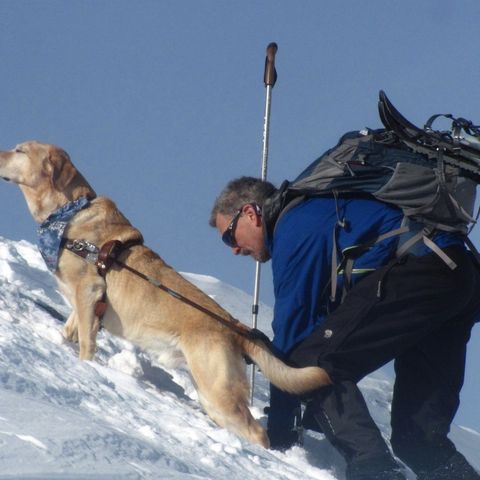
Our guest this week is Randy Pierce of Concord, NH who is an author, avid outdoorsman, mountain climber, keynote speaker, president & CEO of Future In Sight New Hampshire, and who himself if blind.
Randy and his wife, Tracy, have been married for 15 years.
When Randy was in his early 20s he suddenly went blind in one eye and then over a number of years would lose sight in the other eye. If that wasn’t challenging enough, Randy also lost the ability to walk for the better part of two years. After a series of medical procedures and through old fashion grit and determination, Randy regained his ability to walk and has become an avid outdoorsman and mountain climber.
Professionally Randy is president & CEO of Future In Sight New Hampshire, a non-profit providing essential services and support for over 100 years to children, adults and elderly living in New Hampshire who are blind and visually impaired.
Randy is also author of the book: See You At The Summit: My Blind Journey From The Depths Of Loss To The Heights Of Achievement, a brilliant and inspirational read.
There was so much to cover we decided to break his interview into two parts. This is Part #1 of Randy’s SFN Dad To Dad Podcast interview.
Show Notes –
Phone – (603) 546-8542
Email – rpierce@futureinsight.org
LinkedIn – https://www.linkedin.com/in/randy-pierce-2020/
Website – https://futureinsight.org/
Heroes of Summer YouTube – https://www.youtube.com/watch?v=DmUKmbNLvag
Book – See You At The Summit: My Blind Journey From The Depths Of Loss To The Heights Of Achievement – https://tinyurl.com/y6kwpvjh
Transcript:
Randy Pierce: But I realized about adversity that when I went blind, most people would have said one of the worst things that ever happened to me, and I would have been one of those folks originally. Now I celebrate that I went blind because I think it’s the fact that I went blind and the lessons I learned and how to respond to that or any adversity that made me stronger and able to do the things I am today.
Tom Couch: That’s our guest this week, Randy Pierce, an author, avid outdoorsman, mountain climber, keynote speaker and president and CEO of Future In Sight New Hampshire, working to help children and adults who are visually impaired. And Randy himself is blind. He has an amazing story to tell and we’ll hear it in two parts. This week is part one. Now say hello to the founder of the Special Fathers Network and host of the Dad to Dad Podcast, David Hirsch.
David Hirsch: Hi, I’m David Hirsch, host of the Special Fathers Network Dad to Dad Podcast. One brief message. The Special Fathers Network Mastermind Group experience is the most comprehensive program the 21st Century Dads foundation offers. Dads raising children with special needs, meet virtually on a weekly basis and form meaningful relationships while sharing weekly wins, discussing books and sharing heartfelt challenges. One of the highlights of the year is attending the in-person weekend retreat scheduled this year from September 5th through the 7th. As you think about the year ahead, I invite you to join one of the existing or soon to be formed SFN Mastermind groups and join a group of like-minded dads to become the best version of yourself. It might just transform your life as it has done for so many others. For more information, please see the show notes or simply go to 21stCenturyDads.org.
Tom Couch: Now let’s listen to part one of this conversation between Randy Pierce and David Hirsch.
David Hirsch: I’m thrilled to be talking today with Randy Pierce of Concord, New Hampshire, who’s an author, avid outdoorsman, mountain climber, keynote speaker and president and CEO of Future In Sight New Hampshire, a nonprofit providing essential services and support for over 100 years to children, adults and elderly living in New Hampshire who are blind and visually impaired. And Randy, who is himself blind. Randy, thank you for taking the time to do a podcast interview for the Special Fathers Network.
Randy Pierce: Well, thank you for the opportunity and for all the work you do uplifting fathers and people. you know, 386 weeks or so now.
David Hirsch: You and your wife Trace have been married for 15 years. Let’s start with some background. Where did you grow up? Tell me something about your family.
Randy Pierce: Sure. I sort of split growing up. My first 10 years I was in Nashua, New Hampshire, second largest city here in New Hampshire, which is still pretty rural, and, you know, grew up with lots of woods in my backyard. But, my parents made a pretty big decision to move to the top of the state, which is exceedingly rural, when I was 10. And I call those my formative years. So I like to say that I really grew up In Colebrook, N.H. you know, growing up, it was, a family, really. Two older brothers. We would have had an older sister. She would have been the oldest. She passed away before any of us were born. But sort of surprising how big an impact some loss like that can have in your lives despite that. But I grew up very well loved. You know, that’s one of the best things I can share. And given a lot of rain to try to discover who I wanted to be and what excited me. And that sort of allowed me a renaissance approach. Did a little bit of everything, played, you know, every sport, band, chorus, drama club, scouts, you know, anything that kept me from doing homework. Those were the early years.
David Hirsch: Yeah. Well, thank you for, the, brief flyby. I’m very sorry to learn that your parents lost their oldest child, your oldest sister, before you and your brothers were born. You know, that is not the typical experience, for parents to lose a child right out of the starting gates. But like you said, it no doubt shaped their experience as parents and maybe made them a little bit more appreciative of the three of you. Right. You and your brothers.
Randy Pierce: Yeah, I think that’s very true. Right. That doesn’t take away the hard parts. But I think that’s why I lived feeling so loved, because it did absolutely make them appreciate what a gift every moment is.
David Hirsch: So I’m sort of curious to know, what did your dad do for a living?
Randy Pierce: Both my parents were laborers. My dad specifically worked in wood shops. In fact, the day of my almost birth, my mom went at the labor for me. My dad actually cut all four of his fingers on his left hand off in a machine.
David Hirsch: Oh, my God.
Randy Pierce: I say the almost day of my birth because it was, the end of the day on June 6th when my mom went into labor, and it was the end of his workday. Maybe distracted by the news, who knows, Right? But he was in the same hospital as my mom. They wouldn’t let them interact in those days, but they reattached. His fingers were very crooked all my life. and he continued as a laborer, able to use his hand, but, you know, very powerful moment from the Point of my birth, it actually shock delayed my mom. I wasn’t born for a couple of days after that.
00:05:00
Randy Pierce: My dad actually checked himself out against medical advice to go let my mom see that he was going to be okay and they were going to be able to get through this.
David Hirsch: Holy moly. Well, that is a little, different reaction than most, fathers might have to the birth of a child.
Randy Pierce: Sure.
David Hirsch: So how would you characterize your relationship with your dad?
Randy Pierce: So I think early on I had a lot of hero worship for my dad. I wanted to do the things he did. You know, he was a big hunter, fisherman, and I really enjoyed those experiences with him, more so than my other brothers. So that sort of gave us a little bit of a special connection. but there was some trouble in the middle years. You know, neither of us did anything wrong. But it’s just, it’s very common for teenagers to be at a struggle, and I share that. Only to say that the older I got, the more I began to appreciate the great qualities of my dad. And that continued. I think there’s a quote that said, you know, when I was 18, I was amazed at how dumb my parents were. And when I was 22, I was amazed at how much they learned in four years. I think that some of that was my learning. But I also think my dad was on a journey, too, and he was growing and constantly becoming a better person. And as recently as last week, I had the nurses who cared for him in the final six years of his life reach out to me because I did a presentation to their group, to their conference, and say what a gift it was to have worked with my dad. And they’re not just saying those words. You know, I have seen that from them, and I’ve heard it from them continuously for more than a decade that he’s been gone.
David Hirsch: Wow. Well, thanks for sharing any important takeaways, lessons learned that come to mind when you think about your dad.
Randy Pierce: So, you know, I get a lot of gifts from my dad, but, you know, there was really a powerful one yesterday. We one day removed from Father’s Day, and I shared this reflection. So I’ve been very active in the Lions Club. I think, you know, you and I have talked a little bit about that in the past, but my journey, people think, is because my blindness to get associated with lions is their natural connection there. But really what happened when I was 22, lost my sight, My dad didn’t know how to handle having a son that was going blind. And, you know, the fact that I was 22 doesn’t change that he’s still my dad. He still wanted to know how he could help me. I mean, I think that’s what fathers do all their lives, is think about how can I help my children and whatever they may face. But he didn’t know how to deal with it. He couldn’t really envision it in any way. And without telling me, he went out and learned. And m. My dad went through nine grades of education, exceeding my mom by one year, which was not uncommon at that time. Yet he went out and learned who works to help the cause of blindness. And that motivated him. He joined and he never told me because he didn’t do it to serve me. He did it to learn, so that he could maybe be a better support, but just it was his method of outreach. And, you know, ironically, it was 10 years later, a little over, when I got a little bit of attention in the news, and my dad said, hey, my club wants you to come up and speak. But I’ve never told you I had a club, you know, so my. My origin into becoming a legacy was different than most. It was. It was partially just to appreciate that, my dad said the way he wanted to navigate the world and I respect, is find the way you can make a difference. And if you’re struggling, well, look around and find somebody else who’s already doing it and join them. And that’s exactly what he did.
David Hirsch: Yeah. Well, it reminds me, because your dad would be like a, World War II generation type person of the greatest generation. Right. They just did things right. They didn’t draw attention to themselves in a lot of respects, and it’s very informative. Right. You’ve just told me volumes about your dad’s character by saying that he joined this organization. Didn’t mention anything to you, but obviously the Lions Club, International, headquartered here in the Chicago area, you know, has had a profound impact on people who are visually impaired or blind, you know, for well over 100 years. You know, they’ve got chapters all over the country, all over the world, for that matter. And, the way that your dad educated himself and no doubt learned a thing or two along the way about how to be a better dad and maybe provide you with some insights about the journey ahead from your age 22. So thank you for sharing.
Randy Pierce: Well, you’re welcome. You know, powerful for me to reflect, too. Right.
David Hirsch: So I’m wondering if there’s any other father influencers, your grandfathers or anybody else for that matter.
Randy Pierce: You know, fortunately, I could probably say several, but I, you know, be remiss if I didn’t call out my brother Rick. So he’s the middle child, or he’s one above me. Right. He’s six years older than me. So growing up, he was the next influence. And as a brother, I was his kid brother and way too young and immature for him. But he never or rarely treated me like that.
00:10:00
Randy Pierce: You know, I was a terrible sport. Right. He would beat me in most things that we did. Six years was a nice edge, and I would handle losing terribly. But I think he was patient with me and helped guide me to be better about that. But, you know, that continued all our lives. You know, I spent a lot of my life easily able to say that he was. He was probably my closest friend. And, you know, we still are close today. Not as close. The world can distract us. But I spoke to him this weekend. He’s heading off on a big trip right now to Scotland, where I had gone a couple years ago. And, you know, we sort of relive that together because I think we still. We always journey whether we’re in the presence of people who influence our lives or not. We always journey with them because they’re always a part of us in various ways.
David Hirsch: Yeah. Well, thank God for people like your brother Rick, who play an influential role in our lives. I don’t know that you’d jump and say that he’s one of the angels in your life. You know, no doubt he’s played an influential role. And like, there’s that, rivalry that brothers have, typically, that brothers have. And when there’s an age difference, like you said, of six years, you know, particularly when you’re young, that’s a huge advantage. Right. But as you get to be older, six years isn’t that big a deal.
Randy Pierce: He’ll always be an angel. And there’s one key moment I’d point out on that journey when I had gone blind, it was pretty abrupt for me. And one eye was totally blind. The other was pretty significantly blind. And it happened in that first instance. And my brother called me up and he said, you know, I don’t know if the doctors can do this or not, but can I give you my eye?
David Hirsch: Oh, my God.
Randy Pierce: And, you know, the truth is, they couldn’t. Then who? You know, they’re getting closer and closer to those types of things. And in my situation, it wouldn’t have been a help, because it’s not my eye that was, the problem. It’s the optic nerve. But think about that offer. I’m going to give you one of my eyes. You know, people give kidneys because we can live with two of them. And people could give an eye because you could live with one of them. But it’s choosing to take on an enormous burden just for love, that’s pretty powerful. That’s angel territory in my book.
David Hirsch: I’m wiping the tears from my eyes.
Randy Pierce: I mean, I think he was overjoyed when I told him it’s not possible.
David Hirsch: Yeah, well, thank you so much for sharing. So my recollection was that you got a BS in electron engineering from University of New Hampshire. And, when I, when I reflect on that, I was wondering, where did you see your career taking?
Randy Pierce: Yeah, boy, you graduate from college, you’re on top of the world for the final time, Right? We go from eighth grade, we are the oldest, the most experienced in our school, and we feel like we’re great and we get a little dose of humility when we go back to high school. And then we come out of high school and we’re on top of the world. And, you know, depending on what you do next, in my case, go to college, you’re suddenly the small fish in the pond again. And you come out of college and like, well, now there’s nothing ahead. It’s just all peaks. And life’s going to be glorious. And you’re also 22, so you’re invincible, right? 21-22. And that’s what I thought. I thought I was going to have an amazing life. The good news is I was right. There was just, as Zig Ziglar would say, there was a little detour, not a dead end.
David Hirsch: So what was your first job out of college?
Randy Pierce: So I worked for a company called Digital Equipment Corporation. They were the number two computer company to IBM, and I worked in their networks and communications early on, and I had Summer hired for them for two years. Then I finished my first summer hire year and they had offered me a job. They said, you know, come, come work for us full time. Go to school part time. And I said, no, I’m gonna, I’m gonna get the degree, but I’ll come back next summer and if you want to hire me afterwards, you know, let’s see the offer. And what a comfort to go through your senior year with an offer in hand. And, and then what, an ease to come out of school and go into a job where you’re familiar, you know, who you’re working for, you know, the work you’re going to be doing, and you know already that they value and want you. Right. So that was all part of the being on top of the world, right?
David Hirsch: Yeah. Well, thanks for sharing. I agree that, you got the world ahead of you. Right. When you’ve got your college degree in your hip pocket. And, you know, most people only see blue skies from that point going forward. Obviously, that wasn’t how things panned out in your situation, because while you might have worked there for eight years, this was overlapped with, you having the sight impairment that you made reference to earlier. And before we get into that, I’m sort of curious now, when you were growing up, did you have any direct or indirect connection to the world of disability as a youth or until you went out into the workaday world?
Randy Pierce: Exceedingly limited, if at all, and none that stood out to me, except in hindsight. I have a moment in college that stands out like a beacon, and I use it to remind me when I encounter somebody who struggling. So I was walking through the Memorial Union Building at UNH, and it’s between classes, so there’s a swarm of students. And in the middle of this warm was a blind gentleman with a cane. And he was looking somewhat off to my side, and he said, does anyone know the time? I had a watch
00:15:00
Randy Pierce: on. I knew the time. And I remember thinking, he’s not looking at me. He’s not talking to me. And I don’t know how to talk to a blind guy anyhow. And I just walked on. And I can’t tell you whether anybody told him the time. I can tell you how embarrassed I am at such a horrific response. I don’t know what year it was for me, you know, was I 19, 20. But I remember thinking about that afterwards because I obviously, I like to think enough empathy to realize what a poor choice that was when I had time to reflect on it. But I couldn’t go back and change it at that point. But, boy, now doesn’t that have power to remind me when somebody might struggle to manage with me?
David Hirsch: Very insightful. Thank you. So what’s the backstory, on you losing your sight?
Randy Pierce: So, you know, first part of it is totally unexpected. I didn’t have any site problems, and it was, you know, late May of 1989. I was one year in this job, and, like we said, feeling on top of the world. And I was in a fencing class, and it was an early class for me. I hadn’t been doing fencing for very long, but I enjoyed the sport. And my instructor noticed an oddity. And, you know, I’ll remember To this day. And I actually got re in contact with him when I wrote my book. So I wanted to get his perspective from it. And that was sort of a fun reunion. You know, you use your peripheral vision so much. And my peripheral was impacted. And he could map out with his sword tip the blind spot that we all have. We have a blind spot in our upper left of our left eye, upper right of our right eye. It’s where the retina attaches. There’s a little spot of no sight. And our brain just sort of smooths it in. We don’t realize it’s there, but there’s things we can’t see. And mine was way larger than it should have been. And he said, I’m going to kick you out of class and you’re going to go to the doctor right now. And I’m sure I yeah. Yeahed him because. Right. I was 22. And he said, well, let’s go to the office and make you call him. And he did. And thank goodness, like he pushed me through all those. I went to the doctor. He immediately sent me to an ophthalmologist same day, who immediately sent me to a neural ophthalmologist same day. And that I had to leave the state for. And, they had to call and make the neural ophthalmologist wait for me because my problem was very pronounced. My optic nerve was swollen. And that’s serious, you know. That night I was admitted to the hospital UMass Medical Center. And, I would spend the next almost two months there losing my vision very fast. In two weeks, I lost 100% of the sight in my right eye and 50% in my left eye as it closed into a tight Little Tunnel. At 22, I think you can imagine we don’t have all of the maturity. We might like to handle it, but I don’t think at any age we handle loss well. And loss of one of our prominent senses. Sight is 80% of it. Well, it’s hard. And so candidly, I was angry. Why did this happen to me? I felt isolated, I felt helpless and candidly hopeless at the time. And that’s not surprising. And it’s okay. It’s just not okay to stay there in my mind.
David Hirsch: Well, it sounds quite dramatic, Randy, that out of the blue for no apparent reason. Right. It wasn’t like a head injury or some accident that you were in. Is this like a genetic situation where somebody’s optic nerve would swell or sort of go down this path?
Randy Pierce: Yeah. So they didn’t know that for years, they couldn’t figure out what happened. You know, they did an MRI every morning and every afternoon because the primary cause of it at that point in time would be a tumor. And they couldn’t find the tumor. So they. They felt like they needed to find it. And after a month of that, when things had settled out, they began to look into other places. It took them probably 10 years to figure out. And by, you know, by the time I was totally blind, they had started with technology they could look in. And I have two. They ran my genome twice, and I have two genes that have. They call them variants. They’re mutations. Ironically, my father was passed before we got the final answer, so we couldn’t use his genes, but they can do it using my older brother and my mom, who is still alive. And they could determine that I am unique in that nobody has this particular variant pattern, and it didn’t come from my family. So I just developed a unique mutation. Really?
David Hirsch: Okay, well, the net result is that you lost your sight in your right eye very quickly, and then in your left eye. Over what period of time did you lose your sight entirely?
Randy Pierce: So it’s very episodic. So it would swell. I could feel something was wrong. They’d look, they’d see it swollen. They would try to treat. It took seven episodes over 11 years before I became totally blind. You’ve probably heard me joke before, but if I’m not legally blind, I must be illegally blind now. But, you know, the reality is that, you know, those are terms, about what level of sight loss we have, and it’s profound. Sight loss is hard no matter what.
00:20:00
Randy Pierce: I have no motion, no light sensitivity. My eyes can still point. You know, I’m looking at the camera as we’re talking. But, they also will shake something called nystagmus because they have no easy checkpoint to lock onto.
David Hirsch: Gotcha. Well, in addition to losing your sight, you, for an extended period of time, lost your ability to walk. And I’m wondering what the backstory on that was.
Randy Pierce: Yeah, so it turns out that what I have causes demyelinating polyneuropathy, which is just a fancy way to say that the myelin sheath around all of my nerves can die. And my optic nerves were just the first ones. My cerebellum got damaged. That’s what put me in the wheelchair. I have peripheral neuropathy, so I can’t feel my sensory nerves below. My knees don’t exist, so I don’t feel my feet. I now have dysautonomia which is when your autonomic nervous system begins to shut down. Obviously, that’s pretty important. It hasn’t done it in any ways that are critical or I wouldn’t be here. They are serious, and, you know, that was the time not walking with the cerebellum. And, you know, like anything, there’s some things our medical world can help us resolve, and there’s some things that a lot of resolve can help us solve.
David Hirsch: So what was it that enabled you to get your ability to walk, and how long, of a period of time were you unable to do so?
Randy Pierce: Yeah, I was in the wheelchair, and so I could mix walk a little before and a little after. But in that journey, I was in it for one year, eight months, and 21 days, which tells you how I felt about was hard being blind and in a wheelchair. I think each of those can be hard on their own. But what got me out is first, a mindset. I really believe that’s important. You have to say, hey, here’s where I, am. Where do I want to go to? The resilience isn’t that you can just manage everything. Resilience is a skill we develop. It’s understanding where you are with some realism and trying to find a path to where you want to go. And I had two paths that I tried. One, how do I make the most of using this wheelchair and doing the things that allow me to live life? You know, I went to Patriot Games, I went to Jimmy Buffett concerts while in the wheelchair. You know, I just. I wanted to do things. No matter how challenging it was, I just wanted to find the ways to do it. And, that’s good. But at the same time as I was doing that, enriching my life, I said, how can I work to get out of this wheelchair? And sometimes you have to go through unconventional means. In my instance, the first step was really amazing technology. It’s called trans tympanic injection. So that just means through your eardrum, you get your balance. My cerebellum coordinates it. But you get it from three things. You get it from your visual horizon, which I no longer had. You get it from your inner ear. There’s the semicircular canals that basically have liquid with floating crystals that tell you where you’re angled, and that information gives you balance. And your third way is proprioception, your connection to the ground. That last is what happens to a lot of people as they get older, where they might switch to a walker. It’s because the walker Gives them an extra stable point of proprioception. Their hands are on a walker that’s stable to the ground. Right. So what this did is it said, how do we work on the semicircular canal? They injected me with a steroid developed during Christopher Reeve’s spinal cord injury. Right. Trying to make the nerve able to grow, send stronger signals. And that’s ironic because there’s a new Superman movie coming out. But it was the first Superman who led the way to the technology, the medical technology to boost the signal. Your vestibular nerve, it’s the same for balance and hearing. And they said, let’s, let’s make that stronger. If it goes louder to the cerebellum that’s damaged, maybe he can find his way. So they did the six different procedures, six weeks apart. Right ear, left ear, back and forth, and fill it with physical therapy. By the third one, I was walking with lobstering crutches. Those are the crutches that kind of have a forearm clasp and a handle, with the notion being I have four legs, that’ll give me more stability. By the fifth surgery, they had me on a quad cane, which is just a single device. So that could have a hand free to open doors, use a blind cane, maybe even use a guide dog handle someday. Again. By the 6th, I was doing so well that one of my occupational therapists said, hey, we need to give you a different tool because a quad cane is meant for somebody slow and you’re young, athletic. They don’t say that anymore, but she said, how about a hiking stick? And she went out and bought me a hiking stick. And, you know, there’s some fun parts about where that will take me. But that led me walking with just one hand for a little extra balance when I need it. After I got my next guide dog, I started walking with him. Little pull in the harness. I started carrying the hiking stick with me. If I don’t need it, don’t use it. Used it less and less every time. It’s like riding a bike. If you’re going slow, harder to keep your balance. If you can
00:25:00
Randy Pierce: pick up your pace, it’s a little easier to keep your balance. And that’s the freedom that I got from that guide dog at that point. So that’s the, that’s the journey. It’s just as we said, right? Almost two years.
David Hirsch: Wow, that’s an amazing story. And, it seems like that intervention medicine, medical procedures was your saving grace as far as your mobility. Would that be accurate?
Randy Pierce: Yeah. And I would say that was the first Half of it, from that perspective, right? I mean, first the choice to go and say, hey, what are the options? Right? Keep looking. Don’t settle for, hey, we can’t do anything. Okay? If somebody can’t, let’s go see somebody else. Right? I learned about that research project by researching, and while doing that, it connected me to the second project because I still had balance issues that were pretty severe. And the second project worked on the other system. Your proprioceptive. It’s a device called, WCAB. They call it the Brainport. WCAB is the company. And I would wear this device on my tongue that basically had a gyroscope. And instead of getting connection from the ground up, their goal was take it from the head down. So the gyroscope, if I tipped my head, would send electrical signals on my tongue. The severity would be if I tip, more, stronger signal, and if I tip to the left, it would signal the left side of my tongue, tip to the right, the right side, so I could hold my head steady and my body could follow suit. And, that was really a powerful time. I had just met my wife at this time, and I went from somebody who struggled to sleep to doing this seven times a day, doing physical therapy exercises, wearing it. And it exhausted me. I was sleeping, you know, 10 to 12 hours. My brain was remapping. It was plasticity. When I finished that, that’s when I started doing all of the things again, all of the sports and outdoor activities that I had let go while trying to find my way back onto my feet.
David Hirsch: Wow, that is remarkable. Well, thank you again for the many insights, the sort of psychological insights, and then the medical insights as well.
Tom Couch: We’ll be back with more of the conversation on the Special Fathers Network Dad to Dad Podcast in just a few moments. But first, this quick message. Please help 21st Century Dads gather research on families raising children with special needs by having them complete the Special Fathers Network Early Intervention Parents Survey. A link to the survey can be found in the show notes. As a token of our appreciation, each person, mom or dad, who completes the survey will receive a great dad coin. Thank you. Now back to the conversation.
David Hirsch: I’d like to jump into the book, which will allow us to talk about a number of different, situations, the title of which is See You At The Summit: My Blind Journey from the Depths of Loss to the Heights of Achievement, which came out in 2018. What was the turning point that shifted your mindset from despair to determination after losing your vision?
Randy Pierce: So it’s a moving target, right? There’s not one instant. You know, there’s seven stages we talk about when somebody has loss, loss of sight, loss of a loved one. And it’s something that, you know, the, the licensed social workers would probably work you through in counseling. But it’s not a linear scale, and that’s why I bring it up. Right. You may start with the trauma. You may get to denial as you go on that journey. You may get shifted back and forth. You know, one day you think you’ve understood it, you’ve accepted it, and you’re excited to move on. The next day, something happens that triggers you because it’s related to your site, and you suddenly find yourself three stages back. You know, I like the joke, getting up some morning and saying, come on, blind again today. Really. But the truth of it is understanding that journey isn’t linear and you don’t have to go one step to the next and you may move back, it’s okay. But there are a series of them. One of the most powerful ones actually came while I was in the hospital those first two months that I was there getting treated. I was in the hospital over Memorial Day weekend. And at that time, I’m sure you’d have a tough time in today’s world in laws doing this, but one of the nurses got me a day pass to step out to let me leave a, ah, hospital I was admitted to. And there’s a waterway behind the UMass Medical Center. And she and her husband had a sailboat and they brought it to the waterway. They took me out and she had a talk. She said, well, I wanted to get you outside of the room and talk to you about something. And it may be a little hard for you to hear, but I think it’s important. She said, you came into our facility, you were gregarious, you were fun, loving and good to everybody, and you’re not treating any of us bad. But you are so withdrawn into yourself right now that we can’t reach you. And I get it, you’re going through something hard. But how you choose to respond to this is really going to affect whether people are going to want to help you. And we’re going to do everything
00:30:00
Randy Pierce: we can to help you no matter what. But the reality is there’s going to be people who, if they encounter a bitter, withdrawn, angry man, are going to just pass you by. And those are people that you’d rather have as allies, as team members. And the only difference is really whether you choose to let this beat you or whether you find a way to Let the person you are still exist despite the trauma that’s happened to you. And I remember probably being mad at her for daring to say that to me. but I also remember that every day that I was still in that hospital, I was thinking about her words and knowing she was right, but knowing the right way to go. Sometimes we’re not ready to go there. Our emotions are still in a surge. I hit that today. You know, every day I think, you know, my wife could say something, and I love my wife. We have an amazing relationship. But she could say something that I feel hurt about. And I catch my reaction. I’m grumbling. I’m like, how long are you going to hurt about that before you’re going to go? Just say, hey, look, that hurt. Can we maybe rethink, there’s so many easy steps we can take as people. But that moment, I think back to that nurse because it was her advice that made me think about, be true to who you are. Be true to what you know. The rest will take care of itself. And, yep, it may not give me my sight back, but it’ll help me learn how to make the most out of every moment, despite the sight loss. Or, you know, as we’ve discussed before, maybe because of it, because that mentality works on everything else. So I would say that was step one of two biggest things. And I think the second was, surprised me. My wife calls me a nerd and a geek for sharing it, but it’s. The truth is, right before I had gone into the hospital, I had signed up to go attend this LARP live action role play called Nero. And I was going to go out, and it was a little medieval reenactment, a little bit of combat sport. And once I went blind, I had the mentality that I couldn’t. But Nero’s motto was be all you can’t be. Kind of a riff on a, very popular army commercial, right? Happy 250. But be all you can be, they said, be all you can’t be because it’s imaginary, right? You’re reenacting, but in your own invention. And I played a blind guy deliberately. I said, all right, I’m going to be a blind person, because I am. But it helped me, me get comfortable. That blindness didn’t define me. It’s everything else. And, it surrounded me by a community that sort of took that approach. I remember I won a fighting, tournament. And the person who I beat complained to the, folks around. He’s like, well, he doesn’t play a blind guy very well because I was blind. Right? Which is how he found out. And that’s what made me realize, right. People don’t even necessarily know that I’m blind. And some of me was still hiding from it, but more of me was saying, right. What does it really mean to be blind? It means, in my instance, a very hard time to see lots of things I can’t. But, you know, disability is a word that I think gets used in a wrong way often. And what I mean by that, I’m not offended by the word. In fact, I think all of us have disabilities because the word means disability, something you can’t do. And many of us can be Renaissance people doing all sorts of things, but there’s probably something we can’t do. And the trick is, if it’s important to you, then find a way to do it. Which, as Henry Ford used to say, right. Whether you think you can or think you can’t, you’re probably right. Belief in ourselves, first step, not magic. It’s not believe, achieve, you’re done, but believe in yourself what you’re trying to accomplish, then do the work. And it’s pretty amazing how often you’ll find you’re doing the thing that you couldn’t before. And those two moments, realizing through, obviously, some very kind, necessary candor from the nurse, and then living it, because competence skills, competence build our confidence and our confidence let us embrace the world.
David Hirsch: Very powerful. And I would, anoint that nurse, the one you made reference to, that took you out of the hospital, took you on that boat as, at least one of the many angels that’s appeared in your life.
Randy Pierce: Absolutely true.
David Hirsch: So how did climbing actual summits mirror the metaphorical summits in your personal and professional life?
Randy Pierce: Yeah, and I do like the metaphor. Right. So the first notion was, I celebrate walking. Whenever we lose something, we really understand how important it was in our life. How often, you know, does a loved, one, a friend or maybe a family member, you know, leave our life? And whether it’s because they pass away or circumstances, and it’s not until they’re gone that we realize how much value they added. And, boy, that fills you with a longing. Right? And in the case of walking, I was celebrating my return. I was trying to walk everywhere I could. My dog loved the woods, and
00:35:00
Randy Pierce: I had just put down a hiking stick, which had some irony to me, because it’s a tool for walking and hiking. I’d grown up in an area where I could hike a little bit, and So I said, what, what if I go try it? And I would have told you that a blind person couldn’t hike. And I would have been wrong, but I would have believed that. Right. Eric Weinmeyer climbed the seven Summits. If you know that doesn’t prove it. Right. The tallest mountain on every continent is a pretty big statement. Right. Everest included. But I think that for me that was still part of my journey of growth because I’d had another setback. And each setback kind of moves you on that last scale that we talked about, those seven stages. And I was trying to get through the world blind and with a little more challenge to orient. And, getting up on the mountains that work, that adversity started making me realize something. Right. Adversity is what you have when you climb on a mountain. It’s adversity you choose, it’s hard work for rewards you think you might get. And you know, there’s all sorts of rewards I was getting, including the sense of accomplishment. But I realized about adversity that when I went blind, most people would have said one of the worst things that ever happened to me. And I would have been one of those folks originally. Now I celebrate that I went blind because I think it’s the fact that I went blind and the lessons I learned in how to respond to that or any adversity that made me stronger and able to do the things I am today. Well, that’s. I call that positive adversity. When you set a goal like climbing a mountain, it’s something you choose to get something positive in your world that’s going to make you work. Because adversity gives us the choice. Do you quit? Do you say, I can’t, I won’t. I call that the excuse mentality that prevents you from ever doing it. Or do you say, I need to learn, I need to grow, I need to get the right support? I call that the reason mentality. It means it may be hard work. There’s reasons that’ll throw you off, but it also means you’re going to get there as long as you stay in that mentality. And I think positive adversity gives us the practice, makes progress, demonstrable proof that we can do all the things that are important to us, whether it’s climb a mountain or reach a summit of a different type.
David Hirsch: Yeah, well, thank you for emphasizing that adversity isn’t a negative force. Right. It could be perceived as negative. Right. Because there’s some resistance. Yeah. But, it’s almost like a, ah, paradigm Right. You know, you need to choose how you look at the situation and then move forward. It’s a little bit of a mind over matter. but I can’t be speaking from experience like you have. It’s just an observation, but, you know.
Randy Pierce: I bet you probably have had some experiences in your own life. I’m sure rising through the work world that you’ve done, that you’ve hit times where something was daunting, and you probably look back and laugh at how undaunting it is once you put the time into it. But I don’t know anybody who hasn’t experienced that at some level. Would you say that’s likely true?
David Hirsch: Oh, 100%. Yeah. I can tell you 101 stories. You know, the, work related ones professionally, the personal achievement ones, whether it’s riding a bicycle from Santa Monica to Chicago or across the country, just kayaking recently. And, you know, it was like an epic challenge of crazy stuff that I was not treated for.
Randy Pierce: You said kayaking, and it just. I had a story last October that just so powerful and fun to me when I kayak with my wife and we do I look like that old Family Circus cartoon, right? With the zigzags all over the place, because I’m trying to follow the sound. The river’s moving, she’s moving. it’s funny, but I recently went kayaking wearing the meta glasses, which let me connect where somebody sighted can see through my glasses what I’m seeing. And so I didn’t tell my wife, but I turn them on in the kayak and I say, hey, we’re early morning, it’s fall, so it’s peak foliage in New Hampshire. We’re going down the Merrimack river, and I get this woman from Scotland because it’s a volunteer program. It’s called Be My Eyes. And she says, what can I do for you? And I said, well, I’m on the river, I’m kayaking with my wife, and I zigzag all over because I’m doing it by sound. Would you just talk to me and tell me when I need to make a slight correction, right or left? She’s like, sure. So we do that. And I said, I just want to see if it’s possible. And we do it for a few minutes. And I said, you know, thank you. I think we proved it. I really appreciate it. I don’t want to bother you anymore. She’s like, I’m getting to kayak down this beautiful river with peak foliage, if you don’t mind. I’d like to stay. She stayed. And she speaks to me through the stems of the glasses and sees through my camera. And my wife shouts back, what are you doing different? You’re like, doing phenomenal today. And I said, well, I slept in a Motel 6. But, she said, no, really? And so I told her what I was doing. But think about that. I mean, the world is changing and just embrace opportunities to let you change the paradigm, as you said. Right.
David Hirsch: I love it. that’s the first story, actual real life story that I’ve heard about these metaglasses that’s like, oh,
00:40:00
David Hirsch: my gosh.
Randy Pierce: They, they’re pretty amazing, the stylish things. I just put them on, right? So they look like regular sunglasses, right. But there’s a little camera in the upper corner and I can speak to it and it can give me a description of the world around me. It can read. I sat in front of the fireplace and read a real honest book because it would read page by page to me. And sometimes you want to feel a book and you want to sit and be able to be in front of a fire doing it. You know, it’s just there’s things if you want to do, find the solution and do it right.
David Hirsch: Are, these meta glasses just as a point of reference, like a game changer for anybody who’s visually impaired or blind?
Randy Pierce: I mean, everybody has to make their own notion on that. Right. But to me, a lot of changes are evolutionary. Every once in a while, a change is revolutionary. And to me, these are that drastic a change.
David Hirsch: Yeah. I’m going to have to do a little bit more research on that. Thank you. You often speak about ability, awareness. How has blindness redefined your perception of human capacity or capability?
Randy Pierce: Yeah, you know, it’s funny, I’ve done a lot of things, climbing mountains, running marathons, where, you know, your mind is the challenge you have to overcome. Your body’s got plenty more to give. It is our mind that tends to quit on us far more often. And that’s true in managing something. Difficulty. Right. Difficult. We say, we go to that excuse mindset so easy because hard. I honestly worry that, you know, these days that is more prevalent because we solve problems for our youth and don’t always give them as much of an opportunity to do that for themselves. And there’s a cost for that, Right. Whether you call it the helicopter parent or the snowplow parent, it depends where you live. But, the reality is that something that’s stopping you isn’t an obstacle. Right? It may temporarily be. It may temporarily stop you. The only thing that will make it permanently stop you is if you choose to let that in your mind. You know, when I celebrate ability awareness, I take two approaches. Ability awareness means celebrate what you can do, because what you can do is always going to be more important to you than what you can. Right. It’s, not just avoid the negative, but promote the positive. But the second part of that is, if there’s something that you can’t do, disability, and you want to then find a way, you know, for me, if what I’m saying is, well, my disability is I can’t see, I can’t get my eyes back. Well, I can’t. But I can learn how to do it differently in ways that simulate it. You know, right now, similar to the meta glasses, I have technology I use where friends of mine who are fully sighted send me pictures because they want to hear the descriptions I get because I’m, access to technology that’s more robust. And, you know, I. I am effectively seeing. It’s the difference between sight and vision. Right.
David Hirsch: Very powerful. Thank you. You’ve had a series of guide dogs. What role have they played, not just in your mobility, but in your motivation and morale?
Randy Pierce: Yeah, you know, I’ve been a dog lover long before I had a sight impairment, and so that helps with that relationship. I understand the bond that can exist for some of the folks for. For whom that resonates. Right. And it’s certainly been the case in my life. But a guide dog took it to the next level. And it doesn’t mean I didn’t love my rescue dog any less than my four guide dogs that I have. But it does mean that I appreciate them in a different way. You know, they get to be with me 24/7, really, you know, for the most part. And that’s, you know, more time than I’ll spend with most people in my life. You know, there was a point where I spent more time with my guide dogs than with my parents, if you look at it that way, but here’s the first thing, and I’ll, I’ll never forget it, is that when you travel with a guide dog, it’s different than a cane. A cane is an object detector. You find every obstacle and you work your way around it. So, like, if I walked up the street and there’s no sidewalk, I feel the side of the road sweep to make sure there’s nothing in my way. Well, it’s good, but if it’s trash day, I’m Going to encounter every house, the trash can out there I have to work around. If it’s Trash and recycle day, I’m going to stay home because it’s going to slow me down. but a guide dog, they see the obstacles, so they’re obstacle avoiders, not detectors. They’ll just naturally go around and keep you going, which means they’re doing all the focus. And my focus is free to be on the world around me. Yes, I’m still paying attention to them to some extent, but it’s almost like for people who drive, you pull into your driveway and you say, I don’t remember the last 10 minutes of driving and you think, how did that happen? How unsafe was I? When the truth is you’ve done it so much you can do it almost as an autonomic response and your subconscious will alert you if anything changes. Is it the ideal? Of course not. Right. You want to be attentive and focused. Well, the same thing is true with working with a dog. But I have that attention to spare on the world around me. And that’s like suddenly giving you the world back when all your concentration had been in the stick. And you know, it’s an automatic social icebreaker. I always joke, right? Nobody’s
00:45:00
Randy Pierce: ever asked to pet my cane anywhere. But my dog opens the doors of discussion. Just like that 19, 20 year old Randy who didn’t know how to talk to the blind guy. I bet if you’d had a guide dog, I’d have been like, oh, what a beautiful dog. Now maybe there’s some inappropriate there. All depends on how I do it. But it starts the conversation. I’ll tell you, I’ll take that every time. But here’s the last and, probably most powerful part. When you struggle, you got somebody there. And yes, it’s a canine and they are different than us. We try to anthropomorphize them to be like us, but they’re different. But they do understand empathy very well. And when you’re struggling, they’re right there. You know, the biggest struggle of my life with my first guide dog was while I was training with him. I lost the last bit of my sight. And I was on a super anxiety medication, Solu Medrol, a steroid, a prednisone derivative. And so my anxiety was enhanced by the medication. I just went blind. And I remember my dog just sensed the change in my emotional state, leaped up and put his head on my knee, looking up at me, giving me comfort. And you know, they’re doing that all the time. And that moment has a lot of powerful aspects, but it leads with. I always feel there’s someone on my side, someone who cares, someone who’s attentive, and boy, who doesn’t want that. Right. Some. Sometimes as we’re growing up, it’s our family, our fathers, our mothers, our siblings, though they can be rivalry. Sometimes it’s, you know, our spouse. But in my case, I also always have an additional bonus.
David Hirsch: Yeah. Well, in your case, the guide dogs are literally allowing you to maintain your mobility in a way that, like you said, a cane would not provide. And then there’s the emotional aspect that, goes along with, having a companion. Right. Not a human companion, but a, companion nevertheless.
Randy Pierce: Yeah.
David Hirsch: And I’ve heard others who have guide dogs, and it’s really a meaningful m thing for a youth. You know, a young person who might be a preteen or teenager or somebody in their 20s, for that matter, to be able to engage, be part of the community. Because dogs and cats, I guess, but animals are like magnets. Right. They allow people to interact. It’s like an icebreaker, like you said. Right. For a conversation. And you don’t want to underestimate the value or importance of that as well.
Randy Pierce: Yeah. And, you know, I, think that anything I can do with a guide dog, I could do with a cane. It’s just. They’re different. There are some benefits to each. You. Right. A, cane, you get landmarks because you’re going to find the obstacle. With a dog, the dog takes you around something, but what did it take you around? You don’t know. And what if that was a landmark you needed? You know, so there are. There are differences to each, but the speed and the freedom of it is astounding. And as you said, anyone who is different in any way can have that impact them to feel isolated. Right. And I think as people, we have a longing for belonging, and we need a smattering of mattering. Right. We like to make a difference in the world. And when you are isolated because somebody looks at your cane and they don’t understand it, they see something cold that is a step further in isolation. And I encountered all the time, my wife had never seen me without a dog until I had lost one. And then she was stunned by how drastically different interactions were. So I don’t want to undersell that, but I’ll tell you, they have another feature that’s real hard to do with a cane. It’s the word find. Find the door, find the elevator, find the stairs. My cane. I have to do that. My daughter, they can do that now. Semi true story. I love saying semi true story. I did tell my second guide dog to find a wife and now I’m married. So be careful how you use the command.
Tom Couch: And that concludes the first part of David Hirsch’s conversation with Randy Pierce. Tune in next week when we’ll hear the conclusion of Randy’s story on the Special Fathers Network Dad to Dad Podcast.
David Hirsch: And if you’re a dad looking for help or would like to offer help, we would be honored to have you join our closed Facebook group. Please go to facebook.com groups and search dad to dad. Lastly, we’re always looking to share interesting stories. If you’d like to share your story or know of a compelling story, please send an email to david@21stCenturyDads.org.
Tom Couch: The Special Fathers Network Dad to Dad Podcast was produced by me, Tom Couch. Tune in next week for more of David Hirsch’s conversation with Randy Pierce on the Special Fathers Network Dad to Dad Podcast.
00:49:39