

390 – Tom Sander of Charlotte, NC Father of Three Including a Daughter With Charcot-Marie-Tooth Syndrome A Rare From Of MD
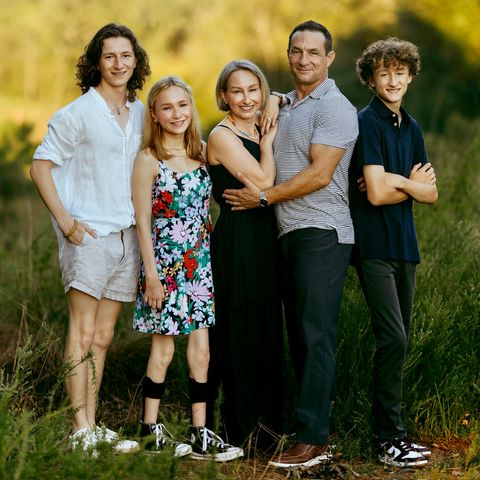
Our guest this week is Tom Sander of Charlotte, NC a territory account manager at Liquidia Corporation, a rare disease bio pharma company, and father of three including a daughter with Charcot-Marie-Tooth Syndrome, a rare form of Muscular Dystrophy.
Tom and his wife, Julie, have married for 22 years and are the proud parents of three children: Will (22), and twins: Jack (18) and Lily (18) who has Charcot-Marie-Tooth Syndrome, which is a type of Muscular Dystrophy that is a spectrum of nerve disorders.
From a very young age Lily has been speaking in public about her condition and how it’s affected her and others. She was selected this past year to be one of two national ambassadors for the Muscular Dystrophy Association.
We’ll hear all about the Sander family story on this episode of the SFN Dad To Dad Podcast.
Show Links –
Phone – (803) 493-7744
Email – tfsander2@gmail.com
LinkedIn – https://www.linkedin.com/in/thomas-sander-30977b12/
MDA Website – https://www.mda.org/press-releases/2025/mda-announces-2025-mda-national-ambassador-lily-sander
Charcot-Marie-Tooth Association – https://www.cmtausa.org/
Charcot-Marie-Tooth Research Foundation – https://cmtrf.org/
YouTube – 2025 Ambassador https://www.youtube.com/watch?v=stJElfj7uqg&t=11s
Instagram Video Burn Bootcamp Be Our Muscle – https://www.instagram.com/p/DIRIv74ODkt/
Transcript:
Tom Sander: I always get teary eyed when we, when we ski together because she skis in a sit ski. So it’s like a big bucket. It’s got a couple skis on, you’ve probably seen them. She’s got a person with tethers and she’s gotten very good at it. She’s got tethers so she’s in control. And on a powder day it’s very hard to keep up because she goes straight down like powders, like lizard flowing over her, she disappears. And you know, I’m a 54 year old, I try to stay in good shape, but you know, I can’t train for powder days, right. So it’s like I need to stop. She meets me at the bottom.
Tom Couch: That’s our guest this week, Tom Sander, a father of three, including Lily, 18, who has a very rare condition called Charcot Marie Tooth, a disease that affects the peripheral nerves of the body. Lily often speaks in public about her condition and how it’s affected her. And we’ll hear all about that through the words of her father, Tom. Now say hello to the founder of the Special Fathers Network and host of the Dad to Dad Podcast, David Hirsch.
David Hirsch: Hi, I’m David Hirsch, host of the Special Fathers Network Dad to Dad Podcast. One brief message. The Special Fathers Network Mastermind Group experience is the most comprehensive program the 21st Century Dads foundation offers. Dads raising children with special needs. Meet virtually on a weekly basis and form meaningful relationships while sharing weekly wins, discussing books and sharing heartfelt challenges. One of the highlights of the year is attending the in-person weekend retreat scheduled this year from September 5th through the 7th in Chicago. I invite you to attend the Special Fathers Network Mastermind group retreat. You’ll meet some extraordinary dads, exchange a lot of best practices and recharge your fatherhood battery for the journey ahead. It might just transform your life like it has done for so many others. For more information, please see the show notes or, simply go to 21stCenturyDads.org.
Tom Couch: Now let’s listen in to this conversation between Tom Sander and David Hirsch.
David Hirsch: I’m thrilled to be talking today with Tom Sander of Charlotte, North Carolina, a territory account manager for Liquidia Corporation, a rare disease biopharma company, and father of three, including a daughter with Charcot Marie Tooth, a form of, muscular dystrophy. Tom, thank you for taking the time to do a podcast interview for the Special Fathers Network.
Tom Sander: Absolutely. Thank you for the invite.
David Hirsch: You and your wife Julie have been married for 22 years and are the proud parents of three children, Will, 22, Jack, 18, and Lily, 18, who has Charcot-Marie-Tooth, which is a type of muscular dystrophy that’s a spectrum of nerve disorders. Let’s start with some background. Where did you grow up? Tell me something about your family.
Tom Sander: Yeah, well, thanks, Dave. And again, thrilled to be here and bring awareness to Charcot-Marie-Tooth disease. But I grew up in a small town located near Toledo. Small farming community, you know, went to. I mean our town was called Pemberville, Ohio. And it’s 2,500 people. So very, very small. My graduating class from Eastwood high school was 65.
David Hirsch: Okay, that gives me a sense of the scope of that. Yeah, I think our high school had 2800, so a little bit larger. But, anyway, I’m sort of curious to know, what was it like growing up in Pemberville?
Tom Sander: You know, it’s one of those small town stories where you can’t wait to leave. But as you reflect you’re like, wow, that was a pretty great upbringing. You know, everybody knew everybody very obviously small town, still had very strong relationships with some of my friends back there. Yeah, it was great. You know, everybody was, you know, you started driving a tractor or similar when you’re 12 or a car and just helping out. So we are a farming family. So both sides. It’s a German lineage. Sander on the one side, Klingler on the other. So two generations off of the farm. My dad was, you know, one generation off. He was the first one to go to college. But we still had those family farms. So like we, you know, one of the things I learned from my dad and growing up in that community is a very strong work ethic. You know, I still have memories of my paternal grandfather, of sitting in the combine with him, you know, him driving and just watching the rows and then, you know, mowing down the corn. And when I was old enough, you’re bailing hay for, for somebody. Somebody always needed help bailing the hay. So yeah, it’s really good upbringing and you know, football town. Right. So, you know, the big thing was if you’re a high, school football player. So I followed that path as well.
David Hirsch: Well, thanks for sharing. I’m sort of curious, what does your dad do for a living?
Tom Sander: Yeah, so he’s a civil engineer by trade and, he’s now retired, but he worked in that for 35-40 years. So he just retired recently. Very, very strong work ethic.
David Hirsch: And how would you describe your relationship with your dad?
Tom Sander: My dad, I’ve thought a lot about this over the years. And I mean good, loving father, but also if you think about that
00:05:00
Tom Sander: strong German lineage, quiet. Right? And so he’s darn near a math genius. And so he won, the state math contest when he was in high school. I’m a salesperson. So, like, we have very, very different personalities. So at times it could be a challenge to connect one, although we both have a genuine want to and need to. So one of the things that we’ve, done is fishing. Like fishing is a common interest. I just took my boys, my two boys, Jack and Will, up to Toledo. We did some walleye fishing with, with Grandpa Fred. And so that was a great time. We’re now going to make this a, an annual trip. We caught a bunch of walleye, then we went back to his house and had a walleye fish fry, which was pretty awesome. But like, we have lived in different towns. Like, you know, he’s in Toledo, I lived in, Chicago, and then in Denver, Colorado, now in Charlotte, North Carolina. So, you know, geographically it’s not always feasible to get together, but, certainly respect him. And you know, he taught me quite a bit growing up, but primarily like that strong work, work ethic. So, I mean, 8, 10, 12 hours on the farm, splitting wood or whatever we had to do.
David Hirsch: Yeah. Well, thanks for sharing. one of the things that I’ve really enjoyed is fishing myself. And we’ve had a father son fly fishing weekend for like 26-27 years. And I invite a bunch of other dads and their boys that are the same age as my boys and I haven’t missed a year. One of the boys has always been available and even as adults now they’re 35 and 29. They’re like, hey, we’re still doing that fly fishing for salmon weekend, aren’t we, dad?
Tom Sander: That’s amazing.
David Hirsch: I love to hear that you’re thinking about making that a family tradition.
Tom Sander: Yeah, we’re going to do it for sure. Because honestly, it’s been 10 years since the last time we did it, so way too long. We bring in, his brother, my uncle as well.
David Hirsch: That’s awesome.
Tom Sander: So, it’s great. Now where do you, where do you fly fish?
David Hirsch: The Pere Marquette river in Michigan. And they’re for salmon and the small ones are 8 and 10 pounds. The big ones are 30 plus pounds. And it’s certainly an advantage because we’re fly fishing. Advantage to the fish.
Tom Sander: Oh yeah, for sure.
David Hirsch: We land one out of eight, One out of ten. Hey, we’re thrilled.
Tom Sander: That’s what I’m thinking. Yeah, I, when I, when I, when I go fly fishing, they’re maybe a couple pounds, so yeah, that’s, that’s amazing you reel those. Are they steelhead or.
David Hirsch: They’re king salmon. Yeah, they, they’re coming in off the lake after four years and, you know, depending on whether they’re fresh or not, depends on the likelihood of landing them because once they’ve been in the river for a couple, three weeks, they start to wear down.
Tom Sander: Right.
David Hirsch: You know, this is the end of life for them as they’re spawning. And, it is so much fun. I just so, look forward to that every year. Anyway, this is fishing podcast, so we’re not going to, you know, go too deep there, but glad to hear that we have another something in common. And, you know, just one last question about your dad. If you had to say, hey, there was a important takeaway or two in addition to his good work ethic. Right. Something that you had already shared, what were some of the lessons learned?
Tom Sander: It’s very quiet, right? He’s a, he’s a quiet person. Everyone describes that. Except if you’re talking about his work, then he’s, he’s very open, and I, guess that can be that way as well. But, he led by example. I mean, he led by example. He expected things a certain way. He made me want to be successful and work as hard as I could in order to do that. He also stressed, you know, education and helped me to get through math class. And again, like, we were very different. Math genius versus salesperson and, marketing guy. So those are some tough hours at the kitchen table trying to learn algebra, I have to say. But I did get it finally. So. And he was, you know, he was very interested in sports and like, he didn’t play sports, he didn’t hunt. But, you know, he made sure that I had, everything I needed for sports. He did, you know, attend my, my games when I played football or soccer. And, when I wanted to learn hunting, you know, I got that, nod from my maternal grandmother, took me to the hunting class and sat through it, although he had no interest in. I think I also love sports. Like, he would love to sit and watch sports and have a beer. So, I mean, that’s something I would like to do with my boys as well.
David Hirsch: Well, hopefully not at 18 that you’re having beers with them, but, well.
Tom Sander: Yeah, in the future. In the future someday. We’ll have a beer in the future with my. I look forward to it.
David Hirsch: Okay. I think what I heard you say is that, he led by example.
Tom Sander: Yeah.
David Hirsch: And you know, what comes to mind is actions speak louder than words. Right. You don’t have to actually, you know, be telling people what to do, but you’re just a good role model.
Tom Sander: True. That’s very good.
David Hirsch: And I think, what I also heard you say is, but you know, he had high expectations maybe for himself and for you and your sister for that matter. And that hopefully, you know, challenges you and you know, whether it’s an education or sports or beyond. Right. To be the best person you can be. So thanks for sharing.
Tom Sander: Thank you for summarizing. That’s perfect.
David Hirsch: Anybody
00:10:00
David Hirsch: else that played an important role when you were a young guy or a young adult for that matter.
Tom Sander: So my parents got divorced when I was a senior in high school. Both ended up remarrying and finding very happy marriages. And you know, it’s interesting, we never heard them fight, but it was a lot of silence, which I think may be worse because we didn’t really know what was happening as kids. But yeah. So my mom married, Bob Johnson. It was interesting because he liked to do all the things that I like to do. He was. Loved fishing, he loved hunting and you know, his sons didn’t like to do any of that. So that was some of the stuff that we did together. We went fishing, he liked boats, he got a bow. We did some, some water skiing and, and things. So he was a salesperson as well. So you’re seeing some just natural commonality there. Right. So gift. Kind of interesting story. He was actually in the army. He spent a lot of time during Vietnam in Spanish speaking areas. And so come to find out when we found some disguises in the in the barn one time, he was actually in government, intelligence. And he would never, I mean till the day he died, which unfortunately passed away three years ago, he would not speak about what he did, during the Vietnam War and, and such Bay of Pigs. But he was in very fluent in Spanish and had disguises. So we can only imagine.
David Hirsch: Yeah, that’s pretty wild. Thanks for sharing. And you know, sometimes other men beyond our biological dads can play an important role in our lives. So thanks for sharing about Bob.
Tom Sander: Sure.
David Hirsch: My recollection was that, you took a, BS in exercise physiology from Miami University and you, were involved with Sigma Nu fraternity. And I’m wondering, when you reflect on your college experience, what comes to mind?
Tom Sander: Well, David, I wish that I had been much more serious of a student, to be quite honest. And I wish that my ADD had, been diagnosed and treated back then. I would have made life a lot simpler. But really for that reason, I had to study something I was interested in and passionate about. Not necessarily what would make a lot of money. So I had always been interested in physical education. I started, weightlifting and then bodybuilding, powerlifting at a young age. And so I was like, oh, fascinating what the human body could do, what it could do under stress or to, you know, to increase human performance. So that’s what I studied. I really enjoyed it. But frankly, I wasn’t prepared to get into the job market either. And we’ll talk about that. The the plan was physical therapy school, which, I mean, quite honest, I wasn’t, I didn’t have the grades. I, I didn’t have the grades to go to PT school. You need like a 3, 8 at that time. But then also while I was, you know, kind of planning the you know, preparing for that, the, the clinical part of getting prepared for that and spending time in the PT, it just again wasn’t that interesting. Like being in an office all day was kind of mind numbing for me. So quickly determined there’s a couple of things that didn’t fit there. And the other thing I could do was to go into sales. And so I had, sold many things to get through college. Of course I had help from my parents, I had loans. But I also sold vacuum cleaners, suntan lotions, sunglasses, even timeshares at one point as a young guy. So the option was, well, with a science background you could go into, not easily, but if you got a break, you could get into pharmaceutical sales. You know, at that time it was, wasn’t altruistic at all. But yeah, you can make 50 grand and then get a car and wear a suit every day. That sounded pretty good at the time. So that’s the path that I went there. Had a very strong, good experience, mainly good in my fraternity, Sigma Nu. You know, what I liked about the Sigma Nu house was that it was very diverse, right? So I was part of the group that reorganized it or started the, the chapter over again. And so we got to kind of, you know, determine what kind of fraternity we wanted to have. And so we had some smart guys, we had, you know, some doctors, good friends that went on to be physicians, paper scientists, and then you Know, I can’t think of anybody that went to that fraternity which, which hasn’t done well in life. But honestly, at the time, you would not have guessed. I mean, it was literally Animal House, the movie every weekend and sometimes during the week. Because I was into bodybuilding at the time, I really didn’t partake. So, it was kind of interesting. go back. I wish I maybe would have had more fun in the fraternity. But it was, it was great. So very good friends with, with a lot of guys from that time.
David Hirsch: Yeah. Well, thanks for sharing. My understand is that you work for Liquidia Corporation, which focuses on rare disease dedicated to developing best in class therapies for rare cardiopulmonary diseases.
Tom Sander: Yep.
David Hirsch: So how long have you been there? What type of responsibility do you, have? What does the company do?
Tom Sander: Yeah, so Liquidia is a startup biotech.
00:15:00
Tom Sander: They start up because we just launched our first drug for pulmonary arterial hypertension, which is a rare disease which affects the heart and lungs. But it’s not a new company actually. Started in 2002, came out of UNC, Chapel Hill, the technology. And so it’s been a very long road for the company. And, we just said, launched our first product. We’re in our fourth week. The launch is going exceedingly well. And, it’s an opportunity to really help patients that have a very high mortality rate. So pulmonary arterial hypertension is one indication. We have a second indication for pulmonary hypertension with interstitial lung disease. There has never been a treatment for those patients with interstitial lung disease and pH. So it’s a great opportunity to help patients really in need. They have a high mortality rate. Untreated patients with PAH die within two and a half years.
David Hirsch: Oh, geez.
Tom Sander: Worse than many cancers. It affects the right side of the heart. So if you think about the pulmonary artery, which connects the right side of the heart to the lungs, that gets clogged up like a hose would. And so the pressures in the lungs get very high and patients actually fill up with fluid and, edema all over their body. They can’t breathe, they can’t walk, and they all end up on a perineal infusion or IV at some point. And they need to be treated by experts like Duke UNC, hopefully sooner than later. So part of my role is it is a sales role. I don’t really consider it sales. I consult with physicians, most physicians, because it’s so rare. PAH is 25 per million. Just to put a put a number on it. Extremely rare disease. Ph, ILD WHO group 3 is less, rare, but still very rare. There’s maybe 100,000 patients, in the US diagnosed per year with that. So part of my role, which I love, is consulting with physicians, helping them to know what patients to scan, and then hopefully, start treatment and then refer to larger centers where they’ll get expert care with doctors who just specialize in PAH.
David Hirsch: Well, thanks for the brief overview. Very enlightening. Thank you. I’m sort of curious to know, how did you and Julie meet?
Tom Sander: Well, David, that’s an interesting story. We met swing dancing.
David Hirsch: Okay.
Tom Sander: At the time, I lived in Chicago. This was, I guess in the 2000s. I think you. Were you there at that point?
David Hirsch: When I’ve been born and raised, I barely left the state of Illinois, U of I. Northwestern, other than some vacation, business travel, all 64 years.
Tom Sander: Okay. So at a point in the late 99, 2000s, swing dancing became kind of a hip hop thing to do for young kids and, people, you know, be very frank. I did to meet girls. And, some of my buddies were single, living in, Wrigleyville and Lincoln park in Chicago. And hey, why don’t we give this a try? So it’s kind of cool. You dressed up in suits and drank chocolate martinis, long and short of it. I was in Columbus, Ohio, visiting, some of my fraternity brothers. And we’re, at an outside patio and I see this girl walking across the way and I’m like, oh, man, that’s, I’d like to meet her. But, you know, didn’t really have the nerve. Right. She kind of sat back, had a beer. Then at some point, she was out there dancing with another gentleman and they, started swing dancing. Well, here’s my opportunity. So I ended up asking if I could cut in. She agreed. And we danced all night and we stayed in touch. Ended up going back and forth on weekends and then at the time, quitting my job, which is a very good job. I moved to Columbus, Ohio from Chicago and, tried to figure out what to do next, but I knew I wanted to be around her. And now we’ve been married for, you said, 23 years, and we have three children.
David Hirsch: That’s wild. Thanks. You’re the only person I know that had swing dancing as what brought them together. So it’s probably not likely to happen a lot more going forward with all these people dating online and doing things like that. So.
Tom Sander: Yeah.
David Hirsch: Well, let’s talk about special needs, first on a personal level and then perhaps beyond. And prior to Lily’s diagnosis, did you or Julie have any connection to the world of disability or special needs?
Tom Sander: I didn’t personally know. I didn’t even know anyone that had special needs. Well, I mean, of course, in school, you see the kids that, you know, ride a different bus and need different schooling and stuff, but no. No personal connection. Julie was, She has a master’s in social work. She’s a licensed counselor. So she. In her work. She did have some work with. With kids in need, but more like mental and not. Or, psychological. Not. Not physical. So she had more experience, but both. You know, honestly, we didn’t really have a lot of.
David Hirsch: So what is Lily’s diagnosis and how did it come about?
Tom Sander: She has a
00:20:00
Tom Sander: bad disease with a funny name. So it’s actually named for the three French scientists who discovered it back in the 1800s. Dr. Charcot, Dr. Marie, and Dr. Tooth. So it’s Charcot-Marie-Tooth. It’s a disease of the peripheral nerve. So it affects patients below their elbow and below their knees. If you picture a bowling pin, flip it upside down. That’s what a person’s leg looks like. With Charcot-Marie-Tooth, the foot becomes very high, arched, and almost like you’re walking your tiptoes. And then they turn in, and then the hands will also turn in. And so my daughter, unfortunately, she had a very severe, case at a young age. So she has a twin brother. And we did notice them developing differently with their motor skills. And so I was always careful, even walking them to nursery school to have my hand on hers in case she would trip or fall. But we just thought, well, he’s a boy. You know, it’s different. Maybe, we didn’t really know anything was wrong. But, at the age of five or six, her foot began turning in dramatically, which started with, like, kind of like a pigeon toe. quickly became, like, very deformed. Where literally, if you stood on your foot and rolled your ankle as far over as you could, that was. Became her normal. And, you know, similar to most rare diseases, it’s hard to get a diagnosis. You know, I think about in my professional career, it takes sometimes years to get a diagnosis. You get multiple physicians and then specialists, and then, you know, here we are, two years later, we finally get the diagnosis. Like, one. There’s very few pediatric neurologists, very few study or experts in Charcot-Marie-Tooth. And so we ended up having to go to, Iowa to see, like, one of the national experts in Charcot-Marie-Tooth disease. And that’s where we finally got the disease. But it was a scary time, David, because as we were trying to figure this out for a year and a half, there’s many diseases with high mortality that it could have been. And so when we finally got the diagnosis, of course we’d never heard of this. In order to get the diagnosis, it has, to be a genetic test. And so we were a little bit relieved when we got the diagnosis. Not happy that she had this rare disease without a treatment. By the way, there’s zero treatments for this disease except bracing and surgery. But we’re happy that one, it didn’t affect her mortality or her mind. Then the work really starts. You know, it’s, What do you do at that point? You’re told your daughter has a. Has a disease which is going to make her life very, very difficult. There’s no treatment. I mean, you’re just give a diagnosis, you’re sent home to figure it out. Right. You know, once, I mean, there’s, I’d say probably a depression. Saddened Lee, like, went into our own, like, proverbial closets and cried, you know, didn’t really know what to do. And, so we started reaching out to find if there’s any other parents or organizations. And we were very blessed to find some organizations to help us through and help us find next steps. So the first organization that we found was the mda Muscular Dystrophy Association. Now, that’s an umbrella term, and they treat hundreds of diseases. But one of the benefits of NDA is they have a local clinic here in Charlotte. It’s a multidisciplinary clinic. So you’ll go to that clinic, you’ll meet with the physiologist, the neurologist, the nutrition person, the genetic counselor. And so we go there every six months to 12 months, and we got a lot of information. but again, like, they work with hundreds of diseases. And so from the mda, which I do want to put a plug in, like, they have meant so much to us. And my daughter is now the national ambassador. So, you know, she went to their kids camp when she was a kid. And, honestly, that was scary for the parents. We’re like, well, you know, we put it off for years. They kept off. We’d go to the clinic, they’d offer this, oh, you’re. You know, Lily should really go to our camp. You know, and again, they. It’s not CMT camp. It’s all kinds of childhood diseases. So we put it off because we were scared. We’re like, wow, you know, she’s not that bad off. Like, I don’t want her to see kids in wheelchairs. I don’t want. Right. And so in retrospect, that was a disservice because once she went, if you’ve done research, you may have even heard her speak about her time at camp because she helps them raise money for camp and research. Now, she was just in Chicago and attended, a Citgo Oil, company event. They raised $1.2 million last week for the MDA. So just an amazing event there in Chicago. Once she went to camp, she’s like, she found her people, right? She’s like, oh. Because she always felt different, right? She’s got this disease and she’s walking a little differently. Her hands
00:25:00
Tom Sander: are a little different. And then she found people that, oh, they’re in wheelchairs and they’re doing okay. And, she felt seen for the first time. And so again, retrospect, as parents, we did that all wrong. But as we help parents now with newly diagnosed children, that’s the first thing we offer. Like, go to camp. Go to MDA camp. And then, again, since they work with so many diseases, we started working with organizations such as the CMTA, so Charcot-Marie-Tooth association, and they just obviously work on CMT and they have kids camp as well. So then she started going to the CMTA camp and that’s where she really felt seen. Those are kids that have her same disease. I joined the board of the CMTRF, Charcot-Marie-Tooth Research Foundation. So I’m on their board currently. And they only do research. So with the other CMTA does research and, camp and patient groups, CMTRF, all we do is raise money and invest in research. It’s called venture philanthropy. So we sign contracts with early stage developers, working with a lot of scientists, and clinicians. So OSU is doing gene therapy. I work personally a lot with Vanderbilt, work with scientists in France and, in Italy, and we help fund them at an early stage. And then, if a drug does get to market, then we recoup some of that investment.
David Hirsch: Yeah. Well, thanks for the flyby. I remember when we were introduced a video of, Lily walking right with her. You called it sort of pigeon toed. It looked more extreme than pigeon toed.
Tom Sander: No. Yeah. It starts as pigeon toed. And it’s extremely.
David Hirsch: Yeah, yeah. And I was like, wow, like, barely.
Tom Sander: Able to walk without braces.
David Hirsch: Yeah, that seemed like would be frightening. Was there some meaningful advice that you got early on that sort of like helped put that in perspective? I know you said you were relieved to hear that it wasn’t a life threatening disease. Right. Like some of the other things that it might have been before the diagnosis was made.
Tom Sander: Yeah.
David Hirsch: But was there any advice that you got once the diagnosis was made that sort of like, allowed you to like, put this in perspective?
Tom Sander: Well, one thing that comes to mind when you ask that question is, in order to get diagnosed, we went to Iowa and we met with Dr. Mike Shy. And when we got the diagnosis, he said, he said, you know what, Life is going to be very inconvenient for Lily. He said, but if, there’s an upside, his CMT children are very smart. And I said, well, is that like part of the disease or why do you say that? Well, no, it’s not part of the disease, but they don’t have a normal childhood. There’s not a lot of distraction. So they’re not playing sports. And they probably don’t have a lot of distractions of regular children of getting into this or that. But that’s held true. And that really, I don’t know why that sticks in my head, but that made a difference. And it’s actually very prophetic because it’s come true. She’s extremely smart. She’s, 10th out of 500 in her class. You mentioned she’s a very strong advocate for others with rare disease.
Tom Couch: We’ll be back with more of the conversation on the Special Fathers Network Dad to Dad Podcast in just a few moments. But first, this quick message. Please help 21st Century Dads gather research on families raising children with special needs by having them complete the Special Fathers Network early Intervention Parents survey. A link to the survey can be found in the show notes. As a token of our appreciation, each person, mom or dad, who completes the survey will receive a great dad coin. Thank you. Now back to the conversation.
David Hirsch: Yeah, well, not to focus on the negative, but would have been the biggest challenges either for her or for you as a family.
Tom Sander: Well, there’s, there’s no guidebook or playbook for raising a child with rare disease. You know, you see, the physical things are obvious, but then also, you know, mental, challenges such as anxiety or depression. You know, because, you know, I think we all mourn. You know, when you have a kid with, with rare disease, there’s, I think, a constant mourning. Right. It’s not like somebody dies, but like you mourn all the things that maybe you were going to do as a family. What type of family were you? We’re going to be active. We were going to be hiking. You know, I’ll do these bike trips. And, you know, you can’t do that. You mourn things that, she would have liked to do. She started in gymnastics, but, you know, that had to end. And then the. Also the. The unseen was the fatigue. You know, again, there’s no playbook. And, you know, gosh, admitting one of my failings, but I think a lot of parents struggle this. You know, we question, you know, when we would assign chores to all
00:30:00
Tom Sander: the kids. You know, maybe she wouldn’t do hers. I’m like, I mean, what’s happening here? Do I come down hard on her for not emptying the dishwasher? You know, she just had this. Fatigue is a very real part of that disease. And she can be active for time, and then she. She’s got to sleep. And so that was one of the things that we had to learn the most about is when to listen to her. So, you know, they say, you try to be fair with your kids, but fair isn’t always equal. That’s 100% the case here. Like, you had to figure out what was fair for the child with a disability and trying to explain that to her brothers. Also, Lily doesn’t have to do X, Y or Z, and I do, and they didn’t treat her any differently, you know, so, we tried not to as well. But there are things that are different, so you have to treat differently.
David Hirsch: Yeah. Well, thanks for your transparency and being so, frank about the challenges. Like you said, there’s no playbook.
Tom Sander: Right.
David Hirsch: For something like this.
Tom Sander: Yeah.
David Hirsch: Every situation is a little bit different. There’s the physical aspects, which you can see, but the unseen things, which is what I heard you saying, like the anxiety of the depression, you know, the fatigue. Those are sort of the big unknowns. And, you know, you did make reference to the fact that, you know, you don’t know if this is just a lazy teenager syndrome or, you know, if it’s something to do with the disease and, you know, want to be equitable. That’s what I heard you saying. Right. You want to treat your kids, you know, similarly, because you don’t want to, give any one of your kids a pass. Right. Because by coddling them or making it easy, you know, at least my observation is typical or atypical kids, that you handicap them. Right. You’re not Preparing them for, you know, maybe what, what life is going to be like. So I really appreciate your thoughtfulness to.
Tom Sander: Adding to that, David, particularly with my upbringing. We talked about that strong German work ethic. Right. And so they just completely go against my upbringing of not making your, your kid, you know, partake and do their part. So it was, that was really hard to figure that out.
David Hirsch: Oh, yeah, I get it. So what impact does Lily’s situation had on her siblings, your marriage, or your extended family for that matter?
Tom Sander: I mean, on the marriage, you know, initially, I mean, there’s. Course there’s been strain, but also, you know, particularly when it’s first diagnosed because we didn’t know what to do. And I think in retrospect we should have had counseling as a family at that point. But, you know, we just tried to figure it out. I think overall it has brought us closer together. And I’d say I definitely have a closer relationship with my daughter because of this. Because, you know, I followed her lead and gotten involved in advocacy as well with her siblings. I mean, they don’t treat her any differently. So I mean, for example, you know, her twin would be the first one to push her down a hill, but also would be helping, her onto the bus or carrying her stuff for her, but didn’t want anybody to know. Right. But also, I mean, it’s, it’s a very good question. I don’t know, we dealt too deep into this with them, but, you know, they must have mourned too, that they haven’t been able to do things. You know, it does change family vacations. It changes where you go, what you do. Now we try not to. When we go skiing, this is, I’ll tell you, David, the best days of my year is skiing with my daughter. Okay. We do the adaptive program at Park City now we go to Big sky. And it’s, I’m telling you, I always get teary eyed when we, when we ski together because she skis in a sit ski, so it’s like a big bucket. It’s got a couple skis on it. You’ve probably seen them. She’s got a person with tethers and she’s gotten very good at it. She’s got tether, so she’s in control. And on a powder day, it’s very hard to keep up because she goes straight down. Like powder’s like lizard flowing over her. She disappears. And you know, I’m 54 year old, I stay and try to stay in good shape, but, you know, I can’t train for powder days. Right. So it’s like, I need to stop. She meets me at the bottom. But, yeah, I don’t know. It’s, yeah, shout out to the adaptive programs at Park City and Big Sky, Montana. It’s so great. And you always meet the best people there.
David Hirsch: Oh, yeah. Well, thanks for sharing. I really appreciate that. You made reference earlier that, Lily was selected as the one of the, if not the National Muscular Dystrophy association ambassador starting in January of 2025. How did that come about? What’s the backstory?
Tom Sander: So, starting at MDA camp. See, you know, she would get interviewed. And so at the age of six, she started speaking at, fundraising events. And if you’ve seen her, I think you have, like, she is a incredible professional speaker. Whenever
00:35:00
Tom Sander: she speaks, people come up. The Citco executives. And I wasn’t there, but reportedly, they said, you know what? I’ve got a whole team of college educated professionals. They don’t speak like you, Lily. I remember, we did a fundraiser here with the NDA. It’s called Muscle Team. They did it for years. And you get paired with an athlete, like, professional athlete. So we’re paired with, a NFL kicker. I won’t name the name. I don’t know if he’ll like to hear the story or not, but, very good. He’d probably be a Hall of Fame kicker for the NFL. He’s still in the league, but we, were paired with him that night. And, after Lily spoke, he’s like, I don’t want to go up and speak after her. I said, I said, wait, are you kidding? Like, you’re. He goes, yeah, man. I said, well, like, being in pressure situations, like, kind of your job, I, I would think that that would be. He’s like, no, no, I hate public speaking. You know, I’d rather kick a last second field goal in the NFL to win the super bowl or, whatever. But, so that’s kind of the example she’s. And we used to, like, we used to practice, you know, like, you know, being in, sales and marketing, that’s, more my realm. And so, like, she was asked to do these videos and do give these talks, and like, we would practice in her in a room for hours. It’s funny to go back and look at the different takes, you know, but, you know, she, she’s gotten very good at it.
Lily Sander: I didn’t really know any different. I was young. I knew that I couldn’t play like my friends, and that I would have to have an insane bilateral reconstructive surgery of my feet. I was not happy about missing kindergarten, but after that, I was able to recover through a lot of physical therapy, and I became a gymnast. I was the worst on, the team, but I truly believe that if I did not have cmt, I would be, like, a pro athlete. I just always look at it, and I’m like, I could do that. So, eventually, I did have to quit with the progression of the disease, but I’ve learned to how. How to live with it and how to live well with it, as I’m always talking about facing the darkness while looking at the positive sides of it. And a big part of that has been advocacy and trying to be a real part of the solution so that I can just have a more positive outlook on CMT.
David Hirsch: Yeah, well, what I hear you saying, from a very early age, she was very comfortable telling her story and just being authentic and that, you know, that’s just a skill that she’s developed, like a muscle almost right from a young age.
Tom Sander: Absolutely, absolutely. And they say, well, how could she do that at 18? Now she’s turned 18. Well, I’m like, she’s been speaking for, like, 12 years publicly. Like, she. They, just had her at the DECA conference, so she was on the big stage speaking with 25,000 kids in the DECA organization. And so that was a big deal. That happened about a month ago.
David Hirsch: Yeah. Well, you made reference to the Citco event in Chicago recently, the DECA conference. Any other events that, Lily’s had a chance to participate in or speak at?
Tom Sander: Yeah, there’s. I mean, there’s. There’s numerous. And I don’t want to forget anyone, honestly, but I will tell you, a local business called Burn Boot Camp. I think they do have locations in Chicago. So Burn Boot Camp, it was founded by Devin and Morgan Klein. Great story. they, you know, Devin started training moms in a parking lot of a church doing exercise classes. And then they grew this into a business, which is, believe me, it could be as high as 500 locations now. And so we do an event with Burn Boot Camp every year where each location raises money. They have their members go out and raise money, and, you know, the goal is always to get to $1 million. And they do this April every year. And Lily’s been part of that. And so she goes on Devin’s podcast and speaks about the MDA, and, you know, how much it, you know, Burn Boot Camp Members can benefit the MDA. And so, you know, Devin and, Morgan, they just have just a big, big heart for kids with special needs. And so they’ve been really important.
David Hirsch: I remember seeing an Instagram video. I think it was entitled the Burn Boot Camp. Be our muscle.
Tom Sander: Yeah. Yeah, absolutely.
David Hirsch: Yeah. She did a very, really did a very effective job.
Tom Sander: Thank you.
David Hirsch: So I’m sort of curious to know what impact has all this sort of, visibility with MDA had on Lily’s, life?
Tom Sander: I’ll tell you, Dave, she loves it. It’s not easy to travel. I mean, it’s. I mentioned fatigue. Like, she wears out. Like, getting through the airports and to hotels and in and out of cabs and these things. It’s. It’s a challenge. But it’s when I see her happiest. Like, she left family vacation in Costa Rica to do the DECA conference, so she flew home early with her mom. I’m like, lily, I mean, are you sure you want to leave vacation early? And she’s like, dad, like, she’s like, try not to get choked up. She’s like, think about the opportunity. This is her speaking
00:40:00
Tom Sander: like that. Think about the opportunity I have to perhaps impact 25. Sorry. Little choked up. but her, you know, really an altruistic, she’s like that. I have the opportunity to shape the viewpoint of 25,000 high school kids and how they view kids with disabilities.
David Hirsch: That’s really powerful.
Tom Sander: You know, how, as a dad, how can you argue with that? Right? So, yeah, so they left Costa Rica early for that, and, she nailed it. I mean, she’s at the point where she doesn’t practice. I mean, she just. She has what. She just does her thing, you know?
David Hirsch: So the twins are 18.
Tom Sander: Yeah.
David Hirsch: Do they have college ambitions?
Tom Sander: Yeah. Oh, absolutely. So I think Jack’s gonna study computer science or something similar. He’s looking at, USC or Clemson. You know, Lily prefers a much smaller school, and so she has a few favorites. She’s gonna be applying to Davidson, just north of Charlotte, Wake Forest, maybe USC Honors College. So, like I said, she’s top ten in her class. And, you know, with all the work that she’s done, I would hope that someone would consider her for a scholarship as well. But, you know, as we look at schools, we really need to be, you know, it’s really important, the accessibility in the school. I mean, she’s probably drive a motorized wheelchair around, right? So it has to be accessible. And not all colleges are created equal in that standpoint. So that’s going to be an important part, and that’s why she’s leaning more toward a smaller school. And she’d like to be an attorney. Right. So, like I said, she advocates for, kids with disabilities in the MDA. She’s fighting for kids with all types of disabilities at school. She, Well, she formed a nonprofit. It’s called Period, and it’s for period poverty. Not something I ever thought of. Be quite honest, David, but, you know, for young girls who don’t have money, getting supplies for menstruation can be a real challenge. And so she started a nonprofit where they were, her and her donations. And, she founded with. With one or two friends. They would stock certain bathrooms in the. In the high school. And she actually went to the school board and convinced, the school board to spend $40,000 and put tampon dispensers in all the schools in the middle school and in the. In the high school. So she kind of runs that on the side. Yeah. So that’s, you know, very strong sense of helping others.
David Hirsch: Yeah. I love it. there’s a pattern.
Tom Sander: Right.
David Hirsch: It wasn’t just, like, one or two things, but, this is just the person that she’s become.
Tom Sander: Yeah.
David Hirsch: What’s it like to have a celebrity daughter?
Tom Sander: It could be a little bit of a challenge. You know, I. I mean, it’s like I said, we do everything we can to support it, Obviously. She has worked, with many organizations. CMTA. She speaks, with the CMTRF generally at their general conference every year. She was an ambassador, both of them, before the MDA. Yeah, she’s busy. I mean, try to support it as. As much as we can. And we. She doesn’t say no to anything, and we do our very best not to say no to anything as well. So we travel and, do whatever we can to support it.
David Hirsch: Yeah. I love your hearts. Thank you. I’m, thinking about advice now, and I’m wondering what type of advice you can share with parents, specifically dads, who find themselves in that situation like you and Julie did, you know, not, sort of expecting anything different than, you know, bam.
Tom Sander: Yeah. So I’m gonna work in my cycling reference here, Davey, since I know that we both share the love for cycling. I think the. The biggest piece, of advice and, you know, hesitant to give anyone advice because, you know, we’ve not really figured everything out yet either. But what’s been important to us is to find other people to help us. And that’s one thing that we enjoy, we’re helping another family right now. Their daughter is very, well, the exact same gene deletion as Lily. And they were just diagnosed as daughter six. So like, what makes us really feel good is to help other families as well. So I think one getting involved and learning from others, right? When you’re cycling, you know, you can either go fast, alone, quote the African proverb of, if you want to go fast, go alone, and you want to go far, go with a group. And that’s never more demonstrated than in cycling. Right? So in cycling you can only be at the front of the pack for so long, then you gotta tuck back into the group and catch your breath and let somebody else lead. And sometimes you’re just, you know, there’s days like last Saturday when it was, it was hard from like mile 10. We ended up going 50 at 20 mile per hour pace. And my mindset quit the whole time. But I had to rely on the people with me to follow their wheel and let them pull when I couldn’t. And so I think that’s probably the biggest part of advice
00:45:00
Tom Sander: I would give to somebody and then also get involved. Right after Julie and I made our way out of our dark closets. You know, the thing that helped us and still helps us today is to get involved, to do something. That’s where I’ve decided to start my own nonprofit. And so, you know, with the that was recently formed. So all these organizations have helped, they still help. But you know, Lily has a rare form of a rare disease. Right. So we formed a non profit to focus on patients with her particular gene variation. So her type is called 1E. It’s maybe 1% of the patients, most patients with CMT have 1A. So if you think about this from a business standpoint, all the research dollars are going into 1A and very few are going into 1E. So we started a 1E organization. It’s official 501C3 that just formed. And our goal is to one, find patients like Lily with 1E and two, to be catalysts for scientists to help them be aware of 1e, help them to get excited about 1e and study it. And so last year we had this crazy idea that we would invite the world’s top scientists to Vanderbilt and have them share their experience with 1e and then talk about ideas on how to proceed and you know, what research ideas they had in order to get a drug for one E and believe, it or not, they all came. So we had 20 of the world’s top neurologists and clinicians. Dr. Shy mentioned. There’s again 25 other people I want to leave out, but the, the primary people that helped put on that meeting. Bruce Carter, he’s a CMT1E expert. He is a researcher at Vanderbilt. He has his own lab. His partner is Chuck Sanders, again has his own lab. And, they helped us put this conference on. And so for a day and a half, we had all these scientists talking about 1e, their experience, and then brainstorming ideas on what to do. And so there was real research proposals that came out of that, and now some of that research is starting. One of those is to develop a mouse using CRISPR with CMT1E. We’re hoping for the NIH grant to come through, but we’re working with a company called Jax Laboratories. Jax. They’re up in Maine. It’s run by Kat Lutz, L, U, T, Z. Kathryn Lutz. But it’s kind of a joke. She likes to say. Yes, her name’s Kat. She runs a mouse house. Right. And, we’re hoping that they, we can find a grant to create this humanized mouse. So they actually take Lily’s genes, they use CRISPR, and they put it into a mouse. Now the great thing, which I love about Jack’s Laboratories is if you think about computers, there’s, you know, open source code. Right. Once the code is developed, any developer can utilize that code. Well, that’s, that’s their business model for genetic therapy. That’s their business model for their mice. So once this mouse is developed, all these scientists that we now are working with, they can use that. And so currently we’re planning the first annual or the second conference, and that’s, that’s going to be in Boston, September 28th. And so again, we’ve got 24 RSVPs. We’re, signing contracts for hotels. And, you know, that’s scary because, you know, we’re asking for funding too, from different organizations and friends and family. Last year cost 30,000. We’re going to try to keep it to 30,000 again. But at the end of the day, even if the patients have to come out of pocket for this, it’s worth it because if we don’t do it, no one will. And so that’s kind of what we’re faced with.
David Hirsch: I love it. Your advice to, dads, which is, find others, don’t do it on your own, and then get involved. And, you’ve taken Getting involved and, put it on steroids with the formation of this, Not For Profit. What’s the actual name of the not for profit? The 1E not for profit.
Tom Sander: Yeah. So it’s, Sharka Marie Tooth, 1E Research Group.
David Hirsch: Research group. Okay. I might get note of that.
Tom Sander: Yeah. And I, listened to your podcast with Amicus Therapeutics. Remember?
David Hirsch: Oh, yeah. John Crowley.
Tom Sander: Yeah.
David Hirsch: He’s a rock star.
Tom Sander: Yeah. You know, so anticipation of this, you know, I listened to the podcast with John Crowley. I remember watching his movie. The movie about his journey with his kids and finding a cure for. Not a cure for a treatment for, is it Pompe disease? Yeah, it is Pompeii with Harrison Ford and Brendan Fraser. I remember watching eight years ago and not meaning that much. It was kind of an interesting story. Sure. But then I just rewatched it a few weeks ago, and just like, what an amazing story that he actually went through this whole process, founded Amicus Therapeutics. They do research and find medications for rare diseases. Now, I wish I had that story,
00:50:00
David, but I don’t. We’re at the very, very beginning, and again, hoping, you know, tucking behind the peloton, you know, I hope to be able to connect with John and other people like that in order to kind of help us along the way.
David Hirsch: Yeah. Well, from your lips to God’s ears. It’ll happen. It’s just a matter of time.
Tom Sander: Yeah.
David Hirsch: And thank you for taking the initiative and putting yourself out there.
Tom Sander: Right. Yeah.
David Hirsch: It’s easy to talk about doing things. The, actually difficult part is actually following through.
Tom Sander: Yeah.
David Hirsch: And because it’s not. It’s not easy.
Tom Sander: Right.
David Hirsch: There’s money involved, there’s logistics. And you’re still balancing, you know, work and family.
Tom Sander: Right.
David Hirsch: With your day job, with what you got going on with your other kids.
Tom Sander: Yeah. I do want to mention, though, I’m not doing it in a vacuum, David. So, there’s two other patients with CMT1E that I work closely with. Ah. One is Eloise Schafly. She’s in St. Louis. And you may know that Schafly name from, American history, political history. We’ll leave it at that. Her grandmother or aunt was very well known in the IRA movement. And, Alex Alexander Hoya, he’s the president of CMT France. And so the three of us have formed this one E group and put on this, our conference, because, again, it’s. You can’t do this in a vacuum. So they’re my partners. I want to make sure I Mention them.
David Hirsch: Yeah, thanks for mentioning that as well. Is there anything else you’d like to say before we wrap up?
Tom Sander: Well, you know, I just thank you for the opportunity to be on the podcast. You know, it’s we’re just, you know, not a lot of people know about this disease. You know, it’s it’s bad disease with a funny name and it’s ironically, it’s the most common of rare diseases. It’s 1 in 2500. So unlike Pompe disease, unlike Duchenne’s and SMA diseases that these organizations spend a lot of money and research on, there’s not a high mortality. So it’s one of these diseases. If you have like CMT1A, you know, you could live your whole life and really not be that affected. Okay. So it could just be a mere inconvenience. we’ve met families where they were never diagnosed, but they were just always known. They weren’t. They were the family not good at sports. They were just kind of clumsy. Well, come to find out they have this disease and it hasn’t really been life changing, life altering in some ways. They didn’t play sports, but they’re still doing everything that they need to. It’s not really that challenged physically. So I appreciate the opportunity to bring awareness, to this disease that not a lot of people know about. Again, if, excited actually to know about the Special Father’s Network is, you know, again, it’s you do feel alone as a dad trying to do these things and support your children and you know, help push research forward. And there’s others that are already doing this or could be part of a support network. very much, would like to check that out.
David Hirsch: Well, we’re thrilled to have you as mentor father as part of the Special Fathers Network. And let’s give a special shout out to our, our mutual friend and cycling enthusiast Steve Whalen for helping connect us.
Tom Sander: Absolutely. Steve, thank you so much. I appreciate you connecting me with David.
David Hirsch: If somebody wants to learn more about Liquidia Corporation, your day job, CMTA, MDA about this new organization that you’ve founded that’s focused on one E or to contact you. What’s the best way to do so?
Tom Sander: Well, you could contact me through email or cell phone. It’s tfsander2@gmail.com and my phone number is 803-493-7744. Happy to connect with anybody who wants to discuss these things.
David Hirsch: Well, I’ll be sure to include that information in the show notes so it’ll make it as easy as possible for somebody to follow up. Tom, thank you for your time and many insights. As a reminder, Tom is just one of the dads who’s part of the Special Fathers Network, a mentoring program for fathers raising a child with special special needs. If you’d like to be a mentor father or are seeking advice from a mentor father with a similar situation to your own, please go to 21stCenturyDads.org. Thank you for listening to the latest episode of the Special Fathers Network Data dad Podcast. I hope you enjoyed the conversation as much as I did. As you probably know, the 21st Century Dads foundation is a 501c3 not for profit organization, which means we need your help to keep our content free to all concern. Would you please consider making a tech actable contribution? I would really appreciate your support. Tom, thanks again.
Tom Sander: All right, thanks, Dave.
Tom Couch: And thank you for listening to the Special Fathers Network Dad to Dad Podcast. The Special Fathers Network is a dad to dad mentoring program for fathers raising children with special needs. Through our personalized matching process, new fathers with special needs children match up with mentor fathers in a similar situation. It’s a great way for dads to support other dads. To find out more, go to 21stCenturyDads.org.
David Hirsch: And if you’re a dad looking for help or would like to offer help,
00:55:00
David Hirsch: we would be honored to have you join our closed Facebook group. Please go to facebook.com groups and search dad to dad. Lastly, we’re always looking to share interesting stories. If you’d like to share your story or know of a compelling story, please send an email to david@21stCenturyDads.org.
Tom Couch: The Special Fathers Network Dad to Dad Podcast was produced by me, Tom Couch. Tune in again next week for another intriguing conversation on the Special Fathers Network Dad to Dad Podcast.
00:55:31