

391 – Chris Losacco of Evergreen, CO A Knife Maker & Father Of Two Including One With A Rare Genetic Disorder
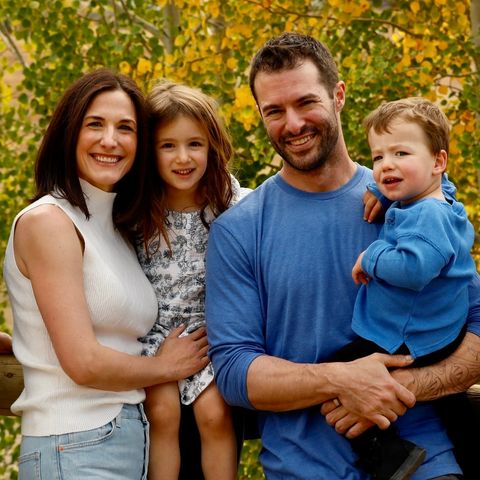
Our guest this week is Chris Losacco of Evergreen, CO who is owner of Elemental Forge, a blacksmith & knife maker as well as the father of two young children, including a son with a very rare genetic disorder.
Chris and his wife, Evan, have married for nearly 10 years and are the proud parents of two young children: daughter Elliot (4) and son Wilder (3), who has a rare genetic disorder known as MEF2C, which commonly includes: intellectual disability and developmental delays, motor skill difficulties, limited or absent speech development, Epilepsy, and Autistic-like behavior.
Chris is also owns Elemental Forge, a blacksmith and knife maker, is active with the MEF2C Family Foundation as well as the SFN Mastermind Group in Denver.
We’ll hear all about the insightful and authentic Losacco family story on this episode of the SFN Dad To Dad Podcast.
Show Links –
Phone – (847) 525-7332
Email – christmastaco@duck.com
Email #2 – Chris@ElementalForge.us
Webiste – https://www.elementalforge.us/
U.S. MEF2C Foundation – https://www.usmef2cfoundation.org/
MEF2C Family Foundation – https://www.mef2cfamilyfoundation.org/
Transcript:
Chris Losacco: The big lesson is if you think anyone’s going to do this for you, you are wrong. You need to take this and you need to run with it. And it’s going to be hard and it’s going to suck and it never gets easier. But if you don’t do it, nobody will and your kid will suffer. That was the lesson that we learned over the course of about a year. I’ll say.
Tom Couch: That’s our guest this week, Chris Losacco, a blacksmith, a knife maker, and a father of a son with a rare genetic disorder. Rick is married to Evan and together they have two children. We’ll hear all about Rick and his life on this special Father’s Network Dad to Dad Podcast. Now say hello to the founder of the Special Fathers Network and host of the Dad to Dad Podcast, David Hirsch.
David Hirsch: Hi, I’m David Hirsch, host of the Special Fathers Network Dad to Dad Podcast. One brief message. The Special Fathers Network Mastermind Group experience is the most comprehensive program the 21st Century Dads foundation offers. Dads raising children with special needs, meet virtually on a weekly basis and form meaningful relationships while sharing weekly wins, discussing books and sharing heartfelt challenges. One of the highlights of the year is attending the in-person weekend retreat scheduled this year from September 5th through the 7th in Chicago. I invite you to attend the Special Fathers Network Mastermind group retreat. You’ll meet some extraordinary dads, exchange a lot of best practices and recharge your fatherhood battery for the journey, ahead. And it might just transform your life like it has done for so many others. For more information, please see the show notes or simply go to 21stCenturyDads.org.
David Hirsch: Let’s listen now to this conversation between Chris Losacco and David Hirsch.
David Hirsch: I’m thrilled to be talking today with Chris Losacco of Evergreen, Colorado, who is a blacksmith and knife maker as well as the father of two young children, including a son with, with a very rare genetic disorder. Chris, thank you for taking the time to do a podcast interview for the Special Fathers Network.
Chris Losacco: Absolutely. Happy to be here.
David Hirsch: You and your wife Evan have been married for 10 years and are the proud parents of two young children, daughter Elliot, 4, and son Wilder, 3, who has a rare genetic disorder known as MEF2C, which commonly includes intellectual disabilities and developmental delays, motor skill difficulties limited or absent, speech development, epilepsy and autistic-like behavior. Let’s start with some background. Where did you grow up? Tell me something about your family.
Chris Losacco: Yeah, so I grew up in a, on the North Shore of Chicago in a town called Lake Forest. You know, it’s funny, I had three younger siblings, so there was. Seems like there was kind of always something going on. Lots of active distractions. I was in sports, music, and I always had some kind of activities going on. So it was, it was a very active childhood. Growing up, it was myself. Two years younger than me was my sister Kara. Five years younger than her was my sister Mary. And then nine years below me, two years below Mary was, my brother Joey. And so we kind of had these, you know, two groups of two that were separated by five years, which created its own little internal kind of fun dynamic where Kara and I grew up, you know, close to each other, and Mary and Joey will grow up close to each other. There’s all sorts of funny dynamics that developed through that. But, yeah, always, always something going on in the house. It was an interesting place to grow up.
David Hirsch: Yeah. Well, thanks for sharing. That’s not so far from where I live and work in Chicago and out in the northwest suburbs of Chicago.
Chris Losacco: Oh, sure.
David Hirsch: Out of curiosity, what did your dad do for a living?
Chris Losacco: So both my parents were in a combination of tech and sales in varying jobs. They actually met because, at one point my dad was my mom’s manager, one of the companies they worked for that no longer exists. I’m totally blanking on the name. But they, they worked together at one point, you know, then obviously they connected and formed their relationship. And my mom worked for one company for most of her career, which she actually started working there right when I was born in 85 or, you know, thereabouts. And there’s, a company called Forsyth. And my dad had a number of different positions. He was more sales manager, you know, kind of type of role throughout his career. He was obviously in sales for a lot of it, but when he learned he could train and run teams, that was kind of where his career took him. My mom went into more of the, you know, tech sales, management, and eventually leadership at Forsyth, where she was kind of running that firm. So, yeah, lots of tech experience, lots of sales experience between the two of them. And I suppose it’s no, no coincidence that I ended up in tech and in a lot of ways in sales too. But they both had really long careers that they seem to really enjoy.
David Hirsch: Well, thanks for sharing. Out of curiosity, how would you describe your relationship with your dad?
Chris Losacco: Well, my dad passed a few years ago, so, you know, regrettably, everything I’m saying here is past tense. But my dad and I always had a good relationship. He, you Know, it’s funny, I, as my dad got closer to the end of his life and it was, you know, just for context, he was very sick for quite a long time. So it was not, it wasn’t like a
00:05:00
Chris Losacco: a surprise, you know, motorcycle accident or something like that. you know, we all had sort of a long time to process what was coming in a way and try and figure out how to try and close as many loops as possible. So my dad and I growing up, he was always the one who took me to hockey and lacrosse and supported a lot of the sports based endeavors. I forced him to completely abandon his love of football because that was just a sport I never played. and have him figure out what the hell hockey even was. But, but you know, so we were always close in that regard and my dad was always kind of the, you know, the life of the party, very likable guy, leaned on his humor. Interesting combo of what I’ll perceive as a very introverted person on his own or needing to recharge on his own, but you know, willing to flip the switch and be the life of the party. Which, you know, is kind of something that we saw on, on display quite a bit. I also had a, this is something I’ll just bring up because I, it’s. I’m so actively trying to get other people to do this. But one of the things that I started to do when he was getting sicker and we kind of knew that, we didn’t have a whole ton of time left, I stumbled across this product and I don’t want to mention the product necessarily because it’s not a paid spot or anything here, but basically what it did was it gave me a bunch of questions to ask him and took the opportunity to record those questions and record his voice answering them. rather than just emailing him like, hey, what was your first job? We actually hopped on a phone call and recorded the call. And so doing things like that to not only record the nuance of how he would answer that question, or any question that’s more interesting than what your first job was, but to actually get his voice as a permanent recording. I’ve made that recommendation to all sorts of folks who, whether they have a parent or a loved one who’s likely nearing the end of their life or not, it was one of the best things we could have done. And I actually learned a ton about my dad right at the end of his life through doing that.
David Hirsch: Yeah, well, thanks for sharing. It’s really powerful actually. You’re sort of, preserving his legacy and his memory in his own words.
Chris Losacco: Right.
David Hirsch: In his own voice, as opposed to just writing something down, you know, maybe missing a little bit in the translation, for that matter.
Chris Losacco: Yeah.
David Hirsch: and the most important thing, whether it’s recorded or not, is that the conversations take place like you were saying.
Chris Losacco: Exactly.
David Hirsch: You know, I guess when you know, the end, is near or seems near, there’s a little bit of a sense of urgency. You know, why wait until then? Right. If you can avoid it. I think that was your message.
Chris Losacco: That’s exactly right. Like, I, I’ve been harping on my mom to do the same thing. And, you know, it seems like there’s always something that’s more pressing at the moment. And this is not me, you know, attacking her in any way at all. But it’s just that you, you nailed it. Like, when you can see the, the end of the race, it seems, you know, you sort of recalibrate and reprioritize. It’s a very, very powerful thing to have happen. And one of the, one of the good things about having a little bit of prescience about how much time isn’t left.
David Hirsch: So. Yeah, well, I’ll just mention, sort of, anecdotally, there’s a very close friend. his name is Lawton Wilkerson. And, he lived, age 97, actually one day short of his 97th birthday. It was a World War II veteran and aviator in World War II, and actually one of the Tuskegee Airmen. And, Wilk, accompanied me on these long, distance bike rides, Santa Monica to Chicago, Boston to Chicago, around Lake Michigan. You know, we just did all these things together. He was a volunteer supporting the 21st Century Dad’s foundation, the Special Fathers Network. And he was married briefly but didn’t have any kids. And, you know, I didn’t really think about interviewing, him until it was too late, until he just wasn’t able to, you know, hold a conversation, you know, just because of his fatigue and the energy at the end of his life. And it’s one of the things I regret because I have interviewed some of my, older friends, guys in their 80s, and, Wilkes passing a couple three years ago now, motivated me to be more intentional. Like I think you were suggesting we all be more intentional about having those conversations. And, you know, there’s a lesson to be learned there. So thanks for sharing.
Chris Losacco: Yeah, definitely.
David Hirsch: So any important takeaways, something you’ve tried to emulate, as a father yourself, that you learned from Your dad.
Chris Losacco: There’s two main things that I learned from my dad. One is about being a dad, and one is about the sort of structure required to enable that. And so I’ll start with the latter. The big thing that I learned from my parents, and I think a lot of people have this opportunity to learn a similar lesson from their folks. And unfortunately it’s always one of those things that tends to happen because the person you’re learning from has made this mistake already. But one of the biggest lesson that I learned from my parents, who, you know, again, I don’t, I don’t want to harp on this specifically for this interview, but it was, it was no question that my parents had their struggles and they, you know, they spent kind of a long time staying together for the kids. And so the lesson that I really learned from my dad and from my mom was that like, you know, if, if you don’t communicate,
00:10:00
Chris Losacco: you are basically destined to fail in a relationship. And these are my words that I’m putting on, on his. But. But said kind of in a different way. Communication is sort of the only thing that matters because regardless of what you learn from communicating, it’s basically a guarantee that if you don’t, you will fail. A relationship will fail. There will be misunderstanding, some degree of jealousy or conf. Or maybe it’s just, ah, straight up ships passing in the night for one reason or another. And so that was kind of one of the big ones that I learned from both my dad and from my mom. Figure out a way to over communicate, in effect. And again, I’m layering a ton of my own perception on this, but if you’re not talking, you are missing something. The other thing was, and this wasn’t so much an overt lesson that he tried to tell me, but it was more his actions that taught me this. And even when I was able to drive myself to a lot of these hockey practices, games, whatever, he either drove me the vast majority of the time or even when he didn’t have to drive me. He would come to most practices and games. There was a significant amount of his time put into just being present for the things that I cared about. He would have loved if I was into football because he loved football. It’s great. that’s what he played, he taught, or he coached football earlier in his life, but he completely transitioned his, his mental energy towards learning hockey, understanding hockey, and you know, to a lesser extent, lacrosse, just so that he could be part of my experiences. So I think there’s, you Know, very much a. You know, whether you call it something like a changing of the guard, you know, some degree of parents just putting a lot of onus on making sure the kids feel seen, the kids feel supported and yeah, that was, that was one of the other lessons that again, I, I sort of just learned by way of watching his behavior rather than listening to him talk about it. So that’s a really critical thing for me. If there’s one thing that you can try and do, it’s not look back and regret and say, man, I sure wish I was there, or I sure wish I had gone to that practice or that recital or that, you know, trip or that, whatever. It’s like make a point to be present because it’s just something that you can’t replace in some, you can’t replace it with a zoom or like a phone recording. It’s just not the same.
David Hirsch: Yeah, point well made. the two things that I heard were actions speak louder than words, right?
Chris Losacco: Definitely.
David Hirsch: And then the importance or value of being present. And you were talking about his physical presence, but also being present emotionally and spiritually. I talk about those things all the time. In fact, when I eulogized my grandfather who died at age 93, my maternal grandfather, Sam Solomon, I quoted, ah, Ralph Waldo Emerson poem. I won’t get it exactly, but it comes to mind in listening to you, which is your action. Speak so loud I can’t hear what you’re saying.
Chris Losacco: Yeah.
David Hirsch: Which, is sort of the message I think you were sharing about your dad. So my recollection was you went to Lehigh University. Took a degree in finance and marketing. And where, where did you see your career taking you?
Chris Losacco: Well, I actually went to Lehigh and they forced us to pick majors day one. And I picked biochem and cellular biology, which, because I wanted to be an orthopedic surgeon. I’ve broken triple digit bones, I’ve had a bunch of reconstructive surgeries. Basically just beating the hell out of myself in sports. And so, you know, in doing so, you learn to repair yourself. I developed an interest in anatomy, biology, et cetera. And so that just seemed like the super logical career because the other side of my brain, which we’ll come back later, is totally finance driven and money driven. And so I thought, well, how can I make a ton of money and work on something that seems interesting? Well, obviously orthopedic surgeon is what I’ll do. And then I ended up working with an orthopedic surgeon after my freshman year. Who will not be named. he actually convinced me not to be a doctor. I don’t know if that was his actual intent, but that was the very clear thread within the messaging. And so for me, I switched into the business school and got degrees in finance and marketing instead. For whatever reason, my path has always been, and this is just a reality, my path has always been dictated, at least in part by making money. And I know that’s, a very common part of everybody’s headspace in our society, but for me it was tip of the spear for a lot of things. And like, it’s only been semi recently that I’ve been able to actually shed that because of how many experiences I finally had where it was clearly not the thing I should have been listening to.
David Hirsch: Yeah, well, thanks for sharing. It’s not uncommon that somebody starts, if you do have the privilege to go to college, starts focusing on one thing and then shifts gears even during those four years or after. Right. Sometimes you study something and you realize that’s not really what I want to do. Right. For a career or a living. The most important thing is just to get a good education and I think, develop some critical thinking, right.
00:15:00
David Hirsch: So that you can make well informed decisions.
Chris Losacco: For sure.
David Hirsch: You know, I think, for a lot of people, you do want to make money, right. So that you could have a, certain level of independence, right. Not be reliant on other people. And I’ll be really crass and just mention that when I was in my 20s, graduated with an accounting degree, thought I wanted to be an accountant. It took me one year of high school accounting, four years of college accounting, and three years working as an accountant, realized, no, ah, I didn’t like being a accountant. But, you know, in the back of my mind I knew that, you know, I wanted to go into business. I just didn’t know what I wanted to do. And people said, you know, challenge yourself, right? Get an accounting degree, get a finance degree. Right? Because those skills are things that you’ll be able to use. So if you understand an income statement and a balance sheet, you know, you maybe understand something about taxes. No, these are, you know, good life skills to have. And, the last thing I’ll say about that was I wanted to make $100,000 a year by the time I was 25, right. Very crass, right? As back in the mid-80s and I had a good paying job at Pricewaterhouse as an auditor and then a tax accountant. And with overtime I was making at age 24, $25,000 a year. That was a good job, good paying job. And I’m like, how am I going to quadruple my compensation in a year? And it’s not going to be doing what I’m doing, so I better change, right? And that’s what motivated me to move into the world of financial services and become a wealth manager, which I’ve been doing now for more than 40 years. And I did not reach my goal. Everybody’s like, oh, did you reach your goal? Did you reach your goal? No, I did not reach my goal by age 25, but I did by the time I was 26. So I was able just to years later to quadruple my compensation. And you know, it’s very fortunate that things worked out the way they have. But you know, I don’t think it’s bad for kids to hear that, right? Young people to hear that today that you know, what was my motivation? Right. You know, what was your driver? And you know, that’s just being open and authentic with people. So thank you again for sharing. So I know that early in your career, just because I did a little homework, you bought and sold guitars, which sounds like a really fun thing to do. Arbitrage.
Chris Losacco: Yeah.
David Hirsch: Between people that maybe were just like estate sales and people that didn’t maybe have a sense for the real value of something and then you know, marketing those and then more recently. And I know that there’s a lot of jobs in between. You have your own business, this elemental forge business. I’m wondering if you could talk about that a little.
Chris Losacco: Yeah, yeah, the guitar thing was, was funny. I, I spent a lot of time playing in bands and it was, it was, it was basically my way of being able to have whatever guitar I wanted without having to shell out thousands of dollars for, you know, that guitar, that amp or whatever. And so it’s funny how if there’s one piece of advice I can give to people, kind of cuing back to the last comment you made is like don’t focus on money. Focus on education and adding value. The money will show up after that. And yeah, I never expected to make any money buying and selling guitars and you know, was, was fortunately a little bit surprised by it. But yeah, I mean to, to give sort of a 50,000 foot like you know, 50x fast forward view of my career. My first job was in marketing for one year because I felt like I had to use that degree. My second job was in finance, sort of accounting because I felt like I had to Use that degree and then basically never worked in finance or marketing anymore. so I moved from Chicago to Vail to Austin to Chicago to Denver to Evergreen. My wife and I met during the veil portion of that stop. And yeah, I spent about 14 years in tech in varying capacities and basically got to the point where, at the beginning of last year, so that would have been January 24th, the company that I was working for, which ate the previous company that I was working for, got eaten by a bigger company that was about to kind of change a lot of different things. And I still say that I was very fortunate to be laid off because tech is really weird about golden handcuffs and you can kind of spend way too long not realizing that you’ve got them on. So to be laid off and given a severance and given an opportunity to sort of step back for a minute and realize like, hey, this, this may not be where I want to continue putting my energy was a really great opportunity that I, I probably didn’t even fully realize right away. I was cognizant of it because obviously I did something with it. But anyway, so the knife making thing, I, I started making knives during COVID because one of the little bummer blips in my career was I left a company called Pivotal at the end of 2019 to go join a startup as head of product and the startup couldn’t get funding in the beginning of 2020. You all may have remembered something that happened that year. I can’t recall what it was. but anyway, so I lost that job and wasn’t able to find another one for a few months. And so I was kind of looking for things to do. And I’ve always been a hands on person once I’ve kind of figured out how easy it is to actually build things with just a little bit of thought and consideration and the massive amount of knowledge that’s available for free on YouTube. So I started making knives because I kind of was, I had time and I was wanted to make something better than what I had. So I had a little bit of
00:20:00
Chris Losacco: experience historically. I knew I enjoyed it and I kind of. This lesson is going to sound super weird to a lot of people. I’m certain of it. but the last job that I took, I took 100% for money. No questions about it. I won’t say what I was making, it doesn’t matter. But I took that job without question because it was the one that paid me the most that was available. The amount of money was silly and it was. Made me feel special and good and all, you know, impressive and blah, blah, blah. And all those, you know, little warm, fuzzy feelings that we all get when you see your paycheck. And. And I absolutely just could not have been more wrong about that decision in hindsight. So what I told myself was that I will not make any decisions that are strictly for money anymore. And that’s not me saying that I’m set for life. I’m not. It’s not me saying that money doesn’t matter. It does, but it can’t be the first thing, and it won’t be the first thing for me. And so I operate this business with all, of the things that I learned from being in production, you know, so things like testing your hypotheses, actually running real experiments and giving a. You know, giving a heck about the data and the conclusions that show up. Like, if I make a knife that doesn’t sell, I’m not gonna make that same knife. You know, if I do a, process that is ineffective or that, you know, causes. Causes some sort of detriment to me, like, learn from that, you know, but not thinking about how can I profit the most, how can I cut this corner, how can I do whatever it is to milk an extra percent of margin? Like, I do nothing. I do the exact opposite of that. And in doing so, I’ve kind of gotten the first chance I’ve had my whole life to actually see what I really enjoy versus what dollar amounts I enjoy. and it’s been a really kind of powerful thing, and I’ve learned a lot from doing it. It’s been a very profound experience.
David Hirsch: So, just so our listeners know, what type of knives are we talking about?
Chris Losacco: So I will say this is probably, like, the one thing that will have a little bit of a financial bend. I only make kitchen knives. The real reason is that if I’m a hunter as well, I could have made hunting knives, camp knives, bowie knives, you know, daggers, whatever. Like, there’s a million different types of knives out there, and I could have made any of them. I’ve actually made many different kinds of knives. But how many times a year do I get to actually go test my hunting knife? Well, if I’m lucky once, or a skinning knife or a boning knife. Like, really, if I’m lucky one time a year on an elk out in my yard, you know? but I can test a kitchen knife every single day, probably multiple times a day, and my wife can test it every single day, multiple times a day. Because we cook food for our kids three to five times a day. You know, the only way you’re going to know if you’re making a good product is by actually using it yourself or, you know, or at least finding people who will use it and then asking for their honest feedback. And if you’re doing anything else, you’re just not getting real data. And so I am my own real data. With kitchen knives, it is coincidental that they also sell for a lot more than a hunting knife, but they also take way more skill, to make. It’s my goal to strive to make something that I think is harder, that I can test more frequently and that I can improve against much more quickly. so that’s really my rationale for kitchen knives.
David Hirsch: Yeah, well, thanks for explaining. And just as a point of reference, how would you compare your knives to, say, cut?
Chris Losacco: There are so many variables that can make two knives that are, for all intents and purposes, very similar. There’s so many variables that can make them different. They can make them function differently, even if they look almost identical. They could both be stainless steel, but the steel itself, the heat treatment of that steel, the, the grind, the thickness, the surface finish, I mean, literally, like the tiniest little tweaks can make one knife not go through a carrot at all. And one knife, like, you know, laser through a, butternut squash like it wasn’t there. And so I won’t denigrate any knife ever. What I will say is that most people have no idea how bad their knives actually are. And it’s because they have had. They’ve never had an experience with a really good one. I was that way. I didn’t understand that a flat ground J. Henckel’s knife was actually a really terrible knife until I made one of my own that was way better. And you kind of have that, like, aha m moment the second you. This is true for all sorts of things. Like maybe you, ah, go back to guitar. Maybe you’ve had, like, that, you know, Mexican Stratocaster, which is a great starting instrument. And then all of a sudden you pick up a PRS and you’re like, whoa. Like, I just, I didn’t know this was real or possible. or you have like that solid state amp and you pick up a tube amp and you’re just getting that aha moment. Same is true with knives. And so it’s, There isn’t enough time for me to explain all the reasons why, but it’s fun for those reasons.
David Hirsch: Yeah, well, thanks for giving us a little bit of an overview knife 101 conversation, if you will. So out of curiosity, how did you and Evan meet?
Chris Losacco: So it’s sort of a funny story to that. So when you moved to this Colorado, and we weren’t typical ski bums, so to speak, we both had
00:25:00
Chris Losacco: decent jobs. But when you go to Vail, the most common thing that people end up doing is you find a room on Craigslist. You find a room in a house, and so you end up in this lottery hodgepodge of people that you hopefully like living with. And so Evan moved out there actually a little bit before I did. One of the people that she lived was this guy named Pete. And Pete and Evan were really good friends. There was definitely a desire for something a little bit more, I think, from Pete’s side. Pete, if you’re listening to this. I know. so when that lease ended and everybody kind of scattered, I ended up in a house with Pete. And one night, there really weren’t many women in the valley. the ratio is something like six or seven men to every woman. So it’s really hard if you’re looking for a relationship, it’s really hard to find one. And so Pete was kind of actively keeping Evan and I from meeting, because they’re also, you know, there’s only so many people you want to hang out with. And so you try having groups of people. And one night Pete invited me out to a bar and he invited another girl out, and that girl invited Evan, and Pete didn’t know. So that was like the, you know, the moment where Pete’s veil was pierced and Evan and I got a chance to meet and, you know, the rest is shots of whiskey and making fun of each other know.
David Hirsch: So let’s talk about special needs first. On a personal level, I’m sort of curious to know. Before, Wilder’s birth, did you or Evan have any connection to, the disability or special needs community?
Chris Losacco: None, unfortunately. You know, one of those. One of those things that you don’t know, you don’t know is how impactful it can actually be to the families of folks with special needs. And it just wasn’t even on, our bingo card. It was not even a theoretical thing that we would have a kid with a disability. It just didn’t even come up in our minds. There was no planning for it. There was no sort of presuppositions of how life would be different. It just wasn’t even a thing, so. And we had Elliot first, who is a hyper typical kid and doing all the things she’s supposed to. And you know, like her doctor’s appointments were like, yep, she’s doing all this stuff. Cool, see you guys next time, you know. And then Wilder happened to just completely rewrite that story for us. And we had no idea what was going on. And I mean, everything changed. Like everything about our lives, all of our planning, all of our theoretical futures, all of our day to day, I mean, everything changed. And so I don’t blame anyone for me not having that awareness. I don’t blame m society for like downplaying kids with special needs. I do think that there’s quite a bit more visibility into the special needs community now than there was. And I mean, you’re certainly aware of that, I’m sure, David. But you know, I didn’t know what I didn’t know. And suffice it to say that hit me like a real big ton of bricks all at once.
David Hirsch: Yeah, well, thanks for sharing. What is Wilder’s diagnosis and how did it come about?
Chris Losacco: So Wilder has what’s called a point mutation, which if you’re thinking about your Word document, it’s a single letter misspelling on the fifth chromosome. It’s the 21st nucleotide pair. And so he, you would think like one little letter out of trillions of letters that make us all up and our DNA and all of our different genes on all of our different chromosomes. And. And so he has a misspelling on the MEF2C gene. It contributes to the development of the MEF2C or the protein that effectively is the machinery for a lot of the body’s development. So the easiest way to say this is it’s a global impairment. The most notable outcomes are from what we know, and I should say we know of less than 500 kids who’ve had this. So like every genetic disorder, it’s rare. But what we believe is known is that the vast majority of the time kids will never speak. they’re non verbal for their whole lives. For the vast majority of cases, they will never live independently. They will never have full scale independence in their life. And there’s lots of different ways. Like me, F2C mutation is because it’s such a large gene where the mutation occurs, the severity of the mutation, whether it’s a shift shift, a full deletion, like many point mutations, it’s all wildly different. So it’s not even fair to say that kids with MEF2C have the same issues. There’s a Wide range of severities that folks can incur.
David Hirsch: So did he have to be genetic tested to verify that he had it or was it something was diagnosed without that?
Chris Losacco: No, we did end up getting genetic testing. This is partially just my inherent interest in science and partially because we had tried every other possible way of obtaining information. And so what ended up happening historically was, you know, Wilder. Just a few months go by, you don’t really notice
00:30:00
Chris Losacco: anything. Newborn’s gonna, newborn, you know, they don’t really do a whole lot. When he got to about six months old and, you know, wasn’t showing us the inkling of crawling, he had had colic or at least what presented his colic for his entire life. You know, we knew that was supposed to pass around two or three months. So we were starting to get concerned and confused why this kid was, you know, he seemed to be allergic to sleep, was just in pain all the time. And so it became really apparent that something was wrong around, you know, I’ll just say around six months, probably a little bit before then. And it was, it only became an option to begin genetic testing around when he was 13 or 14 months old, when he had not even, I mean, he wouldn’t move. We could sit him down on the floor and he would, he would sit. If we put him in a seated position, but it was like he didn’t have arms, he didn’t know he had them. he wouldn’t use them at all. So he wasn’t, you know, feeding himself, wasn’t ambulating in any way. So we got the genetic testing done and you know, this is one of those other things that was a brutal aha moment as a parent, which was, you know, and I’m again, I’m just going to be honest here, knowing that I might ruffle somebody’s feathers out there, but we do not know anything about genomics. And we as humans, like the best geneticists would say they know nothing. Like they know effectively nothing. We know structures, we know in principle what, you know, our genetic materials cause and effects are. But we know absolutely nothing about the actual inherent implementation details. And so when you ask somebody like, okay, well, what is his life going to be like, right, like those things that I said, like most kids that have been studied won’t speak. That’s just drawing patterns from data. Like we don’t have any real way today to say, oh, we have an expert in this, or, you know, oh, there’s somebody who definitely can help us. And so one of the big things that we unfortunately, as Parents learn. And this is big lesson that I want to share with other parents of kids with special needs is you have to take your kids care under your own wing. Like your providers will not help you. And it’s not because they don’t want to, it’s not because they won’t try. But if you think that the system is going to help you, that your providers are going to give you answers, that there’s going to be some kind of solve or easy button or otherwise, you are in for a world of hurt. And so that was the big change for Evan and I when we got Wilder’s diagnosis. We still don’t really know what to do with it. You know, we still today, this day, barely know what to do with it. You know, since then we’ve gotten him eye surgery, we’ve, we’ve gotten his epilepsy under control. He doesn’t have seizures anymore. We’ve gotten him thousand hours of therapy, physical OT, speech, you know, just vision, I mean, everything. And we’ve dealt with so many providers and so many therapists and so, and so much testing and so much time and like, and we still feel like there’s no answers. But had we not done all of that, like, I don’t know where my headspace would be. It would just feel wrong. The big lesson is like, if you think anyone’s going to do this for you, you are wrong. You need to take this and you need to run with it and it’s going to be hard and it’s going to suck and it never gets easier. But if you don’t do it, nobody will and your kid will suffer. Like, that was the lesson that we learned over the course of about a year. I’ll say. And now it’s just native, you know, like we just know. And I can’t possibly give enough credit to my wife like Evan, Evan takes point on everything, Wilder. You know, I am, I am always there. I am actively involved. But without her, it would be a whole different story. And you, you just have to figure out what that balance is going to be because nobody’s ready for a special needs kid. I don’t think there’s any way to be prepared for it. and no special needs kids the same. Right. Like our experience is nowhere near as hard as some families have it, but there’s just no way to prep. And you kind of have to bite the bullet and take the ownership and go with it because the only other option is much worse.
David Hirsch: Yeah, well, thanks for emphasizing that, you can’t rely on others and. Well, you didn’t say this. My way of paraphrasing it is that you have to be your child’s best advocate and, you know, roll up your sleeves and, you know, there aren’t going to be any silver bullets or simple solutions. You know, it’s a little bit like whack a mole. Right. You know, you were talking about, needing eye surgery. Right. Dealing with epilepsy. Right. These are, you know, totally different situations. And, you know, it’s like you’re trying to solve the puzzle, but there’s so many different pieces that have to go into place. And what I love about what you were saying about the efficacy that Evan, and you have, exercised on Wilder’s behalf is that you’ve leaned in. Right. Maybe there was a little denial at the very beginning, but you’ve just said, hey, we need to address this and, be intentional about engaging others. Right. The thousand plus hours
00:35:00
David Hirsch: of therapies, right? How could that not, have a positive impact on a long term basis? And the kid’s only three years old, for God’s sakes. Right. And that, those zero to three years, the early intervention years, are some of the most important years from a developmental standpoint. So only God knows what Wilder’s capabilities are going to be. But what I hear you saying is that the two of you have made it your top priority to try to figure out how best to advocate for them. So thank you for emphasizing that.
Chris Losacco: Yeah. And I do want to touch on one thing you just said, because when Evan and I were having kids, we always knew we wanted to. We had a girl first. We didn’t know the sex of either of our kids. And that’s another big recommendation I have. Do not learn the gender of your kids. Find out when they’re born. way more fun that way.
Tom Couch: We’ll be back with more of the conversation on the Special Fathers Network Dad to Dad Podcast in just a few moments. But first, this quick message. Please help 21st Century Dads gather research on families raising children with special needs by having them complete the Special Fathers Network Early Intervention Parents survey. A link to the survey can be found in the show notes. As a token of our appreciation, each person, mom or dad, who completes the survey will receive a great dad coin. Thank you. Now back to the conversation.
Chris Losacco: But in any case, like, when we had a girl, I wanted a boy, right? I wanted to have. We wanted one of each. And I was so excited to be a dad to a boy and so excited to teach him Everything that I have spent my whole life learning. And there’s no way to get around the fact that like a lot of my expectations, how I thought being a dad was going to be like, all of that is different now. And it’s not all bad at all, but it’s all different. So. Yeah, I don’t know. Everybody’s going to kind of have their way of figuring it out. I didn’t know how I was going to react. I couldn’t possibly have told you. But yeah, when, when faced with something like this, you either take it all in and make the choice to just punch back or you don’t.
David Hirsch: Yeah, well, thanks for your authenticity. You made reference to marriage. I’m sort of curious to know what impact has Wilder situation had on your marriage potentially. his older sister, even though, you know, she’s relatively young as well, or your extended family for that matter, on either your side or Evan’s, side, for that matter.
Chris Losacco: Yeah, there’s def. There’s something to say about all three of those. Evan and I are not shy about how hard this has been. Our relationship hit some really nasty low points. And you know, this is not a Wilder did this. Right. This is a. Circumstances were what they were and neither of us were ready and neither of us had an answer and neither of us had. There’s only so much that a human being can take. When you’re not sleeping, you’ve got a hit with colic for 14 months. Like, holy crap. So, you know, we were, we were really beaten down and. And a lot of that manifested as frustration with each other and communication and we hit some low points and you know, that’s, that’s really hard. But you know, if you care about this person and you both want to make it work, then you do. And it’s not easy at all. And there’s no answers and there’s no formula and just like kind of just try and do a little bit better every day and try, try to learn from the things that, you know, caused a huge problem the day before or whatever. Right. And so we are way stronger now. But it was not without some really dark times on the Elliot front. You know, there’s a. I’m sure a lot of listeners will have already known about this, but there’s this, it’s a made up syndrome called Glass child syndrome. It’s not an actual syndrome, like, you know, like you would say with a real medical diagnosis, but it’s a more of a psychological diagnosis where the child who is typical feels invisible. Hence glass. And so that’s one thing that we’ve become very aware of, is really trying to get ahead of the fact that like, there is no such thing as an even 50/50 split of our time with a kid like Wilder. It’s just fundamentally never going to happen. Wilder needs more things from us than Elliot does. And so even if we try and split the time 50/50 at a minute to minute level, then like what, we won’t play with Wilder because we spent time feeding him or I don’t know, there’s no way to balance it in a functional, approach. So we’ve tried really actively to reach out to folks, the mastermind group, the Denver, the know, Rocky Mountain area. It’s been really helpful. I actually did a, I don’t know how much we talk about the mastermind groups on this podcast, but, but there’s a portion of every meeting called dad in the middle. And you know, I was, I was dad in the middle asking the question to the other guys about how do you, how do you avoid negative impacts to your typical children with a neuro atypical
00:40:00
Chris Losacco: child? And the guys gave me a bunch of really good advice. We’ve been interviewing play therapists for Elliot for the last, you know, two weeks and we’ve got two people that we’re choosing between. We, we try and spend solo time with her. We, you know, we really actively try and head off a lot of those very common issues that the typical child or children will feel. But it’s hard. There’s, again, there’s no answer. We just got to kind of keep seeing if what we’re doing is working and going with it.
David Hirsch: Just the fact that you’re aware of the issue at such an early age puts you ahead because, oftentimes, like you’d said, if you have a child with severe special needs, a disproportionate amount of your time, just logically, right, Just in the heat of battle, day to day, goes toward that child. The fact that you’re thinking about it, you’re intentional about it, right? You’ll be intentional about it, you’ll find things to do one on one, whether it’s Evan and Elliot or you and Elliot are going to help level the playing field. Not 50/50, that’s a fallacy, but just be equitable, right? And as she gets to be older and understands, you know, a little bit, better what her brother’s situation is, she’s not just the older sibling, right? She’s going to be the one that’s maybe gonna help look out for him. Right. Be another advocate, a third advocate, family advocate of his son. Thank you for emphasizing that.
Chris Losacco: Yeah. And then the third one you had asked about was our families. This is another one of those that there was just no way for us to be prepared for this. But it was never a thing that we talked about. It was never a thing that, you know, Evan’s family has had any exposure to. And so, yeah, you go through this, like, this whole ebb and flow of education with your, you know, with, your family members, and. And if. If you’re lucky. The problem is that they want to help and don’t know how. Like, everyone comes at this with, you know, with a positive and, you know, desire to help. And, you know, they. They want to be involved, and they want to, you know, the grandmas want to be. Want to be grandmas to him, but they just. They don’t know how, you know? Like, they don’t. They. They don’t know what they don’t know. And. And again, it’s not a. It’s not a dig at any of them. It’s like, everybody needs education on this, and Evan and I just, like, trying to figure it out ourselves. Like, we don’t know how to educate other people on this. So, like, everybody’s kind of, like, futzing around in the dark trying to figure out how to do this right. And there’s tons of frustrations that bubble up and. Yeah, so it’s definitely a process to get family to sort of get it. And we suffer from the issue that we don’t have a village here in Evergreen. It’s just Ebonite. you know, my family’s kind of spread around, and her family’s predominantly in Texas. But so we mostly have people who, you know, come out every few months. And, you know, grandmas have been awesome, Grandpa’s been awesome. again, my dad passed, but Evan’s dad’s come out a bunch of times, you know, so everybody’s kind of learning, but you might, like, learn a little bit in the few days that you’re here, and then two months go by, so you have to relearn some portion of that. And it’s. You just got to give people a little bit of grace and a little bit of patience, because it’s hard. It’s hard for people who want to help and don’t know how. It’s hard to know what not to say and what to say. And. Yeah, it’s an educational process, for sure.
David Hirsch: Yeah, there’s a learning curve, no question about that. And sometimes what people can do, family members or friends, not having any experience is just to provide a little respite so that one, or both of you can, you know, go to a movie, go to dinner, just have a couple hours, right, that you wouldn’t otherwise have. Definitely this 24/7 vigilance that you have on a day to day basis. And you know, that goes a long way. Right. You don’t have to know a lot about the condition or the affliction, the diagnosis, you know, but just being present, right, Another set of arms and legs or a couple sets of arms and legs to help out and you know, it all contributes to a little bit healthier, well being so. Thanks for sharing. So I’m thinking about supporting organizations. I know in the past we Talked about the MEF2C foundation and then separately the MEF2C Family Foundation. I’m wondering, if you can compare and contrast those two groups.
Chris Losacco: Well, I’ll do my best to do so. So the group that I have more experience with and am closer with is the MEF2C Family Foundation. The simple way to think about them is the MEF2C foundation. I think there’s actually, to my knowledge a couple. There’s one in the UK, there’s one or two in the US I am certainly going to mess up how they’re connected or not connected. But in any case, there’s a few groups who are aware of the MEF2C gene mutations on that gene. And those groups are dedicated to applying known research techniques, you know, utilization of other medicine or therapeutic, delivery mechanisms, the medicines and therapies themselves using things that, you know, the audiences have certain heard of, things like CRISPR and otherwise, you know, different gene editing techniques. they’re, they’re really kind of at the front
00:45:00
Chris Losacco: of research on how to solve the problem. So that’s kind of how I think of the MEFTIC foundation is they are, think of them as scientists in white lab coats trying to, you know, trying to fix the issue. The Metussi Family foundation is a little bit different. So the Metussi Family foundation was, I believe it was six families, six groups of parents who found each other, I think through Facebook groups. but they found each other because they were. And again, I do not want to put words in their mouth here, but my understanding was they were kind of frustrated or, or felt like there was an opportunity to improve the way that this research was being done. You Know if you have multiple foundations or multiple groups of people trying to solve the same problem, but those groups aren’t talking, there’s bound to be overlap in effort spent, there’s bound to be waste, there’s bound to be inefficiencies that end up right. And so what they basically formed themselves to do was to try. And I like to think of them as sort of like the GC of all the subcontractors. You know, the FTC foundation is your plumber and your carpenter and your drywall person and your painter. And if they’re not talking, they don’t know how to optimize their time. The Metussi Family foundation sort of acts like the general contractor there and tries to make sure that everybody has the information that they need. I’ve, been really impressed with that organization. I’ve only recently kind of really learned about them. I think I actually had my first call with them and end of May, I believe it was they have a bunch of relationships with different groups. so you know what I can’t definitely talk about, like if you buy a, you know, buy something at Walmart, like you can round up and donate to the MEF2C Foundation. So they have lots of relationships like that to get contribution financial, and otherwise there’s lots of ways to contribute to them. But there’s an active effort to develop a sponsorship agreement with one of the MEF2C groups in service of being able to pass through dollars towards clinical trials. But it’s creating a proof of concept in effect for a clinical trial which could yield therapy or a treatment down the line. so they’ve really made quite a bit of inroad in terms of, helping this community and organizing parents and giving people a chance to kind of feel less, I don’t know, less alone, I guess about this because I think there’s still under 500 cases of F2C that have ever been found. And of course they’re almost, they’re typically quite severe because genetic testing just hasn’t reached full ubiquity yet and it’s still expensive. And you know, if your kid has a, minor variant of a methoc, you know, genetic disorder, like you may not even know because, because I don’t know what a minor, you know, disorder variant of the disorder would even look like, you know, like. So, yeah, it’s kind of like everything else. We only know what we know and we have no idea what we don’t know. so this group has done a really good job of Trying to be open, trying to create relationships. And, they’re taking it upon themselves. I mean, it’s like, I don’t think any of them are taking any money for it. I think they’re all donating their time. Yeah. So I’ve been impressed and I’m excited to continue to support them.
David Hirsch: Yeah, well, thanks for mentioning the two organizations. one is more research focused. That’s what I heard you say. There’s a couple of them. The one in the US the one in the UK and maybe beyond. And then, one is more family centric. Right. trying to help provide information and help the families feel less isolated, less alone. Right. Because, you know, you think you’re one of one, and then even if you’re one of 500, that’s still a pretty small group given the 8 billion people on the planet. But like you said, the genetic testing isn’t ubiquitous, so there are no doubt a lot more kids out there that have yet to be diagnosed. will be, and then some that will never be diagnosed just, just because of the nature of the thing.
Chris Losacco: Yeah.
David Hirsch: I’m thinking about advice now and I’m wondering, what advice you can share with parents, specifically dads, who find themselves on the throes of, a diagnosis like you’ve been describing.
Chris Losacco: I think a lot of the advice that I would give I’ve actually already shared in this podcast, but I’ll try and rephrase some of it. So. And I’m not going to hold back on this part because I think as dads, as men, you have a choice and nobody can make this choice for you. So I’ll just patently say it. You have no control over this. This, this a, ah, genetic disorder, a special needs outcome, happens to you. It’s not something you did. you can feel like the victim or you can take it and respond positively. And again, I’m not trying to sound like a jerk, but nobody is like, better prepared for this than somebody else. Maybe your child’s needs are significantly higher or lower than somebody else’s, but regardless of the circumstance, it’s on you, the dad, and you the mom.
00:50:00
Chris Losacco: Of course, it’s on the parents to decide how they’re going to respond. Your kid needs you. Your providers won’t do this for you. You either step up and do everything that you can possibly think of, or you might look back and wish you had so that in addition to, like, communicate with your partner, things might get really dark. They did for us. You, can come back from that. I promise we have, and we’re better for it. If you have other kids, focus on them. If you have family members, you’re going to have to educate them. It’s just, if you haven’t figured it out already, you have a massive burden that you have to figure out how to react to. And, and yeah, your choice is going to be what you have to deal with the rest of your life. So my advice, honestly, is take the time you need to feel sorry for yourself or victimized or whatever words you feel like putting in here. I’m not trying to put any labels on anybody, but, like, take that time and then get over it and figure out what has to happen to make life good again. Because it’s going to feel like it’s impossible and it’s going to feel like, you know, how the hell did this happen to me and what am I going to do from here? And you have a choice. so anyway, that’s. I’m trying not to beat the horse, but that’s the choice you have to make. So that’s the advice I give, is just think seriously about that choice and realize that you only have one chance to make it.
David Hirsch: Yeah, well, thanks for the direct, authenticity way of communicating. You know, it’s like medicine, almost, right. It doesn’t taste good, but, it’s going to help make things better. You know, it’s from your lived experience. It’s not something you can read in a book. You know, it’s just shouldering the responsibility that you have as best you can and recognizing that, you know, one of the shortcomings that men have, I sort of, tongue in cheek, refer to it as testosterone poisoning, which is, you know, the inability to, you know, pull over and ask for directions. You know, we’re going to figure it out ourselves. And yeah, you know, we joke about it. You know, when you’re in your vehicle getting from point A to point B, nobody would think twice about, trying to figure it out themselves. It’s on your phone, it’s in your car. You know, you just plug in the coordinates, you know where you’re going. But when you take that same problem solving approach and you apply it to something like parenting, or in this case, parenting a child with special needs, you’re not going to figure it out yourself, right? You’re just setting yourself up. You’re setting your child up for failure, right? So the sooner that you can figure out what the workaround is, where the information is, who knows more than I know? Who can I rely On. Right. Not out of weakness, but out of strength. Right? To be the information gatherer, don’t, you know, put this all off on your spouse or the mother of your child. Right. Lean in. Be the leader that we were designed to be. So, anyway, You’re speaking my language. Thanks for sharing.
Chris Losacco: Yeah, and I did want to clarify that, too. I don’t want to make it seem, like, cool to pick typical tropes like, oh, you were Delta, crappy deck of cards, and you got to just play it now. It’s nothing like that. It’s not a, things are going to suck. Suck it up. It’s a. You have a choice to pour yourself into this and go forward or not. And so. And if you do decide to pour yourself into this and move forward and figure it out, like you said, figure out where you can find support, figure out where your. Your assumptions were wrong, test those assumptions all the time, support your partner, figure out your balance, your sort of distribution of duties. Like, yes, it’s hard, but. And if you decide to do it, you’re going to get back way more than you put in. I know it sounds obnoxious and cliche, but it’s true. Like, Wilder is. I don’t want a single person who listens to this to think that, like, oh, he’s my burden. He’s not at all. Like, Wilder only understands joy. He truly. Only, like, he doesn’t get negativity at all. Every single thing in that kid’s life is either pure joy or pain. And so you’re like, I want to frame it that way because. Different than I expected. Absolutely bad. Absolutely not. And so don’t take anything that I’ve said. It’s like, you got to suck it up. You know, life’s gonna suck. Good luck. Yeah, it’s like, no, it’s not like that in the slightest. It’s just gonna be different than you expected. And if you pour yourself into it, you will find the good aspects of it, and if you don’t, you will possibly. And I, you know, guess you will possibly end up with some combination of regret and never seen the good side of it. And so that’s why I. That’s why I went with that piece of advice. Because communication and all that is critical, but for men specifically, like, you’ve
00:55:00
Chris Losacco: got that choice, and you have to realize that you’ll never know what’s around the corner until you make the choice to go chase it. and I can tell you from personal experience that it’s been the absolute hardest, most difficult Frustrating, just brutal thing that I’ve done in my whole life. And it’s also yielded things that I never would have expected. And that’s just how it is. So, anyway, that’s just me trying to, trying to make sure that I wasn’t taken as a negative spin, the way that I phrased that. But I wanted to be, I wanted to be very clear that like, yeah, there’s just, there’s. There’s more than you know, until you figure it out.
David Hirsch: Yeah. Well said. And I think, part of it is just being okay or comfortable with the uncertainty because most human beings don’t accept change very easily. whether it’s in the home front or in the work front or, you know, the community, you know, people resist change. And I think that’s what we’re talking about. Right, right. You have to adapt to the situation. And you know, it’s not easy, but, it’s like a lot of things in life, the harder things are, you know, the more you appreciate the outcomes. So thanks again for sharing. Is there anything else you’d like to say before we wrap up?
Chris Losacco: No, I think you’ve let me brain dump a little bit. It’s been, it’s been fun.
David Hirsch: But let’s give a special shout out to, Nathan Warner of Denver, Colorado, who is a Special Fathers Network mentor father as well as the local, Special Fathers Network mastermind group leader for helping connect us.
Chris Losacco: Agreed. Yeah, Nathan’s wonderful and very helpful.
David Hirsch: If somebody wants to learn more about the MEF2C foundation or family foundation or contact you, what’s the best way to do so?
Chris Losacco: The best way is probably via email and I don’t know those. Well, I can leave my email address in the show description. and I can get you contact information for the FTC Family foundation. But that’s how I connect you with them and there’s, you know, for them there’s a Facebook group and otherwise if, that’s the platform that you’re on. But yeah, but I can certainly leave some contact info for those folks. They’re very responsive.
David Hirsch: I’ll be sure to include your email and then the information, the websites for these, two foundations to make it as easy as possible for some, Somebody to get a hold of you.
Chris Losacco: Sure.
David Hirsch: Chris, thank you for your time and many insights. As a reminder, Chris is just one of the dads who’s part of the Special Fathers Network mentoring program for fathers raising a child with special needs. If you’d like to be a mentor father or are seeking advice from a mentor father with a similar situation to your own, please go to 21stCenturyDads.org. Thank you for listening to the latest episode of the Special Fathers Network Data dad Podcast. I hope you enjoyed the conversation as much as I did. As you probably know, the 21st Century Dads foundation is a 501c3 not for profit organization, which means we need your help to keep our content free to all concerned. Would you please consider making a tax acceptable contribution? I would really appreciate your support. Chris, thanks again.
Chris Losacco: Appreciate it, David. Have a good one.
Tom Couch: And thank you for listening to the Special Fathers Network Dad to Dad Podcast. The Special Fathers Network is a dad to dad mentoring program for fathers raising children with special needs. Through our personalized matching process, new fathers with special needs children match up with mentor fathers in a similar situation. It’s a great way for dads to support other dads. To find out more, go to 21stCenturyDads.org.
David Hirsch: And if you’re a dad looking for help or would like to offer help, we would be honored to have you join our closed Facebook group. Please go to facebook.com groups and search dad to dad. Lastly, we’re always looking to share interesting stories. If you’d like to share your story or know of a compelling story, please send an email to david@21stCenturyDads.org.
Tom Couch: The Special Fathers Network Dad to Dad Podcast was produced by me, Tom Couch. Tune in again next week for another intriguing conversation on the Special Fathers Network Dad to Dad Podcast.
00:58:57