

392 – Dion Chavis of Raleigh, NC Founder & President of The Glad Dad LLC And Father of Two Including A Son With ASD
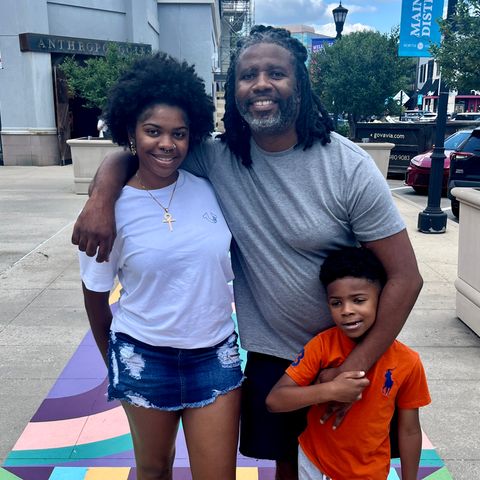
Our guest this week is Dion Chavis of Raleigh, NC, a former radio personality, founder and president of the Glad Dad LLC, and father of two children, including one with Autism.
Dion and his wife, Aisha, have married for 9 years and are the proud parents of Maceo (7) who is on the Autism spectrum. Dion is also the father to daughter Nyla (21) from a previous marriage.
For decades, Dion has been an outspoken advocate for and dedicated to improving the lives of children and fathers. Through the Glad Dads LLC, he offers coaching, mentoring and training.
Dion also used to host two podcasts: “Dads In The Class” and “Black Parenting.” We also learn about the Frankie Lemmon School & Development Center and the impact the organization has with young children.
It’s a fascinating conversation on this episode of the SFN Dad to Dad Podcast.
Show Links –
Phone – (757) 927-2773
Email – dion.chavis@gmail.com
LinkedIn – https://www.linkedin.com/in/dionchavis/
Website – https://www.dionchavis.com/
Frankie Lehman Development Center – https://frankielemmonschool.org/
Transcript:
Dion Chavis: If you are transitioning him from one activity to the next, you have to prepare him by, let’s say, giving him a countdown or timer. So he may need a, if he’s at the park, he may need a 15 minute countdown before we leave. You can’t just pick him up and like, all right, let’s go.
David Hirsch: Right.
Dion Chavis: You have to prepare him because of course, his brain processes things differently. So learning to meet him where he is in spaces like that, it can be a bit challenging because, you know, of course, as parents, I was raised in the 80s and 90s. Your parents didn’t oftentimes meet you where you were. It was what I say goes and this is what it is. And you don’t ask any questions, you don’t ask why. You know what I mean? You just kind of go with the flow and you go with what your parents say. For us, we are creating a space that is a little bit softer than that.
Tom Couch: That’s our guest this week, Dion Chavis, a, former radio personality and founder and president of, of The Glad Dad LLC. Dion has two children, including Maceo, 7, who’s autistic. Dion is dedicated to improving the lives of dads, especially dads of kids with special needs. It’s a fascinating conversation and we’ll hear it on this Special Fathers Network Dad to Dad Podcast. Now say hello to the founder of the Special Fathers Network and host of the Dad to Dad Podcast, David Hirsch.
David Hirsch: Hi, I’m David Hirsch, host of the Special Fathers Network Dad to Dad Podcast. One brief message. The Special Fathers Network Mastermind Group experience is the most comprehensive program the 21st Century Dads foundation offers. Dads raising children with special needs, meet virtually on a weekly basis and form meaningful relationships while sharing weekly wins, discussing books and sharing heartfelt challenges. One of the highlights of the year is attending the in-person weekend retreat scheduled this year from September 5th through the 7th in Chicago. I invite you to attend the Special Fathers Network Mastermind group retreat. You’ll meet some extraordinary dads, exchange a lot of best practices and recharge your fatherhood battery for the journey ahead. It might just transform your life like it has done for so many others. For more information, please see the show notes or simply go to 21stCenturyDads.org.
Tom Couch: Now let’s hear this conversation between Dion Chavis and David Hirsch.
David Hirsch: I’m thrilled to be talking today with Dion Chavis of Raleigh, North Carolina, founder and president of the Glad Dad LLC, former on air radio personality and most importantly, father of two children, including a son with autism. Dion thank you for taking the time to do a podcast interview for the Special Fathers Network.
Dion Chavis: No problem. Thank you so much. For having me. It’s a pleasure and an honor to be here.
David Hirsch: You and your wife Aisha have been married for nine years, and the proud parents of Maceo, 7, who’s on the autism spectrum. You’re also the father to your daughter Nyla, 21, from a previous marriage. Let’s start with some background. Where did you grow up? Tell me something about your family.
Dion Chavis: Sure. Well, I grew up in, Hampton Roads, Virginia. Virginia beach area, Chesapeake. Grew, up the only child to my mother. My mother, my father were not together, so I was raised as an only child by a single mother throughout the majority of my life.
David Hirsch: And my recollection was that you saw your dad every other weekend for the first 11 years of your life, roughly.
Dion Chavis: Yeah. I mean, my dad was. Unfortunately, he was. He was murdered, when I was 11 years old. But prior to that, you know, every other weekend was what it should have been. Didn’t, always play out that way. But, you know, my dad had some struggles with. With drugs and alcohol. But, I mean, you could say every other weekend was. Was when I was supposed to see him. And, you know, most times it played out that way.
David Hirsch: Yeah, well, thanks for mentioning just like, oh, by the way, my dad was murdered. I’m like, oh, my God.
Dion Chavis: Right, right, right.
David Hirsch: At 11.
Dion Chavis: Right.
David Hirsch: That must have been really traumatic. what was the backstory there?
Dion Chavis: So, at the time, you know, I didn’t realize how traumatic it would be because, again, my mother played such a huge part in my life and a huge role that, you know, she needed to fill in order to be sure that I didn’t miss anything. But, you know, my. My father was out one night. he was actually celebrating his birthday, and, he came home and got into an argument with some. With some men in his neighborhood. And unfortunately, that argument turned into a homicide, and, he was shot and killed. And my mother and I found out the next morning, and, you know, he. He was unfortunately taken away far too soon. I believe he was, He was in his 30s, I’m not mistaken.
David Hirsch: Wow. That’s insane. Well, I’m really, really sorry to hear that. That, you’re growing up in a single mom family, which I can relate to from my parents. When they divorced at my age, six. There’s way too many single moms out there. Maybe that’s something that’s inspired both of us.
Dion Chavis: Yeah.
David Hirsch: To do the work that we do. You Know, with dads and on behalf of these kids that are growing up like we did
00:05:00
David Hirsch: without our dads. And your mom went from being a single mom to being like a solo parent, right? That’s not lost on me.
David Hirsch: Yeah.
David Hirsch: Nobody else to sort of use as a backup. But my recollection was your mom did remarry when you were a younger guy, and I’m wondering what, if any, influence your, stepdad had on you.
Dion Chavis: Yeah, so my mom married my stepdad when I was about maybe five years old. He unfortunately died of cancer, like, two years later. He had lung cancer and died of cancer. But, you know, that was my first exposure to, I guess what many would call a traditional family structure. You know, we sat down at the dinner table and ate dinner every night. And, you know, there was more of a structure. He would take me. He was an entrepreneur, so he was a. A, veteran. But he started his own dry cleaning business. He had a mobile dry cleaning business. That was my first time being exposed to someone who was an entrepreneur. I would ride on his truck with him. He would pick up the dry cleaning from the sailors who were on the Navy base. Where I’m from, there’s a big military town. So he would get the uniforms and get them dry cleaned and take them back to the sailors and stuff like that. So it was my very first time being exposed to someone who was an entrepreneur and who had their own business. But like I said, unfortunately, he, passed away due to lung cancer at, ah, the age of, when I was 7. Not sure how old he was, but I know, I remember I was seven years old. Wow.
David Hirsch: Well, it’s very unfortunate that, these men, your biological dad and your stepdad, were involved for such a short period of time in these, important developmental years when you were a young guy, what were the important takeaways from these relationships, lessons learned, that you’ve tried to incorporate into your own situation.
Dion Chavis: As a dad, I think for me, for my biological father, the one thing that I learned, and it’s something that I am still processing as I, as I grow older and as I look back and realize that he never got to see, you know, the age of 45 or he never got to see the age of 42 or 40. You know what I mean? So for me, it is, oftentimes about giving grace. Right? Because there’s a certain level of grace that you have to give someone who just wasn’t a huge part of your life due to no fault of his own. You know, at the end but while he was here, while he was living, you know, there were some choices that he made that could have been better.
David Hirsch: Right.
Dion Chavis: But I also understand that mental health is a real thing, and people struggle with mental health. And it’s hard to be there for your children and be present for your children if you’re struggling with things on your own, if you’re struggling with alcoholism, if you’re struggling with drug addiction, if you’re struggling with unemployment.
David Hirsch: Right.
Dion Chavis: It’s kind of hard to be present for your kids. it’s not impossible, but it just makes it a little bit more challenging. And sometimes folks don’t have the tools to do what they need to do to cross those hurdles. And I just think that life in his. And the hand that he was dealt in his life, it just didn’t provide him with the tools to be a responsible parent. Did he love his children? Absolutely. But did he go throughout life doing things to make life easier on his children as they got older? Probably not. But, you know, for me, that. That gives me the opportunity to give him grace and understanding that, you know, while he was here, he did the best that he could with what he had.
David Hirsch: Yeah. And is it stretch to say that, because of the absence that you experience, that’s something you don’t want either of your children to experience as well?
Dion Chavis: Yeah, absolutely. Once my daughter was born, I made it a point to let it be known and to. To. To live by the fact that the only thing that would ever separate us could be death.
David Hirsch: Right.
Dion Chavis: There was nothing. Even though her mother and I weren’t together, once my daughter came into this world, I made the conscious decision that, you know, nothing was ever going to separate us. And even when her mother moved her to another state a few years later, I packed everything up and followed right behind and just so I could be closer to my child, because I knew that she was going to need me to be a part of her life. As she was starting school, so her first day of kindergarten, I made sure that I was there to walk her into the classroom. And every first day of school after that, up until she got into middle school, when, of course, it’s not as cool to have your dad walking you to class. I made a point to make, sure that I was there every single year and be engaged in her education every single year up until now. She’s. She’s a senior in college, and we’re still kind of going through and talking about what does. What does academia look like and what does her future look like? And you know, what does her class look like in this senior year? And you know, how, is she going to balance working a full time job this year and going to school? So from day one until right now, which is year 21, I’ve been here. But not having my father in my life gave me that motivation to be sure that neither of my kids would, would experience that.
David Hirsch: Yeah. Well, I love your commitment, to fathering.
00:10:00
David Hirsch: You didn’t use the word presence, but it’s obvious to me that that’s a real high priority to be present not just financially, but physically, emotionally and spiritually in your children’s lives. Absolutely. And it’s like the, you know, when I reflect on your experience and mine, like the pendulum swung one way without our dads in our lives and now it swung back the other way. Right. Like the, in the opposite direction. And you know, maybe we’ve overcompensated a little bit. Yeah, right. Because of that.
Dion Chavis: Oh, for sure. I’m a complete helicopter dad. I’m a complete helicopter dad.
David Hirsch: You’re getting a little bit too close.
Dion Chavis: It doesn’t matter. I need, need to be in everything. All of your business.
David Hirsch: Yeah, I love it. Thanks. I’m wondering, is there anybody else, cousins, uncles or any other, you know, men that played an influential role in your life as a young guy or maybe as a young adult for that matter?
Dion Chavis: Yeah, you know, my mom comes from a family of nine, so there’s nine of them. She has four brothers, which, would be my uncles. So, you know, I kind of grew up watching them and admiring them. But I would say my biggest male influence, I tell people all the time I have a cousin, his name is Dwayne. You know, he’s older than me, who I have always looked up to.
David Hirsch: Right.
Dion Chavis: Like, he was probably the coolest person in the world because I didn’t have any brothers.
David Hirsch: Right.
Dion Chavis: So he was and still is the coolest person in the world to me. Like we, we text and talk regularly, but he is the one who actually introduced me to music. He introduced me to hip hop. And you know, I tell people all the time, if it wasn’t for him and if it wasn’t for him, his love for music, I probably would have never gone on to have a 20 year career in radio. I, would have never have a successful vinyl record shop with my wife. And you know, there’s so many things that he kind of built the foundation of just by being present and, you know, just doing what cousins do when coming home and spending the night with us at my mom’s house, or, you know, me going over there and spending the night with him. And he was just my older cousin. I love him and, and you know, without him, I don’t know where I would be.
David Hirsch: Yeah, well, I think of cousins, like your cousin Dwayne as sort of being the angels in our lives. Right. Maybe you don’t know it at the time, but you can look back and say, hey, if it wasn’t for him, you know, where would I be today? Right.
Dion Chavis: Yeah, yeah, for sure, for sure, for sure.
David Hirsch: So thanks for giving my shout out. My recollection was you went to Norfolk State University and studied media studies and, and I’m wondering, you know, when you graduated, where did you think your career was going to go? What was your focus?
Dion Chavis: So the funny thing is that I don’t even know if we talked about this previously, but, you know, I started off wanting to be a chef. So coming out of high school, my goal was to be a chef. So I went to culinary art school. There’s a school called Johnson and Wales, which is based in Providence, Rhode Island. But at the time they had campuses across the country. They had one in Miami, they had one in Charleston, I believe, and there was one in Virginia. So I attended Johnson and Wales for a year or so, and after a year decided, I don’t know if I want to do this. So I ended up leaving there and then attending Norfolk State University to pursue mass communication. So I was a mass comm major. You know, I wanted to be into music. I wanted to do music production because of my love of music, but also wanted to do radio. So when I left, honestly, I didn’t graduate right. Because life started to happen. And I ended up getting a job at a commercial radio station. And you know, my daughter was, was born and you know, just life kind of just got in the way. So I just, you know, I didn’t finish. And you know, funny story is that at 45, I’m just now about to go back to school to finish my degree. As of August of, 2025, I’ll be a transfer student here in North Carolina at North Carolina Central University. But, you know, my journey has been in communications. I worked in radio for 20 plus years as, an on air radio personality. Also done some nonprofit work here in Raleigh. It’s kind of been all over the place, but I had no idea, you know, at 20, 21 years old, where this journey would take me. But, you know, just happy to say that I’m Going back to school to finish what I started.
David Hirsch: Yeah. Well, I appreciate your honesty and authenticity and, the vision I have. I don’t know if it’ll happen, like, within a same week or month or short period of time. Is that you and Nyla, your daughter, who’s a senior in college, could be having graduation celebrations around the same time.
Dion Chavis: You know, that was the plan. That was the plan. But when I looked at my credit. So now the credits that I have now, the plan is I just need to finish before Maceo gets to college.
David Hirsch: Well, that’s. That’s a pretty big window.
Dion Chavis: Yeah. Yeah.
David Hirsch: Hey, man.
Dion Chavis: Hey. Hey. I just. That’s my goal. Like, just. Just. Just finish before Mace. Yo starts. I think Nyla has, She has surpassed, you know, me, and.
David Hirsch: And.
Dion Chavis: And she’ll be finished, this year. I got a little bit more than a year to
00:15:00
Dion Chavis: go. If I, you know, stay on the path of going full time, and I’ll be done in about two years, and, you know, Nyla will be long gone. She’ll probably be working on her masters by then, but as long as I get it done before basically gets to college, I’m good.
David Hirsch: Yeah. Well, from your lips to God’s ears. I hope everything transpires sooner than later so you can get that in the rearview mirror.
Dion Chavis: Yeah.
David Hirsch: So I’m sort of curious now. How did you and Aisha meet?
Dion Chavis: It’s so funny. I was just telling my son this story a, couple days ago. We’re both from Virginia. We actually took a trip to Virginia beach. And, I was telling him the story of how his mom and I met and kind, of boosted myself up a little bit. So the real story is that I was 19, so this is 1999. And I was walking in the grocery store, and I saw this young lady. She had a box of Frosted Flakes and a bottle of Listerine in her hand. And, I saw her going down the aisle, and I thought that she was somebody that I needed to get to know better. And I forgot about getting my groceries, and I saw her go to the checkout line, and I think I might have picked up some gum or something just to go to the checkout line and get behind her and, follow her out to her car and asked her for her phone number. And at the time, you know, we had pagers, right? Every, you know, get somebody your pager or your beeper number. And she gave me your beeper number, reluctantly, I guess, because I paged her three times, and she never called me. Back. It wasn’t until I got my best friend to page her one day that for some reason, she called his number back, and he had to ask her, like, hey, why are you not calling my friend back? So we pretty much harassed her a little bit. and she finally called me back, and, you know, the rest, as they say, is. Is history. And, you know, we had some breaks in between in our relationship, but we figured things out, and, you know, as we grew up together, we were. You know, there was never a time where we weren’t, communicating or we weren’t friends. And, you know, some years back, as she moved away, she ended up moving to San Antonio, Texas, and I moved to Raleigh. And, then she moved to Charlotte. And eventually, you know, we got together, and I, convinced her to risk it all and marry me and start a family.
David Hirsch: I love it. so, would it be accurate to say that you sort of stalked her a little bit at the beginning?
Dion Chavis: I mean, I don’t want to say that on record, but, you know, you can make your own. You can make your own. That’s a strong word, Dave. That’s a strong word. I don’t want. I won’t say it on record, but, you know. Well, I was. I was aggressive in my approach.
David Hirsch: Well, we’ll say you were persistent. Yeah, okay.
Dion Chavis: I was persistent. Thank you. That’s the word I’m looking for. Persistent.
David Hirsch: Anyway, thanks for sharing. That’s a fun story. So let’s switch gears and talk about special, needs for a few minutes. I’m sort of curious to know. Prior to Maceo’s diagnosis, did you or Aisha have any connection to the world of disability or special needs?
Dion Chavis: No, we didn’t. We didn’t. We were totally in the dark to what raising a child on the spectrum looked like. Like, you know, I have family members who are. Who, you know, who are on the spectrum.
David Hirsch: Right.
Dion Chavis: I have younger cousins who are on the spectrum, and. But those aren’t people that, you know, I don’t deal with them every single day. You know, I didn’t. I was. I didn’t have a hand in raising them or anything like that. For both of us, our knowledge of anything that had to do with autism was very, very limited.
David Hirsch: Yeah, well, thanks for sharing. So what is Maceo’s diagnosis, and how did it come about?
Dion Chavis: So, Macy, he’s diagnosed with, autism spectrum disorder, ASD. And it came about because we started noticing at a young age that there were certain milestones that he wasn’t hitting. I think after one of his appointments, can’t remember which one. One of his, appointments, we just kind of spoke to his doctor, his pediatrician, kind of let her know that we were concerned that he wasn’t saying certain words, he wasn’t pointing and just, you know, just. Just small things. And the pediatrician at that time told us that in the state of North Carolina, he couldn’t be officially diagnosed with autism just yet. But we could start the process of speaking with therapists and setting up therapist appointments, you know, speech therapists and behavioral therapists and things like that. And, and once he actually turned three, then we can go ahead and officially get him diagnosed. And all of this was during COVID He had one appointment with his OT and then Covid hit and everything went virtual. So we are, you know, trying to coach him to do the therapy virtually with the OT, with the speech therapist, all in the midst of COVID Like at the very beginning of COVID he had his assessment. His autism assessment was virtual through COVID. And that appointment, you know, it was
00:20:00
Dion Chavis: everyone, you know, psychiatrist and all the other folks who are involved in the process. And you know, we, we had to explain to the, to the, psychiatrist that Maceo was. Is able to read, like, not just, you know, stay off some words, but we had to let him know that he, he can actually read full books. And that let us know that there was something that was, you know, in him that was just different.
David Hirsch: Right.
Dion Chavis: Because he could read like dinosaur names like triceratops and Stegosaurus and just, just all sorts of words that you would think would be a little bit too advanced for him, but he would rattle them off and he would literally sound them out. And, you know, you could see his brain working. And I would work with him every morning. We would do puzzles and we would do, reading and we would do math. And you know, there were, there were things that we would do. So by the time he was six, he knew. He knew all of his timetables. Like he could do multiplication, and, you know, a few months later, he had kind of mastered double digit multiplication.
David Hirsch: Right.
Dion Chavis: So his journey has been one that has been fulfilled, filled with surprises. No day is the same, but his mom and I are learning, every day.
David Hirsch: Yeah. Well, thanks for sharing. You also mentioned, I think in a prior conversation that, in addition to being good at reading at a young age and math, he also plays chess. And, that’s not something most six or seven year olds are doing.
Dion Chavis: Yeah, so his, his mom, you know, I don’t know how to play chess. So we had a chess slash checkers set, and I was ready to teach him how to play checkers because, you know. You know, even though. Even though I was a little rusty, so his mom suggested that we teach him how to play chess. And I said, well, I don’t know how to play chess. His mom knows how to play chess a little bit. So she taught him literally, how to play in one night. And after maybe two or three games, he had it down to. Whereas he knows the movements and he knows everything that he’s supposed to do and all the pieces. And he’s, I mean, I want to say he’s phenomenal, but I don’t, you know, because he’s my son. But, you know, that. That might. That might not be true. He might. He might be a horrible chess player, but to me, he’s phenomenal. And, you know, he’s gonna. He’s a. He’s Bobby Fischer in my eyes. But, you know, his mom and his uncle have both played with him and seen him play, and they both say he’s pretty good.
David Hirsch: Yeah, well, I think you’re gonna have to learn how to play chess yourself.
Dion Chavis: Yeah. I want to. Yeah. Yeah, for sure, for sure, for sure. I mean, he beat me in checkers one time, and, you know, I can’t let this happen again, because I need to have the one up on you.
David Hirsch: I love it. Thanks for sharing. So, you get the ASD diagnosis? I’m sort of curious to know. What, fears did you and Aisha have about, having a child with autism?
Dion Chavis: Man, you know, if I can be candid, at the time, we didn’t know what it would look like.
David Hirsch: Right.
Dion Chavis: So we didn’t know if, if, if he would be verbal, because at that time, he still wasn’t saying a lot of words, and we didn’t know how to handle it, what to do. But, you know, both of us kind of dove in head first with our research and figuring out what we needed to do to give him everything that he needed to be successful. It wasn’t about a label. It wasn’t about, you know, the stigma that a lot of people carry about being afraid of having their child diagnosed or having someone say that this child has autism. For us, it was always about getting him everything that he needs to thrive, and to thrive in a world that is oftentimes very cruel and very hard and very, you know, not understanding, not compassionate. But we wanted to be sure that we created an environment for him just to know that this is home. You know, we are your parents, we love you, and there’s nothing that’s going to stop us from, from advocating for you and giving you everything that you need.
David Hirsch: Yeah. Well, thanks for sharing. I’m, thrilled to learn that you erred on the side of engaging, not being reluctant to accept the diagnosis. You know, it’s like anything else in life. And if you can get beyond denial, right, which a lot of us, struggle with at first and figure out what your children need, then, you know, you’re setting them up for success. Right. You know, we all learn at different levels. We all have different, abilities or challenges. And, you know, I think as parents, we just need to figure out where our kids are and what they would benefit from and put our own egos, feelings, aside, if we can to help them reach their full, God given potential. So thank you for sharing. Was there any meaningful advice you got early on that helped put you down that path?
Dion Chavis: I’d have to say
00:25:00
Dion Chavis: we didn’t have a lot of people who had experience like this.
David Hirsch: Right.
Dion Chavis: So, you know, we were in my. Again, this is, this is in the middle of the pandemic. So people were, were concerned and were burdened with lots of other things. So I don’t, I don’t, I don’t know if we ever received any, any advice that I could think of that kind of stood out. I think what stood out to us was putting people and systems in place to help us.
David Hirsch: Right.
Dion Chavis: His first introduction. I tell anybody this, I tell you this all the time. the first thing that really worked to help him improve his speech was watching Ms. Rachel on YouTube. And this is when Ms. Rachel was brand new, right. She wasn’t the superstar that she is now, but between Ms. Rachel and his actual speech therapist, we feel like we got a lot of information about how to help him develop his speech.
David Hirsch: Right.
Dion Chavis: But also he was in a preschool that was specifically designed for kids with special needs. And we, my wife and I, both are adamant believers that, you know, God put these people in these places to help children like Maceo. And, you know, the services that he’s. He received, they were phenomenal. And at a time where, you know, again, this was the pandemic. You know, I keep saying that at a time where there was so much uncertainty in the world, there was so much just trying to figure it out, we had to make sure that we stayed on top of getting Maceo the services that he needed and putting him in places where he would be able to learn and where he would be able to gain those tools to help him regulate, to help him learn how to play with other kids. At one point, we would take Maceo to the park, and he would, like, not know how to interact with other kids. He would just kind of see other kids playing, and he would just stand there watching them. Right now you take him to the park, he is, like, the leader of the pack and he’s jumping. But though that couldn’t happen without, you know, like, his occupational therapist or his behavioral therapist or like the days where we had to, like, have a tunnel and in the. In our home and we had to teach him how to, like, crawl through the tunnel or he had to do, you know, exercises to improve his dexterity or to improve, you know, all. All of those things that, you know, that were put in place, I think, and those folks who. Who really helped us navigate it.
David Hirsch: Were you referring to the Frankie Lehman Development Center?
Dion Chavis: Yeah, Frankie Lehman Development center, here in Raleigh, North Carolina is where he makes it. he did two years, technically, of, what was preschool. And those years and that time there is what helped him to prepare for kindergarten and to be in a classroom that is, not just for kids who are neurodiverse, but it is a classroom where he is there with kids from. With all sorts of backgrounds and, you know, he has an IEP and all of those things. But even going through the IEP process, those were, you know, times where we were going into it almost un. Not necessarily uninformed, but it was, you know, we didn’t have the experience of sitting through an IEP meeting. We didn’t have the experience of advocating for what services our child would need in a classroom when he goes to kindergarten.
David Hirsch: Yeah, well, thanks for mentioning that. I’ll be sure to include some information about the Frank, Lehman Center, Felman center, in the show notes. So make it as easy as possible for somebody to, follow up. I’m sort of curious to know, not to focus on the negative, but what have been some of the bigger challenges that you faced as it relates to his ASD diagnosis?
Dion Chavis: well, you know, at one point, I think. I think it’s important to. To discuss and, you know, I think it’s a good question because at one point, you know, Maceo, as he was developing, and of course he’s still developing, as his brain was developing, he, you know, had trouble and he struggled with transitions.
David Hirsch: Right.
Dion Chavis: So if you are transitioning and he still has issues, still struggles with it a little bit, if you are Transitioning him from one activity to the next. You have to prepare him by, let’s say, giving him a countdown or timer. So he may need a. If, he’s at the park, he may need a 15 minute countdown before we leave. You can’t just pick one like, all right, let’s go.
David Hirsch: Right.
Dion Chavis: You have to prepare him because, of course, his brain processes things differently. So learning to. To meet him where he is in. In spaces like that, it can be a bit challenging because, you know, of course, as. As parents, I was raised in the 80s and 90s, and they’re, you know, your.
00:30:00
Dion Chavis: Your parents and oftentimes meet you where you were. It was what I say goes. And this is what it is. And you don’t ask any questions. You don’t ask why. You know what I mean? You just kind of go with the flow and you go with what your parents say. For us, we are creating a space that is. That is a little bit softer than that. And, you know, that can be challenging because you have to change the way that you have been raised, and you have to change your own way of thinking and adapt to meet him where he is and meet him in his world just so you can give him what he needs. So, that’s been a challenge. You know, when there was a time when I would talk to my therapist and we would talk about the fact that even though Mace would be in the house and let’s say I’m in a different room, and he could be with, his mom or with his big sister or there was. There’s always a time when we would have to listen out for what was going on with him.
David Hirsch: Right.
Dion Chavis: So if I’m working from home and let’s say you and I are in this meeting, there was a time where I would probably have one of my headphones off and one on one will be listening to you and one will be listening out for anything that could be going on with Maceo.
David Hirsch: Right.
Dion Chavis: Because he could have a tantrum because he can’t find one of his toys or someone told him no.
David Hirsch: Right.
Dion Chavis: So learning how to deal with those things has been very eye opening.
David Hirsch: Yeah. Well, thanks for sharing. I think I heard you say that he has challenges with transitions, and then there’s certain things that set him off, you know, that aren’t typical. And if you can sort of, anticipate the storm before it comes.
Dion Chavis: Yeah.
David Hirsch: And avoid the meltdown, if that’s sort of what you were referring to, you know, mission accomplished.
Dion Chavis: Yeah.
David Hirsch: When, somebody gets deregulated Right. It takes not minutes, but could be hours to get them back to, you know, sort of baseline. So thanks for being so open and authentic about that, man. So I’m sort of curious to know what impact Maceo situations had on your marriage or your extended family, for that matter.
Dion Chavis: Well, I think that. And I’ll speak to extended family first. It has allowed us to somewhat be not just advocates, but also educators, because, you know, those folks who are, you know, from a generation before ours, our parents, our aunts and uncles, they may not necessarily have seen this type of parenting.
David Hirsch: Right.
Dion Chavis: We, want to visit some family over the weekend, and there was a situation where we were at, a family member’s house, and Mace was having some trouble because he didn’t get something that he wanted. So he was having trouble. His grandma forgot to bring him a cup that she said she was going to bring him. And, you know, he was a little heartbroken, and he. He got into one of those moves where he just, you know, couldn’t necessarily accept it in the moment that he didn’t get, you know, what he was promised. So he’s very linear. If you tell him that, you know, you’re going to do something, it has to be done. If you tell him that something’s going to happen at a certain time, has to happen at that time. If you say, you know, so it has to be explained to him. And I think you said it. Great. As parents, we’re not just looking at what the next thing is. Oftentimes, Aisha and I, are looking four or five steps ahead all the time.
David Hirsch: Right.
Dion Chavis: So if you say that someone is. He’s going to get a visitor, or, you know, someone from the family is going to come to visit, or we know that someone’s coming to visit, we don’t necessarily tell him that until that person is about 15 minutes away, because they could get a flat tire. They could say, hey, I’m not feeling good. I’m gonna stay home to come next. He won’t necessarily understand that in the moment.
David Hirsch: Right.
Dion Chavis: And it’ll take some time to navigate him, to get to the understanding of where he’s having to be a little bit more flexible. So with that flexibility, for us as parents, there’s a lot of educating other family members of how to kind of work with Maceo’s nuances, and no one will get it like mom and dad will. But we try to do our best to explain and kind of be the example because we want to be a soft landing for Both of our kids. And for us, I think it’s giving us the opportunity to always have a reason to communicate, because there’s always something going on.
David Hirsch: Right.
Dion Chavis: There’s always something that needs to be addressed. And I think that Maceo has brought us closer.
David Hirsch: Right.
Dion Chavis: Just because his needs are always at the forefront. And we have to be sure that as teammates, we are doing everything that we can do to be sure that all of his needs are met.
David Hirsch: Yeah, well, I’m glad to hear that. thank you for emphasizing that you’re not just advocates, but have become sort of educators. Right, right. You know, beyond your immediate family and that, it doesn’t always happen this way, but, you know, it seems like you and Asia are on the same page. Right. And you’re, you’re both trying to figure out how can we, help Mao reach his full potential. Right. So it’s almost like, ah, a challenge. Right. You’re sort of shouldering this together as opposed to one sort of taking, the lead or being in denial, for that matter, about the situation. So I’m really glad to hear that it’s sort of helped unify the two of you.
Tom Couch: We’ll be back with more of the conversation on the Special Fathers Network Dad to Dad Podcast in just a few moments. But first, this quick message. Please help 21st Century Dads gather research on families raising children with special needs by having them complete the Special Fathers Network Early Intervention Parents Service survey. A link to the survey can be found in the show notes. As a token of our appreciation, each person, mom or dad, who completes the survey will receive a great dad coin. Thank you. Now back to the conversation.
David Hirsch: So I’d like to talk a little bit about the Glad Dad LLC. The work that you do, coaching, mentoring, and workshop development. what was the impetus for creating it, and, how has it changed, you know, over the six, seven years that you’ve been operating this Glad Dad LLC?
Dion Chavis: Yeah, so Glad Dad. That initially started off as a blog back in the days when people were blogging. I had a blog that was called the Single Father’s Blog. And that kind of came out of my situation with my daughter.
David Hirsch: Right.
Dion Chavis: And raising her as a single father, as a father who her mother and I weren’t together. And, you know, there were some challenges in terms of family court and fighting for custody and child support and dealing with all of those things. I felt like that a lot of times, men don’t often have the resources to know what they’re entitled to, like what their rights are and Also wanted to speak about the importance of father engagement and the importance of not giving up and not letting the situation dictate how you respond to your child. So I started the single father’s blog. And then once, of course I got married, I could no longer have the single father’s blog. Wasn’t a single father. So I said, how can I kind of rebrand this thing and still kind of keep the message of, what I’m doing, but kind of expand it to speak to all fathers and not just single fathers and you know, know, kind of talk about the importance of father engagement and being there for your kids. So started the Glad dad, which is like you said, an organization that provides workshops and coaching and all of these things to schools and organizations to help them understand how to connect with fathers and how to bring fathers into the conversation. because like we said earlier, I’ve always been someone who was involved in my kids education and someone who has been involved in, you know, school from day one, even before the pandemic. You know, when I was working in radio, I would work at night and my wife worked during the day and I would be home as Maceo’s caregiver. And again, we were learning addition and we were learning to read and we were doing all of these things at three years old.
David Hirsch: Right.
Dion Chavis: So for me, I think it’s important to understand that dads want to be engaged in their kids education, but they don’t always feel welcomed in the classroom. And there’s a lot of schools and a lot of systems that are in place that don’t understand how they kind of prevent dads from being there just by the approaches that they take. So my goal with the Glad dad is to kind of open up those conversations and to be sure that folks are culturally aware of the things that they can do and the things that they should not do when it comes to engaging dads in order to bring that into the classroom, but also to let fathers know that they’re important and to let dads know how needed they are. You know, that when a father is involved in this child’s education, the child is more likely to go on to college, less likely to drop out, more likely to make all A’s less likely to, get involved in drugs and alcohol. But a lot, a lot of times dads don’t know that information. They don’t get that data. They don’t even see how important they are. They just see themselves as someone who goes to work, pays bills and you know, does things like this because no one has ever told them how important they are in the development and the education of their kids.
David Hirsch: Now you’re starting to talk my language, Dion.
Dion Chavis: Right.
David Hirsch: 27-28 years ago, when we started the Illinois fatherhood initiative, it was like a ton of bricks. Right. It hit me when both parents are involved, which is another way of saying, how do we get the dads involved in the education of our kids? You know, educational outcomes go up, like you were suggesting. High school graduations, more college. And then a lot of the things that are holding kids back,
00:40:00
David Hirsch: families back, Crime and incarceration, drug and alcohol abuse, teen suicide and pregnancy, all those things go down. Right. Dramatically. And all because both parents. Right. Stepped up and got involved. So beyond the scope of today’s conversation, you and I are going to have to take a deeper dive on, how can we, get that message out.
David Hirsch: Right.
David Hirsch: A little bit more broadly. So thanks for sharing.
Dion Chavis: Yeah, for sure. Yeah. And you know, just, just looking at it on a micro level and a macro level.
David Hirsch: Right.
Dion Chavis: Like the dropout rate in this country affects all of us.
David Hirsch: Right.
Dion Chavis: Because the less kids you have dropping out, the, you know, that affects health insurance.
David Hirsch: Right.
Dion Chavis: That affects your homeowners insurance because there’s going to be less crime if you have less people dropping out of school.
David Hirsch: Right.
Dion Chavis: All of those things are impacted. A lot of times we don’t think about that. And just getting dads engaged and getting dads involved is just a small piece that we can start doing to be sure that we are raising kids and making sure that they are, you know, as productive citizens and they are getting all the benefits out of society that they can.
David Hirsch: Yeah. Well, what you’re talking about, in my way of thinking is the ripple effect.
David Hirsch: Right. It’s not just, you know, better graduation rates, lower crime and incarceration, but there’s this ripple effect in society that we all benefit from. Right. When all kids succeed. So thanks for emphasizing that.
Dion Chavis: Yep.
David Hirsch: So my recollection was that, you wrote a book years and years ago when Nyla was quite young, and I think the title of which was be a father to your child. What was that about?
Dion Chavis: Yeah. So I am a contributor to a book called be a father to your child. It’s a collection of essays from about, I want to say, maybe 20 black men about fatherhood and about their take on fatherhood. My essay was called Sins of the father, and it talked about how, again, the sins and the things that my father did in his life, how they impacted me and how they, like, we said earlier, affected and kind of molded my view on what fatherhood looked like, because I knew what I didn’t want to be, and I knew what I didn’t want to do.
David Hirsch: Yeah, well, thanks for emphasizing that. It was a contributor to the book. Be a father to your child, and I’m going to have to look that up. The sins of a father. I’d be curious to learn a little bit more about that.
Dion Chavis: Yeah, yeah, yeah. you know, and there’s some folks in there who actually went on to do some really great things. Kevin, Powell is someone. He was a journalist, for Vibe magazine. He was the last person to interview Tupac Shakur. He then went on to run for some, some political offices in New York City. there’s a couple of people in there who have gone on to do some really, really great things. Father, this is actually the. The 20th anniversary, I believe, if I’m not mistaken, this month is the. Or this year, the 20th anniversary of the book.
David Hirsch: Great. Thanks again. And, it’s not lost on me that, you’ve hosted a podcast or two. My recollection was one was, dad’s in the class, and another was Black parenting. and I’m wondering what was the impetus for creating those and what were your takeaways?
Dion Chavis: Yeah. So, you know, my. My background is in media and broadcasting, so I decided to kind of use those skills to connect the dots for parenting. So the first parenting podcast that I created was born out of a Facebook group that we created called Black People Parenting, Conversations with Black Folks about Raising black kids. Just because, you know, there are different conversations that black folks have to have about raising their kids in society.
David Hirsch: Right.
Dion Chavis: It’s. It’s different. So we created that Facebook group. The Facebook group has grown over to about 7,500 members. We turned that into a podcast, and it was about just, what it says, conversations with black folks about raising black kids. then we went on. I went on to create the Dads in the Class podcast, which was more about father engagement and, you know, having conversations with folks in the educational system about just what it says, dads in the class, and about issues that pertain to education and making sure that our fathers are, coming in, they’re being engaged, and they are volunteering, and they are taking part of the conversations at the PTA meetings, and they’re showing up for more than just the. The basketball and the football games. We want to be sure that we are getting dads who are, actively engaged so we did that for a couple of months. Both of those are, you know, now somewhat paused just because life is life and you know, it’s hard to keep up. Dave, you have 349-5000 episodes or something like that. So I, I admire your consistency. But you know, it’s, it’s a little bit challenging for me with a now 7 year old kind of running around and you know, I just don’t have the same energy that I had at one point. So it’s harder for me to to keep it up. But, you know, looking forward to getting back in the podcast space and giving it another shot.
David Hirsch: Didn’t you mention to me previously that you’ve got an idea or maybe you’ve seen, started to do some recordings in something, under the banner of manhood, fathers and mental health.
Dion Chavis: Yeah. So
00:45:00
Dion Chavis: this is home to me, like this space and talking it, you know, so it’s not something that I’m going to be away from for too long. So I am developing a new podcast that kind of focuses on exactly what you said on manhood, fatherhood and mental health. Because those are three things that are, are passionate. And I feel like the podcast space is, it is missing sensible men.
David Hirsch: Right.
Dion Chavis: I feel like there are a lot of men in the podcast space, who are talking about a lot of nonsense and I think we need more men like you, more men like myself who have something to say that actually contributes positive things to society as opposed to a lot of the, the negative things that we see that I’ve seen. You know, I’m on social media a lot, so I know that there are a lot of things that I see on, on coming from podcasts, specifically from men, to be quite honest, that are just, they’re just dumb.
David Hirsch: Right.
Dion Chavis: And I want to be the opposite of that. I want to add a voice that actually helps men and not kind of puts us in a space where we are bottled.
David Hirsch: Well, thanks for sharing and let me know how I can be part of the solution there. And we’ll have to circle back maybe a year, a couple years from now and see where you’re at with that, concept of that idea.
Dion Chavis: Yeah, you’re going to be on episode 10,000 and I’m probably going to be on episode 20.
David Hirsch: Well, I hope it doesn’t take you that long to get started.
Dion Chavis: You never know.
David Hirsch: But I’m sort of curious to know what role spirituality has played along the journey.
Dion Chavis: Played a huge role, you know, our faith. And when I say Our, I mean, my wife, myself, my family, my mother, my son, my daughter. Our faith is what has kept us through some of the most trying times because we have faith in God and we have belief, a belief that God is going to keep us and protect us and guide us and give us what he needs. And you know, not just faith, we got evidence.
David Hirsch: Right?
Dion Chavis: Again, like there, there was nothing but God that, that brought the, the person in my life, in our life that told us about Frankie Lemon. Right. it was nothing but God.
David Hirsch: Right.
Dion Chavis: There’s no other way that we can claim it or call it. It was God who has put the people in place and that, you know, that’s, that’s how we approach it.
David Hirsch: Right.
Dion Chavis: Whenever there is a issue where we have to make a decision about something regarding Maceo or service or where to go, my wife and I, we say it all the time. God is going to continue to put him where he needs to be. And as he goes into second grade in just a couple of weeks, it’s the same thing, right? It’s the same conversation, right. We aren’t worried about who his teacher is going to be or what, because we already know that God is going to make, make it what it’s supposed to be and give him everything that he needs to be, where he needs to be. And you know, I will die on that hill that, you know, God put Maceo in our life because he knew that we were the ones who would be best suited to guide him through this world. And he knew that Macy was what we needed, right. To, to make us the people that we are becoming at in our 40s. He knew. And I think that, you know, our faith has, has been what has kept us in some of the most trying and difficult times that we, we know that at the end of the day everything’s gonna be all right.
David Hirsch: Yeah. Well, thanks for sharing. Quite impressive. One of the dads in the network, he’s a rabbi out in la, was reflecting on, his twins, they’re now in their late 20s or maybe 30, and his son, non verbal autism. Brilliant young guy, but just cannot express himself traditionally, you know, with a voice. He said, I don’t know how anybody, you know, can shoulder raising a child with a disability or a consequential challenge without God in their life.
David Hirsch: Right.
David Hirsch: Trying to do this by yourself, you know, it’s, it’s recipe for disaster.
David Hirsch: Yeah.
David Hirsch: Anyway, thank you for sharing. I’m thinking about advice now and I’m wondering, what advice you can share, specifically with parents and dads in particular, from your perspective.
Dion Chavis: Well, the first piece of advice is that as human beings, right, we have to remove the ego that comes with being a human being.
David Hirsch: Right?
Dion Chavis: Because oftentimes we feel like we can’t ask for help. We feel like we can’t let anyone else know that we’re struggling as parent. Like, don’t get me wrong, this is hard. Like being a parent of a child, with a disability. It is hard. It is very difficult. And oftentimes we do not want to get the help that we need because we’re so afraid of being judged and we’re so afraid of people looking at us a certain way. But all of that is ego, Dave.
David Hirsch: Right?
Dion Chavis: All of that is our mind telling us that we are better or more
00:50:00
Dion Chavis: than what we actually are. We all need help, right? I need help every single day. There’s not a day that goes by that I don’t need some help from either God or somebody else. But we have to begin to understand the importance of knowing that we are not. We don’t have to do this alone. We don’t have to journey alone. And in order to do that, we have to move our ego and our pride to the side and for our children to get the things that they need and for our children to, be able to live in this world that is ever changing.
David Hirsch: Right?
Dion Chavis: The way that I’m raising my son at 7 is totally different from the way that I raised my daughter when she was seven. Because the world is totally different, right? Gen Z, we were preparing gen z-ers for a world that just doesn’t exist anymore. We prepared millennials for a world that doesn’t exist anymore. So the idea that we as parents can’t ask for help. The idea that we as parents can’t get services or our child is going to be labeled. Those ideas are. They’re outdated, they’re antiquated, and they just don’t make sense. So, you know, the advice that I would give is to put the pride and the ego that we oftentimes have as just human beings, put it to the side and do whatever you have to do to get your child the services and the help and the assistance that they need. But also get yourself whatever you need.
David Hirsch: Yeah, great advice. So I’m going to deconstruct that a little bit. you started with remove the ego. It’s okay to ask for help. don’t be afraid about being judged and identify the best resources or services so that your child can reach their full potential. And I would go on to say that the sooner we can each get to the point where we’re not concerned about what people say, think, or do, hey, that’s. That’s where things are going to start to happen, right?
Dion Chavis: Yeah. Yeah.
David Hirsch: And don’t, like you said, be concerned about what other people are thinking, saying, or doing. Focus m on what your goals and objectives are. And I’m not saying don’t care about anything, but, we all get tripped up when we. Whether you say it’s our egos or, you know, concern about what other, people are saying or thinking or doing. So thank you for emphasizing that.
Dion Chavis: Yeah, for sure.
David Hirsch: So, I know you already do a lot of mentoring just because of who you are, but I’m sort of curious to know why. Have you agreed to be a mentor father as part of the Special Fathers Network?
Dion Chavis: I think that it’s important because, you know, I’ve always said that my. My test that. That I’ve gone through have always been put in my life so I could use them as a testimony.
David Hirsch: Right.
Dion Chavis: And I think a lot of men don’t have anyone to. To help them, don’t have anyone to have conversations with them, don’t have anyone that they can talk to about what they’re struggling with. And I think that, as men, we oftentimes don’t get those opportunities because we carry everything on our shoulders. We carry the weight of what we’re going through, and we don’t have anyone to check in with oftentimes, because as men, we feel like, well, the work’s got to get done, we’ve got to do this, we’ve got to solve the problems. But oftentimes we don’t even take the time out to make sure that our own needs get met. And I think that’s important that men understand that. Like I said before, you don’t. You’re not. You don’t have to journey alone. And I’m, someone who has been through as a parent. I would like to say a lot, but I’m sure there are parents who have been through a lot more than me. But I’ve got a story, and I think my story was meant to help others.
David Hirsch: Yeah. Well, we’re thrilled to have you. Thank you for being involved in the network. Is there anything else you’d like to say before we wrap up?
Dion Chavis: I think that I would just like to say continue to. For anyone listening, just continue to fight the good fight. Continue to fight the good fight and continue to keep the faith that what you are doing, it’s going to work out, it’s going to work out. You know, it a lot of times we, you know, we want to eat the fruit the day that we plant the seeds. Okay. You got, you got to let that thing harvest and you got to let it grow. And you plant those seeds, little by little you’ll start to see the fruits of your labor and the fruits of your hard work and the fruits of your effort start to bloom and blossom. And that’s really what for me fatherhood has been about, like planting seeds and, and hoping that one day they will blossom. And you know, as someone who has a 21 year old, I can say that the seeds that I planted when that started planting when she was, you know, three, four, five years old, I’m just now starting to see a return on my investment. And that’s you know, 18 years ago. But every moment, every second was worth it and I wouldn’t
00:55:00
Dion Chavis: change it for the world.
David Hirsch: Yeah, well thanks for emphasizing it. we do live in what I think of as a microwave society. Right.
Dion Chavis: Just popping in. Yep.
David Hirsch: You know, just things happen very quickly. and you know we’re, we all lean toward immediate gratification.
David Hirsch: Right.
David Hirsch: You know, we want to see, you know, know the results sooner than later. But I think that taking a long term approach, you use some terms that I often use as an investment advisor, return on your investment. You have to be thinking about the long term, not in the short term. And you know, it’s a difference, at least in investment circles, of being like a trader, somebody who’s looking for transactions. Right. Something that’s going to pay off right away versus somebody who’s willing to make those good long term investments and see the benefits, you know, a decade or decades down the road.
David Hirsch: If somebody wants to learn more about the Glad Dad LLC or contact you, what’s the best way to do?
Dion Chavis: So feel free just to visit my website, DionChavis.com. I think that is the best way to get in contact me to learn more about the work that I’m doing. Just visit the website Dion Chavis. D I O N C H A V I S.com.
David Hirsch: We’ll be sure to include that in the show notes. It’ll make it as easy as possible for somebody to follow up. Dion, thank you for your time and many insights. As a reminder, Dion is just one of the dads who’s part of the Special Fathers Network, a mentoring program for fathers raising a child with special needs. If you’d like to be a mentor father or are seeking advice from a mentor father with a similar situation of your own, please go to 21stCenturyDads.org. Thank you for listening to the latest episode of the Special Fathers Network Data dad Podcast. I hope you enjoyed the conversation as much as I did. As you probably know, the 21st Century Dads foundation is a 501c3 not for profit organization, which means we need your help to keep our content free to all concerned. Would you please consider making a tax actable contribution? I would really appreciate your support. Dion, thanks again.
Dion Chavis: Yes, sir. Thank you.
Tom Couch: And thank you for listening to the Special Fathers Network Dad to Dad Podcast. The Special Fathers Network is a dad to dad mentoring program for fathers raising children with special needs. Through our personalized matching process, new fathers with special needs children match up with mentor fathers in a similar situation. It’s a great way for dads to support other dads. To find out more, go to 21stCenturyDads.org.
David Hirsch: And if you’re a dad looking for help or would like to offer help, we would be honored to have you join our closed Facebook group. Please go to facebook.com groups and search dad to dad. Lastly, we’re always looking to share interesting stories. If you’d like to share your story or know of a compelling story, please send an email to david@21stCenturyDads.org.
Tom Couch: The Special Fathers Network Dad to Dad Podcast was produced by me, Tom Couch. Tune in again next week for another intriguing conversation on the Special Fathers Network Dad to Dad Podcast.
00:57:52