

413 – Hugh Hempel of Denver, CO Rare Disease Entrepreneur & Advocate, Father Of Identical Twins With Niemann Pick Type C
Description
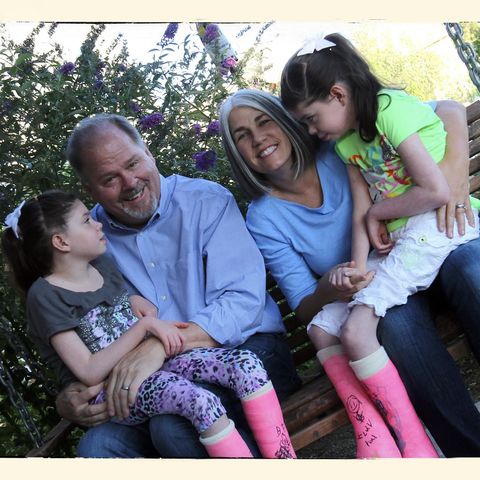
Our guest this week Hugh Hempel of Denver, CO, a technology industry veteran turned health care entrepreneur and father of identical twin daughters with Niemann Pick Type C.
Hugh and his wife Chris, have been married for 25 years and are the proud parents of identical twin daughters Addison & Cassidy. The girls were born in January 2004 and were both diagnosed with Niemann Pick Type C, a type of childhood ALS, a very rare neurogenerative disease. Despite heroic efforts to find a cure and treatments, very sadly the twins passed away in 2019 at age 15.
After a successful tech career that included working at: IBM, Apple and Netscape to name a few, and as a result of the twins’ diagnosis, Hugh & Chris became outspoken advocates for rare disease research. They also created the Addi & Cassidy Fund, a resource for families impacted by Niemann Pick, Cyclodextrin, and a myriad of stories, and resources for families impacted by a wide range of rare diseases.
Hugh has also served in a wide range of leadership positions, including Solutions Therapuetics, Sparkpr, Parent Advocist, N=1 Collaboration and Strainz.
In January 2015 Hugh gave a TEDx Talk presentation entitled: Why I Changed My Mind About Medical Cannabis, coincidentally on Addi & Cassidy’s 11th birthday.
We’ll hear about the Hempel family and about Hugh and Chris’ quest to find a cure and treatments for rare and ultra rare diseases, all on this episode of the SFN Dad To Dad Podcast. This is Part 1 of a two part interview.
Show Links
Phone – (775) 338-4844
Email – Hugh@Hempelfamily.com
LinkedIn – https://www.linkedin.com/in/hughhempel/?skipRedirect=true
Website – N=1 Collaboration – https://www.n1collaborative.org/
Website – Addi & Cassie Fund – https://addiandcassi.com/
TEDx Talk – Why I Changed My Mind About Medical Cannabis (January
2015) – https://www.youtube.com/watch?v=3N8QMeIsX2c&t=1s
Dr. Sanjay Gupta CNN story (11.22.14) –
https://vimeo.com/420572177?fl=pl&fe=vl
Mayo Clinic NPT1 – https://www.mayoclinic.org/diseases-conditions/niemann-pick/symptoms-causes/syc-20355887
MIPLYFFA Website – https://miplyffa.com/
Transcript:
Hugh Hempel is a technology industry veteran turned health care entrepreneur
Hugh Hempel: You know, the kids were severely affected by this neurodegeneration and ultimately lost their ability to walk and talk and their swallow reflux began to become, a significant problem. So the day to day care and feeding, no pun intended, with, the twins was incredibly challenging. It’s a daunting task as any parent who’s had kids like this will attest.
David Hirsch: That’s our guest this week, Hugh Hempel, a technology industry veteran turned health care entrepreneur. Hugh and his wife Chris are parents to Addie and Cassie, who very sadly passed away in 2015 from a rare and fatal disease called Niemann Pick type C. We’ll hear about the Hempel family and about Helen Cassidy’s quest to find a cure to this ultra rare disease in this first installment of a two part interview.
David Hirsch: Dad to the dad. You’re not on your own. We walk this road together, heart and whole.
David Hirsch: Now say hello to the founder of the Special Fathers Network and host of the Dad to Dad Podcast, David Hirsch.
The Special Fathers Network Mastermind Group is free for the first 30 days
David Hirsch: Hi, I’m David Hirsch, host of the Special Fathers Network dad Podcast. The Special Fathers Network Mastermind Group experience is the most comprehensive program the 21st Century Dads foundation offers. Dads raising children with special needs, meet virtually on a weekly basis and form meaningful relationships while sharing weekly wins, discussing books and sharing heartfelt challenges. The Mastermind Group is free for the first 30 days. Stop trying to figure out things on your own. I invite you to join one of the existing Special Fathers Network Mastermind groups. You’ll meet some extraordinary dads, exchange a lot of best practices, and recharge your fatherhood battery for the journey ahead. It might just transform your life like it’s done for so many others. For more information, please see the show notes or Simply go to 21st centurydads.org.
David Hirsch: Through every season, in every stride, great dads are present. 2, 4, 7.
David Hirsch: Now, let’s listen in to part one of this conversation between Hugh Hempel and David Hirsch.
Hugh Hempel is a technology industry veteran turned healthcare entrepreneur
David Hirsch: I’m thrilled to be talking today with Hugh Hempel of Denver, Colorado, a technology industry veteran turned healthcare entrepreneur. He and his wife founded the Addie and Cassie Fund. And our parents to twin daughters diagnosed with Niemann Pick type C, a form of childhood Alzheimer’s. Hugh, thank you for taking the time to do a podcast interview for the Special Fathers Network.
Hugh Hempel: My pleasure, David. It’s good to be with you.
David Hirsch: You and your wife Chris have been married for 25 years and are the proud parents of identical twin daughters Addison and Cassidy. The girls were born in January 2004 and were diagnosed with Niemann Pick type C, a type of childhood Alzheimer’s, a very rare neurological degenerative condition. Despite heroic efforts to find a cure and treatments, very sadly, the twins passed away in 2019 at age. Let’s start with some background. Where did you grow up? Tell me something about your family.
Hugh Hempel: Well, I grew up, predominantly in Denver, Colorado. I was born, in Vermont, but moved back home where all my family hails from. And I have two, siblings. My brother Chris, who’s 18 months younger than I am, and, my sister Lisa, who’s eight years younger than I am.
David Hirsch: And are one or both your parents still alive?
Hugh Hempel: My mom is still alive. I actually live with her in Denver, as she’s nearing the end of her life, unfortunately, I’m spending time with her and, helping to take care of her. My, father passed away, nine years ago. But I’m happy to have the time to spend with my mom.
David Hirsch: Yeah, well, what a blessing it is that you could, be there for your mom at the end of her life. My recollection was she’s in her late 80s and I have very fond memories of doing the same for m. My mom not living with her, but, taking to all the doctor’s appointments, you know, having some really meaningful conversations at the end. So thanks for sharing.
Your father was an attorney who died of alcoholism
Out of curiosity, what did your dad do, for a living?
Hugh Hempel: My father was an attorney. He, graduated Denver University Law School and worked in a variety of different legal positions. I think the most notable was his time as one of the attorneys for the Housing Urban Development portion, of the federal government.
David Hirsch: So was that there in Denver or did he actually work in D.C. though.
Hugh Hempel: The work he did was regional. So I think he was officially, assistant Director of the, Housing Urban Development legal squad here, based in Denver, which I think covered the majority of the Midwest of the United States.
David Hirsch: Got it. And how would you describe your relationship with your dad?
Hugh Hempel: I guess like many, men, I had an, up and down relationship with my father, growing up. He was my best friend. He led me into playing ice hockey, which is one of my main passions. as a very young, young kid, he fell in love with hockey at University of Vermont, which is where I was born. I played hockey all the way through my freshman year in college. and he was instrumental
00:05:00
Hugh Hempel: in all of that. Would get up early in the morning to take me to play hockey. As I grew older and went off to school and so forth, he and I were not as close. in fact, we had some Pretty strong differences of opinion about things. So there was a period of time where, we weren’t close at all. Fortunately, towards the end of his life, we kind of came back together, and I think, we had a lot of shared passions. My love of jazz was, given to me by my father. And, we had a, family tradition of going to the Monterey Jazz Festival every year for many, many years. Very fond memories of my dad.
David Hirsch: Yeah, well, thanks for sharing. we’re a little bit of a hockey family. both of our boys and two of our three girls played hockey. One of the girls played hockey through high school, varsity hockey, and one of our sons played hockey in college. not at a competitive level, but, one of my fondest memories is, we told our kids when they were really small, if you want to be a hockey player, you have to carry on hockey bag. Like, even at age 6, when the bag was about as big as they were, hockey players carry their own bags. You know, it seems like, looking back on it, we were probably a little bit, tough on them. But, hey, you know, I think that goes along with part of what the sport is all about, too.
Hugh Hempel: It’s the way it should be.
David Hirsch: when you think about your dad, are there any important takeaways, lessons learned come to mind?
Hugh Hempel: Oh, boy. Lots of lessons learned. I mean, I. I, suppose to the degree that I have a work ethic, it certainly came from him and my Uncle Tersh and some of the other father figures in my life. I also learned lessons about, you know, tough lessons in life. My. My father, in the end, was an alcoholic. He died of alcoholism, and that was one of the things that he and I struggled with. And so, yeah, it was a tough. It was tough to watch. And, I think it informed my behaviors moving forward, and that was a good thing. So I look at it as he taught me a lesson, despite the difficulty of it.
David Hirsch: Yeah, well, what comes to mind is that you want to emulate certain aspects, the positive aspects of your role models, lives, parents, others. And then you want to live vicariously through the other experiences they have. Try, to avoid some of the behaviors that, you know, weren’t positive or healthy. And, it’s unfortunate. My dad, I think, was a functional alcoholic as well. They just drank like fish, he and my stepmom. And, you know, he would say, hey, never had a dui, never got an accident. You know, what are you talking about? Sort of in denial about it all. But, you know, it’s just like a different Era almost. Right. So I can relate. Yeah.
Your grandfathers were both civil engineers and avid golfers
I’m sort of curious to know what, if any, influence your grandfathers had, first on your dad’s side and then on your mom’s side.
Hugh Hempel: Oh, yeah, my grandfathers were, I was blessed with incredible experiences from both my, my grandfathers. On my dad’s side. I’m named after my dad’s father, Hugh William Hempel. I’m the second. He, was an avid golfer. Well, first he was a civil engineer. A very accomplished civil engineer. Built dams and civil infrastructure all over the world. So I was passionate about engineering, science and math from the beginning. He was also an avid golfer. So by the time I was four years old, he put a golf club in my hands and played golf together until literally until months before he passed away. He shot his age, I think a couple of times in his late 80s or early 90s and I would be fortunate to accomplish the same.
David Hirsch: Wow.
Hugh Hempel: On my mom’s side, Sidney Blandford II was a super, ah, accomplished, well recognized reconstructive plastic surgeon. He was well educated at MIT and he was in the war, World War II, and became a medic and ultimately turned that into a passion for medicine and worked here in Denver as a reconstructive plastic surgeon long before plastic, surgery was, was cosmetic. He, did other than cosmetic plastic surgery mostly, ah, trauma cases and birth deformities and so forth. And he was a passionate photographer. So my love of photography came, among other things from my mom’s dad. Very fond of my relationship with him.
David Hirsch: Yeah, well, thanks for sharing.
Any other role models that played an influential role in your life
It sounds like you have the golf disease from, your dad’s dad and passion, for photography. Anybody else, that played an influential role in your life as a young guy, or perhaps as a young adult for that matter.
Hugh Hempel: Oh, sure, I was blessed to have an uncle, my Uncle Tersh, on my mom’s side. Sidney Blandford iii, or tertiary as the nickname goes, Uncle Tersch is still alive. I just recently saw him. Anyway, he was a huge influence on my life. I spent a great deal of time with him and he was just a very accomplished business person and super strong willed man with a great deal of integrity. And I really respected him, so I learned a lot from him. And then, I suppose you’d call him a second or third father, was what I call him Uncle Louie, Lou Halsal. He was big influence on my life. Taught me how to play tennis and just
00:10:00
Hugh Hempel: lots and lots of things. I don’t even. I can’t even begin to talk about.
David Hirsch: Yeah. Well it sounds like you were blessed all around. Even though the relationship with your dad might have been a little conflicted. The other role models you had both your grandfathers, uncle, Tersch. This quote, Uncle Louis played a pretty influential role in your life.
Hugh Hempel: Yeah, I’m very blessed.
You went to the University of Vermont, took a degree in engineering
David Hirsch: So my recollection was you went to the University of Vermont, took a degree in engineering, IBM, computer vision, a couple stints at Apple and Netscape. I’m wondering, how would you characterize your.
Hugh Hempel: Professional career as in life? sometimes things are serendipity or providence depending on your viewpoint. I suppose I knew I wanted to be a business person, but I knew I wanted to do it in space that was technically ah, oriented. I’ve always sort of been leaning that way. So the engineering degree was mostly there in the form of showing the discipline of being able to get a science degree. I studied business simultaneously at UVM in a program that was designed that way. I thought I was going to go out and be an entrepreneur right from the get go and realize that was not a wise decision. And by sheer luck I got the opportunity to interview at IBM, pretty much straight out of school and landed a job in the sales side, what IBM called the marketing side at the time, in the data processing division, which was IBM mainframes, and ultimately became involved in reselling IBM mainframes which is what landed me at Computer Vision in Boston.
David Hirsch: Well, thanks for sharing. coincidentally my youngest, of our five kids got her first job at IBM and six years later she’s still at IBM.
Chris and his wife met at Netscape, where there were 40 employees
I’m sort of curious to know, how did you and Chris meet?
Hugh Hempel: my wife and I met at Netscape. She was one of the folks in the PR department and I was running electronic marketing infrastructure at Netscape, which was essentially the website. And I did a lot of interviews and press work and she and I worked together quite closely for quite a while.
David Hirsch: Were you one of the earlier employees there at Netscape or not?
Hugh Hempel: Yeah, I mean relatively speaking at the time when I joined the company, I think there were 40 other people in the organization. I think the number on my badge is 120 or something. But that was largely due to turnover. So yeah, I was blessed to be very early and watch an incredible corporate story. Netscape is in and of itself an amazing Harvard Business School case study I guess I would say was grateful to be there and be part of it.
York Rhys’ children were diagnosed with a genetic defect called Niemann Pick
David Hirsch: Let’s switch gears and talk about special needs first On a personal level, and I’m sort of curious now, prior to having your children, did York Rhys have any connection to the world of disability or special needs?
Hugh Hempel: Oh, no. I’m actually quite humbled and somewhat embarrassed to admit that I was kind of a naive, happy go lucky, you know, would be soccer dad. When Addie and Cassie were born, I didn’t have any appreciation whatsoever for the trials and tribulations of special needs, you know, regardless of whether it was rare, disease style, special needs, or other forms. So I became immersed in it very quickly once my children were diagnosed. but I went into it pretty damn naive, to be honest.
David Hirsch: I think that’s the average, or similar response to most. It’s not something you’re familiar with, not something you asked for, and you just find yourself in that circumstance. Right. So learning curve is pretty steep. Maybe there’s some denial at the beginning. Right. Not understanding at all. And, I’m sort of curious to know what was Addie’s and Cassie’s diagnosis and how did it come about?
Hugh Hempel: Officially, their diagnosis is a genetic defect commonly referred to as Niemann Pick type C. It is a lysosomal storage disease. There are a number of different variations of this particular genetic mutation, the common thread being, what’s known as the NPC gene, which is one of the oldest genes in the human body. And it’s the gene that regulates, cholesterol, synthesis in your body, both creation and the depletion of cholesterol, and monitors the homeostasis of cholesterol in your body. And when you have a defect in that process, what, typically happens is you have a significant buildup of cholesterol in your body. And in Addie and Cassie’s case, that manifested itself in huge amounts of cholesterol in their organs and, in their brain, a significant amount of cholesterol buildup. But what happens in that scenario is the cholesterol doesn’t get processed properly and it begins to kill the brain cells and it causes neurodegeneration as a result.
David Hirsch: What age were they when they were diagnosed?
Hugh Hempel: The diagnosis process took over a year. They had a bug, and their pediatrician noticed that they had enlarged spleens by, just manual, you know, feeling their bellies. That kicked off the process. And, like I say, it was, Like many rare parents, we experienced a diagnostic odyssey which went on for quite some time.
David Hirsch: Was it genetically identified or otherwise?
00:15:00
Hugh Hempel: Ultimately, it was genetically identified, yes. Today, you know, 20 years later, the process of identifying this particular disease has been streamlined and it’s quite fast, relatively speaking, because there’s genetic testing that can be done quite quickly and affordably. So it’s usually identified very quickly on, which is a good thing because the sooner you intervene, the less damage is done to the brain, the more likely of, you know, a decent quality of life for the, for the child involved. in our case, the process was literally they got diagnosed by sending fibroblasts, ah, skin samples to a laboratory who grew the skin samples out and then did some analysis on those skin samples to test the cholesterol processing in those samples. And so it wasn’t a genetic test that ultimately did it in our side or initially did it. But ultimately, of course, we did the genetic screening at the Mayo Clinic and it came back with confirmation that that’s the, the condition man.
David Hirsch: Got it. Thanks for the detail.
Early on, what were some of the fears that you and Chris had about diagnosis
Early on, what were some of the fears that you and Chris had, as a result to the reality of this diagnosis?
Hugh Hempel: Well, I mean, the prognosis was well understood already. There was already natural history studies going on. The Parseghan foundation, in collaboration with the nih, had been, tracking Niemann Pick C kids for a number of years. And so we knew the unfortunate diagnosis was as rapid as three or four years or as perhaps as long as 15 years of expected life, which was devastating, of course. So our fears were, you know, loss of our children, you know, sort of the worst possible news you can get.
David Hirsch: Didn’t the Parisigians lose three children to Niemann Pick?
Hugh Hempel: Yeah, yeah. Eric Barseghan, the famous football coach from Notre Dame, these were his grandchildren. His daughter in law, Cindy, you know, founded the Parseghan foundation and has raised an enormous amount of money and done incredibly important things in terms of science and the understanding of this disease. And ultimately the work that was done in labs that were funded by the Parseghian foundation, formed the foundation for the work that Chris and I did to bring cyclodextrin, you know, as a therapy forward for the kids.
David Hirsch: Was there some meaningful advice you got early on, either through the Procyjian foundation or otherwise, that help put things in perspective?
Hugh Hempel: Absolutely. Again, we couldn’t have accomplished what’s been accomplished with these therapies if it wasn’t for the foundation that was created there. And it’s been a while, so my memory is not perfect on this, but the director of the Prosegan foundation at the time, his name was Glenn shepherd, came to Chris and I, we got to know him and we started interacting with him and he let us Know that there was some very interesting, results coming out of one of the laboratories at the University of Texas UT Southwest. One of the folks at the lab was a guy by the name of Benny Liu, who was doing some work on this disease and these genes in general and had discovered serendipitously that cyclodextrin was a, potential therapeutic active ingredient. And Glenn let us know that that was going on. And it was a little bit of a controversy because the Persegan foundation was at the time reluctant to have parents, you know, sort of push forward with treatments. So, Chris and I chose to push forward in that context. And, interesting dynamics happen in the rare disease world sometimes. And that was one of them.
David Hirsch: We’ll be back with more of the conversation on the Special Fathers Network Dad to Dad Podcast in just a few moments. But first this quick message. Please help 21st Century Dads gather research on families raising children with special needs by having them complete the Special Fathers Network Early Intervention Parents survey. A link to the survey can be found in the show notes. As a token of our appreciation, each person, mom or dad, who completes the survey will receive a great dad coin. Thank you.
Cyclodextrin needed to be injected into the nervous system directly
Now back to the conversation.
David Hirsch: My recollection was that this cyclodextrin extended the life of mice in NPC by 2x. but one of the challenges is it needed to be injected into the nervous system directly. Is that sort of what you’re referring to as far as some of the controversy?
Hugh Hempel: Yeah, I mean, yeah, this is a deep subject that could keep us going for hours, but there was a lot of science debate and frankly we were charting completely new territory. I mean we were naive enough in the beginning to think that we could just give the cyclodextrin to the kids in their sippy cup and it would somehow make a difference. I remember Chris bought a kilo of cyclodextrin online, and we started mixing it into their sippy cups, which was hysterical in retrospect. Ultimately, we pursued three paths of
00:20:00
Hugh Hempel: administration. Initially intravenously under the hopes that some of it, the compound would cross the blood bearing barrier and enter into the, ah, nervous system here. Twenty years later, it turns out that that was not an entirely incorrect assumption. There was in fact some crossing of the blood and brain barrier in that context. And in fact, IV delivery is still going on out there in the broad world. But the primary, delivery method became lumbar punctures. So the third path we pursued was, direct to the brain, through installation of a myoresevoir so, lumbar puncture and then direct to the brain. We ultimately abandoned the reservoir in the brain, as it was just surgically very complicated. Cassie ended up stroking out as a result of surgical complications. So ultimately, right now, the standard in the community is to deliver it through, lumbar puncture into the spinal cord.
What were some of the bigger challenges related to this situation with Niemann Pick
David Hirsch: Well, thank you for providing the layman’s description of what you were talking about, not only for my benefit, but for our listeners benefit as well, not to focus on the negative, but what were some of the bigger challenges that, you encountered related to this situation, with Niemann Pick?
Hugh Hempel: Oh, boy. There’s a huge long list. The first challenge, of course, was finding a way to convince the FDA to allow us to treat our kids with this compound. We were fortunate to catch, as they say, lightning in a bottle, because it turns out this compound was being used as a delivery mechanism, for another drug that Johnson and Johnson, their subsidiary Janssen had developed. Anyway, there was a drug master file for cycloduction that was created by Janssen. And we discovered that, and we asked them to help us, by sharing that drug master file, which they were reluctant to do. As you might expect, it was intellectual property owned by Janssen. And we politely asked them, and they refused. And then we not so politely told them that we thought that that was a bad idea. And, my wife, there’s a famous story that’s well documented about my wife writing a blog post that asked the question of, did J and J care about kids? And sent an email message to the PR department at J and J, with a copy of the blog post. And the next morning, we got a call from a cadre of executives at J and J asking what they could do to help. While that story started out a little bit, what’s the word? I’m looking adversarial. J and J, in the end, stepped up and has done nothing short of moving mountains to give us what we needed to make this happen. So I give them a great deal of credit, and I’m still grateful to this day for everything they did and all the folks at JJ that made it possible. But that was an example of just one hurdle.
David Hirsch: Yeah, well, that’s, that’s pretty aggressive, right, to be, putting something out in the public. I know it was years ago, probably before the social media was as strong as it is today.
We ran up against a lot of barriers from the FDA with this drug
Hugh Hempel: Well, the other. I mean, I don’t know how deep you want to go on this, David. But the other things we had to, you know, we were up against is the. And this, this sort of dovetails with my passion and what I’m doing currently in my career. And that is, you know, helping the FDA to understand, this dynamic between risk and reward as it relates to the development of drugs and the, and the barriers that are in place to get a drug approved. So when you have dying kids, you know, the risks begin to wane and respect or in contrast to the potential rewards of treating your kid. So we ran up against a lot of barriers from the FDA as they were worried, and I suppose in retrospect, rightfully so, about the potential of doing harm to our kids. And so they were very interested in having us do toxicology studies and sort of prove this drug was safe in the way we wanted to use it.
David Hirsch: Were they able to be, mainstreamed in, school or not?
Hugh Hempel: I think kindergarten? We tried to mainstream them, but it was fairly obvious very quickly that that was not going to work. So by the time they were through their first few months of kindergarten, they were basically put into the special needs stream at the school district. Ultimately, we moved actually very quickly to having homeschooling, as an option. So we would get a teacher come to the house every morning for an hour and spend an hour with Addie and Cassie working on a variety of things, predominantly around trying to help them communicate. So we, we used some technology called eye gaze technology, which allowed them to communicate through a computer. And the goal was to teach them how to tell us what was hurting or what was wrong and ultimately to be able to identify family members and so forth. We made some progress there. But this horrible disease was so rapidly progressive in Addie and Cassie. it was definitely fighting a very uphill
00:25:00
Hugh Hempel: battle.
David Hirsch says rare disease challenges have taken a toll on his marriage
David Hirsch: Yeah, well, thanks for sharing. Ah, it’s hard to relate, right, unless you’re going through that experience of, watching your children lose their functionality and ah, ultimate their life. Like we’ve discussed a parent’s worst nightmare. And I appreciate you’re just being sort of objective and being able to communicate what that was about. I’m sort of wondering what impact that these challenges have had on your marriage or maybe even your extended family for that matter.
Hugh Hempel: Yeah, I mean, this, there’s no way that this kind of experience doesn’t take its toll on, on everyone. You know, the trauma and anxiety and stress that happens for me personally, for my wife, you know, and as a result for our, our marriage, our relationship, it’s not limited to that. It’s, you know, Folks outside, I. A lot of my friendships and relationships, you know, took a beating, if for no other reason than it was, you know, almost 100% of our focus on the. On the twins for the time they were alive. So for close to 15 years, or the entirety of 15 years, it was very difficult to maintain relationships much further than the immediate family. so that took a toll. And, I could go on and on. It’s quite daunting. I don’t mean to whine, per se. The people I met along the way and the people I started working with, in particular the twins, Dr. Caroline Hastings and all of the nurses that took care of them, the teachers and all of the people I’ve met now subsequently in the rare disease community who share the passion around, furthering the opportunities in individualized medicine and treatments for rare disease in general. I mean, I’ve just, I’ve been immersed in a new community, a new world that has been incredibly gratifying. and so there’s, there’s a silver lining in all of it, I suppose. but yeah, it’s, it’s, it’s very difficult and it’s really, you know, taken. Taken a significant toll on my marriage as well.
David Hirsch: And that concludes the first part of David Hirsch‘s conversation with Hugh Hempelt. Tune in next week when we’ll hear the conclusion on the Special Fathers Network Dad to Dad Podcast.
The Special Father Network is a dad to dad mentoring program
David Hirsch: Dad to dad, you’re not on your own. We walk this road together, heart and home.
David Hirsch: And thank you for listening to the Special Fathers Network Dad to Dad Podcast. The Special Father Network is a dad to dad mentoring program for fathers raising children with special needs. Through our personalized matching process, new fathers with special needs children match up with mentor fathers in a similar situation. It’s a great way for dads to support other dads. To find out more, go to 21st.
Hugh Hempel: Centurydads.Org and if you’re a, dad.
David Hirsch: Looking for help or would like to.
David Hirsch: Offer help, we would be honored to have you join our closed Facebook group.
David Hirsch: Please go to facebook.com groups and search dad to dad. Lastly, we’re always looking to share interesting stories. If you’d like to share your story or know of a compelling story, please send an email to david01dads.org the dad.
Fathers Network Dad to Dad Podcast features great conversations with great dads
David Hirsch: To dad Podcast theme was written and performed by Shane Madden. The show was produced by me, Tom Couch. Tune in again next time week for another intriguing conversation on the Special Fathers Network Dad to Dad Podcast.
David Hirsch: Through every season, in every stride, great dads are present. 2, 4, 7, 3, 6, 5. 2, 4, 7, three, six, five.
00:28:41