

415 – Brad Meshell of Nashville, TN A Wealth Advisor, ED of Jacob’s Audible & Father Of Three Including An Autistic Son
Description
Our guest this week is Brad Meshell, a wealth advisor, executive director of Jacob’s Audible and father of three, including an autistic son.
Brad and his wife, Jaime, have been married for seven years and are the proud parents of three children: Jailyn (18), Jackson (4) and Jacob (7) who is Autistic.
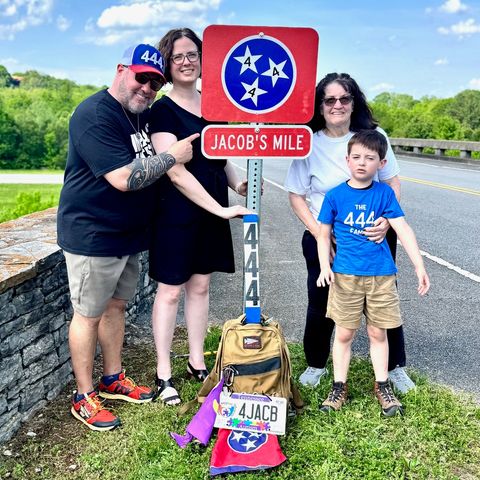
Brad is also the founder and executive director of Jabob’s Audible, a non-profit founded in 2022, whose mission is: Supporting Autistic Kids, Empowering Parents and Building Community. Some of their events include: Pictures With Santa, Ammo For Autism Clay Shoot and the 444 Mile Walk, Bike, Run.
Some of Brad’s gifts include his authenticity and his reslience. It’s a frank discussion where Brad tells of his journey of having a child with special needs all on this episode of the SFN Dad to Dad Podcast.
Show Links
Phone – (615) 589-9898
Email – brad@jacobsaudible.org
LinkedIn – https://www.linkedin.com/in/brad-meshell-a956b21b6/
Jacob’s Audible – https://www.jacobsaudible.org/
Transcript:
Brad Michell has three children with special needs, including autistic son
Brad Michell: The hugs and the cries, listening to Jacob say words, and just do things you didn’t think he would ever do in the beginning. Right. It was always worst case scenario. And now he gets in the car, buckles his seatbelt, he’s very self sufficient. It’s an incredible journey to watch. And we’ve gotten closer with each other because of Jacob and because we learned just like he learned, we learned to love Jacob as our son and just leave the autism in the background.
David Hirsch: That’s our guest this week, Brad Michell, a, wealth advisor and executive director of Jacob’s Ladder, empowering parents in the autism community. Brad is married to Jamie and they have three children, including Jacob, who’s autistic. It’s a frank discussion where Brad tells of his journey of having a child with special needs. And it’s coming up on this special Father’s Network Dad to Dad Podcast.
David Hirsch: Dad to dad, you’re not on your own. We walk this road together, hard and home.
David Hirsch: Now say hello to the founder of the Special Fathers Network and host of the Dad to Dad Podcast, David Hirsch.
The Special Fathers Network Mastermind Group is free for the first 30 days
David Hirsch: Hi, I’m David Hirsch, host of the Special Fathers Network Dad to Dad Podcast. The Special Fathers Network Mastermind Group experience is the most comprehensive program the 21st Century Dads foundation offers. Dads raising children with special needs, meet virtually on a weekly basis and form meaningful relationships while sharing weekly wins, discussing books, and sharing heartfelt challenges. The Mastermind group is free for the first 30 days. Stop trying to figure out things on your own. I invite you to join one of the existing Special Fathers Network Mastermind groups. You’ll meet some extraordinary dads, exchange a lot of best practices, and recharge your fatherhood battery for the journey ahead. It might just transform your life like it’s done for so many others. For more information, please see the show notes or simply go to 21st centurydads.org.
David Hirsch: Through every season, in every stride, great dads are present. 247365.
David Hirsch: Now let’s listen into this conversation between Brad Michell and David Hirsch.
Brad Michell is a wealth advisor and father of three, including autistic son
David Hirsch: I’m, thrilled to be talking today with Brad Michell of Nashville, Tennessee, who’s a wealth advisor and executive director at Jacobs Audible and father of three, including a son who’s autistic. Brad, thank you for taking the time to do an interview for the Special Fathers Network Dad to Dad Podcast.
Brad Michell: Thank you, David. Thanks for having me.
David Hirsch: You and your wife Jamie have been married for seven years and the proud parents of three children, older daughter Jaelyn, 18, Jackson, 4, and Jacob, who is autistic. Let’s start with some background. Where did you grow up? Tell me something about your family.
Brad Michell: I grew up in New Orleans, Louisiana. It’s a very unique place to grow up. you grow up very, very quick and very fast. I’m, the middle child of two sisters. Grew up with both parents. We had a unique childhood. We’re a very close knit family. A lot of people in New Orleans. It’s very culturally family oriented. So I kind of grew up that way. We had people at our house all the time. We had parties at our house. We had everybody’s birthday was at our house. We had a huge backyard, so it came in handy, especially with all the kids. I wouldn’t trade it for anything else in the world. You know, we were lower middle class, but you wouldn’t know it. We never went without. My dad worked seven, eight jobs. My mom took care of us. She also worked two jobs. And it was, you know, we helped raise each other, which was very unique. you know, and I also attribute a lot of my characteristics of manhood, back to those days when I had to listen to my sister and also help raise the younger one.
From the time I can remember, I was on my dad’s hip
David Hirsch: So you mentioned your dad worked, seven or eight jobs. Sounds like he had a great work ethic. I’m wondering, how would you describe your relationship with your dad?
Brad Michell: Oh, very close. From the time I can remember, I was on my dad’s hip. He allowed me to be involved in all the things that he did when it was available. He allowed me to tag along. My summers as a younger child, I spent with him. And so that was kind of how I grew up with being that close. He taught me a lot. He spoke to me like a young man. Even at a young age, he expected a lot out of me. I played a lot of baseball growing up. Travel, teams. I was on two or three local teams. But he was there with me in the evenings. Like I said, we had a big backyard. So we were throwing the ball, hitting the ball against the fence. And he was super. I don’t know how he did it. I don’t know how he worked all day and came home and did what we did. Because he did know so much about so much. I mean, he could put up a fence, he could do plumbing, he could do construction. He crabbed and fished. Very exciting household. You know, people were coming over all the time. He was going places. You want to come with me? Let’s go.
00:05:00
Brad Michell: You know, he was a true New Orleans. I, you know, we call him Yats. You know, deep accent and Just spoke his mind, had a good time. And, but, you know, he taught me a lot.
David Hirsch: Yeah, it sounds like your dad was sort of a jack of all trades.
David Hirsch: Right?
David Hirsch: Is very, you know, like MacGyver, like, you know, he could solve problems.
Brad Michell: Yeah, absolutely. On top of the work ethic and the knowledge that I gained, it was. It was a lot of fun because, you know, he also taught me some of the vices in life. You know, we had horse race, we had racehorses growing up. So I got to, you know, I got to experience going to a racetrack at a very young age. And, that was another unique thing. He had friends of, you know, of every culture. And he shared that with me. And I think that really helped me, become a well rounded young, man. And as an adult, being able to relate to people from all walks of life, because that’s who my dad did business with.
You’re the director of life insurance at Cribble Financial Planning
David Hirsch: So I’m sort of curious to know, what was the highest level of education you attained?
Brad Michell: College.
David Hirsch: Okay. Where’d you go to school?
Brad Michell: University, of Georgia.
David Hirsch: So you’re a bulldog.
Brad Michell: Yep.
David Hirsch: Anyway, from a career standpoint, my recollection was you worked at Barclays for quite a few years, a company called Stephen Associates, and you’re at Cribble Financial Planning. So you’ve had a, financial services career, much like I have. And I’m wondering, what is it that you’re doing now as it relates to financial services?
Brad Michell: Yeah, so I’m actually the director of life insurance or insurance. Anything that comes across as life annuities, accidental insurance, any kind of health insurance, pretty much anything that insurance touches. I facilitate that part of the firm.
Before Jacob was born, I would consider myself ignorant of special needs
David Hirsch: Let’s switch gears and talk about special needs. And I’m sort of curious to know, prior to having, a child, did you or Jamie have any connection to the disability or special needs community?
Brad Michell: You know, we did. And that’s why I have such an appreciation for that community of special needs. Because before Jacob was born, I would consider myself ignorant. Not only autism, but I think a majority of special needs. And that’s why I’m very, very patient with people who don’t understand special needs or don’t recognize special needs right away. Because if you’re not in that community, then you’re really blinded to it. And I understand that if you’re not exposed to it and you don’t live it every day, you definitely can be unaware. The only exposure to autism I had was the movie Rain Man. I thought that’s what autism was. That’s the only Experience that I had or knowledge. When they said Jacob was autistic was that movie.
David Hirsch: Yeah. Well, thank you for being so open and authentic about that. You don’t know what you don’t know basically.
Jacob has very classic autism, very classic traits
And what is Jacob’s diagnosis and how did it come about?
Brad Michell: So Jacob’s diagnosis is, you know, I call it to make it simple. It’s. He has classic autistic, very classic traits. He’s level two non verbal. They change the wording, they change the different diagnoses. Very often they don’t use high functioning anymore. They use level one and things. So it’s kind of confusing, even to me to try and keep up with some of the verbiage that they use. So I just, I explained Jacob very classic autism. He’s very timid, very calm. He doesn’t self harm. You know, we’re very grateful for that. We’re very blessed. He’s, he’s partially verbal, he’s starting to talk, a little bit more every day. He sleeps through the night now, which he didn’t do in the beginning. I don’t think he slept three. And I remember the rotations we had to do just to. He’d sleep 45 minutes at a time maybe. but we, we continued our journey with that. So he’s got a lot of typical characteristics that are starting to show. But his original diagnosis was, I mean it took him, I think it took her 10 minutes when we got into the room, she watched him play a little bit. She watched what he did for about 10 minutes. And so it was really open shut with him. But he’s incredible in the things that he does. And like I said, he’s well aware, he listens to everything you say, he knows everything that’s going on. very mischievous, very funny. He’s comedian. Like, he doesn’t have long winded tantrums or meltdowns. we’re very fortunate with Jacob because I’ve seen a lot of profound cases, I’ve been around a lot of different levels of autism and so we’re very grateful. But he’s very classic because he’s a very happy child, very happy. Smiles, laughs. He’s learned to self regulate a little bit where if things get a little chaotic for him, he’ll move on to his room and kind of hide out for a little while. We take him everywhere we go. He loves going different places. His favorite place is Costco. Yeah, yeah. He loves it because he gets to knock over
00:10:00
Brad Michell: boxes.
David Hirsch: Well, thanks for sharing.
Jacob was diagnosed with autism when he was just a year old
When the diagnosis first came about, if you can remember years ago, what were some of the fears that you and Jamie had at that time?
Brad Michell: Well, I remember I was in denial for a while. Jamie, really pushed at a year old, a year and a half. She really pushed to, have Jacob diagnosed. And I wouldn’t. I wouldn’t do it. This was my first child. And Jamie had, you know, had raised Jalen. And she noticed that Jacob wasn’t doing things that were very, or should be typical. he wouldn’t look at us during diaper changes. He didn’t really have a lot of goo Goo gaga. He was very, you know, just quiet and timid, which alarmed her. But being a dad, I already had his life planned out. You know, he’s going to play baseball, he’s going to play football, whatever it is that dads dream about. And when we, you know, when we got the diagnosis, I, was crushed. but we already kind of knew. We already had him in therapies. but I told her, by the time he’s two, if he’s not where he should be, then I’ll go with it. But we had already put him in therapy before that, because she’s like, we’re not waiting. We’re gonna put him in therapy already. We just didn’t get that stamp. And we got the diagnosis. We were very fortunate with that, too, because that’s, you know, that’s another thing with the autistic community is the wait list to get a diagnosis. And we fell into one at Vanderbilt. They were doing a research study. If we allowed them to film Jacob while he’s being diagnosed, we could get in, like, the next week. And other than that, have been six months, which, as you know, you can’t get any resources until you get that diagnosis, which, you know, the longer you wait, the more time without the resources, without the therapies. Essential, crucial, therapy at that age. And so when we went through the diagnosis, we both went down to the van, and I remember just crying. I cried. Like, she cried. I cried. I thought his life was over. My life’s over. you start blaming yourself. You go through this whole, you know, what did I do wrong? You know, you start talking to God a little bit, and you want to know, what did I do? You’re selfish. In the beginning, I was very selfish. I went to a dark place for about three months and. Very selfish, thinking it was my fault, thinking about what could I do to. To. To save him. What can I do to change it? Putting, like, a death sentence on. On his Life, not a literal death sentence, but I just thought about all the things he was going to be able to do and all the things that, you know, he wasn’t going to be able to see and. And do all these different things, because, you know, when you first Google autism, it’s very scary. And when the more you learn about it in that initial diagnosis, it hits you. It hits you really hard. And Jamie did a lot better. She’s a lot stronger than I am. When it came to this. She was, she just jumped on the phone right away, and for two months straight, she was getting everything in order as far as his therapies and his schooling and all that stuff. So she was the hero in the beginning. I was the sad dad for a long time. It took me about. I think it took about three or four months for me to come out of it.
David Hirsch: Yeah. Well, thanks for being so open and authentic about that.
How has Jacob’s autism impacted your marriage or extended family
you’re fortunate that Jamie leaned in and sort, of led the way. And I’m wondering, what have been some of the biggest challenges that you’ve faced as a family, or how has it impacted your marriage or extended family, for that matter?
Brad Michell: I think in the beginning, more so than, today, I think because of the dark place I went to in the beginning, I think it strained our marriage a little bit because I was checked out, you know, not just from the situation, but from everything it challenged us. Jamie and I are very close, and that was the furthest we’d been apart as far as emotionally. On my end, it was me. It was on my end, but we fought through it. And the one thing helped me out of that darkness was starting Jacob’s audible. But the challenges that we’ve had have been. You know, obviously there’s some limitations to what we can do, what we can’t do, as far as making, decisions. Okay, is this. Is this event okay for Jacob? Is this event going to be something that he can handle and something that we can handle? In the earlier days, I think it was a little tougher, because I don’t think he. He hadn’t learned to regulate. He hadn’t learned to, understand, I think, how he was feeling and what was going on. I think that the challenges was watching him grow and. And make those steps forward and make those milestones, but learning to understand that he’s not Jacob, your autistic son. He’s just Jacob. And that was something we had to learn. We
00:15:00
Brad Michell: had to learn to understand he’s your son. It just looks different and as soon as we got to that point, when he was about three or four, I think the love that we had, and we’ve gotten a lot of support from extended family, our church and things like that. But, you know, and you look back on it, you’re like, oh, there’s things we missed out on. But I, today I’m like, did we really, you know, what did we miss out on? Right. Because we were with Jacob. We were with Jacob. If we didn’t go somewhere, we didn’t leave him. We just stayed home or we found something else to do. But as we learned to understand Jacob’s world, we’ve kind of shifted our world around his world and that’s where we’ve gotten closer. And you know, the hugs and the cries, listening to Jacob say words, and just do things you didn’t think he would ever do in the beginning. Right. It was always worst case scenario. And now he gets in the car, buckles his seatbelt. You know, he’s very self sufficient. It’s an incredible journey to watch. And we’ve gotten closer with each other because of Jacob and because we learned, just like he learned, we learned to love Jacob as our son and just leave the autism in the background and not let that hinder our love for each other and our love for him.
David Hirsch: Yeah. Thank you for sharing.
I’m thinking about supporting organizations that help children with autism
I’m, thinking about supporting organizations and I’m wondering what organization or organizations come to mind that Jacob might have benefited directly from or your family has benefited from as a result of the autism.
Brad Michell: When we first started out, you know, we got wait listed for aba. A lot of our ABA therapies have been great. We’re now with a, company called Blue Sprig and they are incredible. So I think that his therapists have really had a big impact on him. My mom has been a great advocate. She actually moved in with us shortly after Jacob was diagnosed and she plays a huge role as his caretaker. I think about it some days, if it wasn’t for my mom, I don’t know how we would have made it. Not just with Jacob, but with my marriage. Because we’re grateful to have my mom. Because if we want to go have a date night, we do have someone that’s qualified to watch Jacob. She’s really got his routine down. She’s in charge of the routine. she’s so in charge now, she won’t let us do it. Yeah, she’s like, you’re doing it wrong.
David Hirsch: Yeah. Well, thanks for sharing it. Ah, sounds like she has played an influential Role. And I think the organization you mentioned is Blue Sprig. And I’m assuming that’s an ABA therapy type organization.
Brad Michell: Yes, it is.
Jacob’s Audible focuses on helping autistic kids, empowering parents and building community
David Hirsch: Okay, well, let’s switch gears and talk about Jacob’s Audible. My understanding was it started in 2022. The mission is supporting autistic kids, empowering parents, and building community. And I’m sort of wondering what, what’s the backstory? What motivation did you have to start Jacob’s Audible?
Brad Michell: Like I’ve mentioned before, the darkness that I was in, I. I didn’t understand why I kept feeling that way and why I couldn’t get out of it. Because I’m pretty upbeat guy. I’m, the guy that says, no, it’s going to work out. Everything’s be fine. And I wasn’t anymore. With Jacob’s, diagnosis, and it was Christmas that year, he got diagnosed in September. It came to me kind of in my sleep or just laying in bed. I prayed about Jacob for a long, long time. And I was just looking for an answer. And the answer came through. You know, it’s time to get up. It’s time to start moving. And because you realize that you can’t fix Jacob, right? Dads are supposed to fix things, and we can’t fix this. But what can you do for Jacob? You still got to be Jacob’s dad. You still have to be the best dad you want to be, just like you were going to be if he was a typical child. And what does that look like? So I told my wife, I said in my sleep that I was going to start a nonprofit in Jacob’s name, and I was going to walk the Natchez Trace Parkway as our first fundraiser. And she leaned, over to me and told me to go back to sleep. That was her first response to that, that idea. So over the next couple of weeks or so, the next month, I stayed up till 2 or 3 in the morning researching what the challenges would be in something like that. And then obviously looking into nonprofits and what it takes to start a non profit, what it takes to run a nonprofit, things like that. Because once again, I’m stepping into, a situation I know nothing about. And when I start to look back now on why I really started Jacob’s autoboy was because I really wanted to help the next family. You know, we went through hell getting on the wait list, getting the diagnosis, you know, all the insurance, all the IEPs, all the paperwork, the phone calls, the doctor appointments.
00:20:00
Brad Michell: And I think about when I told Jamie, I thought about how Fortunate. We were. We live in Nashville. We have Children’s Hospital 20 minutes away, which they were. You know, they played a big part in the beginning, with Jacob. They still do. We still go there for. For certain types of things. And we had access to a big city that had ABA therapies available and things like that, which a lot of families don’t have that. You know, my mother moved in. You know, my wife’s parents are still alive. They help out all the time with numerous things, just bringing us food. You know, they’re always involved. and, you know, when I started to really start to let it sink in, I was. I was. That was my. My biggest thing was we need to help other families get through this, I think, because what we just went through in the last six months, I don’t know if a lot of people would have made it through, because I. I don’t know if they have the help or if they have the will to get through. Like I said, Jamie kept the ball. She’s the one that kept the ball rolling. if I was alone, I don’t. I don’t know what the outcome would have been. And I think about that all the time. And I thought about that with Jacob’s audible is, how can we change the way we look at things? How do we. How can I change the way I look at autism? And how can I help the next family or the next person, to go through or not go through what I’ve gone through? I referenced some of the things I said, and I said things like, Jacob was taken away from me, and I’m open about the things I said, but God said, I didn’t take him away from you. I gave him to you, and I gave him to you. Not just because he’s perfect the way he is, but I also gave him to you so I can use you to help other people. And I really think that was what God’s purpose was, was to allow me to grow and help other people, you know, as a tool and as a person, that God chose to do his work. And I truly believe that. And I think that’s what got me out of the darkness, was I was lifted up to help other people. You know, God said, it’s time to go. You got to get going. And that was the heart and soul behind it, was making an impact in other people’s lives and not letting his diagnosis take over not only my life, but his life.
David Hirsch: We’ll be back with more of the conversation on the Special Fathers Network Dad to Dad Podcast. In just a few moments. But first, this quick message. Please help 21st Century Dads gather research on families raising children with special needs by having them complete the Special Fathers Network early intervention Parents survey. A link to the survey can be found in the show notes. As a token of our appreciation, each person, mom or dad, who completes the survey will receive a great dad coin. Thank you.
You can’t give up with a young child with a recent diagnosis
Now back to the conversation.
David Hirsch: So I’m sort of curious to know what advice you can share with, parents, specifically dads, if they find themselves with a young child with a recent diagnosis.
Brad Michell: What I would say to dads is, you can’t give up. Everything just looks a little different. it’s not what you thought it was going to be. It’s not what you think it’s going to be. But at the end of the day, Jacob is Jacob, and he’s your son or your daughter. And you have to look at them with the love and with the joy that you would even if your child was who we thought they were supposed to be, your child is a gift. Any child that you’re given is a gift. And you have to realize that. Is it going to be hard? Absolutely. Do I still cry? Absolutely. I don’t cry as much as I used to, but there’s still days, and, you know, we’re seven years in, and, there’s days where I still cry and it’s okay. And that was the biggest thing in the beginning that, you know, if I really want to share something with other dads, from the bottom of my heart, is be vulnerable. Learn to be vulnerable with not only yourself, but with your, you know, with your partner, with your spouse, with your wife. Be vulnerable because it’s okay. Especially when it comes to this situation, because it is a vulnerable situation. It is something that. It hits you from the inside of your soul. I know it did for me. And if I didn’t have my wife to lean on, if I didn’t have my mom to lean on, but if I didn’t cry on her shoulder, if I tried to be. Because us, as men, we want to be tough guys, right? And like I said in the beginning, you can’t fix it. It’s not. It’s not meant for you to fix. It’s not. It’s meant for you to embrace. It’s meant for you to enjoy. It’s a journey that you never saw coming. And this is. This is one that’s obviously going to be special. But at the end of the day, it’s your son or daughter. And it just Looks a little
00:25:00
Brad Michell: different. And that’s one of the biggest things that I had to learn. And I’m still learning. I still learn to accept it on a day to day basis. You have to accept that it’s different. And that was, that’s the hardest thing I think for me. But that’s what I want to leave with dads. Be vulnerable. It’s okay. It’s all right if we’re a little soft, you know, when we need to be. This journey really requires it.
David Hirsch: Yeah. Pearls of wisdom. thank you for sharing.
Brad Couch says don’t be afraid to ask for help from others
Is there anything else you’d like to say before we wrap up?
Brad Michell: I just hope everyone that hears this take something away from it. There’s a great community of people who are involved in special needs. There’s people who have firsthand experience, but there’s also a lot of people who are anxious to learn and give their hands and give their, their hearts to this community. To go along with the vulnerability, you also have to be able and receive help from others and don’t be afraid to ask for help. That’s what we, we preach to our friends and our family and, and the people that are involved with our. Pick up the phone and don’t be afraid to give us a call, give us an email. People come up to me all the time and say, brad, what can I do to help? And I said, you know what you can do? Give them a call. Go knock on their door and say, hey, is there anything I can do for you today? I said, you’ll be surprised. The answer you get. Just a simple phone call to see how they’re doing. You know, bring them a meal. You don’t even know how big a deal that would be. Offer to, just to do anything, just to let them know you’re there could mean the world to them. And knowing that you are aware of their situation and what they’re going through could bring a lot of light and take some load off of people that are in this community.
David Hirsch: It’s great advice. Thank you. Let’s give a special shout out to our mutual friend Jim Littlefield, Del Mars of seeing ability in Louisville, Kentucky for helping connect us.
Brad Michell: Absolutely. We love you, Jim.
David Hirsch: If somebody wants to contact you, learn about Jacob’s audible. What’s the best way to do so?
Brad Michell: The best way would be to go to our website. It’s Jacobs with an S jacobsaudible.org if you accidentally hit.com, that’s okay too because we bought them both. we just don’t service the Nashville area. We service all areas. But There’s a number at the bottom of the website that you can contact also. But yeah, that’s the best way to reach us. like I said, we’re very, very quick turnaround on, responses.
David Hirsch: I’ll be sure to include that information in the show notes that will make it as easy as possible for somebody to reach out. Brad, thank you for your time and many insights. As a reminder, Brad is just one of the dads who’s part of the Special Fathers Network, a mentoring program for fathers raising a child with special needs. If you’d like to be a mentor father or are seeking advice from a mentor father with a similar situation to your own, Please go to 21st centurydads.org thank you for listening to the latest episode of the Special Fathers Network Dad A dad Podcast. I hope you enjoyed the conversation as much as I did. As you probably know, the 21st Century Dads foundation is a 501c3 not for profit organization, which means we need your help to keep our content free to all concerned. Would you please consider making a tax collectible contribution? I would really appreciate your support, Brad. Thanks again, Theo.
Brad Michell: Thank you, David.
David Hirsch: Dad to the dad. You’re not on your own. We walk this road together, hard and whole.
David Hirsch: And thank you for listening to the Special Fathers Network Dad to Dad Podcast. The Special Fathers Network is a dad to dad mentoring program for fathers raising children with special needs. Through our personalized matching process, new fathers with special needs children match up with mentor fathers in a similar situation. It’s a great way for dads to support other dads. To find out more, go to 21st.
David Hirsch: Centurydads.Org and if you’re a dad looking for help or would like to offer help we want, we would be honored to have you join our closed Facebook group. Please go to facebook.com groups and search dad to dad. Lastly, we’re always looking to share interesting stories. If you’d like to share your story or know of a compelling story, please send an email to david2stcenturydads.org the dad.
David Hirsch: To dad Podcast theme was written and performed by Shane Madden. The show was produced by me, Tom Couch. Tune in again next week for another intriguing conversation on the Special Fathers Network Dad to Dad Podcast.
David Hirsch: Through every season, in every stride, great dads are present. 247-365-247365.
00:29:38