

416 – Christian Pache of Thousand Oaks, CA An IT Manager, Father Of 2 Including One With Angelman Syndrome & ASF Board Member
Description
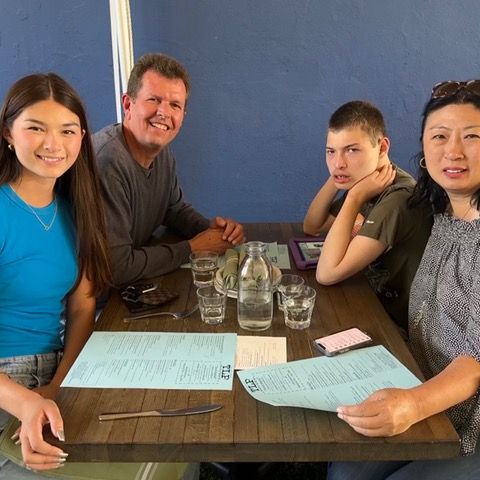
Our guest this week is Christian Pache of Thousand Oaks, CA who is a seasoned financial service IT manager, Angelman Syndrome Foundation board member and father of two including one with Angelman Syndrome & Autism.
Christian and his wife, Anna, have been married for 24 years and are the proud parents of twenty-year old twins: Chloe and Aidan, who has Angelman Syndrome and Autism.
Born, raised and educated in Germany, Christian immigrated to the U.S. for work in NYC. A number of years later he met Anna, married and they started their family. Work opportuinteis took them across the country.
Informed about Angelman Syndrome as the result of Aidan’s diagnosis and with a deep passion for helping others and wanting to give back, the couple has been active within the Angelman Syndrome Foundation, where Christian now serves as a board member.
It’s an uplifting story about family and service to others, all on this episode of the SFN Dad To Dad Podcast.
Show Links
Phone – (917) 882-0562
Email – cpache@gmail.com
LinkedIn – https://www.linkedin.com/in/christian-pache/
Angelman Syndrome Foundation – https://angelman.org/
Foundation for Angelman Syndrome Therapeutics – https://cureangelman.org/
Transcript:
Christian Pache: I think for her, she has, I think, developed a tremendous amount of empathy and I think at least a part that is probably due to having a special needs brother. And so that’s something that’s great to see. That’s something that I think ultimately having a special needs family member hopefully makes almost everybody who gets in contact with them a better person because it almost has to.
David Hirsch: That’s our guest this week, Christian Pache, a financial service IT manager, Angelman Syndrome foundation board member and a father of two, including his son Aiden, who has Angelman syndrome and autism. And Christian shares his life story with us on this Special Fathers Network Dad to Dad Podcast. Dad to dad, you’re not on your own. We walk this road together, hard and whole. Now say hello to the founder of the Special Fathers Network and host of the Dad to Dad Podcast, David Hirsch.
The Special Fathers Network Mastermind Group is free for the first 30 days
David Hirsch: Hi, I’m David Hirsch, host of the Special Fathers Network dad and dad Podcast. The Special Fathers Network Mastermind Group experience is the most comprehensive program the 21st Century Dads foundation offers. Dads raising children with special needs, meet virtually on a weekly basis and form meaningful relationships while sharing weekly wins, discussing books and sharing heartfelt challenges. The Mastermind Group is free for the first 30 days. Stop trying to figure out things on your own. I invite you to join one of the existing Special Fathers Network Mastermind groups. You’ll meet some extraordinary dads, exchange a lot of best practices and recharge your fatherhood battery for the journey ahead. It might just, just transform your life like it’s done for so many others. For more information, please see the show notes or simply go to 21st centurydads.org.
David Hirsch: Through every season, in every stride, great dads are present.
Christian Pache: 247365.
David Hirsch: Now let’s listen into this conversation between Christian Pache and David Hirsch.
Christian Pache is a financial service IT manager and father of two
David Hirsch: I’m thrilled to be talking today with Christian Pache of Thousand Oaks, California, who’s a seasoned financial service IT manager, Angelman Syndrome foundation board member and father of two, including one with Angelman syndrome and autism. Christian, thank you for taking the time to do interview for the Special Fathers Network Dad to Dad Podcast.
Christian Pache: Thank you very much, David for having me. I’m very excited to tell my story and hope, I can provide some helpful information that’ll be beneficial, for your listeners.
David Hirsch: You and your wife Anna have been married for 24 years and the proud parents of 20 year old twins Chloe and Aiden, who has Angelman syndrome and autism. Let’s start with some background. Where did you grow up? Tell me something about your family.
Christian Pache: Sure, I’M originally from Germany. I was born in Germany. I grew up there in a household with my, my parents and with my sister. I went to college there. I studied computer science. I started my professional career there. And then three years, my professional career. I had an opportunity of a position in the United States in New York. And so I took the leap to move over here and started working here. Originally I was planning to go back to Germany after six years because I was on a limited work visa. But three years into my stint here in the United States I met Anna and as they like to say, the rest is history. So I living here ever since.
David Hirsch: Well, thanks for the quick flyby.
How would you describe your relationship with your dad? That’s an interesting question
I’m going to go back to Germany before I got to the United States. And I’m sort of curious to know, what did your dad do for a career back in Germany?
Christian Pache: My dad was an engineer at the German, ah, postal service. So he was really responsible for some of their buildings and some of their infrastructure. And that was pretty much what he, as a breadwinner to our family was doing all of his life.
David Hirsch: And how would you describe your relationship with your dad?
Christian Pache: That’s an interesting question. Thinking about this a little bit and I think that quite honestly raising children in the 70s and 80s has probably been quite different than how it is today. My dad was always there, he always provided for the family, but there was never, I think some of the sort of like guidance or the involvement that I think fathers more like to have today or tend to have today. when I was growing up with him, I feel like overall it was a really good relationship. It was a nice childhood and it was a very nice way of growing up there. But definitely quite different than how parenthood is happening today.
Did you speak English before you came over
David Hirsch: My recollection was, and you mentioned this earlier, that you took a computer science degree and specifically from TU Dortmund University in Germany and you started your career like you had mentioned there in Germany. But the opportunity presented itself that you could work in the States. And I’m wondering if you could just reflect a little bit on the transition. Did you
00:05:00
David Hirsch: speak English before you came over? How good was your English? You know, was it an easy transition or what was the backstory there?
Christian Pache: It was it was a very easy transition. I mean at that point in time computer, science was to some extent in its infancy. When I actually studied it, every single book that we were reading, everything that we are studying, it was all in English because it all really started here in the United States. My first job, even in Germany was for a subsidiary of an American company. So we were speaking English regularly, doing work there. So that made it really fairly easy for me. Also, in Germany you end up learning English in high school, starting to learn English in high school. So everybody in Germany knows some English, so that made it much easier as well. For me, the transition was logical because I had a job in Germany, but I got this really good opportunity in this software consulting company in New York. And it was not just moving to the United States, which excited me, but specifically also to move to New York because I was always fascinated by New York City. And so that kind of made it a very easy decision for me.
David Hirsch: Yeah. Well, thanks for sharing.
How did you and Anna meet? It’s an interesting story
So I’m sort of curious to know, how did you and Anna meet?
Christian Pache: I was in the United States at that time for three years. I’ve been dating on and off, and I was always. It’s an interesting story, at least I find, so. Because I’m always a little bit of an early adopter of technology, partially because I. Computers. And I actually met her through an early version of a, dating website or a dating service. We got into contact through that, and that was the original. That was the original connection. And then we started to talk. We started to exchange emails. At first we ended up talking on the phone a lot. and then, I want to say not much after we initially got into contact, we met. And, Yeah, and that was in 99. And, we got married in 2001, two years later.
David Hirsch: Yeah. Well, I love it. you’re part sort of pioneers in the early years of online, dating.
Christian Pache: Yeah, exactly.
So let’s talk about special needs first. On a personal level, um, I’m sort of curious
David Hirsch: So let’s talk about special needs first. On a personal level, I’m sort of curious to know, prior to having children, did you or Anna have any connection to the world of disability or special needs?
Christian Pache: we did not, per se. One of the things that happened in my life is that When I was 17 years old, my dad had a brain tumor. And he actually had a brain, operation. And, it ended up being a, recurring tumor. So he actually had multiple brain tumors over the course of a couple of years. And that ultimately had an impact on his life. It had an impact on his speech, it had an impact a little bit on his mental abilities. He was very fortunate that he ended up living 30 more years after his first brain tumor operation. But in a way that led to the fact that he really wasn’t the, provider or couldn’t be the provider anymore. He moved more and more into a situation where he needed to be taken care of. And so that was a little bit of an early experience that I had with, ah, something that is special needs, ah, adjacent, I would like to say.
David Hirsch: Yeah, well, thanks for emphasizing the point. you know, when I think about what we’re talking about, we’re talking about being caregivers and mostly from a parent to a child. But you know, if one of your parents declines, typically at an older age, but here, prematurely, like you’d said, at a relatively young age. Right. If he lived another 30 years, it affects you.
Christian Pache: Yeah.
David Hirsch: It gives you some insights and you realize, hey, life’s not fair. Not everybody gets the same, you know, deck of cards or hand of cards, I should say.
Christian Pache: But it also, taught me sort of an initial lesson that I didn’t even know at that time I needed, which is that some things you can change, and if you can change them, you just have to deal with them the best you can. And that was the same situation there as it ended up being when we ended up getting my son’s diagnosis.
David Hirsch: Yeah, good point, well made.
Aiden has a rare disease called Angelman syndrome
So what is Aiden’s diagnosis and how did it come about?
Christian Pache: Okay, Aiden has a rare disease called Angelman syndrome. So Angelman syndrome, to just briefly talk about that, is a 1 in 15,000 disease. So 1 in 15,000 babies get is a loss, of function of the, UBEA3 gene in the 15th chromosome. So the version that Aiden has is there’s a part of that chromosome which is disabled and that causes disability. People with Angelman syndrome are mentally delayed. They pretty much need support for their entire life. A lot of them have seizures, a lot of them have no speech.
00:10:00
Christian Pache: And there are quite a few other health issues that many of them have. It is not a regressive disease. So theoretically, people with Angelman syndrome have a regular life expectancy. Unfortunately, a lot of them pass away, sooner than they should because of accidents or because of side effects of, sicknesses. A very big problem is the lack of speech. When Aidan is crying or has a problem, we have to guess what that problem is because he cannot tell us. So that’s Aidan’s disability. so the way it was diagnosed was, quite interesting because we had twins. It became very obvious to us very early in our kids life that Aiden wasn’t meeting the same milestones that Chloe was meeting and that there was some issue with him. So when he was about a year old, we started getting early intervention therapies in at that time, New York City, where we lived. And so we had some Therapists come to our house. We had an occupational therapist, physical therapist, speech therapists, all of them coming and really helping Aidan. And one of those therapists, when she first saw Aiden, she said, I had a similar kid in the past, and he had Angelman syndrome. You might want to look into that. That’s when we heard about this disease for the very first time. Fast forward. A couple of months after that, Aidan ended up having his first seizure. We needed to take him into the hospital, to have him taken care of. And while we were in the hospital, we actually reached out to the genetics department there, and we got a genetic test done. And that’s when we got his diagnosis, confirmed. And from that point, and it was clear that he had Angelman syndrome.
David Hirsch: About what age would he have been?
Christian Pache: He was, just under two years old at that time.
David Hirsch: Okay. When you got the confirmation, even though there might have been a suspicion, can you remember this goes back, you know, 18 years or so. What was going on in your mind or Anna’s mind?
Christian Pache: It’s, I mean, I get emotional even now thinking about that. I mean, it’s basically grief, right? It is, the end of the life for him that we would have expected or that we expected to happen. So it was quite, I want to say, a traumatic couple, of months for us to get to terms with this and to basically say, okay, get back to the point, as I mentioned earlier, to say, okay, well, that’s what it is. Now we have to deal with it now. Let’s move forward and figure out what that means to our life and how we can best accommodate our life for this. But it was definitely a giant curveball that had been thrown into our life. And, yeah, it was. It was a traumatic, traumatic time. Yeah.
David Hirsch: Well, thanks for sharing. Was there any meaningful advice you got early on that helped put it all in perspective?
Christian Pache: there was, luckily, even at that point in time, already some community that we very quickly found. It’s an organization called the Angelman Syndrome Foundation. It was much smaller then than it is today, so there was an immediate community of other families that were dealing with it. And so there was some good advice there. One of the biggest amounts of advice was get your son as much therapy as you can, because the early years, specifically with the delays, with the developmental delays, are the ones where there was still an opportunity through extensive, physical therapy, occupational therapy, et cetera, to make a big impact in the sort of trajectory of Aidan M. As he moved forward.
What have been some of the biggest challenges related to the Angelman syndrome
David Hirsch: Not to focus on the negative, but what have been some of the biggest challenges that you’ve encountered related to the Angelman syndrome or more recently, the autism diagnosis. You already mentioned the, fact that he’s non verbal, which makes it difficult to know for sure, you know, what, what he might be experiencing.
Christian Pache: I mean, we now have 18 years of experience of essentially raising Aidan. Right. Which is, if I just think about it or say it out loud, it sounds crazy. Through these 18 years, there have been many different issues. I mean, early on, sleep was a huge issue because Aidan was extremely hyper, had a hyper personality. he didn’t, sleep much. So that was quite a few years of extreme, stress for, again, my wife and I. And I have to say I’m so glad that we’re going through this together because at least we could tag team during those days and say, okay, tonight it’s your job to take care of Aiden. Next night is my job. Right. So that was a big issue. We needed to get Aidan to walk. I mean, one of the biggest challenges with Angelman kids is also the mobility. Some of them are not mobile. But we managed to get Aidan to walk when he was, I believe, two or three years old. So it was early enough that we were able to actually send him to preschool, kindergarten, and then to school.
00:15:00
Christian Pache: And the fact that he was not danger aware means that he would go into a, drawer in the kitchen and pull out all the knives and play with them, for example. And yes, so that’s obviously something we don’t want to happen. He would go to the stove and play with, with the buttons and turn on the gas. So there was a lot of adjustments. We basically became experts in, creating, an environment in our house that is safe for Aidan while still giving him the most freedom possible. Another challenge we were having is, aggression and aggression. And I had to learn this over many years, and it took me quite a while to learn. That is not aggression because he wants to be aggressive, but it’s frustration. It’s attempt to communicate for somebody who doesn’t have any speech. I mean, we are at this point in time, essentially, I want to say, almost able to read Aidan’s mind, because with him for 18 years, and we have to, because if he’s unhappy, we are going through a list of things that could cause us unhappiness, and we are hoping that we hit the one that he really, that really causes us at some point. So those were all just some of the challenges we’re going through over the last 18 years.
David Hirsch: Yeah. Well, thank you for, emphasizing the Challenges early on were different than the challenges in the middle or maybe even more recently. That’s really, insightful.
What impact has having a special needs brother had on your marriage
I’m wondering, regarding the challenging situation, what impact has that had on your marriage, on Chloe, his, quote, older sister, by a couple minutes, maybe, and, your extended family, for that matter?
Christian Pache: it had, I think, a lot of sort of, like, different impacts on different people. With Chloe, I want to say, she is a very loving sister to Aidan, and that is great to see. But we also took great care to make sure that her life isn’t dictated by having a special needs brother. So we didn’t want to take away her childhood, her youth, and her growing up. And we were often trying to keep that sort of as normal as we could so that she has a chance. Because, just like, we didn’t pick this life, she didn’t pick this life either.
David Hirsch: Right.
Christian Pache: It was something that we all were just sort of, like, pushed into. So I think for her, she has, I think, developed a tremendous amount of empathy, and I think at least a part that is probably due to having a special needs brother. And, so that’s something that’s great to see. That’s something that I think. I think ultimately having a special needs family member, hopefully makes almost everybody who gets in contact with them a better person, because it almost has to. What kind of impact did it have on our marriage? That is a good question. I think, luckily we are 24 years in and we are still going strong, so that’s, I think, good news. We always try to make sure that we take enough time for ourselves again away from Eden. So, luckily we lived in New York and now we’re living in California. Both of those states have tremendous, services for special needs. We always had respite providers, both in New York as well as in here, that come to our house and take care of Eden for a few hours a couple of times a year so that my wife and I could go out for a nice dinner or even do something mundane as go shopping at Costco together. So, I feel like the ability to taking the time for ourselves was something that really helped us and kept us going in our marriage.
David Hirsch: Yeah, well, funny story about Costco. This, has nothing to do with special needs, but we would go on Costco dates for the $50 hot dog and soda, just because.
Aidan was diagnosed with Angelman Syndrome at age 2
Anyway, I’m thinking about supporting organizations, and I’m wondering, what organizations come to mind, that have been instrumental on Aydin’s behalf or your family’s behalf, from maybe a chronological standpoint from when he was young, as he got older.
Christian Pache: Yeah, I mean, clearly, early intervention services in New York were fantastic. And all the services and all the support that is provided, to special needs kids in New York, was very helpful at first. The school system where Aidan went to elementary and to middle school, was very good. And so he was always well supported there. Once we moved to California, which is between middle and high school, we got him into a really nice, special needs class in a public, high school here in California. And we get a lot of, services through an organization in California called the Regional center, which is essentially local places where, they are the central point of contact for anything special needs related, where you can get respite services, you can get sometimes financial support and other support. So those are fantastic. The one organization that sort of threads through the entire life of Aidan was, of course, the Angelman Syndrome Foundation.
00:20:00
Christian Pache: Because specifically with rare diseases, having sort of a group of people that go through exactly the same issues is just tremendously helpful. Right. So I remember Eden was diagnosed at age 2, and we heard a few months later, ah, of the Angelman Syndrome Foundation. And luckily later that year, they had an Angelman conference. They had a conference. They had a, biannual conference where they get a lot of families together. So we ended up going to that conference in St. Louis when Aidan was just over 2 years old. And it was amazing because we got to go to a lot of sessions. We learned more about the disease, about the genetics, about the disease, helpful hints about, what to do, how to best help your kids, what kind of services were available. Not even talking about all these other families that we got to meet that were basically in our shoes that were going through exactly the same thing. And that was sort of one of those first, like, moments where we knew, oh, we’re not alone in this. We have a community of other people. And that was really helpful.
David Hirsch: We’ll be back with more of the conversation on the Special Fathers Network Dad to Dad Podcast in just a few moments. But first, this quick message. Please help 21st Century Dads gather research on families raising children with special needs by having them complete the Special Fathers Network Early Intervention Parents survey. A, link to the survey can be found in the show notes. As a token of our appreciation, each person, mom or dad, who completes the survey will receive a great dad coin. Thank you. Now, back to the conversation.
Christian Pache: A few years ago, or actually two years ago, when this came to a place, the CEO of the Angelman, Syndrome Foundation. Amanda Moore came over to Los Angeles because there was the opening of the local Angelman Clinic here at a hospital in Los Angeles. So I started talking to her there and, I said, listen, if there is anything else I can do, if I can help in any other way, count me in. And so when I got that opportunity and I was asked to serve on the board of directors, I said, absolutely. I’m so happy to do this. And this is just kind of a small way I find for me to give back to this organization that has provided so much to us.
Living with a special needs child can be quite grueling
David Hirsch: I’m thinking about advice now and I’m wondering, what advice would you Give today with 18 plus years of experience under your belt, to a new dad, a new mom, for that matter, who finds himself in that unexpected, situation.
Christian Pache: Take care of yourself. You cannot have your life sort of like all consumed by being the caretaker. you need to lead your own life to some extent as well. And that is, in my mind, one of the ways that you can try to prevent caretaker, burnout. So that’s one. Living or day in, day out with a special needs child can be quite grueling and quite sort of like, put you down. I like to always have something in my life that I can look forward to. And even if it is a reservation at a nice restaurant or a music concert that I got myself a ticket to, that I’m going to, I find, like, having something like that in my life is something that allows me to sometimes, like, look beyond the, day to day and say, okay, well, there is something exciting that’s going to happen next month and that’s going to keep me going here. So I think that something like that is something that is really beneficial. Last but not least, you have to kind of say goodbye to being a perfectionist if you are one. Because with a special needs child, things will never go according to plan. You can have the best plan about what happens tomorrow, next week or next year, and something else comes and happens and, now you have to adjust and you have to just go with the flow.
You’ve agreed to be a mentor father for the Special Fathers Network
David Hirsch: So, why is it that you’ve agreed to be a mentor father as part of the Special Fathers Network?
Christian Pache: Again, it’s very similar to going onto the board of the Angelman Foundation. It’s a good opportunity to give back. I have a lot of experience at this point in time, and if there is somebody who doesn’t and who is at a different point in their journey and they need some advice, there is probably some advice I can give and some. Some help. And even if it’s just lending, somebody an ear, I think, which is going to be almost as helpful as providing somebody with advice. I think it’s a great. It’s a great thing to do.
David Hirsch: Yeah. Well, we’re thrilled to have you. Thank you for being involved in the network.
Is there anything else you’d like to say before we wrap up
Is there anything else you’d like to say before we wrap up?
Christian Pache: It was an emotional journey, and it still is, and it will continue to be. It’s helpful to talk about it. It’s helpful to have this network. It’s helpful to be able to hear from other dads. I’ve listened to a lot of the, episodes of your podcast, and any of them had some nugget, at least in them that was helpful for me, even after doing this for 18 years. So it’s just. It’s just a great thing that you do here.
David Hirsch: Yeah. Well, thank you for sharing.
Christian’s part of the Special Fathers Network mentoring program for fathers
Let’s give a special shout out to our mutual friend Anthony Lucero for helping connect us.
Christian Pache: Oh,
00:25:00
Christian Pache: yeah, absolutely. And, if I may add, the movie that you just published, the Paperback Plan is a great movie. It’s an independent movie. If it plays anywhere where you are, go see it. It’s well made, and I’m very happy and appreciative that he connected the two of us.
David Hirsch: Yeah. Well, I want to give a special shout out to Anthony, and his wife as well, because, they introduced me to Nick, Massey and their son Cole. Cole is the young man who plays the featured role as the, young individual with the handicap. And, what a amazing story that is. And I’m, hoping that you’ll enjoy, hearing about that as well.
Christian Pache: Yeah, for sure.
David Hirsch: If somebody wants to contact you, what’s the best way to do so best.
Christian Pache: Way is my email. It’s cpachemail.com and, yeah, I check that every day. So just shoot me a quick email and then if we, get to want to talk, I can pass, on my phone number and we could certainly have a conversation. But that’s probably the best first point of contact.
David Hirsch: I’ll be sure to include that, your LinkedIn profile, as well as some information on the Angelman Syndrome foundation and the show notes. Thank you, Christian. Thank you for your time and many insights. As a reminder, Christian’s just one of the dads who’s part of the Special Fathers Network, a mentoring program for fathers raising children with special needs. If you’d like to be a mentor father or are seeking advice from a mentor father with a similar situation to your own. Please go to 21st Century Dads.org Thank you for listening to the latest episode of the Special Fathers Network Data dad Podcast. I hope you enjoyed the conversation as much as as I did. As you probably know, 21st Century Dads foundation is a 501c3 not for profit organization, which means we need your help to keep our content free to all concerned. Would you please consider making a tax effectable contribution? I would really appreciate your support Christian. Thanks again.
Christian Pache: Thank you very much.
David Hirsch: Dad to the dad. You’re not on your own. We walk this road together. And thank you for listening to the Special Fathers Network Dad to Dad Podcast. The Special Fathers Network is a dad to dad mentoring program for fathers raising children with special needs. Through our personalized matching process, new fathers with special needs children match up with mentor fathers in a similar situation. It’s a great way for dads to support other dads. To find out more, go to 21st.
David Hirsch: Centurydads.Org and if you’re a dad looking for help or would like to offer help, we would be honored to have you join our closed Facebook group. Please go to facebook.com groups and search dad to dad. Lastly, we’re always looking to share interesting stories. If you’d like to share your story or know of a compelling story, please send an email to david21thcenturydads.org the dad.
Fathers Network Dad to Dad Podcast features great dads discussing football
David Hirsch: To dad Podcast theme was written and performed by Shane Madden. The show was produced by me, Tom Couch. Tune in again next week for another intriguing conversation on the Special Fathers Network Dad to Dad Podcast. Through every season, in every stride, great dads are present 247-365.
00:28:14