

420 – Rob Floyd of Franklin, TN A High Profile Mixologist, TV Personality & Father Of Five, Including One Moyamoya
Description
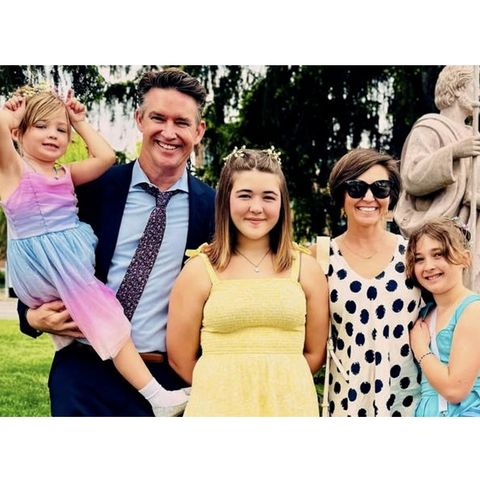
Our guest this week is Rob Floyd of Franklin, TN a master mixologist, TV host, author and father of five including a daughter who has Moyamoya.
Rob and his wife, Megan, have married for 20 years and are the proud parents of five children: Joseph (29), Robbie (28), Ella (14), Indego (11) and Anges (5). Indego is the one with Moyamoya, a rare progressive brain disease.
The older two are from Rob’s first marriage, which resulted in him becoming a single custodial father.
Professionally, Rob is a mixologist (yes he makes drinks for a living). He does this on TV as part of the Bar Rescue franchise and aboard dozens of Princess Cruises on an annual basis.
Rob is also author of the book, Sip At Sea: A Princess Cruises Cocktail Collection From Celebrity Mixologist Rob Floyd.
Rob also shares some terrific stories, including how he became good freinds with people like Brad Pitt when they were both very early in their careers doing commercials for Mountain Dew.
It’s a very uplifting story and one that should be enjoyed with a cocktail or mocktail, all on this episode of the SFN Dad to Dad Podcast.
Show Notes –
Phone – (620) 757-9101
Email – Matt.Shepherd@Midwestevaluation.com
LinkedIn – https://www.linkedin.com/in/matthew-shepherd-86594056/
Company – https://midwestevaluation.com/
Social Innovation Labs – https://www.socialinnovationlab.org/
Order your copy of the new 21CD book: Dads Raising Chidlren With Special Needs & Disabilities: A Guide For 21st Century Dads on Amazon: https://amzn.to/4tdvjcv
Transcript:
Rob Floyd’s daughter Indigo has a rare brain disease
Rob Floyd: And it’s okay to ask for help by not fixing everything. You can kind of be present in those moments when you’re needed, because you’re not going to be able to be a superhero. You’re not going to be able to be Super Dad.
David Hirsch: That’s our guest this week, Rob Floyd, a, master mixologist, TV host, and father of five, including daughter Indigo, who has moyamoya, a very rare progressive brain disease. We’ll hear all about Rob and his family on this special Father’s Network Dad to Dad Podcast.
David Hirsch: Dad to the dad. You’re not on your own. We walk this road together, hard and whole.
David Hirsch: Now say hello to the founder of the Special Fathers Network and host of the Dad to Dad Podcast, David Hirsch.
The Special Fathers Network US tour will take place from May 21 to June 21
David Hirsch: Hi, I’m David Hirsch, host of the Special Fathers Network Dad to Dad Podcast. Two brief messages. First, I’m thrilled to announce our new book, Dads Raising Children with Special Needs and Disabilities. A Guide for 21st Century Dads is now available for pre order on Amazon, Barnes and Noble and other sites. See the show notes for additional information and how to pre order. Second, the Special Fathers Network US tour will be taking place from May 21 to June 21, Father’s Day. The tour will start in Maui, then Anchorage, and then to Milwaukee and all around the US by RV to all 50 states. The purpose of the tour is to strengthen and grow the, Special Fathers Network and to promote the new book. We’re still looking at confirmed venues for the tour, and we can use your help for more information and see how you can help. Please see the show notes or simply go to 21st centurydads.org through every season,
David Hirsch: in every stride, great Dads, are present. 247365.
David Hirsch: Now, let’s listen into this conversation between Rob Floyd and David Hirsch.
Rob Floyd is founder of Rob Floyd Entertainment and father of five children
David Hirsch: I’m thrilled to be talking today with Rob Floyd of Franklin, Tennessee, founder of Rob Floyd Entertainment, a mixologist, author of the book Sip at Sea, and perhaps most importantly, father of five, including one with Moyamoya, a rare progressive cerebrovascular condition. Rob, thank you for taking the time to do a podcast interview for the Special Fathers Network.
Rob Floyd: Thank you so much for having me. I appreciate it.
David Hirsch: You and your wife Megan have been married for 20 years and the proud parents of five children. Joseph, 29, Robbie, 28. Hella, 14. Indigo, 11. Agnes, 5 indigoes. The one with Moya. Moya, a rare progressive brain disease. Let’s start with some background. Where did you grow up? Tell me something about your family.
Rob Floyd: Yeah, so my dad was, a Dr. Air Force. The funny part is I’m one of nine kids, which is very fun, very, riot. seven boys, two girls. So it was hysterical because you could hear my mom was dinner time, yelling, Mary, Freddy, Stephen, Jamie, cj, John, Robert, Ann, Tony. You know, I just, I think I got them all. I hope I didn’t. But, I mean, it was just such a funny thing. And, you know, originally in the Air Force, we did some traveling, but mainly at the end, my dad kind of went into private practice and a brilliant pediatrician. Immunology was just. Just incredible. And just, a wonderful Irish storyteller. And so, he, you know, we had such a great family. Great growing up. It. Very competitive, very competitive. But it was wonderful too, because it drove you and it was wonderful. I think the biggest thing, my dad was such a great storyteller. The dining room table became sacred because it was there. I learned very early on that the dinner was never about the food, it was about the story. The food was always the exclamation point. And so my mom was a great cook, but for nine, it was always more banquet style. But, man, my dad could put together stories like nobody’s business. Business.
David Hirsch: I love it.
How would you describe your relationship with your dad? Oh, it was wonderful
Thanks for sharing. How would you describe your relationship with your dad?
Rob Floyd: Oh, it was wonderful. Brilliant. You know, at first with the older kids, they all became pretty much Doctors, lawyers, Wharton, CFOs and all that. The youngest three, sort of much more creative. And after a while, he didn’t hold me to those standards that the others did because I could work as hard as I could. I’ll do well in school, but I’ll never get the straight A’s like the others did. But I could do so many other different things. We had a great relationship because I always kept good grades and then was super involved in sports in the schools and. And church. And he used to love coming to the games. My mom and dad loved coming to it. So whether it was, football, basketball, baseball, swimming, I played it all. So they would come and yell and hoot and holler and it was. It was a really special time. And I can almost still to this day, you know, be taking the court and always look up in the court and know what section they’re in, and it was so fun.
David Hirsch: Yeah.
David Hirsch: Well, what I hear you talk about with your dad is that, he was very engaging. Right. Great storyteller.
Rob Floyd: Yeah.
David Hirsch: Sounded like he had a good work
00:05:00
David Hirsch: ethic, based on the type of career that he pursued and that he was present. Yes. Even though there was A lot of you.
Rob Floyd: Yeah. Yeah.
David Hirsch: Maybe by the end, once all your older siblings were out of the way, they would be able to focus a little bit more just on you. Because you were the last to leave the nest.
Rob Floyd: Exactly. Well, there’s one younger, but yes, the last two, I think they get to enjoy it a lot more, and that was really sacred for them. It’s like they got to enjoy their marriage more. They got to enjoy going to our games and just really kind of, relishing those moments.
David Hirsch: Any important takeaways, lessons learned? When you think about your dad, I
Rob Floyd: think that he taught me basically how to work super hard without discipline. There’s chaos. I love the saying, and it was in Wall street, too. But man looks into a mirror and sees nothing looking back at him. And at that moment, he knows his character. For me, it’s like my dad was my shining star and how he treated his profession, his family. His wife was the love of his life, Kathleen. And so, you know, that’s one thing that I try to emulate every day.
Your grandfather was stricken with polio and went on to become Gloucester mayor
David Hirsch: Any influence from your grandfathers first on your dad’s side?
Rob Floyd: I think the biggest one was my grandfather. He passed when I was probably 4 or 5, but he was in a wheelchair. He was stricken with polio. Brilliant guy, super smart. But when he got polio, boy, he got sent to a, sanitarium where, you know, they would, you know, fresh air and all that. In fact, I read a, little handwritten thing about him. He was put into a train, and they couldn’t fit him in the train. Obviously, there’s no ADA sort of stuff back then. So they had to put him on a stretcher and put him through a window to get him into the train to send him to. But when he came back, he was completely broke. The family had nothing. And I think that was the first thing that I really with. What I went through, which I drawn, is there was courage in asking for help. How he paid it back was he ended up becoming the mayor of Gloucester. He would go on campaigns from door to door in a wheelchair and knock on doors and all of that. He was an amazing mayor, wonderful guy. And, But his grit and determination were really powerful. And I look back and I read, and I still have a picture up on our wall of him. And it’s, It’s very moving.
David Hirsch: Yeah. Very powerful. Thank you. That visual image I have of him being hoisted into the train and then, going from door to door in his wheelchair. Right. You know, it’s pretty powerful. Thanks for sharing. Yeah.
Rob Floyd: absolutely.
Matthew Kirby says those moments in high school prepared him for life
David Hirsch: So any other father figures, men that played an important role when you were a young guy, or perhaps as a m. Young adult?
Rob Floyd: Yeah, you know, a lot of my coaches did. I had, some really, really wonderful coaches, in high school. Silly name. Chuck Lowendick was an amazing coach. He was so tough on me. but, you know, when you never thought you could make it through, you always knew there was something left. And I think that’s the biggest thing. And then Scott Possle was my college coach. Boy, I had some coaches with some names, huh? But they were always so tough. Oh, my God. But those moments, and I remember reading Pat Riley’s book when he talked about it, is those moments of playing harder than you ever did, prepared you for life, which could hit you harder than you could ever imagine. And so I draw on those moments all, even to today. And it’s okay if you didn’t win the day, but did you give it everything? And really, was that everything? And, you know, when I got to college, I realized I’m not going Pro. You know, 6 foot 4 guard is not the biggest, you know, like, we need that.
David Hirsch: Yeah. Thanks for sharing. My recollection was you went to Florida Southern College.
Rob Floyd: Yes.
David Hirsch: Where did you see your career taking you?
Rob Floyd: So, originally, I thought I was going to be in sports or some sort of a coach. And I love teaching, love being with people and stuff. But what happened was I started doing theater. Now, I didn’t start. I auditioned for theater, and nobody would hire me. So I just kept auditioning and auditioning and auditioning, and finally somebody did. And I worked hard so I could learn it and do it pretty well. But then I ended auditioning for a commercial, ended up booking the commercial, ended up working with a guy who was phenomenal. Brilliant guy, Stayed at my house for a while. My mom loved him. And his name’s Brad Pitt.
David Hirsch: The Brad Pitt?
Rob Floyd: The Brad Pitt.
David Hirsch: Oh, geez.
Rob Floyd: In fact, if you look back on the Mountain Dew commercials of horseback riding, there he and I are. But. And this is something I teach with all my teams, I said, you know, when I would talk to Brad and visit him and all that, and he was the chicken, or he was, you know, doing whatever job he could to support his acting dream. And there were so many of them, I would say, why do you work so hard? And he would look at me and he said, you know, whatever I do here will translate for the rest of my life into everything I do. Which sounded kind of crazy. If you’re just being a mascot of A chicken factory or whatever. But it’s true.
00:10:00
Rob Floyd: And so that discipline, that holding himself accountable and that being okay to be silly and work hard really kind of played into everything he did. And there was no shortcuts. And so I teach that to my teams when I’m working and training bar teams around the world is like, listen, I, revealed at the end, this is what he held himself to. These are the dreams. This was his North Star. He never. He never gave up on it. He forgave himself when he did wrong or messed up or all of that, but that’s what you can accomplish.
David Hirsch: So you’re talking about Brad Pitt, the person that’s got a bigger than life personality. Yeah, but you’re talking about him, before he became the Brad Pitt we know today.
Rob Floyd: Yes, correct. Correct. Late 80s. 1987.
David Hirsch: Yeah. I’m gonna have to go back and see if I can find that Mountain Dew commercial.
Rob Floyd: Oh, you will. On horseback. Just Mountain Dew on horseback. It’s us riding behind horses and water skis. It’s an 80s moment. Being cool.
David Hirsch: You’ll find in the state of the.
David Hirsch: Oh.
Rob Floyd: So I was. I. I went on to act. I. I ended up, having in my own TV series. I was on sliders, replaced Jerry o’. Connell. I Godzilla. You’re welcome. and then, with Matthew Broderick and all that, I got eaten. So it doesn’t really help, but, I was working with an amazing teacher and director, named John Kirby out of Los Angeles, and he introduced us, and I fell in love immediately. And then finally, after months, she went out with me. And then that first time out with me, I asked her to marry me. And then after just. Yeah, no, you’re not pushing anything.
David Hirsch: Why’d you wait so long? Why’d you wait so long?
Rob Floyd: Yeah, but no. And so now we have. You know, I, was married before. I was raising two boys alone, and she really came in and rescued us, and, has been just my rock ever since.
David Hirsch: I love the story. Thanks.
Indigo was diagnosed with myomoia at age three
So let’s talk about special needs first on a personal level.
Rob Floyd: Yeah.
David Hirsch: So what is Indigo’s diagnosis and how to come about?
Rob Floyd: So one day she basically was, playing, and all of a sudden couldn’t get up and couldn’t move. My wife called, the doctor, and the doctor’s like, you know, we’re gonna get an ambulance out there right away. And, it was. It was just out of the blue. And it was only, after we were brought to UCLA medical that they, after a couple days, diagnosed her that she. Well, right. Almost immediately with a stroke and that. Stage four. Moya. Moya.
David Hirsch: Geez Louise. So just out of the blue, typical kid bumping along just like the others, and, has a stroke, and then this is the outcome of that.
Rob Floyd: Yeah.
David Hirsch: How old was she?
Rob Floyd: Three.
David Hirsch: And, how did the myomoia diagnosis come about so quickly?
Rob Floyd: This is, a blessing. And my wife was incredible with it in the sense of, like, working with this incredible physician named Dr. Wong out of, UCLA. And, he specializes in moimoi. Because if we had not been there, I don’t know that they would have been able to recognize it right away. And this is one of the few hospitals in America that treat it. And so it was very. It was very out of the blue. It was very out of the blue. And so they came and talked to us. And then that started our several years in hospitals and ICUs and living like that.
David Hirsch: It must be a. Not just a rare disease, but a very rare disease. Yes. When you first learned about it, what were the fears that you and Megan had?
Rob Floyd: I think the first thing is that we’re. You, don’t know what you don’t know, and that it lets your mind race to horrific places, to everything. And I think that was my biggest fear was the fear of the unknown. The fear of this is it. There’s so many things that were cascading at the same time. The challenge was we were then all of a sudden living in a hospital. And then, you know, thank God for, Megan’s parents, Steve and Diane Klein, because they came and would stay at the house. But also we had so many different friends. We had so many different people and neighbors that would all of a sudden, you know, pitch in. And, I think the biggest core moment was that I. And this was big for me was that. And I hope it resonates with people out there. Is silence isn’t strength. Where normally we think of ourselves as men and we hold on to these things and we fight through them, and there are things in your life you can’t do that with and that you really need help, and it’s okay to. It’s important to ask. So, you know, it was huge to be able to reach out and to see the different community and the people and people you could never pay back or you may never even see again, they just dropped off a meal. They just did little things like that, which meant the world and for us, I kind of think it started to take away not being there. That guilt no longer had to be our compass.
David Hirsch: Yeah, very powerful. This, silence is not a strength.
00:15:00
David Hirsch: Very powerful.
A lot of prayer, a lot of meditation helped during treatment
Was there some advice you got early on that helped put all this in perspective? Something you can pinpoint when you look back.
Rob Floyd: You know, a lot of prayer, a lot of meditation. There was just friends and I really appreciated. A lot of them were just quiet. They would come sit at the hospital and talk about sports, talk about, you know, anything, you know, to take your mind off of. Because as everyone knows, you’re. You never sleep at a hospital. You never sleep. And it’s like a couple hours of like, you know, maybe in a row. And there’s times you’re just losing your mind and it’s just, it’s beyond stress all the time. And so it was just, it was a 15 minute nap with having a friend watch over her, you know, in the room or something like that, where it was. Those sort of things were really powerful. And then honestly, sometimes, like having somebody there so that you could take a run, so you could go for a walk, that you could just get out of there because you need to break the cycle of that energy that just kind of goes around. And yeah, that was really tough, not
David Hirsch: to focus on the negative.
What have been some of the bigger challenges you’ve encountered over the last decade
But what have been some of the bigger challenges that you’ve encountered over the last decade?
Rob Floyd: First, I think was the financial one. When you’re looking at it, you’re like, there’s no way we can pay for all of this. There’s no way we can figure it, all of it out. And then I think that as a man, you’re like among, the provider. You can be scared and strong at the same time. And so for me, scared to death of that. I was scared to death of the medicine, scared to death of strokes and seizures. Scared. And it was by not denying that, but, but accepting it and, and focused on that North Star and the moment. I think that that was the critical part. Dr. Seuss had once written that you never realize how important a memory is until it becomes a moment. And so there were so many moments with friends there that were just powerful and guided you through and became so much bigger. But those moments helped guide you and help you take an easy, deep breath.
David Hirsch: We’ll be back with more of the conversation on the Special Fathers Network Dad to Dad Podcast in just a few moments. But first, this quick message. Please help 21st Century Dads gather research on families raising children with special needs by having them complete the Special Fathers Network Early Intervention Parents survey. A link to the survey can be found in the show notes as a token of Our appreciation. Each person, mom or dad, who completes the survey will receive a great dad coin. Thank you. Now back to the conversation.
What impact have these challenges had on your marriage, Indigo siblings or your extended family
David Hirsch: What impact have these challenges had on your marriage, Indigo siblings, or your extended family for that matter?
Rob Floyd: My wife is amazing. She works, she does so much. I, you know, still travel for work and do all my stuff. And she’s really the rock. She really has, you know, stopped working. So she’s home. She’s really guiding in education and health and all of that for the family. And I think it was a big challenge for everybody that all of a sudden mom and dad aren’t there. You know, they’re at the hospital. And so, you know, the other kids were, you know, very nervous. very nervous.
David Hirsch: So how is Indigo doing today?
Rob Floyd: So much better. So much better. She’s doing really well. There’s still challenges that we face. The brain is so tricky, so there’s so much that you don’t know, and only time really can fix it. You know, she attends, school a couple days a week. The rest of it’s homeschooling. You know, here’s. I think the biggest thing. The biggest thing for me is it was a crazy moment. I think it was a really profound moment when I realized my 3 year old was my hero.
David Hirsch: Yeah, that’s a game changer.
Rob Floyd: Yeah.
I’m thinking about supporting organizations Indigo has benefited from
David Hirsch: I’m thinking about supporting organizations. I’m wondering, what comes to mind, organizations that, Indigo’s benefited from, your family’s benefited from.
Rob Floyd: You know, I think the first one, which was we didn’t even know existed, was, you know, the family services that they would child life in the hospital was just unbelievable. We didn’t know it was there. And these, you know, m. Ladies and men and all would come in and they would bring games, or they would just bring a dog or they would bring something to break up the monotony. A toy, a stuffed animal. Anything in those 15 to 20 minutes. Oh, my God. Were just unbelievable. Oh, my goodness. That was. That was the biggest thing because that was like. That was like the triage on the front lines. So that was one. And in fact, we’ve done some fundraising for them as well.
You quit acting to become a bartender, and now you’re a cocktail ambassador
David Hirsch: So most people know you because of the,
00:20:00
David Hirsch: work you do as a mixologist. And I’m wondering if you could share with people what it means to be a cocktail ambassador.
Rob Floyd: Oh, yeah. So this is a very accidental profession, trust me. And, we were laughing because any senior in high school or college would be like, yeah, I’ll do that. You know, I was a dad raising kids you know, diapers don’t pay for themselves. So I was always working and hustling, but the one way to do it was through bartending, you know, and as an actor, I ended up quit acting so I could be a better dad. And I was working with James Cameron. When I quit the show, I was like, I’m not being the dad I need to be. And so I quit it, and I had no idea what to do next. It’s that jump. It’s that leap of faith. What I eventually realized was that I’m a storyteller. We’re all storytellers, but I’m a storyteller, and this is just a different way of doing it. And now I’m a cocktail ambassador, with Princess Cruises. I do 300 properties around the world. I train 7,000 bartenders. And for the past 10 years, I’ve starred on the number one TV show. So I went back to TV, but in a culinary way, in a way I never thought possible. So now it’s hysterical because my kids go to school and the teachers are always like, your child wanted to make cocktails at lunch. And that’s what you want to hear when the kids are in kindergarten. It’s very funny. And for me, you know, when I train teams, there’s a great study, and it’s from a book called the Good Better Place. And, also Yale uses it, but it’s called the rule of 17. And I live by this rule, teaching teams. And it says that people laugh and smile 17 times a day, which seems about right. But a great bar, they do it 17 times an hour. That’s why we go to a great bar. And so really embracing that and understanding it and teaching my team that having fun and making people feel heard and loved and cared for and reading a room without having to, you know, ask questions, but you can just see how it is and see how people reacting. That’s the real joy and that’s the success. And that’s why we go to a bar, and that’s why it is the rule of 17 for me.
David Hirsch: Love it. So for those who don’t know what Bar Rescue is with Paramount Pictures, maybe you could, just give us a quick flyby.
Rob Floyd: So it is a rescue show. I signed on 11 years ago, but it’s been going on for 13 years, I believe now. And there’s so many great success stories we have out of it. It’s real. There are times where people take it and they take off, and next thing you know, they have five restaurants and bars and there’s times where people hate us and call us every name in the book and we don’t rescue it. What are you gonna do? But it’s a very, challenging show, but it is. It’s a great show that’s been going on for a long time.
I’m wondering what advice you can offer to a parent not about drinking
David Hirsch: I’m thinking about advice now. And I’m wondering what advice you can offer to a parent not about drinking or back to special needs, parent that finds themselves in that situation, that you and Megan found yourselves in unexpectedly.
Rob Floyd: I think that you don’t have to fix everything. You’re gonna want to as a dad. You are gonna want to, and you’re gonna want to fight and you’re gonna rage and you’re gonna want to. There’s gonna be so much anger and why me? And all of that. But if the core. You go, I don’t have to. Is the number one thing. Then you go back and it’s okay to ask for help. You know, silence is not strength. And by not fixing everything, you can kind of be present in those moments when you’re needed. Because you’re not going to be able to be a superhero. You’re not going to be able to be super dad. You’re just going to have to be in that moment, which is where you need to be for everyone. And that’s enough. And it’s hard to give yourself permission, everyone else that, Because you’re not going to want to. But that’s the most important thing.
David Hirsch: Yeah. Great advice. not having to fix everything and just my words paraphrasing to be present.
Rob Floyd: Yeah, exactly.
You’ve agreed to be a mentor father for the Special Fathers Network
David Hirsch: So why is it that you’ve agreed to be a mentor father as part of the Special Fathers Network?
Rob Floyd: Just to try to give back, to try to really help in any way. Not necessarily that I have the most clever things to say or I can understand other people’s pain, I can’t. But really just to, you know, to say that there is, you know, a light at the end of the tunnel. And maybe that’s just for moments of the day and stuff and to be able to celebrate those moments again. So my dad, nine kids, I go back to this. And, he never wanted a gift for his birthday. Never. Christmas. Nope. He only wanted us to memorize poetry. And so when we would have to give him his present, we’d have to stand up. So we all know so much. My dad passed in his 50s, just a stroke
00:25:00
Rob Floyd: out of nowhere. And it was, ah, not what my daughter, has or anything. A venous malformation. But we all know all of this great poetry, so we all get together. There’s a great saying that I learned back when I memorized the cremation of Sam McGee. The saying is a promise made is a debt unpaid, and the trail has its own stern code. And promising as a dad, you’re going to be there no matter what. The trail’s tough, it’s tough, but celebrate yourself. Love your moments. Be good to yourself. You don’t want to feel guilty, don’t. You’re going to want to feel all these things, don’t. You’ve got to find ways. And you also got to find ways to have movement. Whether it’s a walk, whether it’s a run, whether it’s anything. Just out of that moment, just so you can refresh and come back.
David Hirsch: Great advice.
Rob Floyd is part of the Special Fathers Network mentoring program
Is there anything else you’d like to say before we wrap up?
Rob Floyd: No, I just, you know, I love what you’re doing. I think this is critical. I wish I could have heard it back when, when we went through, what we did and what we’re going through now. So it’s so much, You’re living in the unknown and your mind can race to so many different places and don’t let it stick to your North Star and take deep breath.
David Hirsch: Great advice. If somebody wants to contact you, what’s the best way to do so?
Rob Floyd: My email is Rob Floydobfloyd n t like entertainment ent.com and then I’m, on because I travel a lot. I, you know, I do trainings in Australia and Italy or wherever. I’m on Instagram at drink with Rob. And that’s easy because it always pops up and, and dming there is usually a pretty easy way to get easier, way to get in touch with me, you know, because I see that, you know, no matter what country you’re in, sometimes, like texts, you come back in the country and all of a sudden there’s 700 texts and you’re like, oh my God. You know, I mean, like, even today I’m, back in the country. But there’s 117 texts so far this afternoon.
David Hirsch: And I’m like, need a text manager.
Rob Floyd: Exactly. I know.
David Hirsch: I’ll be sure to include the email, and the Instagram handle in the show notes. So it’ll make it as easy as possible for somebody to follow up. Yeah, Rob, thank you for your time and many insights. As a reminder, Rob is just one of the dads who’s part of the Special Fathers Network, a mentoring program for Fathers raising a child with special needs. If you’d like to be a mentor father or are seeking advice from a mentor father with a similar situation to your own, Please go to 21st centurydads.org thank you for listening to the latest episode of the Special Fathers Network Data dad Podcast. I, hope you enjoy the conversation as much as I did. As you probably know, the 21st Century Dads foundation is a 501c3 not for profit organization, which means we need your help to keep our content free to all concerned. Would you please consider making a tax deductible contribution? I would really appreciate your support.
David Hirsch: Rob.
David Hirsch: thanks again.
Rob Floyd: Thank you so much.
David Hirsch: Dad to the dad. You’re not on your own. We walk this road together, hard and home.
David Hirsch: And thank you for listening to the Special Fathers Network Dad to Dad Podcast. The Special Fathers Network is a dad to dad mentoring program for fathers raising children with special needs. Through our personalized matching process, new fathers with special needs children match up with mentor fathers in a similar situation. It’s a great way for dads to support other dads. To find out more, go to 21st
David Hirsch: centurydads.org and if you’re a dad looking for help or would like to offer help, we would be honored to have you join our closed Facebook group. Please go to Facebook groups and search dad to dad. Lastly, we’re always looking to share interesting stories. If you’d like to share your story or know of a compelling story, please send an email to david@21stcenturydads.org the dad
David Hirsch: to dad Podcast theme was written and performed by Shane Madden. The show was produced by me, Tom Couch. Tune in again next week for another intriguing conversation on the Special Fathers Network Dad to Dad Podcast.
David Hirsch: Through every season in every str, great dads are present. 247-365-24-7365.
00:29:22