

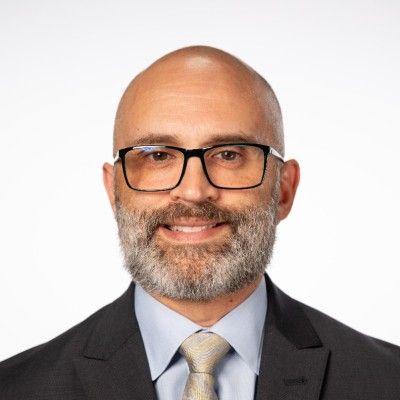
422 – Justin DeVault of Algonquin, IL a Data Analyst, Father of Three Including One With Autism & Loss Of One At 15 Years Old
Description
Our guest this week is Justin DeVault of Algonquin, IL a data analyst and father of three including one with Autism and the loss of their oldest at 15 years of age two years ago. This is a follow up interview to the interview Justin did in June of 2022.
Justin and his wife, Margaret, have been married for 21 years and are the proud parents of three; Hazel (7), Alice (9) and Henry, who would be 17, but very sadly passed away two years ago. Hazel has Autism and Henry had a brain stroke shortly after birth, that lead to the loss of his sight and impaired his neurological development.
Justin reflects on the loss of Henry, the value of therapy and the ongoing challenges of raising a daughter with autim, that lead to the difficult decision of a residential placement, for a pre-teen, at the Genesee Lake School in Oconomowoc, WI.
Justin, thank you for sharing the update and sincere condolences to your family on the loss of Henry. All on this episode of the SFN Dad To Dad Podcast.
Show Notes –
Email – pasteboardmask@gmail.com
LinkedIn – https://www.linkedin.com/in/justin-devault-373043b9/
Therapeutic Residential School – https://www.geneseelakeschool.com/
Dream Riders TLC – https://www.dreamriderstlc.com
Clearbrook Arlington Heights – https://www.clearbrook.org
Thumbuddy Special – https://www.thumbuddyspecial.org
June 2022 SFN Dad To Dad Podcast – https://21stcenturydads.org/205-justin-devault-of-algonquin-il-the-father-of-three-including-a-daughter-with-autism-son-who-suffered-a-brain-stroke/
Order your copy of the new 21CD book: Dads Raising Chidlren With Special Needs & Disabilities: A Guide For 21st Century Dads on Amazon: https://amzn.to/4tdvjcv
Join 21CD on the SFN U.S. Tour, a 30 day, 50 state, 60+ stop tour taking place from May 21 to June 21, 2026: to strengthen and grow the Special Fathers Network as well as give away copies of our new book.
Transcript:
Justin DeVault’s oldest child, Henry, passed away two years ago
Justin DeVault: We always monitored him through a, baby monitor when we were going to bed. And Margaret, my wife, she happened to go down and check on him one more time before, we were going to sleep. And she came back upstairs and said, justin, something’s wrong. We gotta, we gotta do something. And, he was just having really labored breathing and, you know, it just wasn’t good. So I said, all right, we’re good. We’re gonna, call an ambulance and we’re just gonna get him checked out. Probably don’t need to. Let’s just play it safe, right?
David Hirsch: That’s our guest this week, Justin DeVault, a data analyst based in Algonquin, Illinois and a father of three. Sadly, Justin’s oldest child, Henry, passed away two years ago at age 15 due to complications stemming from a brain stroke he had shortly after birth. This is a follow up interview where we’ll hear how Justin and family have coped with the loss of Henry. That’s on this special Father’s Network Dad to Dad Podcast. Dad to the dad, you’re not on your own.
David Hirsch: We walk this road together, hard and whole.
David Hirsch: Now say hello to the founder of the Special Fathers Network and host of the Dad to Dad Podcast, David Hirsch.
The Special Fathers Network US tour will take place from May 21 to June 21
David Hirsch: Hi, I’m David Hirsch, host of the Special Fathers Network Dad to Dad Podcast. Two brief messages. First, I’m thrilled to announce, our new book, Dads Raising Children with Special Needs and Disabilities. A Guide for 21st Century Dads is now available for pre order on Amazon, Barnes and Noble and other sites. See the show notes for additional information and how to pre order. Second, the Special Fathers Network US tour will be taking place from May 21 to June 21, Father’s Day. The tour will start in Maui, then Anchorage and then to Milwaukee and all around the US by RV to all 50 states. The purpose of the tour is to strengthen and grow the Special Fathers Network and to promote the new book. We’re still looking to confirm venues for the tour and we can use your help for more information and see how you can help. Please see the show notes or simply go to 21stcenturydads.uh.org.
David Hirsch: Great dads are present.
Justin DeVault: 247365.
David Hirsch: Now let’s listen into this conversation between Justin DeVault and David Hirsch.
Justin De Valt is the father of three children with special needs
David Hirsch: I’m thrilled to be talking today with Justin De Valt of Algonquin, Illinois, who works at Cintis and Data Analysis and is the father of three to which experience special needs. Justin, thank you for taking the time to do a follow up interview. The Special Fathers Network Dad to Dad Podcast.
Justin DeVault: Thank you. Nice to speak with you again.
David Hirsch: You and your wife Margaret have been married for 21 years and the proud parents of three, Hazel, seven Alice, nine and Henry, who would be 17, but very sadly passed away two years ago. Hazel was diagnosed with autism and Henry had a brain stroke shortly after birth that led to the loss of his sight and impaired neurological development. Your first Special Fathers Network Data dad podcast interview, episode number 205 aired in June of 2022. A lot has transpired since then, most notably Henry passing away in February 2024 at age 15. I remember attending his funeral and was deeply touched by the outpouring of support from the hundreds of family and friends that were in attendance. Thank you for reaching out, more recently to provide our listening audience with an update and some meaningful insights. So as a background, because not everybody would have listened to your first podcast, for those not familiar with the situation, where, did you grow up? Tell me something about your family.
Justin DeVault: Yeah, sure. Thank you. I, was born in Kansas City, Missouri. I have a half sister who’s eight years my senior. And I lived there until I was about 4 or 5 before we moved into the Chicago suburbs. And we’ve been here ever since
David Hirsch: and I don’t remember. What did your dad do for a living?
Justin DeVault: My dad, he was an EMT for quite a while. He also took care of horses at the Arlington racetrack for a long time. He rounded, out his career in retirement, as head of maintenance, over at a public library.
David Hirsch: So, so let’s do a quick update. please provide us with an update on Hazel and Alice, their year in school and how they’re doing.
Justin DeVault: Yeah, Alice is doing fantastic. She’s in a dual language program and she’s loving that. And she loves trying different sports, but she has consistently been in karate since she was about three and a half. I tell her that she can try out and drop anything else, but she’ll always be in a martial art. That’s right.
David Hirsch: How about Hazel?
Justin DeVault: Hazel, she’s good. You know, she has pretty, significant things that she does as a result of her autism. You know, we’re gonna mostly talk about Henry, but we have had some difficult
00:05:00
Justin DeVault: times with her as well. About six months after Henry passed, and Hazel’s non verbal, so it’s hard to know if it’s related to that, but she started showing pretty significant, regression signs. So this would have been around Thanksgiving of last year and she started really getting upset about going to school and then even leaving the house. And then leaving her room. So over the past year, since last spring, she probably had a good, let’s say, eight to ten weeks of, behavioral monitoring at, Lori Children’s. And we really had to get her medications dialed in. It was a really tough thing to do. But I’m glad that we did it. We made the decision that she needs more consistent, care. You know, her main thing is she doesn’t like to be transported, but she thrives when she’s in school. So we got her enrolled at Genesee Lake School in economy, Wisconsin. She’s doing very well there. So. So we’re happy about that.
David Hirsch: And, it is really a nice
Justin DeVault: community up there, but she’s doing well. If I have any concerns, that I’m really paying attention to right now, it’s Alice. Simply because over the past two years, her life has been thrown up in the air. Right?
David Hirsch: So, yeah, point well made. Thank you.
Henry had a brain stroke very early on in his life
So let’s talk about Henry. He had a brain stroke very early on in his life that led to loss of sight and impaired cognitive ability. How did his situation transpire since your first interview in June of 2022?
Justin DeVault: Yeah, he was, he was doing well. no, I would say no changes from, when, we last did that interview. But it was, two years ago in February, right around Valentine’s Day, that, he was sick. He. He was having just signs of a cough and runny nose and those types of things. We don’t think he was predisposed. I mean, he’s been sick in his life and it was never a medical emergency, but we always monitored him through, a baby monitor when we were going to bed. And Margaret, my wife, she happened to go down and check on him one more time before, we were going to sleep. And she came back upstairs and said, justin, something’s wrong. We gotta, we gotta do something. And, he was just having really labored breathing and, you know, it just wasn’t good. So I said, all right, we’re good. We’re gonna, call an ambulance and we’re just going to get him checked out. Probably don’t need to. Let’s just play it safe. Right? So paramedics came, we got him up out of bed, and he walked into the back of the ambulance. Right. I had Margaret, go with in the ambulance. Alice was sleeping, so I had to have somebody come over to be with her. And then I drove up to the local hospital. And when I got there, I could sense something was going on because, they were waiting to Let me into the er. When they did let me in, it was security who was bringing me back, and they were just kind of. She had her head down. And when I got into the er, you know, Margaret, she came up to me just out of her mind. And I walked into, you know, Henry. He had, a cardiac arrest, and they were resuscitating him, so we couldn’t go in the room with him. There was at least, I feel like, 10 people in there. And it took about 10 minutes to get his heart started again and get him stabilized. And even during that time, they didn’t really think that they had what was needed, for him. So they. They called in the. The medevac, the helicopter from Laurie Children’s. So we’re waiting on that to come through. And he was airlifted to Laurie Children’s Hospital. And we drove out there. You know, it turned out that he had contracted regular strep throat, but something happened where it got into his, bloodstream. And so he had sepsis. So that. That’s essentially what had happened. And he was, intubated. He, you know, was not alert, but he was, I’ll, call it stable. We had him there for the weekend. They had everything under control. There were a lot of people keeping an eye on him. And the doctors were being honest, but they were being hopeful. So we were just doing a lot of talking with him. And I think I left on Sunday night to be with Alice
00:10:00
Justin DeVault: back at home with my mom, and Margaret stayed back with Henry. But prior to me leaving, he started showing potentially signs of recognizing something was going on, because we would always hold his hand. And then, you know, he started putting his fingers around our hands and stuff like that. And at the time, you know, we were hopeful. At the same time, we were scared. I mean, it was bringing back a lot of memories from when Henry first, contracted bacterial meningitis when he was 10 days old and not knowing what the future was going to bring. Right. we didn’t know because he was, ventilator. We didn’t know if he was going to be breathing on his own after this, eating on his own. We just didn’t know what was going on. So there was a lot of fear around that. But I came back home. I was at home with Alice and my mom. And then Margaret called me and said that, a doctor wanted to talk. And so I hopped on the phone, and the doctor had said that they’re monitoring his, you know, his brain activity, and they noticed something, and that we needed to go in. So we knew it was bad and we went in and it just turned out that he had had a brain aneurysm. Apparently. The. When there’s something I learned when people have a heart attack, there’s a high chance of that happening like five to seven days after the heart attack. And so they really keep a close eye on that. They, you know, have them in like they had him in cold sleeves and a cold vest and all these different things to try to prevent swelling that can, that can lead to that. But it didn’t, it didn’t work. So you know, they let us know that he was effectively brain dead. And so we just started learning about what that process looked like, you know, but we had to tell everybody and to hear everybody’s reactions, you know, that’s tough in and of itself. I think, I think it’s somewhat biologically intentional that you’re kind of in shock so that you don’t just completely lose it, you know. so I remember everything, but I don’t remember being crazy upset. just really focused on Margaret. But you know, we learned that it was about a one to two day process to clinically diagnose someone being brain dead. So we, you know, we had some time to allow people to come and say goodbye or you know, Henry and Hazel’s personal support worker. her name was Ally. She’s like another family member. We love her dearly. She came up and said goodbye and then just other some Frank who you know, came to say goodbye and then family and whatnot. So we at first were not sure if we wanted Ellis to say goodbye in person. But the kind of family support system at Lurie really recommended that we at least try but take it easy and not pressure. So we brought her up to the. And I’m glad that we did, but we brought her up to the hospital and she was brought into a room designed for children. And it was a worker there who, who explained what was going on to Alice. And she was crying. It was obvious at the same time that she didn’t fully understand what was happening. But we asked her if she would like to see her brother to say goodbye and she said yes. We got up to the floor and she got nervous and scared. And so we waited in like the family waiting room area and we said we don’t have to do anything yet. And then I said, hey, let’s go in there. And she said okay. And we brought her into the room and it was just a very Quick thing, you know, she went by his side, and, you know, she said, hi, Henry.
Justin’s journey from being diagnosed with brain dead to being flown to hospital
I love you, and touched his arm, and she said, I want to go. And so we just brought her up. Yeah. After that, I, you know, made the choice to not be there when they, you know, disconnected everything, I didn’t feel the need to, You know, I. I believe that, you know, the. The diagnosis of being brain dead, meant that that wasn’t necessarily gonna do anything for him. Right. So. Wow.
David Hirsch: That’s a lot. Justin. Thank you for, sharing what that journey was. That lasted about a week. From what I understand, from, time you took him to the hospital locally to having him airlifted to Lurie, which is like, you know, the primo, primo place in Chicago
00:15:00
David Hirsch: Children’s Hospital. And, the end. Right. you know, Alice was only seven. Right. That’s a lot for anybody to process, let alone, you know, a young person like that.
Justin DeVault: Yeah.
How have you guys gotten through this? Well, uh, we’re still in counseling
David Hirsch: I guess the first thought that, you know, comes to mind, I’ve got tears in my eyes just having to recall that story is, has everybody been in counseling since then?
Justin DeVault: Oh, yeah.
David Hirsch: How have you guys gotten through this?
Justin DeVault: Well, we’re still in counseling. I see a brief counselor. Margaret found a different counselor that she jibes with better, so she sees that counselor. And, I prefer just talking through things she does as well. But Margaret actually is, She did emdr, which is like a rapid eye type thing that helps with, reliving certain events in life and whatnot. And then Alice sees my counselor in addition to her school counselor, or she sees my grief therapist in addition. Yeah, I mean, you know, I’ll, Full disclosure. You know, I have a, PTSD diagnosis, from it, and it. You know, it’s crazy when I look back to the, month or two immediately after, in terms of what I was going through, because I don’t know that I recognized it at the time, but. And this is actually something that still happens, but if I wasn’t working, like, I didn’t take time off of work, and that wasn’t because work didn’t want me to. I mean, they said, do whatever you need to. I just said, listen, if I need to step away, if I need a day, I’ll take it. But otherwise, you know. And, But if I wasn’t working, if I wasn’t taking care of Alice or anything like that, I was just lying on the ground and feeling like, physically like I was in a car accident. I mean, it was crazy, because it wasn’t Just a mental thing. The, The. The grief was manifesting itself in extreme physical pain. And like I said, that that still kind of happens. And I attribute that. I mean, you know, that I like to work out a lot and stuff like that, but I just think I got a huge dump of cortisol. Right. And, that kind of stuff. So. So, yeah, I mean, it’s been rough. you know, I would say up until about six months ago, dreaming about him every single night. And that’s also, you know, I guess, one of the symptoms of ptsd. But, you know, I’m very thankful for Margaret. She’s been extremely strong. Our, marriage and our relationship, in my mind, is stronger than ever. I mean, when you isn’t. I mean, I’ve seen it go the other direction, too. I’ve seen some family tragedies where they’ve lost people and it just breaks the whole family apart. but, luckily we’ve gotten stronger together, so.
David Hirsch: Yeah, well, that’s a silver lining.
David Hirsch: We’ll be back with more of the conversation on the Special Fathers Network Dad to Dad Podcast in just a few moments. But first, this quick message. Please help 21st Century Dads gather research on families raising children with special needs by having them complete the Special Fathers Network Early Intervention Parents survey. A link to the survey can be found in the show notes. As a token of our appreciation, each person, mom or dad, who completes the survey will receive a great dad coin. Thank you.
What surprised you most about your own grief journey
Now back to the conversation.
David Hirsch: I’ve heard it described. The grief often unfolds in waves rather than in stages. what surprised you most about your own grief journey over the last year
Justin DeVault: or two, one is that in terms of mental state, you know, one of the things that really scared me, and I won’t go into too much detail, but, you know, when people get concerns about things that lead them to want to, you know, call crisis hotlines and stuff like that, I didn’t want to do anything, but I had intrusive thoughts. I had a lot of intrusive thoughts for a while where I hated them, but I felt like I couldn’t control them. And, you know, in the previous interview that we had, I said, I’m a big meditator, and who knows? I mean, maybe that, that did help. Maybe it still helps, but I felt like that was something I wasn’t expecting, you know, so that’s something I really had to work through was thoughts are only that, right? And just get help when you need it. Don’t feel. Feel too proud. Strength As a man to me, is recognizing, when you need help and being humble. So, yeah,
00:20:00
Justin DeVault: so that. That surprised me. That’s not the case anymore. The other thing that not necessarily surprise, but just a recognition is I think that the grief process for Henry got hijacked by Hazel’s problems. And now that she’s in a better place, I find my grief with Henry resurfacing.
I’m curious about how Hazel and Alice experienced Henry’s passing
David Hirsch: Yeah, well, you’ve had, not one thing, right? One child and the situation with Henry, but sort of simultaneously the circumstance with Hazel sort of bubbling to the surface like you’ve made reference to. I’m sort of curious to know how Hazel and Alice experienced Henry’s passing. And how have those conversations shaped the way you and Margaret talk about loss or remembrance and things like that?
Justin DeVault: Yeah. With Hazel, even though she’s non verbal, we talk about it and we would show her pictures of them. It’s hard to know how she processes that. Alice, she’s doing a really good job of being open about her feelings. I knew that she didn’t fully understand at first because when we came home from the hospital, for example, you know, the next morning we asked her, hey, do you understand what’s going on? And she just said, yeah, look, Henry is very sick, you know, and so had to re. Explain. I think that she’s gone through sadness and anger, anxiety. I mean, at that age, I didn’t understand my emotions at all. So I always get very nervous about the iceberg effect.
David Hirsch: Oh, yeah. Yeah.
Justin DeVault: All we can do is give her love and tell her that, you know, when we’re sad. Because I don’t want her to think that there’s something wrong with her feeling sad and, just letting her know that she could talk to us. And if she doesn’t feel like talking to us because we’re too close to the situation, she could talk to somebody else. But as long as she has somebody to talk to.
David Hirsch: Really important.
You spoke previously about living in the present moment after loss
Thank you for emphasizing that you shared previously about living in the present moment. What does quote, being present look like now when love and loss seem to coexist at the same time?
Justin DeVault: I think that people naturally understand that more when they go through something like this. Right. But even still, it helps when I realize that there’s no. Nothing wrong in life happening in this immediate moment. And then I start thinking about, what Henry went through and I start to get affected emotionally. It helps to get grounded and re centered in the present moment and recognize that, you know, I can recognize the pain and the sadness and then I can move on and Focus on the, the here and now with, with my family. So.
David Hirsch: Yeah, point well made. it’s hard not to go back in time sometimes. Right. And you know, the coulda, woulda, shoulda sort of traps that, you know, we set up for ourselves and being mentally fit, right, like you were talking about, you know, you know, you could relate to being physically fit like most guys, but I think it takes a different, skill set to be mentally and emotionally fit. So it sounds like, you’ve been, doing a lot of mental and emotional workouts.
Justin DeVault: Yeah, yeah. And I mean, I might be in grief therapy forever, but that’s okay. You know,
David Hirsch: for other fathers walking a similar road, especially those facing medical fragility or end of life realities. What do you wish someone had gently told you earlier?
Justin DeVault: You just have to, I, I want to try to come up with something that’s not the cliches that people are used to. Right. But I’ll say this, because I, you know, I know that we talked about this before for other fathers who are out there who are like me, who are maybe not religious. Okay. Don’t discount some of the things that religions value. So I’ve really learned during this process the value of community. Not only friends and family, but one of the reasons why you saw so many people at his ah, services was because of, the gym that I attend and that community and just having all the support. Support to understand the danger in certain mind states like, despair. You can’t, you can’t despair. And you know, these things that I would say, you know, in people who do not practice something regularly, they don’t think about these concepts that their religions tend to, put weight, because they’re important.
David Hirsch: Yeah. Well,
00:25:00
David Hirsch: thanks. That’s a valuable insight.
Justin is part of the Special Fathers Network mentoring program for fathers
So I’m thinking about advice. Are there any important takeaways that come to mind as it relates to raising children with differences or for dads who have a child with a physical or intellectual disability? Any thoughts that come to mind.
Justin DeVault: One you can learn from anybody. And there are lessons to be found anywhere. Sometimes experiences are formative and sometimes that can be more important than experiences being positive. So recognize that you know, the, the difference between the experiencing self and the remembering self can look at things very differently.
David Hirsch: So, let’s give a special shout out to our mutual friend Dr. Rob Kiprol, for helping connect us way back when. Is there anything else you’d like to say before we wrap up?
Justin DeVault: No, just thank you for interviewing me again. I obviously do talk about this stuff. it was a good thing to see where it would take me.
David Hirsch: Yeah. Well, thrilled that you’re, able to, share some valuable insights. If you, somebody wants to contact you, what’s the best way to do so?
Justin DeVault: Yeah, I mean, I, I’d be happy to talk to or speak with anybody. I would say probably LinkedIn would be the easiest way.
David Hirsch: Happy to include your LinkedIn, maybe your email address in the show notes so it’ll make it as easy as possible for somebody to follow up.
Justin DeVault: Yeah.
David Hirsch: Justin, thank you for taking the time and many insights. As a reminder, Justin is just one of the dads who’s part of the Special Fathers Network of mentoring program for fathers raising a child with special needs. If you’d like to be a mentor father or are seeking advice from a mentor father with a similar situation to your own, Please go to 21st centurydads.org thank you for listening to the latest episode of the Special Fathers Network Data dad Podcast. I, hope you enjoyed the conversation as much as I did. As you probably know, the 21st Century Dads foundation is a 501c3 not for profit organization, which means we need your help to keep our content free to all concerned. Would you please consider making a tax octable contribution? I would really appreciate your support, Justin.
Justin DeVault: Thanks again. Thank you.
David Hirsch: Dad to the dead. You’re not on your own.
Justin DeVault: We walk this road together, heart and home.
David Hirsch: And thank you for listening to the Special Fathers Network Dad to Dad Podcast. The Special Fathers Network is a dad to dad mentoring program for fathers raising children with special needs. Through our personalized matching process, new fathers with special needs children match up with mentor fathers in a similar situation. It’s a great way for dads to support other dads. To find out more, go to 21st
David Hirsch: centurydads.org and if you’re a dad looking for help or would like to offer help, we would be honored to have you join our club closed Facebook group. Please go to facebook.com groups and search dad to dad. Lastly, we’re always looking to share interesting stories. If you’d like to share your story or know of a compelling story, please send an email to david@21stcenturydads uh.org the
David Hirsch: Dad to Dad Podcast theme was written and performed by Shane Madden. The show was produced by me, Tom Couch. Tune in again next week for another entire intriguing conversation on the Special Fathers Network Dad to Dad Podcast. Through every season, in every stride, great dads are present. 247-365-247365.
00:28:35