

426 – Murray Jones of Brisbane, Australia, Owner of Big Ideas, Father of Three Including One With Autism & Podcast Host
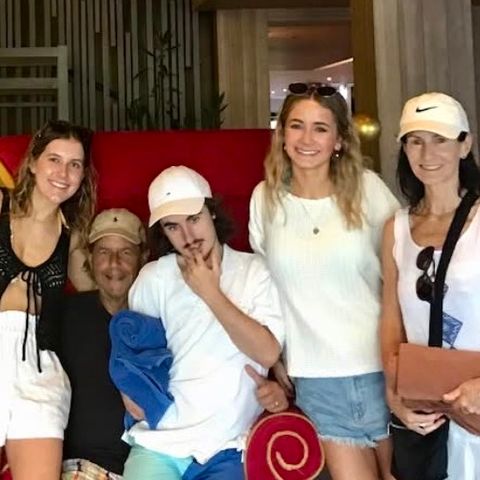
Description
Our guest this week is Murray Jones of Brisbane, Australia who is the owner of Big Ideas, a creative communications company, a director of Brisbane Investment and Property Management, the father of three including one with autism and host of the A Few Good Men Podcast.
Murray and his wife, Pamela, have been married for 30 years and are the proud parents of three: Hayley (20), Bridget (26) and Fred (28) who is autistic and non-verbal.
Murray is a seasoned advertising industry veteran with three decades of expereince and is also founder of Brisbane Invest a property management company.
Along with friend and fellow special needs dad, Garry Butler, Murray hosts the A Few Good Men Podcast, which aims to understand some of the very difficult and unexpected journeys that men have experienced when raising children with a disability and the way that has altered the course of their lives.
It’s and uplifting and inspiring story all on this episode of the SFN Dad To Dad Podcast.
Show Notes –
Phone – +61 419 349 5587
Email – murray@bigideasgroup.com.au
LinkedIn – https://www.linkedin.com/in/mujones/
Hear A few Good Men on Spotify: https://open.spotify.com/show/02iTSEBGmQKZT2u1wrUQnr
Order your copy of the new 21CD book: Dads Raising Chidlren With Special Needs & Disabilities: A Guide For 21st Century Dads on Amazon: https://amzn.to/4tdvjcv
Join 21CD on the SFN U.S. Tour, a 30 day, 50 state, 60+ stop tour taking place from May 21 to June 21, 2026: to strengthen and grow the Special Fathers Network as well as give away copies of our new book.
Transcript:
Murray Jones, father of three, has son with autism
Murray Jones: That initial diagnosis was definitely, you know, we were completely shell shocked and didn’t know what to do, really. Never even heard of the word autism. I mean, the only thing that we really did resolve was that we do whatever it takes to give him his best life.
David Hirsch: That’s our guest this week, Murray Jones, a father of three, including a son with autism. He’s also a host of the podcast A Few Good Men for fathers of kids with special needs. It’s an interesting conversation, and we’ll hear it on this Special Fathers Network Dad to Dad Podcast.
David Hirsch: Dad to the dad. You’re not on your own. We walk this road together, heart and home.
David Hirsch: Now say hello to the founder of the Special Fathers Network and host of the Dad to Dad Podcast, David Hirsch.
The Special Fathers Network US tour will take place from May 21 to June 21
David Hirsch: Hi, I’m David Hirsch, host of the Special Fathers Network Dad to Dad Podcast. Two brief messages. First, I’m, thrilled to announce our new book, Dads Raising Children with Special Needs and Disabilities. A Guide for 21st Century Dads is now available on Amazon, Barnes and Noble and other sites. See the show notes for additional information. Second, the Special Fathers Network US tour will be taking place from May 21 to June 21, Father’s Day. The tour will start in Maui, then Anchorage, and then to Milwaukee and all around the US by RV to all 50 states. The purpose of the tour is to strengthen and grow the Special Fathers Network and to promote the new book. We’re still looking at confirmed venues for the tour, and we can use your help for more information and see how you can help. Please see the show notes or simply go to 21st centurydads.org through every season,
David Hirsch: in every stride, great dads are present. 247365.
David Hirsch: Now, let’s listen into this conversation between Murray Jones and David Hirsch.
Murray Jones of Brisbane interviews for Fathers Network Data Debt podcast
David Hirsch: I’m, thrilled to be talking today with Murray Jones of Brisbane, Australia, who’s the owner of Big Ideas, a creative communications company, a director with Brisbane investment and property management firm, father of three, including one with autism, and host of the Few Good Men Debt, podcast. Murray, thank you for doing an interview for the Special Fathers Network Data Debt podcast.
Murray Jones: Oh, no, thank you, David. It’s an absolute pleasure. I’m honored.
David Hirsch: You and your wife Pamela have been married for 30 years and are the proud parents of three Haley, 20, Bridget, 26, and Fred, 28, who’s autistic. Let’s start with some background. Where did you grow up? Tell me something about your birth family.
Murray Jones: so I grew up in Melbourne, which, for those of you who don’t know, Australia, it’s A, it’s the southern part of Australia, so I grew up there. I’ve got three siblings. I’ve got two brothers and a sister and obviously, you know, so I grew up in a very typical sort of family. Mum and dad, you know, good hard working people and you know. Yeah, that’s where I grew up.
David Hirsch: Well, my recollection was you were the middle of the three boys and then you have a younger sister, correct?
Murray Jones: Yeah, so my older brother’s yes, has a sort of three and a half years between Peter and I and then, and then Bruce, nearly six years. And then younger sister who’s about ten years younger.
David Hirsch: Gotcha. Out of curiosity, what did your dad do for a living?
Murray Jones: He was an industrial chemist by profession, but for most of his life he was in, you know, sales management roles. He was, you know, I always say he was, you know, I’m an old sales guy and you know, followed in dad’s footsteps. So
David Hirsch: my recollection was he just passed away like a year or so ago.
Murray Jones: Oh, no, you know, it’s about four years ago now.
David Hirsch: Oh, four years, okay.
Murray Jones: You know, he had pretty good health up until he passed, so he had a good life. And you know, we were good mates. So, you know, I still miss him. So I think, you know, you know, you’re lucky in life if you can say your parents are friends as well, you know. So, you know, we were good mates and Mum, passed away, before that. So, and I think once he went, as often happens, he sort of lost the love of his life and lost a bit of will to live, I think. But anyway, had a good innings, as we say here.
David Hirsch: How would you describe your relationship with your dad?
Murray Jones: I was very strong. He was, you know, always a good sounding board, you know, we didn’t always agree, that’s for sure. And so, you know, there was some interesting discussions over the years. But yeah, no, he was a good mate.
David Hirsch: Any important takeaways when you think about your dad? lessons learned.
Murray Jones: Oh yeah, for sure. I think, he said, he said really good examples, you know. You know, when you shake hands with someone, it’s a, it’s a really good sign often of the character. So dad always just say, you know, firm handshake, look someone in the eye and you know, most importantly, your words, your bond, you know, which he lived by really. So. And I do too. He’s very, and he’s very kind, kind guy. And he, he had a really quite a credible relationship with Fred. They
00:05:00
Murray Jones: really had a, A bond which was great to watch, you know, because, you know, Fred, you know, as I said earlier, he doesn’t, he doesn’t. Can talk, but doesn’t communicate very well. But there was this invisible bond there between dad and, and Fred which was, you know, which I miss and I think Fred probably misses too, so.
David Hirsch: Yeah, well, thanks for sharing. That’s touching.
David and Pamela first met when Pamela was 17 or 18
I’m thinking about other father figures and I’m wondering if you had a relationship with either of your grand. Starting on your dad’s side and then your mom’s side.
Murray Jones: No, not on mum’s side. Her father passed away when she was really young. I remember my grandfather, you know, Dad’s father. You know, funnily enough, he was, he was an old sales guy too, David. So, you know, very much in my DNA, I think.
David Hirsch: So out of curiosity, how did you and Pamela meet?
Murray Jones: We first met when, about 17 or 18. You know, I’ve got a strong, recollection of the day I met her. You know, introduced through sort of mutual friends and she’s got zero recollection of meeting me that day. Anyway, we developed a friendship and then, sort of went separate ways. you know, in my 20s I was, I was a bit of a wild boy really, but. And I was in the advertising industry and moved to Sydney and et cetera. So we kind of lost touch. But, yeah, then reconnected and to the late twenties and. And the rest is history, as they say.
David Hirsch: That’s awesome. Thank you for sharing.
David Long talks about his son Fred who has autism
Let’s talk about special needs on a personal level first. What is Fred’s diagnosis and how did it come about?
Murray Jones: Well, he’s, he’s, you know, got autism. I suppose it really became evident that something wasn’t quite right, you know, when, You know, I don’t know if they’ve got him over there in the States. Probably do, but, you know, when new mums sort of, sort of got these mothers groups and so, you know, they get, get together and there’s always that sort of, oh, Johnny’s doing well and you know, and you know, I guess that’s natural, you know, you sort of, oh, gee, Johnny’s walking and you know, Sammy’s not. And anyway, Fred, he wasn’t hitting the milestones. I mean, he didn’t, he didn’t walk until he was, you know, well over two. And my mum said, oh, don’t worry, Murray, you were a late walker as well. You know, I didn’t bother getting up and walking until I was about 20, I don’t know, 20 months or something. So pretty late. But then it became more and more evident, David, that, you know, there was something amiss. And you know, long story short, as we, we sought, professional advice and had lots of, meetings with, you know, various therapists and psychologists and, you know, finally the day came when he was about two and a half and yeah, we got the formal diagnosis that he had autism.
David Hirsch: You can remember way back when. What were some of the concerns or fears that you and Pamela had at that time?
Murray Jones: I remember walking out. I clearly remember walking out of that, you know, the psychologist, office sort of. We were shell shocked, you know. Yeah. So it was kind of like we were in this cocoon. And then as we walk out into the end of the, you know, quite a busy, straight. And Yeah, it was just. Yeah, that initial. That initial, diagnosis was definitely, you know, we were completely shell shocked and. And didn’t know what to do really. Never even heard of the word autism. I mean, obviously in the lead up, in the prelude to the diagnosis, we were aware of autism and prior to, you know, having. Fred would never. I’d never heard of autism. You know, we didn’t know what to do. You know, what do we do now? It’s like, I mean, the only thing that we really did resolve was that we do whatever it takes to, you know, to give him his best life. And then, you know, from that moment we. I mean, we went down a lot of paths because I suppose as a natural reaction particularly, you know, perhaps, you know, more as a bloke, you just want to fix it. You know, there must be a solution to this. You know, how do we. How do we fix this problem and, you know, move on. So I can say, you know, for time immemorial there’s been snake salesmen. So we got caught up with a few of those. With them, you know, miracle cures, inverted commas and, you know, there are all sorts of things that we did. But we got him into early intervention pretty much straight away. So he started going to, obviously not school, but an early intervention, place at about, you know, about two and a half, you know, soon after the diagnosis, we had therapists coming in, to the house, or one therapist in particular doing. Don’t know if you’ve ever heard of Applied Behavior Analysis, aba. It’s kind of intense rote learning. So that young lady was coming into her house for about 20 or 30 hours a week. You know, as you can imagine. Long, long story. But you know we just resolved to do whatever we could to well initially to fix him. And then as the years sort of went by we Yeah we realized there’s no fix. fast forward to about age six and a half or something. It was still in early intervention. Then at another sort of early intervention school and then about six and a half we were watching TV and there’s a show on this school in
00:10:00
Murray Jones: Brisbane. We’re you know happily living in Melbourne. So we saw this thing on TV about this school in Brisbane and the only school of its kind in the southern hemisphere that specialized specifically with children with severe communication disorders. Long story short is we you know, I said to Pam M. I remember, Yes, we were sitting next to each other and I said oh gee, we should have a look at that school. She said yeah it looked amazing. But she said it was in Brisbane, Murray. You know. I said yeah I saw that, I saw that. But anyway we ended up you know checking it out and it was quite difficult to get in. And particularly because Fred at that stage was completely non verbal. You know I used to cry myself to sleep. I think he still wasn’t saying dad, he was saying mum. But you know that was pretty much it. So his vocabulary was definitely very very limited. And yeah we thought, we kind of thought perhaps he’ll never talk at all. so anyway after over a six month period we had various trips to Brisbane and you know there were certain criteria. He had to have a certain level of IQ because they wouldn’t take anyone under you know, who had a really low IQ and that’s really hard to gauge particularly when they’re not talking. So and we then we found there was a non verbal test that was, that had just come into play and you know we’ve got the psychologist from somewhere and you know. Anyways a long long story but we finally got the green light because you know it was a pay to play school. You know, like the fees are you know quite high. But it wasn’t just pay the money and you’re automatically accepted. You know there was a very strict criteria which we finally met. And you know I can remember getting the phone call in the November. So we’ve been here 20 years. So initially we thought we’d be here for maybe a couple of years.
You made the priority to move, right, because of this opportunity
The school started in January, like the middle of January. It was pretty early start. So we had six weeks to get sorted. We kept our house down there. We probably would have sold if we had time, but we kept it, which was, you know, long term. It was a blessing in disguise, that’s for sure. But, anyway, we’ve got the house rented. We got sorted, you know, removalist. And it was this mad rush. And in between that, my wife said, by the way, I’m pregnant.
David Hirsch: You can’t make this stuff up. Well, thanks for sharing. You know, when you said you would do anything, right, you know?
Murray Jones: Yeah.
David Hirsch: Ah, just the fact that you were. You made the priority to move, right, because of this opportunity to get Fred into a school that, you know, was like a one of a kind, you know, demonstrates that your actions speak louder than your words. And, it’s pretty powerful. So thanks for sharing. So, I’m wondering, what.
Murray Jones: By the way, we thought we’d probably be up here for a couple of years. It’ll be fixed and, and, you know, we’ll go back and, you know, resume our normal life. But, anyway, here we are 20 years later.
David Hirsch: Yeah, well, some of the guys in my Bible study often say that, you make plans and God laughs, right. Because, you know, it’s anybody’s idea as to, like, what’s going to happen, right? You might have your thoughts or, like, your hopes or dreams or whatever. And, you know, sometimes it doesn’t turn out the way you expect it, but not in a bad way. It just doesn’t turn out the way you expected.
David Hirsch: We’ll be back with more of the conversation on the Special Fathers Network Dad to Dad Podcast in just a few moments. But first, this quick message. Please help 21st Century Dads gather research on families raising children with special needs by having them complete the Special Fathers Network Early Intervention Parents survey. A link to the survey can be found in the show notes. As a token of our appreciation, each person, mom or dad, who completes the survey will receive a great dad coin. Thank you.
What have been some of the biggest challenges that you’ve encountered with autism
Now back to the conversation.
David Hirsch: So not to focus on the negative, but what have been some of the biggest challenges that you’ve encountered as a result of the autism?
Murray Jones: The, the plans or the vision that, you know, you have in your head about, there’s that firstborn, you know, boy, you know, which most blokes I’m sure you know, that’s. That’s a very proud moment, you know. And, you know, in my head I can imagine, you know, doing stuff together and, you know, so. So I guess, yeah. That adjusting to the fact that, you know, relationship that you thought you might have with your son is very, very different, you know, other people’s, which, as I said, I’m, I’m over now. But you know, initially, you know, other people’s reactions because he does, you know, if, you know, if you saw us walking down the street, he’s mean, he’s a pretty, very normal looking kid. You know, he’s got long hair, he’s got, you know, he’s a good looking kid. He’s So you wouldn’t really notice. But it’s just, you know, as soon as, it doesn’t take long if he’s, you know, he won’t stand still for long and he’s, you know, he’s got some. Sometimes he’ll do a bit of flapping or, you know, so he stands out, you know. And then, you know, I suppose the other thing is too, you know, we’re lucky in a way. I mean, we’ve got friends who we’ve become great friends with, who we met through that Glen Laden school, the school we
00:15:00
Murray Jones: came up for, whose boys are you know, also autistic. But as you know, the spectrum’s quite, very wide. And so Fred probably falls somewhere in the middle, you know, and he’s not, obviously, he’s not high functioning where, you know, we’ve got friends who’ve got autistic boys who are high functioning. But he’s very conscious of the fact that he is different. And you know, sadly, he’s had all sorts of issues, you know, mental health issues and stuff. Whereas Fred lives in a world where he’s very, very happy. You know, all the angst and worry and tears that we’ve had over the years, he’d be completely unaware of, you know. You know, he’s happy, he’s in his own lives, in his own world. I’ve changed, I reckon. you know, I’m certainly far more patient. One thing for sure though, you do realize that there are so many, good people out there in the world. You know, it’s quite amazing, you know, the army of carers and the, you know, and the parents like you and I, the, the It’s which you wouldn’t, you know, if, if you hadn’t fallen down that time, you wouldn’t, obviously you wouldn’t have a clue, you know, so, so they’re, they’re always. I like to think of myself as a glass half full guy, you know, I like to be sort of, you know, look for the Silver lining and things. So that’s probably, probably it.
David Hirsch: Yeah.
Parents with special needs are more humble, less arrogant and less selfish
Well, thanks for sharing. One of the ways that, I’ve heard it expressed is that parents who have a child with a disability or special needs on average are more humble, less arrogant, less selfish. And when you stop and think about that, you know, that’s what the world needs more of is people that are more humble, less arrogant and less selfish. And, you know, those are the people that you’re spending more time with. Right. Because they have something in common.
Murray Jones: Right.
David Hirsch: A child with a disability. So anyway, thank you again, being open and authentic about that.
Murray Jones: What’s funny you should say. I often look at Fred and I think, because, you know, Fred wouldn’t harm a fly, right. And he’s just, you know, he’s just got, He’s a lovely soul. And I just think, Jesus, there were more people in the world like Fred. But you’re right, if there are more people in the world, like, you know, the people that we would never have met, you know, it’s, it’s, it’s interesting, isn’t it? I’ve never sort of thought about like that, but it’s true.
David Hirsch: Absolutely.
Murray Jones: Certainly need some more humble people in the world at the moment. Let’s not talk about the world leadership. But anyway.
David Hirsch: Oh, no, no, we’re not going to go there. Not on this podcast, no.
Having a child with a disability certainly tests your marriage, Fred says
So, I’m sort of curious to know what impact these challenging situations had on your marriage, Fred’s younger sisters, or your extended family for that matter.
Murray Jones: Well, I get, you know, look at. Certainly, it certainly just no doubt tests your marriage. You know, I read a stat some or that it’s, it’s a pretty well known stat, I think. So, you know, sadly, out there, 50 of marriages end up on the rocks. Out in the, let’s say, the normal world, you know, throw in a child with a disability, and it’s up around 85, 90%. So it certainly puts a, you know, straight drain on your, on your relationship. But it’s. Look, you know, we’ve come through with 30 years this year, 30 years in July. So, and I suppose too, as you know, now we’re this stage of life where, you know, you know, fortunately we’ve, you know, we’ve crossed a few financial hurdles and could just, you know, sort of pick up and travel, you know, whenever we want, as an example, where you can’t. There’s always the Fred factor. You know, whatever we do, there’s a fret factor. so which you know, we’re not complaining about but certainly you know that and you see you know, friends who don’t have a child with a disability, you know, their kids are grown up, you know, like our youngest is 20, she’s still living at home. But you know, we’re at the stage now excel, you know, love to be able to just go to you know, Europe for winter or whatever, you know, or just, or just get in, travel around me and more around Australia. So they’re the things that, yeah. So for the last 28 years there have been lots of things that we would have liked to have done but we didn’t or we couldn’t or whatever. So. But in terms of you know, his siblings, it’s really interesting. Bridget who’s 26, who’s currently in your part of the world, she’s in nearby, she’s in Canada at the moment. But she’s a school teacher, primary school teacher and for the last three years has been teaching in London to, as a teacher for kids with special needs, like severely autistic. Ages sort of you know, five to eight or thereabouts, six or seven in a class. Non verbal, sometimes violent, you know, not toilet trained. You know, it’s pretty like the tough end of the, of the spectrum. and she’s chosen to do that and that’s. She. And she doesn’t want to go back to just being a you know, normal primary school teacher. So that’s, you know, I think that’s really interesting because it takes a special person to do that. I mean, you know, she’s, she’s one of life’s angels, there’s no doubt about that. So you know, big kind heart, you know, it’s just so I’m very, very proud of it. But and there was never any, it was just probably subconsciously she, you know, she was drawn to that. and then our youngest daughter is in her second year of speech therapy and her long term goal is she wants to teach,
00:20:00
Murray Jones: you know, work with children. So perhaps not special needs but you know, so. But it’s definitely had an impact. I mean you know in the early days when we first got the diagnosis and as I said, Bridget was born about 18 months after Fred. So. And we’re going to, you know, this you know, non stop, you know, all the therapists were, you know, just this, it was, it was very, very busy. You know, Bridget was sort of just, come on, you know, sort of dragged along with it. All, you know. Yeah, we’ve tried. We’ve really made a conscious effort, you know, over these, to make sure that we don’t just focus on Fred, you know, and I think we’ve done a reasonable job, but, yeah, it definitely has an impact.
David Hirsch: Yeah. Well, thanks for being so open and authentic. The point you made, the last point you made, is that, you know, they’re. There’s a propensity to spend a, disproportionate amount of time and resources with the child that has the greatest needs, in your case, Fred. But, it’s really important that you remind yourselves as parents that you’re parents to, all of your children. Right. And you want to be as equitable as you can, with spending one on one time with each one of them, even though, as the years have gotten by, the girls have enjoyed some, levels of independence that, you know, Fred might not.
David Hirsch: Yeah, so that’s really important.
A Few Good Men brings together men who are raising children with disabilities
So I’d like to talk about the podcast A Few Good Men. what was the backstory? why did you or you and Gary Butler start this? And how many episodes have you done?
Murray Jones: Well, certainly, you know, we’re just babies compared to, you know, compared to you, David, that’s for sure. But look, I, I actually, It’s a bit of a story to it, but, I’ve actually registered A Few Good Men as a. And I’ve been just paying for the. For the website thing for, I don’t know, well, over 20 years before, you know, definitely before Fred was born, because, an old man of mine in Melbourne, we. We just thought there was a market there for, you know, to talk. You know, to create a platform for men to talk. Not necessarily. Not, you know, I didn’t even have a child with disability then. A Few Good Men with Murray Jones. Hi, I’m, Murray Jones. This is A Few Good Men, the podcast that brings together men who are raising children with disabilities and offers them a safe place to share their stories, struggles and triumphs. My journey as a father to a child with a disability has been challenging, but it has also given me strength and resilience that I never knew I had. So that’s where it sort of started. And it’s gotta just, you know, sat there in the back of my mind for a long time. And then, a couple of years ago, I just thought, well, if you drill down even further, you know, the stories, as you well know, the stories of men who’ve got, you know, children with disability, there’s thousands of Them, you know, the catalyst was to, like, you’ve done, you know, I’d love to, you know, get to the point where you, you’ve created a community of, men who are on a similar track, albeit very different, but, you know, on that similar path. What’s the odd saying? Unless you walked a mile in someone’s shoes, you know, then it’s impossible to know what the journey’s been. So the goal really is to, you know, hopefully do what you’ve done, you know, and create a community and, and to really make, you know, some change and to, you know, to help men on the journey. And I think just, Just, you know, had a lot of really, you know, great feedback. We’ve only. I’ve only done eight or nine, podcasts, so it’s, you know, it’s very early days, but I see there’s a massive opportunity and the feedback I got. I’ll tell you a quick story which really, for me, made it all worthwhile. Not last year, but the year before. It was down in Melbourne for Christmas. And, we went to a party and this lady came up to me and she said, I just wanted to tell you, my daughter has got a son who’s got autism and her husband is not coping well at all. And she said, and he listened to your podcast and he actually. And it really had a massive impact on him because he realized he’s not alone. You know, there are others. There are others who’ve been on the journey. There is some light at the end of the tunnel. And she said, it really had a massive impact and it changed his outlook. And I just thought, well, you know, what the idea of the podcast was never to become, you know, a rich and famous broadcaster. That that one bit of good that it clearly achieved, you know, made it all worthwhile. So.
David Hirsch: Well, I hope that you’ll continue to pursue the podcast. I’m happy to help in whatever way I can from a distance.
Murray Jones: Oh, thanks. Thanks.
David Hirsch: And, you know, I’ve learned a thing OR 2 with 400 plus episodes. It has not been a straight line. There’s been a lot of ups and downs, but I think the most important thing, I think, is consistency and it relates to what we’re talking about. Being there, being present, you know, for your kids, being present for your wife, being present for your friends. And, you know, you want to stay the course, right? So if you start something, you want to continue to pursue it. Not that it’s a lifelong commitment to, host a podcast,
00:25:00
David Hirsch: but there is something to be said for consistency and continuity. So I’m thinking about advice now and I’m wondering if there’s piece of advice that you could offer. Perhaps a new dad, a guy that’s close to the beginning of his journey, that has a recent, a child with a recent diagnosis.
Murray Jones: It can be a dark and lonely, you know, journey, but reach out, you know, to people and just look for and, and enjoy, the best qualities of your child, you know, and don’t give up. Don’t just, you know, persist, persist, persist. I think that’d be, that’d be the key piece of advice. You know, for what it’s worth that I, that I’d say I agree.
David Hirsch: That’s excellent advice.
The Special Fathers Network mentoring program for fathers raising children with special needs
So is there anything else you’d like to say before we wrap up?
Murray Jones: Well, first of all, you know, thanks again for the opportunity, David. That’s, you know, I really appreciate it mate. And just really honestly I’m, you know, in awe of what you’ and what you continue to do and you know, I’m, you know, so, grateful that we’ve connected.
David Hirsch: Yeah. Well, let’s give a special shout out to, Dr. Shane Sander Geld, who is a SFN mentor father in Brisbane and who was also featured in the SFM Data dad podcast. I think it was episode number 72 for helping connect us.
Murray Jones: Absolutely, yeah, absolutely. Big shout out. And and also you know, shout out to Gary, you know, you’ve mentioned a couple of times. You know, he’s, I mean he and I, we’re working on, as you know, on a lot of stuff for future. But it was Gary who who said, you know, you’ve got to tune in to David. So there we are. You’ve got, you know, you’ve, you’ve got an Aussie fan base, David, that’s for sure.
David Hirsch: Well, there’s at least three of you that I can count by name and I’ve been in contact with some regularity. So I’m thrilled to have you as part of the network. Than you if somebody wants to contact you, what’s the best way to do
Murray Jones: so, just, I guess, yeah, shoot me an email would be good. To Murray, big ideasgroup.com I’ll be sure
David Hirsch: to include that in the show notes. So I’ll make it as easy as possible for somebody to follow up. Murray, thank you for your time and many insights. As a reminder, Murray is just one of the dads who’s part of the Special Fathers Network mentoring program for fathers raising a child with special needs. If you’d like to be a mentor father or are seeking advice from a mentor father with a similar situation to your own, Please go to 21st centurydads.org thank you for listening to the latest episode of the Special Fathers Network Dad to Dad Podcast. I hope you enjoyed the conversation as much as I did. As you probably know, the 21st Century Dads foundation is a 501c3 not for profit organization, which means we need your help to keep our content free to all concerns. Would you please consider making a tax collectible contribution? I, would really appreciate your support. Murray. Thanks again.
Murray Jones: Thanks David.
David Hirsch: Dad to the dad. You’re not on your own. We walk this road together, hard and whole.
David Hirsch: And thank you for listening to the Special Fathers Network Dad to Dad Podcast. The Special Fathers Network is a dad to dad mentoring program for fathers raising children with special needs. Through our personalized matching process, new fathers with special needs children match up with mentor fathers in a similar situation. It’s a great way for dads to support other dads. To find out more, go to 21st
David Hirsch: centurydads.org and if you’re a dad, looking for help or would like to
Murray Jones: offer help, we would be honored to
David Hirsch: have you join our closed Facebook group. Please go to facebook.com groups and search dad to dad. Lastly, we’re always looking to share interesting stories. If you’d like to share your story or know of a compelling story, please send an email to david2stcenturydads.org the dad
David Hirsch: to dad Podcast theme was written and performed by Shane Madden. The show is produced by me, Tom Couch. Tune in again next week for another intriguing conversation on the Special Fathers Network Dad to Dad Podcast.
David Hirsch: Through every season in every str, great dads are present. 247-365-24-7365.
00:29:10