

430 – Nathan Simpson of Colorado Springs, CO Father of Nine, Including One With Tuburous Sclerosis
Description
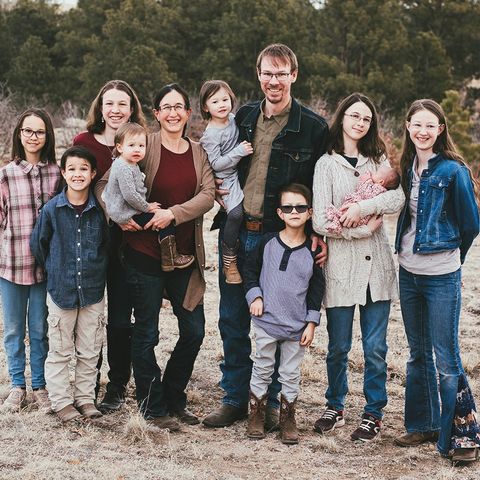
Our guest this week is Nathan Simpson of Colorado Springs, CO an aircraft mission planner for the U.S. Air Force and father of nine children including one with tuberous sclerosis.
Nathan and his wife, Stefanie, have been married for 19 years and are the proud parents of nine children ranging in age from 3 months to 17 years, including six year old Tevia, who has tuberous sclerosis.
The family lives outside of Colorado Springs on a working farm, with all types of animals and Stefanie home schools the children. Nathan has also been a member of the SFN Matermind Group in Colorado.
It’s an enlightening, uplifting and inspiring story about a young couple, with a large family and a demonstrated spiritual dimension to their lives, all on this episode of the SFN Dad to Dad Podcast.
Order your copy of the new 21CD book: Dads Raising Chidlren With Special Needs & Disabilities: A Guide For 21st Century Dads on Amazon: https://amzn.to/4tdvjcv
Join 21CD on the SFN U.S. Tour, a 30 day, 50 state, 60+ stop tour taking place from May 21 to June 21, 2026: to strengthen and grow the Special Fathers Network as well as give away 2,000 copies of our new book. Click here to see the full tour schedul and register for the venuw closest to you: https://21stcenturydads.org/us-tour-venue-details/
Show Notes –
Email – simpson.nathan@pm.me
TSA website – https://tuberous-sclerosis.org/information-and-support/what-is-tsc/
Transcript:
Nathan Simpson has nine children including a son with tubular sclerosis
Nathan Simpson: One of the things that my kids are very conscientious about is that when we’re out and about, they always try to make sure to say hi to the other, non typical special needs kids. If we see them at the zoo, a lot of people will look at those kids and just kind of shun them. And our kids always make sure to go up and help say hi to them, sometimes even try to make a quick friendship. I’m really proud of my kids for how they do that. When other people see somebody like the special needs community as a lesser human.
David Hirsch: That’s our guest this week, Nathan Simpson, an aircraft mission planner in the U.S. air Force. Nathan has nine children, including a son with tubular sclerosis. We’ll hear all about Nathan and his life on this Special Fathers Network Dad to Dad Podcast.
Nathan Simpson: Dad to dad, you’re not on your own.
David Hirsch: We walk this road together, hard and home.
David Hirsch: Now say hello to the founder of the Special Fathers Network and host of the Dad to Dad Podcast, David Hirsch.
Special Fathers Network US tour will be taking place from May 21 to June 21
David Hirsch: Hi, I’m David Hirsch, host of the Special Fathers Network Dad to Dad Podcast. Two brief messages. First, I’m thrilled to announce our new book, Dads Raising Children with Special Needs and Disabilities. A Guide for 21st Century Dads is now available on Amazon, Barnes and Noble and other sites. See the show notes for additional information. Second, the Special Fathers Network US tour will be taking place from May 21 to June 21, Father’s Day. Start in Maui, then Anchorage and then to Milwaukee and all around the US by RV to all 50 states. The purpose of the tour is to strengthen and grow the Special Fathers Network and to promote the new book. We’re still looking at confirmed venues for the tour and we can use your help. For more information and see how you can help, please see the show notes or simply go to 21sturydads.org
Nathan Simpson: great dads are present, too. For
David Hirsch: now, let’s listen into this conversation between Nathan Simpson and David Hirsch.
Nathan Simpson is an aircraft mission planner for the U.S. Air Force
David Hirsch: I’m thrilled to be talking today with Nathan Simpson of Colorado Springs, Colorado, who’s an aircraft mission planner for the U.S. air Force and father of nine children. Yes, I said nine children, including one with tubular sclerosis. Nathan, thank you for taking the time to do an interview for the Special Fathers Network dad and dad podcast.
Nathan Simpson: You’re welcome.
David Hirsch: You and your wife Stephanie have been married for 19 years and are the proud parents of nine children, ranging in age from 3 months to 17 years. Let’s start with some background. Where did you grow up? Tell me something about your family.
Nathan Simpson: I grew up in, Castle Rock, Colorado. So born and raised here, which is kind of unusual, nowadays to be a native Coloradan. Grew up with both my parents and three younger sisters.
David Hirsch: when you say, native Coloradan, like second generation native Colorado.
Nathan Simpson: My great grandparents moved to Colorado.
David Hirsch: So you would be the fourth generation.
Nathan Simpson: Yep.
David Hirsch: Okay. That is pretty wild.
Nathan Simpson: Yeah.
David Hirsch: And out of curiosity, what did your dad do or does he do for a living?
Nathan Simpson: My dad was it, audio visual for conference centers, and then he retired from, Auraria campus as it.
David Hirsch: Okay. And how would you describe your relationship with your dad?
Nathan Simpson: I. Really good. Growing up, we spent time together. Favorite thing to do was bike rides.
David Hirsch: Okay.
Nathan Simpson: And then play. We played a lot of games together as well.
David Hirsch: You were the only son if you had three younger sisters?
Nathan Simpson: Yes, I was.
David Hirsch: And when you say bike rides, that’s always like, curious to me. Are we talking about road biking or mountain biking or both?
Nathan Simpson: More of road biking. Taking trails around the neighborhood, streets around the neighborhood. They’re fairly short, but it was time, one on one time with my dad. With him working in Denver and having a commute of an hour to an hour and a half. His days were long.
David Hirsch: Gotcha. Any important takeaways, lessons, learned from your dad when you reflect back on your relationship with him?
Nathan Simpson: I think one of the biggest ones was God first, family second, and then everything else goes underneath there.
David Hirsch: Do you have an example?
Nathan Simpson: Just one thing that was kind of instilled through the way that he lived and through the way that our family operated. Church was always a priority. We very rarely skipped church, typically only if the roads were. We’d die on the roads or we couldn’t get to church because the roads were so bad from the snow. But other than that, we were at church almost every single Sunday.
David Hirsch: So what I hear is consistency.
Nathan Simpson: Yes, big time.
David Hirsch: Any other important values that your dad or parents passed on to you?
Nathan Simpson: I think they gave us, myself and my sisters, a heart to serve. I think all of us serve in some way in some capacity. We do a lot of serving with, the local pregnancy center. One of my sisters is a missionary out in Romania. And then the
00:05:00
Nathan Simpson: other one does a lot with her kids organizations as well.
David Hirsch: Yeah, that’s really important, that, role model. were your parents volunteers or missionaries themselves?
Nathan Simpson: Every church that we went to, my parents were in charge of children’s ministries. So the children’s ministry directors.
David Hirsch: Gotcha.
Nathan Simpson: So we did a lot of children’s ministry. I have, volunteered in several different churches with children’s ministry and I like to joke that I’ve been in children’s ministry since I’ve been born.
David Hirsch: And with all your kids, you’ll be there a long time to come. Yeah.
Your grandfather had a farm and that’s where you got your aviation bug
So I’m wondering what, if any, influence your grandfathers had.
Nathan Simpson: My mom’s dad was a pilot, private pilot, owned his own, air club. And that’s where I got the bug, the aviation bug, and started flying. I actually started flying with one of his airplanes and just kind of moved from there. And then my great grandfather had a farm, and that’s kind of where I got the farming bug. Why? We kind of have our little farm that we have.
David Hirsch: Well, let’s talk about that for a minute. what kind of farm is it?
Nathan Simpson: We, have about five acres and we’ve got a small hobby farm. In essence, we have currently, well, 11 sheep, we have three lambs that were just born a week ago. We’ve got five pigs, two meat cows. we’ve got well over 100 chickens, turkeys, duck and couple dogs.
David Hirsch: That sounds like a lot of animals to take care of.
Nathan Simpson: It is. I go through about four, tons of hay every three months.
David Hirsch: And is, this all on you and Stephanie or the kids involved with this?
Nathan Simpson: So our oldest, Karina, she takes care of the sheep. Our oldest son, Titus, he takes care of the pigs. Two of our girls take care of the chickens. The cows are pretty much free fed. And then our third daughter takes care of the dogs. So we’ve got all hands on deck with the farm animals so that it doesn’t all land on me.
You went to Metro State in Denver and got a degree in aviation technology
David Hirsch: My recollection was that you were homeschooled and you went to Metro State in Denver, took a degree in aviation technology. And I’m wondering, where did you see your career taking you?
Nathan Simpson: Originally I was, ah, really hoping for a missionary pilot. That was kind of my dream job and wasn’t able to get there. But I still got my degree in, aviation technology, basically professional pilot. And when I met my wife, it was a question of whether I wanted to be gone all the time or be home for dinner all the time. And I chose dinner all the time. So that’s when I started applying to Jefferson. I applied for three positions, got three offers, and guy kind of picked what I wanted to do there.
David Hirsch: And you’ve been there the entire time?
Nathan Simpson: I have, Yep. I’ve had two jobs in one company in 19 years.
David Hirsch: And M, from what I understand from our prior conversations, there’s not a lot of details you go into about the type of Work that you do just because of the confidentiality, Is that still the case?
Nathan Simpson: Correct? Yep, that is the case.
David Hirsch: Okay, out of curiosity, how did you and Stephanie meet?
Nathan Simpson: Stephanie and I, surprisingly enough, we actually went to college together, and we graduated together, but we did not know each other during college. And we met about five, months after we graduated at church group. College church group.
David Hirsch: That’s wild.
Nathan Simpson: Yeah, isn’t it? I asked her out. our first date was six days after we met. And then our wedding was six months after our first date.
David Hirsch: That’s amazing.
Nathan Simpson: And here we are 19 years later.
David Hirsch: Yeah. Well, I’m sure that some people cautioned you, maybe even parents, were like, are you sure? Are you sure? It seems like it’s pretty fast.
Nathan Simpson: That’s one of the things my dad always said. My dad always said that, he always believed that when I found the right woman, it’d go fast. And it did.
David Hirsch: He has a prophecy.
Nathan Simpson: Yep.
David Hirsch: Okay.
Tevye’s diagnosis is tuberous sclerosis complex
What is Tevye’s diagnosis and how did it come about?
Nathan Simpson: Tevye’s diagnosis is tuberous sclerosis complex. When he was born, everything seemed fine, but then we started noticing seizures. We didn’t know they were seizures. we thought they were just kind of random movements until he was, about two months old, when it was very obvious it was a seizure. That’s when we took him into the ER and they did all the scans, admitted to him, because they couldn’t figure it out, and he was continuing to seize. And that’s when they brought in neurology, and they said it’s probably tuberous sclerosis. Ah. But we need to do genetic testing to find out. So it wasn’t confirmed for about four days until the genetic testing came back.
David Hirsch: Wow. And what was your immediate reaction when you learned what it was?
Nathan Simpson: it was hard because, at that point, when we found out about it, they could not control his seizures. He was still seizing significantly, getting up to 100 seizures in a day. Complete status, 24, 7. And it was extremely difficult to see one of our children in the hospital with all of the wires with the E, the EEG and everything, and doctors not really knowing how to proceed. It was one of those where Stephanie and I really relied on each other and really relied on our faith to get through this, knowing that even though we were going through this, God is still
00:10:00
Nathan Simpson: good. And that is what Tuggia’s meme names is. God is good. So it was kind of a prophecy, in essence, when we named him Tevye, that God is good. Even in the Midst of trials.
David Hirsch: Yeah, very powerful. What was it that you’re able to turn the corner and get some seizure control?
Nathan Simpson: It took a while. They ended up transferring us from Colorado Springs after a week up to Denver because Denver had the better neurology team. It was just, they were playing with meds and it was one of those things where he was either completely sedated or he was seizing. And it was just, it took about two and a half weeks to find the right medication combination to get him to stop seizing. And when we left, he was on four anti epileptic meds when we left the hospital. But we were able to get him at least somewhat unsetated and his seizures down to about one a day.
David Hirsch: Wow, that’s pretty amazing. And where is he now as it relates to the seizures right now?
Nathan Simpson: We have not actually physically seen any in the last year. We have about two instances where we think he may have had one just based on his attitude, but we’re not 100% positive. So for the most part he is pretty much seizure free controlled by two medications.
David Hirsch: Yeah, yeah. I like the trend. It’s moving in the right direction.
Nathan Simpson: Yeah, it is.
When you learned about tubular sclerosis complex, uh, TSC early on
David Hirsch: So when you learned about tubular sclerosis complex, TSC early on, what were some of the concerns or fears that you and Stephanie had?
Nathan Simpson: The biggest concerns and fears we had was quality of life and lifespan because we heard all the horror stories of. It’s like with it being so severe, we may be looking at teens or early twenties. And then what we were seeing with the hospital was it’s like he’s either fully sedated or he’s seizing. And yeah, we weren’t sure. We weren’t sure how we were going to handle having somebody so special with the seizures on, making sure that he had a quality life that was prior. Biggest concern was trying to figure out how to get him to live life to the fullest that he could live.
David Hirsch: Gotcha. Not to focus on the negative, but what have been some of the biggest challenges beyond the seizure control?
Nathan Simpson: Biggest challenges especially lately has been Tevi is six. He has a four year old, sister and a two year old sister and he’s a big six year old. he’s about the same size as our 9 year old Titus, but he is developmentally around 2. So he thinks he can do the same things that our two year old can do, but he can’t because he’s a lot bigger. He wants to be treated the same way as our two year old, but he can’t because he’s bigger and he roughhouses with the two year old and the four year old thinking that he’s two but it ends up just being a big mess. So again we have kind of like our two groups of kids. Poor Titus, he’s in the middle right there. But we’ve got the younger group where Kyla, our four year old, she’s kind of like the ringleader of the younger group. And then Tevye and Kitri are kind of P2Ps in a pods. But it’s trying to teach Tevye that even though he believes he’s two or is on the same developmental level as Kitri, that he can’t necessarily do the same types of things that he that she can is trying to figure out how to deal with a two year old in a very big six year old body.
David Hirsch: Gotcha. and what’s his ability to communicate verbally or otherwise?
Nathan Simpson: It’s getting a lot better. He is up ah, to about three, sometimes four word sentences. He’s able to communicate enough to explain his needs, basic needs, diaper, drink. He’s hungry, but he can’t explain how he’s feeling. So it’s like if he gets really upset, he can’t communicate what he needs. So it’s kind of a guessing game with us to try to figure out. It’s like, okay, based on this, okay, he is hungry but he can’t communicate it because he’s just so upset. But speech has been working with him and his vocabulary has been increasing pretty significantly over the last especially two to three months.
David Hirsch: We’ll be back with more of the conversation on the Special Fathers Network Dad to Dad Podcast in just a few moments. But first this quick message. Please help 21st Century Dads gather research on families raising children with special needs by having them complete the Special Fathers Network early intervention package. A link to the survey can be found in the show notes. As a token of our appreciation, each person, mom or dad, who completes the survey will receive a great dad coin. Thank you.
So I’m thinking about supporting organizations that benefit your son
Now back to the conversation.
David Hirsch: So I’m thinking about supporting organizations
00:15:00
David Hirsch: and I’m wondering what comes to mind as far as organizations that he’s directly benefited from or maybe your family’s directly benefited from.
Nathan Simpson: The biggest one is his medical team. We haven’t really gotten into like non profits. His therapists at MGA Home Care down here in the Colorado Springs and his neurology team up in Denver at Children’s Hospital is just absolutely phenomenal right now. And yeah, his Medical team has just been great in helping him and helping him thrive and helping him continue to develop even though he is, has all the delays.
David Hirsch: Is the mga, home care, the one you made reference to, is that in house or do you have, does he go someplace for the physical therapy?
Nathan Simpson: That, is all in house therapy, which helps significantly with our schedule and our, the amount of kids we have. So all of the. She’s got four different therapists that come home.
David Hirsch: Okay. Did I remember that you homeschool your kids?
Nathan Simpson: Yes, we do.
David Hirsch: Okay.
Nathan Simpson: And I work from home.
David Hirsch: Yeah. Is Stephanie, is that her primary focus during the day then is trying to run heard from 2 months, 3 months to 17 years?
Nathan Simpson: Yes, that is her primary focus Monday through Friday is homeschooling.
David Hirsch: That seems like a lot of curriculums to keep track of.
Nathan Simpson: It is. It is. Ah. And we just started Tevye. So again it’s. He’s on the lower end of the level, so. But his two sisters are trying to keep up.
David Hirsch: Gotcha. That is wild. well, your, pedestal got notched up. Just a couple more levels, up.
Tavia was diagnosed with special needs when he was just a toddler
But thank you for sharing. I’m sort of curious to know what impact of these challenging situations had on your marriage, Tibia’s siblings, or the extended family for that matter.
Nathan Simpson: It has been challenging. We have had, especially when Tavia was first diagnosed, we went through some rough patches because we were two shifts passing in the night in our marriage because one of us was trying to take care of Tevye, the other one was taking care of the kids. And we really didn’t have time together. So just the rough patches, the two shifts and the passing of the night made it hard for us. And then we really, really made intentional time to get together to whether it be in the evening or whether to actually go out of the house, which was what we needed to get out of the house and make time for each other. As far as his siblings go, up through six months, he was in the hospital in two one month stints. And the first time, because we had no idea what was going on, the kids ended up staying at grandma grandpa’s for a full month while we were at the hospital 24 7, trying to talk with doctors, figure out how to help our little boy and that it so impactful today our kids still remember that being, remembering that they didn’t know if they were going to get a call and say that their little brother had passed away. And nowadays they become really helpful with him and kind of guardians of him in a lot of ways where they protect him when we’re out and about. They kind of stand up for him when people call him names because he can’t do different things. And they’re also, in a lot of ways his special needs have been a blessing on the family because we have realized first of all how fragile life is. But second of all on how to help the vulnerable and how to serve them. One of the things that my kids are very conscientious about is that when we’re out and about, they always try to make sure to say hi to the other non typical special needs kids. If we see them at the zoo, a lot of people will look at those kids and just kind of shun them. And our kids always make sure to go up and help say hi to them. Sometimes even try to make a quick friendship for the five to ten minutes that they’re on the playground or whatever. I’m really proud of my kids for how they do that. When other people see somebody like the special needs community as a lesser human, that’s pretty powerful.
David Hirsch: Yeah, very powerful.
You have a 12 passenger Ford Transit and then you have a truck
Thank you for sharing. So you’ve got this large family. We talked a little bit about homeschooling. How do you get around from point A to point B as a family?
Nathan Simpson: We have a 12 passenger Ford Transit, so we all fit in pretty well. And we have one extra seat now.
David Hirsch: So you can bring one friend at a time. Out of the nine kids, they can bring one friend.
Nathan Simpson: Exactly.
David Hirsch: Okay, so you just have one van though it’s not like you’re driving one van and Stephanie’s driving the other van.
Nathan Simpson: No, we have one big van and then we’ve got a small van and then I’ve got my truck. So if we need, if I’m going somewhere I’m typically taking my truck unless I need the full capacity of the transit. And same thing with Stephanie. If she’s going somewhere, she’s taking the small van, the transit connect,
00:20:00
Nathan Simpson: unless she needs a full capacity.
David Hirsch: Gotcha, gotcha. And did I remember you telling me about taking like a camper, ah, RV type trips?
Nathan Simpson: Oh yeah, we have a 29 foot that’s ah, light enough that we can pull behind our transit. So we’ve gone anywhere from all the way down to the Florida Keys to try to get to Dry Tortugas. Didn’t end up happening. But we’ve been up to Glacier national park, down to Big Bend National Park. we’ve been trying to hit pretty much all the national parks that we can or national monuments we’re actually headed up to Crater, of the Moon National Monument, coming up here in about three weeks. And then we’ll hit Wind Cave national park as well.
David Hirsch: Wow, that’s pretty ambitious taking all these kids on the road like that.
Nathan Simpson: They love it. They love it. And it’s. It’s a lot with Tevye, too, because he absolutely loves being outside. So, like, he is in his happy place when we have that camper out wherever we are. He just absolutely loves it.
David Hirsch: I know that 29ft sounds sort of big, but, having 11 bodies, yeah, it sounds like it would be very cramped. Are you guys camping, like, tents camping? I’m just trying to get a visual.
Nathan Simpson: It sleeps 10 right now. So you’ve got the front, what we call our master bedroom. The couch goes down to two people. The, dinette goes down to two people. And then we’ve got a double bunk in the bed in the back. And then the, baby sleeps in a little bassinet next to us.
David Hirsch: It seems like it’s going to get a little tighter and tighter as the kids get older. Yeah.
Nathan Simpson: Ah, it will. It will for sure.
David Hirsch: Okay, well, you can always pitch a tent. I remember when we were raising our kids, every once in a while we’d just pitch a tent in the backyard just because they would sleep outside, not with mom, but with dad. And, it was an adventure. Right? age appropriate.
Nathan Simpson: Yep, exactly.
One of the things that you’ve been involved with is the Fathers Network mastermind group
David Hirsch: So one of the things that you’ve been involved with that not all the dads in the Special Fathers Network is the Special Fathers Network mastermind group. And I’m wondering, how would you characterize that experience? What’s it meant to you?
Nathan Simpson: That has meant a lot to me. The biggest thing has been getting together with other dads who know. Who know what we’re going through. It’s like, I don’t have to explain everything or even be shunned in some ways and sometimes have because of, the other dads don’t know how to react. So being in that Special Fathers Network masterminds group was a huge impact. To just be able to get together and talk and then occasionally bring up stuff where it’s like, yeah, I need some help with this. It was very impactful.
David Hirsch: Yeah. Well, thanks for the feedback. we’ve been doing the mastermind groups for about six years. there’s five or six different groups. And I know that, it’s challenging. Right. One of the challenges is being consistent. Right. With the level of engagement and participation. So I’m hoping that we can revitalize, the group there in the greater Denver area to be involved. And for the most part, it’s a virtual experience, right?
Nathan Simpson: Yeah.
David Hirsch: So it’s making an hour, hour and 15 minute commitment on a weekly basis out of the 168 hours in a week. And I’m not saying that’s trivial, but it’s like a lot of things in life, it’s a priority. You know, you prioritize what’s important and, just thrilled that, it’s had a positive impact on you like it’s had with dozens and dozens of other dads.
You’ve made reference to your spirituality. What impact has your spirituality had on your life
So you’ve sort of made reference to your spirituality. What impact has your spirituality had on your life?
Nathan Simpson: So, born and raised in a Christian home, and we, still do go to church on a weekly basis. It gives purpose and meaning to life, especially with everything that we, as special needs dads go through. It still gives a why and it gives an end plan. There is also the aspect of being able to, in essence, lean on God when we’re going through the hard troubles. And it’s like, okay, even though I don’t know the why, and I still ask the why, I still ask quite. I still question why? Why did Tevye get this? You know, why Tevye? Why? Why the suffering with all this? Why can’t he be a normal kid? But in the end, I know that there is purpose in this and that for whatever reason, there will be good that comes out of this. So the reliance on God and the reliance on knowing that he. He does know and he has a plan for this helps me be able to get through some of the tougher days when Tevye is just. It’s hard to console him or whatever is going on with what he’s going through.
David Hirsch: Yeah. Well, thanks for being able to articulate that like you have.
Special Fathers Network is a mentoring program for fathers raising children with special needs
I’m thinking about advice now, and I’m wondering what advice you can share with a dad who might be even close to the beginning of his journey. Somebody with kids that are even younger than Tevye, who’s 6. What would you say to them?
Nathan Simpson: Keep going? I would say, yeah, I would say keep going. And, find support.
00:25:00
Nathan Simpson: Find a support group, whether it be the Special Fathers Network or whether it be at church or whether it be like, there’s, some special needs dad’s pub nights, beer nights out in my area, somewhere where you can go and you can talk and you can be with people who know what you’re going through without having to give them a book of what you’re going through.
David Hirsch: Great advice. Thank you. Is there anything else you’d like to say before we wrap up?
Nathan Simpson: I think, I’d say even though it is a challenge to have a special needs kid, find the positive in it. Because at least with my, with Tevye, I mean, he probably is the one who brings the most smiles to every, anybody we come into contact with. Over all my kids, he’s the one who is probably one of the biggest blessings because of what we have learned through what he’s going through, what we have learned on how he actually goes through life and how he views life. With him being, you know, where he’s at, life is just good. Even though he has hard stuff, life is great. And looking at that, it’s, it’s neat to see and it teaches us. I think we can learn a lot from our special needs kids.
David Hirsch: Yeah. Very well stated. Thanks for sharing. Let’s give a special shout out to Nathan Warner for helping connect us initially.
Nathan Simpson: Yes. Yeah.
David Hirsch: If somebody wants to contact you, what’s the best way to do so?
Nathan Simpson: probably email. Email address is, simpson nathan@protonmail.com I’ll
David Hirsch: be sure to include that in the, show notes so it’ll make it as easy as possible for somebody to follow up.
Nathan Simpson: Cool.
David Hirsch: Nathan, thank you for your time and many insights. As a reminder, Nathan is just one of the dads who’s part of the Special Fathers Network, a mentoring program for fathers raising a child with special needs. If you’d like to be a mentor father or are seeking advice from a mentor father with a similar situation to your own, please go to 21st centurydads.org thank you for listening to the latest episode of the Special Fathers Network Data dad Podcast. I hope you enjoyed the conversation as much as I did. As you probably know, the 21st Century Dads foundation is a 501c3 not for profit organization, which means we need your help to keep our content free. To all concern. Would you please consider making a taxactible contribution? I would really appreciate your support, Nathan. Thanks again.
Nathan Simpson: Thank you. Dad to the dad. you’re not on your own.
David Hirsch: We walk this road together hard and home.
David Hirsch: And thank you for listening to the Special Fathers Network Dad to Dad Podcast. The Special Fathers Network is a dad to dad mentoring program for fathers raising children with special needs. Through our personalized matching process, new fathers with special needs children match up with mentor fathers in a similar situation. It’s a great way for dads to support other dads. To find out more go to 21st
David Hirsch: centurydads.org and if you’re a, dad looking for help or would like to offer help, we would be honored to have you join our closed Facebook group. Please go to facebook.com groups and search dad to dad. Lastly, we’re always looking to share interesting stories. If you’d like to share your story or know of a compelling story, please send an email to david@21stcenturydads.org the dad
David Hirsch: to dad Podcast theme was written and performed by Shane Madden. The show was produced by me, Tom Couch. Tune in again next week for another intriguing conversation on the Special Fathers Network Dad to Dad Podcast.
Nathan Simpson: Through every season, in every stride, great dads are present. 247-365-24-7365.
00:28:48