

434 – Brad Sund of Fort Mill, SC Father of Three and Board Member of Defend The Fatherless
Description
Our guest this week is Brad Sund of Fort Mill, SC a long-time employee at Advanced Drainage System, father of three and board member of Defend the Fatherless,
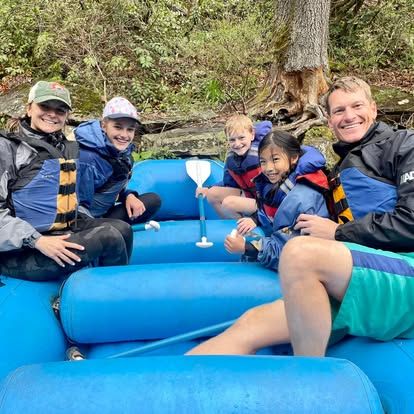
Brad and his wife, Caitlin, have been married for 22 years and are the proud parents of three children: Kyrie (18), Brooks (16) and Olivia (14) who was adopted from China, who has ADHD and microtia, a rare deformation of the ear.
Caitlin is founder of Defend The Fatherless, a not for profit whose mission is: lessening the burdens of foster and adoptive families by meeting their physical, emotional, spiritual, educational and financial needs.
It’s an uplifting story about faith, family, adoption and supporting like minded families all on this episode of the SFN Dad To Dad Podcast.
Show Notes –
Phone – (704) 507-4524
Email – bradleysund@yahoo.com
LinkedIn – https://www.linkedin.com/in/brad-sund-b020827a/
Website – https://www.defendthefatherless.org/
Join 21CD on the SFN U.S. Tour, a 30 day, 50 state, 60+ stop tour taking place from May 21 to June 21, 2026: to strengthen and grow the Special Fathers Network and distribute 2,000 complimentary copies of our new book.
Transcript:
Just know there’s help out there. Get involved in it. Just talk, be open to say, hey, man, I am struggling
Brad Sund: Just know there’s help out there. Just talk, be open to say, hey, man, I am struggling. You will be amazed with how many people are like, I got your back. What do you need? You have a community that surrounds you. Get involved in it. Because when you do that, you’re not only raising that, that child, adopting that child. Through the easy times, through the hard times, you will have people surround you. Just realize you have help right no matter where you are, no matter what you’re doing, there’s people that are there to support you.
David Hirsch: That’s our guest this week, Brad Sund. A longtime employ at Advanced Drainage Systems, he’s also a board member of Defend the Fatherless, a not for profit based in South Carolina. Brad is married to Kaitlyn and Together they have three children, including Olivia, 14, who was adopted from China and has ADHD and microtia. We’ll hear all about Brad and his life on this Special Fathers Network Dad to Dad Podcast.
Brad Sund: Dad to the dad. You’re not on your own. We walk this road together, hard and whole.
David Hirsch: Now say hello. The founder of the Special Fathers Network and host of the Dad to Dad Podcast, David Hirsch.
Special Fathers Network Dad to Dad Podcast featuring Brad Sundd and David Hirsch
David Hirsch: Hi, I’m David Hirsch, host of the Special Fathers Network Dad to Dad Podcast. Two brief messages. First, I’m, thrilled to announce our new book, Dads Raising Children with Special Needs and Disabilities. A Guide for 21st Century Dads is now available on, Audible, Amazon, Barnes and Noble and other sites. Second, the Special Fathers Network US tour, a 30 day, 50 state, 66 stop tour taking place from May 21 to June 21, Father’s Day. The purpose of the tour is to strengthen and grow the Special Fathers Network, to provide resources to special needs families, and to distribute 2,000 complimentary copies of my new book. For more information on the Special Fathers Network and all the tour locations, see the show notes or simply go to 21stcenturydads.org through every season and every stride,
Brad Sund: great dads are present. 247365.
David Hirsch: Now let’s listen into this conversation between Brad Sundd and David Hirsch.
Brad Sundda talks about his father’s suicide on the Special Fathers Network podcast
David Hirsch: I’m thrilled to be talking today with Brad Sundda, Fort Mill, South Carolina, who works at Advanced Drainage System, a board member with Defend the Fatherless, and perhaps most importantly, father of three. Brad. thank you for doing an interview for the Special Fathers Network Data Dad Podcast.
Brad Sund: Excited to be here, David.
David Hirsch: You and your wife Caitlin have been married for 22 years and are the proud parents of three children, Kyrie, 18, Brooks, 16, and Olivia, 14, who was adopted from China, who has ADHD and Microtia a rare deformation of the ear. Let’s start with some background. Where did you grow up? Tell me something about your family.
Brad Sund: Yeah, thank you for asking. No, So I grew up in Naples, Florida. I was actually born on the south side of Chicago, but my parents moved me down there when I started kindergarten. So that would have been about six years old. We moved down there full time. I had a pretty normal life down there. Great life. My family was always very, very involved. My father, my mother. I had two older sisters who were 10 and 12 years older than me. we share the same father, but different mothers. And we have always been very, very close. They’ve been, you know, that they’re older than me, David. They’ve been kind of mentors towards me. They’ve been through it before. It’s always been great to have them, have them there for me as well. Very close family.
David Hirsch: Outstanding. so my recollection was your dad was a second generation business owner. Ideal Tool and Die. Was that the name of the business?
Brad Sund: Yes, sir. Yeah. So my grandfather, my dad’s dad started Ideal Tool and Die back kind of right after the, recession built it up. And then my dad took it over and then was fortunate to sell it. And when we moved down to Florida, he retired full time. But comically enough, he really didn’t full time retire. He was very, very active, especially, in the Optimist Club of Naples. Very, very big into serving the community through that. Some of the other things he did, like the just say no program, anything that they could to especially focus on children.
David Hirsch: Yeah, I think that’s amazing. But the story sort of took a twist, and I’m wondering, how would you describe that?
Brad Sund: You know, when I was, 23 years old, living down in Naples with my family, my father tragically took his own life. Just kind of set us on a totally different path than anything I’d seen before. Dave. You know, it was a shock. a lot of people always ask me, well, did you, did you see signs? And the answer was, you know, looking in the rear. Yeah, 100%, you see things. But my dad was my hero, my mentor. He was the guy that I thought was almost invincible. Right. But, yeah, that one fateful night when we got that phone call, kind of everything in my life changed direction. Pretty hard, hard tack, right?
David Hirsch: Oh, my gosh. Did it affect you the same way it affected your sisters or not?
Brad Sund: yeah, yeah. I mean, we were all very,
00:05:00
Brad Sund: very devastated. my sisters, and I were just completely torn apart. really the only kind of difference that was between my sisters and I, them being older than me, they had families of their own. And it really was, the only difference, I’d say, that affected was, you know, my mom and I were kind of down there, so we had to pick up the pieces, get through all of it. My sisters were fantastic, but they have families to get back to on their own. So, you know, a lot of it was just trying to get through all that estate stuff was kind of the most brutal part of it, luckily. And I know we’ll talk about a little bit about my marriage. Caitlin and I were together since we were in high school. so that was great. She was there through it with everything. And my dad had a very, very good group of friends that helped us through it as well. But still, as you can imagine, just brutal.
David Hirsch: Yeah, I can’t even imagine. And not to dwell on this because I know it’s got to be a really difficult thing to reflect on, but did he leave an explanation of why he did this? Some people leave a suicide note or something like that.
Brad Sund: Yes, he did. so he wrote notes to my sisters and I, my mom, just explaining. And it really came down to David. He ran out of money, or he thought he did. It was just life, right? Life just kind of. We see we were spending more than we were bringing in. And unfortunately, my dad just really couldn’t see his way through that. Couldn’t see that this is a temporary problem. You know, it wasn’t about the money. It was about our family. We would have been fine living in a two bedroom apartment, right? But for him, it was just. He felt like, I think he let everybody down, especially my mom and I, and he figured that there was some life insurance, so leaving that behind would take care of us and be what we wanted. You know, reflecting on it, David. Yeah, I see why he would think that, but that’s not what we wanted. The money didn’t matter. I kind of joke around. We can always make more money, right? No matter the situation you’re in, you can always work through it. But for him, I think it was just a pride thing. He couldn’t do that. He just couldn’t look at himself in the mirror and see it.
David Hirsch: I’m just really sad for you, your sisters, your mom. But when you think about your dad, what are some of the more important takeaways that you think of? when you think about your dad?
Your father in law passed away almost a year ago now
Brad Sund: Yeah, so my dad was always very, very generous. he always was one of those people especially that taught me to just give of myself. And even throughout my life, whether it be a family, through work, I try to live that out. Right. I try to make it so that I’m serving others.
David Hirsch: Any other father figures that come to mind, Men who played an influential role either as a young guy growing up or perhaps as an adult, for that matter.
Brad Sund: So, luckily, I served Caitlin. I kind of dated through. Through high school. I was actually. It was my freshman year in college, her junior year in high school when we started dating. Her father, my father in law, became very much a father figure to me, until he unfortunately passed away almost a year ago now. But he was a dad to me. Right. I never looked at him as my father in law. I never talked to him like that. He was my dad. his name was Brooks. And as you saw, my son’s name is Brooks. We named him after him because of just what he means to us.
David Hirsch: Yeah, well, thanks for calling out your father in law, Brooks. Sorry to hear that. He passed away more recently.
You’ve been at ads for 21 years, and you’re 47 now
So my recollection was that you took a B.S. in business administration from University of Florida, and, you’ve just had a couple jobs out of college.
Brad Sund: Yes, sir. Being in my company, I’m 47 now. Being at my company, for 21 years now, ads, it’s been fantastic. And before that, I actually worked for a company, James Hardy. Unfortunately, Hardy decided to go a different direction. They closed that part of their business, and one of our competitors was Advanced Ranging Systems, or ads. And it was kind of a natural fit for me to go over there. So, ADS gave us the ability not only to go to work for this great company, but to have a chance to move somewhere new. And we really wanted to kind of get back to the city, so we decided to just go with Charlotte. That’s 21 years ago. Moved up here, and it’s been great.
David and Kaitlyn adopted Olivia from China in 2009
David Hirsch: So let’s switch gears and talk about special needs first. On a personal level, I’m sort of curious now. Olivia was adopted. What’s the backstory that led to you opening up not just your home, but your hearts?
Brad Sund: You know, I had a plan for our lives. I was going to be, you know, of course, a multimillionaire by the time I was 30. Have everything all set. And I’d said, hey, we’re not going to have kids until our finances are set, where I just was like, hey, we’re not doing anything until we hit this. This magical number. We started trying with our oldest, Kyrie, and we. We ran into some fertility issues. Nothing Major, like going through IVF or anything like that. But, it was a struggle. we didn’t know if we were ever going to have a child. And then we were blessed with Kyrie, which was absolutely awesome. And finally I convinced Caitlin that we would be done
00:10:00
Brad Sund: at this point. And I even made sure I had a certain surgery that made sure that I was in fact done having kids. And I, will never forget Kaitlyn just was never kind of done with it. Right, David? She always said that, hey, I feel like I want to do more. I feel like I want to have another child. I was like, well, okay, well, I don’t know how this is going to work, Kate. I, you know, we had a procedure done and she said, no, no, I think I want to start adopting. And I said, okay. She’s like, what? I’m like, okay, well, obviously I heard the spirit talk and you’re, you know, are convinced that this is what we need to do. So then we said, okay, let’s go, you know, let’s just go overseas. And then we landed on China. But as we look down it, if you wanted to get a, non special knee child, the wait list was just huge for that. I, I can’t remember how many years it was at that point, David. It was probably like eight, nine years until you could go adopt a child from China. Then we started looking down their special needs program. Their special needs program. It’s about a nine month process and that’s almost what ours turned out to be. Nine months to where we started. and once we selected Olivia to when we got her, and what was crazy about it is at first I got a little bit scared about that special needs aspect. Like, okay, what does this mean? Is this cerebral palsy, spina bifida, big things. Well, then we realized in China, like a cleft lip, cleft palate is considered special need in there, any type of physical deformity whatsoever. And then we started looking through some of the files and we had a couple, we’d have to translate them through the doctors. And then I’ll never forget Caitlin’s like, okay, we got this other one and Olivia’s file came through and it was awesome. I’m like, oh man, that’s my little girl. And I just knew it. And I’ll never forget, I went to, I think it was Office Depot. Printed out two five by seven pictures of Olivia. I’ve actually got her little picture still behind me here. And brought them over, wrapped them up, showed up at my kids preschool at our church at Forest Hill. And Caitlin walks up, she’s like, what are you doing here? And Kyrie and Bris come running out, and I gave them, the present. They opened it up, and it was a picture of Olivia. Caitlyn was like, what are you doing? I’m like, that’s our daughter. I knew it. And, you know, it was awesome. Kyrie was thrilled. That was, that was kind of our adoption story there. And then went over to China, got her. It was, it was a whirlwind. It was a really, really cool adventure. and then bringing her home, it was, it was just awesome, right? Really, really cool.
Olivia was born without a right ear, but she could hear perfectly
David Hirsch: How old was Olivia when, she came into your family?
Brad Sund: So she was right at 14 months old when we adopt her in, February.
David Hirsch: Okay, that’s wonderful. Well, you knew going into it that there was a physical handicap, if you will. And, what is the diagnosis and how did it come about?
Brad Sund: Yes, to make it the most simplistic. Olivia was born without a, right ear. She’s got a lobe still on here, but there’s no ear canal. No actual physical, ear. we didn’t know if there was possibly some bones underneath it. Could we get some conductivity back on there? You know, what does this look like? And it turns out everything was fused. She was completely deaf on her right side. Now the good news is on her left side, David, she could hear perfectly. And then, amazing technology. She’s now got a, Baha, a bone anchored hearing device. It’s actually a company called Ponto from Oticon. And now she can wear it and it just clips onto her head. She’s got a small, post on surgically, implanted on her head. And she can hear perfectly at that point. Right. And what’s nice with her is really, really strong to just get through all that. And luckily, being a girl’s got long hair, so you would never even know unless I told you.
David Hirsch: Yeah. Well, it’s amazing the way that her life has been transformed and that you picked her out of whatever number of dozens or hundreds of kids. Oh, yeah. And, you know, just changed the structure of her life again. I have a special place in my heart for people like you and Caitlin. Opening up your homes and your hearts create a forever family for Olivia. in this case.
Brad Sund: Yeah. It was always cool. I was like, to tell a story that at any point in time this few years ago, there was 143 million, orphans in the world. And it’s kind of crazy when you think about the fact that we looked domestically, we looked at some other countries. And out of 143 million, I was able to find my daughter. But what was really cool about it was, is I look at it now as she’s part of our family and gets annoyed with me just like the other kids do when I’m embarrassing. And why would you say this? And all this other stuff. And if you look at the percentage chance of us coming together, you just realize that there’s no such percentage that could ever find her. God found her for us. And even when she was, with her biological mother and father, God had a plan for her that she was supposed to join our family. And she fits perfectly in it.
David Hirsch: Well, she’s 14 now. Has there been any conversation about reconnecting with her biological
00:15:00
David Hirsch: parents, or is that door closed? Yeah.
Brad Sund: No. No. so we. We’ve always told her, if you want to go back, you know, we’ll go back over there again. But no, we. We’ve always encouraged her, you know, when you want to go back, we will go back and look. But we’ve also let her know that live. We don’t know what happened to your family. We don’t know, even if we go searching for you, if we’ll be able to find them. I mean, China is a fairly big country, but we can hone in on, where she was. But we also don’t know if that’s where her birth city was or if they. They went to drop her off. We don’t know. But we told her, anytime you want to go back, you just let us know. We’ll go. And she’s shown some interest, David. But she’s never had the, hey, I’m ready to go. I want to go now. Right? You know, if she were ever do that, we’d go in a heartbeat.
David Hirsch: Yeah. Well, thanks for sharing.
David says he would love to find his daughter’s biological family
I’m wondering if you would qualify for something like make, a wish, right? Where the organization Make a Wish picks up the opportunity for you and your family to travel, you know, to do something like that. I just don’t know if they do adoptions, foreign adoptions, you know, as part of a make a wish. But, anyway, I think just the fact that you’ve been open and transparent about that and laying the opportunity out there, you know, if and when, you know, maybe God’s touched her heart, wanting to pique her curiosity to pursue that, just to bring some closure to or satisfy that curiosity.
Brad Sund: Oh, yeah. And, I mean, there’s. There’s. I. Everybody’s story is different, but I. I think she will one day want to. To go down that path and try to find her biological mom and dad, which I think would be awesome. The. The other thing that, you know, we’ve always had a discussion with her when we talk about our biological family, and we mean this. Her mom and dad did such a brave thing. there’s. There’s some crazy stuff that goes on in China when it comes to disabilities and everything else like that. And for her mom and her dad, they put themselves at quite a risk to be able to give her up for adoption. I don’t know what their story is, David. Obviously, I don’t know if she’s a younger mother who knows what it was, but I am just so grateful to her mother and father that they made that. That sacrifice to. To give her a chance over here. And I would hope that one day we could interconnect and they can just see how amazing she is and how well she’s done. And I think that would just be epic. Right? And, you know, if there was ever a time where even if we got to know them, you know, even getting them over here, I don’t know how that all works nowadays, but I love a relationship with them. Right. Nothing but just grateful for who they are and the choice they made for us.
David Hirsch: We’ll be back with more of the conversation on the Special Fathers Network Dad to Dad Podcast in just a few moments. But first, this quick message. Please help 21st Century Dads gather research on families raising children with special needs by having them complete the Special Fathers Network early intervention Parents service. A link to the survey can be found in the show notes. As a token of our appreciation, each person, mom or dad, who completes the survey will receive a great dad coin. Thank you.
Defend the Fatherless started as a foster closet 10 years ago
Now back to the conversation.
David Hirsch: Let’s switch gears and talk about, Defend the Fatherless, which I understand started about a decade ago. Caitlin is the executive director. It started out as something very modest, this York county foster closet. So how has that transpired?
Brad Sund: Yeah, it was really cool. So, you know, after we brought Olivia home, we. We felt that we could still do more for the community. We had that story, like I told you, cher. We. We still wanted to get over there and encourage more people to go out and get these children that need homes. Right? The need is definitely there. And not only that, we wanted to share our story so people know that, hey, this is really cool what you can do. So we got involved with this York county, foster parent association. Great group of people. And they had this 20 by 10 storage unit. That was this foster closet and it was for any foster families or adoptive families, didn’t matter. So we went in there, cleaned the closet out, kind of redoed some stuff and then started marketing to our community to get more donations into it. And then we decided, hey, this is a 20 by 10 outside storage unit. We really need to get this climate controlled. So we did. We partnered up with a really, really great storage facility that had a 20 by 10 unit. I may or may not have illegally wired it up to have a chandelier, nice lights in it. We tried to make it as boutique as we could and it was really neat. When they walked in there, David, they would walk in and racks of clothes. You can take whatever you want. Then we started carrying, car seats, diapers, I mean anything you could possibly need. And it got so big that we actually rented the 20 by 10 storage unit next door to the one we had and that filled up and we’re like, man, what do we do now? So we decided at that point we want to take this up to the next level. And one Christmas I was looking for ideas on how do we get this from to our own 501C3, our own company
00:20:00
Brad Sund: and defend the fatherless.com&.org were available and I just went ahead I want to godaddy and purchase the rights to those for I got whatever it was. It was like $15 for each one of them and we still existed for that. And then we looking around. Okay, well we started raising a little bit of money through the generosity of our community and we got enough to now get a lawyer to start going down the, the pathway. How do you get through the IRS? What does a 501C3 look like? How do you set all these up? And as we were doing that there’s a a great church partner of our called Flint Hill Baptist Church. And they had this little school building from the 1900s. Half of it, they’re like, well we’re going to give you half of it and we want you to, to move in here and let this be the foster closet. Man, it was just so awesome that, that, that church just was so great. We still are so grateful for him. And what’s crazy about it now is as we started doing that, Caitlin and our co founder Mary Beth were, we had kind of a path, right David? We, well we could exist to where we were existing in where we started serving maybe make up number five, six kids, a month to where we were now starting to serve 60, 70, 80 children a month. And it was getting to the point where we not only had clothing, we started stocking formula. We started, I mean it was crazy what we had. Then we started getting mattresses in there because kids need mattresses when they go cribs. Anything you could possibly imagine. And we’re like, man, this is getting big. Now what do we do? So, well, that’s when we decided, okay, we need to take this to the next level. So Caitlin now has five, wonderful women who work for her. They started expanding the ministry to include mental health benefits. A lot ton of community get togethers will bring the foster, parents in so they can grab coffee, they can grab a Bible study if they want to. But in this, we actually moved into across the street to the second floor of the church. We took up some space there and now we’ve got a, I think it’s like 25 by 15 storage shed out there. That’s, that’s, that’s full. And it just, it’s amazing to watch us go from serving a couple kids a month to now, most months we have 100 children come through there. We’re even in conversations right now with how much is expanding. Is it like, where do we go next? Right. Do we go to the county over? So that’s kind of the story. Just from this 20 by 10 exterior to now, what they become is just absolutely amazing.
David Hirsch: Yeah, well, thanks for the story. It is quite amazing.
David: One of the big things they do is a back to school drive
And the one thing that I picked up on you made passing reference to it is what you refer to on the website as respite and connection events. And I’m wondering if you could just drill down just briefly on that.
Brad Sund: Oh man. The, the rest of the connection events, you know, they’ll bring they do so much, they might have a breakfast one time where they’ll just partner up with the church and the church will come cook breakfast for anybody who wants to come, whether it be the social workers, the families. one of the big things they do, really big events is we do a back to school drive. And what’s really neat about the back to school drive is we, we get all these shoe donations and the shoes we get are absolutely unbelievable. David. It’s not like, oh, just go back to Walmart. No, these people are buying several hundred dollar Nike, like Air Force ones. And these kids come in there and they can shop and get whatever they want. They get a backpack full of supplies. So that’s a big one. Another really big one we do is we’ve had family camps before where we’ll partner up with the campground and then they can go use the campground all day. Another really cool event we do every year is called Santa’s Helper. We raise money and we raise gift cards. And what we do is the foster families, we give the gift cards to the social workers who give them to the families. David. And that way the families can go out and purchase whatever gifts they want rather than giving the kid a gift card. Be like, buy you want. No, we want the families to be able to gift those children something on Christmas. And as you can imagine, it’s, it’s a, it’s a very expensive time. It’s very hard to do this. So we just want to help them out best we can by giving them a few gift cards so they can celebrate.
David Hirsch: Yeah, I love it. Thank you for sharing.
What advice can you share with parents considering adopting, specifically dads
So I’m thinking about advice now, and I’m wondering what advice can you share with a parent, specifically dads, who, I guess, reflecting on our conversation, might be on the bubble as far as adopting.
Brad Sund: So the, the one thing I’ll tell you, any dad who’s, who’s doing this is it is hard. Realize that there’s not only the financial commitment, which is upfront, you’ll see a lot of that, but it’s, it’s the commitment to, to the time, right? And especially for a lot of families, if they have other children. I just always like to tell, hey, guys, be prepared. This is a lot of time out, right? You’re going to struggle, your marriage is going to struggle. The number one thing you know is there is a community out there, right? There is a ton of other dads who’ve been through it, moms who have been through it. Just know there’s help out there. Just talk, be open to say, hey, man, I am struggling. You will be
00:25:00
Brad Sund: amazed with how many people are like, I got your back. What do you need? We got freezers full of frozen meals. You know how awesome that is? Sometimes just you’re having a hard day, get frozen meal to throw in, the oven, right? You have a community that surrounds you. Get involved in it. Because when you do that, you’re not only raising that, that child, adopt that child. Through the easy times, through the hard times, you will have people surround you. Just realize you have help, right? No matter where you are, no matter what you’re doing, there’s people that are there to support you.
David Hirsch: Yeah, well, crystal clear message about, you know, it’s not all, roses and rainbows. so you want to go in with, Some objectivity and say, hey, there’s some uncertainty. It’s not going to be a straight line. There’s other people that have been there and done that and that there’s this community that you might not be tapped into, but that exists, you hope exists that you can tap into. And, you’re just living proof of that. So thank you.
You’ve agreed to be a mentor father for the Special Fathers Network
So why is it you’ve agreed to be a mentor father as part of the Special Fathers Network?
Brad Sund: I’ve always had a passion for mentoring younger men and women especially. Right. Just trying to use a little bit about what I’ve gone through in my life. And I’ve just always felt that need to be able to be there for somebody who might be going through something like we talked about before and feel like, man, I don’t. There’s nobody who understands that’s not true. There’s people out there who’ve been there for you. And I love, especially when these, these younger, inside reps we hire, I just love talking to them. I get excited when they, when something good happens to them. I want to be there when something bad happens. So that this I think is just an extension of that network.
David Hirsch: Yeah, I love it. Well, thank you for being part of the network. We’re thrilled to have you.
Brad is part of the Special Fathers Network mentoring program
Let’s give a special shout out to Tom Sander, who you made reference to of Charlotte, North Carolina, who was featured in episode number 390 for Helping Connect us.
Brad Sund: He’s fantastic. And thank you for giving me his. I’ve been looking for his. He’s like, I’m not telling you what my episode is. I’ve been looking, but now I got 390. That’s the next one I’ll be listening to for sure.
David Hirsch: If somebody wants to contact you, what’s the best way to do so.
Brad Sund: Yeah, so. So, honestly, the best way to do it is just shoot me an email. my email’s pretty simple. It’s. It’s Bradley B r a d l e y sund s u n d my name@yahoo.com. that’s the easiest way to do it.
David Hirsch: Well, I’ll put the LinkedIn connection. I’ll also put, some information about defend, the fatherless. So anybody that’s interested in learning more about that will have a chance to look at that as well. Brad, thank you for your time and many insights. As a reminder, Brad is just one of the dads who’s part of the Special Fathers Network, a mentoring program for fathers radzing the child, child with special needs. If you’d like to be a mentor father or are seeking advice from a mentor father with a similar situation to your own, Please go to 21st centurydads.org thank you for listening to the latest episode of the special Brothers Network Data that podcast. I hope you enjoyed the conversation as much as I did. As you probably know, the 21st century dad’s foundation is a 501c3 not for profit organization, which means we need your help to keep our content free to all concerned. Would you please consider making a tactical contribution? I would really appreciate your support, Brad. Thanks again.
Brad Sund: Thanks Dave. It was great. Dad to the dad, you’re not on your own. We walk this road together, hard and whole.
David Hirsch: And thank you for listening to the Special Fathers Network Dad to Dad Podcast. The Special the Special Fathers Network is a dad to dad mentoring program for fathers raising children with special needs. Through our personalized matching process, new fathers with special needs children match up with mentor fathers in a similar situation. It’s a great way for dads to support other dads. To find out more, go to 21st
David Hirsch: centurydads.org and if you’re a dad looking for help or would like to offer help, we would be honored to have you join our closed Facebook group. Please go to facebook.com groups and search dad to dad. Lastly, we’re always looking to share interesting stories. If you’d like to share your story or know of a compelling story, please send an email to david21stcenturydads.org the dad
David Hirsch: to dad Podcast theme was written and performed by Shane Madden. The show is produced by me, Tom Couch. Tune in again next week for another intriguing conversation on the Special Fathers Network Dad to Dad Podcast.
Brad Sund: Through every season, in every stride, great dads are present. 247-365-247365.
00:29:28