

435 – Rob Reider of Falmouth, ME Father of Two, Co-Founder & Executive Director Of The Sad Dads Club
Description
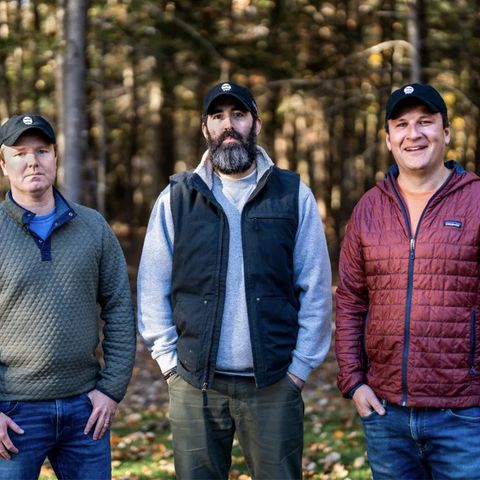
Our guest this week is Rob Reider of Falmouth, ME a father of two and co-founder and executive director of the Sad Dads Club.
Rob and his wife, Tehilah, have been married for 12 years and are the proud parents of two children: Dallas (6) who is autistic and Lila, who very sadly passed away in 2017 as the result of a still birth.
Rob along with Chris Piasecki and Jay Tansey who also lost children to a still birth about the same time are co-founders of the Sad Dads Club, a global support community for fathers who have lost a child, helping them navigate life after loss by providing community and access to mental health services.
While losing a child is conisdered a parent’s worst nightmare, those involved with the Sad Dads Club find comfort in knowing they are not alone. It’s a surprising upligting story all on this episode of the SFN Dad To Dad Podcast.
Show Notes –
Email – rob@saddadsclub.org
LinkedIn – https://www.linkedin.com/in/rob-reider-65438840/
Website – https://saddadsclub.org/
SFN Audiobook ‘On Losing A Child’ – https://tinyurl.com/46jueh3s
Join 21CD on the SFN U.S. Tour, a 30 day, 50 state, 60+ stop tour taking place from May 21 to June 21, 2026: to strengthen and grow the Special Fathers Network and distribute 1,000 complimentary copies of our new book: Dads Raising Children With Special Needs & Disabilities: A Guide For 21st Century Dads.
Transcript:
Sad Dads Club helps bereaved fathers navigate life after loss
Rob Reider: The three of us had had stillborn daughters, and once the three of us got together and were able to find this immense comfort and relief in one another, it dawned on us that there were probably guys out there who were going through what we were going through that didn’t have anyone that they could go to. They didn’t have someone that they could confide in. We have to do something about it. We looked high and low. There were no resources out there, so why not start something of our own so that we can reach these dads to ensure that no one is going through child loss alone?
David Hirsch: That’s our guest this week, Rob Reider, co founder of the Sad Dads Club, a global support community for fathers who’ve lost a child. Rob and his wife, Tehila, have two children, Dallas, 6, who’s autistic, and Lila, who sadly passed away in 2017. In his grief, Rob got together with two other dads who also lost children to form the Sad Dads Club, helping fellow bereaved fathers navigate life after loss by providing community and access to mental health services. Rob’s got quite a story to tell and we’ll hear it on this Special Fathers Network Dad to Dad Podcast.
Rob Reider: Dad to the dad, you’re not on your own. We walk this road together, hard and home.
David Hirsch: Now say hello to the founder of the Special Fathers Network and host of the Dad to Dad Podcast, David Hirsch.
David Hirsch interviews Rob Reider for the Special Fathers Network Data dad podcast
David Hirsch: Hi, I’m David Hirsch, host of the Special Fathers Network Dad to Dad Podcast. Two brief messages. First, I’m thrilled to announce our new book, Dads Raising Children with Special Needs and A Guide for 21st Century Dads is now available on, Audible, Amazon, Barnes and Noble and other sites. Second, the Special Fathers Network US tour, a 30 day, 50 state, 66 stop tour taking place from May 21 to June 21, Father’s Day. The purpose of the tour is to strengthen and grow the Special Fathers Network, to provide resources to special needs families and to distribute 2,000 complimentary copies of my new book. For more information on the Special Fathers Network and all the tour locations, see the show notes or simply go to 21st centurydads.org through every season, in every
Rob Reider: stride, great dads are present. 247365.
David Hirsch: Now let’s listen into this conversation between Rob Reider and David Hirsch
David Hirsch: and thrill be talking today with Rob Reider of Falmouth, Maine, who is the co founder and executive director of the Sad Dads Club, a global support community for fathers who have lost a child. Rob is also the father of two. Rob, thank you for taking the Time to do an interview for the Special Fathers Network Data dad podcast.
Rob Reider: I’m honored to be here. Thank you for having me.
David Hirsch: You and your wife Tehila, have been married for 12 years and are the proud parents of two children, Dallas, 6, who’s autistic, and Lila, who’s who very sadly passed away in 2017 as a result of his stillbirth. Let’s start with some background. Where did you grow up? Tell me something about your family.
Rob Reider: I grew up in Chevy Chase, Maryland. My mom, my dad, my sister and me and we lived in the same house through my college years. I had a very tight knit family who was incredibly supportive, incredibly intelligent. I’m not necessarily including myself in that categorization, but, but my mom, my dad and my sister, were. All three of them were brilliant. All three of them were lawyers. I broke the trend and decided not to pursue law school. I was the more artistic, the more alternative, very tight knit, supportive family. I was super lucky to have the parents that I had who, despite they themselves not being as interested in the arts, were always willing to do whatever they could to encourage my pursuits of different artistic endeavors, which typically included playing in a band, making music or noise as they would call it. Again, they didn’t understand it, but they always supported it. My sister was six years older than I am. She still is six years older than I am. And I grew up listening to punk rock music and that became my earliest passion.
David Hirsch: I love it. Thanks for sharing. So, what does your dad do for a living? You mentioned he was a lawyer. What type of law did he practice?
Rob Reider: My dad was a healthcare lawyer.
David Hirsch: And was that in Maryland?
Rob Reider: It was in Washington D.C. and he did a ton of traveling. I remember that he was constantly would have a suitcase or briefcase by the door and a suit bag. But despite being in such high demand and having to be on the road all the time, I never felt as though he wasn’t there. He was incredibly present. He always did everything that he could to accommodate my schedule around his. Even though again, he was on the road constantly, he was always showing up when and where he could for any of my sports endeavors or when I was playing in my bands, coming to our shows. He, it was remarkable. I, I think back to how much he was traveling, how it always felt
00:05:00
Rob Reider: like he was there. I don’t know how he did it, but he did.
David Hirsch: Maybe he had a body double.
Rob Reider: I don’t know. It’d be. He’s one of one. I don’t think it’s possible.
Your dad taught you many important life lessons, including trying your hardest
David Hirsch: Okay. When you Think about your dad, how would you characterize your relationship the best?
Rob Reider: It’s phenomenal. I always felt so comfortable with and around him, which I feel was the greatest gift that I could have been given. He taught me what I consider to be the most important lessons that I’ve ever learned and ones that I still carry with me today. And among them, being, at the end of the day, if you’ve tried your best, that’s all anybody can ask of you. And I think that rather, I know that that anecdote instilled in me a desire to really try my best in all the endeavors, no matter what it was, what I was doing, and knowing that with how, self deprecating we can all get and we can all be and how hard on ourselves we can be. I think that coming back to, did you try your hardest? And if you did, then you did all you can do. And I think that that’s a really important lesson that sort of saved me from spiraling into those typical patterns of feeling like I didn’t do enough or I’m not good enough. And coming back to that always kept me grounded.
David Hirsch: I love it.
Your word is your bond. That was what his father always said to him
Thanks for sharing. Any other lessons learned come to mind when you think about your dad?
Rob Reider: Your word is your bond. Being trustworthy. That was what his father always said to him. And I, I understood it when I was younger that being honest is something that was important, that we learned that as children. However, I feel now more as an adult how incredibly important that is. With all the different areas of life in which you have to deal with other people, being able to trust someone is so paramount, and I think that’s so important. I think that is how you measure someone’s character. And I certainly credit him to instilling the importance of that on me from a very young age.
You graduated from Bowdoin College with a BS in English
David Hirsch: So my recollection was you took a BS in English from Bowdoin College. where did your career take you from there?
Rob Reider: Oh, from there I took a little bit of a windy path. I was in a band that was comprised of friends of mine whom I’d grown up with in a music scene in that DMV, which is the D.C. maryland, Virginia area. And a bit of a supergroup was formed from this music scene. There were members from a few different bands who came together. And right around the time I graduated From Bowdoin in 2007, very shortly after that, we received major label attention and our band called the Friday Night Boys was signed to Atlantic Records. And we, we gave it a go. We got in the van and we cut an album and traveled all over the US and Europe and Canada and lived the dream for a bit, albeit in a very unglamorous way because again, we were in a tour van that we ourselves were driving. It was something we all dreamed of doing. And so, right. It was the perfect time for me to have done something like that because I’d been playing music my whole life. These guys who were in the Friday Night Boys with me were the most talented guys I’d ever played with. And I was such a big fan of their playing, of their songwriting. So being such a passionate musician, I had actually taken a semester off of Bowdoin when I was a junior rather than go abroad. The deal between my parents and me was that if I were to take a semester off, I’m still going to walk with my class. I still had to graduate on time. So I had to make up those credits credits by picking up extra courses as well as taking summer school. But I was able to fulfill that agreement and getting the chance to do it in an extended form and on a professional quote unquote level. So it was a, unorthodox path after having graduated from Bowdoin. But I had my degree in hand, which my parents said was super important for in case the band didn’t work out, which it turns out many bands do not work out. The bands you hear about, the ones who are able to sustain, far fewer than those who fall by the wayside, long forgotten.
David Hirsch: So my recollection was that, you worked, at Harvard, university in the administration area and then for Bowdoin College as an assistant director of giving for another handful of years and then more recently at the main medical college in the philanthropy area. Was that a straight line? Was there a connection between each of those or how did that transpire?
Rob Reider: Once the band had stopped touring, I knew that I wanted to be in Boston. I had a friend, one of my best friends who was in Boston. She was working at Harvard. She was able to get my resume to the top of a pile. I guess they thought that it looked pretty interesting to see that, hey, this guy was a touring musician and he went to Bowdoin. So chances are he’s semi intelligent. And that was that was my introduction to the corporate world. And it actually taught me a ton about for what I’m doing today, just in the administrative side of things and. But from
00:10:00
Rob Reider: there, after working at Harvard, my wife and I wanted to come back to Maine, which is where we met, having both gone to Bowdoin college. And so I had been volunteering for the Office of Annual Giving, which is a, long winded way of saying I was volunteering to fundraise for, on behalf of my graduating class, 2007. So I reached out to that office to say, hey, I’m planning to move to Maine and just wondering if you all had any job openings. And serendipitously they did. And so I worked there for, I believe, five years doing fundraising.
David Hirsch: And then what brought you to the Maine Medical College?
Rob Reider: a toxic professional setting was certainly what was the catalyst to get me to look elsewhere for employment. I love Bowdoin. It changed my life. But it’s remarkable what, being in a not wonderful setting where you don’t feel particularly valued will do. So I went on over. I had another colleague, former colleague, current friend, who had experienced the same thing at Bowdoin and moved on over to, Maine Med and said, hey, there’s this job opening here and, you should come check it out. And so I did for almost two years there.
Dallas was diagnosed with autism level two when he turned three years old
David Hirsch: Let’s talk about Dallas first. He would be the second of your two children. what is his diagnosis and how did it come about?
Rob Reider: He was diagnosed with autism level two right around when he turned three years old. You know, he was born in September of 2019. And so, you know, fast forward six months and the whole world is shut down. So we chalked his delayed speech up to a lack of socialization. But once we had a meeting with his school, they suggested that we have him evaluated based on things that they were seeing. And it didn’t come as a complete shock to us because we were also picking up on some things that we were keeping our eye on, by no means ignoring, but hadn’t yet taken action on. And so once we heard that from his teachers and they told us, you know, I don’t think this is the right school for him, we started the process of getting him evaluated so that we could see if there was indeed a diagnosis.
David Hirsch: And, did he actually start speaking or when did he start speaking?
Rob Reider: He started speaking only once. He was four years old. When he was. At that point, he was integrated into a school that was for children specifically with autism.
David Hirsch: So that’s worked out really well for him then, being in a special environment.
Rob Reider: Oh, my gosh, it is absolutely transformative. It’s one of the most remarkable growth experiences I’ve ever been present for seeing the way that he’s blossomed with that consistent as well as specialized care. We got incredibly lucky to get him into the school that we really wanted to get him into, which is part of Maine Behavioral Health, it’s a school called Glickman Louder center of Excellence in Autism and Developmental Disorders. That place did wonders for him, and we are forever grateful for the guidance, the care, and all the love that they gave him. It made all the difference. It changed his life and our lives completely.
David Hirsch: Yeah, I’ll try to include some information in the show notes about that so others will be aware of that resource.
Dallas was diagnosed with autism when he was just 18 months old
So I’m going back to the original time that, Dallas was diagnosed. What were the initial thoughts or fears that you had as parents?
Rob Reider: This is going to jump ahead only a little bit, or rather give a glimpse into what I know. We’ll talk about, later in this interview, which is Lila. But my wife and I had a feeling that he likely was going to be diagnosed with autism. Based on what we were seeing, there were some telltale signs. He was not speaking. He was stimming a lot. He was flapping his arms a lot. He was obsessively lining up cars in a way that if anything was altered even the slightest, he would just melt down. He was far more focused on wheels. This emotion just. Just washed over me. It was like, are you kidding me? I had my daughter die, and now there’s something wrong with my son. And that was a exact moment. I mean, like, as soon as it came out of my mouth, it came out of my head, my heart. I immediately flipped my perspective. I was like, whoa, there is nothing wrong with my son. He may need more support, he may need extra support, he may need unique support, but I know something wrong. Something wrong is when your child’s heart stops. Knowing that he was healthy, that he was seemingly happy, I was going to have to adjust my expectations while also assuming my role as his father. And I will do whatever it takes to make sure that I am there to give him a happy and fulfilling life. I. I really, in that moment, then adjusted my perspective and how I was going to show up to the situation knowing that I am his father. This is my job. So let’s go. I’m up for whatever they’re going to suggest is going to be best for him while also keeping my eye on what I see he needs so that I can advocate for him. Because
00:15:00
Rob Reider: right now, especially with him being so young and him not having a literal voice, I’m going to need to be that for him.
David Hirsch: We’ with more of the conversation on the Special Fathers Network Dad to Dad Podcast in just a few moments. But first, this quick message. Please help 21st Century Dads gather research on families raising children with special needs by having them complete the Special Fathers Network Early Intervention Parents Survey. A, link to the survey can be found in the show notes. As a token of our appreciation, each person, mom or dad, who completes the survey will receive a great dad coin. Thank you.
Chris Tansey’s daughter Lila was still born in December of 2017
Now back to the conversation.
David Hirsch: Let’s switch gears and talk about Lila. Very, sadly, she was still born in December of 2017. Not to go through all the details, but what was the backstory on that first pregnancy of yours and how did it transpire?
Rob Reider: Everything was proceeding along the pregnancy so easily. Once we were pregnant, it felt like everything was hitting every growth milestone that we were supposed to. I went to as many appointments with her as I could, and we were just elated to be having a little girl. And all of a sudden we go to our 38 week appointment. It was the first appointment in the morning. Nothing appeared off, nothing felt off, and there was no heartbeat. And that’s just when the floor disappeared from beneath us. That’s when everything changed. That was when the nightmare began. Effectively, we didn’t see it coming. There was nothing indicated during any of our monthly to then weekly exams. As we got closer to our due date, everything was proceeding as completely textbook. And boring is the way that I always say it, because it was.
David Hirsch: Yeah. Well, it sounded like you got blindsided. Right? Just bam. Yeah, I don’t think anybody could possibly be prepared for something like that.
Rob Reider: Yeah.
David Hirsch: So my recollection was there was a friend, I think it was Jay Tansey.
Rob Reider: Yep.
David Hirsch: that had lost a, daughter, Bella, if I remember.
Rob Reider: Yep.
David Hirsch: About a year before Lila. It was like foreshadowing for you.
Rob Reider: Yeah.
David Hirsch: Here you’re helping them grieve the loss of their daughter and, boom, you get struck by lightning, you know, a year later.
David Hirsch: Yeah.
David Hirsch: Was that the sort of, the sort of backstory, on this small group of dads that you got to be super close to as a result of this shared experience?
Rob Reider: Yeah, it absolutely was. Jay and I were best friends in college. We were classmates. My parents hosted him. I was the best man in his wedding. So we, we went way back and we were very close. And at the time, in 2017, we were both living in Portland, Maine. And on January 31, 2017, he texted me that I, I, my wife and I had just babysat their, their older son and we knew that he and his wife were expecting their second child, any day, literally. And when I got the text on January 31, 2017, that they lost the baby. I had no idea what could have possibly happened. I had never heard of anybody having a stillbirth or a stillborn child in my life. That was a term I was completely unfamiliar with. And unimaginably then, 11 months later was actually the same calendar year. So he was January 31st, I was December 13th. my wife and I had a. Lila was stillborn. And so I always put it that I had the fortunate misfortune of having such a close friend who was also geographically close to me. That was someone for me to go to, that was someone that I could say anything I want or say nothing at all. But no explanation was needed around either. And it was so profoundly important for me to have that outlet. There was one other dad that we were introduced to seven months after we lost Lila. So. So within the span of under 18 months, the three of us had had stillborn daughters. And it was through a classmate that we were introduced to Chris, who also had a stillborn daughter, Izzy. And once the three of us got together and were able to find this immense comfort and relief in one another, it dawned on us that there were probably guys out there who were going through what we were going through that didn’t have anyone that they could go to. They didn’t have someone that they could confide in. And the thought of that, knowing what our relationship and dynamic gave all of us, was like, we have to do something about it. We looked high and low. There were no resources out there, so why not start something of our own so that. That we can reach these dads to ensure that no one is going through child loss alone. I can’t remember exactly when it was, but we would have conversations about this idea. And my wife had thought of the name Sad Dad’s Club, interestingly. So Jay and I had obviously spent time together. I had then spent time with Chris. But the first time that Chris J. And I, because Jay and Chris hadn’t yet met in person, we were going to go hang out. It was just like gnarly, rainy, cold winter,
00:20:00
Rob Reider: like February night or something in Maine. And I told my wife, Tehila, I said, all three of us are hanging out for the first time tonight. And she just, like, looked outside and was kind of like, oh, what a horrible evening. You guys are going to be sitting in the dark, drinking beer, like the Sad Dad’s Club. It was like, what did you just say? And it stuck. It just.
David Hirsch: It’s.
Rob Reider: It was such a catchy name. And I was like, that’s funny. And people, whenever I’m wearing something that says Sad Dad’s Club on it. I have never in my life worn something that strangers anywhere. I’m talking New York City, I’m talking Los Angeles, I’m talking streets of Maine. I’ve never been anywhere where people are just like, hey, what is Sad Dad’s Club? complete strangers. Because it is this kind of funny name and it doesn’t immediately reveal what it is. And very rarely do people know the response that’s going to come, which is that it’s a support group for fathers who have lost children. It’s a non profit that supports fathers who have lost children.
David Hirsch: So my understanding is the mission is to help fellow bereaved fathers navigate life after loss by nurturing a supportive community and providing access to mental health services.
Sad Dad’s Club provides professional mental health services for bereaved fathers
I’m sort of curious now about the scope. This started out with the three of you. how is it to going grown and where is it today?
Rob Reider: So once we became a non profit, we started hosting these monthly Zoom sessions. We were using our Instagram profile to get the word out about, hey, we’re going to have these dedicated times the third Thursday of every month where we’re going to just hop on Zoom, pick a topic, talk, no pressure to share. If you just want to sit and listen, that’s fine. But we’re going to have the floor open in case you do want to talk. Just a very casual open floor discussion. I shouldn’t say casual so much because it’s obviously very heavy stuff, but we started then hosting in person regional events and then we also introduced doing retreats. We wanted to continue doing what we are doing, which is providing that, nurturing a supportive community. Going back to our mission statement, that is where we get dads who have similar life experiences, who can come together. We invite vulnerability. That vulnerability will be validated. You know that you’re going to be met with warmth. You know that you are no longer alone, and you know that you’re in a safe space with other men who understand the complexity of the grief that you are traversing. But what more can we do? What more can we provide? Can we help facilitate that we ourselves are not qualified to do? None of us are clinicians, but between Jay, Chris and me, the three of us believe heavily in the importance of quality professional mental health services in the wake of child loss. You have absolutely no executive functioning. Even if you have a great job, you have great insurance. You think, okay, I need to find a therapist in my network. Are they taking new patients? Do they even have experience treating somebody who has endured child loss and is grieving. you know what? That’s too much. I’ll do it later. So our organization partners with therapists who specialize in child loss and grief, and we pay for up to six sessions per dad because we want to make the process as seamless as possible to getting that quality professional mental health support at no cost to the dad or their family. We want to make sure that not only is the financial barrier removed, but also the logistical one. And that’s why we offer up to six sessions paid for with these therapists that we partner with for every dad who comes to us for it. We are trying to create as robust a package as possible to help these dads heal as best we know how. And we are pulling from the tools that we ourselves had access to, that we ourselves found and presenting them to these dads.
David Hirsch: I love it. It’s huge. So it started out there in Maine, just a few dads. It’s expanded, because of the virtual footprint they have. do, you have a sense for how many dads there are, what states, what countries they’re in, et cetera?
Rob Reider: Right now, we have dads that we know of in 38 states and 15 countries. We have supported and engaged with over 10,000 fathers since we started, and we just want to make sure that we keep growing more and more and more. Our ultimate goal is making sure that no dad who has gone through child loss thinks that there’s nothing out there for them. We cannot say definitively when a dad will be ready to engage in this type of work in this type of group. And we just want them to know that whenever they are ready, we are there. That’s why we are the only organization that provides this type of comprehensive care that is focused on men’s mental health for bereaved fathers. Right here in sad Dad’s club, you can get what you need. You can get people remembering your son or daughter’s birthday. You can get people remembering what the symbol is for your child. You can get people who actually want to hear your story over and over again, who, you know, aren’t suddenly feeling uncomfortable after two minutes and curling their toes at the water bubbler. I say this from experience, not only my own, but also from hearing from thousands of dads, literally these horror
00:25:00
Rob Reider: stories of returning to work. It’s one of the most traumatic transitions, but we can make all of these transitions. You enter back into the world a different version of yourself. And if we can make things a little easier for these dads, where they have a space where they can talk about what they’re struggling with. And they also know that there is a place that will honor, remember, and love their child with them, that will make the rest of the relationships in their lives easier for them.
David Hirsch: I love it.
What advice would you give to someone grieving the loss of their child
With the benefit of hindsight, your experience and the guys who are there at the very beginning, what advice would you give to, somebody who’s grieving the loss of their child so that they engage sooner than later so they’re not wallowing or, you know, sort of unfocused?
Rob Reider: I would say, first and foremost, be gentle with yourself. And then I would say, just check out Sad Dad’s Club. See what we’re all about. Dip your toe in the water. There is no pressure to stay. There is no expectation. All of our resources are at absolutely no cost. And we will keep it that way because we want no barrier to relief, that healing should not come at a cost. And I have seen dads come into our space completely convinced that this is not going to possibly help. Something may have happened where their partner’s like, you got to do something. I found this thing called Sad Dad’s Club. I can see it on them. M. They’re. They’re. They’re so weighed down by grief, and they’re just like, this isn’t going to do a thing for me. And then it does. And I see that over and over. And I am no expert. I’m the expert only in my own grief. So is that person who has just experienced their loss one week ago. And I have had dads who are within the first year of grief say things that for me, has been like, wow, light bulb moment. That changes my perspective entirely. Everybody has something of value to offer in this space, and everybody is the expert of their own grief, which means that they have something that if and when they feel comfortable doing so, they will say that will help someone else. It doesn’t matter how far removed. We have dads who are a month out from m. Their loss. We have dads who are literally 50 years out from their loss. And each of those and everyone in between has profound wisdom because their experience is their own and their lens is their own. And the generosity and offering that or the comfortability and saying like, you know what? I am going to speak. I am going to say this. It always amounts to something of value, which is one of the most remarkable things I’ve ever experienced being a part of.
David Hirsch: Yeah, very powerful. Thank you.
Anything else you’d like to say before we wrap up saddadsclub. org
Anything else you’d like to say before
Rob Reider: we wrap up saddadsclub.org, worstclub bestguys.org you’re not alone. You’re not. It can feel that way. It can seem that way. With all the programs that we have in place, there will be something that can plug you into this community that is made of the most generous of heart group of men I have ever met. I promise nothing will be lost to try it. I encourage you to try it whenever you feel ready. Know that we are always here.
David Hirsch: Thank you for sharing.
Special Fathers Network is a mentoring program for fathers raising children with special needs
So let’s give a special shout out to John Gustin who hosts the Tired Dads and Moms Podcast who was also Featured in Episode 426 of this podcast for helping connect us.
Rob Reider: Thank you John Rob, thank you for
David Hirsch: your time and many insights. As a reminder, Rob is just one of the dads who’s the part of of the Special Fathers Network, a mentoring program for fathers raising a child with special needs. If you’d like to be a mentor father or are seeking advice from a mentor father with a similar situation to your own, Please go to 21st centurydads.org thank you for listening to the latest episode of the Special Fathers Network Dad to Dad Podcast. I hope you enjoyed the conversation as much as I did. As you probably know, the 21st Century Dads foundation is a 501c3 not for profit organization, which means we need your help to keep our content free to all concerned. Would you please consider making a tech tactical contribution? I would really appreciate your support Rob. Thanks again.
Rob Reider: Thank you very much.
Special Fathers Network is a dad to dad mentoring program for fathers raising special needs
David dad to the dad. You’re not on your own. We walk this road together, hard and home.
David Hirsch: And thank you for listening to the Special Fathers Network Dad to Dad Podcast the Special Fathers Network is a dad to dad mentoring program for fathers raising children with special needs. Through our personalized matching process, new fathers with special needs children match up with mentor fathers in a similar situation. It’s a great way for dads to support other dads. To find out more, go to 21st
David Hirsch: centurydads.org and if you’re at dad looking for help or would like to offer help, we would be honored to have you join our closed Facebook group. Please go to facebook.com groups and search dad to dad. Lastly, we’re always looking to share interesting stories. If you’d like to share your story or know of a compelling story, please send an email to david@21stcenturydads uh.org the
David Hirsch: Dad to Dad Podcast theme was written and performed
00:30:00
David Hirsch: by Shane Matt. The show was produced by me, Tom Couch. Tune in again next week for another intriguing conversation on the Special Fathers Network Dad to Dad Podcast.
Rob Reider: Through every season, in every stride, great dads are present. 247-365-24-7365.
00:30:22